Cambridge: Guided River Cam Punting Tour
1.552 reviews
Admire the sites of historic Cambridge University on a guided punting tour. Enjoy live commentary from your guide and hear some amusing punting stories.
Buy now
From 64,14€ per group
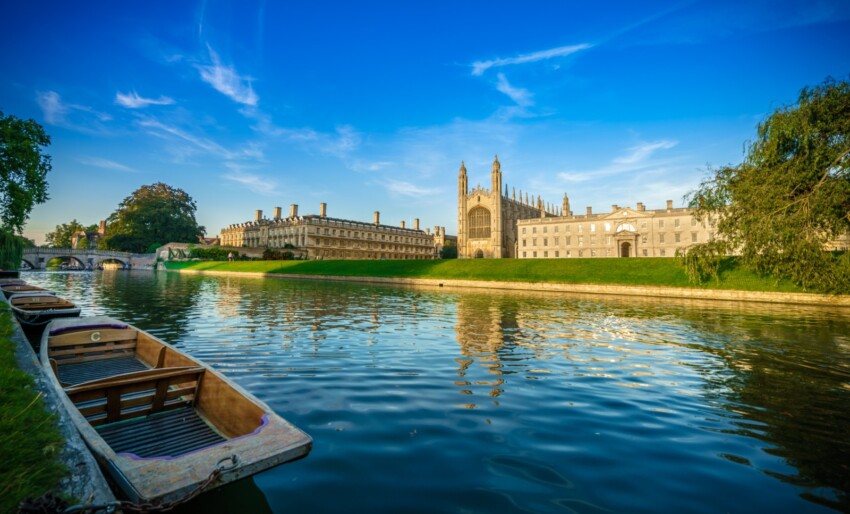
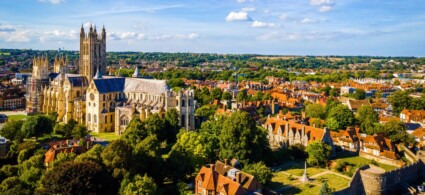
Nestled on the banks of the River Cam, Cambridge is far more than just a renowned university town. With over 800 years of academic history, this jewel of East Anglia captivates visitors with its Gothic architecture, evocative medieval colleges and an intellectual atmosphere that permeates every corner of the historic centre.
Majestic stone buildings are reflected in the river’s waters, whilst young students on bicycles traverse ancient courtyards. Here, tradition and innovation blend harmoniously: alongside centuries-old libraries stand cutting-edge research facilities, and traditional academic ceremonies sit comfortably alongside a vibrant contemporary cultural scene.
The town is compact and easily explored on foot, a characteristic that makes it perfect for a long weekend or a longer holiday discovering its architectural and cultural treasures.
Cambridge is an open-air museum where every building tells centuries of history and academic tradition. The historic centre is home to some of England’s finest medieval colleges, magnificent gardens and world-renowned museums, all accessible via pleasant walks through cobbled streets and charming alleyways.
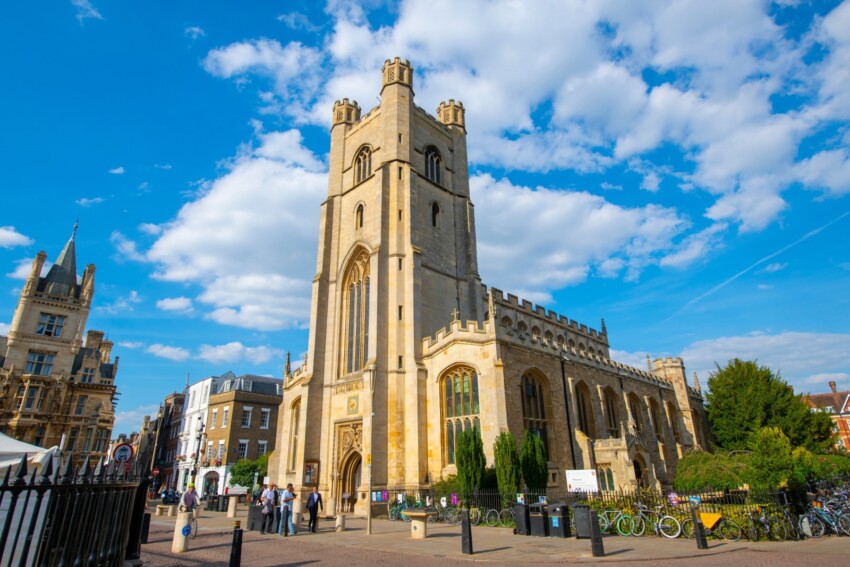
The Church of St Mary the Great, affectionately known as Great St Mary’s, is Cambridge’s central landmark and the university church. Its tower, open to visitors, offers breathtaking panoramic views across the city and colleges. From here you can enjoy one of the finest vistas of King’s College Chapel and the historic centre’s rooftops.
The church’s interior features notable architectural elements, including a decorative 17th-century pulpit and a restored Victorian organ. It remains central to university life, hosting numerous academic ceremonies and concerts.
Positioned directly facing Market Square, the church makes a perfect starting point for exploring the city. Its bells continue to mark the rhythm of Cambridge life today.
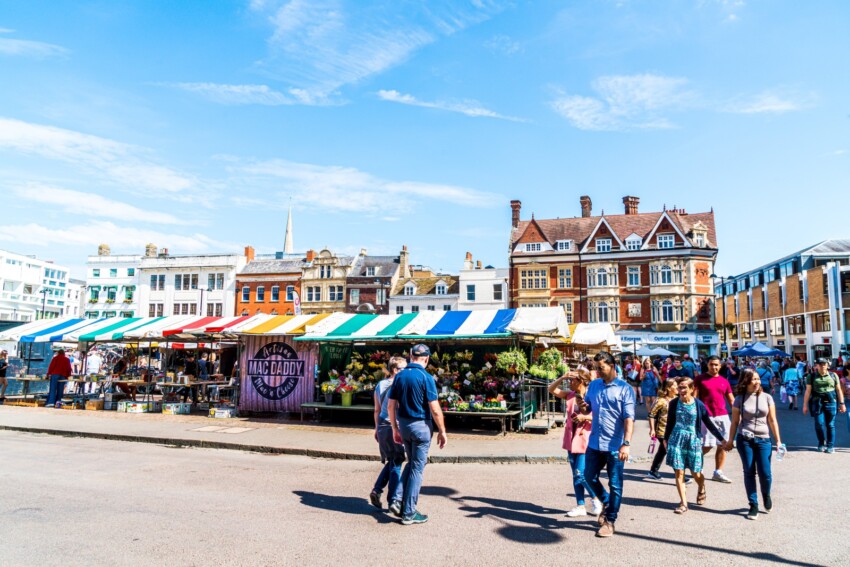
Cambridge’s beating heart is Market Square, where a daily market has animated the city centre since medieval times. Colourful stalls offer everything from local produce to vintage goods, from second-hand books to international street food.
Surrounding the square is a network of pedestrianised streets lined with independent shops, historic bookshops and traditional pubs. Don’t miss the Grand Arcade for shopping and Rose Crescent for its Victorian charm.
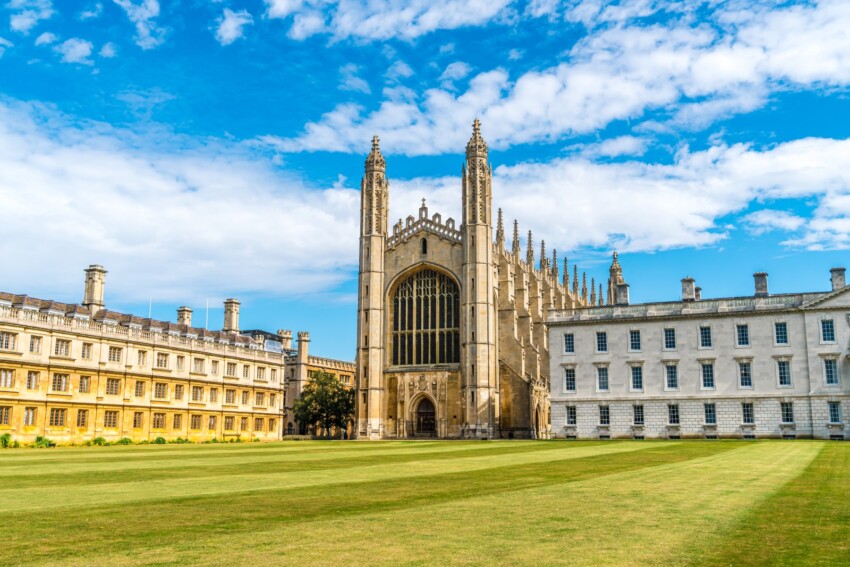
King’s College embodies the very essence of Cambridge, and its magnificent chapel is considered one of the greatest masterpieces of English Gothic architecture. Founded in 1441 by King Henry VI, the chapel dominates the city’s skyline with its soaring spires and elaborate stone decorations.
The chapel’s interior unfailingly takes visitors’ breath away. The most striking feature is the fan vault, the largest of its kind in the world, stretching the entire length of the building and creating an extraordinary sense of lightness. The medieval stained glass, miraculously preserved intact through the centuries, filters light creating evocative colour displays across the stone floor.
Particularly moving is attending a service featuring the King’s Singers, when the renowned choir’s voices fill the nave. During the Christmas period, the Festival of Nine Lessons and Carols attracts visitors from around the world.
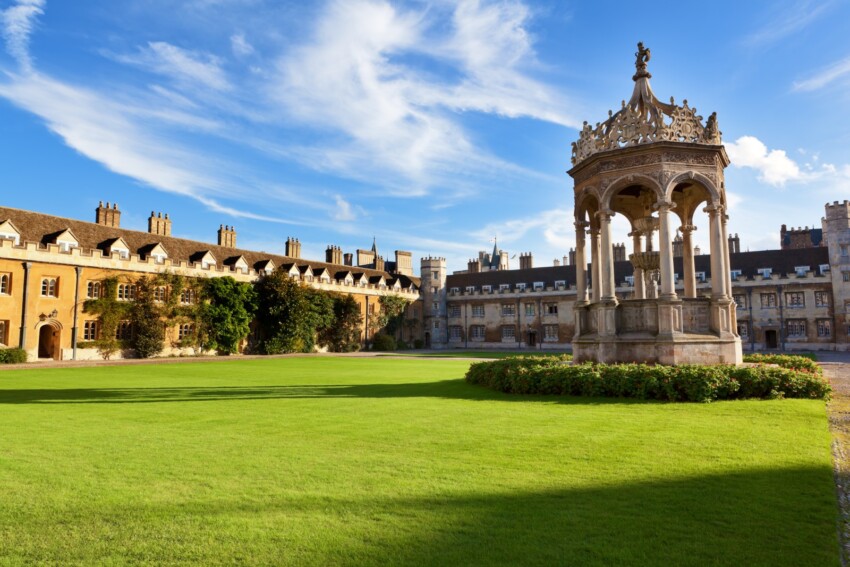
Trinity College, founded by Henry VIII in 1546, is the largest and wealthiest of Cambridge’s colleges. Among its alumni are 34 Nobel Prize winners – more than any other institution in the world. The impressive Great Court is Europe’s largest quadrangular courtyard, and its central fountain is an iconic landmark.
The Wren Library, designed by the celebrated architect Christopher Wren, houses precious manuscripts and first editions, including original writings by Isaac Newton and autographed poems by Lord Byron. The library overlooks the “Backs”, gardens that slope down to the River Cam, offering one of the city’s most photographed views.
The college is also known for the “Great Gate”, a magnificent entrance portal decorated with a statue of Henry VIII and Tudor family crests.
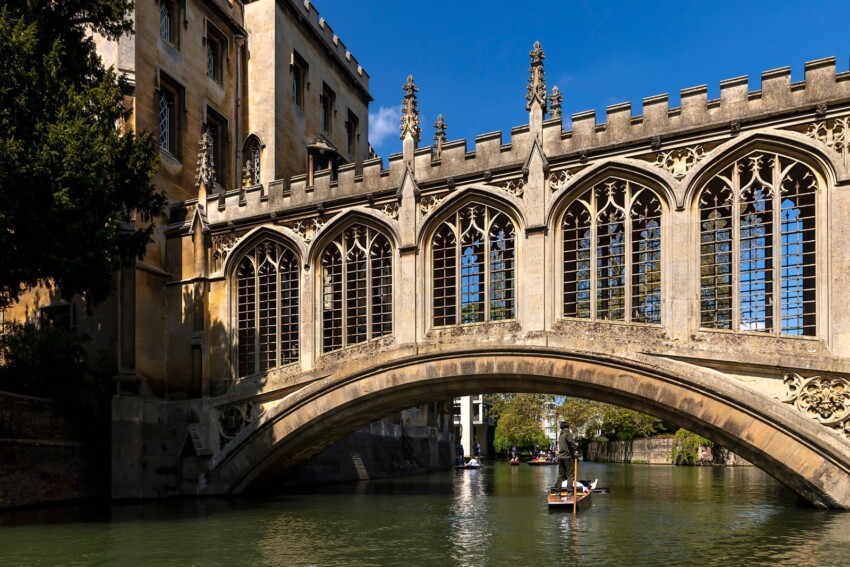
St John’s College is one of Cambridge University’s largest and most prestigious colleges, founded in 1511. The college extends majestically along the River Cam’s banks, boasting some of the university town’s most spectacular buildings. The complex develops through a series of historic courtyards that chronicle the architectural evolution of five centuries of academic history.
The First Court, the oldest courtyard, still retains much of its original Tudor structure, including the Old Chapel now used as a library. However, the Second Court, completed in 1602, represents one of Cambridge’s finest examples of Elizabethan architecture, with red brick and stone decorations creating a harmonious colour scheme. The Ancient Library, with its medieval manuscripts and rare first editions, is a treasure of incalculable cultural value.
The college’s most iconic symbol is the Bridge of Sighs, built in 1831 and named after the famous Venetian bridge. This covered structure crossing the River Cam, linking New Court to Third Court, is one of Cambridge’s most photographed spots.
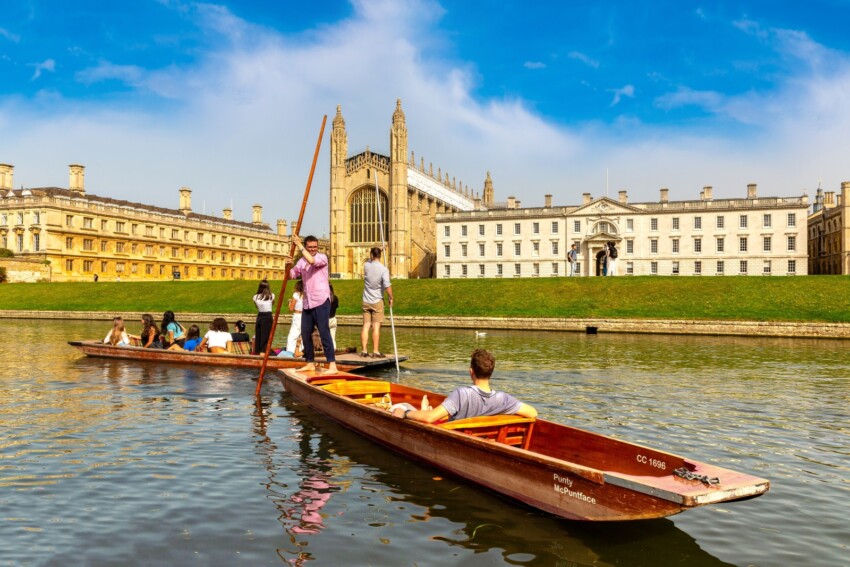
A must-do experience in Cambridge is punting, the traditional flat-bottomed boat journey along the River Cam. These punts are propelled with a long pole, offering a unique perspective of the “Backs”, the college gardens that overlook the river.
During the approximately 45-minute journey, you can admire St John’s College’s Bridge of Sighs, inspired by its famous Venetian namesake, and Queens’ College’s Mathematical Bridge, the subject of numerous legends. You can hire a boat and attempt to navigate it yourself, though a guided tour is recommended to enjoy the historical tales and anecdotes.
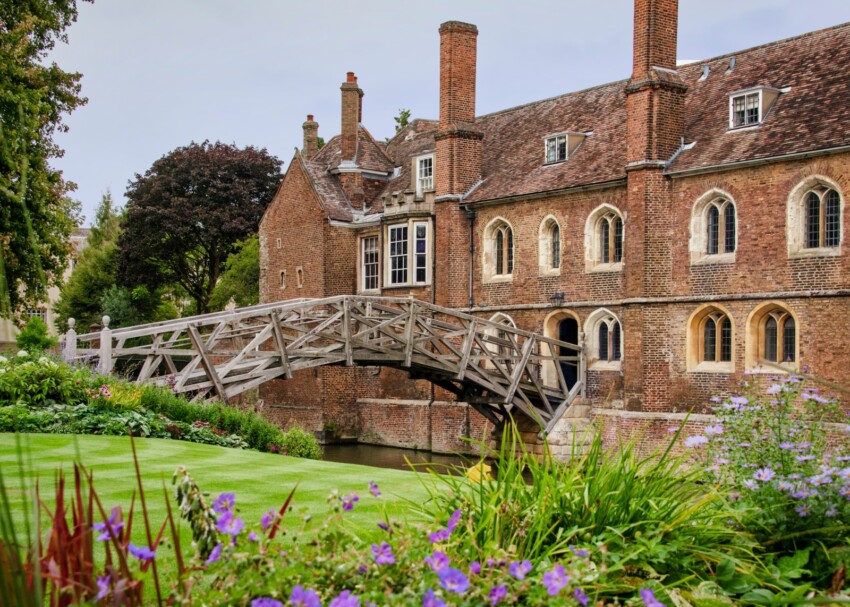
Queens’ College, founded in 1448, is one of Cambridge’s most picturesque colleges. Its main attraction is the famous Mathematical Bridge, a wooden structure spanning the River Cam. According to popular legend, the bridge was designed by Isaac Newton and built without using bolts, though it was actually constructed in 1749, after the scientist’s death.
The college itself is a fascinating example of architecture ranging from the late medieval period to the Victorian era. Its historic courtyards, particularly the 15th-century Old Court, offer an authentic glimpse into Cambridge’s university life through the centuries.
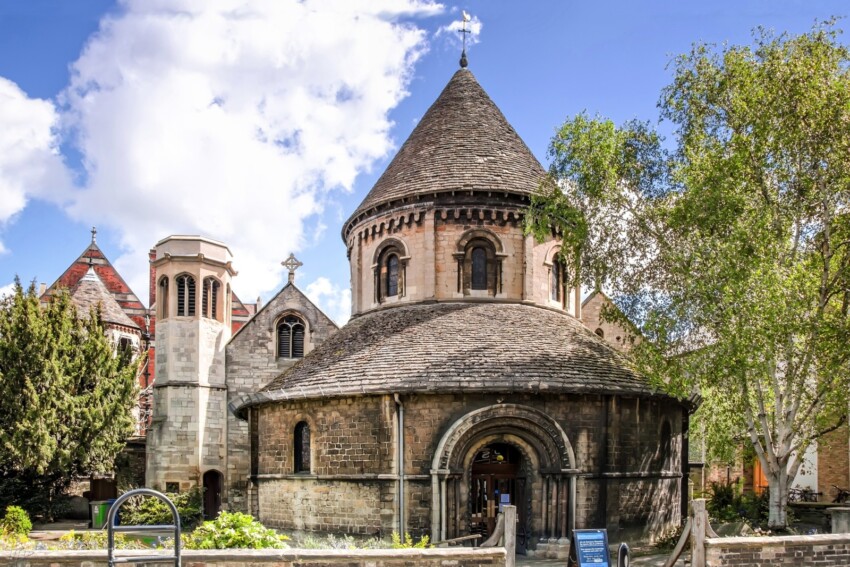
The Church of the Holy Sepulchre is one of only four surviving medieval round churches in England. Built around 1130, it is the country’s oldest round church and an exceptional example of Norman architecture. Its circular form was inspired by the Church of the Holy Sepulchre in Jerusalem.
The recently restored interior retains original architectural features and medieval frescoes. The church is an important historical and spiritual landmark of the city.
Kettle’s Yard is a hidden gem of Cambridge, a unique house-museum hosting an extraordinary modern art collection. The building was the home of Jim Ede, former Tate Gallery curator, who transformed it into a living exhibition space where modern art integrates seamlessly with everyday objects.
The collection includes works by artists such as Joan Miró, Barbara Hepworth and Henri Gaudier-Brzeska. The seemingly casual yet carefully considered arrangement of objects and artworks creates an intimate and contemplative atmosphere. The gallery also hosts temporary contemporary art exhibitions.
Cambridge University’s Museum of Archaeology and Anthropology houses one of the world’s most important collections of Pacific art and artefacts. The museum also boasts a significant collection of local archaeological finds that chart East Anglia’s history from antiquity to the medieval period.
Particularly notable is the Polynesian and Aboriginal Australian art and artefact collection. The exhibitions are well-curated and interactive, making them engaging for both adults and children.
The Fitzwilliam Museum is considered one of the world’s finest small museums. Housed in a magnificent neoclassical building, it contains an extraordinary art and antiquities collection spanning from ancient Egypt to the 20th century.
Among the most prized pieces are works by Titian, Rubens and Turner, a notable ceramics collection, illuminated manuscripts and ancient Egyptian art and artefacts. The museum is particularly renowned for its French Impressionist collection and Italian school paintings.
Admission is free and the manageable size allows for a thorough visit in 2-3 hours. The museum also has an excellent café and well-stocked bookshop.
Cambridge University’s Botanic Garden is a peaceful oasis spanning 16 hectares south of the city centre. Founded in 1846, it is home to over 8,000 plant species from around the world, arranged in themed sections including medicinal plants, an alpine rock garden and Victorian glasshouses.
The glasshouses are particularly fascinating, with environments recreating different habitats, from tropical rainforest to desert. The garden is beautiful in every season: spring for bulb displays, summer for flowering meadows, autumn for foliage colour and winter for glasshouse blooms.
It’s a perfect spot for a relaxing break during your city visit, with spacious lawns for picnics and a welcoming café.
In the following map you can see the location of the main places of interest mentioned in this article.
Guided tours are an excellent way to discover Cambridge and its prestigious university in depth. Expert local guides, often former students or academics, share fascinating anecdotes about university life and the city’s centuries-old history. Tours provide access to areas normally closed to the public and offer a fuller understanding of this academic centre’s traditions.
Cambridge’s historic centre is the ideal area to stay, offering a wide choice of boutique hotels housed in historic buildings and charming B&Bs. The location allows you to reach all major attractions on foot and enjoy the university atmosphere during evening hours. Prices are higher, but the convenience justifies the investment.
The Mill Road area offers a more economical yet interesting alternative, just 15 minutes’ walk from the centre. This multicultural neighbourhood is full of ethnic restaurants, independent cafés and vintage shops, ideal if you’re seeking a more vibrant, contemporary atmosphere.
The Trumpington area, south of the centre, is perfect for families, with modern hotels offering parking and green spaces. The area is well-served by frequent buses reaching the centre in 10 minutes.
Cambridge is located approximately 80 km north of London and is easily accessible by both train and car. The city benefits from excellent transport links with the rest of the United Kingdom, making it an ideal destination for a day trip from the capital.
Stansted Airport is the closest to Cambridge, just 47 km away. The most convenient option is the direct train service, which takes 30 minutes to reach Cambridge (operated by Greater Anglia). Alternatively, there is a National Express coach service that takes approximately 50 minutes.
Heathrow Airport is connected to Cambridge via the National Express coach service, with a journey time of around 2 hours and 30 minutes.
Trains from London depart from King’s Cross station and take approximately 50 minutes to reach Cambridge. The service is frequent, with departures every 30 minutes throughout the day. Cambridge station is about a 20-minute walk from the historic centre, but is well served by buses and taxis.
For those arriving by car, Cambridge is accessible via the M11 from London (approximately 1 hour and 30 minutes) or the A14 from the east and west. We recommend using one of the numerous park and ride facilities located around the city, as the historic centre has strict traffic restrictions and parking is expensive and limited.
For those staying in London, Cambridge makes a perfect destination for a day excursion. Organised coach tours from the capital offer a convenient way to explore the university city, often combining it with other places of interest, such as Oxford.
Cambridge’s strategic location makes it easy to explore some of the finest destinations in East Anglia. Car hire is recommended for reaching more remote destinations and enjoying the freedom to explore the English countryside at your own pace, although many attractions are still accessible by public transport.
The Imperial War Museum Duxford, situated approximately 15 km from Cambridge, is Britain’s largest aviation museum. Housed in a historic RAF airfield, the museum displays an extensive collection of aircraft, military vehicles and wartime artefacts.
Visitors can explore several themed hangars that tell the story of aviation, from the First World War to the present day. Particularly impressive is the collection of Second World War aircraft, including rare examples still in flying condition.
The Wandlebury Country Park, situated on the Gog Magog Hills south of Cambridge, offers 100 hectares of woodland and chalk grassland meadows. The park includes an ancient circular Iron Age fort and is home to a rich variety of flora and fauna.
It’s an ideal location for nature walks, picnics and birdwatching. The well-maintained paths are perfect for families with children, and the views across the surrounding countryside are spectacular on clear days.
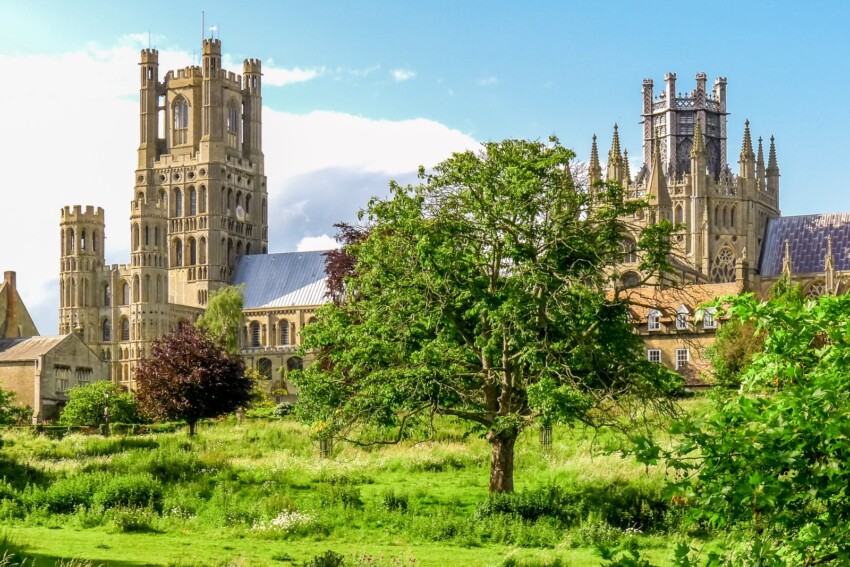
The historic town of Ely, with its magnificent Norman cathedral nicknamed the “Ship of the Fens”, is just a 30-minute train journey from Cambridge. The cathedral, with its distinctive octagonal tower, is a masterpiece of medieval architecture and offers fascinating guided tours. The town is also home to Oliver Cromwell’s house, now a museum, and a charming riverside lined with historic warehouses converted into cafés and shops.
The picturesque village of Grantchester, immortalised in Rupert Brooke’s poetry, is accessible via a pleasant hour-long walk along the River Cam. The village is famous for its meadows, where Cambridge students come to relax on sunny days, and the Orchard Tea Garden, where you can enjoy traditional cream tea in the open air. It’s a perfect spot for a cycling trip or a stroll through the English countryside.
Anglesey Abbey is a splendid National Trust property surrounded by beautiful gardens, located approximately 20 minutes’ drive from Cambridge. The estate includes a working water mill and themed gardens that offer different displays in every season. Particularly enchanting is the Winter Garden, designed to be at its most spectacular during the winter months.
What's the weather at Cambridge? Below are the temperatures and the weather forecast at Cambridge for the next few days.
Cambridge is located in the south-east of England, in Cambridgeshire, approximately 80 kilometres north of London.
 Hotel
Hotel  Budget accommodations
  Apartments
  Family Hotel
  Luxury Hotel