Nestled in the heart of Kent, Canterbury is one of England’s most captivating historic cities.
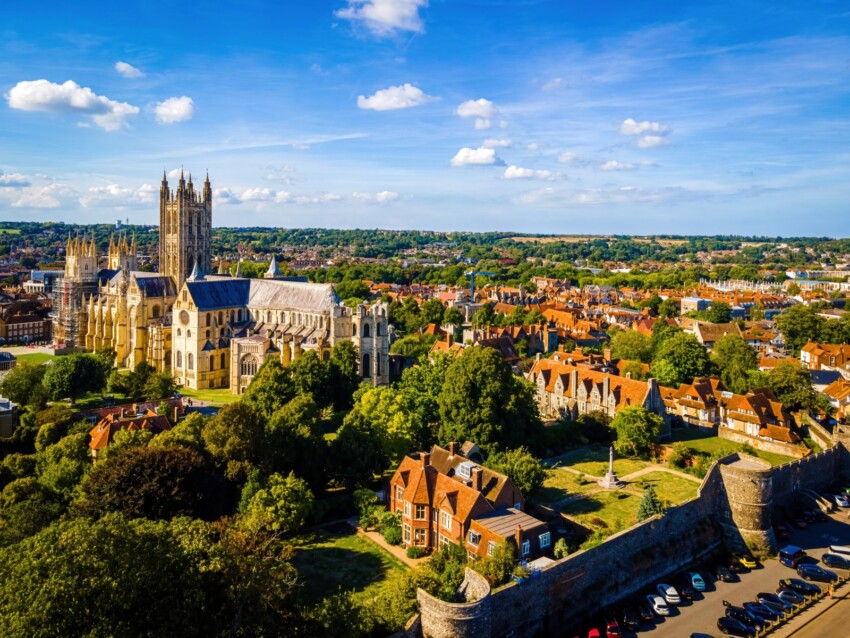
Its magnificent cathedral, a UNESCO World Heritage Site, has dominated the city’s skyline for nearly 1,000 years, testament to the importance of this spiritual and cultural centre. The medieval alleyways of the old town, with their characteristic half-timbered houses, tell centuries of stories and pilgrimage, whilst the numerous historic pubs and welcoming cafés offer a perfect blend of tradition and contemporary vitality.
The city retains its medieval charm whilst remaining a vibrant university town, creating a unique atmosphere where history and modernity blend seamlessly. Public gardens and the River Stour, which winds through the centre, add a touch of natural beauty to this Kent gem, making it an ideal destination for a weekend getaway or a stopping point on a wider journey through southern England.
Things to do in Canterbury
Canterbury is an open-air museum encompassing two thousand years of English history. Its extraordinary cultural heritage includes three UNESCO sites – the Cathedral, St Augustine’s Abbey and St Martin’s Church – which testify to the city’s historical and spiritual significance.
Its medieval streets hide architectural and cultural treasures waiting to be discovered at leisure.
Canterbury Cathedral
1Cathedral House, 11 The Precincts, Canterbury CT1 2EH, UK
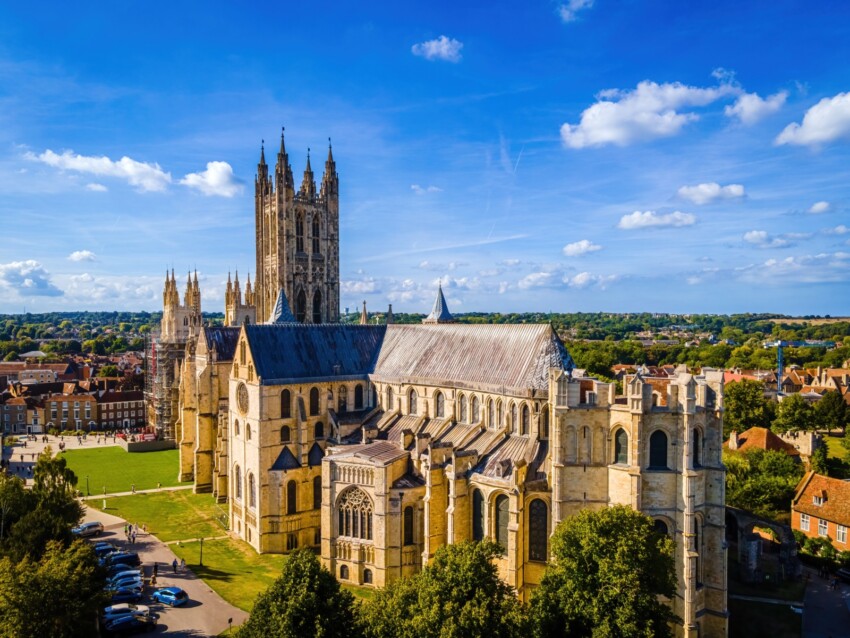
The magnificent Canterbury Cathedral represents the beating heart of the city and the Anglican Church. This extraordinary example of English Gothic architecture was the setting for one of the most significant events in medieval British history: the assassination of Archbishop Thomas Becket in 1170.
The cathedral immediately impresses with its imposing proportions and architectural beauty, which combines different styles from Romanesque to Gothic. The interior is a feast of medieval art, with its stained-glass windows filtering light to create a mystical atmosphere, and the finely carved choir representing one of England’s finest examples of Gothic art.
Particularly moving is a visit to the Trinity Chapel, where Thomas Becket’s shrine once stood, a destination for pilgrims for centuries. The pilgrims’ steps, worn smooth by thousands of the faithful, still testify today to this place’s extraordinary spiritual importance.
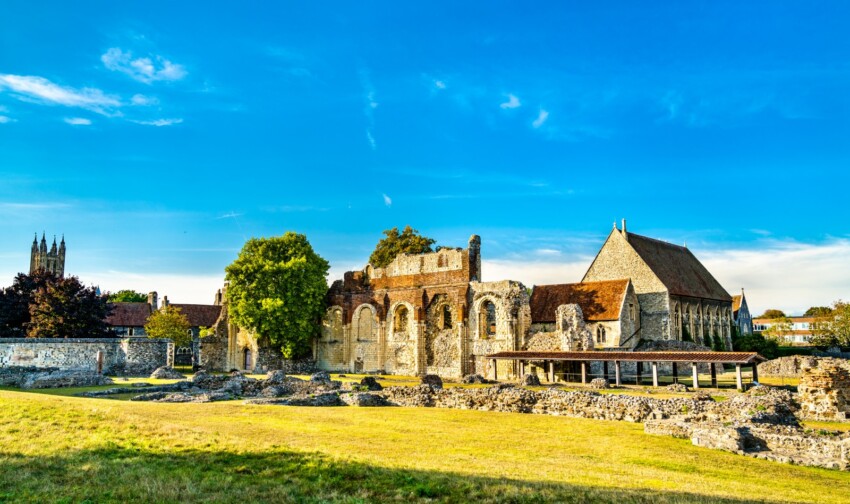
St Augustine’s Abbey represents a fundamental part of Canterbury’s UNESCO heritage. Founded in the sixth century, it was England’s first Benedictine monastery and became an important centre of learning during the Middle Ages. Today, though in ruins, its majestic remains testify to the grandeur of Norman and Gothic architecture.
The abbey gardens offer a peaceful haven where you can admire the ruins and imagine medieval monastic life. The on-site museum tells the abbey’s story through archaeological finds and multimedia reconstructions, enabling visitors to understand this place’s importance in the history of Christianity in England.
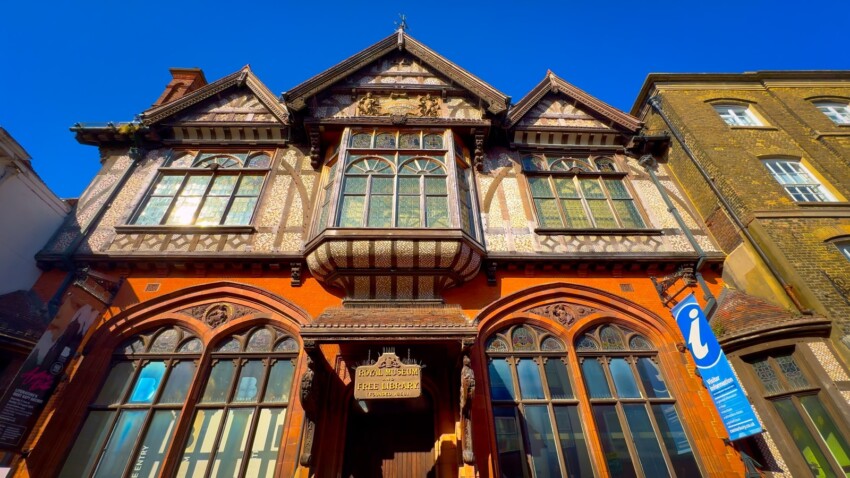
The Beaney is Canterbury’s principal cultural centre, combining museum, art gallery and library. This beautifully restored Victorian building houses a rich collection of art, crafts and historical objects.
The galleries feature an eclectic mix of artwork, ethnographic artefacts and natural curiosities. Particularly interesting is the Kent decorative art collection and temporary exhibitions ranging from contemporary art to local history.
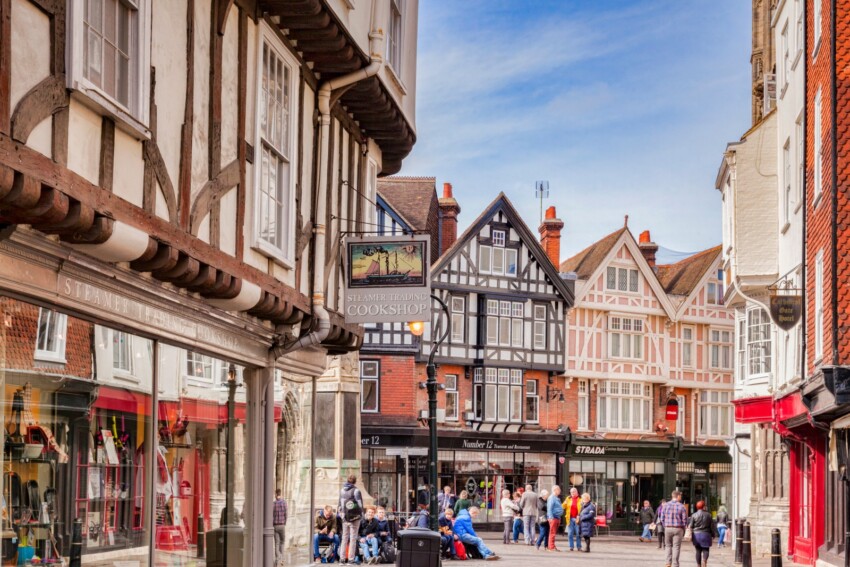
St Margaret’s Street represents one of the finest examples of preserved medieval architecture in Canterbury.
This historic street, winding through the heart of the city centre, is characterised by splendid half-timbered buildings that have remained virtually unchanged since the fifteenth century. The sloping façades and exposed beams create an atmosphere frozen in time, offering one of the city’s most photogenic views.
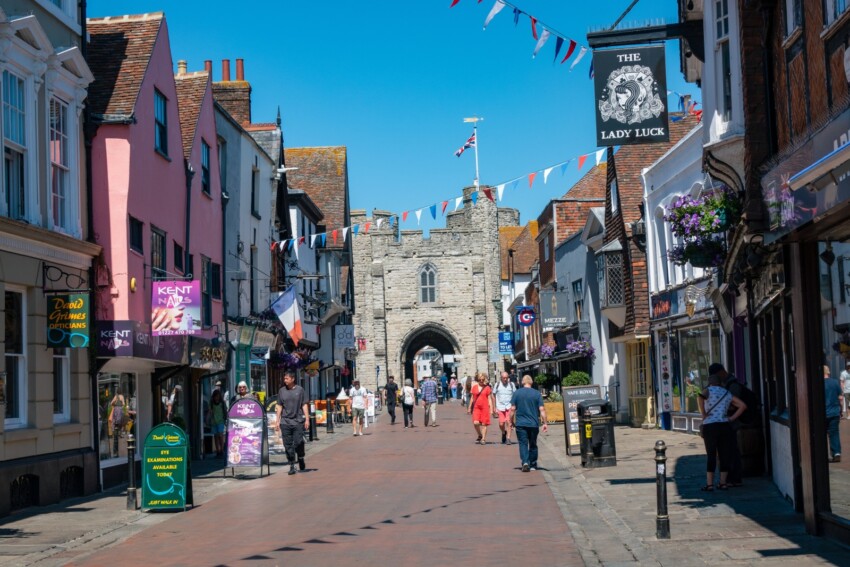
The street is home to some of Canterbury’s oldest pubs, including the characterful “The Old Buttermarket“, dating from the fourteenth century and named after the ancient market once held in this area. Historic cafés with period shop fronts and exposed beam ceilings offer an authentic taste of English life, perfect for an afternoon tea break.
Along the street you’ll find numerous craft shops that keep local traditions alive, selling hand-thrown pottery, artisan jewellery and Kent specialities. Particularly interesting are the antique shops where you can find unique pieces that tell the region’s story.
During the festive season, the street comes alive with period decorations and markets that recreate a Victorian Christmas atmosphere.
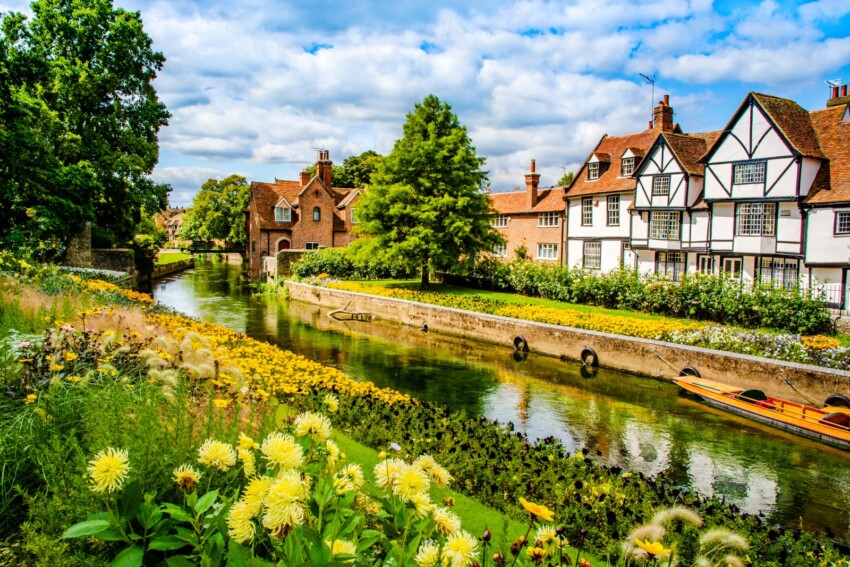
The River Stour winds through Canterbury, creating picturesque views and offering the opportunity for leisurely boat trips. Punting tours (traditional flat-bottomed boats similar to gondolas) allow you to see the city from a unique perspective, gliding beneath ancient bridges and past hidden gardens.
Westgate Gardens represent one of England’s oldest public parks. Dominated by the majestic Westgate Tower, the city’s only surviving medieval gateway, the gardens offer a tranquil refuge with well-maintained lawns, colourful flower beds and ancient trees. The Oriental plane tree from 1672 is considered the city’s oldest tree.
Roman Museum
611A Longmarket, Butchery Ln, Canterbury CT1 2JR, UK
Located in the city centre, the Roman Museum is built around the remains of an original Roman villa. The museum offers a fascinating window into Roman Canterbury, with exhibitions including mosaic pavements preserved in situ, everyday objects and reconstructions of life in ancient Durovernum Cantiacorum.
Interactive displays and reconstructions allow visitors to get hands-on with Roman life, whilst original finds, including coins, pottery and utensils, tell stories of trade and domestic life.
St Dunstan’s Church is an architectural gem often overlooked by visitors. Located just outside the city centre, this medieval church is famous as the burial place of the head of Sir Thomas More, the renowned humanist and statesman.
The building features interesting Gothic architectural elements and preserves some beautiful medieval stained glass. The peaceful churchyard surrounding the church offers a moment of calm away from the bustle of the city centre.
St Martin’s Church is England’s oldest parish church still in use and forms part of the city’s UNESCO heritage. This small church, with its walls incorporating Roman bricks, testifies to the continuity of Christianity from the Roman period to the present day.
The church’s interior preserves interesting architectural features from different periods, from Roman remains to Saxon and medieval modifications. The surrounding churchyard, with its ancient gravestones, offers an insight into the city’s social history over the centuries.
Map
In the following map you can see the location of the main places of interest mentioned in this article.
Where to stay in Canterbury
Canterbury’s historic centre offers the best accommodation for exploring the city. This area is rich in boutique hotels set in historic buildings and characterful bed & breakfasts that allow you to experience the city’s authentic atmosphere. The central location guarantees easy access to all major attractions on foot, plus numerous restaurants and pubs.
For those seeking quieter accommodation, the Westgate Gardens area offers several hotels with views over the river and gardens, whilst remaining just a few minutes’ walk from the centre. This area is particularly popular with families for its relaxed atmosphere and proximity to green spaces.
We offer best rates If you find it cheaper we refund the price difference.
Free cancellation Most properties allow cancellation without penalty.
We're available 24 hours a day For any problem call Booking.com.
Canterbury is easily accessible from London and major cities in southern England. The city is located in the heart of Kent, approximately 100 km from the British capital. The most convenient way to reach it is by train from London St Pancras or London Victoria station, with a journey lasting approximately one and a half hours.
For those arriving by air, Gatwick Airport is the most convenient option, with direct trains to Canterbury taking approximately two hours.
Those travelling by car can use the M2 or A2 from London, with a journey of approximately two hours depending on traffic. The city has several park-and-ride facilities allowing you to leave your car outside the historic centre.
Coach tours from London
For those preferring hassle-free travel, organised day tours from London offer an extremely convenient way to discover Canterbury. Tours are available that combine a visit to Canterbury with other famous attractions, such as Dover and its white cliffs or the beautiful Leeds Castle.


 Hotel
Hotel  Budget accommodations
  Apartments
  Family Hotel
  Luxury Hotel