The Lygon Arms
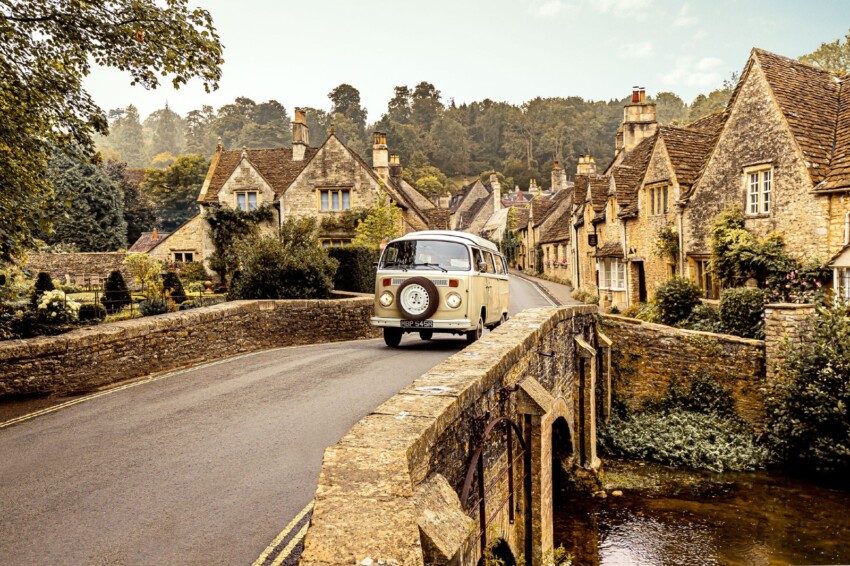
The Cotswolds represent the purest and most romantic essence of rural England, a region where time appears to have crystallised in an era of Georgian elegance and centuries-old traditions. This enchanting area is a tapestry of idyllic landscapes where gentle hills alternate with hidden valleys, and where every bend in the road reveals a new stone-built village that seems to have stepped from the pages of a Jane Austen novel.
Here, thatch-roofed cottages are not merely tourist attractions but authentic homes that tell stories spanning centuries, whilst historic pubs continue to serve craft ales and traditional fare much as they did hundreds of years ago. The English gardens, tended with meticulous care, offer spectacles that transform with the turning of the seasons.
Visiting the Cotswolds means immersing yourself in a world where the frenetic pace of modern life slows to an almost standstill, where time is measured by the chime of church bells and where every stone, every path and every cottage tells a centuries-old story of tradition, culture and timeless beauty.
The Cotswolds are a range of hills that stretches across six counties in south-western England, occupying a territory extending from the limestone hills of Gloucestershire to the picturesque borders of Oxfordshire. This extensive area, officially designated as an AONB (Area of Outstanding Natural Beauty), is flanked by some of England’s most captivating historic towns: the Roman Bath with its ancient thermal baths to the south, the Shakespearean Stratford-upon-Avon to the north, the academic Oxford with its centuries-old colleges to the east, and the elegant Cheltenham with its Regency architecture to the west.
The beating heart of the region lies in Gloucestershire, where distinctive limestone hills have given rise to the distinctive honey-coloured stone architecture that has become the very symbol of the Cotswolds. The territory extends into Wiltshire, touching Somerset, Worcestershire and Warwickshire, creating a mosaic of rural landscapes that subtly shift as you move from one county to another.
The true essence of the Cotswolds lies in its historic villages, each with a unique character and fascinating stories to tell.
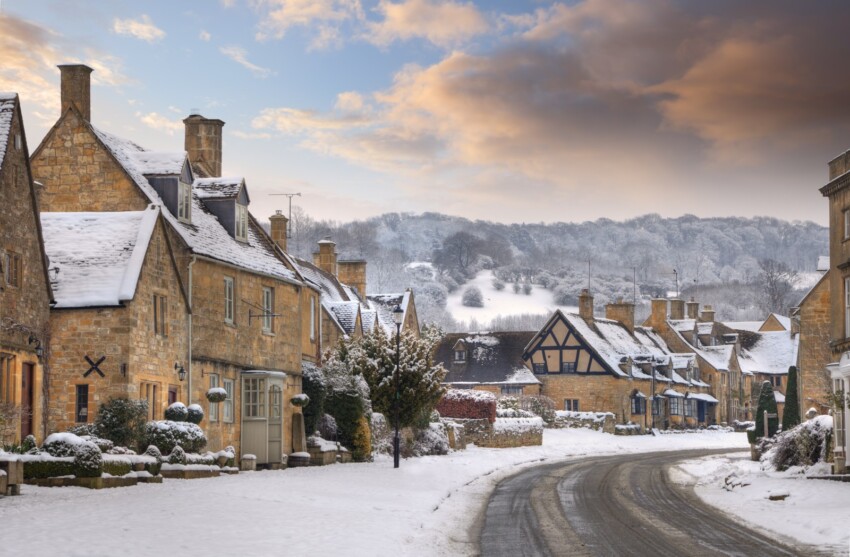
Nicknamed the “Queen of the Cotswolds”, Broadway epitomises the quintessence of English rural beauty. The village owes its name to its wide main High Street (“broad way”), flanked by stately horse chestnuts and plane trees that shade an impressive sequence of honey-coloured stone buildings. During the medieval period, Broadway was a crucial stopping point along the route connecting London to Worcester, and this historical legacy is reflected in the ancient inns that once accommodated coaches and travellers.
The Broadway Tower, an iconic landmark dominating the village from a height of 312 metres above sea level, was constructed in 1799 for Lady Coventry. This Victorian folly offers spectacular views extending across 16 counties on the clearest days. The village has always attracted artists and writers: William Morris stayed here regularly, whilst John Singer Sargent painted some of his masterpieces here. Today, Broadway maintains this artistic tradition through its numerous art galleries and craft shops.
The Gordon Russell Design Museum celebrates the legacy of the celebrated furniture designer who established his workshop here. The village gardens, particularly spectacular in spring when daffodils bloom, are maintained with such dedication that Broadway has won numerous “Britain in Bloom” awards.
Broadway is best visited in the early morning hours, when sunlight illuminates the High Street and shops begin to open. Allow at least half a day to explore the village and climb the Broadway Tower. The main car park is located on Leamington Road, just a short walk from the centre.
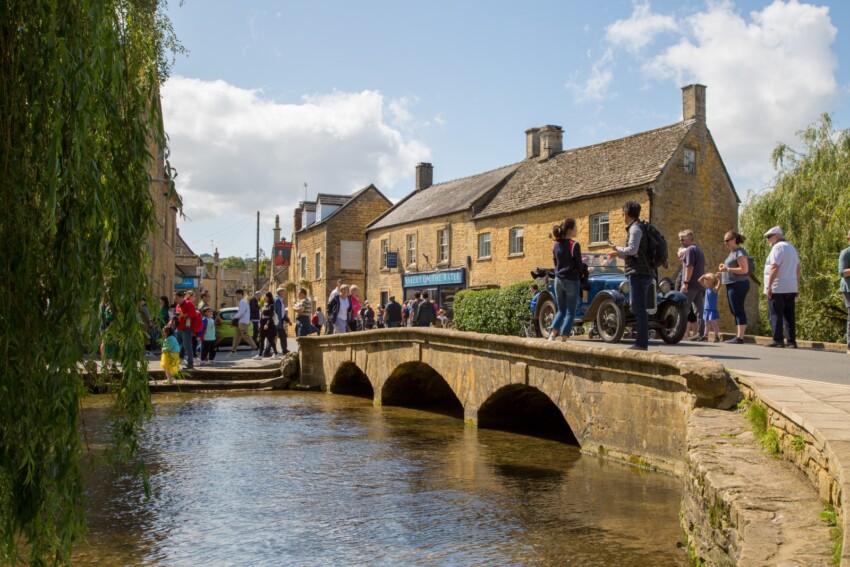
Bourton-on-the-Water, affectionately known as the “Venice of the Cotswolds”, is one of the region’s most picturesque and visited villages. The River Windrush, which flows through the centre of the village, is crossed by five charming low-arched stone bridges, the oldest of which dates back to 1654. These bridges, together with the elegant limestone houses that are reflected in the crystal-clear waters of the river, create a unique atmosphere that attracts visitors from across the globe.
One of the most distinctive attractions is the Model Village, a perfect miniature replica of the village itself, created in the 1930s on a 1:9 scale. The Birdland Park and Gardens is home to over 500 birds, including one of Europe’s largest collections of king penguins. The Cotswold Motor Museum recounts the story of British motoring through a fascinating collection of vintage vehicles and memorabilia.
During the summer months, the village comes alive with traditional events such as football in the river, a football match played in the bed of the Windrush, a tradition dating back to medieval times. Numerous tea rooms and historic pubs offer a warm welcome and the chance to sample local specialities such as Lardy cake and traditional cream teas.
Bourton-on-the-Water tends to be very crowded during the middle hours of the day, especially in summer. It is advisable to visit at sunset or early in the morning. The main car park is well signposted and located on Rissington Road. Allow at least half a day to enjoy all the attractions.
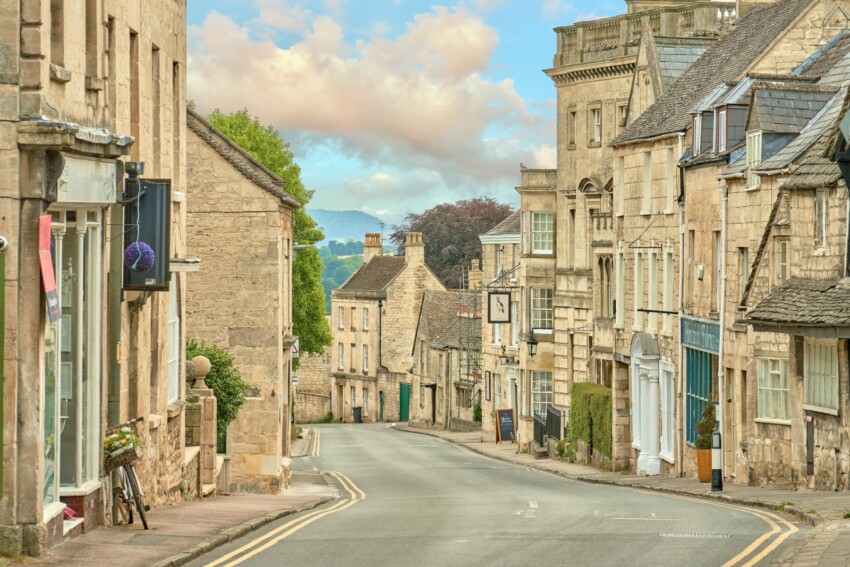
Painswick is an architectural gem built with the characteristic limestone of the Cotswolds. The village reached its height of prosperity in the 18th century thanks to the wool trade, and this wealth is still reflected today in its elegant Georgian buildings and perfectly preserved cobbled streets.
The Painswick Rococo Garden is the only surviving rococo garden in England. Created in the 1740s as a place of pleasure and entertainment for Benjamin Hyett and his guests, it today offers a fascinating example of this exuberant and theatrical style of gardening. The garden is particularly spectacular in February, when thousands of snowdrops bloom.
The Rococo Gardens are open daily and merit at least two hours of exploration.
The churchyard of St. Mary’s Church is famous for its 99 carefully clipped yew trees. According to legend, the devil will never allow the hundredth tree to grow. The church itself is a magnificent example of Norman architecture, with later additions that bear witness to centuries of history. The village is also home to Painswick Beacon, a site of archaeological interest with the remains of an Iron Age fort that offers spectacular views across the Severn Valley.
Painswick rewards a leisurely approach. Car parking in the village is limited, but there is a convenient public car park on Stamages Lane.
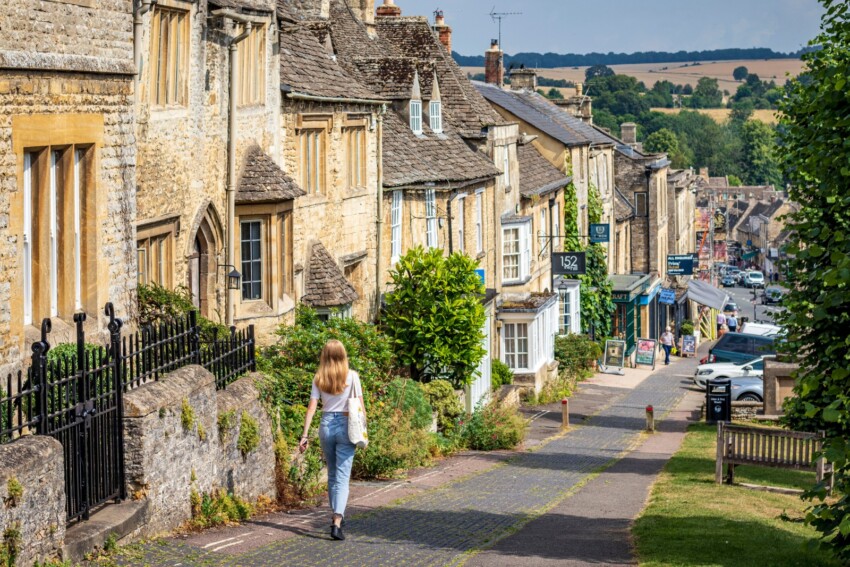
Burford, the “Gateway to the Cotswolds”, is a medieval town of extraordinary beauty, whose High Street slopes gently down towards the River Windrush. The main street is lined with historic buildings that span over 900 years of architectural history, from medieval timber-framed houses to elegant Georgian residences.
The Church of St Mary is one of the most impressive religious buildings in the Cotswolds, featuring elements ranging from the Saxon to the Victorian period. Inside you can admire the exceptional Norman baptismal font and the medieval Lady Chapel. The church also witnessed a dramatic event during the English Civil War, when Cromwell imprisoned and executed a group of mutinous Levellers in 1649.
The Tolsey Museum, housed in a characteristic Tudor building that once served as the centre of the town’s commercial life, tells the story of Burford and its mercantile past. The town is also renowned for its antique shops, craft workshops and historic pubs such as The Highway Inn, which has served travellers since the 15th century.
Burford is best explored by starting at the top of the High Street and gradually descending towards the river. The antique shops merit several hours of browsing. The main free car park is located on Church Lane.
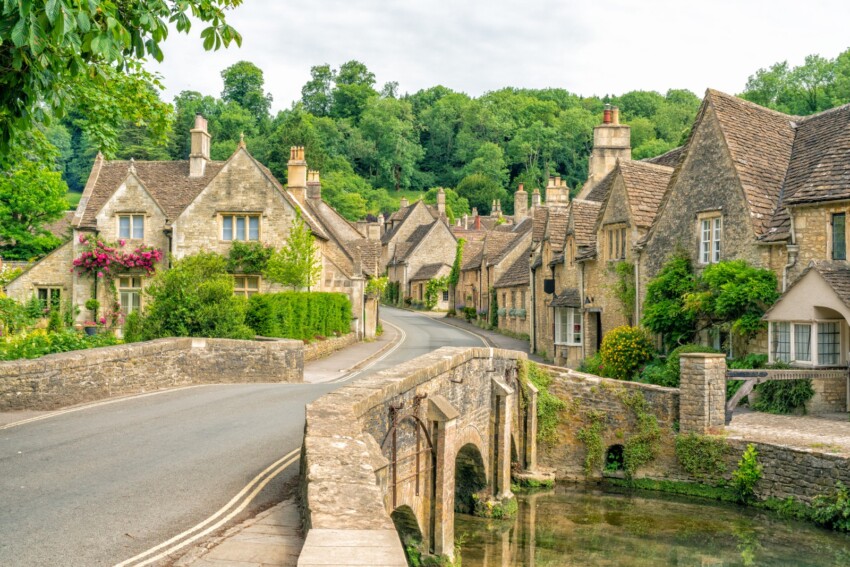
Often described as “the most beautiful village in England”, Castle Combe retains an almost perfectly intact medieval atmosphere. The village takes its name from a 12th-century castle, now vanished, that once dominated the area from a nearby hilltop. The architectural perfection of Castle Combe has made it a highly sought-after location for films and television series, from Spielberg’s “War Horse” to “Downton Abbey”.
The heart of the village is dominated by the Market Cross, a 14th-century monument that recalls Castle Combe’s importance as a centre of the wool trade. The St. Andrew’s Church houses one of the few functioning medieval clocks in England, along with interesting Norman and Gothic architectural elements.
The The Manor House Hotel, an elegant 14th-century manor converted into a luxury hotel, is surrounded by spectacular gardens and a championship golf course. The village is also famous for the Castle Combe Circuit, one of the oldest racing circuits still in use in Britain, which regularly hosts motoring events.
Castle Combe is best visited in the early morning or late afternoon to avoid tour groups. Don’t miss the opportunity to take a walk around the surrounding area by following the marked trails. Car parking is located at the entrance to the village.
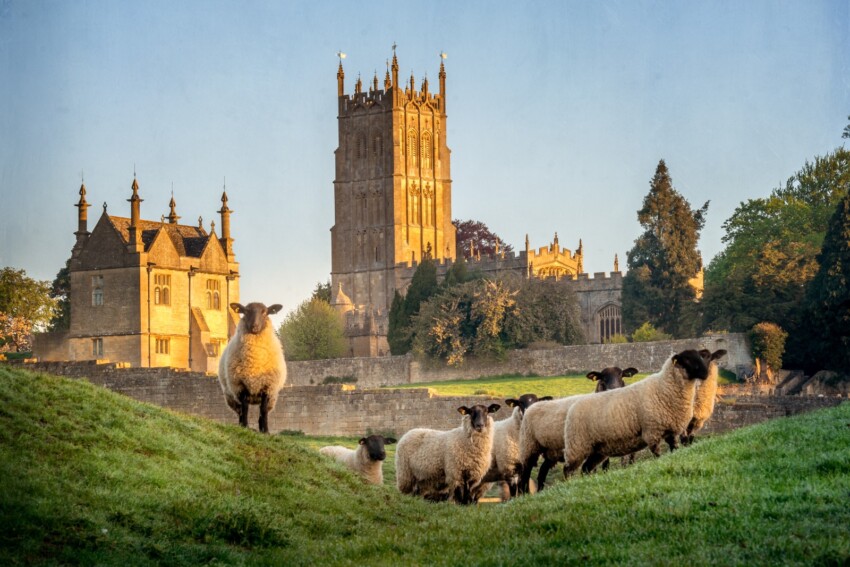
Chipping Campden represents one of the finest and best-preserved market towns of the Cotswolds. The prefix “Chipping” derives from the Old English “ceping”, which means market, and reflects the town’s historical importance in the wool trade. The High Street, considered the most beautiful street in the Cotswolds, is an open-air museum of English vernacular architecture, with buildings spanning from the 14th to the 17th century.
The Market Hall of 1627, commissioned by Sir Baptist Hicks, is one of the village’s most iconic buildings. Built to protect merchants from the elements, it is today managed by the National Trust and continues to be the focal point of community life. The St James Church is a splendid example of 15th-century Perpendicular architecture, featuring one of the most beautiful spires in the Cotswolds.
In the early 20th century, Chipping Campden became an important centre of the Arts and Crafts movement, when C.R. Ashbee transferred his Guild of Handicraft here from London. This artistic legacy survives in the Court Barn Museum and in the numerous craft workshops that still animate the village today.
Begin your visit at the Market Hall and continue along the High Street. The main car park is located on Sheep Street, but there is another smaller one on Back Ends.
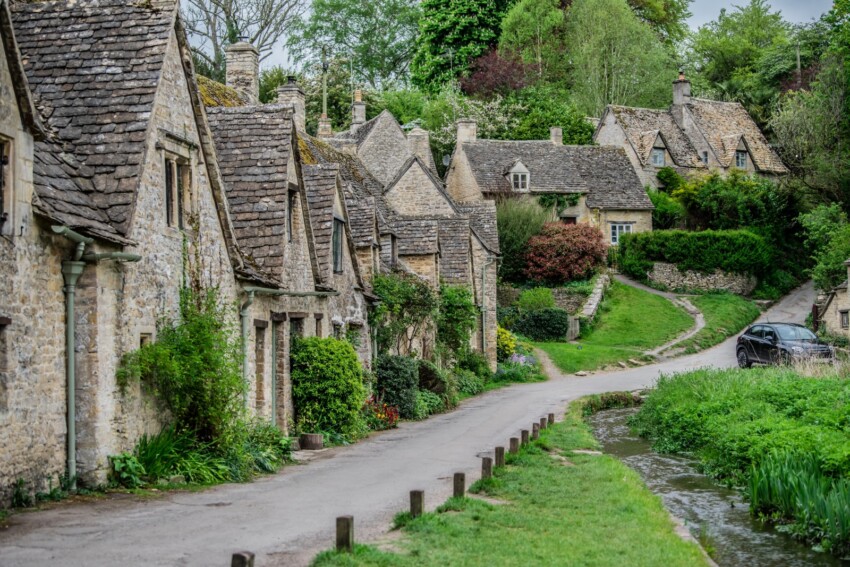
The picturesque village of Bibury was described by William Morris as “the most beautiful village in England”, and it retains its charm intact to this day. The heart of the village is Arlington Row, a series of 14th-century stone cottages originally built as wool stores and later converted into homes for weavers. This row of houses is one of England’s most photographed vistas and even appears on British passports.
The River Coln, which flows through the village, is famous for its trout farming, the Bibury Trout Farm, founded in 1902. Here visitors can fish for their own trout or simply admire these fish in the crystal-clear waters of the river. The Church of St Mary is a fascinating example of Saxon and Norman architecture, with elements dating back to the 8th century.
Bibury’s gardens are particularly spectacular in spring, when daffodils and crocuses create carpets of colour, and in summer, when climbing roses decorate the honey-coloured stone façades of the cottages.
Bibury is particularly photogenic at dawn or dusk. Arlington Row is very busy during the day, so plan your visit accordingly. Car parking is located near the Church of England Primary School.
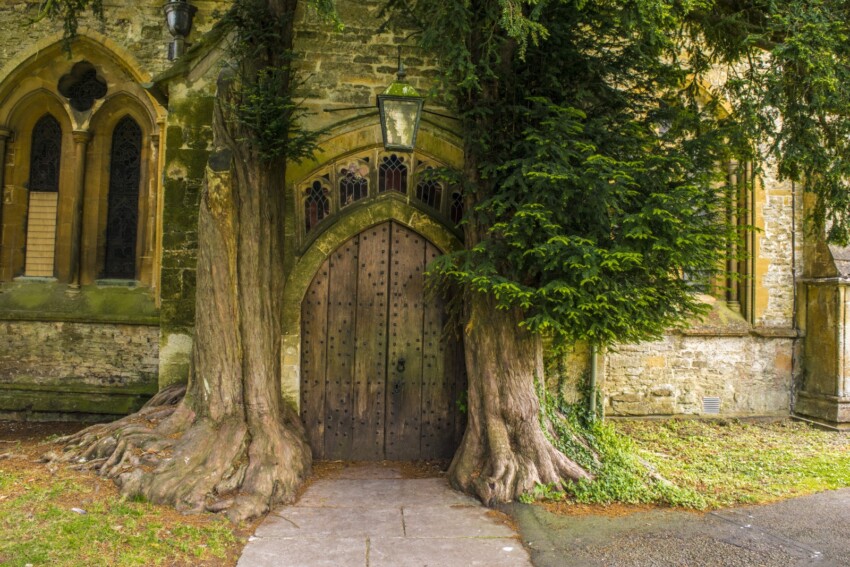
Situated on a hilltop at 244 metres above sea level, Stow-on-the-Wold is the highest town in the Cotswolds. Its strategic position made it an important commercial centre from medieval times, when wool fairs attracted merchants from across Europe. The large market square, surrounded by ancient stone buildings, still testifies to this commercial heritage.
The St Edward’s Church is famous for its “Hobbit doors“, flanked by two ancient yew trees, which seem straight out of a Lord of the Rings tale.
There is even rumour that Tolkien found inspiration here for the Doors of Durin, the western gates of Moria.
The church also houses one of the oldest stone crosses in the Cotswolds. During the English Civil War, in 1646, Stow was the scene of the last great battle of the Cotswolds, fought in the streets of the town centre.
The town is renowned for its numerous antique shops and art galleries, concentrated around Sheep Street and The Square. Historic pubs such as The Queen’s Head and The Kings Arms keep the tradition of hospitality alive, serving local ales and traditional dishes.
Stow-on-the-Wold has several well-signposted car parks around the centre. The market is held on Thursdays and it is worth timing your visit for this day to experience the town’s traditional atmosphere.
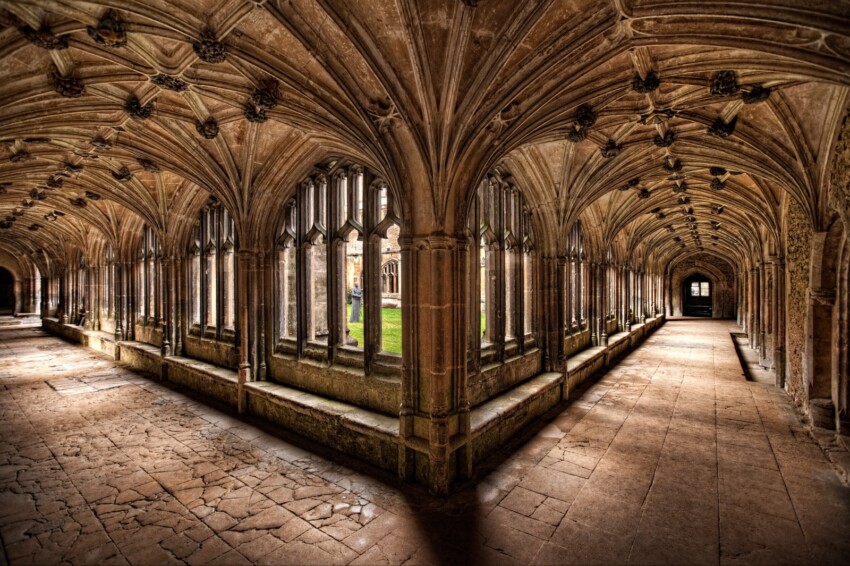
The village of Lacock is so well preserved that it appears like an open-air film set – and indeed it has been used for numerous productions, from Harry Potter to Pride and Prejudice.
The entire village is managed by the National Trust, which has preserved its medieval and Tudor character.
The Lacock Abbey, founded in 1232 as an Augustinian monastery and later converted into a Tudor residence, is renowned not only for its architecture but also for its place in photographic history: it was here that William Henry Fox Talbot captured the first photographic negative in 1835. The Fox Talbot Museum tells this fascinating story.
The cobbled streets of the village are lined with cottages from the 14th to 18th centuries, traditional shops and historic pubs such as the Sign of the Angel, which has served travellers since the 15th century. The Church of St Cyriac preserves interesting medieval features and a collection of 18th-century gravestones.
Lacock is managed by the National Trust and admission is charged to access the abbey and museum. National Trust car parking is located at the entrance to the village.
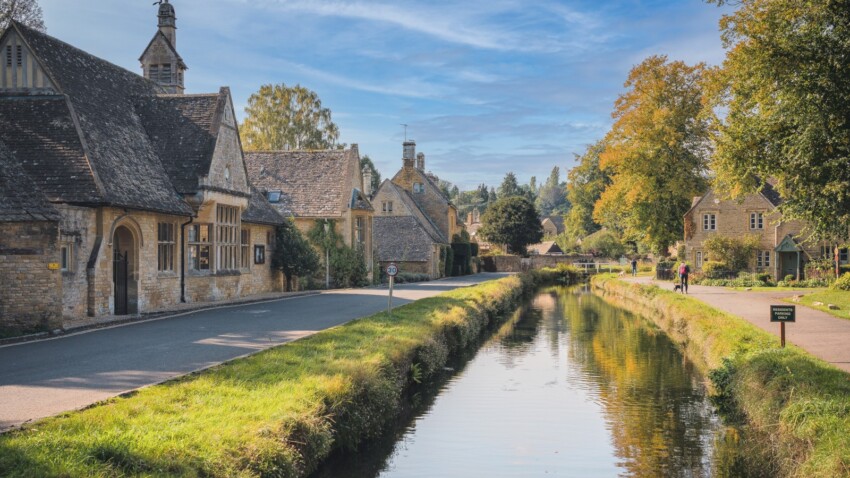
The twin villages of Lower and Upper Slaughter are among the most idyllic in the Cotswolds. Lower Slaughter is crossed by the River Eye, whose waters once powered a 19th-century water mill, now converted into a museum and shop.
The Lower Slaughter Manor, an elegant Elizabethan manor house surrounded by formal gardens, offers a glimpse into the lives of the rural English gentry. St Mary’s Church dates from the 13th century and retains interesting Norman features.
Upper Slaughter, a short walk away, has maintained its rural character and is one of England’s rare “doubly fortunate villages”, having lost no residents during either of the two world wars. The two villages are linked by a picturesque footpath that follows the river course, offering one of the most pleasant walks in the Cotswolds.
Lower and Upper Slaughter are best explored on foot, following the path connecting the two villages. The complete circular route takes approximately two hours. Parking is limited in both villages, so it’s advisable to park at Bourton-on-the-Water and walk from there.
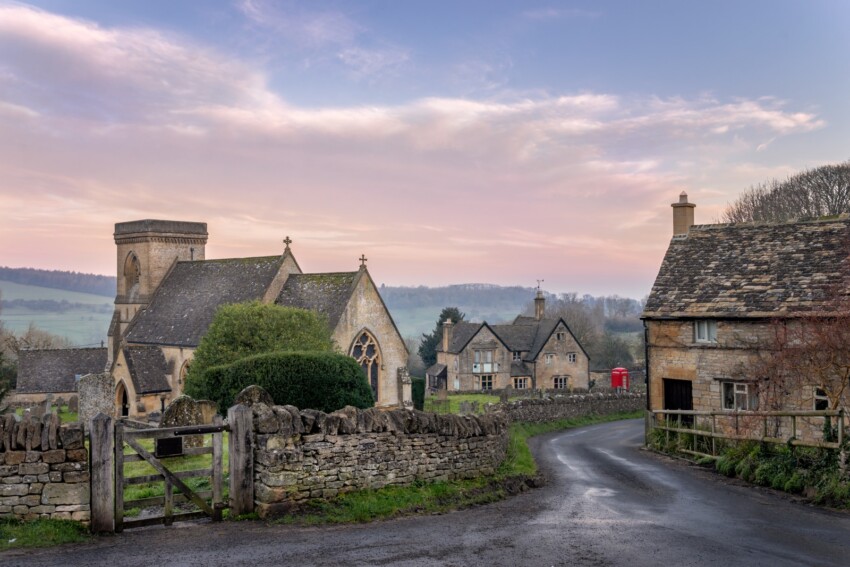
Perched on a hilltop with spectacular views over the Vale of Evesham, Snowshill is one of the Cotswolds’ hidden gems. This small village owes its fame primarily to Snowshill Manor, a 16th-century house that displays the eclectic collection of Charles Wade, an architect who devoted his life to gathering extraordinary objects from around the world.
The manor is surrounded by extraordinarily beautiful terraced gardens, designed according to Arts and Crafts principles and organised into “green rooms” that offer enchanting views in every season. In summer, the lavender fields surrounding the village create a Provençal landscape in the heart of England, attracting photographers and gardening enthusiasts.
The village itself is a perfect example of Cotswold architecture, with honey-coloured stone cottages and an atmosphere that seems suspended in time. The Snowshill Arms, a traditional 17th-century pub, offers a warm welcome and spectacular views over the valley.
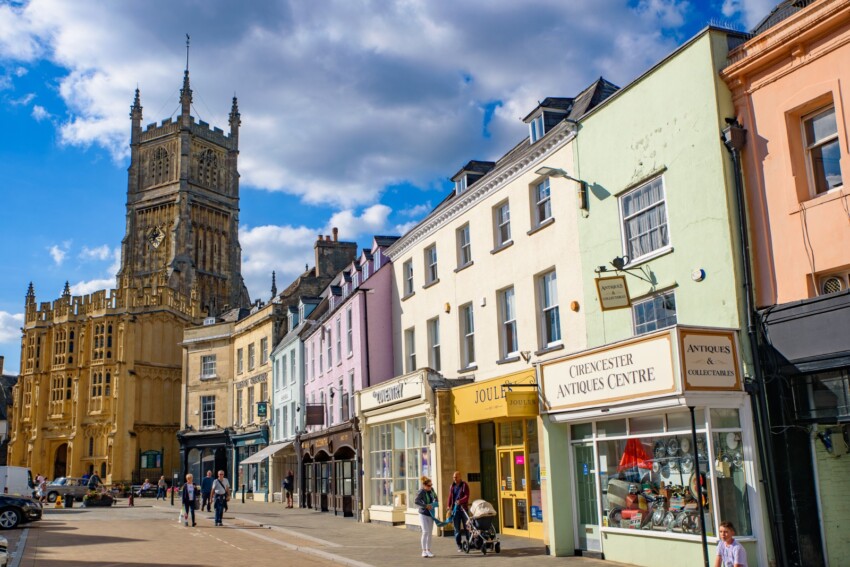
Cirencester is a charming historic market town at the heart of the Cotswolds, perfect as a base for exploring this celebrated region of England. Its town centre, entirely pedestrianised, is a delightful mix of independent shops, cafés and restaurants housed in characterful stone buildings.
The town’s jewel is the Corinium Museum, which engagingly tells the story of the town’s Roman past through mosaics and well-preserved artefacts. The Church of St John the Baptist is impossible to miss: it dominates the main square with its imposing 15th-century tower, one of the tallest in the Cotswolds. The interior is well worth visiting to admire the richly decorated Gothic vaulting and ancient chapels.
The market held twice weekly on Mondays and Fridays enlivens the main square with stalls selling local produce, whilst Cirencester Park provides a green oasis ideal for picnics and walks.
The town is particularly popular with families for its peaceful and safe atmosphere, whilst couples can enjoy the romantic town centre and numerous traditional pubs.
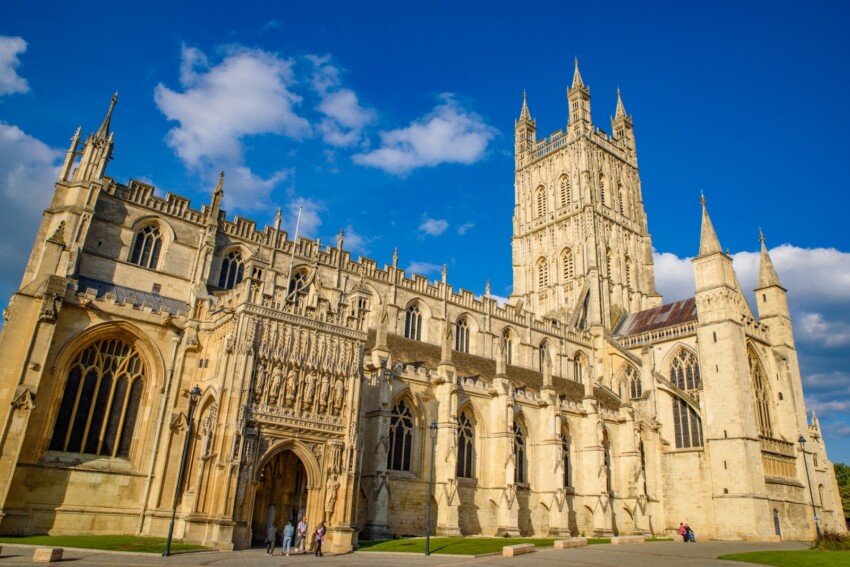
Gloucester, with its 130,000 inhabitants, certainly cannot be described as a village, yet it is a city that deserves to be included in a Cotswolds itinerary.
With over 2,000 years of history, it combines a rich Roman and medieval heritage with a vibrant contemporary atmosphere. Gloucester Cathedral is one of the finest examples of medieval architecture in England, celebrated for its fan-vaulted cloisters, which appeared in scenes from the Harry Potter films.
The Victorian Gloucester Docks represent the country’s finest inland port, with its restored warehouses now converted into apartments, shops and restaurants. The Gloucester Waterways Museum tells the story of the city’s canal system, whilst the Museum of Gloucester houses important Roman and natural history collections.
The city maintains its mercantile traditions at Gloucester Quays, a modern outlet shopping centre, and at the traditional covered market. The nearby Gloucester Cathedral Quarter offers a fascinating mix of independent shops, cafés and restaurants in a historic setting.
Gloucester merits half a day, starting at the Cathedral in the morning when light filters through the stained glass windows. The Docks are particularly pleasant in the late afternoon.
In the following map you can see the location of the main places of interest mentioned in this article.
To truly appreciate the magic of the Cotswolds, it is advisable to dedicate at least one week to exploring the region. This timeframe will allow you to fully immerse yourself in the atmosphere of the villages, discover lesser-known trails and experience the leisurely pace of rural life. A week allows you to visit the main villages comfortably, spending adequate time wandering through the lanes, stopping in historic pubs, browsing antique shops and enjoying the views from the surrounding hills, as well as visiting at least one city such as Bath or Oxford.
Those with less time can concentrate their visit into four or five days, focusing on the most significant villages and alternating cultural visits with nature walks. In this case, it is advisable to choose a strategic base such as Stow-on-the-Wold or Bourton-on-the-Water, from where you can easily reach many of the main attractions.
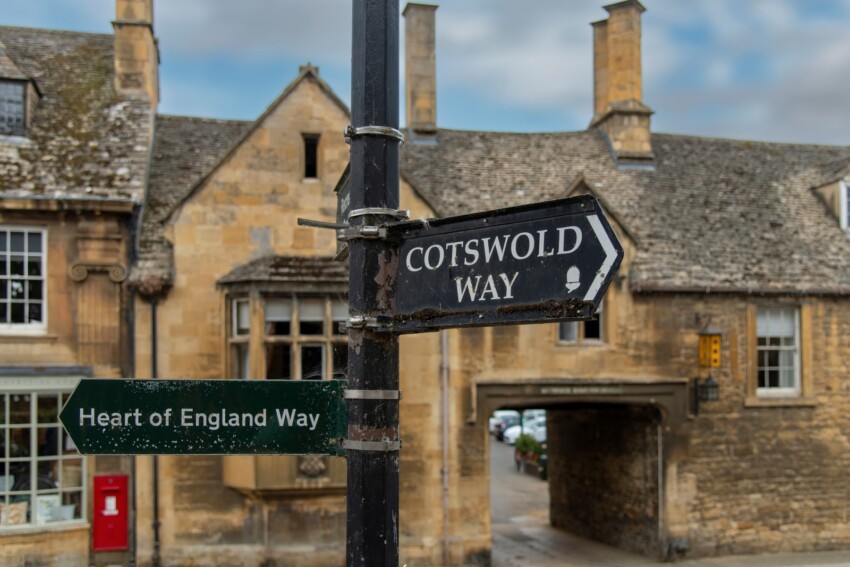
Reaching the Cotswolds is relatively straightforward thanks to its strategic location in the heart of England.
If arriving by air, most visitors will land at one of the London airports. From here you have three options:
Alternatively, you can choose Bristol Airport or Birmingham Airport, which are respectively close to the southern and northern parts of the Cotswolds.
Cotswolds coach tours departing from London often prove to be the ideal choice for those visiting the capital and want to spend a day immersed in authentic English countryside.
Whilst local transport is often sparse and doesn’t connect all the most charming locations, a guided tour allows you to reach the most beautiful and remote villages such as Castle Combe, Bibury and Bourton-on-the-Water in a single day.
The presence of a professional guide enriches the experience with anecdotes and curiosities about local history, whilst the comfort of coach travel allows you to admire the landscape without worry. And unlike scheduled buses, these itineraries are designed to optimise visiting times, guaranteeing you sufficient stops at each location.
Whatever airport you land at, the best solution for moving efficiently and making the most of your time is to hire a car: this is the only way you can fully enjoy the region and explore the villages with complete freedom according to your tastes and pace.
Major car rental companies are present at all London airports and at Bristol, Cardiff and Birmingham airports.
The minor roads, although narrow and winding, offer some of the most picturesque scenes of the English countryside.
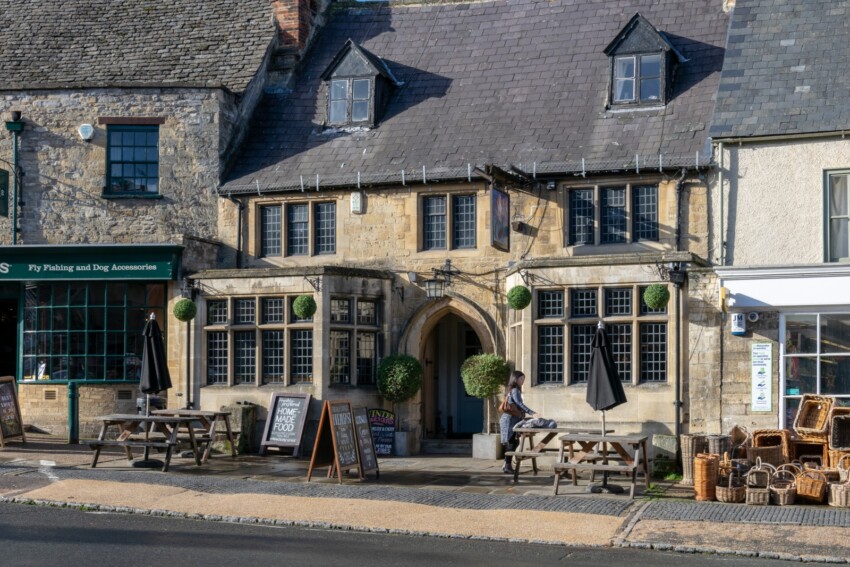
Given the popularity of the region, it is essential to book well in advance, especially for weekends and during the high season (May to September). Many establishments require a minimum stay of two or three nights at weekends.
Choosing one of the charming villages as your base offers complete immersion in the authentic atmosphere of the Cotswolds. At sunset, when the coach tours have departed, the villages reveal their truest character. Peaceful evenings allow you to enjoy twilight walks, dine in historic pubs and experience the slow pace of English country life.
However, this choice involves some practical considerations. The smallest villages have a limited range of restaurants and services, which often close early in the evening. Public transport connections can be sparse, especially in the evening, making a car necessary.
Furthermore, accommodation in the most picturesque villages tends to be more expensive and often requires booking well in advance, especially in high season.
Although not technically part of the region, Bath and Oxford are cities that are always included in a Cotswolds tour, both because they are wonderful and have much to offer visitors, and because they are excellent places to stay and bases from which to explore the area. We strongly recommend including them in your itinerary.
In general, staying in Bath or Oxford allows you to combine visits to the most characteristic villages with a more lively evening and nightlife, offering numerous restaurants and entertainment venues.
Bath, a UNESCO World Heritage site, offers a unique experience combining exploration of the Cotswolds with a stay in one of England’s most elegant cities. Its location is particularly strategic for visiting the southern villages such as Castle Combe (30 minutes), Lacock (45 minutes) and Bradford-on-Avon (20 minutes).
The strengths of Bath as a base include a pedestrianised historic centre rich in shops and restaurants, visits to the Roman baths and the opportunity to alternate excursions to the Cotswolds with some relaxation at the modern Thermae Bath Spa.
Oxford is an excellent base for exploring the eastern part of the Cotswolds. Staying in Oxford allows you to easily reach enchanting villages such as Burford (30 minutes’ drive), Bibury (45 minutes) and Stow-on-the-Wold (50 minutes).
The advantages of using Oxford as a base are a wide choice of accommodation for every budget and a lively evening scene with historic pubs, quality restaurants and a rich cultural offer. The city also offers tourist bus services that regularly connect the main Cotswolds villages.
The downside is heavy traffic leaving the city during rush hours and longer journey times to reach villages in the western part of the Cotswolds.
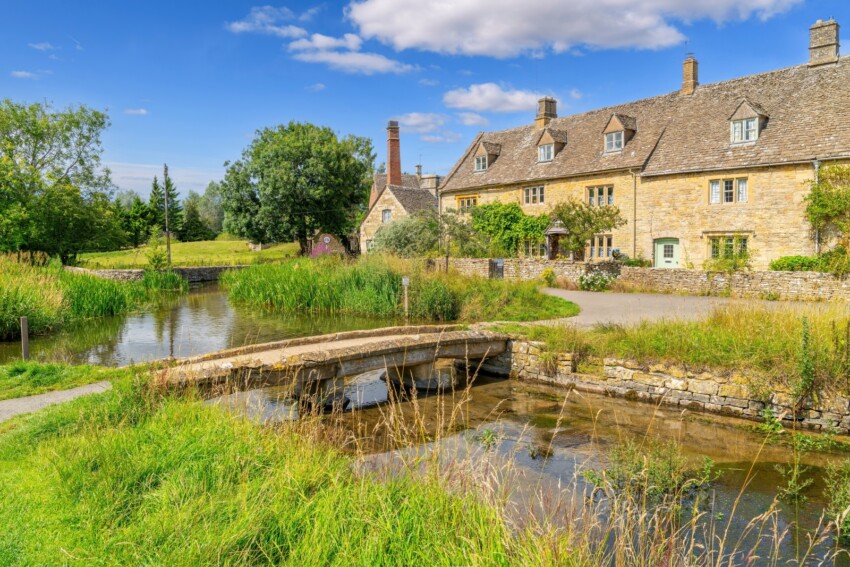
Every season in the Cotswolds brings its own particular charm, completely transforming the landscape. Spring heralds the year with an explosion of colour: wild daffodils create golden carpets in the woodlands, whilst the gardens of historic houses awaken with early blooms of crocuses and tulips. Mild temperatures, ranging between 10 and 15 degrees, make this period ideal for walking excursions along the numerous trails that crisscross the region.
Summer brings long, luminous days, with temperatures rarely exceeding 25 degrees, creating perfect conditions for exploring the villages and taking part in the many festivals and outdoor events that enliven the region. The gardens are at their finest, with climbing roses adorning cottage facades and lavender perfuming the air.
Autumn transforms the Cotswolds into a palette of golds, reds and browns as the trees change colour and the pubs light their fireplaces, offering a warm and romantic atmosphere. Temperatures remain pleasant until October, making this period particularly suited to nature walks and visits to the region’s castles.
Winter, whilst cold, gifts picture-postcard landscapes when snow blankets the thatched roofs of cottages and dry-stone walls. Temperatures can drop below freezing, but pubs and tea rooms provide welcoming havens where you can warm yourself by a crackling fireplace with a cup of tea or a glass of hot cider.









 Hotel
Hotel  Budget accommodations
  Apartments
  Family Hotel
  Luxury Hotel