Bestseller
London: Downton Abbey, Cotswolds, and Highclere Castle Tour
From 227,86 €
Buy the ticket
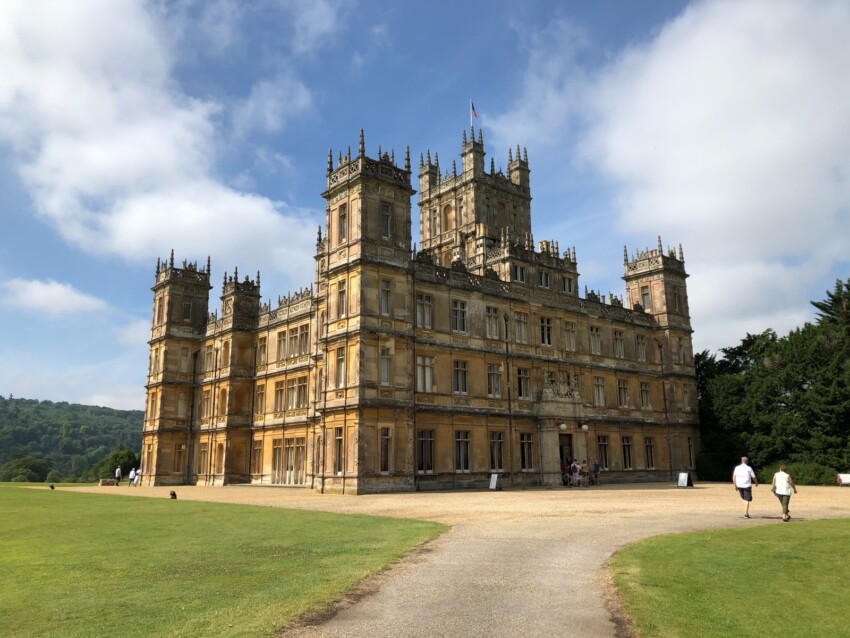
The majestic castle that served as the backdrop for the award-winning TV series Downton Abbey is real, open to visitors, and even more captivating than it appears on screen.
Highclere Castle, situated in Hampshire just 110 km from London, is not merely a film set but an authentic historic residence, still inhabited by the current Earls of Carnarvon. Every room, staircase and corner of the grounds tells true stories that often surpass fiction.
Stepping through Highclere’s gates means physically entering the world of Downton Abbey: walking the same avenue where Lady Mary strolled with Matthew Crawley, climbing the monumental staircase where unforgettable scenes unfolded, lingering in the drawing room where the Crawleys welcomed their distinguished guests.
Highclere’s true uniqueness lies in the seamless blend of fiction and reality: just as in the series, this castle genuinely served as a military hospital during the First World War under the management of the Countess Almina, it hosted prominent historical figures and houses an extraordinary Egyptian collection linked to the fifth Earl’s discovery of Tutankhamun’s tomb in 1922.
Since Downton Abbey premiered in 2010, followed by three successful films, Highclere has become a pilgrimage destination for fans from across the globe, eager to walk literally in the places they loved on screen.
For countless fans of the series, visiting Highclere Castle means literally stepping into the world of Downton Abbey. Unlike many productions using studio-constructed sets, Julian Fellowes chose to film entirely in the castle’s authentic rooms, preserving the genuine atmosphere of the era. Walking through these spaces is a surreal experience: you’ll immediately recognise the library where Lord Grantham read The Times, the dining room where the family gathered for formal dinners, the drawing room where Lady Violet dispensed her memorable witticisms.
The tree-lined drive approaching the castle is the very path where 1920s motorcars kicked up dust and gravel, where dramatic scenes between Lady Mary and Matthew unfolded. The grounds feature the iconic Lady Mary’s bench, beloved by fans, and the secret garden where some of the series’ most romantic scenes were shot. Every corner of the grounds evokes specific moments from all six seasons and three films, from the lawn where garden parties were held to the romantic chapel used for wedding scenes.
During your visit, you’ll notice how the true history of the Carnarvon family inspired many plot elements: the transformation into a military hospital during the First World War is not fiction but historical fact, lived by the fifth Countess Almina exactly as told in the series. The furnishings, paintings and even some props are authentic antique pieces from the family collection. Special “Real Lives and Film Sets” tours explore precisely this fascinating interplay between historical truth and television narrative, revealing which elements are faithful to Carnarvon history and which are Fellowes’ creative inventions.
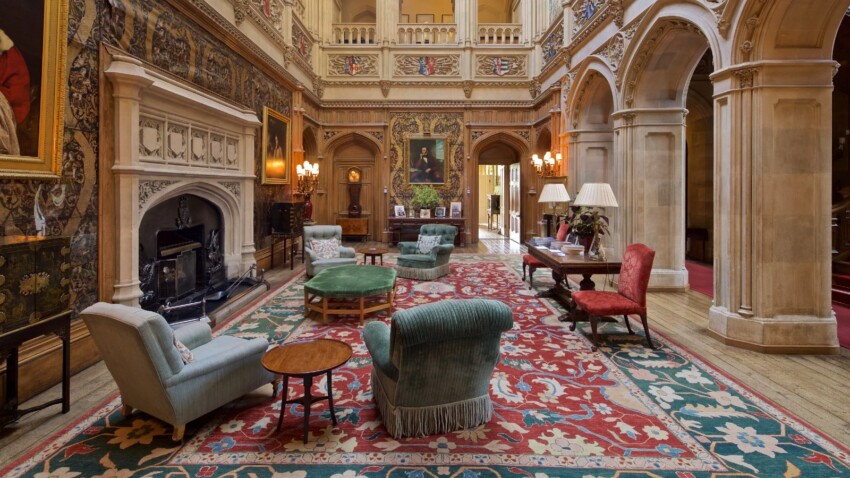
The beating heart of Highclere Castle is undoubtedly the drawing room, a majestic space soaring over 15 metres high and representing the finest example of Victorian neo-Gothic architecture within the residence. This is probably the most iconic room in Downton Abbey: here Lord Grantham welcomed distinguished guests, here formal dances and receptions took place, here the family gathered during the series’ most dramatic moments. The walls are lined with precious Spanish leather panels from the seventeenth century, whilst the balconies overlooking the room create the theatrical effect that made this space immortal in the series’ scenes.
The room’s most distinctive feature is its monumental staircase, the very one that fans of the series will immediately recognise as the location of memorable scenes: Lady Mary’s arrival for dinner, theatrical descents for grand occasions, whispered conversations on landings. During filming of Downton Abbey, this staircase was walked thousands of times by costumed actors, and today, treading it, you breathe that aristocratic grandeur perfectly recreated by the series. The ceiling, decorated with exposed beams and the Herbert family’s heraldic emblems, creates a solemn yet welcoming atmosphere. In niches along the walls stand family portraits and art collections testifying to the refined tastes of various Earls of Carnarvon.
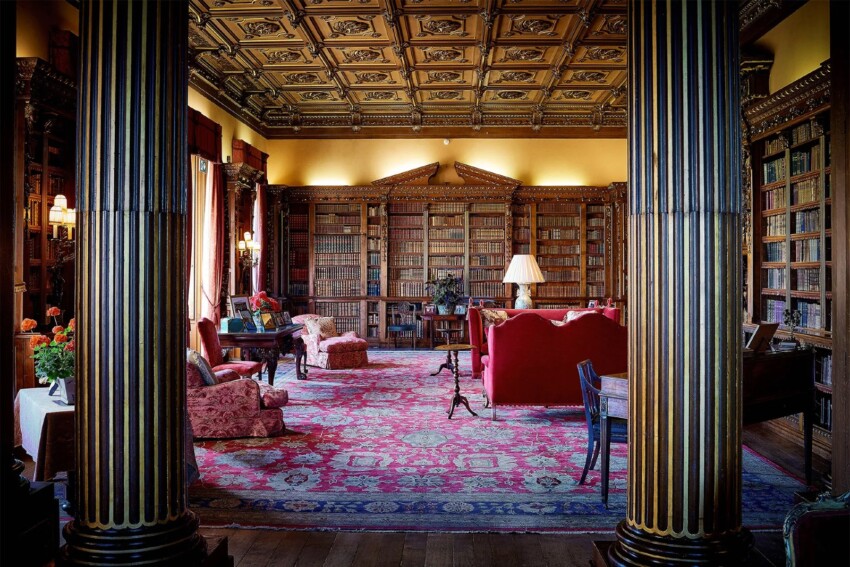
The library at Highclere is one of the residence’s most evocative rooms and one of the most recognisable sets in Downton Abbey. Those who followed the series will perfectly recall this space as Lord Grantham’s personal refuge, where he read correspondence, discussed estate matters with his agent Mr Carson and faced challenges threatening the property. With walls entirely lined with dark wooden shelves housing approximately 5,650 volumes, many of them rare and priceless, this room perfectly embodies the idea of a Victorian country house library.
The decorated ceiling and family portraits adorning spaces between shelves lend the room an air of nineteenth-century scholarly retreat. Particularly fascinating is the collection of books on Egyptian history and archaeology, accumulated by the fifth Earl during his expeditions. In the series, this library witnessed crucial conversations between characters, moments of family intimacy and important decisions for Downton’s future. The original furnishings, including leather chairs and period desks you see in the series, are authentic and still preserved in their historical arrangement, allowing you to metaphorically sit in Lord Grantham’s place whilst enjoying the same view he had.
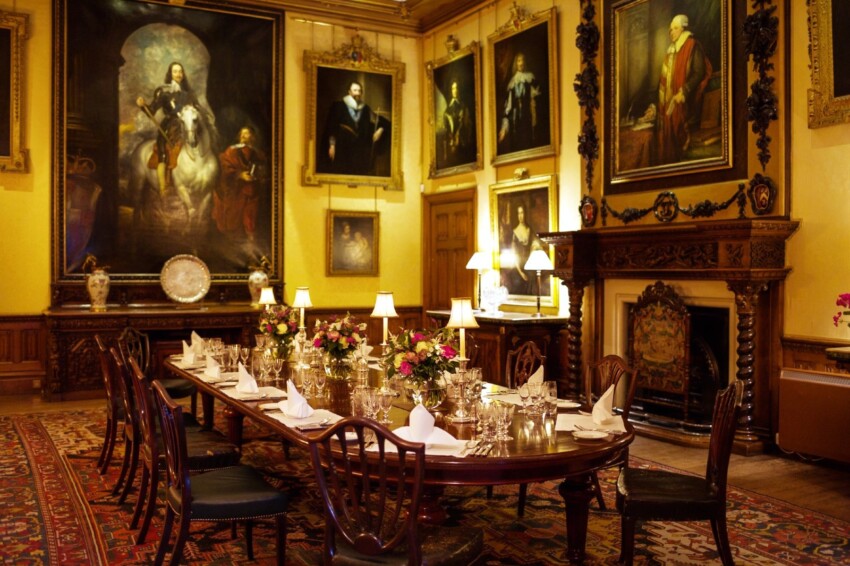
The state dining room at Highclere Castle is a triumph of Victorian elegance and perhaps the most immediately recognisable location for Downton Abbey viewers. Here unfolded the memorable scenes of formal dinners characterising every season: the sparring between Lady Violet and Isobel Crawley, the dramatic announcements altering events’ course, grand dinners with distinguished guests. The long central table, seating up to 24 diners, witnessed in reality countless Carnarvon family dinners and, during filming, hundreds of takes creating the series’ most iconic scenes.
The walls are decorated with paintings by Van Dyck and Reynolds, among Britain’s greatest portrait masters. The silverware displayed in sideboards and finely decorated porcelain are the very objects you see in Downton Abbey scenes, authentic treasures from the Carnarvon collection used both in real life and as props. During special guided tours, anecdotes about historic banquets held here and curiosities about filming are shared, such as actors actually eating during scenes, necessitating numerous takes. The crystal chandelier and Venetian mirrors create lighting effects amplifying the room’s magnificence, exactly as it appears on screen.
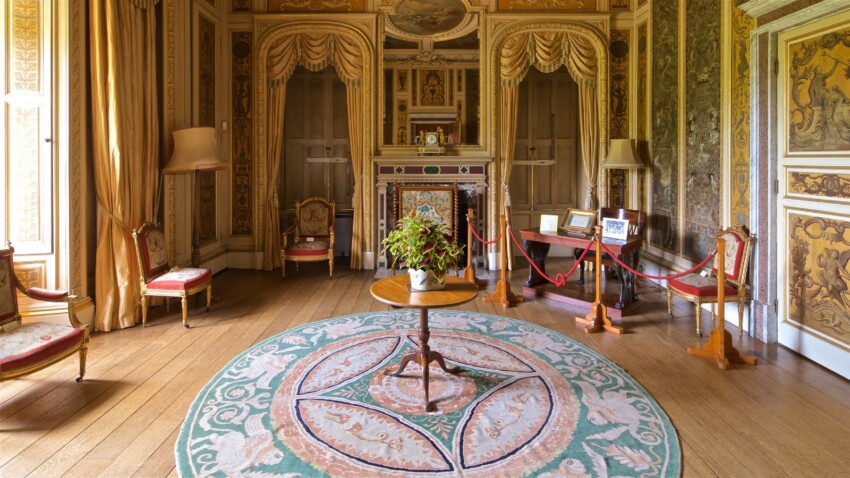
Entering the music room, you’re surrounded by an atmosphere with lighter, more delicate tones than other state rooms. The hand-painted baroque ceiling represents one of the castle’s finest decorative works, whilst the walls are covered with sixteenth-century Italian embroidery conferring timeless elegance. This room was designated for musical entertainment during castle soirées.
Of particular interest is the collection of period musical instruments on display, including a nineteenth-century piano played during receptions. Windows overlooking the grounds offer privileged views of the Italian-style gardens and artificial lake. This room also preserves the desk and chair Napoleon Bonaparte used during his final years exiled on Saint Helena, an extraordinarily valuable piece of European history.
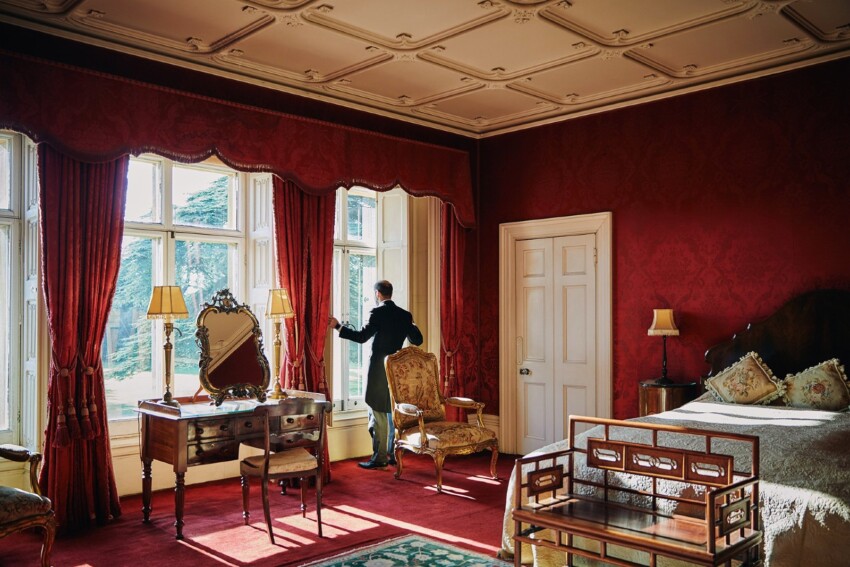
On the upper floor are the historic bedrooms, accessed via a steep staircase testifying to the castle’s construction period. Among these, the Earl and Countess’s chamber stands out, furnished with original Victorian furniture and featuring a richly decorated four-poster bed. The rooms retain original furnishings and offer an intimate glimpse into nineteenth-century British aristocratic daily life.
Particularly fascinating is the room of Lady Almina, the fifth Countess of Carnarvon, illegitimate daughter of Alfred de Rothschild. The personal objects displayed and preserved documents tell the extraordinary story of this woman who transformed the castle into a military hospital during the First World War, saving hundreds of wounded soldiers’ lives. Those unable to climb stairs can consult photographic albums of the bedrooms in the drawing room.
In the castle’s underground cellars lies one of England’s most important private Egyptian collections. The Discovery Gallery commemorates the fifth Earl of Carnarvon’s fundamental role in discovering Tutankhamun’s tomb in 1922, one of the twentieth century’s most sensational archaeological events. The exhibition includes authentic artefacts brought from Egypt, original documents and historical photographs from the expedition that forever changed Egyptology.
Among the collection’s most extraordinary pieces are artefacts from the Valley of the Nobles and the Valley of the Queens, plus a magnificent reproduction of Tutankhamun’s funeral mask. The exhibition also tells the story of the “pharaoh’s curse”: the Earl died mysteriously in April 1923, months after the tomb’s opening, from erysipelas infection after accidentally cutting a mosquito bite whilst shaving. His widow sold part of the collection to the New York Metropolitan Museum, but many pieces were hidden in castle cupboards until 1987, when the family rediscovered them.
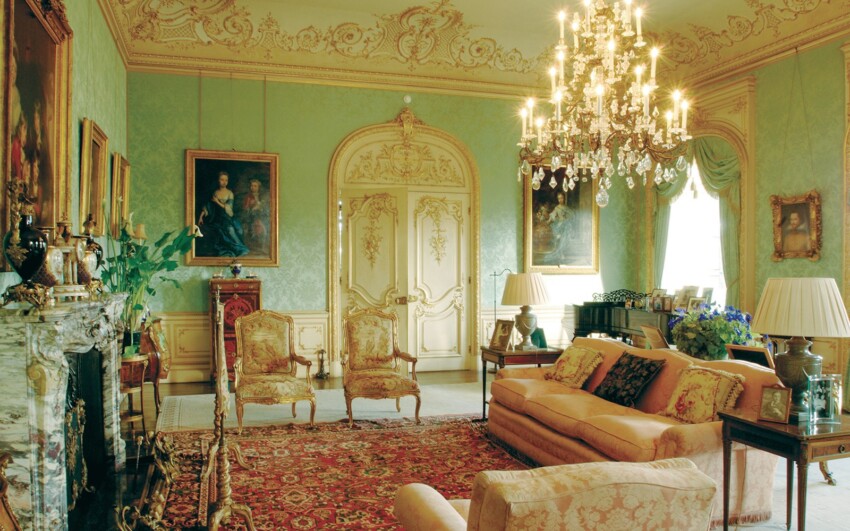
The rococo-style drawing room represents a corner of French sophistication within the English castle and one of Downton Abbey’s most photographed spaces. The walls are lined in soft original French green silk, with finely worked damask dating to the eighteenth century. This more intimate room was used by the family for relaxation and private conversations, away from the formality of the great state rooms, exactly as depicted in the series when the ladies retire here for afternoon tea or confidential conversations.
The delicate furnishings and gold-leaf decorations testify to continental culture’s influence on British aristocratic taste. In this room you can admire small art objects, French porcelain and miniatures the family collected over centuries. During Downton Abbey filming, this drawing room hosted numerous scenes requiring an intimate, familial atmosphere, particularly conversations between Lady Cora and her daughters, or moments when Lady Violet dispensed unsolicited but often wise advice. The sofas and chairs you see are the same ones Michelle Dockery and Maggie Smith sat on during filming.
Decorated in early nineteenth-century style, the smoking room represents the traditional male refuge after dinner, where gentlemen retreated to smoke cigars and discuss politics and business. The wild boar leather chairs still bear marks from the spurs of cavalry officers who used them, tangible testimony to the life animating the castle. The walls are lined in dark wood and enriched with hunting trophies and family military memorabilia.
This room houses a collection of antique pipes and period tobacco boxes, plus a specialised library of military history volumes and hunting chronicles. The atmosphere is deliberately more austere and masculine than other castle rooms, reflecting the rigid division of Victorian and Edwardian social roles. Distinguished castle guests, including politicians and army officers, spent countless hours in this room.
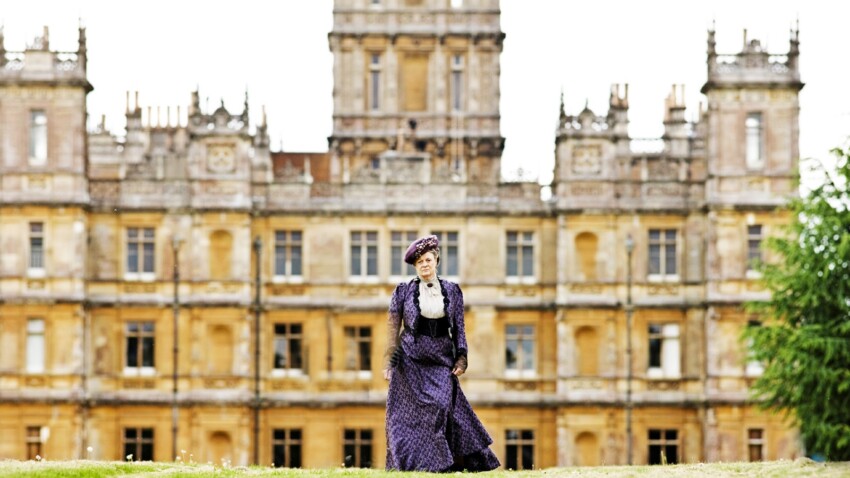
In 2009, Highclere Castle achieved worldwide fame as the principal filming location for the television series Downton Abbey, created by Julian Fellowes, a long-time friend of the Carnarvon family. The choice of Highclere was far from arbitrary: producers visited over 25 historic British properties before finding the perfect location. Gareth Neame, co-creator of the series, stated that they were seeking “a stately home that conveyed the authority of the aristocracy of that era” and that “Highclere, rebuilt in 1840, perfectly symbolises the power of the British Empire and the landed gentry”.
What made Highclere so perfect for Downton Abbey was the remarkable alignment between the fictional history of the Crawley family and the real history of the Carnarvons. The series, set between 1912 and 1926, depicts precisely the same years experienced by the Fifth Earl and Countess Almina: the First World War, the transformation of the castle into a military hospital, the post-war economic challenges, the social upheavals of the era. Julian Fellowes drew directly from the biography of Lady Almina written by the current Countess Fiona Carnarvon, weaving authentic historical elements with dramatic storytelling.
The success of Downton Abbey was overwhelming: six television series broadcast from 2010 to 2015, followed by three successful films (2019, 2022, 2025), numerous Emmy and BAFTA awards, and a cultural impact that generated a global phenomenon called “Downton mania”. The castle saw visitor numbers increase exponentially, rising from a few thousand annually to over 70,000 visitors in the years following the series broadcast. Fans from around the world – the United States, Japan, Australia, China – transformed Highclere into a pilgrimage destination, eager to walk in the same spaces where Lady Mary, Lord Grantham and Maggie Smith, as Lady Violet, performed.
Filming for the series took place during certain months of the year, typically in spring and autumn, when the castle was closed to the public. The film crew had full access to the main ground-floor rooms, whilst scenes set in the servants’ quarters and kitchens were filmed in studios in London, as the castle’s original spaces were not sufficiently spacious for television production requirements. The furnishings, paintings and many props visible in the series are authentic pieces from the Carnarvon collection, lent for filming and subsequently returned to their original positions.
Today the estate is inhabited by the Eighth Earl of Carnarvon, George Herbert, and his family, who regularly open the doors to visitors during selected periods of the year. The success of Downton Abbey enabled the family to finance essential restoration work: in 2009 the castle required urgent repairs costing over £12 million, and the proceeds from television rights, tours and increased visitor numbers have significantly contributed to the preservation of this extraordinary historic heritage for future generations.
Tickets for Highclere Castle must be booked online well in advance via the castle’s official website, as it is still a privately inhabited residence, opening times are limited to specific periods of the year and daily visitor numbers are restricted.
Alternatively, especially if you don’t have access to a car, you can take part in guided tours departing from London that will allow you to visit not only the castle but also some charming nearby villages.
The castle is generally open during some spring weekends (April–May), the summer months (July–August, Sunday to Thursday), in autumn to admire the autumn foliage, and in December for Christmas decorations.
Standard tickets include access to the castle, the Egyptian exhibition in the cellars and the gardens, with three time slots available. The last castle entry is at 4pm, but regardless of which time slot you choose, you can visit the gardens, tea rooms and gift shop for the entire day. It is strongly recommended to purchase tickets weeks or even months in advance, as they sell out quickly, especially for special tours.
Throughout the year, themed guided tours are organised offering a more in-depth experience: “Real Lives and Film Sets”, “From Downton Abbey to Tutankhamun” and “Christmas at Highclere”. These special tours cost more but include access to areas not normally open to visitors and the services of expert guides who share exclusive anecdotes about the family and the castle’s history.
You can add to your ticket the “Picnic Afternoon Tea for Two”, a selection of cakes, scones and sandwiches served in an elegant box with half a bottle of Joseph Perrier champagne
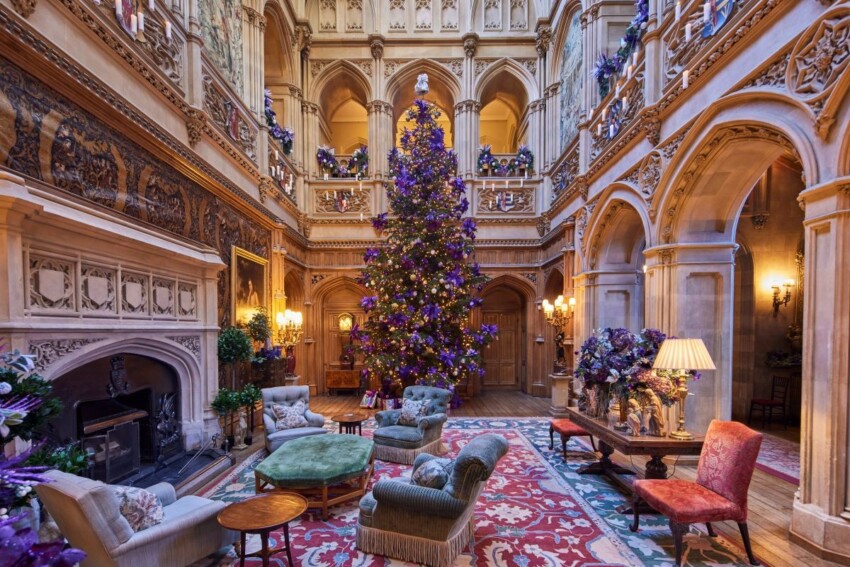
Among the most requested experiences by visitors are the “Real Lives and Film Sets” themed guided tours, which represent a true must for Downton Abbey enthusiasts. These special tours, available in autumn and winter, offer exclusive insight into how the true story of the Carnarvon family intertwined with the television narrative. Expert guides, many of whom worked directly with the production team during filming, share behind-the-scenes anecdotes: which scenes were filmed in which rooms, how many takes were required for complex sequences, which props were authentic antique pieces and which were replicas.
During these tours, production secrets are revealed: how the film crew temporarily transformed rooms for filming needs, where lights and cameras were hidden to avoid appearing on screen, what temporary modifications were made to furnishings. Visitors also learn which events portrayed in Downton Abbey correspond to events that actually happened to the Carnarvon family and which are dramatic inventions, creating a deeper understanding of both the series and the authentic history of the castle.
Beyond regular public opening hours, Highclere Castle organises numerous other special events throughout the year that enrich the visitor experience. The “From Downton Abbey to Tutankhamun” guided tours offer exclusive insight combining a castle visit with the extraordinary archaeological expedition of the Fifth Earl, including access to the Egyptian exhibition with detailed explanations of the artefacts and their historical significance.
In spring, during the Easter period, an Easter egg hunt in the gardens is often organised, an event particularly popular with families with children. The “From Downton Abbey to Tutankhamun” tours, available in winter and spring, combine a castle visit with insight into the Fifth Earl’s extraordinary archaeological expedition, including access to the Egyptian exhibition with detailed explanations.
In December, the castle transforms into a fairytale setting with “Christmas at Highclere”, when the rooms are decorated in Victorian tradition with garlands, holly and illuminated Christmas trees. These Christmas tours are particularly sought-after and sell out very quickly. In autumn, foliage tours allow you to admire the spectacular colours of the parkland when the centuries-old trees turn red, orange and gold.
During summer, you can book “Afternoon Tea”, an exclusive adults-only experience that includes afternoon tea served in one of the castle’s rooms, with a selection of sandwiches, scones with jam and cream, and pastries accompanied by fine teas. The estate also occasionally hosts private dinners, weddings and corporate events, though these experiences are available only by special request and at premium prices.
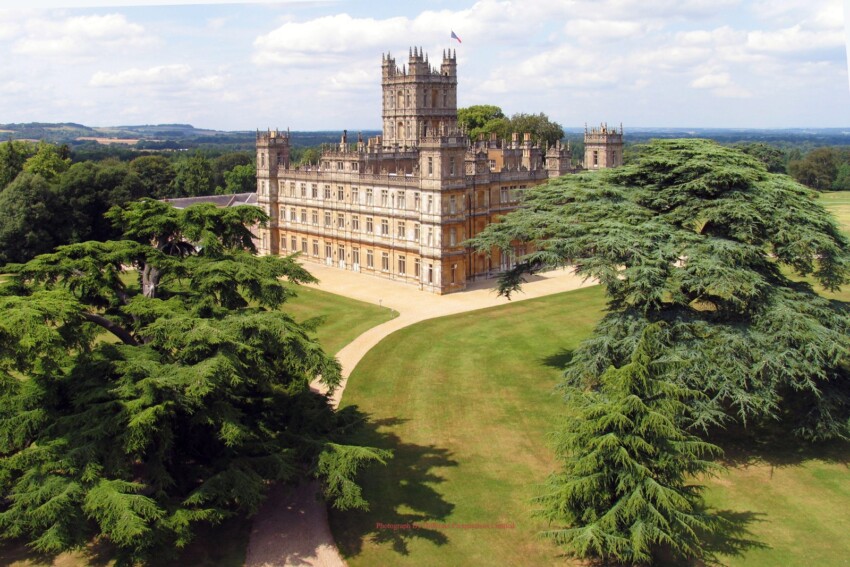
Highclere Castle is located in Hampshire, approximately 8 kilometres south of the town of Newbury and 110 kilometres west of London.
The simplest option for those without a car is to purchase an organised tour departing from London that includes coach transport, often combined with visits to other attractions such as Cotswolds villages or the city of Oxford. These tours typically depart from central London and last a full day (around 9 hours), with prices varying by operator but generally including transport, castle admission and English-language guide.
Another ideal way to reach the castle is undoubtedly by rental car, which offers greater flexibility and allows you to explore the beautiful surrounding English countryside. From London, taking the M4 westbound and then the A34 southbound, the journey takes approximately 1 hour and 20 minutes. The castle has free parking on its grounds, though on busy days parking may be at some distance from the ticket office.
For those preferring public transport, direct trains depart from London Paddington station to Newbury operated by Great Western Railway, with approximately one train per hour. The journey takes approximately 50–55 minutes. Alternatively, trains depart from London Waterloo station to Andover, another location near the castle. Once you arrive in Newbury or Andover, you’ll need to take a taxi for the remaining 8–10 kilometres to the castle: costs are around £15–20. It’s important to book your return taxi by phone, as you won’t find taxis waiting at the castle exit.
Yes, advance booking is absolutely essential. Highclere Castle is a privately inhabited residence and daily visitor numbers are strictly limited. Tickets often sell out weeks or even months before your intended visit date, especially for weekends and special tours.
No, photography and video recording are strictly forbidden inside the castle and Egyptian exhibition, to protect the privacy of the Carnarvon family and preserve the historic furnishings. Photography is, however, permitted and encouraged in the gardens, parkland and outdoor areas. Drones are not allowed anywhere on the property.
For a complete visit to the castle, Egyptian exhibition and main gardens, allow at least 3–4 hours. If you wish to explore the woodland paths, wildflower meadow and the six 18th-century architectural follies scattered throughout the park, you may need half a day. The tea rooms and gift shop are accessible for the entire day, regardless of your ticket time slot.
The main ground-floor rooms and Egyptian exhibition are accessible with manual wheelchairs, which can be reserved by emailing the castle before your visit. However, as it is a 19th-century historic building, the upper floor with bedrooms is accessible only via steep stairs and is therefore not reachable for those with mobility difficulties. For these visitors, photographic albums of the bedrooms are available to view in the drawing room. Motorised wheelchairs are useful for exploring the extensive gardens. Guide dogs are permitted with prior notification.
Picnics are not permitted within the castle’s formal gardens. However, you are welcome to return to your car in the car park to have a packed lunch, taking all rubbish with you. The castle has tea rooms offering a selection of fresh sandwiches, salads, cakes and hot beverages at reasonable prices, as well as hot takeaway food such as sandwiches and pasties. There is also a kiosk in the park selling ice cream, smoothies and drinks.
There is no strict dress code for visiting the castle, but comfortable shoes are recommended as garden paths include gravel and natural terrain. High heels are not advised. For special tours with afternoon tea, smarter attire may be suggested, but this remains a personal choice. Rucksacks and large bags are permitted but can be left at the visitor reception if preferred.
Absolutely, though you would miss a significant part of the emotional experience. Whilst Downton Abbey made the castle famous worldwide and represents the primary reason for visits by the majority of tourists today, Highclere has historical and artistic value far beyond the fiction. Sir Charles Barry’s architecture blending Italian and English styles, the extraordinary Egyptian exhibition celebrating one of the 20th century’s most important archaeological discoveries, the landscape gardens by Capability Brown considered among England’s finest, and the authentic history of the Carnarvon family spanning crucial centuries of British events make the visit fascinating even for those who have never seen an episode of the series.
 Hotel
Hotel  Budget accommodations
  Apartments
  Family Hotel
  Luxury Hotel