Bestseller
Stonehenge Admission Ticket
From 28,29 €
Buy the ticket
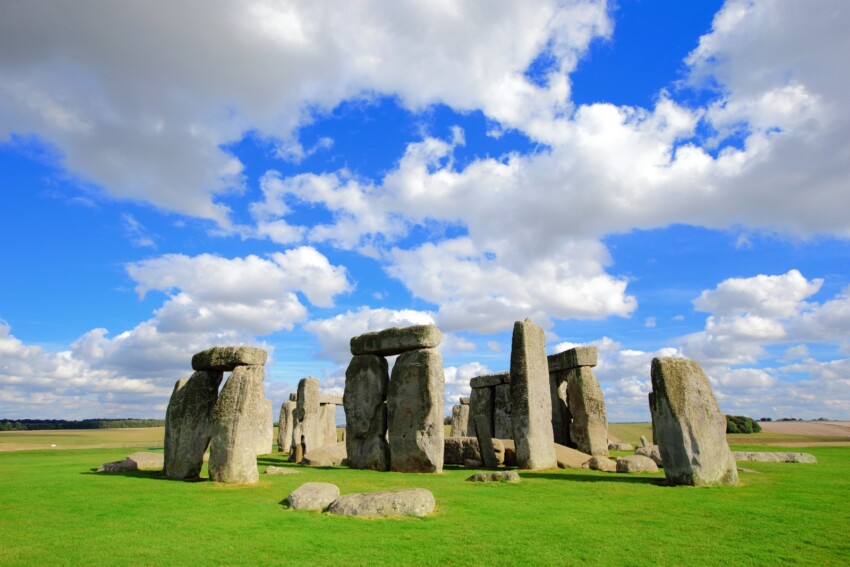
Stonehenge is one of the world’s most iconic and enigmatic prehistoric monuments, an impressive Neolithic site located on the plains near Salisbury, approximately 140 kilometres from London. It comprises a monumental complex of enormous stones (megaliths) arranged in concentric circles, with its principal construction dating back roughly 4,000–5,000 years.
What makes Stonehenge particularly captivating is the mystery that still surrounds its construction and purpose. Various theories exist regarding its original use: some scholars believe it was an ancient pagan temple dedicated to sun worship, whilst others consider it a sophisticated astronomical observatory. British astronomer Gerald Hawkins noted in 1965 that the site’s principal alignments pointed towards the extreme positions of sunrise and sunset, and moonrise and moonset on the horizon.
The site attracts hundreds of thousands of visitors from around the world each year and holds particular significance during the summer and winter solstices, when it becomes a pilgrimage destination for followers of neo-pagan religions and Druids.
Whether you’re a history enthusiast, archaeology lover, or simply curious, Stonehenge offers a unique experience where past and present converge in an almost magical atmosphere.
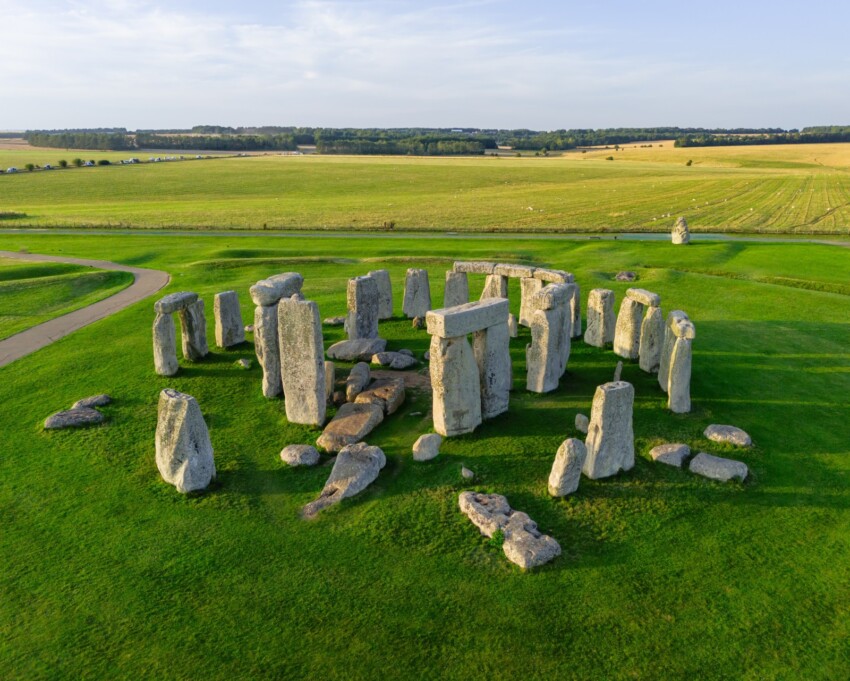
The monumental stone circle represents the heart of the Stonehenge experience, an architectural achievement that defies modern understanding. The outer circle, originally consisting of 30 vertical sarsen blocks, was crowned with horizontal lintel stones that created a continuous ring 30 metres in diameter, suspended 4 metres above the ground. Today, although only six of the outer circle’s lintels remain, the structure’s majesty remains breathtaking.
Particularly impressive is the Heel Stone, an enormous sarsen stone weighing 36 tonnes that marks the site’s entrance. This stone holds particular astronomical significance: it aligns perfectly with the sunrise during the summer solstice, creating a spectacular sight that attracts thousands of visitors annually. In 1979, archaeologists discovered the hole of another similar stone beside it, suggesting that originally two stones may have marked this significant point.
The pedestrian pathway encircling the monument has been carefully designed to offer spectacular views from various angles. The most photogenic viewpoint is near the shuttle stop, where the distance from the stones is closer and natural light, especially at sunrise and sunset, creates effects of extraordinary beauty. During your visit, you’ll also observe the Station Stones, of which only two of the original four remain, marking the corners of a perfect rectangle with the monument’s exact centre.
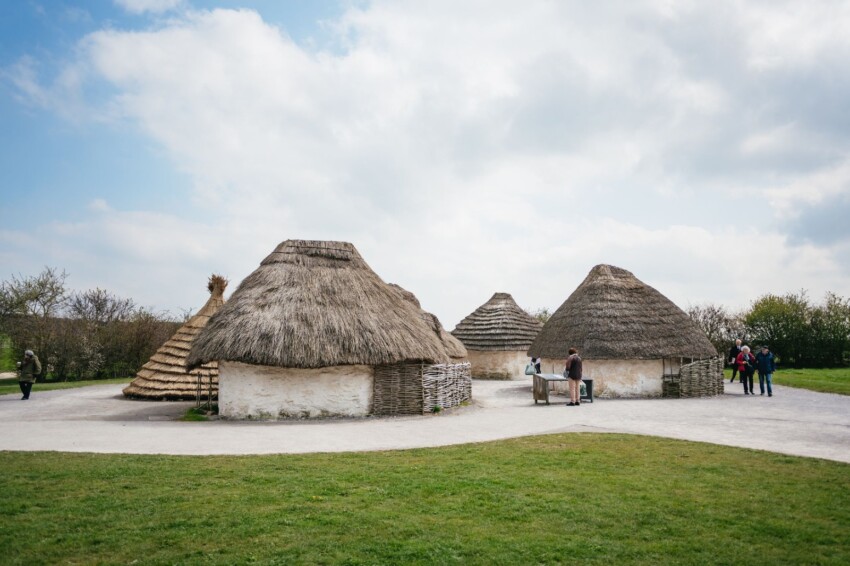
Outside the Visitor Centre stands a faithful reconstruction of five Neolithic houses, an unmissable attraction for understanding daily life in that era. These dwellings were created based on archaeological findings from Durrington and offer an authentic glimpse into life 4,500 years ago.
Site volunteers in period costume animate this space, demonstrating everyday Neolithic activities: from grinding grain with hand mills to rope-plaiting, woodcarving to pottery-making. It’s an immersive experience that allows you to fully understand the historical and social context in which Stonehenge was constructed.
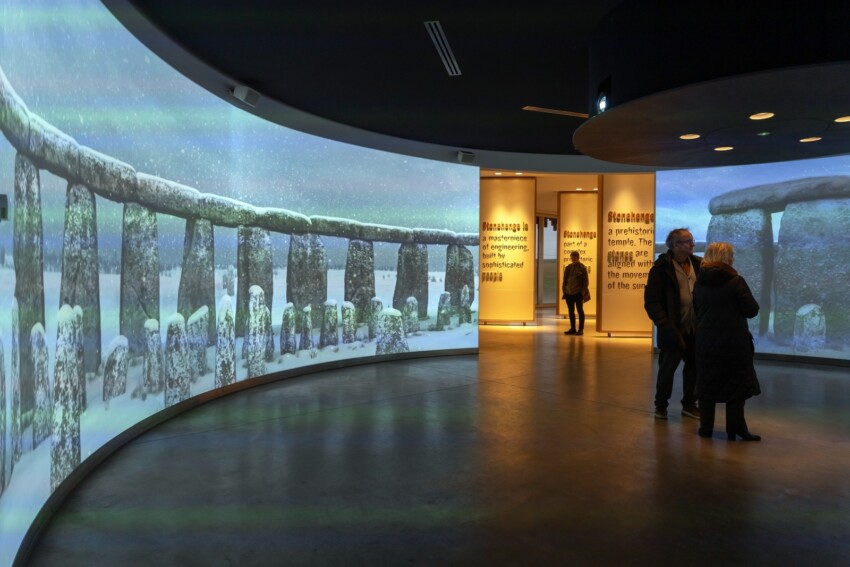
The modern Visitor Centre represents a fundamental element of your visit. The building houses a permanent exhibition entitled “Wish You Were Here” that tells the story of the monument’s development over the millennia. Inside, a display of approximately 250 archaeological artefacts illustrates the site’s history through original ceramics, tools and jewellery from the era. One of the most fascinating attractions is the forensic reconstruction of the face of a man who lived 5,500 years ago, created using bones found in the area.
The Visitor Centre experience is enriched by innovative audiovisual installations. The centrepiece is an extraordinary 360° projection that allows you to experience Stonehenge’s atmosphere during different seasons of the year. Thanks to this immersive technology, visitors can virtually experience the evocative solstice phenomena and see how the surrounding landscape changes throughout the seasons, offering a unique perspective from within the monument itself.
The Visitor Centre also houses a comfortable café where you can enjoy hot drinks, snacks and light meals. The souvenir shop offers a wide selection of books about Stonehenge’s history, crafts inspired by the site and local Wiltshire products. It’s the ideal place to purchase a memento of your visit or deepen your knowledge of the monument through specialist publications.
Visiting Stonehenge requires minimal planning as the site uses a timed ticket system to manage visitor flow. Advance booking is highly recommended and guarantees not only entry at your preferred time but also savings on ticket prices.
The system provides 30-minute time slots, and once you enter you may remain on site for as long as you wish.
Discounts are available for those over 65 and children aged 5–17, whilst entry is free for under-5s.
Gate prices are slightly higher, with an increase of around £2–3 per category. It’s important to note that the audioguide is not included in the ticket price and may be hired separately.
Stonehenge’s opening times vary significantly throughout the year to accommodate the seasons and natural light.
During summer (1 June – 31 August), the site is open from 9:00 to 20:00, allowing visitors to enjoy the long summer days. In spring and autumn (1 April – 31 May and 1 September – 15 October), opening hours are 9:30 to 19:00, whilst in winter (16 October – 31 March) the site closes at 17:00.
Last admission is always permitted two hours before closing time, giving you sufficient time to explore the site at leisure. The monument is closed only on 24 and 25 December.
Reaching Stonehenge is a relatively straightforward undertaking thanks to its strategic location in southern England. The archaeological site is located in Wiltshire, approximately 140 kilometres from London, and can be easily accessed by car or organised tour. Public transport access is somewhat more complicated.
The drive from London is probably the most flexible and comfortable option. The most direct route involves following the M3 motorway towards Basingstoke, then continuing on the A303 towards Salisbury/Andover. Signposting to Stonehenge is clear and visible. Average driving time is around an hour and a half, though this can vary significantly depending on traffic, especially at weekends and during peak season.
The site has an extensive free car park located next to the Visitor Centre. A valuable tip for drivers: try to arrive at opening time or late afternoon to avoid the heaviest queues. During summer months and on public holidays, the car park can fill quickly during mid-afternoon hours.
For those preferring public transport, the journey requires a combination of train and bus. The nearest railway station is Salisbury, reachable in 90 minutes from London Waterloo station with frequent trains departing roughly every half hour from 6:30 in the morning. Rail tickets range in price from £10 to £25, with cheaper fares available if booked in advance.
From Salisbury, connections to Stonehenge are provided by the Stonehenge Tour Bus, a dedicated shuttle service departing from both the railway station and the bus station. The bus journey takes approximately 30 minutes and also includes an audioguide in the ticket price.
Organised tours often represent the most practical and economical solution, especially for first-time visitors to England. These tours depart regularly from London and other cities, offering several advantages: transport is comfortable and direct, expert guides provide detailed explanations, and the price often includes visits to nearby attractions.
The most popular options include both half-day tours dedicated exclusively to Stonehenge and full-day tours that combine a Stonehenge visit with other destinations such as Bath, Windsor Castle or Oxford. These tours typically last between 6 and 12 hours, depending on your chosen itinerary.
Your choice of accommodation for visiting Stonehenge depends very much on your overall itinerary and the time you wish to dedicate to exploring the area. The two main towns where you can stay are Salisbury and Amesbury, both offering options to suit every budget and travel style.
Salisbury represents the ideal base for visiting Stonehenge. At just 13 kilometres from the archaeological site, it offers a wide range of accommodation options.
For those wishing to explore other attractions in the area, such as Bath or the villages of the Cotswolds, Salisbury represents an excellent operational base for 2–3 days. The town offers not only a strategic location but also notable attractions in its own right, including the magnificent cathedral which houses one of the four surviving original copies of the Magna Carta.
As the nearest town to Stonehenge, Amesbury offers a privileged location for visiting the site. The Fairlawn Hotel and the George Hotel are both excellent choices, combining the convenience of the location with the charm of historic properties.
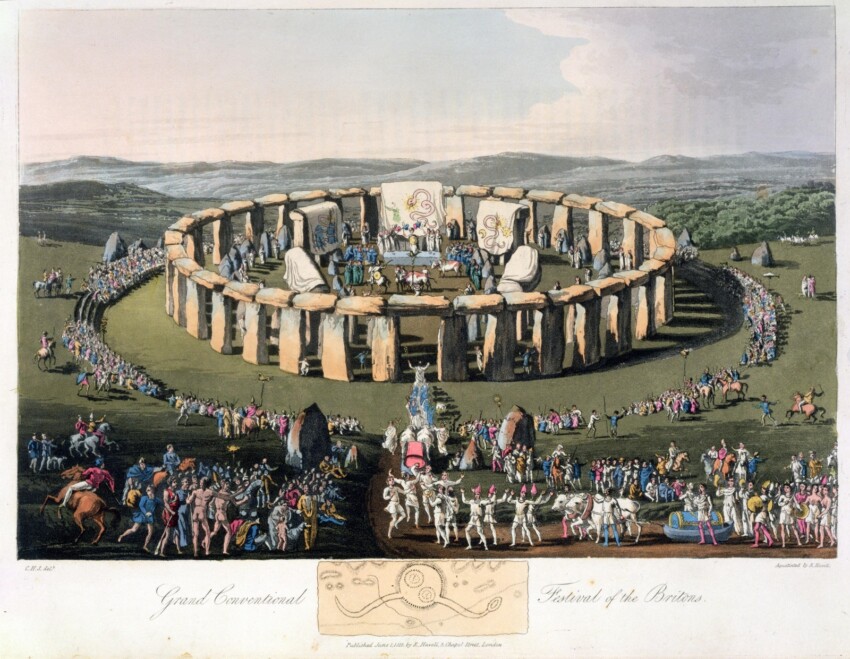
The history of Stonehenge is a fascinating journey through time spanning over five thousand years. The earliest traces of human activity in the area date back as far as 8000 BC, but construction of the monument as we know it today began much later, around 3100 BC, with the creation of the first significant architectural feature: an imposing circular earthwork surrounded by a deep ditch enclosing an area roughly 100 metres in diameter.
The most significant phase of construction, which gave Stonehenge its most recognisable appearance, occurred around 2500 BC. It was during this period that the monumental stones that still define the site were erected. The builders used two types of stone: the magnificent sarsen, sandstone blocks weighing between 20 and 45 tonnes and standing about 7 metres high, and the smaller yet equally important bluestones, each weighing just 4 tonnes.
One aspect that continues to astound archaeologists and scholars is the origin of these stones. The sarsen blocks were transported from the Marlborough Downs, approximately 30 kilometres away—an impressive feat in itself for the era. But even more remarkable is the source of the bluestones, which were brought from the Preseli Mountains in Wales, over 200 kilometres away. This fact raises numerous questions to this day about the technical and organisational capabilities of Neolithic peoples.
Recent archaeological discoveries have added further pieces to our understanding of the site. About 3 kilometres from Stonehenge, the National Geographic Society uncovered the remains of a village dating to 2600 BC, consisting of 25 small dwellings. Some scholars believe these structures were used by the monument’s builders, whilst others suggest they may have housed pilgrims visiting the site.
Since 1986, Stonehenge has been designated a UNESCO World Heritage Site and is now managed by English Heritage. A curious aspect of its recent history is that roughly a century ago, in 1915, the entire site was purchased at auction for £6,600 by solicitor Cecil Chubb as a gift for his wife. Three years later, Chubb generously donated it to the British state, receiving in return the title of “First Baronet of Stonehenge”.
Over the centuries, Stonehenge has captured the imagination of generations, giving rise to numerous fascinating legends that intertwine with documented history.
The most celebrated of these stories, first recounted by Geoffrey of Monmouth in his “Historia Regum Britanniae” of 1135, attributed Merlin the Wizard with a fundamental role in the monument’s construction.
The legend tells how Merlin magically transported the enormous stones from Ireland, where a tribe of giants had previously brought them from Africa. According to the tale, Merlin used his magical powers to make the stones “fly” across the sea to the Salisbury Plain, where he arranged them in the configuration we see today.
This story sits within the broader Arthurian cycle, connecting Stonehenge to the legends of King Arthur and the Knights of the Round Table. According to Geoffrey of Monmouth, the site was built as a funerary monument to commemorate hundreds of British nobles who, according to legend, were betrayed and slain by the Saxons during a peace meeting.
It is intriguing to note how this medieval explanation sought to make sense of the incredible engineering feat represented by Stonehenge. Merlin’s intervention served to explain how it was possible to transport and position such enormous stones (some weighing as much as 50 tonnes) at a time when modern machinery did not exist. The legend of Merlin has contributed to fuelling the aura of mystery and magic that still surrounds Stonehenge today.
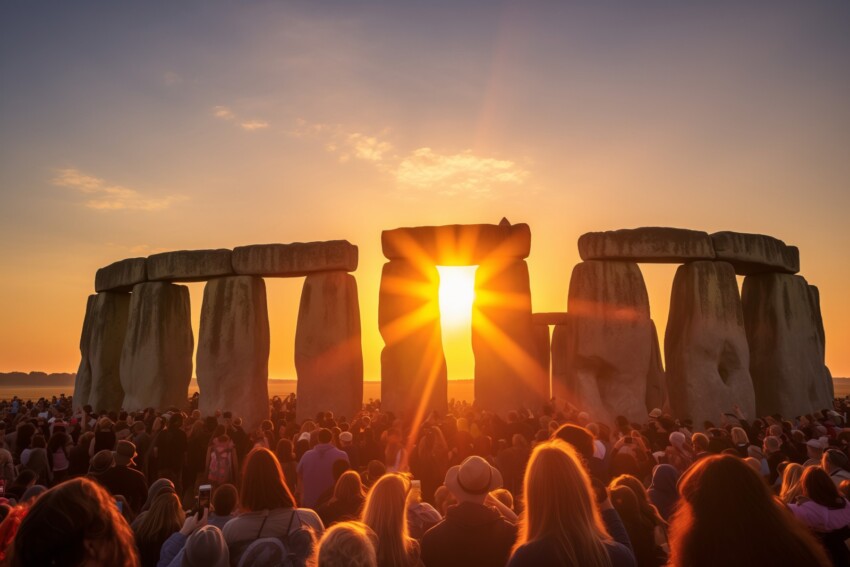
The solstices at Stonehenge represent some of the most magical and atmospheric moments of the year. During the summer solstice, which falls on 21 June, thousands of people gather at dawn at this ancient monument to witness a unique spectacle: the sun rises in perfect alignment with the Heel Stone, one of the site’s most important stones, creating an extraordinary visual effect that is believed to have been carefully planned by the Neolithic builders.
English Heritage, the organisation managing the site, has recognised the spiritual significance of these events and even broadcasts the summer solstice celebrations via live streaming, allowing people from around the world to participate virtually in this special moment.
During the solstices, Stonehenge becomes a gathering point for various spiritual groups, particularly modern druids and followers of Neopagan religions, who perform ceremonies and rituals. It is one of the rare occasions when access inside the stone circle, normally forbidden for conservation reasons, is permitted under special circumstances.
Thanks to the 360° virtual experience available at the Visitor Centre, tourists can nonetheless experience the emotion of the solstices at any time of year, observing how the landscape and light change during these crucial moments of the astronomical calendar.
Stonehenge lies in south-west England, precisely in Wiltshire county, approximately 13 kilometres north-west of the medieval town of Salisbury and around 140 km from London.

 Hotel
Hotel  Budget accommodations
  Apartments
  Family Hotel
  Luxury Hotel