Bestseller
London: Emirates Stadium Entry Ticket and Audio Guide
From 42,21 €
Buy the ticket
Opened in 2006 as the successor to the historic Highbury and located in the Holloway area of North London, the Emirates Stadium has quickly become an architectural landmark for next-generation football stadiums. With a capacity of 60,704 spectators, it is London’s third largest stadium after Wembley and the Tottenham Hotspur Stadium, and one of the most technologically advanced in the United Kingdom.
The Emirates is not only the home of Arsenal Football Club, one of England’s oldest and most prestigious football clubs, but also a multifunctional complex that houses the club museum, retail areas, restaurants and event spaces throughout the year.
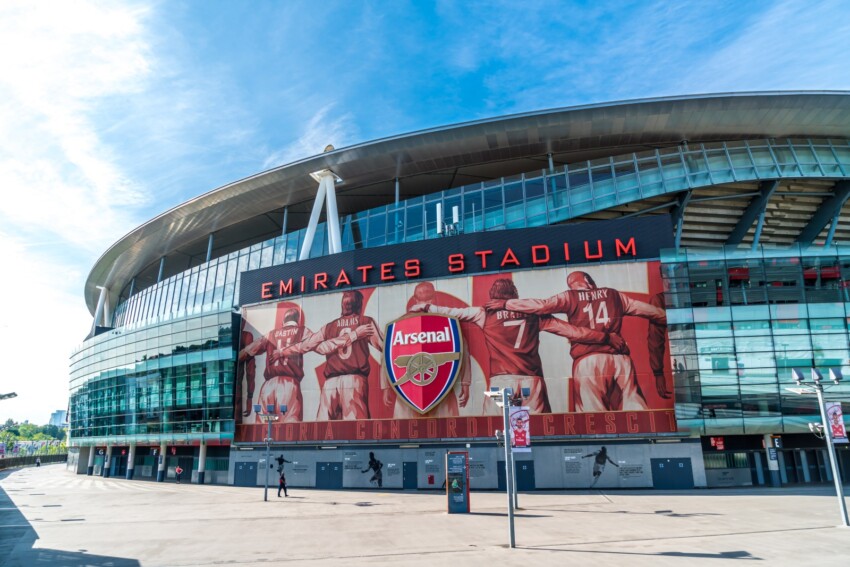
Its distinctive architecture, characterised by an imposing oval structure in glass and steel, reflects the fusion of tradition and modernity that has always defined Arsenal, the club founded in 1886 and known as the “Gunners“. Unlike many modern stadiums built on the outskirts, the Emirates stands in the heart of the area historically connected to Arsenal, just steps from the old Highbury (now converted into luxury residences), maintaining a strong link to the club’s roots.
Arsenal’s stadium offers numerous points of interest that deserve particular attention during your visit. Here are the most significant aspects you shouldn’t miss.
The exterior of the Emirates Stadium is a remarkable example of contemporary sports architecture. The structure, designed by the HOK Sport practice (now Populous), is characterised by four tiers of seating and a glass and steel façade that creates an effect of transparency and lightness, despite its imposing dimensions. Particularly striking are the suspended bridges that connect the stadium to the surrounding areas, creating an experience of gradual approach to the stadium that builds anticipation for your visit.
One of the most fascinating elements is the Clock End, a tribute to the famous north stand of the old Highbury stadium, above which hung the historic clock symbolising Arsenal. At the Emirates, the south side has been renamed Clock End and houses a modern replica of the historic clock, creating a symbolic bridge between the club’s past and present.
Around the stadium, don’t miss the numerous statues of club legends that adorn the perimeter, including those dedicated to Herbert Chapman, Tony Adams, Thierry Henry, Dennis Bergkamp and Ian Wright. These bronze sculptures, created by artist Sean Henry, have become pilgrimage sites for fans and offer excellent photo opportunities.
The Diamond Club represents the pinnacle of luxury at Emirates Stadium. Located at Club level, this exclusive area offers a premium experience with a gourmet restaurant, wine bar, personalised service and some of the best seats in the stadium. During the tour, you’ll have the chance to peek into this exclusive world, normally accessible only to members who pay an annual membership fee of several thousand pounds.
Other noteworthy VIP areas include the Platinum Box suites with private views directly overlooking the pitch, and the Directors’ Box, where club executives and the most prestigious guests sit. Access to these areas during the tour will allow you to appreciate the level of refinement and comfort the Emirates offers its most exclusive guests.
Particularly interesting is the contrast between these luxurious areas and the more democratic North Bank, traditionally the hottest section of Arsenal fans, where the football experience is more visceral and less focused on comfort.
A visit to the Emirates Stadium’s changing rooms is one of the most eagerly anticipated moments of the tour. The main changing room, used by Arsenal, is a spacious and technologically advanced environment, with warm-up areas, hot tubs and individual stations for each player, marked with name and shirt number.
During the tour you can sit in the same seats used by the team’s stars and notice the personalised details that reflect the club’s philosophy, such as motivational quotes on the walls and references to Arsenal’s historical values. The visiting team’s changing rooms, whilst comfortable, are deliberately more spartan and lack the personalisation found in the home dressing room.
The player tunnel, lined with Arsenal’s red and white colours, creates an atmosphere charged with emotional tension. Walking through this passage, followed by the teams before each match, you can literally follow in the footsteps of your football idols, culminating in the thrilling moment when you emerge pitch-side, met by the breathtaking sight of the stands stretching 360 degrees around you.
The playing surface at the Emirates is considered one of the finest in Europe, thanks to a state-of-the-art system combining natural grass with artificial fibres, guaranteeing a perfect pitch throughout the season. During the tour, you’ll be able to admire this impeccable surface up close and appreciate the meticulous work of the groundskeeping team that maintains it daily.
The stands are designed to offer excellent sightlines from every position, with steeper gradients than Highbury to create a more intimate and engaging atmosphere despite the larger size. The seats, all in the club’s red and charcoal colours, form patterns and lettering visible from above, including the famous cannon symbol of Arsenal.
A distinctive feature is the partially translucent roof, which allows natural light to reach the pitch whilst protecting spectators from the elements. This design not only enhances the spectator experience but also contributes to the health of the grass.
The Arsenal Museum, located within the Emirates Stadium, is an unmissable stop for any visitor interested in the rich history of the club. The museum traces Arsenal’s evolution from its foundation in 1886 to the present day through an extensive collection of memorabilia, trophies, historic shirts and multimedia installations.
Particularly moving are the spaces dedicated to the club’s legendary teams, such as the “Invincibles” Arsenal of the 2003-2004 season, the only team in Premier League history to complete a season undefeated, and the “Double” winning team of 1970-71. Don’t miss the section dedicated to Herbert Chapman, the visionary manager who transformed the club in the 1930s, and the exhibitions on the great legends of the Gunners, from Cliff Bastin to Thierry Henry.
The museum also houses the numerous trophies won by the club, including replicas of the FA Cup (Arsenal holds the record for victories with 14 trophies), English league titles and the 1994 European Cup Winners’ Cup. Interactive installations allow visitors to relive the most iconic moments in the club’s history and deepen their knowledge of its traditions.
The Armoury is Arsenal’s main official shop at the Emirates Stadium, located on the south side of the ground. With its two floors of merchandise, it offers one of the widest selections of official club products, from match shirts to scarves, from souvenirs to casual clothing bearing the Arsenal brand.
Don’t miss the shirt personalisation service within the Armoury, which allows you to add names, numbers and official patches on the spot. You can also purchase shirts with the names of club legends or current stars.
A second official store, The Arsenal Store, is located nearby in Finsbury Park and offers a further shopping opportunity for fans. During the Christmas period and for major matches, additional temporary retail points are often set up in the area surrounding the stadium.
The history of Emirates Stadium is relatively short compared to Arsenal’s long tradition, but it represents a fundamental chapter in the club’s evolution in the 21st century.
For much of its history, Arsenal played at the historic Highbury stadium, opened in 1913. Although Highbury was a stadium beloved by fans, rich in history and tradition, its limited capacity (38,500 seats after 1990s refurbishments) and inability to expand further due to urban planning constraints were limiting the club’s ambitions at a time of increasing commercialisation of football.
In 1999, under the leadership of vice-chairman David Dein and then-chairman Danny Fiszman, Arsenal announced plans to build a new stadium near Highbury. After considering various options, including relocation to Wembley, the club selected an industrial site at Ashburton Grove, just 500 metres from Highbury.
The process of obtaining planning permission was complex and required lengthy negotiations with local authorities and residents. Finally, in 2004, construction of the new stadium began, with an estimated cost of £390 million, making it at the time the most expensive stadium ever built in the United Kingdom.
The construction of Emirates Stadium represented a remarkable engineering challenge, given the limited space available in a densely populated urban area. The project, led by the HOK Sport practice (now Populous), involved not only the stadium but also new residential areas, commercial spaces and public areas, creating an integrated urban regeneration scheme.
In 2004, Arsenal signed a sponsorship agreement with the Emirates airline worth 100 million pounds, which included naming rights to the new stadium for 15 years, later extended until 2028. This agreement was crucial in financing the cost of the ground.
After approximately 2 years of construction, Emirates Stadium was officially completed in the summer of 2006. The opening took place on 22 July 2006 with an event featuring former Arsenal striker Dennis Bergkamp as guest of honour in a testimonial match against Ajax, his former club.
Since opening, Emirates Stadium has been continuously updated to keep pace with technological evolution and improve the fan experience. Significant refurbishments were carried out in the summer of 2018, introducing new graphics, art installations and tributes to club legends throughout the stadium to strengthen the emotional connection with Arsenal’s history.
An important innovation was the installation of an energy storage battery system in 2018, making the Emirates the world’s first stadium powered by a large-scale battery system, significantly reducing the environmental impact of the ground.
Although the Emirates is only just over 15 years old, the club is already planning future upgrades to ensure the stadium remains state-of-the-art. These include continuous improvements to catering areas, integration of new fan technologies and potential targeted capacity expansions in certain areas of the stadium.
The stadium has also played a crucial role in positioning Arsenal globally, allowing the club to compete financially with other top European clubs and attract world-class players despite a relatively lean period for trophies on the pitch following the move from Highbury.
Tickets for stadium tours can be purchased at this website.
Several tour options are available:
Guided tours of Emirates Stadium are available most days of the year, with some exceptions on match days and during special events. Standard opening times are:
During peak periods such as school holidays, additional tours can be added to meet increased demand. It’s always advisable to check up-to-date opening times on the official Arsenal FC website before planning your visit.
The Arsenal Museum generally follows the same opening times as the tours, but can be visited independently and often has slightly extended opening hours.
In total, a complete visit including both tour and museum requires approximately 2-3 hours.
Ticket prices for Premier League matches vary considerably depending on the category of the fixture and seating location in the stadium:
Concession rates are available for seniors (over 65) and young adults (16–18 years), whilst children under 16 benefit from significant discounts that can reach up to 65% of adult prices in certain stadium areas.
It’s worth noting that purchasing tickets for Arsenal matches can be challenging for visitors, as most games sell out quickly, with priority given to club members.
If tickets are sold out through official channels, you can try secondary marketplaces such as Viagogo. The cost will certainly be higher, but if you’re keen on the event and don’t want to miss it, it can be a worthwhile compromise.
Emirates Stadium is located in Holloway, North London, and is well connected to the capital’s public transport network.
London’s Underground is the most convenient way to reach the stadium. The nearest stations are:
Several bus routes also serve the area around Emirates Stadium. The main ones include: Routes 4, 19, 29, 91, 106, 153, 236, 253, 254, 259, 271, 279. All stop near the stadium at varying distances. The most convenient stops are on Holloway Road, Hornsey Road and Seven Sisters Road.
Yes, it’s highly recommended to book in advance, especially during weekends, school holidays and peak tourist season (June–August). The most popular tours, particularly half-day experiences, tend to sell out quickly. Advance booking not only guarantees availability at your preferred time, but often saves time by avoiding ticket office queues.
Yes, Emirates Stadium is considered one of the most family-friendly stadiums in the Premier League. During stadium tours, guides pay particular attention to younger visitors, tailoring explanations and actively engaging them. The museum also includes interactive sections specifically designed for children.
For matches, children under 4 can enter free if they don’t occupy a seat, whilst discounted rates are available for young people up to 18 years old.
If tickets are sold out through official channels, you can try secondary marketplaces such as Viagogo. The cost will certainly be higher, but if you’re keen on the event and don’t want to miss it, it can be a worthwhile compromise.
Yes, Emirates was designed from the outset with a particular focus on accessibility. For stadium tours, wheelchair-accessible routes are available that allow you to visit all the main areas of interest. It’s advisable to inform the stadium of any specific requirements when booking your tour or purchasing match tickets.
The area around Emirates Stadium offers numerous dining and drinking options before or after matches and tours. Some of the most popular pubs and restaurants among supporters include:
For a more authentic experience, many supporters visit pubs in the Highbury area, the neighbourhood where Arsenal’s old stadium was located. The Bank of Friendship and The Highbury Barn are examples of venues with genuine atmosphere and a strong connection to the club’s history.
On match days, pubs in the immediate vicinity of the stadium fill up quickly, so it’s advisable to arrive well in advance or book where possible.
City Card allow you to save on public transport and / or on the entrances to the main tourist attractions.
 Hotel
Hotel  Budget accommodations
  Apartments
  Family Hotel
 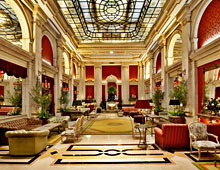 Luxury Hotel