Bestseller
London: Chelsea FC Museum and Stamford Bridge Classic Tour
From 48,09 €
Buy the ticket
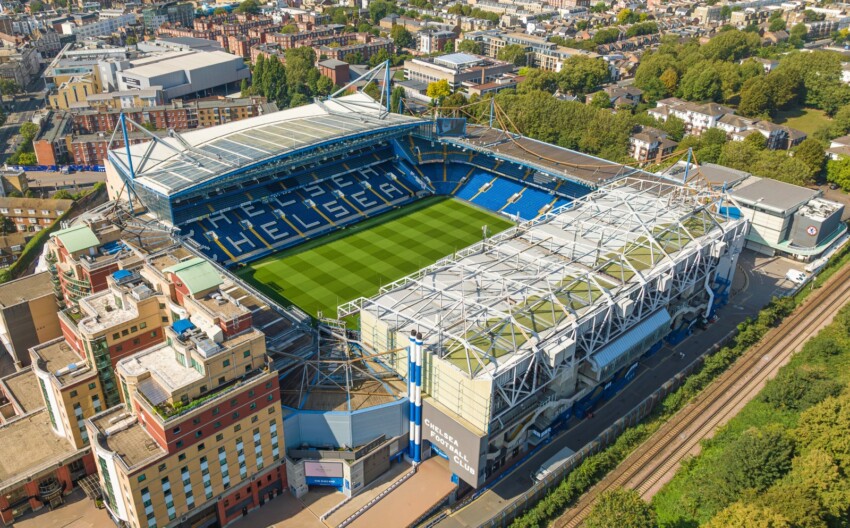
In the heart of the elegant Fulham neighbourhood of West London stands Stamford Bridge, one of the most iconic and historically significant stadiums in English and European football.
Home to Chelsea Football Club since the club’s foundation in 1905 and with a capacity of 40,834 spectators, Stamford Bridge is one of England’s oldest stadiums. Located just 500 metres from Fulham Broadway Underground station, this venue is not only the stage for the Blues’ sporting achievements, but also a multifunctional complex encompassing a hotel, restaurants, retail spaces and the club museum, making it a complete destination for football enthusiasts and tourists alike.
Unlike many modern stadiums built away from city centres, Stamford Bridge is nestled within a prestigious residential area, creating a fascinating contrast between the bustling crowds on match days and the tranquil elegance of the surrounding neighbourhood.
Stamford Bridge comprises four main stands, each with unique characteristics and its own atmosphere. Exploring them all will allow you to appreciate the stadium’s different perspectives.
The West Stand is the main and most modern stand, rebuilt in 2001. Within it you’ll find hospitality suites, VIP boxes, the press room and club offices. With its imposing façade overlooking Fulham Road, this three-level stand is the largest and most sophisticated in the stadium. Inside, don’t miss the historic photographs adorning the corridors, documenting iconic moments in Chelsea’s history.
The East Stand is the stand opposite the main one. Rebuilt in the 1970s, it’s famous for housing The Shed End, historically the hottest section for Chelsea supporters. Although the original structure has been modernised, the area retains its name and vibrant atmosphere. During a tour, observe the murals and decorations celebrating the club’s most famous supporter chants and the legends who have played for Chelsea.
The Matthew Harding Stand (North Stand) is named after the Chelsea vice-chairman who tragically passed away in 1996. This stand is renowned for its exceptional acoustics and electric atmosphere during matches. Look out for tributes to Matthew Harding visible at various points and the unique view of the pitch that this section of the stadium offers.
The Shed End (South Stand) is the stand overlooking Fulham Road and predominantly hosts visiting supporters on the upper level. The lower level is home to the Chelsea Megastore, the club’s official shop, and the entrance to the Chelsea Museum. During a tour, pay attention to the architectural details that reference the original version of “The Shed”, the famous covered terrace that existed before the rebuild.
The Chelsea Museum is a must-visit for any Stamford Bridge visitor. Located in the Shed End, the museum tells the fascinating story of the club from its foundation to the present day through a rich collection of memorabilia, trophies, historic shirts and multimedia installations.
Particularly moving are the spaces dedicated to the club’s major successes, such as the first Champions League victory in 2012 in Monaco, with the original trophy on display, and numerous Premier League trophies won under the guidance of José Mourinho and other successful managers. Don’t miss the section dedicated to club legends, from Peter Osgood and Ron “Chopper” Harris of past generations, to Frank Lampard, John Terry, Didier Drogba and Eden Hazard of the modern era.
The museum also offers interactive experiences, such as the opportunity to sit in the press conference room and answer journalists’ questions, or explore a replica of the dressing room in its days of greatest glory. An audio guide available in several languages enriches the experience with lesser-known anecdotes and stories.
A visit to the dressing rooms is one of the highlights of a Stamford Bridge tour. Chelsea’s dressing room, recently refurbished, represents the height of modernity with individual spaces for each player, marked with shirt name and number.
During the tour you’ll be able to sit in the same seats used by your favourite players, observe up close the facilities used for pre-match preparation and sense the atmosphere in these reserved spaces. Tour guides often share interesting anecdotes about player routines and superstitions, offering a privileged insight into the behind-the-scenes world of football.
Particularly interesting is the layout of the tactical area, where the manager outlines the match strategy before kick-off, and the internal warm-up zone, used by players before taking to the pitch.
Walking through the players’ tunnel and emerging pitch side is an exciting experience that allows you to literally follow in the footsteps of your football heroes. Stamford Bridge’s tunnel is decorated with the club’s colours and the famous lion emblem, creating an atmosphere charged with competitive tension.
When you emerge from the tunnel and see the playing surface in its entirety, you’ll be able to appreciate the perfection of the pitch, considered one of the best in the Premier League. The lighting system, undersoil heating and drainage represent engineering excellence in the sports facilities sector.
From pitch side, take a moment to observe the stands surrounding you and imagine the atmosphere of a match with the stadium full and supporter chants echoing through the air. This vantage point also offers excellent photography opportunities to capture your visit to Stamford Bridge.
The press conference room is where managers and players make statements before and after matches. During the tour, you’ll have the opportunity to sit in the chair used by Chelsea’s manager and experience what it’s like to face the media after a crucial match.
Stamford Bridge’s VIP and hospitality areas are among the most luxurious in the Premier League. Standard tours usually include a visit to the executive boxes, from which you can enjoy the privileged view of the pitch that executives and VIP guests of the club have during matches.
Particularly interesting is the Directors’ Box, where the club’s owners and top-level executives sit, along with celebrities and special guests. From these exclusive areas, you’ll be able to appreciate various details of the stadium that aren’t visible from standard seats.
Located in the Shed End, the Chelsea Megastore is the club’s official shop where you can purchase a wide range of official products: from match shirts to scarves, from souvenirs to casual clothing bearing the Chelsea brand. The store spans two floors and also offers shirt personalisation services with name and number.
While a visit to the shop is free and independent of the stadium tour, it’s worth including in your itinerary to take home a memento of your Stamford Bridge experience.
Stadium tour tickets can be purchased on this website.
It is strongly recommended to book in advance, especially during weekends and school holidays, when demand is highest.
Guided tours of Stamford Bridge are generally available every day with multiple departures throughout the day, usually from 10:00 to 15:00, with tours departing every 30 minutes.
Important exceptions to standard opening times:
The Chelsea Museum generally follows the same opening hours as the tours, but can be visited independently and often has extended opening hours, typically from 9:30 to 17:00.
To make the most of your Stamford Bridge experience, allow at least 1 hour for the standard guided tour and 45 minutes for a museum visit.
Ticket prices for Premier League matches vary considerably depending on the location within the stadium and the importance of the fixture. It’s important to know that purchasing tickets for Chelsea matches can be difficult for visitors, as most matches sell out quickly, with priority given to club members.
For high-profile matches (against teams such as Manchester United, Manchester City, Liverpool, Arsenal and Tottenham) and Champions League fixtures, tickets are even harder to come by and prices tend to be higher.
If tickets are sold out through official channels, you can try secondary marketplaces such as Viagogo. The cost will certainly be higher, but if you’re keen on attending and don’t want to miss out it can be a good compromise.
The history of Stamford Bridge is fascinating and dates back well before it became Chelsea Football Club’s stadium. The site of the current venue was originally land used by the London Athletics Club in the late 19th century. In 1877, this land was acquired by the Mears brothers, local entrepreneurs, who decided to transform it into a sports stadium.
The original venue, opened in 1877, was not intended for football but for athletics. The name “Stamford Bridge” has nothing to do with bridges or architectural structures: it probably derives from “Samfordesbrigge”, a small watercourse that once ran through the area, or according to other sources from a medieval battle fought nearby.
In 1904, Gus Mears, owner of the land, decided to transform it into a football stadium. His initial intention was to offer it to Fulham FC, a club already established in the area, but after their refusal, Mears made a decision that would change the history of English football: founding a new club that would play at Stamford Bridge. Thus, on 10 March 1905, Chelsea Football Club was born.
The original 1905 stadium was very different from what we see today. Designed by architect Archibald Leitch (who also designed other historic stadiums such as Old Trafford and Ibrox), it had an impressive capacity of 100,000 spectators, making it one of the country’s largest venues. The main stand in Edwardian style was the only one with seating, while the rest of the stadium consisted of vast terraces where supporters watched matches standing.
In the 1930s, the stadium was equipped with an athletics track and also hosted speedway and greyhound racing events, becoming a multi-purpose sports facility. Capacity peaked in the 1930s with 82,905 spectators recorded for a derby against Arsenal in 1935.
The structure remained substantially unchanged until the early 1970s, when an ambitious modernisation project began. The East Stand was completely rebuilt as a modern two-level stand, but the project costs plunged the club into serious financial difficulties, bringing it to the brink of bankruptcy.
The 1980s and 1990s saw further modernisations, with the rebuilding of the north stand (later renamed Matthew Harding Stand in honour of the club vice-chairman who tragically died in a helicopter accident in 1996) and the transformation of the stadium into a completely seated venue, as required by the Taylor Report following the Hillsborough tragedy.
The West Stand, the last to be rebuilt in 2001, completed Stamford Bridge’s transformation into a modern stadium. This development phase also included the creation of a hotel, restaurants, retail spaces and luxury apartments around the stadium, transforming the area into a multifunctional complex known as “Chelsea Village”.
The arrival of Russian magnate Roman Abramovich in 2003 marked the beginning of the most successful era in Chelsea’s history. Under his ownership, the stadium has undergone continuous improvements, though maintaining its relatively limited capacity (40,834 spectators) due to constraints of the urban area in which it is located.
In 2018, plans for a complete stadium rebuild with increased capacity to 60,000 seats were approved, but subsequently suspended indefinitely due to financial and political complications. With the change of ownership to Todd Boehly and Clearlake Capital in 2022, the stadium’s future remains a matter of discussion, with possible refurbishments or even a long-term relocation to a new site, although the latter option is viewed with scepticism by more traditional supporters.
Stamford Bridge is located in a central position in West London, in the Fulham neighbourhood, and is easily accessible by various means of transport.
London’s Underground is the most convenient way to reach the stadium. The nearest station is Fulham Broadway (District Line, zone 2), located just 5 minutes’ walk from the stadium. On match days, however, this station can become very crowded, especially at the end of fixtures. As an alternative, you might consider:
Numerous bus routes serve the area around Stamford Bridge:
Yes, you can, but advance booking is strongly recommended, especially during weekends, school holidays and peak tourist seasons (June–August and December–January). Booking ahead guarantees availability at your preferred time and often saves you time by avoiding queues at the ticket office.
Yes, both the stadium and museum are family-friendly attractions. Chelsea FC is recognised for its efforts in creating a welcoming environment for young supporters. During tours, guides are experienced at engaging younger visitors with age-appropriate anecdotes and interesting facts.
For matches, the club offers dedicated Family Areas where the atmosphere is more relaxed and child-friendly. Children under 2 can enter free of charge if they don’t occupy a seat. Discounted tickets are also available for children up to 16 years old.
If official channels are sold out, you can try secondary marketplaces such as Viagogo. The price will certainly be higher, but if you’re keen on the event and don’t want to miss it, it can be a good option.
Yes, the stadium is equipped to welcome visitors with disabilities. The following are available:
Stadium tours are designed to be accessible, with alternative routes available where necessary. It’s advisable to inform staff of any specific requirements when booking.
Yes, Stamford Bridge has numerous refreshment points serving a variety of food and drinks. On match days, each stand has kiosks offering snacks, sandwiches, burgers, hot dogs, pie and mash, and a selection of beverages, including beer (except during European matches where only non-alcoholic drinks are available).
For a more comprehensive dining experience, the stadium also hosts several restaurants and bars that operate on both match days and regular days:
During tours, you can take a break at the museum café, which serves hot drinks, snacks and light sandwiches.
It’s recommended to arrive at least 60–90 minutes before kick-off. This will give you time to:
For high-profile matches (derbies or Champions League fixtures), it’s advisable to arrive 2 hours early due to more stringent security checks and larger crowds.
The area around Stamford Bridge offers numerous options for eating and drinking before or after matches and tours. Some of the most popular pubs and restaurants among supporters include:
On match days, pubs in the immediate vicinity of the stadium can become extremely crowded. If you prefer a quieter atmosphere, consider options in Earl’s Court or South Kensington, which are a short walk away.
City Card allow you to save on public transport and / or on the entrances to the main tourist attractions.




 Hotel
Hotel  Budget accommodations
  Apartments
  Family Hotel
  Luxury Hotel