Bestseller
London: Tottenham Hotspur Stadium Tour
From 36,06 €
Buy the ticket
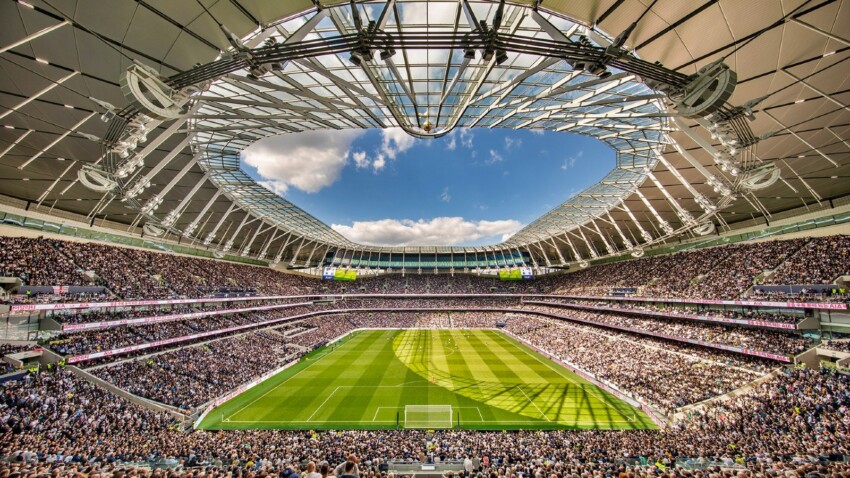
At the forefront of technological innovation, architecturally impressive and designed to offer an unprecedented experience, the Tottenham Hotspur Stadium stands as one of the most modern and innovative stadiums in the world.
Opened in April 2019 after nearly three years of construction, this architectural masterpiece occupies the exact site where the legendary White Hart Lane once stood, maintaining a strong connection to the club’s history. With a capacity of 62,850 spectators, it is the second-largest stadium in the Premier League and London’s biggest club stadium.
Located in the Tottenham district of North London, this multi-functional venue is home to Tottenham Hotspur Football Club, as well as hosting American NFL matches, world-class concerts and community events throughout the year.
What sets the Tottenham Hotspur Stadium apart from any other sports facility is its incredible versatility, exemplified by the retractable pitch that divides into three sections and slides beneath the South Stand, revealing a second synthetic surface specifically designed for American football matches and other events. With a total construction cost exceeding £1 billion, the stadium was conceived as a catalyst for urban regeneration across the entire Tottenham area, creating new employment opportunities and attracting visitors from around the globe.
The complex encompasses not only the stadium itself, but also numerous restaurants, an official club superstore, an interactive museum, an on-site microbrewery (the first in a football stadium) and even a panoramic terrace with breathtaking views across London.
The Spurs’ stadium offers numerous points of interest worthy of particular attention during your visit. Here are the most significant aspects you shouldn’t miss.
The most revolutionary feature of the stadium is undoubtedly its innovative retractable pitch system, the first of its kind in the world. The natural grass football pitch is divided into three sections which, when not in use, slide beneath the South Stand to reveal a second synthetic grass surface specifically designed for NFL matches and other events. The entire transformation process takes only approximately 25 minutes and represents a masterpiece of engineering applied to sports stadiums.
During a tour, you’ll have the opportunity to see this unique system (weather and event scheduling permitting) and understand how the stadium was conceived from the outset as a truly multi-functional structure. If you’re fortunate, you may even witness the transition itself, a fascinating process that typically occurs during changeovers between football matches and NFL games.
Particularly interesting is observing how the football pitch is preserved and maintained in perfect condition even when “parked” beneath the stand, thanks to artificial lighting systems, controlled ventilation and precision irrigation.
The South Stand was designed to be the beating heart of the stadium’s atmosphere, inspired by Borussia Dortmund’s famous “Yellow Wall”. With a capacity of 17,500 spectators arranged on a single continuous steep stand, it is the largest single stand in the UK and was specifically conceived to maximise atmosphere and create impressive acoustics.
Within the South Stand sits the Goal Line Bar, Europe’s longest bar at 65 metres, capable of serving 10,000 pints per hour thanks to an innovative system that fills glasses from below. Another unique feature is the “Market Place”, a dining area with diverse gastronomic options evoking the atmosphere of a street market.
During the tour, take time to appreciate the incredible steepness of the stand and imagine the intensity of the atmosphere during a match, when 17,500 supporters sing in unison, creating what players describe as a true “wall of sound”.
The Tunnel Club represents one of the most exclusive VIP experiences in world football. This premium space allows members to observe players through glass walls as they prepare in the tunnel before taking to the pitch. During the tour, you’ll have the opportunity to visit this exclusive area and experience the pre-match atmosphere from a unique vantage point.
The area includes a luxury restaurant with award-winning chefs, a premium bar and reserved seats directly behind the dugout, offering a privileged view of the pitch and the chance to perceive the emotions of those involved just metres away.
The Tunnel Club walls are decorated with historic club memorabilia and specially commissioned artwork, creating an environment that combines contemporary elegance with respect for Tottenham Hotspur’s heritage.
The H Club is the stadium’s most luxurious hospitality area, designed to offer an experience comparable to London’s finest restaurants. This exclusive space, inspired by London’s private members clubs, includes four top-level restaurants, a luxurious bar and premium midfield seating.
During the tour, you can admire the H Club’s refined interiors, featuring designer furnishings, original artwork and a central fireplace that creates a welcoming and elegant atmosphere. Particularly noteworthy is the Chef’s Table, where guests can enjoy an interactive culinary experience prepared by internationally renowned chefs.
The H Club perfectly embodies chairman Daniel Levy’s vision of creating not merely a stadium, but a complete experience that redefines standards for sports hospitality.
Visiting the dressing rooms is one of the most anticipated moments of any stadium tour, and Tottenham Hotspur Stadium’s do not disappoint. The main dressing room is designed in circular form to foster team spirit, with personalised individual lockers for each player. Every seat features a locker with integrated ventilation system, charging points for devices and a screen displaying personalised statistics and motivational messages.
During the tour, you can sit in the same seats used by the Spurs’ stars and notice the details designed to optimise pre-match preparation. Particularly interesting is the strategic arrangement of seating, which reflects not only team hierarchy but also tactical and linguistic considerations.
The away dressing room, whilst comfortable and modern, is deliberately more spartan and less welcoming—a subtle psychological advantage for the home team.
A unique feature of Tottenham Hotspur Stadium is its on-site microbrewery, the first ever installed in a football stadium. Located in the East Stand, the “Beavertown Microbrewery” produces fresh craft beer served directly from the stadium’s taps, eliminating transport requirements and ensuring maximum freshness.
During a tour, you can observe the production process through glass walls and, if you’re fortunate, watch the various stages of beer preparation. The brewery is part of a broader “fan experience” concept aimed at delivering superior products compared to traditional stadium standards.
Adjacent to the microbrewery is the Taproom, a pub within the stadium where visitors can sample locally-produced beers in an atmosphere reminiscent of modern craft pubs across London.
The Tottenham Experience is an extensive space located in the historic Warmington House building (the only structure preserved during the demolition of the old stadium) that houses the club museum, official store and visitor centre. The museum tells the rich history of the Spurs, from their founding in 1882 to the present day, through a collection of trophies, historic shirts, photographs and memorabilia.
Particularly moving are exhibitions dedicated to the club’s greatest legends, such as Jimmy Greaves, Glenn Hoddle, Paul Gascoigne and Harry Kane, and to defining moments, such as the 1984 UEFA Cup victory, the 1960-61 double and the epic 2019 Champions League run to the final.
The museum employs modern interactive technologies, including augmented and virtual reality installations, to create an engaging experience that will appeal to both long-time supporters and visitors less familiar with the club’s history.
Tickets for the stadium tour can be purchased on this website.
Several tour options are available:
All tours include access to the Tottenham Experience museum where you can discover the club’s rich history through trophies, historic shirts and interactive installations.
Guided tours of Tottenham Hotspur Stadium are available on most days of the year, with some exceptions on match days and during special events. Standard times are:
In total, a complete visit including tour, museum and shopping requires approximately 3-4 hours.
Watching a Tottenham match at their state-of-the-art stadium is a coveted experience, but requires planning due to high demand. Ticket prices for Premier League matches vary according to match category and stadium location:
Discounted rates are available for seniors (65+), young adults (18-21) and children (under 18), with discounts reaching up to 50% of adult prices in some stadium areas.
Obtaining tickets for Spurs matches can be challenging for tourists, as most fixtures sell out quickly, with priority given to club members.
If tickets are sold out on official channels, you can try secondary marketplaces such as Viagogo. Prices will certainly be higher, but if you’re keen on the event and don’t want to miss it, it may be a worthwhile option.
The history of Tottenham Hotspur Stadium is relatively recent, having opened in 2019, yet the journey towards its creation is rich with challenges, innovations and ambitious visions for the future.
For 118 years, from 1899 to 2017, Tottenham Hotspur played its home matches at White Hart Lane, a historic stadium deeply beloved by supporters but increasingly inadequate for the ambitions of a modern club. With a capacity limited to around 36,000 spectators and dated commercial and hospitality facilities, White Hart Lane could no longer compete with the stadiums of leading European clubs.
The decision to build a new stadium was officially announced in 2008, as part of the “Northumberland Development Project”, an ambitious urban regeneration plan for the entire surrounding area. Initially, the club considered relocating to the Olympic Stadium (now London Stadium) following the 2012 London Olympics, but ultimately the desire to remain in the Tottenham neighbourhood prevailed, maintaining a strong connection to the club’s historical roots.
After years of planning, local controversies and negotiations with authorities, the final plan was approved in 2015. The scheme involved a new stadium of approximately 62,000 seats built partly on the same site as the old White Hart Lane, but with significantly larger dimensions and cutting-edge features.
Construction of the new stadium began in 2016, while the club continued to play at White Hart Lane. The engineering challenge was enormous: building the new stadium around the old one, demolishing the latter in phases without disrupting football seasons.
The final match at White Hart Lane was played on 14 May 2017, an emotional 2-1 victory against Manchester United, followed by a farewell ceremony for the historic venue. Demolition began immediately the following day, whilst construction of the new stadium accelerated.
The original plan anticipated the new stadium would be ready for the start of the 2018-19 season, but various technical issues, particularly with electrical and safety systems, caused significant delays. During this period, Tottenham played its home matches at Wembley Stadium, England’s national stadium.
After months of delays and mounting costs, Tottenham Hotspur Stadium was finally completed in March 2019. The final cost exceeded one billion pounds, making it one of the most expensive stadiums ever built, but also one of the most technologically advanced.
The official opening took place on 3 April 2019 with a Premier League match against Crystal Palace, won 2-0 by Spurs with the first goal in the new home scored by South Korean international Son Heung-min. To celebrate the opening, the club also organised two trial matches with reduced capacity: a youth match and a “legends” match featuring former players.
Just weeks after inauguration, the stadium hosted its first major European night with a 1-0 victory over Manchester City in the Champions League quarter-final, the beginning of a run that would take the Spurs to the Madrid final.
In September 2019, the stadium hosted its first NFL match between the Chicago Bears and Oakland Raiders, successfully demonstrating the venue’s versatility and the functionality of the retractable pitch. This marked the beginning of a decade-long agreement with the NFL to host at least two matches per season.
The COVID-19 pandemic in 2020 temporarily interrupted the stadium’s commercial development plans, with matches played behind closed doors for several months. However, during this period, the venue served the community as a food distribution centre for those in need and subsequently as a vaccination centre.
Today, Tottenham Hotspur Stadium is fully operational not only as home to Spurs, but also as a venue for international sporting events, concerts (featuring artists such as Lady Gaga and Guns N’ Roses) and continues to be a catalyst for the economic regeneration of the Tottenham area.
Tottenham Hotspur Stadium is located in north London, in the Tottenham neighbourhood, and is well connected to the capital’s public transport system.
The London Underground is the most convenient way to reach the stadium. The nearest stations are:
On event days, these stations can become very crowded, particularly after matches end. Transport for London often implements crowd management systems, including restricted access to stations and designated routes.
Numerous bus routes serve the Tottenham Hotspur Stadium area:
On match days, some bus services may be subject to diversions or restrictions due to road closures around the stadium. It is advisable to check the updated route on Transport for London’s website before travelling.
For more information on London buses, consult our guide.
Yes, advance booking is strongly recommended, especially during weekends, school holidays and peak tourist season. The most popular tours, particularly half-day ones, tend to sell out quickly. Booking in advance not only guarantees availability at your preferred time, but often allows you to save time by avoiding box office queues.
If tickets are sold out through official channels, you can try looking on secondary marketplaces such as Viagogo. The price will certainly be higher, but if you’re keen on the event and don’t want to miss it, it can be a good compromise.
Yes, Tottenham Hotspur Stadium is considered one of the most family-friendly stadiums in the Premier League. The club has created several initiatives to make the experience welcoming for visitors of all ages:
During stadium tours, guides pay particular attention to younger visitors, adapting explanations and actively engaging them. The museum also includes interactive sections designed specifically for children.
For matches, children under 2 years old can enter free if they do not occupy a seat, whilst significant reduced fares are available for young people up to 18 years old.
Absolutely yes. Tottenham Hotspur Stadium was designed from the outset with particular attention to accessibility, setting new standards for inclusivity in modern stadiums.
During tours, wheelchair-accessible routes are available that allow you to visit all the main points of interest. It is advisable to inform the stadium of any specific requirements when booking your tour or purchasing match tickets.
Tottenham also has a dedicated Disability Access Officer and a team of specially trained stewards to assist visitors with disabilities. Further detailed information is available in the accessibility section of the club’s official website.
Yes, one of the distinctive features of Tottenham Hotspur Stadium is its high-quality food offering, which has redefined standards for food in sports venues. The stadium hosts:
An innovative feature is the ability to use a dedicated app to order food and beverages directly from your seat, with delivery or collection at designated points, avoiding queues during half-time.
During tours, The M Café and some other food options are operational, depending on the day and time. In the immediate vicinity of the stadium there are also several restaurants and cafés that are part of the urban regeneration project for the area.
Yes, the area around Tottenham Hotspur Stadium has undergone significant transformation as part of the urban regeneration project linked to the new stadium’s construction. Some popular options include:
On match days, pubs in the immediate vicinity of the stadium fill up rapidly, so it is advisable to arrive well in advance or make a reservation where possible.
For a complete gastronomic experience, it is worth considering the numerous options within the stadium itself, which offer superior quality food compared to traditional stadium catering standards.
City Card allow you to save on public transport and / or on the entrances to the main tourist attractions.

 Hotel
Hotel  Budget accommodations
  Apartments
  Family Hotel
  Luxury Hotel