Bestseller
The Chimney Lift at Battersea Power Station
From 19,51 €
Buy the ticket
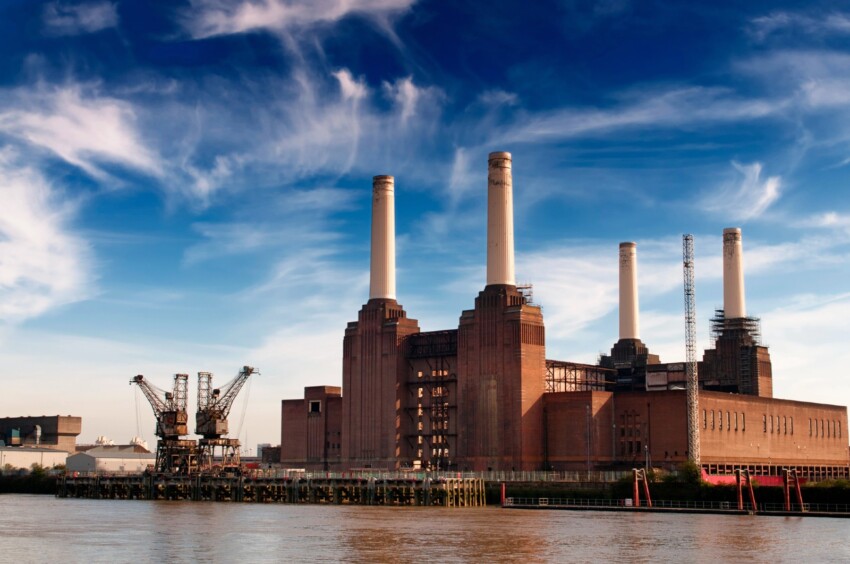
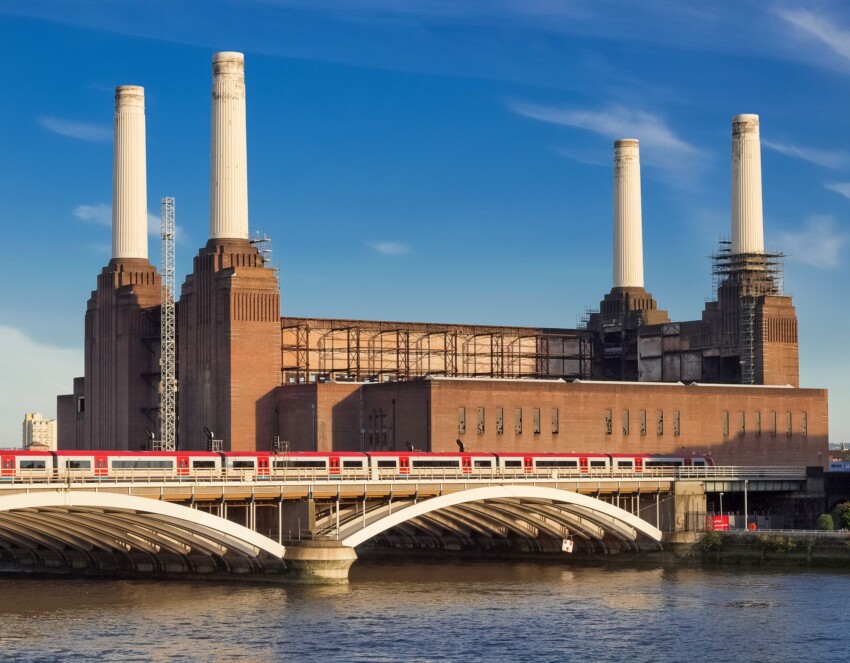
Along the banks of the Thames, in the Battersea neighbourhood, stands one of London’s most iconic buildings. The Battersea Power Station, with its four imposing white chimneys visible from miles away, represents an extraordinary example of art deco industrial architecture that has defined the landscape of the British capital for over ninety years.
This monumental power station, built between 1929 and 1955, ceased production in 1983 after supplying electricity to 20% of London, powering landmark buildings such as the Palace of Westminster and Buckingham Palace.
After nearly four decades of abandonment, the building was completely restored and reopened to the public in October 2022, transforming into a vibrant attraction offering over 150 shops, restaurants, bars and attractions, and the experience of the Chimney Lift that takes visitors to 109 metres high, offering spectacular views across the city.
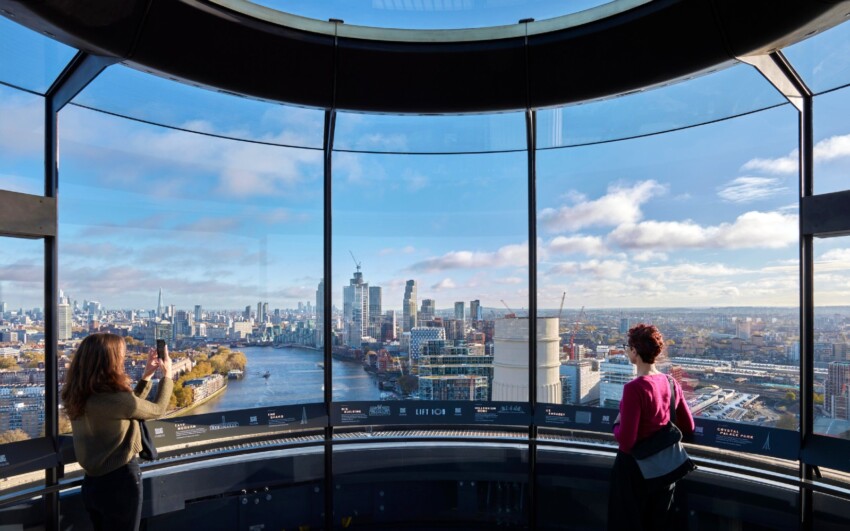
The main attraction at Battersea Power Station is undoubtedly the Chimney Lift, a unique experience that takes visitors 109 metres high, to the top of the building’s north-western chimney. The experience begins in the magnificent Turbine Hall A in art deco style, where an interactive multimedia exhibition tells the rich history of the power station through original documents, archival photographs and audio-visual installations.
The journey continues into the Infinity Room, an immersive space where lights and sounds create a sensory experience that prepares visitors for the ascent. Here, an interactive light installation responds to visitors’ touch, simulating energy generation through a large-scale multiplayer touchscreen where participants interact collectively.
The panoramic glass lift rises along the interior of the chimney, with constellations of light guiding the way upwards. Once at the top, 360-degree panoramic views open up across London: on clear days you can see the London Eye, the Royal Albert Hall, the Big Ben Tower, The Shard, Tower Bridge and even Crystal Palace to the south. Information panels help identify various landmarks, whilst the observation platform allows for memorable photographs.
The complete experience lasts approximately 30-40 minutes and is available both during the day and at sunset, offering completely different perspectives on the city.
The power station’s original control rooms have been meticulously restored and represent fascinating testimonies to 20th-century British industrial engineering. Control Room A, with its distinctive 1930s style, has been transformed into a space for exclusive events, whilst Control Room B, which reflects 1950s aesthetics, has become an all-day concept bar where visitors can get close to the original dials and controls, still perfectly preserved.
Both rooms retain their intact bakelite control panels, numerous switches, pressure gauges and instruments that once regulated electricity production. Walls lined with art deco tiles and original terrazzo flooring add further historical charm to these unique spaces.
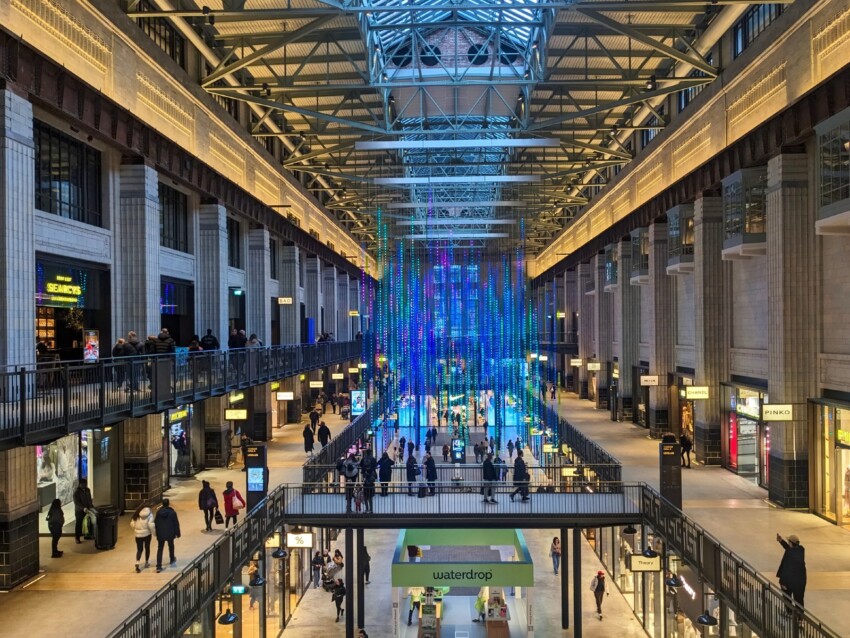
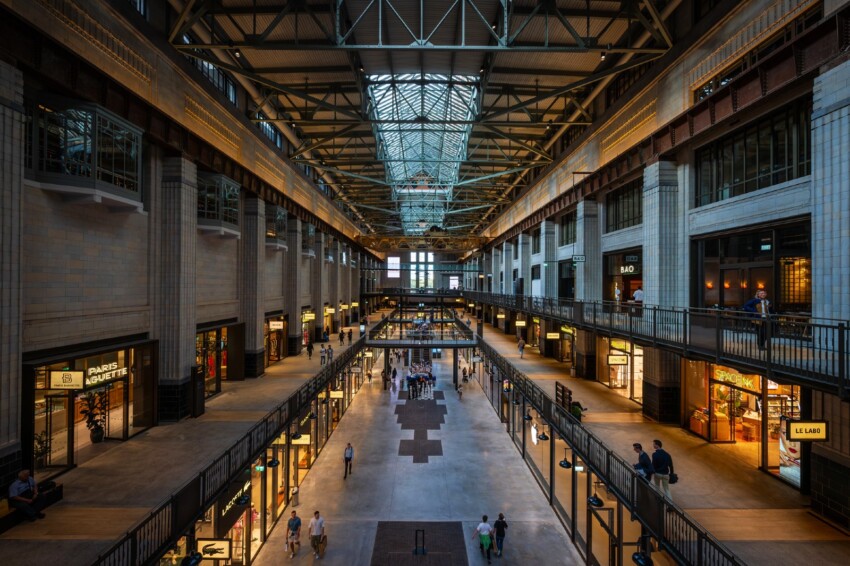
The Turbine Hall A and B, the industrial heart of the power station, are now three-storey shopping galleries hosting over 150 shops. The atmosphere retains the original industrial character with exposed steel structures, enormous vertical volumes and brick finishes, creating a truly distinctive shopping environment. Among the brands present are luxury names such as Ralph Lauren and Mulberry, alongside more accessible labels like Zara, Mango and Uniqlo. The M&S flagship store, which opened in December 2024, is the brand’s first independent fashion store.
Particularly noteworthy is Battersea Books, a large bookshop offering every imaginable literary genre, with comfortable reading areas where you can settle in with a beverage. Liberty has opened a pop-up dedicated to fragrances in Turbine Hall A, the first time the brand has expanded outside its historic London flagship. The LEGO store includes a miniature reconstruction of Battersea Power Station itself, attracting visitors of all ages.
Battersea Power Station offers over 50 restaurants, bars and cafés ranging from international cuisine to traditional British establishments. The Arcade Food Hall brings together various casual dining options in one lively space, whilst restaurants such as Dishoom (specialising in Bombay-inspired Indian cuisine), Gordon Ramsay Street Pizza, Wagamama and Megan’s offer more structured culinary experiences.
Along the Riverside Walk, venues with outdoor terraces allow you to enjoy spectacular views of the Thames, particularly appreciated at sunset. The Ping Pong bar combines food and entertainment with ping pong tables available for guests, whilst numerous wine bars and craft breweries offer refined selections in characterful settings.
The Cinema in The Power Station is a boutique cinema screening blockbusters, independent films and cinema classics in a comfortable and modern setting. Birdies, an indoor mini-golf course with creative design and fun settings, offers an alternative entertainment option for families and groups of friends.
The power station regularly hosts cultural events, temporary exhibitions and artistic installations. In 2025, the NEON opened, a new permanent exhibition space of 3,200 square metres dedicated to immersive experiences and large-scale cultural exhibitions. NEON presents two unique exhibitions per year, attracting visitors from around the world with content ranging from archaeological artefacts to thematic exhibitions such as Jurassic World: The Exhibition.
The annual calendar at Battersea Power Station includes major events that attract hundreds of thousands of visitors. The Light Festival, held from January to February, transforms the complex with artistic light installations creating magical atmospheres after sunset.
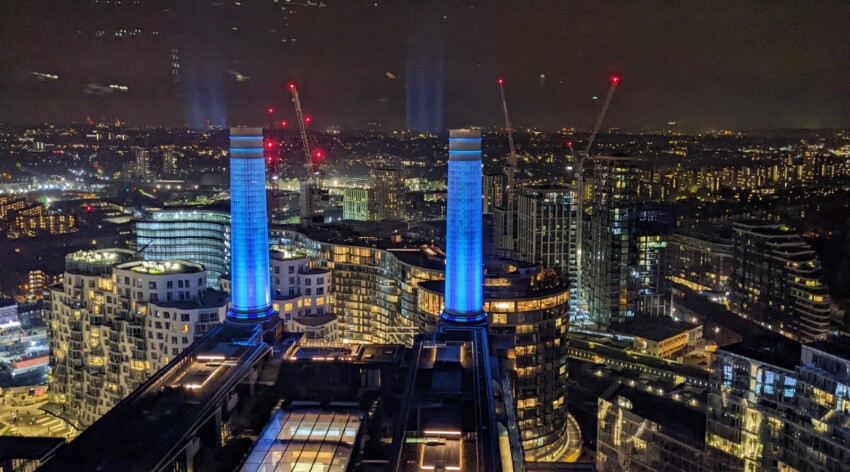
In September, the celebrASIA festival is held, celebrating South-East Asian culture with food, music, markets and entertainment, attracting over 150,000 visitors at its inaugural 2024 event. During the festive season, from 7 November to 4 January, the power station transforms into one of London’s most enchanting festive destinations, with Glide, the capital’s only riverside ice skating rink, sparkling decorations, Christmas markets and spectacular lighting that transforms the chimneys into a symbol of London’s holiday season.
The surroundings of the power station include Power Station Park, a recently created green space with children’s play areas, landscaped gardens and pedestrian paths extending along the Thames. The Riverside Walk, freely accessible, offers a panoramic walk of over a kilometre along the river, with views of the power station on one side and central London on the other.
During the warmer months, temporary artistic installations enhance the outdoor spaces. POWER, a colourful monumental typographic installation by Morag Myerscough, has become one of the neighbourhood’s most popular photo spots.
Battersea Power Station is Europe’s largest brick building, with imposing dimensions that have made it an unmistakable landmark along the Thames. The building extends across an area that once covered 42 acres of industrial land, now transformed into a vibrant, multifunctional neighbourhood.
The four iconic chimneys, arranged symmetrically at the building’s four corners, reach a height of 101 metres from ground level. Each chimney is 50 metres tall and sits atop cooling towers 51 metres high. During restoration, the original chimneys, which were severely deteriorated, were completely rebuilt using modern techniques whilst maintaining an exterior appearance identical to the original.
The red brick façade, constructed with over 6 million bricks, features art deco decorations that Scott designed to elevate the building from a simple industrial structure to an architectural masterpiece. External details include elaborate finishes recalling classical columns, whilst the interiors retain original elements such as Control Rooms A and B, beautifully restored with their control panels, dials and vintage instruments intact.
The Turbine Hall A and B, enormous rooms that once housed generators, have been converted into public spaces for the first time in the building’s history. These spaces maintain the original industrial atmosphere with high ceilings and exposed steel and brick structures, creating a fascinating contrast with the modern shops and restaurants now found within.
The restoration and conversion project, undertaken by the WilkinsonEyre architectural practice, respected the integrity of Scott’s masterpiece, preserving the chimneys, massive brick structure and Turbine Halls as dominant elements. New residential spaces have been added, including apartments and rooftop villas surrounding roof gardens, offering spectacular views of the river and city.
Battersea Power Station is not merely a site of architectural interest but also a symbol of British popular culture: its chimneys appeared on the cover of Pink Floyd’s album Animals in 1977, in the Beatles film Help! and in numerous other film and television productions. In 2024, National Geographic listed it among the world’s best 20 cultural sites, recognising its importance as an international destination.
Construction of Battersea Power Station began in 1929 in response to London’s growing energy demand. The project, entrusted to architect Sir Giles Gilbert Scott – the same designer of the iconic red British telephone boxes and Liverpool Cathedral – addressed citizens’ concerns that the industrial building might disfigure the urban landscape.
Scott transformed what could have been a purely functional structure into an architectural masterpiece, using 6 million red bricks to create an art deco building that harmonised with its surroundings. The power station was constructed in two distinct phases: the Battersea A Power Station, completed in 1935 with two western chimneys 101 metres high, and the Battersea B Power Station, finished in 1955 with two eastern chimneys, following an interruption due to the Second World War.
During its operational period, the power station became a strategic landmark: RAF pilots used the white steam plumes from the chimneys to navigate through London’s fog. In 1964, an electrical fault at the power station caused a blackout across London, delaying the launch of BBC Two, which was postponed to the following day.
The power station reached the height of cultural fame in 1977, when Pink Floyd chose the building for the cover of their album Animals, photographing it with an inflatable pink pig floating between the southern chimneys. During the photoshoot, the pig broke free from its moorings and drifted into Heathrow Airport’s airspace, prompting police helicopters to track its path until it landed on the Kent coast.
Following closure in 1983, the building was granted Grade II* listed building status by Historic England, recognising its architectural and historical importance. For nearly three decades it remained abandoned, with numerous redevelopment projects failing, including a theme park in the 1980s and a stadium for Chelsea FC in the 1990s. It was only in 2012 that Malaysian investors acquired the site and launched a restoration project worth 9 billion pounds, completed in 2022.
Battersea Power Station is located in the Battersea neighbourhood, in the London Borough of Wandsworth, on the south bank of the Thames. The complex occupies a strategic position along the river, directly opposite the Chelsea district on the north bank and within easy reach of some of the capital’s most prestigious areas.
The most convenient way to reach Battersea Power Station is by Underground, alighting at Battersea Power Station station on the Northern Line.
In addition to the Underground, seven bus routes serve Battersea Power Station and the surrounding area. The “Battersea Power Station” stop on Battersea Park Road is served by routes 156, 211, 344 and 436. From here, cross the road and walk along Pump House Lane to reach the complex in approximately 10 minutes on foot.
The “Battersea Park/Chelsea Gate” stop near Chelsea Bridge is served by routes 44, 137, 211 and 452. From this stop, descend the steps on the south side of Chelsea Bridge and follow the riverside path to Circus West Village, identifiable by Morag Myerscough’s striking “POWER” art installation.
However, the most enjoyable way to arrive at the power station is undoubtedly by Uber Boat by Thames Clippers. Battersea Power Station Pier is about a 5-minute walk from the complex along the Riverside Walk. Travel times along the river include: Putney (25 minutes), Westminster (10 minutes), Embankment (15 minutes), Blackfriars (20 minutes) and Canary Wharf (40 minutes).
A comprehensive visit to Battersea Power Station requires at least 3 hours if you wish to go up the Chimney Lift, explore the shops, have lunch or dinner at one of the restaurants and walk along the Riverside Walk. If you’re planning just a brief stop to view the building from outside and take a quick look at the Turbine Halls, an hour should suffice.
Access to the Turbine Halls, shops and restaurants is free and requires no booking. However, to go up the Chimney Lift, you’ll need to purchase a ticket with a specific time slot, and advance online booking is strongly recommended, especially at weekends and during school holidays, as places sell out quickly.
Yes, Turbine Halls A and B are open free to the public during opening hours. You can explore the commercial spaces, admire the original industrial architecture, visit the shops freely and enjoy the restaurants. Only the Chimney Lift experience requires a paid ticket.
The Early Riser Experience at 10:00 in the morning offers fewer crowds and ideal light for photographs. Sunset (times vary by season) is the most popular time for spectacular views of the city lit up. Weekdays are generally less crowded than weekends. Weather conditions affect visibility, so check the forecast before booking.
Yes, the complex is fully accessible. The Underground station has lifts, and the second exit on Electric Boulevard offers step-free access. All main areas are wheelchair accessible. For the Chimney Lift, an accessible lift is available and must be booked in advance by contacting customer service.
City Card allow you to save on public transport and / or on the entrances to the main tourist attractions.
 Hotel
Hotel  Budget accommodations
  Apartments
  Family Hotel
  Luxury Hotel