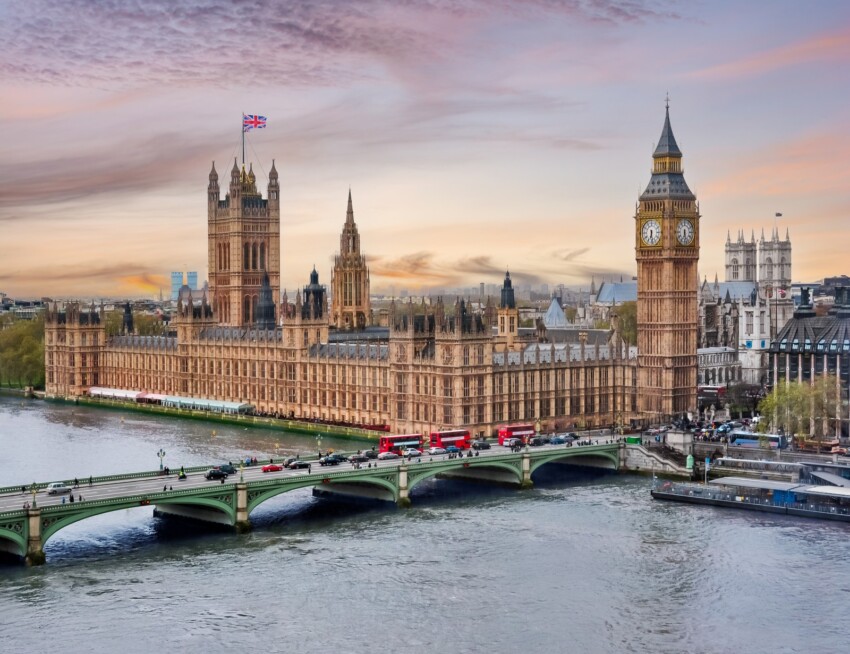
The deep, powerful chime that resonates along the Thames every hour is perhaps London’s most iconic sound. That chime comes from Big Ben, the celebrated clock that towers above Elizabeth Tower on the magnificent Palace of Westminster, home to the British Parliament (Houses of Parliament). When people think of London, the image of this imposing Neo-Gothic tower with its gilded clock face is probably one of the first things that comes to mind, an undisputed symbol of the British capital and parliamentary democracy.
Built after the devastating fire of 1834 that destroyed much of the ancient palace, the current Neo-Gothic complex has witnessed over 160 years of British history. Its twin towers, soaring spires and privileged position on the Thames make it one of the most photographed buildings in the world. The most famous part, the Clock Tower, houses Big Ben – which, contrary to popular belief, is actually the name of the main bell rather than the clock itself.
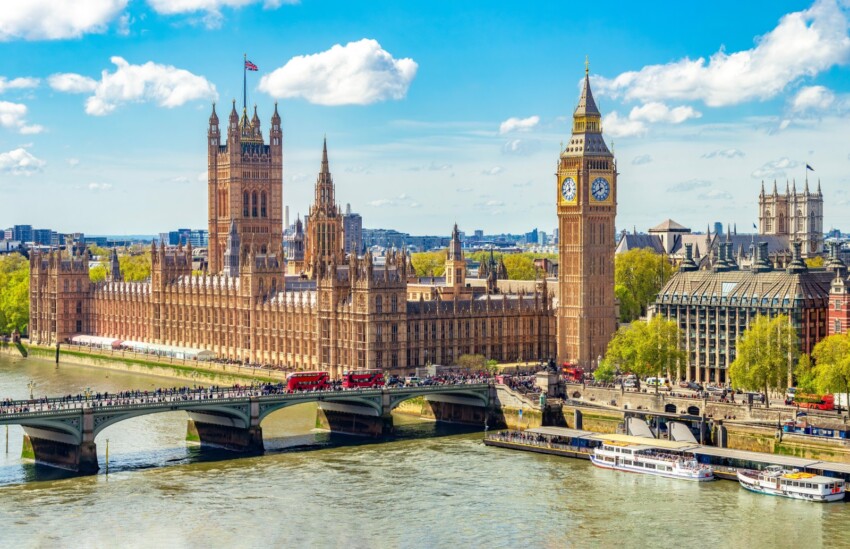
The Elizabeth Tower, formerly known as the Clock Tower and renamed in honour of Queen Elizabeth II in 2012 to mark her Diamond Jubilee, stands majestically at the north end of the Palace of Westminster. Standing 96 metres tall, it dominates Westminster’s skyline and is visible from numerous points across the city.
The tower houses the famous clock with four faces, each 7 metres in diameter, illuminated at night with an evocative golden glow. The clock faces are decorated with the Latin inscription “DOMINE SALVAM FAC REGINAM NOSTRAM VICTORIAM PRIMAM”, which means “Lord, protect our Queen Victoria I”.
Inside the tower is the actual “Big Ben“, a name that actually refers to the main bell weighing 13.7 tonnes, not the clock or the tower itself as is often believed. The bell is named after Sir Benjamin Hall, the Chief Commissioner of Works at the time of its installation in 1858. The unmistakable sound of Big Ben was first broadcast by the BBC in 1923 and has since become London’s acoustic symbol, recognised worldwide.
The clock mechanism, designed by Edmund Beckett Denison and built by Edward John Dent and Frederick Dent, is remarkable for its precision. The pendulum beats every two seconds and is regulated by adding or removing one-penny coins on top of it, with a single coin changing the clock’s speed by 0.4 seconds per day.
The House of Lords is one of the most opulent chambers in the Palace of Westminster, designed to reflect the dignity and importance of the upper house of the British Parliament. Topped by a gilded ceiling and decorated with colourful stained glass, this chamber is a triumph of Victorian art.
The seats are upholstered in red leather, a colour traditionally associated with nobility, and the chamber is dominated by the magnificent Royal Throne in carved and gilded wood, used by the monarch during the State Opening of Parliament. At its centre stands the Woolsack, a large cushion stuffed with wool that serves as the seat for the Lord Speaker, who presides over the House. This tradition dates back to the 14th century and symbolises the historical importance of the wool trade to the British economy.
On the walls hang full-length portraits of the “Monarch Peers“, kings who reigned during the Wars of the Roses, whilst the rest of the chamber is richly decorated with frescoes, mosaics and wooden carvings depicting historical scenes and heraldic symbols. Visitors can observe artistic details created by the Royal Fine Art Commission, such as the heraldic shields of feudal lords from the time of William the Conqueror displayed on the stained glass.
During guided tours, you can admire this sumptuous chamber where important legislative debates still take place and where you can witness the colourful ceremonial pageantry of the British Parliament, with Lords in official dress and ancient traditions still respected.
The House of Commons presents a striking contrast to the opulence of the House of Lords. More austere and functional, this chamber is the beating heart of British democracy and home to the 650 members of Parliament elected by the people. Unlike the House of Lords with its red décor, here the dominant colour is green, which upholsters the benches arranged on two facing sides.
The chamber’s layout is intentionally intimate and relatively small (only 427 MPs can sit at any one time), creating an atmosphere of direct confrontation that characterises British politics. The two main sides are separated by a distance exactly equal to two sword lengths plus a foot, a relic of the era when parliamentarians carried weapons.
At the centre sits the Speaker’s chair, which moderates the debates, and in front of it the “Table of the House“, where parliamentary officials sit and where the ceremonial Mace is placed, the symbol of the Crown’s authority without which the House cannot legally convene.
The current House of Commons is not the original: it was completely destroyed during Second World War bombing in 1941 and rebuilt under the direction of architect Sir Giles Gilbert Scott, though it maintained the traditional design and dimensions. Winston Churchill insisted that the chamber retain its limited size, arguing that this layout encouraged lively debates and kept the British parliamentary tradition alive.
During visits, you can sit on the benches where Britain’s greatest statesmen have sat and imagine the electric atmosphere of Prime Minister’s Question Time, when the head of government answers questions from the opposition amid applause and cheering.
Westminster Hall is the oldest part of the palace, having survived the 1834 fire and witnessed nearly 1000 years of history. Built in 1097 under the reign of William II (William Rufus), this imposing hall represents one of the world’s largest medieval open-roof spaces, measuring 73 metres in length and 20 metres in width.
The ceiling is supported by a remarkable 14th-century oak timber structure, a masterpiece of medieval engineering commissioned by Richard II. This hammer-beam roof uses no central supports, creating a completely open space that leaves visitors awestruck.
Westminster Hall has hosted some of the most significant events in British history: trials of Thomas More, King Charles I, Guy Fawkes and William Wallace were held here. In more recent times, the hall witnessed celebrations for Queen Elizabeth II’s Golden Jubilee and has hosted the coffins of important state figures during state funerals, including Winston Churchill, the Queen Mother and Margaret Thatcher. In 2013, Nelson Mandela became the first non-British person to be honoured here.
On the stone floor you will notice a plaque marking the exact spot where King Charles I stood during his trial for treason in 1649. Along the walls are commemorative plaques and memorials that tell the long and complex history of this extraordinary space.
Westminster Hall is often the starting point of guided tours and offers a fascinating contrast with the 19th-century Neo-Gothic sections of the rest of the palace.
St. Stephen’s Hall occupies the site of the ancient St. Stephen’s Chapel, which from 1547 to 1834 housed the House of Commons until it was destroyed in the fire. This corridor is rich in parliamentary history and serves as a link between Westminster Hall and the central octagon, from which access is gained to the current parliamentary chambers.
Along the walls of this hall are statues of famous parliamentarians and statesmen, alongside paintings illustrating crucial moments in British constitutional history. The floor is decorated with elaborate mosaics, recreating the design of the chapel’s original medieval floor.
An interesting detail is the line in the floor that marks the point beyond which monarchs cannot advance, symbolising the separation of powers between the Crown and Parliament. This line has profound historical significance, stemming from Charles I’s unsuccessful attempt to arrest five members of Parliament in 1642, an event that contributed to the outbreak of the English Civil War.
During your visit, take time to observe the architectural details and decorations that tell the story of the long evolution of British parliamentary democracy.
The Central Lobby is the architectural heart of the Palace of Westminster, situated exactly between the House of Lords and the House of Commons. This octagonal chamber is decorated with refined mosaics representing the patron saints of the four nations of the United Kingdom: St. George (England), St. Andrew (Scotland), St. David (Wales) and St. Patrick (Northern Ireland).
The 23-metre-high domed ceiling is supported by stone pillars and decorated with coloured stained glass that filters the light, creating a solemn atmosphere. The mosaic floor features intricate patterns and the parliamentary emblem.
This hall is not only architecturally significant but also functionally important to British democracy. It is here that citizens can come to meet or “lobby” their elected representatives, from which the political term “lobbying” derives. Even today, any British citizen can visit the Central Lobby and request to speak with their MP (Member of Parliament).
During visits, you can see the counter where visitors complete “green cards” to request a meeting with their representative, a tradition that underscores the accessibility of the British parliamentary system.
The Victoria Tower, which stands at the south end of the palace, was once the world’s tallest square tower at 98.5 metres, slightly taller than Big Ben’s tower. This imposing structure was designed not only as an architectural element but also as a secure archive for parliamentary documents. Even today, the tower houses over three million documents, including all laws passed by Parliament since its construction.
On top of the tower flies the flag of the United Kingdom when Parliament is in session, replaced by the Royal Standard when the monarch is in the building.
Adjacent to Victoria Tower is the Royal Robing Room, a sumptuous chamber where the sovereign dons ceremonial robes and the Imperial State Crown before the State Opening of Parliament. The room is richly decorated with frescoes depicting Arthurian legends, symbolising the chivalric virtues of justice and valour.
The focal point of the room is the ceremonial throne beneath a gilded canopy, used by the monarch before leading the procession to the House of Lords. The walls are lined with elaborate wooden panelling and decorated with heraldic shields, whilst the ceiling features gilded coffers with floral designs.
Although access to these areas is more limited than other parts of the palace, during certain special tours it is possible to admire these regal spaces where one of the most important ceremonies in British political life takes place.
The history of the Palace of Westminster is interwoven with the political and constitutional evolution of the United Kingdom itself. The site has hosted a royal palace since the 11th century, when King Canute the Great (1016–1035) chose this area for his London residence. However, it was Edward the Confessor who established his court here and constructed the first grand palace, completed in 1060.
Following the Norman Conquest of 1066, William the Conqueror adopted Westminster as the principal seat of government, and this tradition has continued unbroken to the present day, making the Palace of Westminster the oldest political centre in the world still in active use.
Over the following centuries, monarchs enlarged and embellished the palace. A pivotal moment came in 1295, when Edward I convened what became known as the “Model Parliament“, marking the beginning of parliamentary institution and the gradual shift of the palace’s function from royal residence to seat of government.
In 1512, a serious fire damaged significant portions of the structure, and King Henry VIII decided to abandon Westminster as a royal residence in favour of the Palace of Whitehall. This event marked the definitive transformation of Westminster into Parliament’s exclusive seat.
The night of 16 October 1834 marks a dramatic turning point: a catastrophic fire destroyed almost the entire ancient palace, leaving standing only a few medieval structures, including Westminster Hall, St Stephen’s Crypt and the Jewel Tower. This event led to an architectural competition for reconstruction, won by Charles Barry with a Neo-Gothic design, created in collaboration with Augustus Welby Pugin.
Reconstruction work began in 1840 and continued for decades, with the new palace gradually completed and occupied between 1852 and 1870. Barry’s project included two famous towers: the Victoria Tower and the Clock Tower (now Elizabeth Tower), the latter housing Big Ben.
The Big Ben bell has a fascinating history of its own. Initially cast in 1856 at a foundry in Stockton-on-Tees, it cracked during testing. It was therefore recast in 1858 at the Whitechapel Bell Foundry in London, but developed a second crack in September 1859. Rather than recasting it again, the decision was made to rotate the bell slightly and use a lighter hammer – a solution that has allowed Big Ben to sound with its characteristic slightly cracked tone for over 150 years.
During the Second World War, the palace suffered severe damage from aerial bombardment. On 10 May 1941, a particularly devastating raid destroyed the House of Commons and severely damaged other parts of the building. Big Ben, however, continued to chime throughout the war, becoming a symbol of resilience broadcast by the BBC. Post-war reconstruction lasted until the 1950s, with the new House of Commons officially opened on 8 October 1950.
In 1987, the Palace of Westminster was designated a UNESCO World Heritage Site, recognising its exceptional historical and architectural value. More recently, the palace has faced significant challenges related to the ageing of its structures, with an extensive restoration programme planned for the coming years, including the current Elizabeth Tower restoration project, which began in 2017.
Tickets to visit the Palace of Westminster vary depending on the type of visit and time of year. We strongly recommend purchasing tickets online in advance through the official UK Parliament website, especially during peak tourist season (July–August) or during public holidays, to avoid long queues and ensure availability.
It is important to note that during parliamentary sessions (generally Monday to Thursday), guided tours are available only to overseas visitors, whereas on days when Parliament is not in session (mainly Saturdays and during parliamentary recesses), tours are open to all.
In addition to standard guided tours, several special experiences are available:
The Palace of Westminster is open to visitors at different times depending on the time of year and parliamentary activity. In general, guided tours are available at the following times:
The palace is generally closed to the public on Sundays (except for special events), at Christmas, on Good Friday and on days of state ceremonies such as the State Opening of Parliament. On these occasions, the entire complex may be closed even to visitors with advance booking.
Regarding observing parliamentary debates, when the chambers are in session, public galleries are open:
Exact opening times may vary based on the parliamentary schedule, so it is always advisable to check the official Parliament website before your visit.
A complete guided tour of the Palace of Westminster lasts approximately 90 minutes. However, taking into account the time needed for security checks (which can take up to 30 minutes during peak periods) and for exploring the introductory exhibition, you should allow at least 2–2.5 hours for the entire experience.
To avoid crowds, the best time to visit the Palace of Westminster is on weekdays outside school holidays and the summer months of July and August. In particular, early morning tours tend to be less crowded.
The ideal time of year for a visit is during parliamentary recesses (mainly Easter, late July–early September and Christmas), when more tours are available and you can access both parliamentary chambers.
If you are interested in attending parliamentary debates, Wednesday afternoons offer the opportunity to observe Prime Minister’s Questions (PMQs), when the Prime Minister answers questions from the opposition. This session, held at 12:00 noon, is particularly lively and offers a fascinating glimpse into British politics, although gallery access for PMQs is limited and in high demand.
For a unique perspective of the palace, consider a visit at sunset in autumn or winter, when the external illumination of Big Ben and the Neo-Gothic façade creates a particularly atmospheric setting, ideal for photography.
The State Opening of Parliament is the grandest and most traditional ceremony in the British parliamentary calendar. This annual event marks the formal beginning of the parliamentary session and represents a rare occasion when the three constituent elements of Parliament – the Crown, the House of Lords and the House of Commons – come together.
During this ceremony, the monarch processes from Buckingham Palace to the Palace of Westminster, often in the golden State Coach, escorted by the Household Cavalry. Inside the palace, the sovereign dons the Imperial State Crown and regalia in the Royal Robing Room, before leading the procession to the House of Lords.
A particularly symbolic moment occurs when the Black Rod (a senior official of the House of Lords) is sent to summon members of the House of Commons. As a sign of the Commons’ independence from the Crown, the door is symbolically slammed in the Black Rod’s face, who must then knock three times with his ceremonial black staff before being granted access.
Whilst attending this ceremony in person is virtually impossible for tourists, the proceedings are broadcast live on television. In the days following the ceremony, the processional route within the palace can be seen during guided tours, with guides explaining the significance of various elements of the ritual.
Occasionally, Parliament organises exclusive evening tours that offer a unique experience of the illuminated palace. These tours, usually available only during certain periods of the year, allow you to admire the interiors in a more intimate and atmospheric setting, with a reduced number of visitors.
During these visits, guides dwell on lesser-known anecdotes and stories related to the palace and its long history. Some evening tours have specific themes, such as “Tales of Intrigue and Conspiracy” or “The Ghosts of Westminster”, which explore the more mysterious and fascinating aspects of the building.
The cost of these special visits is generally higher than standard tours, but the exclusive experience is certainly worth the premium. Tickets are limited and tend to sell out quickly, so it is advisable to book well in advance through the official Parliament website.
During Open House London and Heritage Open Days, which typically take place in September, areas of the Palace of Westminster normally closed to the public are opened for special tours. These days offer unique opportunities to access spaces such as the palace roofs, some historic parliamentary offices or the ancient crypts.
These free events are extremely popular and places sell out quickly, often through a lottery system. Information about participation is posted on the Parliament website and on the event websites themselves a few months in advance.
Parliament regularly organises educational workshops and lectures for students and adults interested in how British democracy works. These events provide insights into the legislative process, constitutional history and the role of Parliament in contemporary society.
For families with children, during school holidays interactive activities are organised specifically designed for younger visitors, such as themed treasure hunts within the palace or creative workshops inspired by parliamentary history and art.
These educational events are often free or available at nominal cost, and represent an excellent opportunity to deepen your understanding of British democratic institutions in an engaging way.
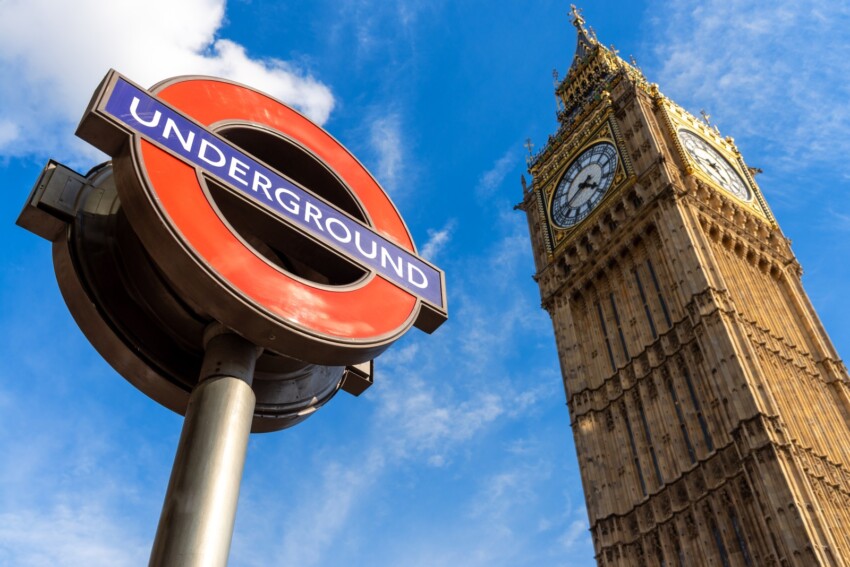
The most convenient way to reach the Palace of Westminster is certainly by London Underground. The nearest station is Westminster (Jubilee, Circle and District lines), which is situated right opposite the palace with an exit that immediately provides a spectacular view of Big Ben.
Other nearby stations include St James’s Park (Circle and District lines), approximately a 5-minute walk away, which offers a pleasant stroll through the park of the same name, and Waterloo (Jubilee, Northern, Bakerloo and Waterloo & City lines), on the opposite bank of the Thames, from which you can enjoy panoramic views whilst crossing Westminster Bridge.
Numerous London bus routes stop in the immediate vicinity of the Palace of Westminster. The main stops are on Parliament Square, Victoria Street and Westminster Bridge. The main routes serving the area include: 11, 12, 24, 53, 87, 88, 148, 159, 211 and 453.
A particularly atmospheric way to reach the Palace of Westminster is via the Thames, using Thames Clippers river boats. The nearest pier is Westminster Pier, situated right next to the palace. This service connects Westminster with various areas of London, from Putney to Greenwich and beyond.
Arriving by river offers the opportunity to enjoy spectacular views of the city from a unique perspective and to fully appreciate the majestic façade of the Palace of Westminster overlooking the Thames.
Tours of the tower are extremely rare and not readily accessible to international visitors. However, the tower can be admired from the outside at various vantage points around Westminster, and guided tours of the Palace of Westminster provide extensive information about its history and operation.
Big Ben traditionally chimes on the hour, with smaller chimes at quarter-hour intervals. The sound carries remarkably well and can be heard several kilometres away under favourable conditions. For the best experience, position yourself in Parliament Square or on Westminster Bridge at the top of the hour, where you can enjoy both the view of the tower and the distinctive sound of the bell.
You can book a guided tour of the Palace of Westminster through the official Parliament website. Bookings typically open several months in advance, and it’s recommended to secure your place as early as possible, especially during peak season or parliamentary recesses when availability is greater.
You’ll need to provide your preferred dates, the number of visitors and payment details. Upon booking, you’ll be assigned a specific entry time that you must adhere to.
Photography policies within the Palace of Westminster vary depending on the area:
Mobile phones must be kept on silent throughout your visit, and tripods or other professional photography equipment are not permitted without special authorisation.
The Palace of Westminster is committed to being accessible to all visitors. Despite being a historic building with architectural constraints, numerous measures have been implemented to ensure accessibility:
If you have specific requirements, it’s advisable to contact the visitor services in advance via the website or by phone to ensure they can be accommodated properly.
The Palace of Westminster is subject to rigorous security measures, similar to those at airports. All visitors must pass through security screening at the entrance, which includes metal detectors and baggage scanning.
A valid photo identification document is required for all visitors aged 16 and over. During special events or periods of heightened alert, additional security measures may be in place, which could result in longer waiting times.
There is no formal dress code for visitors participating in guided tours, though smart casual attire is recommended out of respect for the dignity of the institution.
If you intend to observe parliamentary debates from the public galleries, your dress should be more formal: men should wear a shirt and long trousers, whilst women should wear equivalent formal attire. T-shirts with political slogans or potentially offensive messages are not permitted in any area of the palace.
During summer months, certain areas of the palace can be quite warm, whilst in winter other areas may feel cool, so it’s advisable to dress in layers.
The Palace of Westminster is a suitable attraction for families with children. To make the experience more engaging for younger visitors, the following are available:
Children under 5 enter free, but it’s important to consider that the standard tour lasts 90 minutes and involves considerable walking, which may be challenging for very small children. During periods of high visitor numbers, the visit may not be ideal for very young children, particularly given the need to maintain quiet in certain areas.
Unlike Buckingham Palace, the Palace of Westminster does not have a regular changing of the guard ceremony. However, the palace is constantly patrolled by police officers, and on special occasions such as the State Opening of Parliament, you may observe ceremonial guards and other elements of official protocol.
If you’re interested in seeing the Changing of the Guard, we recommend visiting Buckingham Palace (approximately 15 minutes’ walk from Westminster), where this ceremony takes place regularly and is one of London’s most popular tourist attractions. Consult the official Royal Collection Trust website for updated ceremony times.
The Palace of Westminster is not open every day of the year. Guided tours are generally available:
The palace is always closed to visitors on Sundays (except for special events), at Christmas, on Good Friday and on days of state ceremonies such as the State Opening of Parliament.
The public galleries for observing debates follow the parliamentary calendar and are open only when the chambers are in session, generally Monday to Thursday and occasionally on Friday.
Given the complexity of opening hours, which depend on parliamentary business, it’s always advisable to check availability on the official Parliament website before planning your visit.
City Card allow you to save on public transport and / or on the entrances to the main tourist attractions.

 Hotel
Hotel  Budget accommodations
  Apartments
  Family Hotel
  Luxury Hotel