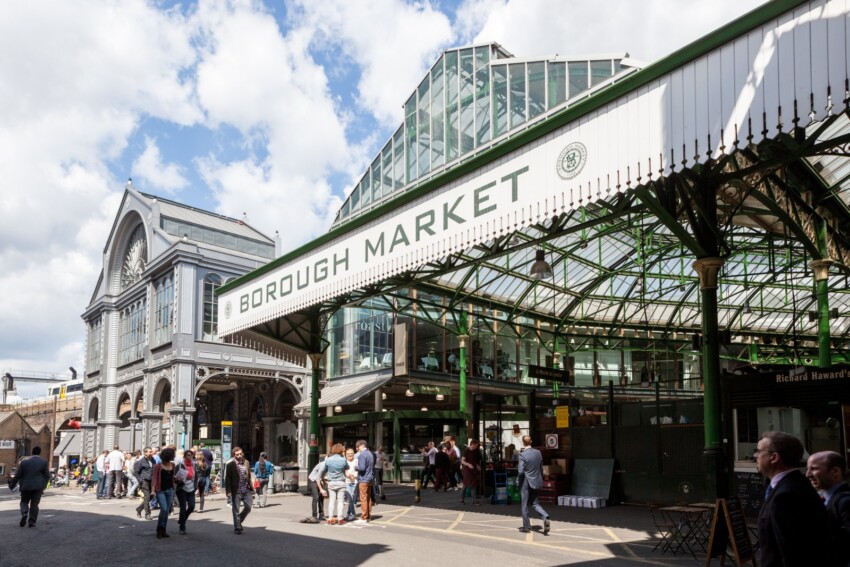
Beneath the Victorian arches of London Bridge station, where trains thunder overhead, lies one of Europe’s oldest food markets. Borough Market is far more than a shopping destination: it’s an institution that has shaped London’s gastronomic culture, a labyrinth of flavours where artisan producers, Michelin-starred chefs and curious visitors meet daily.
With over 100 stalls spread across 19th-century wrought-iron structures and modern installations, this market represents the evolution of British food commerce. Its origins stretch back to 1014, when merchants gathered at the southern end of the old London Bridge to sell grain, fish and livestock to travellers heading into the City. Today, after numerous relocations and renovations, Borough Market remains the essential destination for those seeking the highest-quality ingredients and authentic culinary experiences.
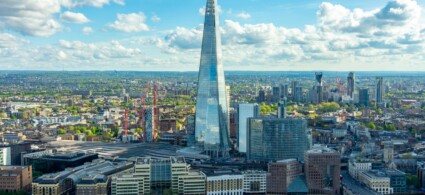
Located in the Southwark neighbourhood, just a stone’s throw from The Shard and Southwark Cathedral, the market has become an unmissable destination for every visitor.
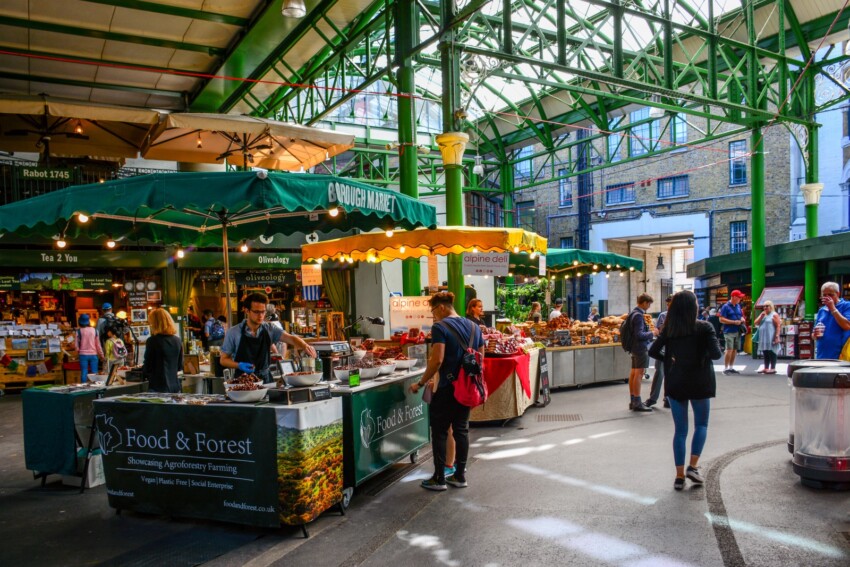
The market divides into three distinct zones, each with its own character. Three Crown Square houses the larger producers and established traders: here you’ll find artisan cheeses, cured meats, bread and international specialities at more structured, permanent stalls.
The Green Market, largely beneath the railway arches behind Southwark Cathedral, welcomes small specialist producers with more temporary stalls. This is the market’s most authentic corner, where you’ll discover rarities like cheeses from small farms, small-batch honey and heritage vegetable varieties.
Borough Market Kitchen is the realm of international street food, with Mexican, Indian, Mediterranean and Asian cuisine stalls. The atmosphere here is more chaotic and vibrant, with customers eating standing up at counters or sitting on the cathedral steps on sunny days.
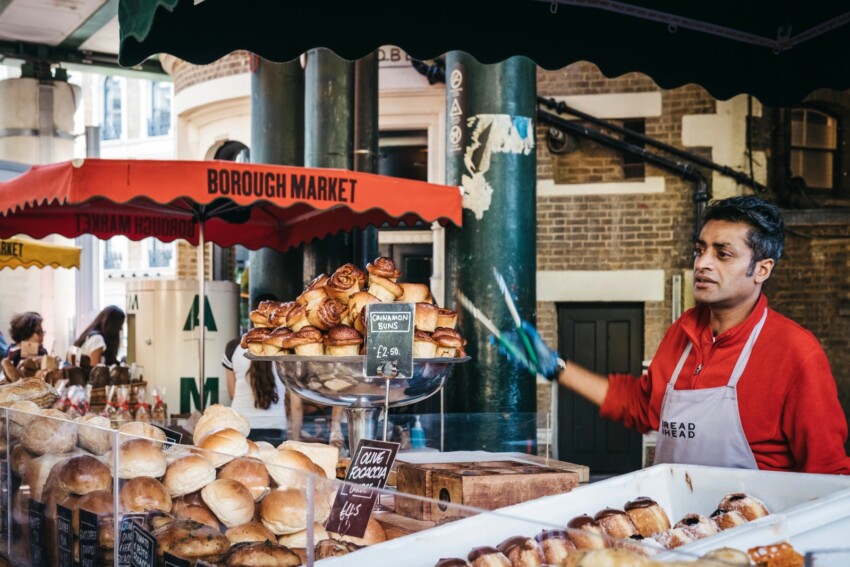
The true soul of Borough Market lies in its extraordinary gastronomic variety. With over 100 active stalls, the market offers a cross-section of British and international cuisine to satisfy any palate. The key to enjoying the experience fully is to arrive hungry and curious, ready to be guided by aromas and the queues forming at the most popular stalls.
The Borough Market Kitchen section, located beneath the railway arches, concentrates the best street food offerings. Here you’ll encounter fragrances from every continent’s cuisines – Indian spices, Mediterranean aromas, South American grill smoke and the fragrance of freshly baked bread.
Kappacasein Dairy is arguably the market’s most photographed stall. Their celebrated raclette toastie – a natural sourdough sandwich filled with melted Montgomery cheddar and caramelised onions – epitomises comfort food. Preparation happens before your eyes: half a wheel of cheese is heated until perfectly melted, then scraped directly onto crispy bread.
The chorizo roll from Brindisa has been a market icon since 1990. Grilled Iberian chorizo – succulent and gently spiced – served in a crispy roll with roasted peppers. It’s the sort of food you eat standing up, with greasy hands and a satisfied grin. You might wait in line, but that’s part of the experience.
For vegetarian Indian cuisine lovers, Horn Ok Please serves authentic street food like samosa, dosa and kathi roll prepared with fresh spices and quality ingredients. Their chaat – crunchy chickpea salads with tamarind and yoghurt – are an explosion of sweet, sour and spicy flavours.
Bread Ahead bakery is a must-visit for memorable baked goods. Their custard-filled doughnuts are legendary: soft brioche fried to order and filled with thick, fragrant pastry cream. They’re served still warm and often sell out before lunch, so arrive early. The adjacent baking school also offers courses in making natural sourdough.
Olivier’s Bakery‘s rosemary focaccia, located in the main hall, deserves special mention. The salty, buttery crust contrasts perfectly with the soft, aromatic crumb inside. It’s the sort of bread that disappears within hours of getting home.
For authentic French pastries, one stall offers flaky croissants, pain au chocolat and lemon tart prepared according to time-honoured Gallic tradition. The quality of ingredients and impeccable technique fully justify the slightly higher-than-average prices.
Richard Haward’s Oysters continues a family tradition dating back to 1792, with seven generations of oyster farmers working along Salcott Creek in Essex. Oysters are shucked to order and served on crushed ice with lemon and tabasco. Freshness is absolute: from coast to stall in a matter of hours.
The Wright Brothers stall offers a broader seafood selection: oysters of various types, scallops, crab and lobsters kept live in dedicated tanks. For those who prefer cooked oysters, they also offer gratin or steamed versions.
Neal’s Yard Dairy represents the best of British and Irish cheese production. Their selection includes hard cheeses like Kirkham’s Lancashire, blues like Colston Bassett Stilton, and goat’s cheeses from West Country farms. The staff are extremely knowledgeable and offer generous tastings to help customers find the perfect cheese.
The stall’s atmosphere is quieter compared to the street food zones, allowing for detailed conversations about ageing, production techniques and ideal pairings. It’s the perfect place to buy products to take home or give as gifts.
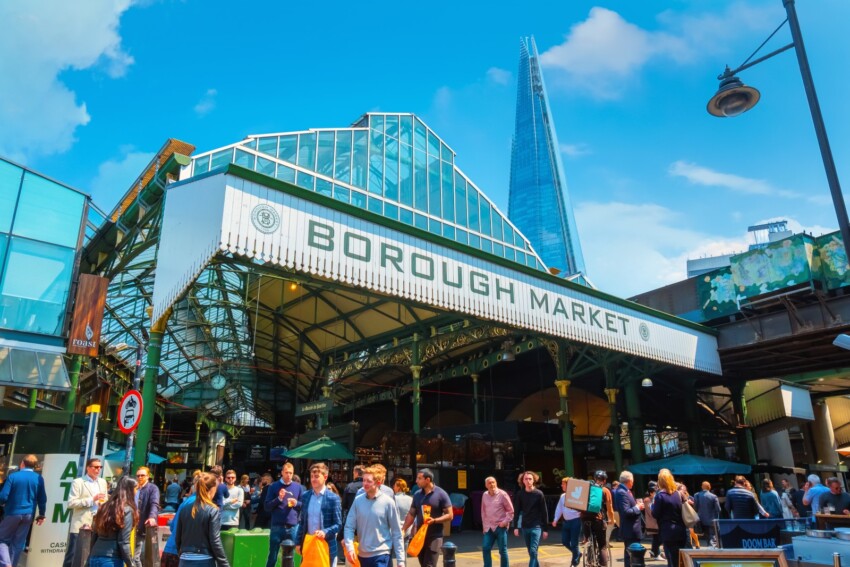
Borough Market‘s distinctive character comes from a layering of architectural styles accumulated over nearly three centuries. The Victorian wrought-iron and glass structures, erected in 1851, create luminous aisles reminiscent of 19th-century greenhouses.
The railway arches that overhang much of the market date from the mid-19th century and have been integrated into the market’s structure itself. Trains thundering overhead every few minutes add a unique element of urban dynamism.
The main entrance on Borough High Street, with its Art Deco façade from the 1930s, provides a pleasant contrast to the Victorian structures inside. Another notable architectural feature is the portico of the Roast restaurant on Stoney Street: this is the Floral Hall, originally part of the Royal Opera House at Covent Garden.
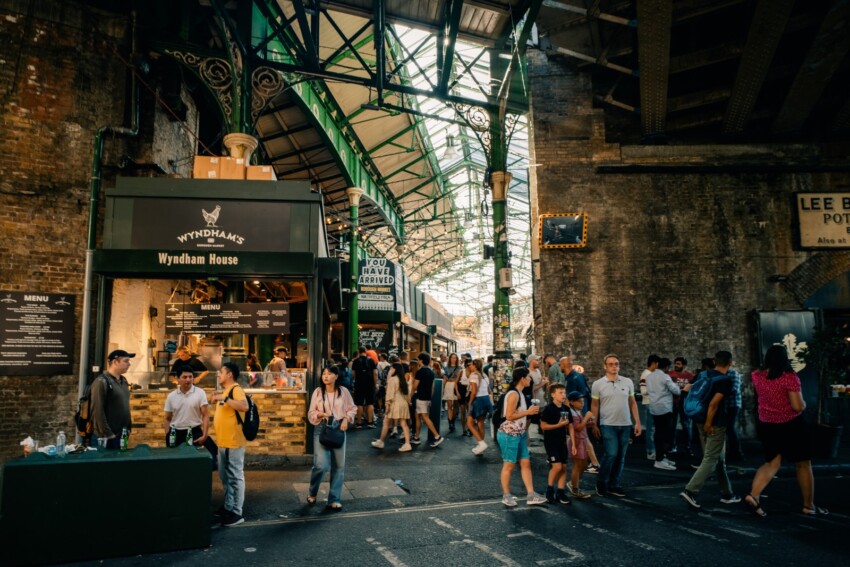
Don’t buy immediately at the first stall that catches your eye: spend your first 15-20 minutes on a complete exploratory circuit, mentally noting what interests you. This allows you to compare offerings and plan purchases based on appetite and budget.
Free samples are widespread, especially among cheese, cured meat, oil and condiment sellers. Traders expect you to taste before buying – it’s part of market culture. Don’t hesitate to ask about products: the traders’ expertise and passion are among the place’s greatest riches.
Bring reusable bags with you: many stalls don’t provide carrier bags, and using your own is also an appreciated gesture towards sustainability. Official Borough Market tote bags (£3–5) are durable and make a practical souvenir. Some cheese and meat sellers vacuum-pack products to make transport easier.
Borough Market is open six days a week with hours varying by day. Monday to Thursday the market operates from 10:00 to 17:00, with a more limited stall offering than weekends. Friday hours extend from 10:00 to 18:00, whilst Saturday – the liveliest day – opens at 08:00 and closes at 17:00. Sunday opening is 10:00 to 16:00. The market is closed Mondays.
Saturday morning offers the most authentic atmosphere, with all stalls operational and the typical energy of Londoners doing their weekly shop. However, between 12:00 and 14:00 crowds reach their peak, with long queues at popular stalls and difficulty navigating the narrow passageways.
To avoid the rush, the ideal time is 10:00–11:30 on Wednesday, Thursday or Friday. At these times you’ll find all specialities still available, queues are manageable and there’s space to observe preparations. Arriving just after opening also lets you secure the most sought-after products, like Bread Ahead’s doughnuts which tend to sell out quickly.
During the Christmas period, Borough Market transforms with festive decorations, mulled wine and seasonal stalls dedicated to gourmet gifts. The atmosphere is particularly enchanting, though crowds increase noticeably. In December the market stays open daily, including Sundays, with extended hours.
Borough Market‘s central location makes it easily accessible by public transport. The nearest Underground station is London Bridge, served by the Jubilee (grey) and Northern (black) lines. From the station exit, the market is about a 4-minute walk following signs to Southwark Street.
Several bus routes serve the area: numbers 43, 141, 149 and 521 stop at Borough High Street and Southwark Street, right by the market entrances.
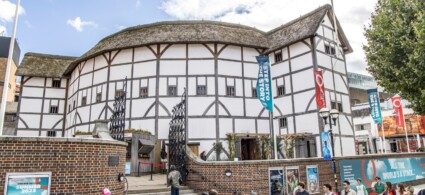
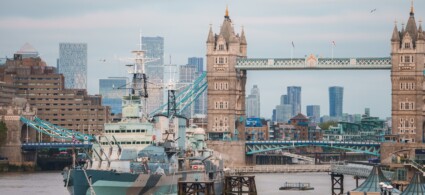
Walking to Borough Market from other central attractions is pleasant and lets you explore the Southwark area. From the Tower of London, crossing Tower Bridge, it’s roughly 15 minutes’ walk along the Thames. From the London Eye, following the South Bank, it takes about 20 minutes passing Tate Modern and the Globe Theatre.
City Card allow you to save on public transport and / or on the entrances to the main tourist attractions.

 Hotel
Hotel  Budget accommodations
  Apartments
  Family Hotel
 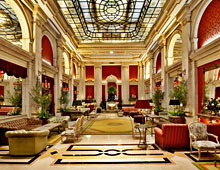 Luxury Hotel