Bestseller
London: Buckingham Palace & Changing of the Guard Experience
From 23,44 €
Buy the ticket
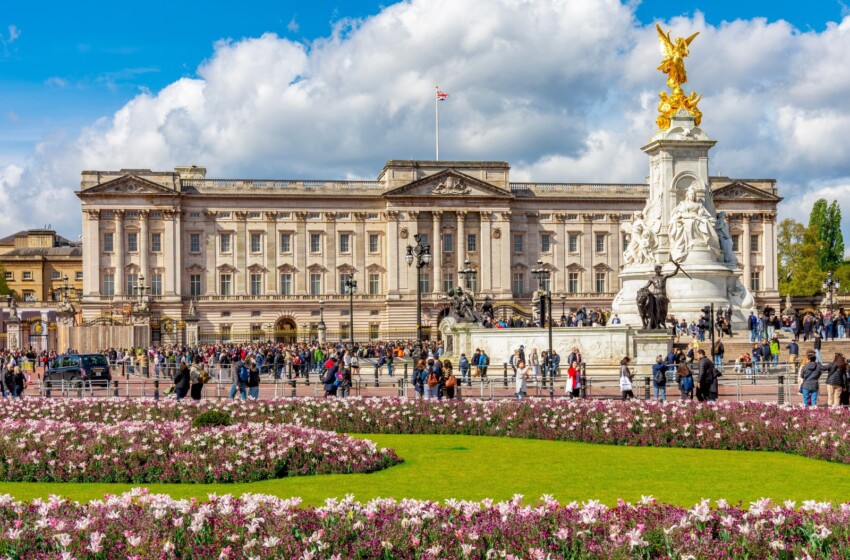
A majestic symbol of British monarchy, Buckingham Palace stands as one of London’s most iconic landmarks and a defining feature of the United Kingdom. With 775 rooms, this neoclassical palace serves not only as the official residence of the British sovereign, but also as an operational centre for the Royal Family and a vital venue for state events and public ceremonies.
Located in the heart of Westminster, the palace is instantly recognisable by its imposing façade, the famous balcony from which the Royal Family appears on special occasions, and the celebrated Changing of the Guard ceremony that draws visitors from around the globe.
Each year, over 500,000 visitors pass through the doors of Buckingham Palace during the summer opening, when the sovereign relocates to Balmoral Castle in Scotland.
This guide provides all the information you need to plan your visit perfectly, from tickets and opening hours to the palace’s fascinating history and intriguing details. You’ll discover what awaits inside the magnificent State Rooms, learn how the Changing of the Guard works, and receive practical advice for avoiding queues and making the most of this unforgettable experience.
We’ll take you through the Royal Gardens, showcase the treasures of the Royal Collection, and introduce you to the traditions that make Buckingham Palace an unmissable attraction during any visit to London.
The State Rooms form the heart of Buckingham Palace and are generally open to the public during the summer months. These 19 official rooms are used by the Royal Family to receive guests during state events, official ceremonies and investitures. Each room is decorated with exquisite taste and houses priceless pieces from the Royal Collection, one of the world’s most important art collections.
The White Drawing Room is one of the palace’s most elegant spaces, used by the Royal Family as a reception room for special occasions. Here you can admire period furniture, crystal chandeliers and a well-kept secret: a hidden passageway behind a mirror that allows the sovereign to enter the room unseen. The best vantage point for photographing this room is from the centre, to capture the harmony of the golden decorations and rococo-style furnishings.
The Throne Room is where some of the monarchy’s most important ceremonies take place. Dominated by a canopy and the official thrones, this room has witnessed generations of royals posing for official portraits, including photographs of Prince William and Kate Middleton’s wedding in 2011. An interesting fact: the thrones were created for the coronation of King Edward VII and Queen Alexandra in 1902.
The Picture Gallery houses some of the most precious paintings in the Royal Collection, including works by Rembrandt, Rubens, Vermeer and Van Dyck. Stretching an impressive 47 metres in length, this gallery was designed by John Nash and displays paintings that are regularly rotated for conservation purposes. For photographers, the advice is to pay attention to natural light filtering through the upper windows, creating perfect illumination on sunny days.
The Grand Staircase, designed by John Nash, is an architectural masterpiece that welcomes visitors with its imposing double-flight staircase in white and gold marble. The walls are adorned with portraits of Royal Family members. This staircase has been the setting for countless historic moments, with sovereigns and heads of state having walked it during official visits.
The Ballroom is the palace’s largest room, built during Queen Victoria’s reign in 1856 to host grand events. Measuring 36.6 metres in length, 18 metres in width and 13.5 metres in height, it continues to be used for state banquets today. During your visit, you can see tables laid out as they would be for an official banquet, complete with porcelain services, crystal glassware and historic centrepieces. A curious detail: setting a single table for a state banquet requires over 5,000 pieces including cutlery, plates and glasses.
Long known as the Queen’s Gallery, following the death of Queen Elizabeth II this space was renamed the King’s Gallery. It is a public exhibition space that hosts temporary exhibitions of works from the Royal Collection. Located on the south wing of the palace, this gallery was opened to the public in 1962 on the site of a chapel destroyed during World War II.
The gallery regularly hosts thematic exhibitions that change every few months, allowing the public to view different sections of the extensive Royal Collection. The exhibitions range from Renaissance paintings to Asian artefacts, from masterpieces by great masters to royal treasures.
One of the most extraordinary pieces previously displayed is a gilded silver dinner service commissioned by George IV, known as the Grand Service, which comprises over 4,000 pieces.
The advantage of the King’s Gallery is that it is open to the public year-round, unlike the State Rooms which are only accessible during specific periods.
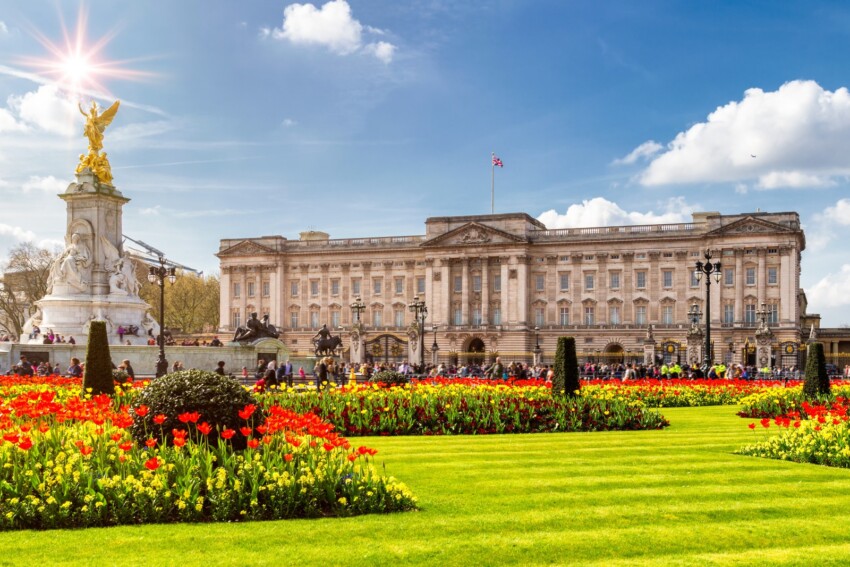
The Royal Gardens at Buckingham Palace span 16 hectares and represent London’s largest private garden. These gardens are not merely a natural oasis in the heart of the city, but also an important ecosystem that is home to over 325 wild plant species and more than 30 bird species.
During a guided garden tour, you can admire the artificial lake created in the nineteenth century, which covers 1.2 hectares and is fed by water from the Serpentine in Hyde Park. A little-known fact is that during World War II, part of the lake was used to grow vegetables to support the war effort.
The Rose Garden features both historic and modern varieties, including the ‘Elizabeth’ rose created in honour of Queen Elizabeth II. The best time to visit is from June to September, when the roses are in full bloom and fill the air with their fragrance.
Don’t miss the Mulberry Garden, where trees grow whose ancestors were planted on the orders of James I in the seventeenth century, in an attempt to establish a British silk industry. The project failed because black mulberries were planted instead of white mulberries, which are necessary for silkworm breeding.
The most photographed feature of the gardens is undoubtedly the Waterloo Vase, a massive marble urn standing over 5 metres high, originally commissioned by Napoleon but later presented to the Prince Regent (the future George IV) following the Battle of Waterloo.
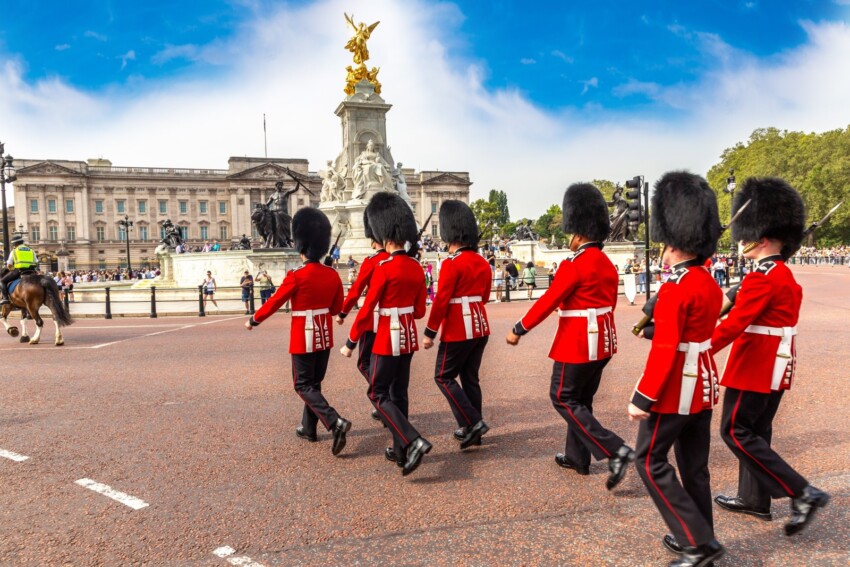
The Changing of the Guard is one of the most famous and spectacular ceremonies associated with Buckingham Palace. It is a centuries-old military tradition during which the King’s Guard, responsible for the sovereign’s protection, hands over their duties to the new contingent.
The ceremony takes place in the forecourt of the palace and lasts approximately 45 minutes. The soldiers, dressed in their distinctive red uniforms and bearskin caps, march accompanied by a military band performing a repertoire ranging from traditional marches to contemporary pieces.
The best vantage point to watch the Changing of the Guard is from the main gates of Buckingham Palace, though it’s advisable to arrive at least an hour early to secure a good spot. Alternatively, you can position yourself along The Mall or near Wellington Barracks to see the soldiers as they prepare and march towards the palace.
An interesting fact: the bearskin caps worn by the guards can weigh up to 700 grammes and stand approximately 30 centimetres tall, originally designed to make soldiers appear taller and therefore more intimidating on the battlefield.
During the ceremony, pay attention to the verbal commands and precise movements executed by the soldiers, the result of rigorous training. You’ll also notice the differences between the regimental colours that indicate which unit is mounting the guard that day.
The central balcony of Buckingham Palace is arguably one of the world’s most famous and photographed architectural features. It is from this balcony that the Royal Family appears during special occasions such as Trooping the Colour (the official parade to mark the sovereign’s birthday), royal weddings and other events of national importance.
The tradition of balcony appearances began in 1851, when Queen Victoria appeared during celebrations for the Great Exhibition. Since then, this balcony has been the backdrop to countless historic moments, including the announcement of the end of World War II in 1945 and celebrations for Queen Elizabeth II’s Platinum Jubilee in 2022.
The best spot to photograph the balcony is naturally from The Mall, the processional route leading to Buckingham Palace, preferably during official occasions when it is decorated with the Royal Coat of Arms.
A lesser-known fact: the balcony was added to the palace during renovation works commissioned by Queen Victoria and designed by architect Edward Blore in 1845.
The Royal Mews are the royal stables of Buckingham Palace, where the state carriages are kept and where the horses used for official ceremonies are housed. This complex represents one of the oldest operational departments of the British Royal Family.
Here you can admire the Gold State Coach, the gilded carriage used for every coronation since 1762. Weighing over four tonnes and drawn by eight horses, this carriage is a masterpiece of eighteenth-century craftsmanship, decorated with painted panels and gilt carvings. Interestingly, it is so heavy and uncomfortable that Queen Elizabeth II described it as a “terrible jolt”.
You can also see the Diamond Jubilee State Coach, a modern carriage built for Queen Elizabeth II’s Diamond Jubilee in 2012. Unlike its historic counterpart, this one is equipped with air conditioning, electric windows and hydraulic suspension for a more comfortable journey.
The Royal Mews are also home to the Windsor Greys, the horses that pull the royal carriages during official ceremonies. These magnificent animals are bred specifically for their grey colouring and their ability to pull heavy carriages over long distances.
During your visit you can also see the liveries of the coachmen and positions, ceremonial dress that follows a traditional design dating back to the eighteenth century.
The history of Buckingham Palace begins in 1703, when the Duke of Buckingham commissioned the construction of a large townhouse known as Buckingham House. In 1761, King George III purchased the property as a private residence for Queen Charlotte, earning it the nickname “Queen’s House”.
The transformation of the house into a true palace took place during the reign of George IV, who in 1826 commissioned architect John Nash to undertake an ambitious expansion project. Nash transformed the residence by adding new wings around a central courtyard, but the project costs spiralled so dramatically that the architect was dismissed before the work was completed.
It was only during the reign of Queen Victoria, who in 1837 became the first sovereign to reside permanently at Buckingham Palace, that the building assumed its role as the official residence of the British monarchs. During this period, however, the palace proved too small for the Royal Family’s needs and those of the court, so in 1847 the east wing was added with the famous balcony, thus completing the front façade that we know today.
A little-known fact is that during World War II, Buckingham Palace was bombed nine times, yet King George VI and Queen Elizabeth (the future Queen Mother) refused to leave London, declaring: “The children won’t go without me. I won’t leave the King. And the King will never leave”.
Throughout the twentieth century, the palace underwent numerous modernisation works. During Elizabeth II’s reign, lifts were installed, electrical and plumbing systems were updated, and façades were restored. In 1992, following the fire at Windsor Castle, it was decided to open the State Rooms to the public during summer to help fund the restoration works.
Buckingham Palace is recognised for its neoclassical architectural style, though it incorporates elements from various historical periods. The building has been designated a Grade I listed building, the highest level of protection for historic buildings in the United Kingdom.
The State Rooms are generally open to the public only for a limited period during summer (typically from late July to September) and on select days in spring and winter.
Ticket prices for the State Rooms vary depending on the period and type of visit.
The Queen’s Gallery and Royal Mews are open year-round with tickets available separately from the State Rooms.
It is highly recommended that you purchase tickets in advance online as places are limited and often sell out, particularly at weekends and during peak season. Booking online allows you to select a specific time slot for entry, avoiding lengthy queues.
Buckingham Palace is included in several tourist passes, such as the London Pass, but generally only for visits to the King’s Gallery, whilst the State Rooms and Royal Mews are excluded.
To enhance your experience at Buckingham Palace, various guided tour options are available. Every ticket includes an audioguide complimentary with the price, available in nine different languages.
For those seeking greater insight, it is possible to join guided tours in English led by expert palace guides. Guided tours offer the advantage of historical insights and fascinating anecdotes that might be missed during a self-guided visit.
The opening hours of Buckingham Palace vary significantly depending on the season and which parts of the palace are open to the public.
The State Rooms are open during the summer period, typically from late July to September, daily from 9:30 to 19:30, with last entry at 17:15. It is important to note that during the first weeks of August, hours may vary due to official commitments of the royal family.
The Queen’s Gallery is accessible to visitors year-round, open continuously from 10:00 to 17:30 (last entry at 16:15), but closed on 25 and 26 December. The Royal Mews are generally open from February to November, daily from 10:00 to 17:00 (last entry at 16:15), with possible closures during official ceremonies and on certain public holidays.
As for the Royal Gardens, these are typically open from May to September, with access included in your State Rooms ticket during the summer opening. Special guided garden tours are also available on selected days, allowing visitors to explore the flora and fauna of this remarkable green space.
The palace may close at short notice for royal requirements.
To make the most of your experience at Buckingham Palace, plan for the following visit times:
The best time to visit Buckingham Palace is on weekdays and during opening hours’ early slots (9:30–11:00) or late afternoon (after 16:00), when crowds are typically lighter.
The busiest days are weekends and national holidays. August is traditionally the busiest month, whilst the final week of July and the first week of September tend to be quieter.
To witness the Changing of the Guard, which typically takes place at 11:00 in the morning, check the calendar in advance on the official British Army website, as the ceremony does not take place every day and can be cancelled in bad weather.
Throughout the year, Buckingham Palace hosts various special events and offers exclusive experiences that allow visitors to discover lesser-known aspects of the royal residence.
During certain times of year, typically in winter and spring, it is possible to join an exclusive evening tour of the State Rooms. These tours, limited to small groups, offer a unique experience: visiting the state apartments when the palace is closed to the general public, accompanied by Royal Collection experts who share anecdotes and stories not included in standard visits. At the end of the tour, participants receive a glass of champagne and a copy of the official catalogue. These tours must be booked well in advance on the official Royal Collection Trust website.
Every year, during the summer opening, the State Rooms host a temporary exhibition dedicated to a specific theme related to the royal family or British history. These exhibitions feature objects rarely shown to the public, drawn from the royal collections.
Recent exhibitions have included themes such as diplomatic gifts received by the sovereign, clothing worn during special occasions like coronations and royal weddings, and collections of historic jewellery.
During the summer months, Buckingham Palace hosts the famous royal Garden Parties, where approximately 30,000 people are invited annually to take tea in the palace gardens in the presence of royal family members. Whilst it is not possible to purchase tickets for these events (invitations are reserved for those nominated for their contributions to the community), the tradition represents a fascinating aspect of palace life.
A curious fact: during these events, approximately 27,000 cups of tea, 20,000 sandwiches and 20,000 slices of cake are served.
A lesser-known perspective is available from St James’s Park, where you can capture striking photographs of the palace reflected in the park’s lake, particularly at sunset. This view offers a different angle from the traditional front-facing images, allowing you to capture the building set in a natural frame, away from the crowds.
Another distinctive sensory experience is the fragrance of the gardens in summer, when numerous varieties of roses and other flowering plants create a unique atmosphere, a detail often overlooked in standard tourist accounts.
Buckingham Palace is centrally located in London and is easily accessible by various forms of public transport.
The London Underground (London Underground) is the most convenient way to reach Buckingham Palace. Victoria, Green Park and St James’s Park stations are all within a 10-minute walk of the palace, whilst Hyde Park Corner is approximately 15 minutes’ walk away.
Numerous London bus routes stop in the immediate vicinity of Buckingham Palace.
Yes, it is highly advisable to book tickets in advance, especially during the summer opening of the State Rooms. Tickets are allocated by time slot and often sell out, particularly at weekends and during school holidays.
For security reasons, numerous items are prohibited at Buckingham Palace that could compromise security or the building’s integrity. Restrictions cover weapons of any kind, including knives and sprays, as well as sharp or potentially dangerous objects. Large luggage such as big suitcases and bulky rucksacks are not permitted. Food and drinks are also forbidden, with the sole exception of water in clear bottles. Regarding camera equipment, tripods and selfie sticks are not allowed. Finally, alcohol of any kind is strictly prohibited.
All visitors and their personal belongings must pass through security checks similar to those at airports.
Photography or video recording is not permitted inside the State Rooms of Buckingham Palace. This rule has been implemented to protect the historic interiors and light-sensitive artworks, as well as to ensure a pleasant visit experience for all. However, you may photograph the gardens, the external courtyard and, of course, the palace façade from the square in front.
Yes, Buckingham Palace is extensively accessible for visitors with disabilities. Wheelchair-accessible routes are available through the State Rooms and Royal Gardens, with lifts connecting different levels of the palace. Visitors with reduced mobility can request free wheelchairs (advance booking is advised) and guide dogs are permitted.
Staff are trained to assist visitors with special needs.
Yes, Buckingham Palace offers various activities specifically designed for children. During the summer opening, young visitors receive a Family Trail, an interactive route that guides them through the State Rooms with games, puzzles and age-appropriate activities. Special children’s audioguides are also available, narrated by historical characters, making the visit more engaging. On certain special days, creative workshops and interactive demonstrations are organised on topics such as royal etiquette, heraldry or art. In the gardens, children can participate in outdoor activities such as spotting the wildlife that inhabits this urban ecosystem.
There is no formal dress code for Buckingham Palace visitors, but respectful attire is recommended given the historic and institutional context. It is advisable to wear comfortable shoes, as the visit route is quite long. During the summer months, the interiors are air-conditioned, so it may be useful to bring a light layer.
It is extremely unlikely to encounter the sovereign during a tourist visit to Buckingham Palace. During the summer opening of the State Rooms, the royal family generally does not reside in the palace but relocates to other royal residences such as Balmoral Castle in Scotland. The only way to see the sovereign at Buckingham Palace is to attend public events such as the Changing of the Guard or Trooping the Colour, when the royal family appears on the balcony.
City Card allow you to save on public transport and / or on the entrances to the main tourist attractions.
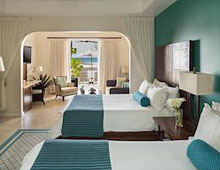 Hotel
Hotel 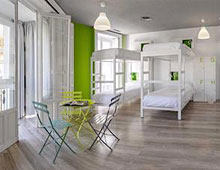 Budget accommodations
 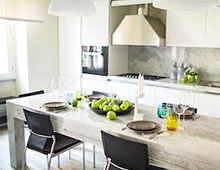 Apartments
 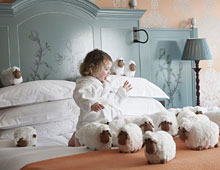 Family Hotel
  Luxury Hotel