Radisson Blu Hotel, London Canary Wharf East
London - 5 Fairmont Avenue, Canary Wharf
Book now
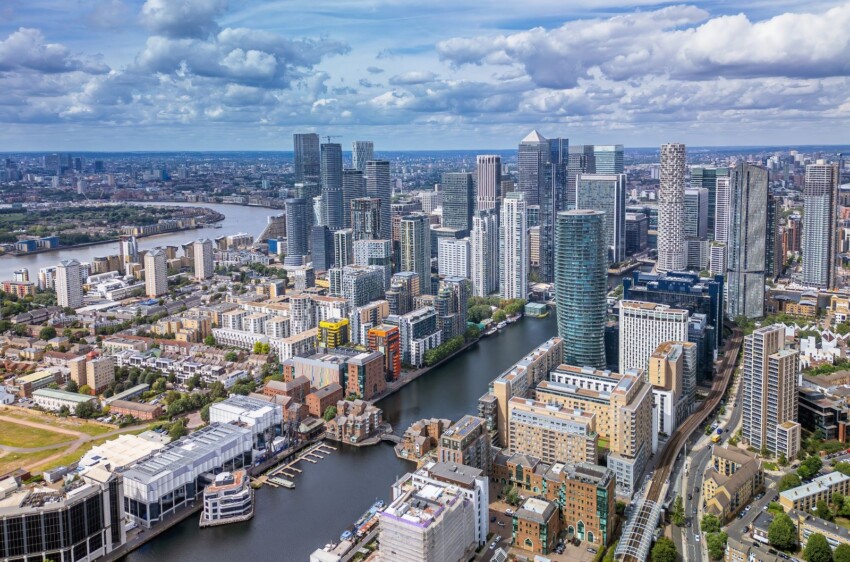
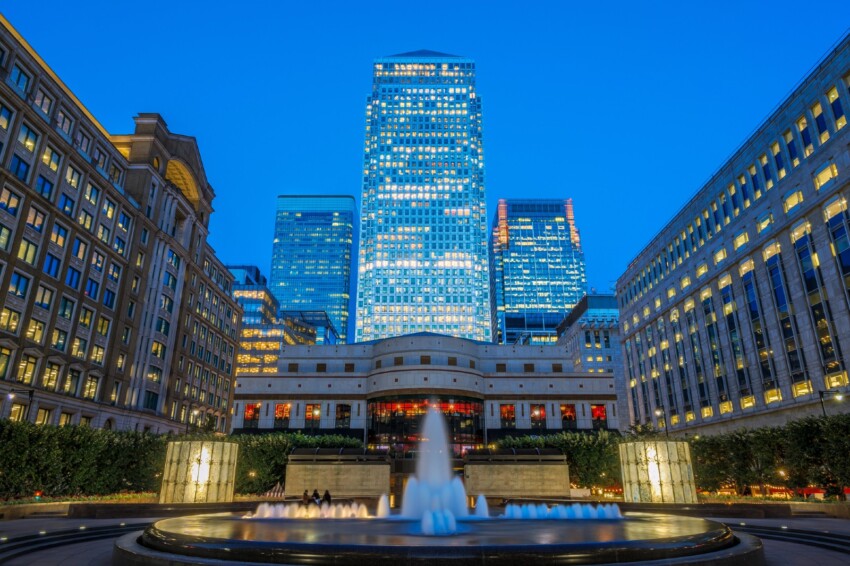
Canary Wharf is a district where glass and steel skyscrapers reflect in the waters of the Thames, where cutting-edge architecture meets London’s maritime heritage, and where the fast-paced world of finance coexists with unexpected green spaces and public art.
Located in East London, on the Isle of Dogs peninsula in the London Borough of Tower Hamlets, Canary Wharf is now the city’s second financial centre after the City of London. With over 105,000 people working daily in its offices, this ultra-modern district is home to some of the world’s most important banking and financial institutions, including HSBC, Citigroup, Morgan Stanley and Barclays.
But Canary Wharf is far more than just business. In recent years, this district has transformed into a tourist destination in its own right, with over 300 shops, dozens of restaurants, art galleries, elevated green spaces and a packed calendar of events.
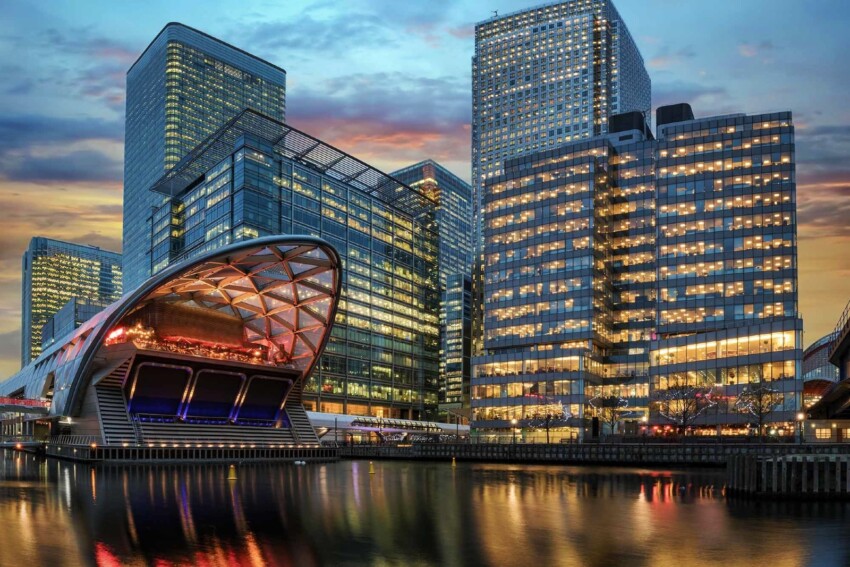
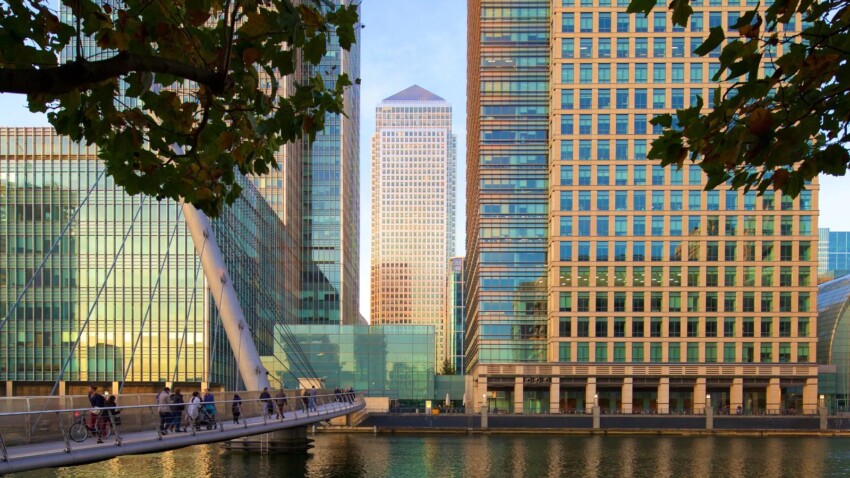
It’s impossible to discuss Canary Wharf without highlighting its undisputed symbol: One Canada Square, the skyscraper with the distinctive pyramidal top that dominates the skyline of east London. Designed by Argentine architect César Pelli and completed in 1991, this 50-storey building standing 235 metres tall is a masterpiece of postmodern architecture.
The tower is clad in stainless steel with metallic windows that shift in tone from silvery grey to gold depending on the light, creating fascinating colour effects throughout the day. The pyramidal crown is not merely aesthetic: its metallic fins are self-cleaning as rainwater runs over them, and at night the light emanating from it is visible across much of London, functioning almost like an urban beacon.
Whilst the offices in the upper floors are not open to the public, you can explore the ground floor of the building, which houses shops, cafés and an impressive entrance hall. However, the best free vantage points to admire One Canada Square and the entire Canary Wharf skyline are elsewhere: the pedestrian bridges connecting the various buildings, the walkway along the docks and, especially, the Crossrail Place Roof Garden.
Surrounding One Canada Square stand other iconic skyscrapers, including the HSBC Tower and the Citigroup Centre, which together form one of Europe’s most recognisable skylines. In the evening, when office lights switch on and reflect across the dock basins, the spectacle becomes particularly striking. For urban photography enthusiasts, the pontoons at South Dock and Wood Wharf offer the best perspectives for capturing the majesty of these glass and steel giants.
One of Canary Wharf’s most pleasant surprises is the Crossrail Place Roof Garden, an elevated garden stretching over 300 metres above Elizabeth Line station. Designed by Foster + Partners and opened in 2015, this green space is one of London’s largest roof gardens and is completely free and open to the public daily from 9:00 to 21:00 (or until sunset in summer).
The most spectacular entrance to the garden is via a futuristic bridge from North Colonnade, whose interior walls are decorated with colourful artworks reminiscent of modern stained glass. Once you reach level 3, you’ll find yourself immersed in a genuine urban jungle, protected by an impressive laminated timber structure that creates an ideal microclimate for plants.
The garden has a unique feature: it sits almost exactly on the Greenwich Meridian, the line separating the eastern and western hemispheres. This location inspired the garden’s botanical concept, with plants from the eastern hemisphere (golden bamboo, Japanese maples, Asian ferns) arranged to the east, and species from the western hemisphere (tree ferns, liquidambar, American plants) to the west. Informative panels along the way tell the story of the Docklands’ commercial history and the plant species that first arrived in Britain through these very docks.
The garden is perfect for a relaxing break after wandering amongst the skyscrapers, with numerous benches hidden throughout the vegetation where you can sit to read or simply enjoy the contrast between the lush greenery and the surrounding glass towers. Access is fully wheelchair-accessible with lifts and ramps, making it suitable for those travelling with pushchairs or with mobility difficulties.
To truly understand Canary Wharf’s character, a visit to the Museum of London Docklands is essential. Located at West India Quay, just a few minutes’ walk from Canary Wharf station, this free museum occupies an authentic Georgian warehouse from 1802, listed as a Grade I building for its historical significance.
The museum spans three levels and tells over 400 years of history of the Thames, London’s port and the Docklands communities, from Roman times to contemporary regeneration. The exhibition follows a chronological route through 12 thematic galleries, each dedicated to a particular period or aspect of the port’s history.
One of the most powerful and moving sections is “London, Sugar & Slavery”, the only permanent gallery in the UK dedicated to London’s involvement in the slave trade and sugar commerce. Through original documents, period artefacts and immersive reconstructions, the exhibition addresses this dark chapter of British history without censure, showing how the wealth generated by Caribbean plantations financed much of the Docklands’ development.
Particularly engaging is the reconstruction of “Sailortown”, a series of full-scale Victorian alleyways and shops that recreate the atmosphere of 19th-century Docklands, with its pubs, warehouses and disreputable streets frequented by sailors. You can literally walk through these recreated streets, listening to period sounds and observing authentic shop windows.
The “Docklands at War” gallery documents the crucial role the docks played during the Second World War and the devastating Blitz bombings that destroyed much of the area. Photographs, film footage and personal testimonies make the resilience of the local community tangible. For families with children, the Mudlarks gallery offers interactive experiences where younger visitors can play at loading merchant ships and discover dockyard life through hands-on activities.
The museum is open Monday to Sunday from 10:00 to 17:00, and admission is completely free. For those wishing to explore further, temporary exhibitions are available (some ticketed), changing regularly. The museum’s café overlooks the docks and is an excellent spot for a break after your visit.
In the following map you can see the location of the main places of interest mentioned in this article.
Canary Wharf has become one of East London’s premier shopping destinations, with over 300 shops spread across several shopping centres connected by covered galleries. The main one is Canada Place Shopping Centre, located beneath One Canada Square’s plaza, housing international brands, fashion boutiques, perfumeries, bookshops and electronics stores.
In addition to this is Jubilee Place, opened in 2004, which further expanded the shopping offer with another 120 shops. Both centres are directly connected to Underground and DLR stations via covered passages, making them particularly convenient to visit even on rainy days. Compared to typical shopping centres, the architecture here is more sophisticated, featuring spacious galleries lit by natural light, fountains and art installations.
As for dining, Canary Wharf offers a wide choice ranging from fast food to Michelin-starred restaurants. Cabot Square, one of the main piazzas, is surrounded by cafés and restaurants with outdoor seating where you can enjoy lunch whilst taking in the sunshine (when available) and the lively atmosphere. Among the most interesting venues is the Big Easy, an American steakhouse situated directly beneath Crossrail Place Roof Garden, renowned for its generous portions and relaxed atmosphere.
Along West India Quay‘s docks you’ll find a concentration of pubs and waterfront restaurants, particularly pleasant on summer evenings. Here you can enjoy both traditional British cuisine and international offerings, from Japanese to Mexican, and Italian cuisine. Prices are generally in line with central London, but quality is typically high given the area’s business clientele.
For a different experience, consider visiting the temporary markets held regularly in the main piazzas. The Canary Wharf Street Food Market, which takes place on certain days of the week at various locations, offers gastronomic specialities from around the world at more accessible prices. During the Christmas period, don’t miss the Christmas Market with its characteristic wooden chalets selling artisan products, mulled wine and traditional festive fare.
One of the most striking aspects of Canary Wharf is its rich collection of public art, with over 70 permanent works distributed across piazzas, buildings and open spaces. This is one of the UK’s most important collections of outdoor contemporary art, completely free and accessible to all.
The district has developed a genuine Canary Wharf Art Trail over the years, a signposted route that guides you through the most significant works. Among the most iconic sculptures is “Traffic Light Tree” by Pierre Vivant, an installation of 75 functioning traffic lights arranged like tree branches, changing colour in random sequences creating a hypnotic spectacle, especially in the evening.
In the Crossrail Place Roof Garden you can admire “Summer Lights, Hidden Garden” by Hugh Turvey, a light installation using X-rays of plants and flowers to create evocative backlit images. Along the pedestrian bridges and across the piazzas you’ll find works by international artists including Julian Wild, Michael Lyons and Antony Gormley.
Beyond permanent installations, Canary Wharf regularly hosts temporary exhibitions and artistic performances. During summer, the “Canary Wharf Arts + Events” programme organises open-air concerts, outdoor film screenings and theatrical performances in the main piazzas. A particularly popular initiative is the Winter Lights Festival, held every January and transforming the district into a luminous art gallery with interactive installations and large-scale projections.
The artworks are not simply decorative pieces but integral to Canary Wharf’s urban concept. Many installations dialogue with the surrounding architecture, creating interesting contrasts between the austerity of glass towers and the expressiveness of contemporary art. For enthusiasts, the official Canary Wharf website features a detailed Art Trail map with information on each work and its creator.
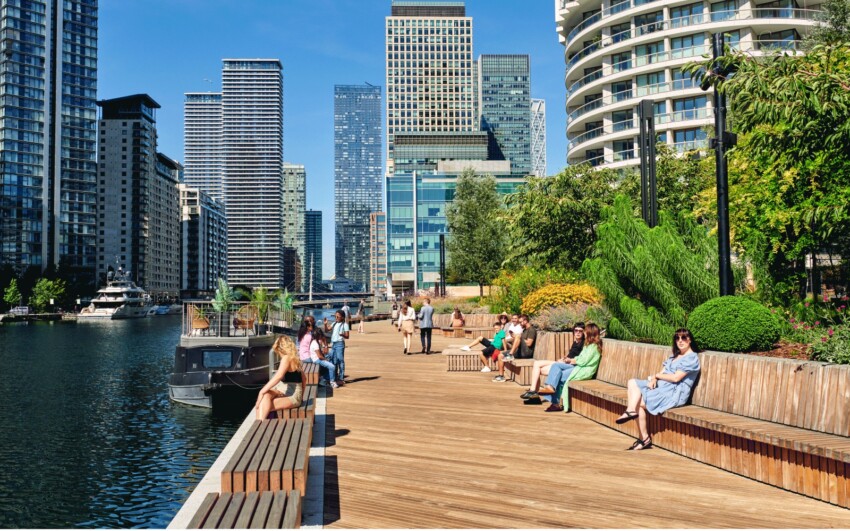
Despite its image as a financial district dominated by skyscrapers, Canary Wharf offers numerous green spaces and pedestrian areas perfect for a relaxing break or romantic walk. Beyond the aforementioned Crossrail Place Roof Garden, the district boasts several well-maintained urban parks and scenic walks along the dock basins.
Jubilee Park, located in the heart of the financial district, is a green oasis with mature trees, manicured lawns, fountains and benches. During fine weather, office workers and visitors come here to enjoy lunch outdoors or simply relax reading a book. The park regularly hosts outdoor events, including open-air cinema in summer and seasonal markets.
Walks along the docks are among Canary Wharf’s most pleasant experiences. The South Dock Promenade hugs the waterfront offering spectacular views of skyscrapers reflected in the dock basins. It’s particularly striking at sunset, when building lights begin to illuminate. Along the route you’ll find benches, picnic areas and pontoons for watching moored boats.
Wood Wharf, one of the newest areas of the complex, features new pedestrian areas with waterfront terraces and contemporary gardens. This emerging neighbourhood is developing a more residential identity compared to historic Canary Wharf’s core, with public spaces designed to encourage socialising and relaxation.
A particular experience is the walk along the Thames heading east, which from Canary Wharf leads to Greenwich via the Thames Path. This approximately 3-kilometre route follows the river offering fresh perspectives on the city and passes through parks such as Mudchute Park and Farm, a free urban farm particularly popular with families.
During winter, Canada Square Park hosts the famous Canary Wharf Ice Rink, an outdoor ice skating rink surrounded by illuminated skyscrapers. Opened every year from late October, it has become a London tradition and popular attraction for residents and visitors, featuring skating sessions, live music and a festive atmosphere that completely transforms the district’s character.
Canary Wharf has progressively developed a vibrant evening entertainment scene that extends far beyond the image of a financial district that empties out after 6pm. Today, the neighbourhood offers pubs, cocktail bars, live music venues and even competitive social activities that appeal to both workers and visitors alike.
Among the most notable venues is Boisdale of Canary Wharf, a sophisticated establishment combining quality Scottish cuisine with live music. Each evening features jazz artists, Sinatra and Elvis tributes, soul nights and reggae DJ sets taking to the stage. The atmosphere is refined yet welcoming, with an impressive selection of whisky and cigars that appeals to connoisseurs.
For those seeking a more informal and playful experience, Fairgame is a fairground-themed activity bar offering vintage games such as Whac-A-Mole and target shooting, complemented by gourmet street food and creative cocktails. An RFID wristband system automatically records game scores, enabling real-time leaderboards and friendly competition. The atmosphere is lively and colourful, ideal for group nights out.
Electric Shuffle brings shuffleboard to Canary Wharf in its modern, technologically enhanced form, complete with interactive digital tables and a stylish bar. Matches can be played by groups of 2 to 8 people, and the automated scoring system keeps things flowing smoothly and competitively. The venue regularly hosts bottomless brunch at weekends, combining food, unlimited drinks and gaming.
The Cocktail Club (formerly London Cocktail Club) is a go-to destination for cocktail enthusiasts, with expert bartenders crafting both classic and original creations. Weekday happy hours offer great opportunities to sample cocktails at reduced prices, whilst themed evenings and bottomless brunch at weekends draw festive crowds.
For those preferring quieter options, numerous traditional pubs along West India Quay serve real ale, British charm and tables overlooking the water. In summer, these venues become particularly appealing for an evening drink whilst enjoying views of the illuminated docks.
The neighbourhood is served by three underground lines and an urban railway line, plus river services and numerous bus routes.
Canary Wharf station is a major hub on the Jubilee Line (grey line), which connects the neighbourhood directly with Westminster, London Bridge, Waterloo and other central stations. The journey from Westminster takes approximately 15–20 minutes. The station itself is an impressive architectural achievement, designed by Norman Foster with a glass cathedral-like structure that floods the underground platforms with natural light.
From 2022, Canary Wharf has also been served by the brand-new Elizabeth Line, which runs east to west across London, connecting Heathrow Airport with the city centre and East End. This line dramatically reduces journey times: from Paddington to Canary Wharf takes just 17 minutes. The Elizabeth Line station at Canary Wharf is integrated within the Crossrail Place complex, directly beneath the roof garden.
The Docklands Light Railway (DLR) serves three stations in the area: Canary Wharf, Heron Quays and South Quay. This driverless automated light railway connects the neighbourhood with Bank in the heart of the City, with Greenwich and with London City Airport. The DLR trains, with their expansive panoramic windows, offer spectacular views across the city as they traverse the historic docklands on elevated tracks.
Also consider the river boats that connect Canary Wharf with Westminster, the London Eye, Tower Bridge and Greenwich along the Thames. The Canary Wharf pier is approximately a 5-minute walk from the main station. This form of transport, whilst practical, offers unique perspectives on the city and allows you to sidestep road traffic.
Canary Wharf is also well served by several bus routes, including the D3, D7, D8, 135 and 277. Buses are particularly useful for reaching areas of East End not directly served by the underground.
Within the neighbourhood, getting around on foot is extremely straightforward thanks to a network of covered pedestrian passages, elevated walkways and underground galleries connecting buildings, stations and shopping centres.
To see all the facilities and book accommodation in Canary Wharf use the form below, entering the dates of your stay.
City Card allow you to save on public transport and / or on the entrances to the main tourist attractions.
 Hotel
Hotel  Budget accommodations
  Apartments
  Family Hotel
  Luxury Hotel