Strand Palace
London - 372 Strand
Book now
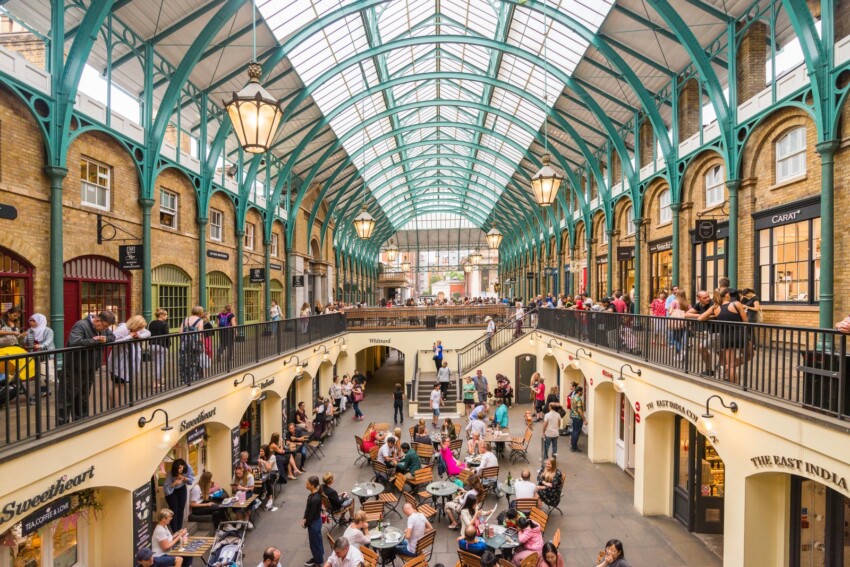
Covent Garden is one of London’s most captivating and bustling neighbourhoods, situated in the heart of the West End between Soho and Holborn. This historic area, named after the Westminster convent that occupied these lands in the 13th century, has transformed over the centuries from a monastic garden to a fruit and vegetable market, and finally into the vibrant cultural and commercial hub it is today, attracting over 44 million visitors annually.
The neighbourhood’s focal point is Covent Garden Piazza, dominated by the iconic covered market building with its iron and glass structure dating from 1830. Today this space hosts artisan boutiques, designer shops and refined cafés, whilst the surrounding streets are filled with historic theatres, restaurants and trendy bars.
The area is particularly renowned for its street performers, who must pass rigorous auditions to perform beneath the market’s colonnades. You’ll regularly witness displays of juggling, magic, live music and acrobatics that create a festive atmosphere. The neighbourhood maintains the theatrical spirit that has defined it since the 17th century, when London’s first public theatre stood here.
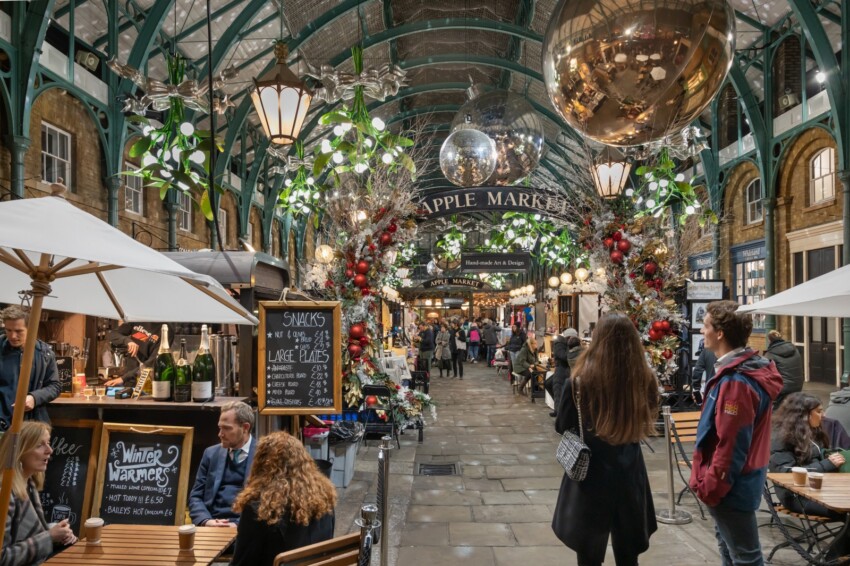
The beating heart of the neighbourhood is Covent Garden Market, housed in the elegant Victorian structure designed by Charles Fowler in 1830. This three-aisled space offers a unique shopping experience. The central piazza regularly hosts performances by street performers of the highest calibre: jugglers, acrobats, magicians and musicians who must pass rigorous auditions.
In the Apple Market, beneath the northern colonnade, you’ll find over 40 stalls selling British craftsmanship, handmade jewellery, art prints and vintage objects. Tuesdays are dedicated to antiques, with pieces ranging from Victorian porcelain to vintage toys. On the upper level, the Jubilee Market offers stalls with clothing, accessories and souvenirs.
The surrounding buildings house refined boutiques and Apple’s flagship store. Don’t miss Benjamin Pollock’s Toyshop, a historic toy shop selling traditional paper theatres, puppets and vintage dolls since 1880. The market opens from 10:00 to 20:00, with reduced hours on Sundays.
The Royal Opera House dominates the eastern side of the piazza and is home to the Royal Opera, the Royal Ballet and the Orchestra. The current building, opened in 1858, features a neoclassical facade with a Corinthian colonnade. The interiors were renovated in the 1990s, adding the spectacular Paul Hamlyn Hall with its iron and glass ceiling.
You can visit the Opera House on guided 75-minute tours that take you through the Velvet Room, rehearsal spaces and the main stage. Tours cost around £15. The Royal Ballet performs over 200 times a year, whilst the opera season features both classical and contemporary productions.
The discounted ticket scheme offers balcony seats from £10-£40. During summer, the piazza screens live performances for free on a large screen. The Amphitheatre Bar offers panoramic views of the piazza and serves afternoon tea.
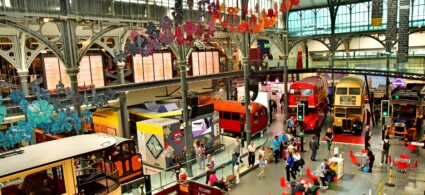
The London Transport Museum occupies the former flower market and tells 200 years of London’s transport history. The exhibition includes over 80 original vehicles, including the first Underground carriage from 1863, vintage double-decker buses and trams.
The route spans three floors in chronological order. Children love climbing aboard historic vehicles, operating bus and train simulators, and exploring interactive tunnels. The section devoted to the Tube showcases the evolution of the iconic roundel logo and advertising posters.
Don’t miss the collection of vintage posters which includes works by artists such as Man Ray. Admission costs £18.50 for adults (free under 18s) and your ticket remains valid for a year. Open from 10:00 to 18:00 daily except 25 December.
Neal’s Yard is a small hidden piazza nestled between Shorts Gardens and Monmouth Street, characterised by vibrant pastel-coloured buildings that create a unique bohemian atmosphere. Developed in the 1970s as a community dedicated to holistic health, it now hosts vegetarian cafés, tea shops and the historic Neal’s Yard Remedies pharmacy, a pioneer of British natural cosmetics since 1981.
Neal’s Yard Dairy, nearby, is a must-visit for lovers of British and Irish artisan cheese, with over 70 varieties matured in underground cellars. Staff offer free tastings.
The surrounding area, Seven Dials, takes its name from the solar monument with seven dials erected in 1694. This maze of Victorian alleyways is home to independent boutiques, specialist bookshops such as Stanfords (the world’s oldest travel bookshop, established 1853), and historic theatres.
Covent Garden is the heart of London’s Theatreland. The neighbourhood is home to the Theatre Royal Drury Lane, London’s oldest theatre still in use (1663), currently hosting Disney productions. The Lyceum Theatre has been the permanent home of “The Lion King” since 1999. Other iconic theatres include the Novello Theatre, the Adelphi Theatre and the intimate Donmar Warehouse.
For discounted tickets, visit the TKTS booth at Leicester Square (10 minutes’ walk), where you can buy same-day tickets at reductions up to 50%. Many theatres also offer “day seats” at reduced prices sold on the morning of the performance.
St Paul’s Church, designed by Inigo Jones in 1633, is known as the “actors’ cathedral”. The interiors, rebuilt after a fire in 1795, retain their simplicity with coffered wooden ceilings. The walls are covered with commemorative plaques honouring theatre legends: Charlie Chaplin, Vivien Leigh, Noël Coward and Boris Karloff.
The church regularly hosts classical and jazz concerts, often free of charge. Each May, the May Fayre and Puppet Festival commemorates the first performance of Punch and Judy in 1662. Open Monday to Friday from 9:00 to 17:00.
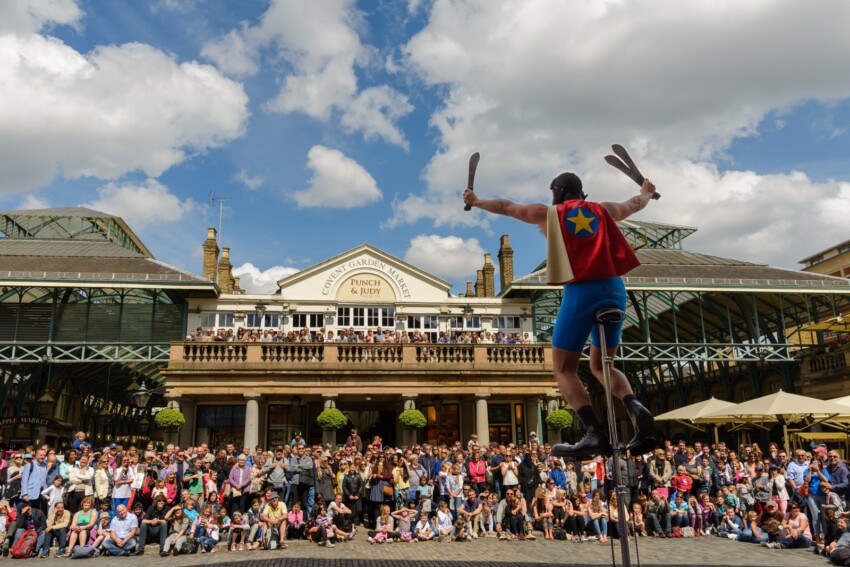
Street performers take to the stage daily in four slots (11:00, 13:00, 15:00, 17:00) beneath the colonnades. Performances last about 30 minutes and the artists, selected through rigorous auditions, represent the best of international talent.
During the festive period (November-January), the piazza transforms with an enormous decorated Christmas tree and artistic installations. Don’t miss December’s Christmas Pudding Race, a charity event where waiters in Victorian costume race through the streets balancing puddings on trays.
In summer (June-August), the Covent Garden Summer Screenings programme projects musicals and operas onto a large screen in the piazza for free. During Covent Garden in Bloom (May), the piazza is decorated with spectacular floral displays.
Covent Garden Underground station on the Piccadilly Line sits directly beneath the piazza, with exits on Long Acre and James Street. The lifts are often crowded; consider taking the original 193 spiral steps dating from 1907, a historic experience if somewhat challenging.
Good alternatives are Leicester Square (Northern and Piccadilly Lines, 5 minutes’ walk) and Holborn (Central and Piccadilly Lines, 7 minutes’ walk), generally less congested. Charing Cross station is 8 minutes’ walk away and connects to the national rail network. From Heathrow terminal, the Piccadilly Line goes directly to Covent Garden in around 50 minutes.
Numerous bus routes serve the area: lines 1, 59, 68, 91, 168, 171, 188 and 243 stop on Aldwych, Strand or Kingsway. The neighbourhood is easily accessible on foot from Trafalgar Square (10 minutes), Leicester Square (5 minutes) and Soho (5 minutes).
The most practical solution remains using public transport with an Oyster Card or contactless card.
Covent Garden has medieval origins, when these lands belonged to Westminster Abbey and were used as gardens growing fruit and vegetables for the monks. The name derives from the old designation “Convent Garden”. In 1552, following Henry VIII’s dissolution of the monasteries, the lands passed to the Russell family, Earls of Bedford.
The urban transformation came in 1630, when the fourth Earl of Bedford commissioned architect Inigo Jones to design an Italian-style residential piazza. Jones created London’s first public piazza, with elegant colonnades inspired by St Mark’s Square in Venice and St Paul’s Church, considered a masterpiece of English Palladian architecture. This aristocratic piazza initially attracted London’s nobility.
In 1654 the fruit and vegetable market was established, a feature that would characterise Covent Garden for over three centuries. In 1830 the current market building was constructed, designed by Charles Fowler, a neoclassical stone structure with an iron and glass roof. Meanwhile, the Theatre Royal Drury Lane (1663) and the Royal Opera House (1732) cemented the neighbourhood’s reputation as a centre for the performing arts.
In 1974 the fruit and vegetable market relocated to Nine Elms. Following debates about demolition, the decision was made to regenerate Covent Garden and transform it into a shopping and cultural centre. Its reopening in 1980 marked the beginning of the neighbourhood’s renaissance, which today preserves its original Victorian architecture whilst housing boutiques, restaurants and spaces for street performers.
To see all the facilities and book accommodation in Covent Garden use the form below, entering the dates of your stay.
City Card allow you to save on public transport and / or on the entrances to the main tourist attractions.
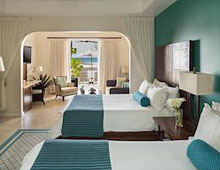 Hotel
Hotel 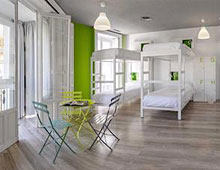 Budget accommodations
 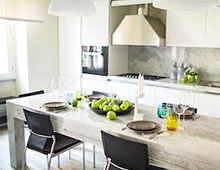 Apartments
  Family Hotel
  Luxury Hotel