Bestseller
London: Entrance Ticket to the Cutty Sark
From 22,90 €
Buy the ticket
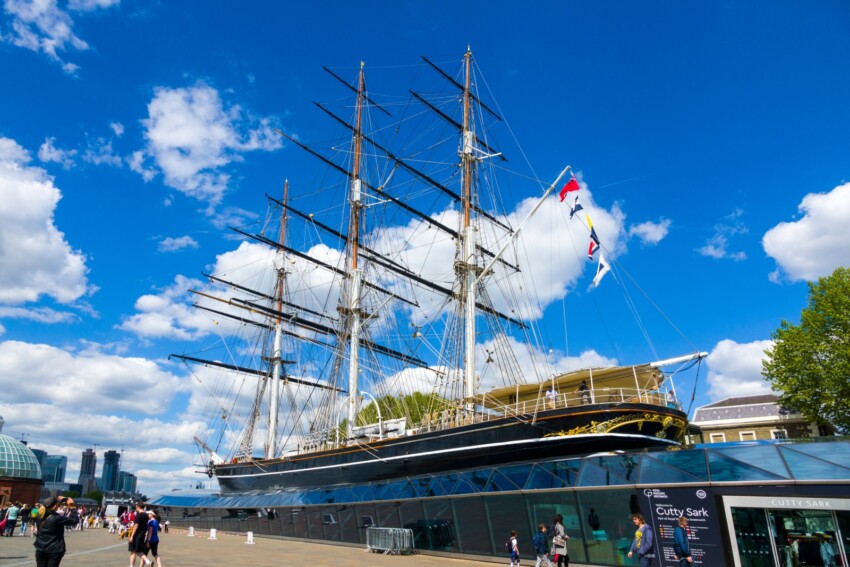
At Greenwich stands one of the most celebrated sailing vessels in British maritime history. The Cutty Sark, launched in 1869, represents the last surviving example of the lightning-fast tea clippers that dominated commercial routes between Europe and Asia during the second half of the nineteenth century. This extraordinary vessel, measuring 85 metres in length with a mainmast towering 46 metres high, achieved speeds exceeding 17 knots – a remarkable record for its time.
The Cutty Sark, recognised as a UNESCO World Heritage Site, is far more than a simple maritime museum: it’s an immersive experience into Victorian seafaring life, where you can walk beneath the suspended hull, explore the original decks and handle the instruments that enabled this clipper to compete with early steamships. The ship experienced a remarkable second life following a devastating fire in 2007, reopening in 2012 with conservation work combining traditional techniques and modern technology, preserving 84% of the original structure.
A visit to the Cutty Sark offers a unique perspective on the maritime commerce revolution and London’s pivotal role in connecting the British Empire with Asian markets. The vessel transported up to 10,000 chests of tea per voyage, covering the distance between Shanghai and London in just 107 days – an extraordinary achievement for the era. Through historical reconstructions, original artefacts and multimedia installations, you’ll discover the challenges faced by the crew of 28 men during oceanic crossings.
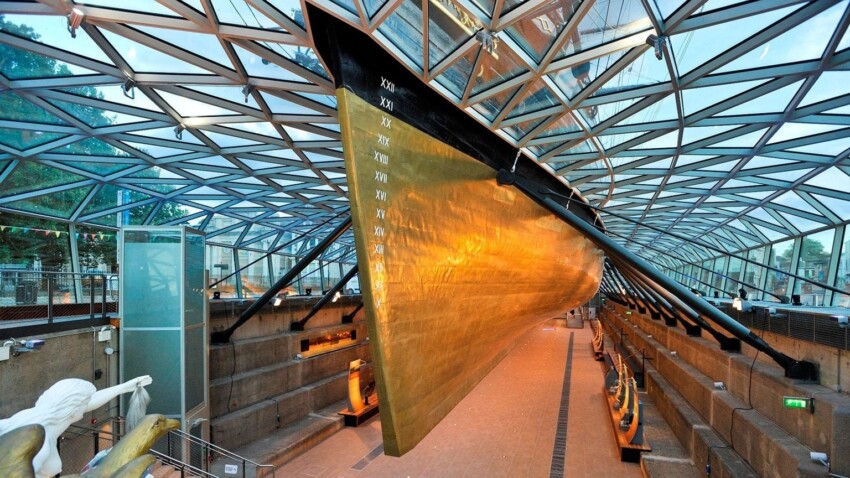
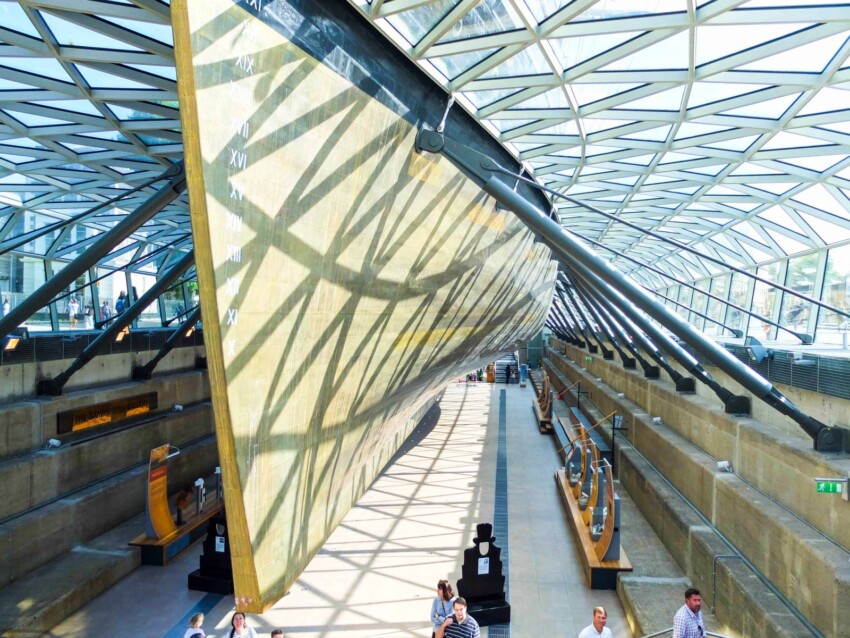
The most spectacular experience at the Cutty Sark begins in the lower deck hall, where you walk directly beneath the suspended hull, suspended 3.3 metres above ground. This innovative architectural solution, created during the 2007–2012 restoration, allows you to admire the hull’s hydrodynamic lines from an impossible perspective when the ship was at sea. The copper sheathing, comprising 3,517 restored original plates, gleams beneath LED lighting creating an extraordinary visual effect.
In this section you can observe the tapered bow designed to cut through ocean waves and understand the technical innovations that made clippers so swift. Explanatory panels illustrate how designer Hercules Linton combined length, narrow beam and considerable sail area to create a ship capable of competing with steamships on the tea route. You’ll also notice fire damage from 2007, deliberately left visible in certain sections to testify to the ship’s recent history.
Ascending aboard via the ramp, you access the lower deck where the crew lived in Spartan conditions during voyages lasting three to four months. The recreated cabins show the cramped spaces where 28 sailors slept in suspended bunks, with barely 45 centimetres of width per person. The faithful reconstruction includes sailors’ personal effects: pipes, family photographs, musical instruments and even stuffed rats that regularly infested the hold.
The captain’s cabin, by comparison, offered relative comfort with mahogany furnishings, a navigation desk and a more spacious berth. You can see the original logbook of Captain Richard Woodget, who commanded the Cutty Sark during its most glorious years on the Australian wool route. Interactive screens narrate personal stories of crew members, from daily challenges such as cooking in rough seas to celebrations when crossing the Equator.
On the main deck above, you find yourself at the operational heart of the ship, surrounded by original wooden and steel equipment. The three masts rise 46 metres above you, and although complete sails aren’t always hoisted for conservation reasons, you can see replicas rigged during special events. The ship originally carried 32 sails with a total area of 3,000 square metres – equivalent to nearly nine tennis courts.
The steering wheel, operated by a 2-metre-diameter wheel, requires the strength of two men to manoeuvre in rough seas. You can personally try turning the helm wheel (under supervision) and understand the physical skill required to control a ship weighing over 2,000 tonnes. The original mooring bitts, rigging equipment and tackles bear witness to Victorian-era marine engineering.
One of the most photographed attractions is the ship’s original figurehead: a witch named Nannie Dee, the protagonist of Robert Burns’ poem “Tam o’ Shanter”. The witch wears a “cutty sark” (short nightdress in Scots), from which the ship derives its name. The original wooden figure, carved in 1869 by Frederick Hellyer, is preserved indoors for conservation reasons, whilst a modern replica adorns the external bow.
The museum houses the world’s largest figurehead collection, with over 80 wooden sculptures that decorated ship bows in the nineteenth century. These figures represent mythological characters, historical figures and national symbols, and you can observe the varied carving and colouring techniques. The collection includes figureheads from British, Dutch, Scandinavian and American vessels, offering a snapshot of international maritime iconography.
Descending into the hold, you experience the conditions in which 10,000 chests of tea were transported during the Shanghai route. Scent screens release the aromas of tea, spices and pine wood that immerse you in the atmosphere of the era. The arrangement of chests followed precise criteria to balance weight and prevent dangerous shifts during storms.
Multimedia installations recount the annual tea races, an unofficial competition amongst clippers to be first bringing the spring harvest to London. The first clipper to arrive commanded premium prices for its cargo, and rivalry between captains was intense. In 1872, the Cutty Sark completed the voyage in 107 days, establishing a record that made it renowned. You can also see tea samples from the period, remarkably well-preserved, and understand why this beverage was valuable enough to justify such costly vessels.
The Cutty Sark regularly hosts temporary exhibitions in the dedicated ground floor gallery, with themes ranging from maritime exploration to daily Victorian life. Exhibitions change every 4–6 months and are included with admission. Check the official website for current exhibitions during your visit.
The conference room, located in the adjacent building, hosts educational events, historical lectures and documentary screenings about British maritime history. Weekend workshops for families allow children to practise tying nautical knots, learn navigation with a sextant and hear sea shanties sung by sailors.
The Cutty Sark was commissioned in 1868 by shipowner John Willis, nicknamed “White Hat Willis” for his characteristic white hat, who wanted a ship capable of competing with the finest clippers on the profitable tea route from China. The design was entrusted to Hercules Linton, a young Scottish naval designer who created a revolutionary hull: longer and narrower than previous clippers, with a fineness coefficient that prioritised speed over cargo capacity.
The ship was launched on 22 November 1869 at Scott & Linton’s shipyards in Dumbarton, Scotland, at a cost of £16,150 (equivalent to approximately £2 million today). The name, inspired by Robert Burns’ poetry, was chosen personally by Willis and reflected his passion for Scottish literature. Her maiden voyage took the Cutty Sark to Shanghai in February 1870, inaugurating a career that would span all the world’s oceans.
The Cutty Sark’s finest years were, however, on the Australian wool route, rather than the tea trade. With the opening of the Suez Canal in 1869, steamships gained a decisive advantage on the Chinese route, being able to transit the canal whilst sailing vessels had to circumnavigate Africa. From 1885 to 1895, under Captain Richard Woodget’s command, the Cutty Sark dominated the Australian run, transporting raw wool from Sydney to London in record times no other sailing ship could match.
In 1895 the ship was sold to a Portuguese company, renamed “Ferreira”, and used for general cargo in Atlantic trade. She was recovered in 1922 by Captain Wilfred Dowman, who brought her back to Britain and began the first conservation restoration. From 1954 the Cutty Sark has been permanently displayed at Greenwich in a specially constructed dock, becoming a tourist attraction and symbol of British maritime history.
The devastating fire of 21 May 2007 destroyed much of the upper deck and threatened the entire structure. Fortunately, many original components had been removed for restoration and were saved from the flames. The reconstruction project, costing £50 million, not only restored the ship but improved it with the innovative solution of elevating it on steel supports, allowing visitors to admire the hull from below. The reopening on 25 April 2012, graced by the presence of Queen Elizabeth II, marked a renaissance for this maritime icon.
We strongly recommend purchasing tickets online at least 24 hours in advance: you’ll save 10% on admission and avoid queues, particularly long on weekends and during school holidays.
The ticket includes access to all ship areas, temporary exhibitions and the figurehead collection. It’s valid for the entire day, allowing you to exit and re-enter freely. Purchasing online lets you select a specific entry time that avoids overcrowding and guarantees a more enjoyable experience. During peak season (July–August and holidays), entry is permitted only by timed reservation.
For those visiting other Greenwich attractions, the Royal Museums Greenwich Day Pass offers unlimited one-day access to the Cutty Sark, the Royal Observatory, the National Maritime Museum and the Queen’s House. This pass represents significant savings if you plan visiting at least three of the four attractions.
Holders of the London Pass receive free access to the Cutty Sark, whilst the ticket isn’t included in standard tourist city cards.
The most scenic way to reach the Cutty Sark is by river with Uber Boat by Thames Clippers, fast ferries connecting central London to Greenwich. Boats depart from Westminster Pier, Tower Bridge, Canary Wharf and other points along the Thames every 20 minutes during the day. The journey from Westminster takes approximately 45 minutes and offers spectacular views of landmarks along the river. Disembark at Greenwich Pier, just 5 minutes’ walk from the Cutty Sark.
The DLR (Docklands Light Railway) is the fastest and most economical option. Cutty Sark for Maritime Greenwich station is literally 2 minutes’ walk from the ship. Take the line towards Lewisham from Bank, Tower Gateway or Canary Wharf. The journey from Bank takes 20 minutes.
Alternatively, you can alight at Greenwich station, a 10-minute walk away through Greenwich Market, a pleasant covered market with artisan stalls.
Online booking isn’t compulsory but strongly recommended, especially at weekends and during school holidays. Booking online saves you 10% on the ticket and lets you choose an entry time that ensures fewer crowds.
A full visit takes approximately 90 minutes, extending to 2 hours if you participate in the included guided tour. Families with children may require more time to explore all interactive activities.
Yes, most of the ship is accessible via a panoramic lift connecting all main levels. Free wheelchairs are available at the entrance on request. Some areas such as the engine room and certain narrow passages aren’t accessible, but represent a small part of the experience. Staff are trained to assist visitors with reduced mobility. Guide dogs are admitted in all areas.
The Cutty Sark offers numerous interactive activities for children: they can turn the helm, tie nautical knots, dress in crew costumes and complete an educational treasure hunt. Summer weekends host special shipbuilding and navigation workshops.
Most of the visit takes place in covered and sheltered areas, but the main deck is outdoors. During heavy rain, certain deck sections may temporarily close for safety, but you can still access all other internal areas comprising 80% of the experience. Winter can be particularly cold on deck; dress in layers.
Yes, London Pass holders receive free access to the Cutty Sark by presenting your digital or physical pass at entry. No additional booking is required.
City Card allow you to save on public transport and / or on the entrances to the main tourist attractions.



 Hotel
Hotel  Budget accommodations
  Apartments
  Family Hotel
  Luxury Hotel