Heeton Concept Hotel
London - 15-25 Hogarth Road, Earls Court, Kensington, Kensington & Chelsea
Book now
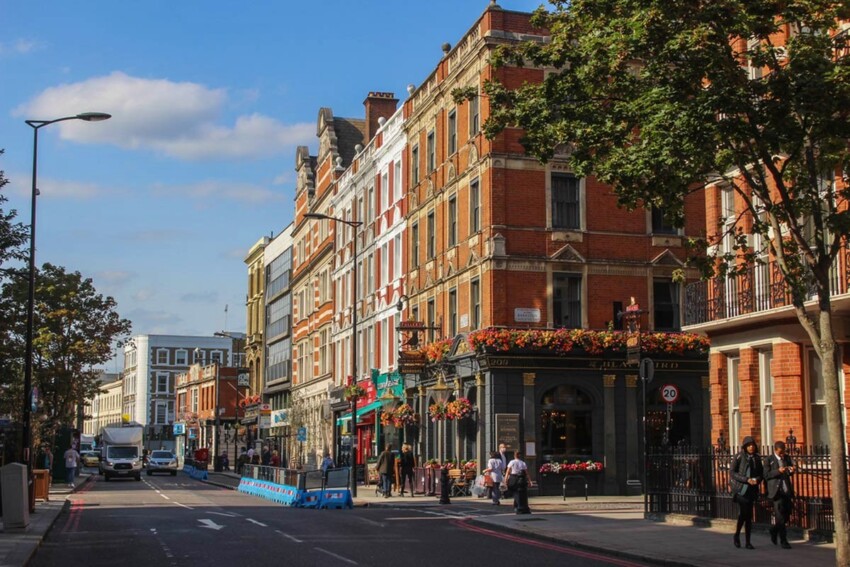
Earl’s Court is one of the most interesting neighbourhoods in West London, an area that has undergone a profound transformation in recent years, becoming one of the most vibrant and cosmopolitan districts of the British capital. Situated between Kensington and Chelsea, this neighbourhood still retains the Victorian atmosphere of its elegant terraced houses, whilst preparing to welcome an ambitious urban regeneration project that will further reshape its character.
For travellers seeking a convenient yet well-connected base, Earl’s Court offers numerous accommodation options at more accessible prices than central areas, whilst maintaining a vibrant and multicultural atmosphere. Earl’s Court Road is the main artery of the neighbourhood, animated by shops, cafés and restaurants that reflect the diversity of the local community.
Earl’s Court Road is the beating heart of the neighbourhood, a street roughly a kilometre long that runs through the entire area from north to south. Walking along this thoroughfare means immersing yourself in authentic multicultural London, far from the glittering shop windows of the West End yet rich in character. Indian, Middle Eastern, Thai and Australian restaurants alternate with traditional British pubs, creating a gastronomic mosaic that reflects the cosmopolitan makeup of the local population.
The Victorian and Edwardian buildings flanking the street still retain their original features, with typical red brick façades and colourful front doors. Many of these buildings have been converted into flats and hostels, yet maintain the architectural charm of the neighbourhood’s golden period. The street comes particularly alive in the late afternoon, when locals and residents flock to numerous pubs such as the Blackbird or the King’s Head, both beloved by the Australian and New Zealand community.
The weekly market held along certain stretches of Earl’s Court Road offers the chance to buy fresh produce, vintage clothing and locally crafted items. Though not as renowned as other London markets like Portobello or Camden, it represents an authentic neighbourhood shopping experience.
Where the legendary Earl’s Court Exhibition Centre once stood, today a vast construction site stretches out, destined to radically transform the neighbourhood’s face. Demolished in 2017, this exhibition complex hosted events for over 100 years that shaped history: from concerts by Pink Floyd, Queen and Led Zeppelin to international motor shows, from indoor tennis competitions to scientific conventions.
The regeneration project, called Earls Court Development, involves the construction of over 7,500 new homes, commercial spaces, offices and green areas across 77 acres. Once completed by 2030, it will become one of Western Europe’s largest urban development projects. Whilst the demolition stirred nostalgia among those who remember the legendary concerts, it also represents an opportunity to revitalise an area that needed modernisation.
Currently it’s possible to see construction works in progress along Warwick Road and Lillie Road, where the first residential buildings of the new complex are rising. For urban history and contemporary architecture enthusiasts, observing this transformation represents a unique opportunity to witness a London neighbourhood’s metamorphosis.
Though Earl’s Court isn’t famous for its parks, the neighbourhood offers several green spaces where you can relax away from the city’s bustle. Philbeach Gardens is a hidden oasis within the residential heart of the area, a Victorian communal garden accessible only to residents but visible through the elegant wrought-iron railings surrounding it. Its manicured flowerbeds and centuries-old trees represent a perfect example of nineteenth-century London urban greenery.
A short walk north brings you to Kensington Gardens and Holland Park, two of London’s most beautiful parks. Holland Park deserves particular mention for its Kyoto Garden, a Japanese garden donated by Kyoto Chamber of Commerce in 1991, complete with waterfalls, a koi pond and peacocks roaming freely amongst visitors. The park also houses the ruins of Holland House, a Jacobean mansion bombed during the Second World War, now used as an atmospheric location for cultural events and summer theatre performances.
The Brompton Cemetery, located on the neighbourhood’s eastern border along Fulham Road, represents one of London’s most fascinating and least-known green spaces. Opened in 1840 as one of the “Magnificent Seven”, the seven grand Victorian cemeteries built to solve the city’s overcrowded burial grounds problem, today it’s a place of peace and architectural beauty. The monumental tombs, neoclassical mausoleums and tree-lined avenues create a surreal atmosphere, perfect for a contemplative stroll away from London’s frenzy.
Earl’s Court isn’t a luxury shopping neighbourhood, but offers an authentic and varied retail experience reflecting its multicultural nature. Beyond supermarkets and chain stores along Earl’s Court Road, you’ll find numerous independent shops worth exploring: second-hand bookshops, vintage clothing boutiques and shops specialising in ethnic products.
The Tesco Extra on Cromwell Road is one of the area’s largest supermarkets, open 24 hours and popular with both residents and tourists stocking up on essentials or preparing picnics for nearby parks. For those seeking more specialist products, Middle Eastern shops along Earl’s Court Road offer spices, confectionery and ingredients difficult to find elsewhere in London.
Vintage enthusiasts will appreciate the numerous charity shops scattered throughout the neighbourhood, where you can unearth second-hand clothing, used books and vintage items at affordable prices. These shops run by charitable organisations are a British institution and allow for sustainable shopping whilst supporting social causes.
Earl’s Court’s culinary scene is surprisingly rich and varied, with a predominance of international cuisine reflecting the neighbourhood’s multiethnic makeup. Indian restaurants are particularly numerous along Earl’s Court Road, serving authentic curries and tandoori dishes at prices competitive with the city centre.
Noor Jahan, one of the area’s most appreciated Indian restaurants, has served Mughlai cuisine since 1980 in an elegant yet informal setting. Their chicken tikka masala and lamb rogan josh are particularly recommended. For those preferring Thai cuisine, Bangkok offers traditional dishes prepared with fresh ingredients and spices imported directly from Thailand.
Australians have brought brunch culture to the neighbourhood, with several cafés serving substantial breakfasts on weekends. Greenwood is a particularly loved spot for its pancakes, eggs Benedict and quality coffee, often crowded on Sunday mornings with expats and Londoners seeking a relaxed breakfast.
For a more traditionally British experience, the neighbourhood’s pubs serve classic fish and chips, pie and mash and Sunday roast. Blackbird is renowned for its generous portions and welcoming atmosphere, whilst Pembroke attracts a younger clientele thanks to its live music events and extensive selection of craft beers.
Budget-conscious travellers will appreciate the numerous street food and takeaway options: from pizza by the slice to kebab shops, through to fish and chip shops open until late. Many of these places offer complete meals under £10, making them ideal for quick dinners before exploring London’s nightlife.
Whilst Earl’s Court can’t compete with neighbourhoods like Shoreditch or Soho for nightlife, it still offers various options for those wanting a pleasant evening without heading to the centre. Pubs represent the heart of evening social life, with many venues organising quiz nights, sports events screenings and themed evenings.
Troubadour is a cultural institution of Earl’s Court, a café-club that since 1954 has hosted legendary artists like Bob Dylan, Paul Simon and Jimi Hendrix early in their careers. Today it continues programming live music concerts, poetry slams and acoustic evenings in an intimate and bohemian atmosphere. Its basement room maintains the vintage charm of the 1960s, with period posters and original furnishings.
For those seeking a more lively experience, cocktail bars like Finborough Arms offer creative drinks and an attached theatre staging quality off-West End productions. This combination of bar and theatre is typically Londoner and allows you to dine, enjoy a cocktail and watch a show in the same venue.
Proximity to Kensington and Chelsea means that within 10-15 minutes on the tube you can reach areas with more intense nightlife, such as the clubs of Notting Hill or the smart bars of Chelsea. Many Earl’s Court residents and visitors use the neighbourhood as a convenient base from which to explore London’s nightlife, then return to a quieter area.
Earl’s Court is traditionally one of the preferred neighbourhoods for budget and mid-range travellers thanks to the abundance of hostels, bed and breakfasts and hotels at accessible prices. The area offers excellent value for money compared to more central areas such as Westminster or Covent Garden, whilst maintaining excellent underground connections.
Hostels are particularly numerous, with facilities ranging from basic backpacker accommodation to more carefully curated boutique hostels. Many of these cater to Australian clientele and offer dormitories, communal kitchens and social spaces where it’s easy to meet other travellers. Prices for a dormitory bed start from around £15-20 per night, making them accessible even for longer stays.
For those preferring greater privacy, Victorian and Edwardian bed and breakfasts offer cosy rooms with breakfast included at prices ranging between £60 and £100 for a double room. These establishments often retain the original charm of historic buildings, with high ceilings, decorative cornicing and period fireplaces. Philbeach Gardens and surrounding streets host some of the neighbourhood’s most characterful bed and breakfasts.
Chain hotels such as Ibis, Premier Inn and Holiday Inn are present in the area and guarantee predictable quality standards at competitive prices. These hotels are particularly popular with families for the practical services offered and spacious rooms. Booking in advance makes it possible to find rates under £80 per night for a double room.
Earl’s Court takes its name from the medieval estate that occupied this area, belonging to the Earls of Oxford from the thirteenth century. For centuries it remained predominantly agricultural land on London’s periphery, until Victorian urban expansion in the second half of the nineteenth century transformed the fields into elegant residential neighbourhoods.
The neighbourhood’s development accelerated with the opening of the railway station in 1871 and subsequently the Underground, which made Earl’s Court easily accessible from the city centre. The Victorian and Edwardian buildings constructed during that period mainly housed London’s upper-middle-class, with spacious terraced houses equipped with all the modern comforts of the era.
The opening of the Earl’s Court Exhibition Centre in 1887 marked a turning point for the neighbourhood, bringing visitors from across London and beyond. Initially conceived for circus performances and fairground attractions, the building gradually expanded to become one of Europe’s main exhibition spaces. Buffalo Bill organised his Wild West Show there in 1887, whilst in 1895 it hosted the Empress Theatre, one of London’s largest theatres of the time.
During the twentieth century, Earl’s Court experienced various phases of social transformation. In the 1960s and 70s it became a landmark for counterculture and the LGBT community, with clubs and venues attracting artists and bohemians. Simultaneously, the subdivision of large Victorian houses into flats and bedsits created accessible housing that attracted immigrants from worldwide, particularly from Australia and New Zealand.
The 1980s and 90s saw Earl’s Court consolidate as a transit zone for young travellers, with the proliferation of budget hostels hosting backpackers arriving from Commonwealth countries. The demolition of the Exhibition Centre in 2017 opened a new chapter in the neighbourhood’s history, with the urban regeneration project destined to transform it into a high-level residential area whilst maintaining the diversity and multicultural character that have always defined it.
Earl’s Court is served by two underground stations that provide rapid and efficient connections across London. Earl’s Court station is a major hub on the underground network, where the District Line (green) and the Piccadilly Line (dark blue) intersect, making the area easily accessible from both Heathrow Airport and London’s main attractions.
From King’s Cross St Pancras station, you can reach Earl’s Court in approximately 25 minutes on the direct Piccadilly Line without any changes. From central London, specifically Leicester Square, it takes just 15 minutes on the Piccadilly Line. If you’re arriving from Heathrow Airport, the Piccadilly Line offers a direct service in around 40–45 minutes, providing a budget-friendly alternative to the pricey Heathrow Express.
Its proximity to Kensington and Chelsea makes Earl’s Court an excellent base for exploring South Kensington’s museums: the Victoria and Albert Museum, the Natural History Museum and the Science Museum are all reachable in 10 minutes on foot or a single tube stop away. Kensington Palace in the Kensington Gardens is approximately a 20-minute walk.
West Brompton station, located on the southern edge of the area, offers additional connections via the District Line and Overground services, which are useful for reaching areas such as Clapham Junction or heading further south.
Earl's Court is located in the Royal Borough of Kensington and Chelsea, in the western part of London, approximately 5 kilometres from Westminster city centre.
City Card allow you to save on public transport and / or on the entrances to the main tourist attractions.

 Hotel
Hotel  Budget accommodations
  Apartments
  Family Hotel
  Luxury Hotel