Where time divides east from west: Greenwich is London's UNESCO neighbourhood, home to the Prime Meridian, the Cutty Sark and world-class free museums.
Located on the southern bank of the Thames just a few kilometres from central London, Greenwich is one of London’s must-see destinations. Recognised as a UNESCO World Heritage Site since 1997, it’s famous for being traversed by the Greenwich Meridian, the imaginary line that divides the world into eastern and western hemispheres.
The area is home to iconic attractions including the Royal Observatory, the magnificent Old Royal Naval College and the National Maritime Museum. Greenwich offers a completely different experience from central London: you’ll find expansive green spaces such as Greenwich Park, historic markets and a relaxed atmosphere that seems to belong to another era.
The neighbourhood is approximately 10 kilometres from central London and makes for a perfect half-day or full-day excursion. The combination of world-class free museums, spectacular views across the city and unique attractions make Greenwich an essential stop for anyone visiting the British capital.
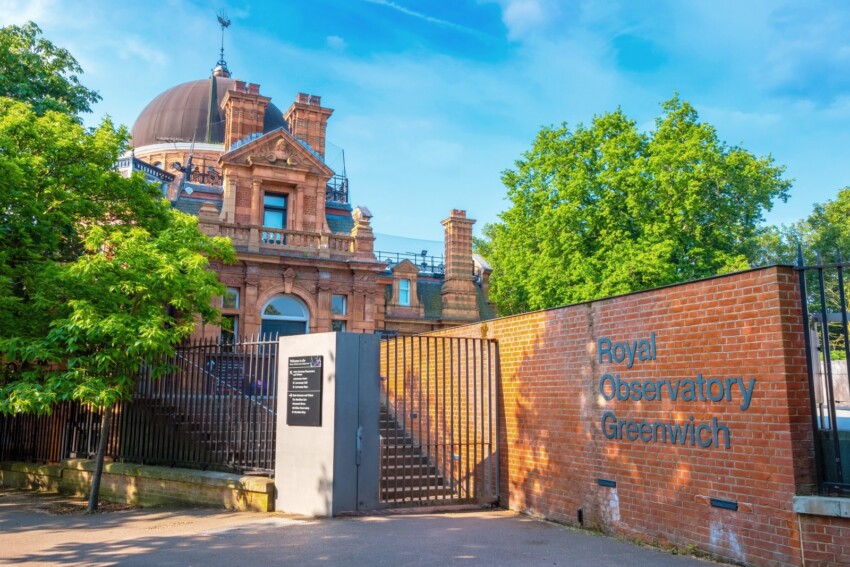
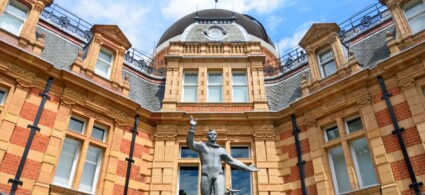
The Royal Observatory is undoubtedly Greenwich’s most celebrated attraction and the primary reason the area is known worldwide. Founded in 1675 by order of King Charles II, the observatory was established with the specific purpose of solving the problem of determining longitude at sea—a critical challenge for maritime navigation at the time.
The main building, designed by architect Christopher Wren, stands atop Greenwich Hill, commanding a strategic position for astronomical observation. Flamsteed House, the oldest part of the complex, is named after the first Astronomer Royal, John Flamsteed, who worked here for over 40 years. Inside you’ll find beautifully preserved historic apartments, original astronomical instruments, and the famous Shepherd Gate Clock, the world’s first public clock to display Greenwich Mean Time.
The most thrilling moment of your visit is undoubtedly crossing the Greenwich Meridian (0° of longitude), marked by a steel strip set into the courtyard pavement. Here you can literally stand with one foot in the Eastern Hemisphere and one in the Western Hemisphere—an experience that draws thousands of visitors daily. At night, a powerful green laser beam illuminates the sky along the meridian line, visible from various points across London.
The Peter Harrison Planetarium, added in 2007, is one of Europe’s most modern planetariums. Its bronze dome, tilted at 51.5 degrees to align with Greenwich’s latitude, houses a spectacular 120-seat astronomy theatre featuring immersive shows about the universe. Your observatory ticket includes access to one of the planetarium’s presentations.
The attraction is included in the London Pass, making it excellent value if you’re planning to visit multiple sites.
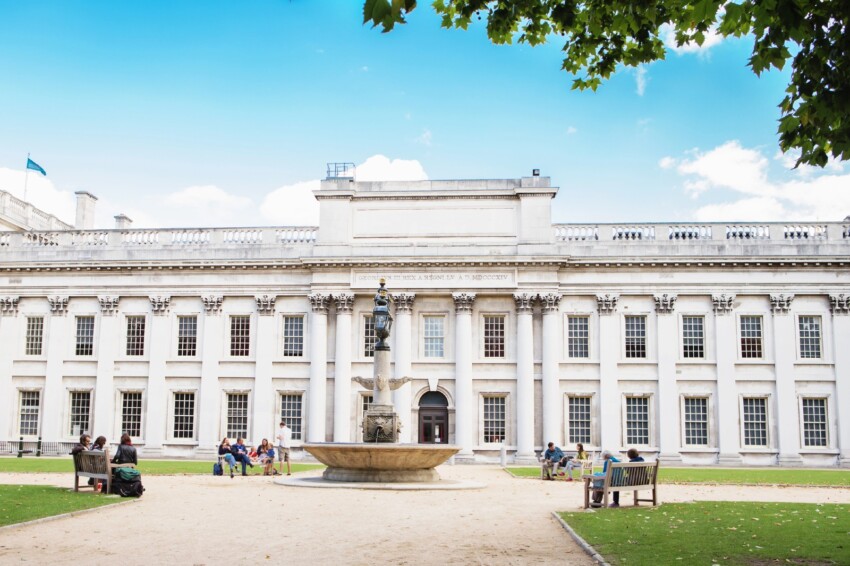
The Old Royal Naval College is a baroque architectural masterpiece dominating Greenwich’s waterfront and ranks among England’s most harmonious architectural ensembles. Designed by some of Britain’s greatest architects—including Christopher Wren, Nicholas Hawksmoor, and John Vanbrugh—between 1696 and 1712, the building was originally conceived as a royal hospital for retired sailors.
The complex comprises four principal buildings arranged symmetrically around a large central square, with sightlines carefully planned to frame the Queen’s House perfectly in the background. This architectural arrangement, which leaves a clear visual passage, was a deliberate decision by Queen Mary II, who insisted that the view from the Queen’s House towards the river remain unobstructed.
The true jewel of the complex is the Painted Hall, often called the “British Sistine Chapel”. This extraordinary hall was decorated by artist Sir James Thornhill between 1707 and 1726, taking 19 years to complete the 3,700 square metres of baroque frescoes. The paintings celebrate the British monarchy, naval power, and Protestant triumph, featuring over 200 human figures. Following a £8.5 million restoration completed in 2019, the frescoes have been restored to their original splendour. Entry to the Painted Hall costs £12 for adults, though the highly recommended 45-minute guided tours are excellent value.
The Chapel of St Peter and St Paul, rebuilt following a fire in 1779, features a neoclassical interior strikingly contrasted with the Painted Hall’s baroque style. The ceiling decorated by Benjamin West and the altarpiece depicting St Paul’s shipwreck create an atmosphere of profound spirituality. Chapel entry is free.
The underground areas of the Naval College now house the fascinating Visitor Centre, where you can explore the building’s history through interactive exhibits and discover the tunnel system connecting the various structures. Particularly compelling is the section devoted to the lives of retired sailors who lived here until 1869, when the hospital was transformed into the Royal Naval College.
The complex has served as a location for over 100 films and television series, including scenes from the Pirates of the Caribbean films, The Crown, Les Misérables, and The King’s Speech. Film location-specific tours are available weekends.
Entry to the courtyards and grounds is completely free, making the Old Royal Naval College one of London’s most spectacular no-charge attractions. The site is open 10:00 to 17:00 daily.
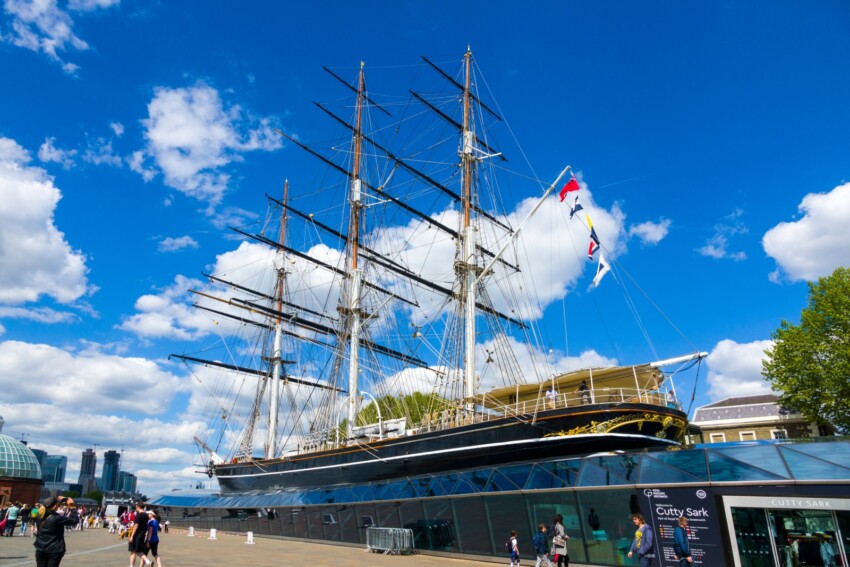
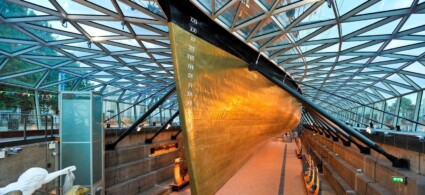
The Cutty Sark is a British maritime icon and the only surviving 19th-century tea clipper. Built in 1869 at the Dumbarton shipyards in Scotland, this elegant sailing vessel was designed to be the fastest of its time for transporting tea from China to England—an exceptionally lucrative trade during the Victorian era.
With a length of 85 metres and 32 sails (963 square metres of total sail area), the Cutty Sark could achieve remarkable speeds for the period, reaching 17.5 knots. The name derives from Robert Burns’ Scottish poem “Tam o’ Shanter”, in which “cutty sark” means a short nightshirt. The ship’s figurehead depicts Nannie Dee, the poem’s witch, holding a horse’s tail in her hands.
The vessel underwent a major restoration following a devastating 2007 fire and reopened to the public in 2012 with an innovative exhibition solution: the Cutty Sark is now elevated 3 metres above a glass platform, allowing visitors to walk beneath the hull and admire the world’s largest collection of ship figureheads (81 historic examples).
On board you can explore four decks and discover what life was like for a crew of 28–35 people during long voyages. Recreated cabins show the spartan conditions sailors endured, whilst the captain’s cabin, relatively luxurious by contrast, provides interesting perspective. The engine room preserves original machinery, including an auxiliary engine installed in 1895.
The orlop deck (the lowest deck) hosts interactive exhibitions about the ship’s history and Victorian maritime trade, with multimedia projections recreating storms in the Indian Ocean and around the Cape of Good Hope. The “Master Mariner” installation uses augmented reality to show how the ship appeared under full sail.
Admission costs £18 for adults and £9 for children. As mentioned earlier, combined tickets with the Royal Observatory offer significant savings. The Cutty Sark is included in the London Pass. Opening hours are 10:00 to 17:00 (last entry 16:15). Online advance booking is recommended for Saturdays and Sundays to avoid queues, especially during summer months.
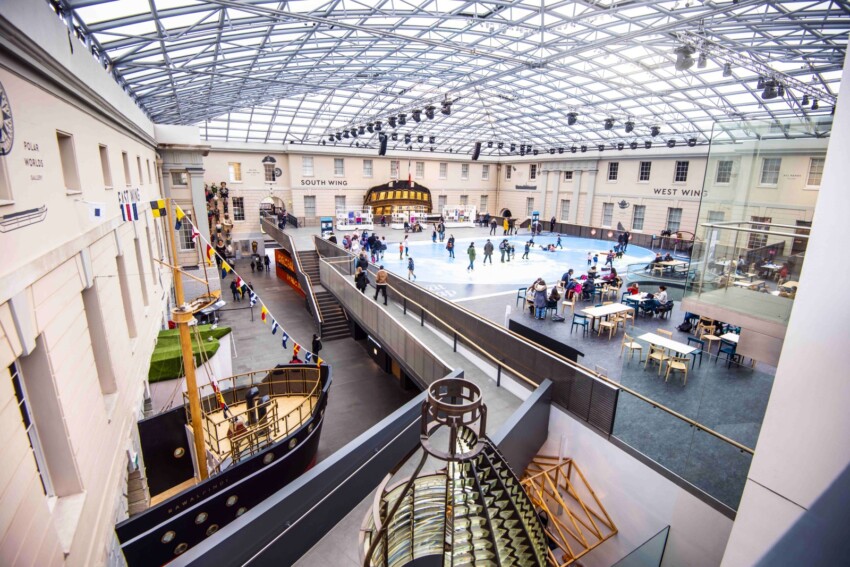
The National Maritime Museum is the world’s largest maritime museum and houses a collection of over 2 million objects related to British naval history. Founded in 1934, the museum occupies a series of interconnected neoclassical buildings and offers an immersive experience in the maritime history that defined the British Empire.
The 17 permanent galleries explore themes spanning from the Tudor era to 20th-century conflicts. The Nelson, Navy, Nation Gallery is dedicated to Admiral Horatio Nelson and displays the famous uniform he wore during the Battle of Trafalgar in 1805, with the bullet hole that caused his death still visible. This artefact ranks among the most iconic objects in British history.
The Polar Worlds gallery chronicles Arctic and Antarctic expeditions with original artefacts from Ernest Shackleton’s and Robert Falcon Scott’s explorations. Particularly moving is the wooden sledge used in the tragic 1912 South Pole expedition. The Pacific Encounters gallery explores Captain James Cook’s voyages, featuring original navigation instruments and objects collected during his three Pacific voyages.
For families, the Ahoy! gallery (lower level) is an interactive space designed specifically for children under seven, where they can explore a pirate ship, fire toy cannons, and dress as sailors. The SHIP (Shipbuilding, Heritage, Identity, People) gallery offers an engaging experience of British shipbuilding.
The museum also houses the Royal Observatory Collection, with over 1,000 historic astronomical instruments, and the Caird Library, one of the world’s most important maritime research libraries, accessible by appointment to scholars.
Entry to the National Maritime Museum is completely free, though some temporary exhibitions may require a separate ticket. The museum is open 10:00 to 17:00 daily. Free audio guides are available in several languages. Plan to spend at least 2–3 hours to properly appreciate the main collections.
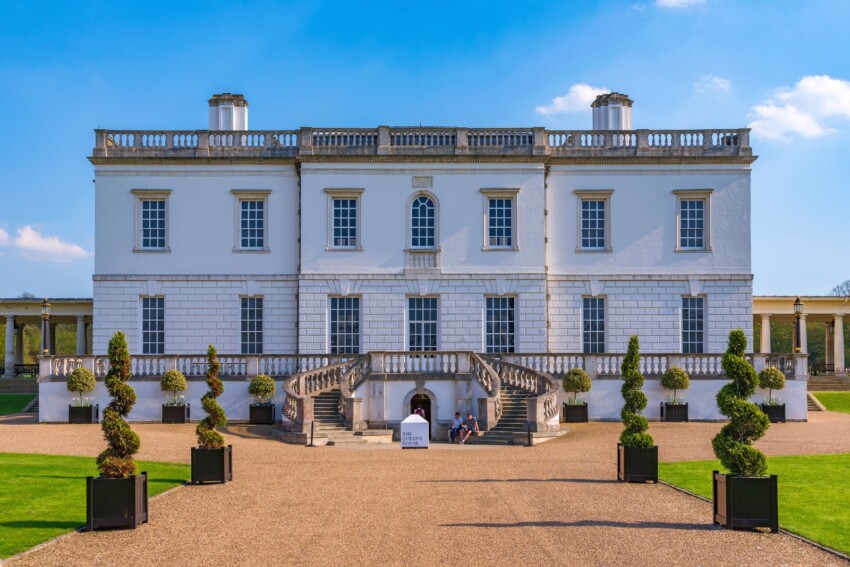
The Queen’s House is an architectural gem often overlooked by tourists, yet represents one of the most significant buildings in British architectural history. Designed by architect Inigo Jones between 1616 and 1635, it was the first Palladian building constructed in England, introducing Italian Renaissance style to the United Kingdom.
Commissioned by King James I for his wife Anna of Denmark, the villa wasn’t completed until the reign of his successor Charles I, becoming the residence of Queen Henrietta Maria. The building’s “H” shaped plan was originally intersected by a public road running from Greenwich to Woolwich, creating the famous Bridge Room on the first floor, which literally connected the building’s two wings above the road.
The Queen’s House interior houses the Royal Museums Greenwich art collection, featuring works by artists such as William Hogarth, Canaletto, Gainsborough, and Joshua Reynolds. The Great Hall, a perfect 12-metre cube, features a ceiling decorated with a fresco representing Peace and the Arts, whilst the white and black marble floor creates striking geometric contrast.
The Tulip Stairs, the first freestanding geometric spiral staircase built in Britain, is a masterpiece of 17th-century engineering. The decorative wrought-iron balustrade with floral motifs (originally thought to be tulips, hence the name, but probably lilies) winds elegantly upward with no central supporting pillar, anticipating modern architectural innovations by centuries.
On the upper level, the Queen’s Chambers have recently been restored to recreate their 1630 appearance, with painted ceilings, tapestries, and period furnishings. These rooms command privileged views towards the Thames and the Old Royal Naval College.
Entry to the Queen’s House is completely free, making it an essential stop during your Greenwich visit. It’s open 10:00 to 17:00 daily. The collection is regularly rotated, so even repeat visitors always discover something new. Free audio guides provide insights into the architectural history and art collection.
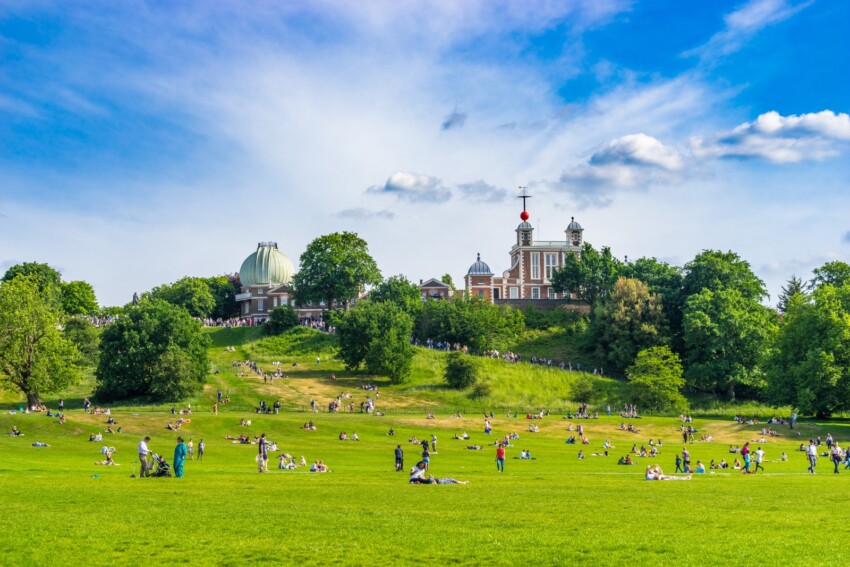
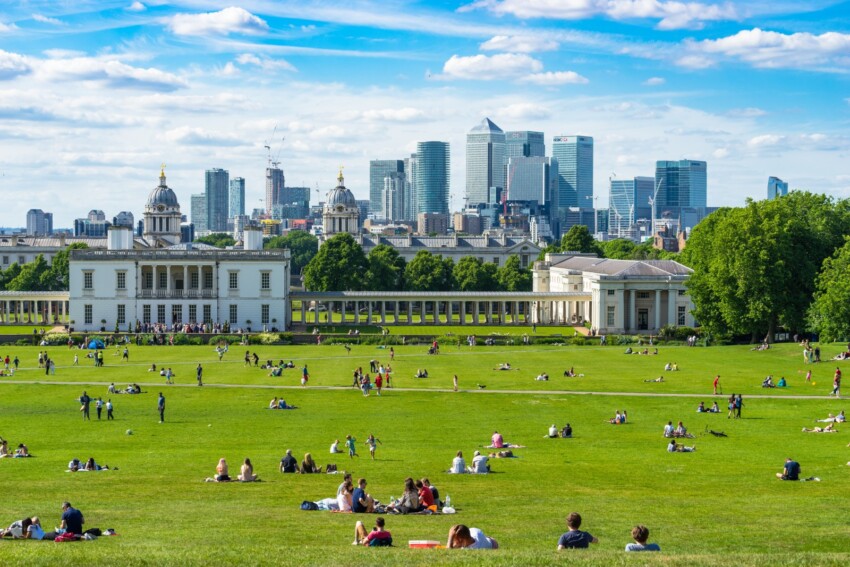
Greenwich Park is one of London’s eight Royal Parks and the oldest, having been enclosed in 1433. Spanning 74 hectares, it offers one of the capital’s most spectacular green spaces, combining natural landscape, formal gardens, and historic monuments in a setting of unparalleled beauty.
The park’s most distinctive feature is the hill on which the Royal Observatory stands, offering what is arguably London’s most iconic panorama: from here you can admire the Old Royal Naval College’s perfect symmetry in the foreground, with Canary Wharf’s skyscrapers rising strikingly in the background, creating an extraordinary contrast between historic and modern architecture. This viewpoint is particularly magical at sunset, when golden light illuminates the Thames and the city.
The park was redesigned in formal French style by André Le Nôtre (the same landscape architect who designed Versailles’ gardens) in 1660.
Although much of that original design was later modified, some elements remain, such as the tree-lined avenue running from the Royal Observatory towards the Old Royal Naval College, and the Flower Garden, an enclosed 2.5-hectare garden featuring geometric flower beds, an ornamental lake and over 150 varieties of roses.
The Wilderness, located in the south-eastern corner of the park, is a 5-hectare area of ancient woodland dominated by centuries-old oaks and chestnuts, some of which are over 300 years old. Here you’ll also find the Queen’s Orchard, with traditional fruit trees, and the Roman Bath, a mysterious semi-underground structure from the Roman or Saxon era, whose original purpose remains debated by archaeologists.
The park has supported an important population of deer since 1515: the current herd numbers around 30 red deer and fallow deer living in a fenced area open to the public. Particularly evocative is the autumn rutting season, when the males compete for females.
For children, two equipped play areas provide entertainment: the main one is located near the visitor centre, whilst a second, more recent facility, is situated in the Flower Garden area. The Pavilion Tea House, an elegant Victorian café, offers an ideal spot for a break with views across the park.
The park is open free of charge year-round, from 6:00 until dusk. During summer weekends, the park frequently hosts free events, craft markets and concerts. Those visiting London in July can enjoy the special atmosphere of the park during the Greenwich Music Time concerts, a series of open-air concerts featuring international artists.
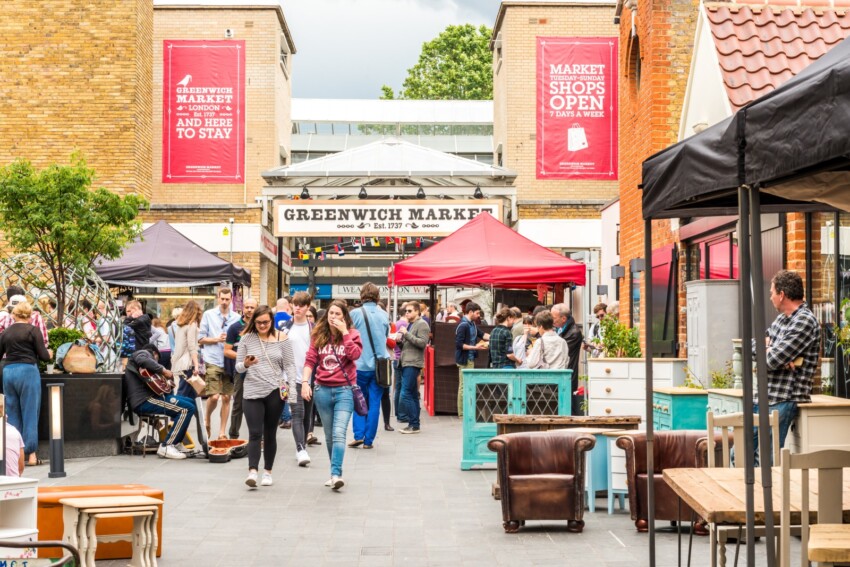
Greenwich Market is one of London’s oldest covered markets, operating since 1737 (though a market has been documented at this location from 1700). Located in the heart of Greenwich, just steps from Cutty Sark, the market occupies a beautifully restored Victorian building and offers a shopping experience entirely different from the major tourist markets in central London.
The market changes character depending on the day of the week. From Thursday to Sunday, the main market operates with around 120 stalls selling local crafts, antiques, vintage goods, handmade jewellery, art, photography and collectibles. The quality of craftsmanship is generally high, with many emerging designers using the market as a showcase for their creations. On Tuesdays, Wednesdays and Fridays, the market transforms into an area predominantly dedicated to food, featuring high-quality street food.
The permanent food court, which surrounds the covered market, hosts over 25 food stalls offering international cuisine: from Spanish paella to Thai curry, Mexican tacos to French pastries. Particularly popular are the British street food stands, offering gourmet versions of classics such as fish and chips and pies. Prices are generally more affordable than central London.
The building itself merits attention: the iron and glass structure, typical of Victorian market architecture, was designed to maximise natural light. The 2004 restoration preserved these original elements whilst integrating modern facilities. The first-floor galleries house independent shops, cafés and restaurants with views over the market below.
During winter months, the Greenwich Market Winter Festival transforms the area into a festive village with stalls selling artisan holiday products, mulled wine and a particularly festive atmosphere.
The market is open from 10:00 to 17:30 (hours may vary slightly for some food court outlets). Entry is free. The market can be very busy at weekends, so visiting on weekdays offers a more relaxed experience. For those seeking authentic local London products, this market represents an excellent alternative to the more touristy Camden Town or Portobello Road.
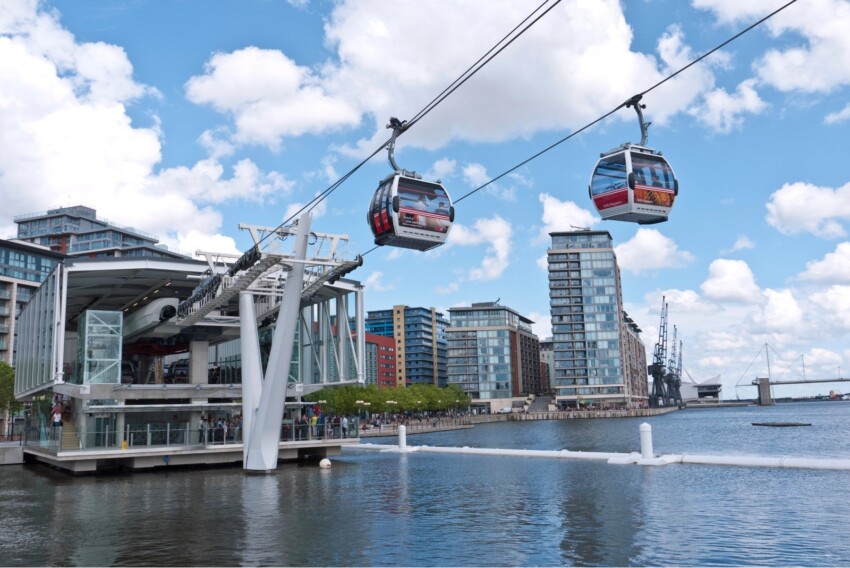
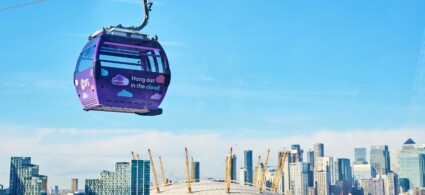
The IFS Cloud Cable Car, also known as the Emirates Air Line after its original sponsor, is an urban cable car that crosses the Thames, connecting the Greenwich Peninsula (near The O2) with the Royal Docks on the north bank of the river. Opened in 2012 for the London Olympics, this attraction offers a unique experience for viewing the capital from a completely different aerial perspective.
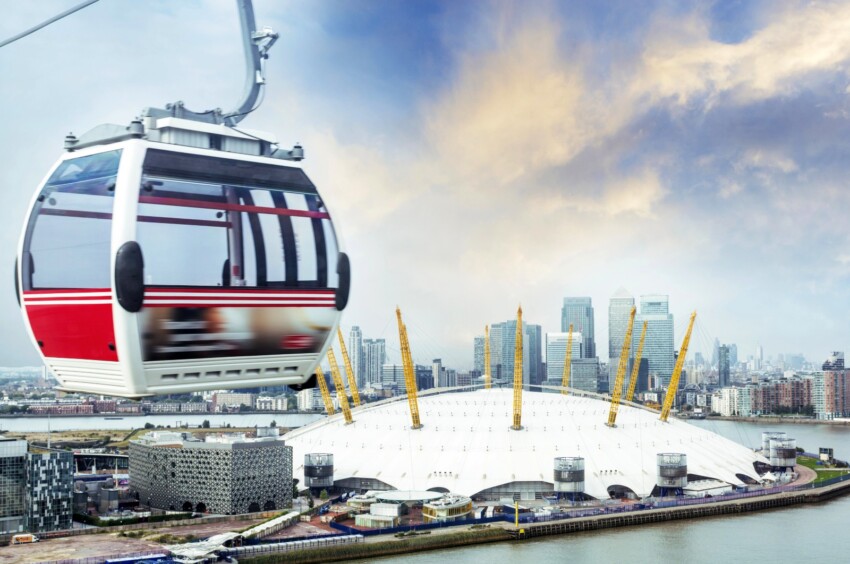
The route spans 1.1 kilometres and reaches a maximum height of 90 metres above river level, offering spectacular panoramic views of Greenwich, Canary Wharf, The O2, the Olympic Park and, on clear days, even the central London skyline. The crossing takes approximately 10 minutes and the glass cabins can accommodate up to 10 people each, guaranteeing 360-degree visibility. During the journey, an audio system provides information about points of interest visible along the route.
The cable car operates from 7:00 to 21:00 on weekdays (until 22:00 on Fridays) and from 8:00 to 22:00 at weekends, with cabins departing every 30 seconds during peak hours. The Greenwich station (Peninsula Station) is located approximately 5 minutes’ walk from North Greenwich Underground station (Jubilee Line) and 10-15 minutes’ walk from The O2. On the opposite bank, the Royal Docks Station is adjacent to the Royal Victoria DLR stop, offering direct connections to Bank and Canary Wharf.
Particularly evocative is the sunset crossing, when the sun descends behind London’s skyline and the sky is painted with spectacular colours, with no additional charge. The cable car is fully accessible for people with reduced mobility, with ramps and lifts at both stations. The Cable Car represents not only a tourist attraction but also a functional transport link for those travelling between the two banks of the Thames in this area.
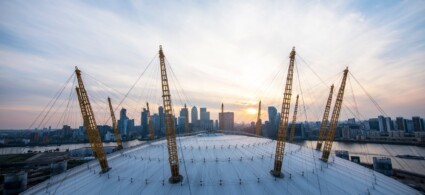
The O2 is one of London’s most iconic modern buildings and the world’s largest indoor arena by capacity, with 20,000 seats. Originally built as the Millennium Dome to celebrate the year 2000, the controversial initial project cost £789 million and was widely criticised as a waste of public money.
The structure is an engineering masterpiece: the white dome has a diameter of 365 metres (one for each day of the year) and is supported by 12 yellow pillars 100 metres tall (representing the months of the year or the hours on a clock). The fibreglass membrane coated with Teflon that forms the dome covers an area of 100,000 square metres yet weighs only 70 kg per square metre, creating one of the lightest coverings ever built for a structure of such dimensions.
After years of abandonment, in 2007 AEG acquired the site and transformed it into a multifunctional entertainment centre. Today The O2 is much more than a concert arena: the complex includes a multiplex cinema with 11 screens (including an IMAX), over 26 bars and restaurants, a casino, bowling alley and dozens of shops. Building Six, a smaller 2,700-seat venue, hosts theatre performances, comedy shows and intimate concerts.
The main arena has hosted some of the 21st century’s most memorable musical events, including Prince‘s residency in 2007 (21 sold-out concerts) and Michael Jackson‘s last full live performance in 2009. During the 2012 London Olympics, The O2 hosted gymnastics, trampolining and basketball competitions.
The most unique experience The O2 offers is Up at The O2, a guided climb on the dome itself. The 52-metre ascent along a walkway over the arena roof takes approximately 90 minutes (including briefing and descent) and offers spectacular 360-degree views of London and the Thames. Participants wear special suits and are secured to a safety rope throughout. The experience costs £32-£38 depending on the time of day. Sunset and night climbs are also available.
Uber Boat by Thames Clippers, the riverboat service connecting various parts of London along the river, has a stop directly at The O2, making arrival by boat a scenic option. The Emirates Air Line, a cable car that crosses the Thames, connects The O2 with the Royal Docks on the north bank, offering spectacular aerial views during the 10-minute journey.
To check upcoming concerts and events, visit the official O2 website. Tickets for events must be purchased separately and prices vary enormously depending on the artist and location. Access to the complex’s shops and restaurants is free and open daily.
In the following map you can see the location of the main places of interest mentioned in this article.
Royal Museums Greenwich Day Pass
The Royal Museums Greenwich Day Pass is a combined ticket offering significant savings for those wishing to visit the main paid attractions in Greenwich in a single day.
The pass includes entry to three of the area’s most iconic attractions:
the Royal Observatory with the Greenwich Meridian and the Peter Harrison Planetarium
the historic ship Cutty Sark
the spectacular Painted Hall in the Old Royal Naval College.
By purchasing the Day Pass instead of individual tickets, you save approximately 25-30%, making this option particularly worthwhile for those planning a full day in Greenwich.
The pass can be purchased online or directly at the ticket offices of each of the three included attractions, but advance online purchase is strongly recommended, especially during peak season when attractions can be very busy.
A significant advantage of the Day Pass is that it includes a planetarium show at the Peter Harrison Planetarium, which would otherwise require a separate ticket. The shows, lasting approximately 30 minutes, cover various astronomical themes and are available at different times throughout the day. It’s advisable to book your preferred time slot when purchasing the pass or upon arrival at the Royal Observatory to ensure availability.
The pass also offers fast-track or priority access during certain times of year, allowing you to skip main queues and access attractions more quickly. This benefit is particularly appreciated during summer weekends and school holidays, when waiting times can be significant.
For those holding the London Pass, it’s important to note that this already includes all attractions covered by the Royal Museums Greenwich Day Pass, plus dozens of other London attractions. In this case, purchasing the Day Pass would be unnecessary. The London Pass is better value for those planning to visit many attractions over several days, whilst the Royal Museums Greenwich Day Pass is ideal for those wishing to concentrate exclusively on Greenwich in a single day.
Greenwich is excellently connected to central London with several transport options, each offering its own advantages in terms of experience and convenience.
Underground and DLR
The Docklands Light Railway (DLR) is probably the most convenient way to reach Greenwich. The Cutty Sark station is just steps away from the historic ship and all the main attractions. The DLR departs from Bank Station in central London, with trains every 5-10 minutes. The journey takes around 20 minutes and offers interesting views of the Docklands and Canary Wharf. The beauty of the DLR is that it’s completely automated and driver-free, so you can sit in the front row and enjoy the views.
Alternatively, the Jubilee Line stops at North Greenwich, the station for The O2. From here you’ll need to catch a bus (the 188 or 486) for around 10 minutes to historic Greenwich, or walk for approximately 20 minutes along the river. This option is quicker if you’re coming from west London or Westminster.
By train
Southeastern trains connect London Bridge (in the centre) to Greenwich station in just 8 minutes, with departures every 15 minutes or so. Greenwich station is situated slightly south of the park, about a 10-minute walk from the National Maritime Museum. This is the quickest option if you’re already in the London Bridge or Borough area.
Another railway line connects Cannon Street and Charing Cross to Greenwich in around 15 minutes. Trains also pass through London Bridge and Waterloo East.
By boat on the Thames
Uber Boat by Thames Clippers depart from various piers along the Thames, including Westminster Pier (near Big Ben), London Eye Pier, Tower Pier (near the Tower of London) and Canary Wharf. The journey from Westminster to Greenwich Pier takes around 45-60 minutes depending on the service type (express or with more stops).
The boats have large panoramic windows and open-air decks, making the journey an attraction in itself. Along the way you’ll pass under some of London’s most iconic bridges, see Tower Bridge and The Shard, and take spectacular photos of the London skyline.
Alternatively, there are many Thames river cruises that reach all the way to Greenwich.
A particularly fascinating way to reach Greenwich from the north bank of the Thames is via the Greenwich Foot Tunnel, a Victorian pedestrian tunnel running beneath the river. The tunnel, 370 metres long and 15 metres deep, opened in 1902 to allow workers living south of the river to reach the Docklands where they worked. The southern entrance is near Cutty Sark, whilst the northern entrance is at Island Gardens on the Isle of Dogs (Island Gardens DLR stop).
The tunnel is lined with white tiles and is well-lit, creating a unique and slightly surreal atmosphere. Both entrances feature elegant glass and steel domes designed by Alexander Binnie, and the original wrought-iron lifts (still functioning) are small masterpieces of Edwardian engineering. The tunnel is open 24 hours a day and completely free to use.
Practical transport tips
For most visitors, the combination of DLR + Thames Clipper offers the best experience: arrive by DLR to start your visit, then return to the centre by boat along the river to enjoy the sunset views.
Where to eat in Greenwich
Greenwich offers an excellent selection of restaurants, historic pubs and cafés that reflect both the area’s maritime tradition and its modern revitalisation as a culinary destination.
Historic pubs
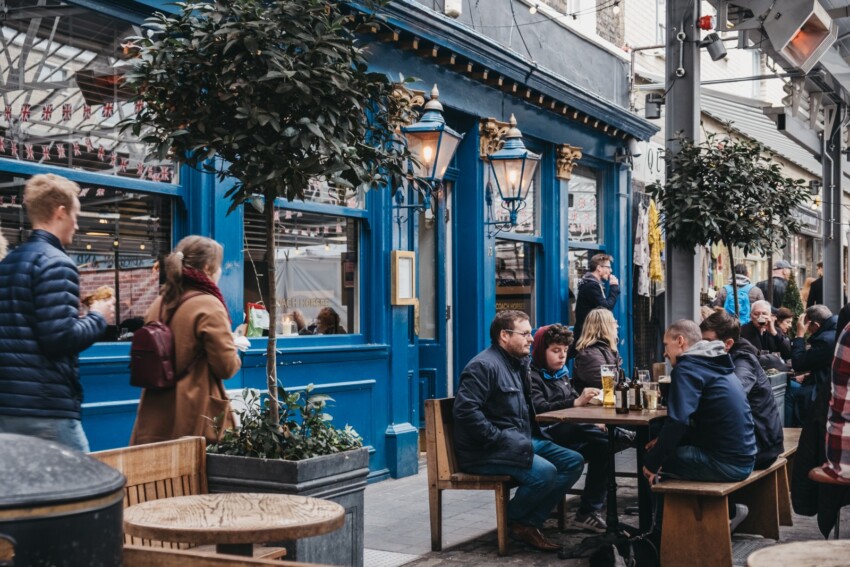
The Trafalgar Tavern, situated directly on the riverfront near the Old Royal Naval College, is a Victorian pub from 1837 that was frequented by Charles Dickens and appears in his novel “Our Mutual Friend”. The pub is celebrated for its whitebait dinners, a tradition dating back to when government ministers held annual banquets here. The interior preserves the original atmosphere with dark wood panelling, large windows overlooking the Thames and historic fireplaces. Prices are average for London (£15-25 for a main course).
The Cutty Sark Tavern, another historic pub from 1804 tucked away in a picturesque location near the Foot Tunnel, is appreciated for its selection of real ales and authentic atmosphere. The pub has retained much of its original character, with low ceilings and creaky wooden floors.
The Greenwich Union, part of the local microbrewery Meantime Brewery, offers craft beers produced in Greenwich alongside a menu of quality pub food. The atmosphere is more contemporary but maintains a distinctly local character.
Restaurants
The Old Brewery, located within the Old Royal Naval College complex in the Pepys Building, serves modern British cuisine in a spectacular setting. The restaurant occupies what was once the original hospital brewery (hence the name) and combines historic architecture with contemporary design. The menu focuses on seasonal British ingredients, with dishes ranging from reinvented fish and chips classics to more innovative creations. Prices are mid-to-high (£18-30 for main courses), but the quality justifies the cost.
Goddards at Greenwich, a genuine local institution since 1890, is famous for its traditional pie and mash, a working-class London dish comprising savoury meat pies (or eel) served with mashed potato and characteristic green “liquor” (a parsley-based sauce). This is the ideal place for an authentically London dining experience at very reasonable prices (around £7-10).
Craft London at Peninsula Square (near The O2) is a more upscale restaurant with modern British cuisine and an exceptional selection of artisanal cocktails. The outdoor terrace offers wonderful views of the Thames and Canary Wharf.
Cafés and breakfasts
Greenwich Market offers excellent options for quick breakfasts or casual lunches, with stalls serving everything from American pancakes to organic porridge, French croissants to bagels. Prices are reasonable (£5-10 for a full meal).
Bill’s Greenwich in the heart of the market offers generous British breakfasts, brunch and homemade cakes in a casual, family-friendly atmosphere. Particularly popular at weekends, so expect queues for tables between 10:00 and 12:00.
Pavilion Tea House in Greenwich Park is perfect for traditional afternoon tea with views across the park. The homemade cakes, scones with jam and cream, and tea selection are excellent quality. A lovely option for a break during your park visit.
International cuisine
The Gipsy Moth, a gastropub on the riverfront near Cutty Sark, offers an eclectic menu ranging from British cuisine to dishes inspired by international influences. The outdoor terrace with river views is particularly pleasant on sunny days.
Tai Won Mein is considered one of Greenwich’s best Chinese restaurants, specialising in hand-made noodles and dim sum. The surroundings are simple but the food is authentic and prices reasonable.
For those seeking vegetarian or vegan options, Goddard’s Pie House (not to be confused with the aforementioned Goddards at Greenwich) offers modern versions of traditional pies with several plant-based options.
Where to stay in Greenwich
The historic Greenwich area, in the immediate vicinity of the National Maritime Museum and Cutty Sark, hosts several elegant accommodations. Here you’ll find boutique hotels in restored Georgian buildings and family-run bed & breakfasts offering a more intimate atmosphere than large city-centre hotels. Prices are generally more accessible than areas like Westminster or South Kensington.
The riverfront area, particularly between Greenwich and Canary Wharf, offers modern hotels with Thames views. These accommodations are perfect if you want contemporary comfort and business-oriented facilities. Many of these properties are international chains guaranteeing high standards. The main advantage is proximity to the DLR and Thames Clippers stops.
For a truly unique experience, some floating hotels are moored along the Thames near Greenwich, offering the opportunity to sleep literally on the water. These accommodations, though limited in number, guarantee a memorable experience with panoramic river views.
We offer best rates If you find it cheaper we refund the price difference.
Free cancellation Most properties allow cancellation without penalty.
We're available 24 hours a day For any problem call Booking.com.
For a complete visit to Greenwich, allow a full day. A typical itinerary could include: arriving by DLR in the morning, visiting the National Maritime Museum (2 hours), lunch at Greenwich Market, visiting Cutty Sark (1.5 hours), a walk through Greenwich Park to the Royal Observatory (1 hour for the visit plus walking time), descending through the park to visit the Queen’s House (1 hour), and finally exploring the Old Royal Naval College with the Painted Hall (1.5 hours). Return to the centre by boat at sunset.
If you have only a half day, focus on the Royal Observatory, National Maritime Museum and Cutty Sark, all reachable on foot within minutes of each other.
Is Greenwich included in London’s Travelcard zones?
Yes, Greenwich is in Zone 2-3 (depending on the specific station). A Travelcard for zones 1-2 covers the DLR Cutty Sark station, whilst for the Greenwich railway stations you may need a Travelcard for zones 1-3. With an Oyster Card, the correct fare is automatically deducted.
Do I need to book in advance?
For the Royal Observatory and Cutty Sark, online booking is strongly recommended, especially at weekends and during summer, to avoid queues and benefit from a discount. The National Maritime Museum and Queen’s House are free and don’t require booking.
Is Greenwich safe to visit?
Yes, Greenwich is a very safe area, well-policed and frequented by families and tourists. As in any tourist area of a major city, exercise normal care with your belongings, especially in busy areas like the market. In the evening, the areas around the Old Royal Naval College and The O2 are well-lit and lively.
Where is located Greenwich
How to save on transport and entrance fees
City Card allow you to save on public transport and / or on the entrances to the main tourist attractions.
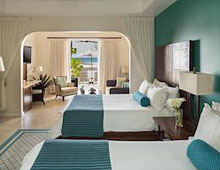 Hotel
Hotel 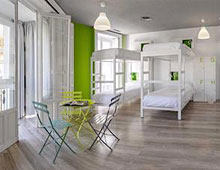 Budget accommodations
 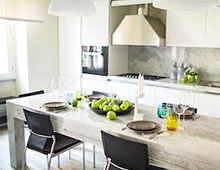 Apartments
  Family Hotel
 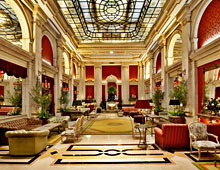 Luxury Hotel