Bestseller
HMS Belfast Tickets
From 30,70 €
Buy the ticket
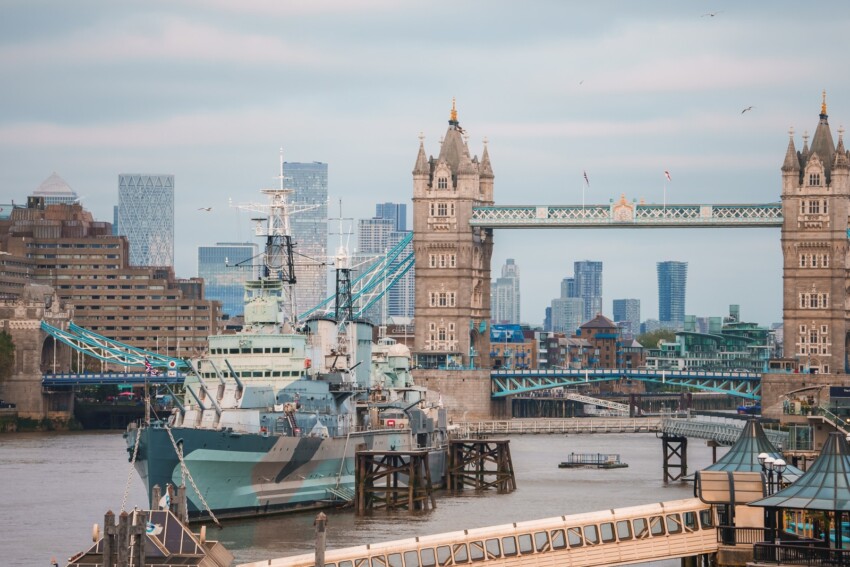
The HMS Belfast is an imposing British warship that has witnessed some of the most crucial moments of twentieth-century history. Anchored on the River Thames between Tower Bridge and London Bridge, this magnificent Edinburgh-class vessel represents one of Europe’s most fascinating and comprehensive floating museums today. With nine decks to explore, the HMS Belfast offers a complete immersion into the daily lives of sailors, naval military strategies and the technological evolution of the British Navy.
Built in 1938 and launched shortly before the outbreak of the Second World War, Belfast participated actively in numerous military operations, from intercepting German ships in the naval blockade at the war’s beginning to supporting the Normandy landings in 1944. Later deployed during the Korean War, this armoured cruiser represents today an invaluable historical heritage and one of the few surviving British warships from that period.
A visit to HMS Belfast will allow you to explore every aspect of life aboard a warship: from the imposing engine rooms to the cramped crew quarters, from the command centre to the brig, through to the powerful gun turrets. Each area has been carefully restored and enriched with sound and visual effects that make the experience even more immersive and engaging for visitors of all ages.
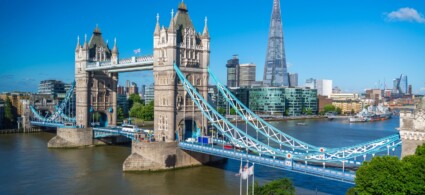
Located in a privileged position in the heart of London, HMS Belfast also offers one of the city’s most spectacular panoramas, with beautiful views of Tower Bridge, the Tower of London and the modern skyline of the City.
The command bridge represents the operational brain of the ship, from where the captain and officers directed all operations. Carefully restored with original equipment, this space will allow you to step into the shoes of the commanders who guided Belfast through Atlantic storms and naval battles. You’ll observe the period navigation equipment, speaking tubes for communicating with other sections of the ship, and even sit in the captain’s chair.
From here you can also enjoy an exceptional panoramic view of the Thames and some of London’s most iconic monuments, including Tower Bridge and The Shard skyscraper. The positions are enhanced with uniformed mannequins that recreate scenes of daily life during operations, making the atmosphere even more authentic.
The imposing gun turrets are one of the most spectacular elements of HMS Belfast. The ship was equipped with twelve 6-inch guns distributed across four triple turrets, capable of striking targets up to 12 miles away. During your visit you can enter inside these armoured structures and understand the complex workings of the loading and aiming system.
The experience is made even more realistic thanks to sound effects that simulate the deafening roar of gunfire and the rotation mechanism of the turrets. You’ll observe the different crew positions and imagine the extreme conditions in which these men operated during naval battles. Turret “B” is completely accessible and will allow you to follow the path of ammunition from the magazine to the gun.
The gigantic engine room is one of the most fascinating places on the ship. Descending to the lower decks, you’ll find yourself immersed in a labyrinth of piping, valves, control panels and engines that powered the ship’s propulsion. This space, which extends over multiple levels, will give you a concrete idea of the engineering complexity of a warship from that era.
The original Admiralty engines were capable of developing over 80,000 horsepower, allowing Belfast to reach a maximum speed of 32 knots (around 60 km/h). The atmospheric lighting and ambient sounds recreate the claustrophobic and extremely hot atmosphere in which the engine crews worked, often in temperatures exceeding 40 degrees Celsius.
Exploring the areas dedicated to the crew will allow you to understand the daily life of approximately 950 men who populated this floating city. The common crew’s hammocks were hung in cramped shared spaces, in stark contrast to the more comfortable officers’ cabins. The sleeping area was transformed during the day into a recreational space or dining area, optimising every available centimetre.
Particularly interesting is the ship’s galley, where you can observe the enormous pots and industrial ovens needed to prepare over 2,000 meals per day. Nearby is also the ship’s infirmary, complete with an operating theatre where surgical operations were performed even during battles.
The operations room represents the strategic heart of the ship, where information from radar and other detection systems was processed to coordinate military action. This section has been reconstructed as it was during the final phase of the Second World War, when Belfast participated in Operation “Overlord” (the Normandy landings).
You can observe the tactical tables with maps, communication systems and the first naval radars. The audiovisual displays will help you understand how military operations were coordinated and how Belfast contributed to decisive historical events such as the Battle of North Cape, which led to the sinking of the German cruiser Scharnhorst.
This exhibition space tells the daily life of sailors through personal objects, period photographs and recreations. You’ll discover how the crew spent their leisure time, what pastimes were most common during long voyages and how celebrations were observed on board.
Particularly moving are the original letters and diaries that bear witness to the thoughts and emotions of men far from their families, often for months. The section also includes information about food rations, clothing and hygiene conditions on board, offering a human and everyday snapshot of military life at sea.
The Arctic Messdeck is a new interactive section dedicated to HMS Belfast’s missions in the Arctic Sea during the Second World War. Through audio testimonies, historical photos and environmental recreations, this area will let you experience the extreme conditions faced by the crew during convoys to supply the Soviet Union between 1941 and 1944.
The polar temperatures, the constant threat of German submarines and Arctic storms made these missions particularly dangerous. Here you can also observe the special equipment used to operate in extreme freezing conditions and understand the logistical challenges of these operations which were crucial to the conflict’s outcome.
The history of HMS Belfast begins at the Harland & Wolff shipyards in Belfast, in Northern Ireland (from which she takes her name), where she was launched on 17 March 1938 by the wife of Prime Minister Neville Chamberlain. Belonging to the Edinburgh-class light cruisers, she was one of the last British warships to be built with a classic riveted hull rather than a welded one.
The first serious incident occurred just three months after entering service, when the ship struck a magnetic mine in the Firth of Forth on 21 November 1939, sustaining such severe damage that nearly three years of repairs were needed. This incident led to a substantial redesign of the hull and the installation of more modern equipment.
Returning to operational service in 1942, Belfast participated in the Battle of North Cape on 26 December 1943, contributing decisively to the sinking of the German cruiser Scharnhorst. Subsequently, it played a crucial role during the Normandy landings (Operation Overlord) in June 1944, providing naval gunfire support to Allied troops. Its powerful 6-inch guns bombarded German positions on the French coast, contributing to the operation’s success.
After the Second World War, Belfast was modernised and returned to active service during the Korean War (1950-1952), participating in coastal bombardment operations and patrols. In the following years it continued to serve in various missions until its withdrawal from active service in 1963, having travelled over 541,000 nautical miles (approximately 1 million km) in 24 years of service.
Destined for scrapping, she was saved through the intervention of a group of enthusiasts led by retired Admiral Sir Morgan Morgan-Giles. In 1971, HMS Belfast was permanently anchored on the Thames as a museum ship and opened to the public, becoming part of the Imperial War Museum in 1978. Today she represents the only large Second World War cruiser preserved in Europe and a tangible testimony to twentieth-century British naval power.
We recommend purchasing HMS Belfast tickets online to avoid queues and benefit from discounted rates. Admission is free for children under 5, with discounts available for families, students and over-65s.
If you have the London Pass, your visit to HMS Belfast is included in your package at no additional cost. Several of London’s tourist cards also offer discounts on admission, so always check your card’s benefits before purchasing separate tickets.
For groups of more than 10 people special rates and the possibility of booking exclusive guided tours are available. Schools and educational groups can benefit from further discounts by contacting the booking office directly.
Tours of restricted areas offer exclusive access to sections of the ship normally closed to the public. These special tours, available only on selected dates and requiring advance booking, take you through:
These tours are conducted by experienced museum curators who share stories and anecdotes rarely told on standard visits, offering a unique perspective on the ship.
HMS Belfast is open to the public every day of the year, with the following opening times:
The ship is closed only on 25, 26 December (Christmas and Boxing Day) and during some scheduled maintenance days, generally in January. It’s advisable to always check opening times on the official website before your visit, as extraordinary closures or seasonal changes may occur.
For a complete visit that allows you to properly explore all nine decks and related exhibitions, it’s advisable to allow at least 2-3 hours. Visitors particularly interested in naval history may wish to spend up to 4 hours to explore every detail and take part in interactive demonstrations.
The visiting route is well signposted and follows a logical order through the different decks, but it’s possible to personalise your itinerary based on your interests. The visit starts from the upper deck and proceeds towards the lower decks, ending with the engine room.
The very nature of a warship, with its multiple decks, steep stairs and narrow passages, makes HMS Belfast partially accessible to people with reduced mobility. However, the museum has made significant efforts to improve accessibility where possible:
Unfortunately, due to the ship’s structural characteristics, approximately 60% of spaces remain inaccessible to wheelchairs. However, the museum offers a virtual tour of these spaces via tablets made available free of charge for those unable to physically access all areas.
One of the most extraordinary experiences offered by HMS Belfast is the opportunity to spend a night aboard the ship, sleeping in the same hammocks used by sailors during the Second World War. This activity, called “Kip in a Ship”, is primarily aimed at school groups and youth organisations (such as scouts), but during certain periods of the year it is also opened to families.
Participants experience an authentic life as a sailor, dining on dinner and breakfast in the original mess halls, taking part in interactive evening activities and patrolling the ship during the night hours. The morning wake-up call comes with the traditional naval bugle call, providing a complete immersion in shipboard life.
Throughout the year, HMS Belfast hosts a number of special historical themed events:
The gun training experience is an interactive activity that allows visitors to participate in a naval combat simulation. Under the guidance of a costumed “officer”, participants take on different roles within a gun turret crew:
This hands-on demonstration, accompanied by realistic sound effects, illustrates the complexity and precision required to operate the ship’s gigantic guns. The activity is particularly popular with families with teenagers and military history enthusiasts.
HMS Belfast enjoys a highly central location in the heart of London, easily accessible by various modes of transport. The ship is permanently moored on the River Thames between Tower Bridge and London Bridge, on the south side of the river.
The Underground is the quickest and most efficient way to reach HMS Belfast. The nearest station is London Bridge (Northern Line and Jubilee Line), just a 7-minute walk from the ship. Alternatively, Tower Hill station (Circle and District Line) is about 10-12 minutes’ walk away, on the opposite side of the river from the ship. From here you’ll need to cross Tower Bridge to reach HMS Belfast.
Numerous London bus lines also stop near HMS Belfast:
A particularly scenic way to reach HMS Belfast is by boat. Uber Boat stops at London Bridge City Pier, located right next to the ship.
Yes, purchasing tickets online on the official Imperial War Museum website allows you to board the ship directly via the fast-track lane, avoiding queues at the ticket office, which during peak seasons can involve waiting times of up to 30-45 minutes. London Pass holders enjoy the same advantage.
The ship is very suitable for children from age 5 onwards, who are generally fascinated by the naval environment, the guns and battle stories. Family-friendly routes and educational materials tailored to different age groups are available. However, parents should be aware that there are many steep stairs and narrow passages that can be challenging for very small children. Prams must be left at the entrance and are not permitted on board for safety reasons.
Yes, a visit to HMS Belfast is fully included in the London Pass, with no additional charges. Pass holders simply need to show it at the entrance to board the ship directly and benefit from priority access. This inclusion makes the London Pass particularly good value if you plan to visit several London attractions.
Photography for personal use is permitted in almost all areas of the ship. Flash photography may be restricted in some sections containing historical documents that are sensitive to light. Professional or commercial photography requires prior authorisation. Selfie sticks are allowed but should be used with care, given the confined spaces and other visitors.
Despite being moored on the Thames, HMS Belfast is extremely stable and movement is almost imperceptible. The massive steel hull and permanent mooring system ensure that, even with tidal changes and the passage of other vessels, you may notice at most a very slight rocking – generally not enough to cause discomfort even for those prone to seasickness.
Audio guides are available in several languages, including Italian, French, German, Spanish and Chinese. In addition, free information leaflets are available in the main European languages. Regular guided tours are generally only in English, but for groups it is possible to book private guides in other languages in advance.
City Card allow you to save on public transport and / or on the entrances to the main tourist attractions.

 Hotel
Hotel  Budget accommodations
  Apartments
  Family Hotel
  Luxury Hotel