Bestseller
London: Kensington Palace Sightseeing Entrance Tickets
From 23,64 €
Buy the ticket
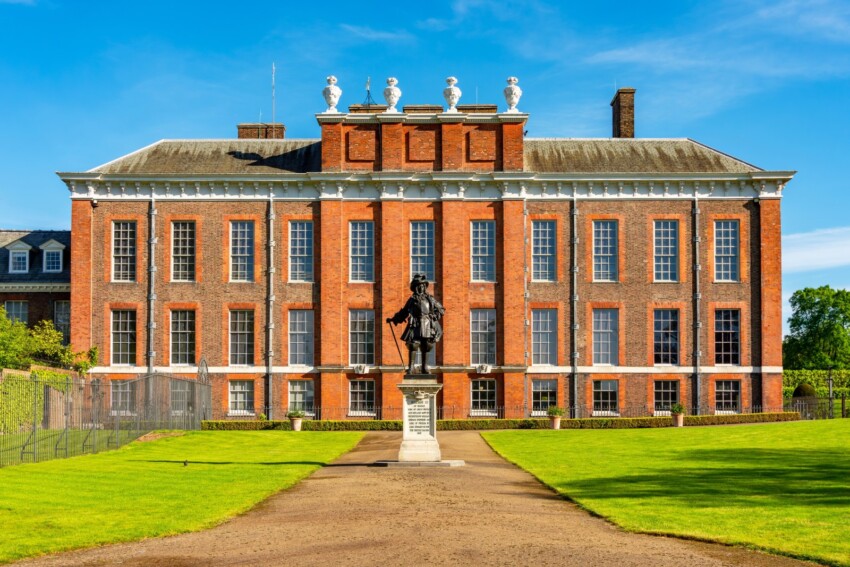
Kensington Palace is one of London’s most enchanting royal residences, nestled within the peaceful Kensington Gardens. Its history spans over three centuries of British monarchy, from the days of the Stuart sovereigns to the present day. This palace, which was the home of Queen Victoria and Princess Diana, continues to serve as the official residence of the Prince and Princess of Wales and their children.
A visit to Kensington Palace offers the opportunity to discover the magnificently restored State Apartments, temporary exhibitions dedicated to the royal family, and the historic gardens surrounding the building. Unlike other royal residences in London, this palace maintains a more intimate atmosphere, allowing you to truly experience how daily life unfolded for British royalty over the centuries.
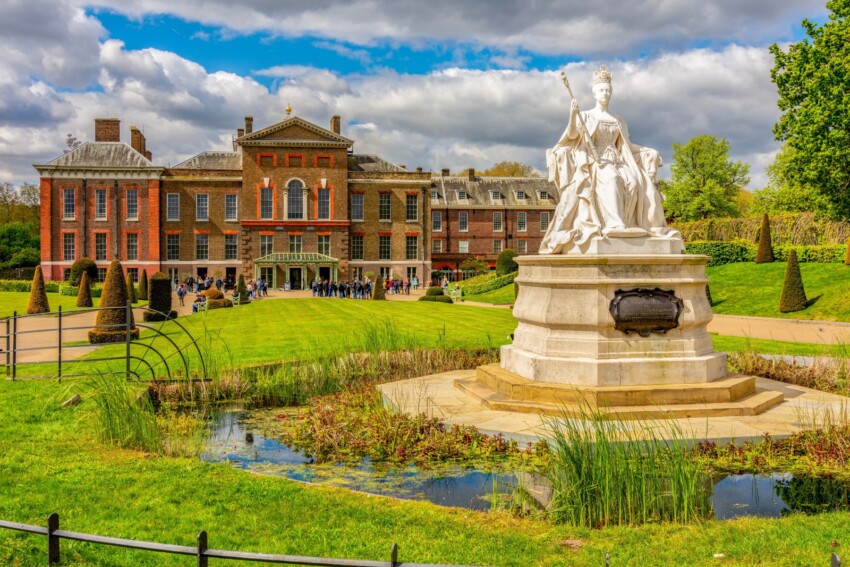
The King’s State Apartments are the heart of any visit to Kensington Palace. Designed to impress and entertain, these sumptuously decorated rooms include the Presence Chamber, the Privy Chamber, the Cupola Room, the King’s Drawing Room and the King’s Gallery.
The King’s Staircase, completed by William Kent in 1724, is a true masterpiece. The walls feature a vivid representation of court life during the reign of George I. The fresco includes portraits of royal court figures: from the “wild boy” found in German forests to members of the Ottoman court such as Mehmet von Königstreu, his wife Marie and his compatriot Mustapha. Famously, visitors could only enter and ascend the grand staircase if their clothing and jewels were deemed acceptable by the palace guards.
The King’s Gallery is the longest and largest room in all of the residence’s apartments. The space has been maintained almost identically to how King George I decorated it in 1725, and it houses one of the finest collections of royal art in the country. The frescoed ceiling and richly decorated walls create an atmosphere of magnificence that transports visitors directly into the 18th century.
The Cupola Room, also designed by Kent in 1722, is the main state room of the palace, distinguished by its characteristic domed ceiling. Princess Victoria was christened in this room in 1819, and the baptismal font still stands as testimony to this historic moment.
The Queen’s Apartments, used by Queen Mary II, are more intimate yet equally luxurious. These private rooms include the Queen’s Dining Room, the Drawing Room, the Queen’s Staircase, the Gallery and the Closet. Here Mary II took her meals, relaxed and entertained guests in a more intimate setting compared to the King’s ceremonial spaces.
The rooms preserve splendid original 17th-century elements, including carved wooden panels, ornate fireplaces and painted ceilings. Queen Mary’s ceramics collection, of which she was a passionate collector, was originally displayed in these rooms.
This permanent exhibition, inaugurated to celebrate the 200th anniversary of Victoria’s birth, explores how an indulged princess blossomed into the independent and iconic monarch we remember. The exhibition includes extraordinary objects relating to Victoria’s early years, including a touching memory album created by her German governess, Baroness Lehzen, and Victoria’s doll’s house.
Curators from Historic Royal Palaces conducted extensive research to recreate the rooms in which Queen Victoria grew up. They worked with interior specialists to reproduce Regency wallpaper on Victoria’s doll’s house, combining this extraordinary historic piece with archival samples to inform the furnishings throughout the exhibition.
The Birth Room has been recreated using letters from the Duke of Kent written on the day of Victoria’s birth, which described in detail everything from the layout of the palace rooms to the view from the window. The Red Saloon, where Victoria held her first council as Queen, is now open to the public with a large painting commemorating that historic moment.
The Jewel Room displays gems commissioned for Queen Victoria by her beloved husband Prince Albert. The collection includes exquisite jewels that testify to the profound affection between the two sovereigns. Each piece tells a story of love and devotion that lasted until Prince Albert’s premature death in 1861, an event that plunged Victoria into mourning that would last for the rest of her life.
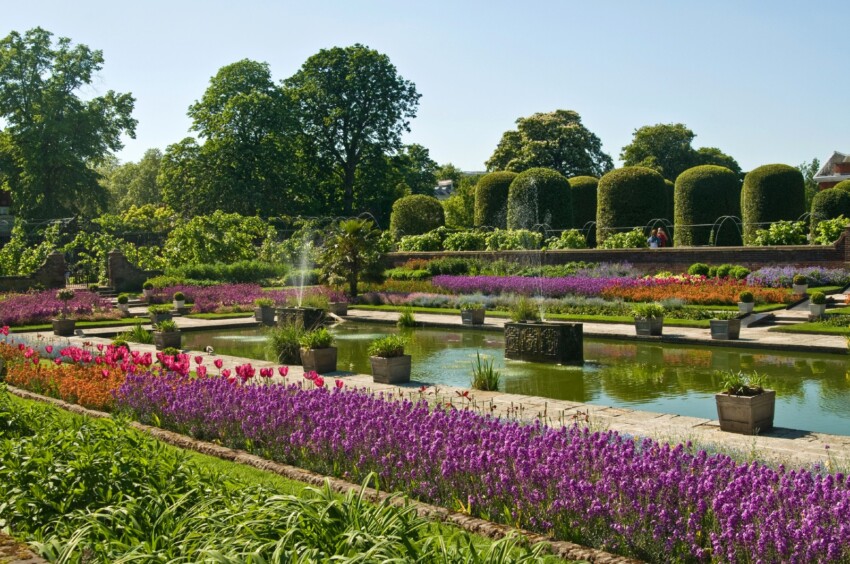
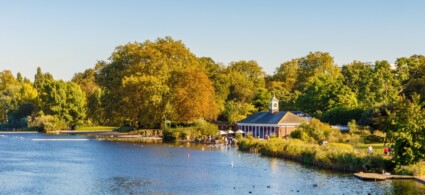
Kensington Gardens surround the palace, offering a tranquil retreat in the heart of London. These magnificent gardens, covering 111 hectares, are one of London’s eight Royal Parks and host several notable attractions.
The Sunken Garden, designed in 1908, features ornamental flower beds, a peaceful pond and vibrant seasonal plantings. It was a favourite place of Princess Diana, and in 2017 it was redesigned in her memory as the White Garden, planted entirely with white flowers and foliage.
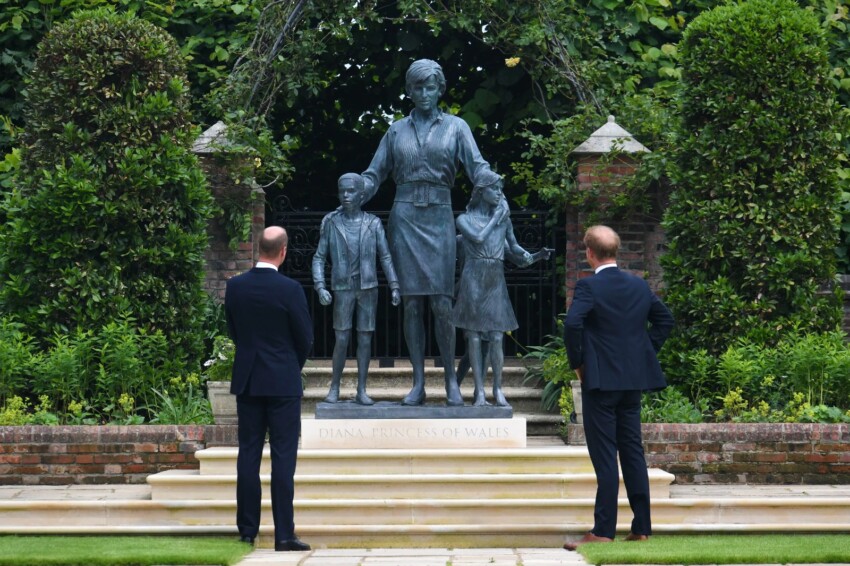
On 1 July 2021, what would have been Diana’s 60th birthday, a bronze statue of the Princess with children was unveiled here. Princes William and Harry chose this location to commemorate their mother, describing her as “an icon in her generation” and hoping that the statue would forever be seen as a symbol of her life and legacy.
Located on the western side of Hyde Park, at the edge of Kensington Gardens, the Albert Memorial is an impressive monument featuring extraordinary stonework and creative design. It was built by Queen Victoria in memory of Prince Albert. At its centre stands a massive gilded bronze statue of Albert, beneath a large chapel-like structure that reaches 54 metres in height. At the four corners of the monument are various allegorical sculptures: four representing different continents of the world and four representing different industries.
The gardens include the Cradle Walk, a secluded arched passageway flanked by fragrant flowers that offers a peaceful retreat, and the Queen’s Gardens, with manicured lawns and symmetrical flower beds that reflect the traditional elegance of the palace grounds.
In 1981, apartments 8 and 9 were combined to create the London residence of the newly married Prince Charles and Princess Diana. The couple maintained this home as their official residence until Diana’s death in 1997, even after their separation.
Diana loved Kensington Palace deeply, affectionately nicknaming it “KP”. Here she raised Princes William and Harry, who attended local schools in Notting Hill, just minutes from the residence. The apartment was furnished with Diana’s characteristic taste for luxurious fabrics, floral wallpaper, pink velvet sofas and personal touches such as family photographs scattered throughout the rooms.
The dining room featured beige walls with crimson velvet curtains, ornate bamboo furniture and historic artwork, creating a harmonious blend of Eastern and Western influences. The sitting room, which also served as Diana’s office, was characterised by a dusty rose sofa surrounded by cushions, blue floral wallpaper and blue curtains. The nursery occupied the entire upper floor, designed by the luxury children’s interior design company Dragons and Walton Street, with separate rooms for William, Harry and their individual nannies.
When Diana died tragically in 1997, over 136,000 people came to Kensington Palace to sign the condolence books, and over four million bouquets of flowers were left at the palace’s golden gates. The palace remained open 24 hours a day to cope with the flow of mourning visitors.
It is strongly recommended to purchase tickets online in advance as they often sell out, especially at weekends and during public holidays.
Reduced rates are available for various categories: visitors over 64 years old, full-time students and young people aged 16-17 can access discounted prices. Children under 5 enter free of charge. The ticket is included in the London Pass, a tourist card that covers entry to over 80 London attractions and can save up to 50% compared to purchasing individual tickets.
A free audio guide is included with your ticket, available in several languages, including Italian. The audio guide offers a tour through the palace’s history with curators, historians and conservators sharing fascinating stories and hidden secrets of Kensington Palace.
For those wishing for a more in-depth experience, guided tours with experts are available, providing additional context, historical anecdotes and details that significantly enrich your understanding of court life through the centuries.
Kensington Palace is located within Kensington Gardens.
The nearest London Underground stations are High Street Kensington (Circle and District Line) and Queensway (Central Line), both approximately 10-15 minutes’ walk from the palace. From High Street Kensington, you walk through Kensington Gardens along a scenic route that allows you to appreciate the beauty of the park.
Several bus lines serve the area: lines 9, 10, 49, 52, 70 and 452 stop nearby. Those travelling from Paddington Station can reach the palace with a short walk of approximately 20 minutes through Hyde Park.
Yes, it is highly recommended to book tickets and your arrival slot online in advance. Kensington Palace often reaches maximum capacity, especially at weekends and during holidays, and advance booking guarantees entry on your chosen date.
Allow at least 2-3 hours to properly explore the palace, including the State Apartments, exhibitions and gardens. Those wishing to explore all sections thoroughly and use the full audio guide should allow 3-4 hours.
Photography is generally permitted inside Kensington Palace, however there may be specific areas or exhibitions where photography is forbidden. It is advisable to follow the instructions provided on site and respect any prohibitions indicated.
Yes, the magnificent Kensington Gardens surrounding the palace are freely accessible to the public. However, to enter the palace and visit the State Apartments and exhibitions, you will need to purchase an admission ticket.
No, the private sections of Kensington Palace where royal family members reside, including the Prince and Princess of Wales, are not accessible to the public. Visitors can only explore the historic State Apartments and designated public areas.
Whilst Buckingham Palace is the official residence of the monarch and the administrative centre of the monarchy, Kensington Palace is a more intimate royal residence that houses various members of the royal family. Kensington Palace has a more understated atmosphere and allows you to visit authentically furnished and preserved rooms.
City Card allow you to save on public transport and / or on the entrances to the main tourist attractions.
 Hotel
Hotel  Budget accommodations
  Apartments
  Family Hotel
  Luxury Hotel