Bestseller
London Zoo: Entry Ticket
From 40,08 €
Buy the ticket
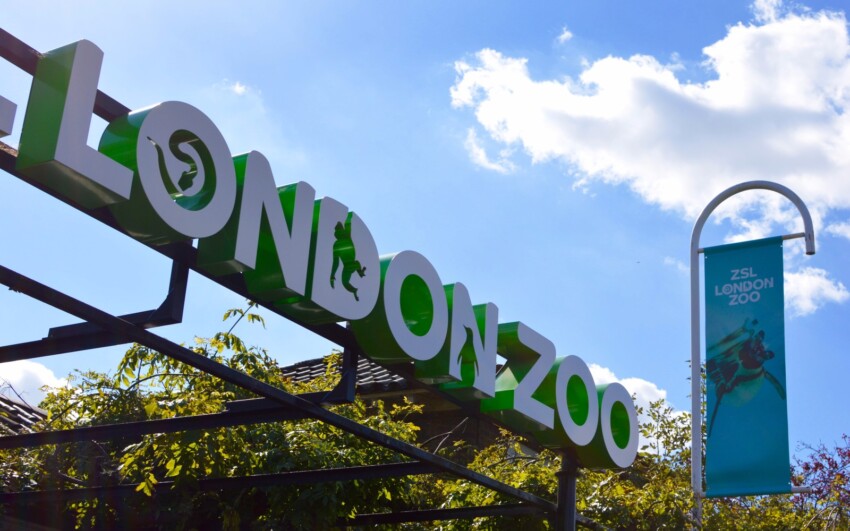
In the heart of Regent’s Park, surrounded by striking Victorian architecture and magnificent gardens, stands ZSL London Zoo, the world’s oldest scientific zoo still in operation. Founded in 1828 by the Zoological Society of London, this extraordinary zoological park is far more than a simple tourist attraction: it’s a centre of excellence for species conservation and scientific research, home to approximately 15,000 animals representing over 750 different species.
Each habitat has been meticulously recreated to ensure animal welfare and offer visitors an immersive experience that goes far beyond simple observation. Spanning 15 hectares, the zoo unfolds along a carefully designed route that allows you to discover extraordinary creatures, participate in educational encounters with keepers, and understand the importance of biodiversity conservation.
The zoo’s most spectacular experience is undoubtedly the Land of the Lions, a 2,500 square-metre area that recreates an abandoned Indian village within Gir Forest, the last refuge of Asian lions. Unveiled to raise awareness of the critical situation facing these big cats—only about 400 remain in the wild—this installation represents a masterpiece of architectural and zoological design.
The pathway winds through the ruins of an ancient Indian temple, where you can observe lions through “frameless” windows that create the illusion of coming face-to-face with these majestic predators. The setting includes authentic details such as decorated Indian bus stops, an ancient well, and vegetation typical of deciduous forest. Beyond the lions, the area is also home to Hanuman langurs, primates sacred in Indian culture that coexist with the big cats just as they do in nature. The experience is enriched by ambient sounds recorded in Gujarat villages and detailed information about ZSL’s conservation projects in India.
Gorilla Kingdom is an African rainforest oasis in the heart of London, designed to house a family of western lowland gorillas, a critically endangered species. The naturalistic habitat sprawls across an island surrounded by a moat, allowing the gorillas to move freely in an environment that mirrors conditions in Central Africa’s forests.
The group is currently led by Kiburi, the dominant silverback male, and includes several females and youngsters born at the zoo, including Juno and Venus, born in January and February 2024 respectively. Observing the complex social dynamics of these primates is a fascinating experience: you’ll see youngsters playing under their mothers’ supervision, the silverback assuming his leadership role, and the entire group interacting in ways that demonstrate their extraordinary emotional intelligence. The area also features enclosures for white-collared mangabeys and black crested macaques, plus a walk-through aviary with African birds. Information panels and interactive stations explore the threats gorillas face in nature—from poaching to deforestation—and the conservation programmes currently in place.
Opened in August 2022, Monkey Valley represents the reimagining of the iconic Snowdon Aviary, a modernist structure designed by Lord Snowdon in the 1960s. This extraordinary walk-through aviary, with its distinctive 21-metre-high aluminium pyramid structure, has been transformed into a habitat for black-and-white colobus monkeys, acrobatic primates native to the montane forests of Central Africa.
Walking along the paths that traverse the aviary, you’ll find yourself literally surrounded by these elegant primates with their black and white coats, leaping between tree branches with remarkable agility. The spectacle is accompanied by the sound of a nine-metre waterfall cascading into a tranquil lagoon, recreating the atmosphere of Africa’s misty forests. The immersive experience allows you to observe the colobus monkeys’ natural behaviour up close, renowned for their acrobatic prowess and specialised stomachs that enable them to digest mature leaves rich in cellulose. It’s one of the most photographed spots at the zoo, especially in the mornings when light filters through the metal structure creating shadows among the vegetation.
Tiger Territory is home to magnificent Sumatran tigers, one of the smallest tiger subspecies but also among the most threatened, with fewer than 400 individuals remaining in the wild. The 2,500 square-metre habitat recreates Indonesian jungle, complete with dense vegetation, fallen trees, rocks and a deep pool where tigers, unlike most felines, enjoy swimming and cooling off.
The area is designed to stimulate the tigers’ natural behaviours: suspended logs allow them to climb, strategically placed hideaways encourage predatory behaviour, and food is hidden throughout the enclosure to encourage foraging. Large glass panels offer prime viewing spots, and visitors often witness tigers approaching within mere centimetres, separated only by safety glass. During daily keeper talks, staff share information about tiger biology, the threats they face from deforestation and poaching, and ZSL’s conservation programmes on Sumatra. The experience is particularly thrilling when the tigers swim in their pool or lounge on elevated branches, displaying the power and elegance that make them among the planet’s most captivating predators.
Penguin Beach is England’s largest penguin pool, a 1,200 square-metre facility housing a thriving colony of Humboldt penguins, a species native to the rocky coasts of Peru and Chile. The habitat recreates the conditions of South American cliffs, with lava rocks, sandy beaches and a pool 3.5 metres deep containing 450,000 litres of water.
The attraction’s highlight is the underwater bubble, a transparent dome emerging in the pool’s centre that allows visitors to become immersed in the penguins’ aquatic world. From this privileged vantage point, you can watch these seabirds dart underwater like torpedoes, demonstrating the extraordinary swimming abilities that make them highly efficient predators. On land, the penguins assume their characteristic clumsy, endearing waddle, charming younger visitors. The area also features artificial nests where penguins lay eggs and raise chicks, and during daily feeding sessions, keepers provide details about these birds’ biology, threats from climate change and overfishing, and conservation initiatives in their native regions.
Prepare yourself to enter a completely different tropical environment as you step into Rainforest Life, a multisensory experience that recreates South American rainforest conditions. Humidity, warmth and jungle sounds envelop you immediately as you walk suspended pathways surrounded by lush vegetation and exotic animals.
The area is home to some of South America’s most fascinating creatures: two-toed sloths that move with their characteristic slowness through the branches, red titi monkeys with their russet coats, emperor tamarins sporting distinctive white moustaches, and nine-banded armadillos foraging through leaf litter. But the most singular experience is entering the Night Life section, where lighting is reversed to allow you to observe nocturnal animals during their active hours. Here you’ll encounter short-tailed bats flying freely, pottos and slender lorises, nocturnal primates with enormous eyes, and blind cave fish navigating darkness using other senses. The display also includes a section dedicated to leafcutter ants, which you can watch transporting plant fragments along long trails to cultivate the fungi they feed on.
The Into Africa zone transports you to Africa’s savannas and forests, hosting some of the continent’s most iconic fauna. The area develops around expansive grasslands where Chapman’s zebras, warthogs and ostriches coexist, recreating the dynamics of African plains where diverse species share the same territory.
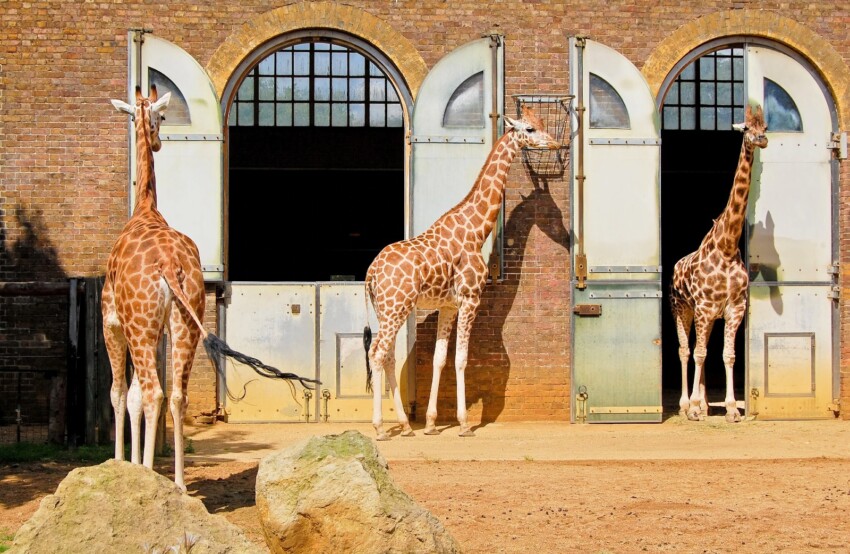
The area’s jewel is the historic Giraffe House, a Victorian building from 1837 that represents the world’s oldest zoological structure still in use for its original purpose. Tall windows allow giraffes to project their heads outwards, creating an iconic image that has characterised the zoo for nearly two centuries. Watching these gentle giants move with elegance despite their imposing size is unforgettable, especially during feeding sessions when they extend their tongues up to 45 centimetres to grasp leaves. The area also features enclosures for okapis, mysterious African creatures that appear to be a cross between a giraffe and zebra, pygmy hippopotamuses, a vulnerable species from West Africa, and African wild dogs, social predators with their distinctive spotted coat. Information panels throughout the area provide insights into African wildlife conservation and ZSL’s projects across the continent.
The Reptile House boasts an extraordinary history: the original reptilarium, opened in 1849, is the world’s oldest. The current structure, which reopened at Easter 2024 following major renovation, is titled “The Secret Life of Reptiles and Amphibians” and houses the UK’s largest collection of venomous snakes and reptiles.
Among the most impressive residents are Komodo dragons, the world’s largest lizards capable of exceeding three metres in length, king cobras that can raise themselves up to two metres off the ground, emerald green tree pythons, Yemen chameleons with their colour-changing abilities, and various species of vividly coloured poison dart frogs. A section is dedicated to amphibians, featuring giant Chinese salamanders, Mexican axolotls and African Goliath frogs. The reptilarium is also famous among Harry Potter fans: this is where the scene from the first film was shot in which Harry discovers he can speak to snakes, conversing with a Burmese python. The Victorian building, with its characteristic barrel vaults and historic display cases, is an architectural attraction in itself. New installations include terrariums with controlled temperature and humidity, misting systems for tropical species, and UV lighting to ensure animal welfare.
Tiny Giants celebrates the smallest yet no less extraordinary creatures in the animal kingdom—invertebrates that make up over 80% of living species on the planet yet rarely receive the attention they deserve. Through innovative installations and spectacular magnifications, this interactive zone reveals the incredible complexity of the miniature world.
You can observe close-up colonies of leafcutter ants transporting plant fragments up to 50 times their body weight, discover how bee and termite societies function, admire the beauty of jewel beetles, and understand invertebrates’ crucial role in ecosystems. One of the most enjoyed experiences is the Butterfly House, a tropical glasshouse where hundreds of butterflies fly freely among exotic flowers, and if you remain still, one might land on you. The area also includes Madagascar Walk-through, where you can enter the habitat of ring-tailed lemurs and watch these charming primates leap over your head. Multimedia installations and interactive games help younger visitors understand why these “tiny giants” are essential to life on Earth, from pollination to organic matter decomposition.
Designed specifically for younger visitors, Animal Adventure is an interactive area where children can get close to docile animals in a safe and stimulating environment. Unlike other zoo zones, the barriers here are low and designed to allow children to observe and interact with animals from a more direct perspective.
The area is home to South American llamas and alpacas, African crested porcupines, South American ring-tailed coatis, and in the Touch Zone children can pet goats, Kunekune sheep and chickens under keeper supervision. One of the highlights is a nature-themed playground with structures imitating animal burrows, giant nests and adventure trails. During summer, an interactive fountain provides refreshment for younger visitors, so it’s advisable to bring a change of clothes. The area includes baby-changing facilities, shaded picnic zones and parent rest areas. Colourful educational signs and hands-on activities teach children about conservation importance through play, making this zone a perfect starting point for introducing the youngest visitors to the natural world.
London Zoo tickets are available exclusively through online booking. It’s highly recommended to purchase them in advance to guarantee entry, especially on weekends and during school holidays when the zoo can reach maximum capacity. Prices vary slightly depending on the day of the week and season, with generally lower rates on weekdays and during winter months.
The zoo is included in the London Pass, a tourist pass offering free access to over 80 attractions across the capital. If you’re planning to visit multiple attractions during your stay, this could prove a cost-effective option.
London Zoo organises a number of seasonal events throughout the year that enhance the traditional visit experience.
During summer, the “Big Summer of Fun” festival is held, dedicated to families with animal-themed games, interactive activities and educational entertainment scattered throughout the zoo. Children can participate in skill challenges such as “Tiger Sneak” where they must navigate a route without ringing bells, or “Ecosystem Puzzle” where they learn the importance of natural balance by assembling puzzle pieces against the clock.
The feeding sessions represent one of the most anticipated moments of a visit. Scheduled feeding times take place throughout the day for different species: penguins are fed twice daily with educational commentary from keepers explaining the biological characteristics of these marine birds, tigers receive meals in ways that stimulate their predatory instincts, and lions are fed in ways that encourage natural hunting and feeding behaviours. Exact times are communicated at the entrance and are subject to variation, so it’s advisable to check them upon arrival to plan your route accordingly.
The most extraordinary experience is undoubtedly an overnight stay at the zoo, available in the Gir Lion Lodges located within the Land of the Lions. This unique opportunity, available from May to December, includes a themed dinner, a guided tour of the zoo after closing when animals display completely different behaviours, the chance to fall asleep listening to the roar of lions nearby, breakfast with views over the feline habitat, and early access to the zoo before official opening. The lodges are decorated in Indian colonial style and offer modern comforts whilst maintaining an adventurous atmosphere. Bookings should be made well in advance given the limited number of places available.
The ZSL London Zoo is located at the northern edge of Regent’s Park, easily accessible by public transport from anywhere in London.
The nearest Underground station is Camden Town on the Northern Line (black line), from which the zoo is approximately 20 minutes’ walk away (1.5 km). The route passes through the picturesque residential streets of Camden, famous for its markets and alternative scene. An equally good alternative is Chalk Farm, also on the Northern Line, which is 18 minutes’ walk away (1.4 km) and offers the advantage of being less crowded at weekends, plus it’s served by lifts making it more accessible. The route from Chalk Farm passes through the charming neighbourhood of Primrose Hill.
From Baker Street station (Bakerloo, Circle, Metropolitan and Hammersmith & City Lines) the zoo is 21 minutes’ walk away via Regent’s Park, a very pleasant walk through tree-lined avenues and well-maintained gardens. Alternatively, from the same station you can take bus 274 heading north which takes around 14 minutes. You can also reach the zoo on foot in approximately 24 minutes (2.1 km) from Regent’s Park station on the Bakerloo Line by walking through the entire park, or by taking bus 88 from nearby Albany Street.
The buses serving the zoo include routes C2, 274 and 88, which stop near the main entrance. If you’re arriving by car, it’s important to know that the zoo has limited parking reserved for visitors with disabilities. The nearest public car park is NCP Parkway, located on Parkway, Camden Town, approximately 15 minutes’ walk from the zoo. Be aware that driving in London incurs the Congestion Charge if you enter the central zone on weekdays between 07:00 and 18:00.
City Card allow you to save on public transport and / or on the entrances to the main tourist attractions.
 Hotel
Hotel  Budget accommodations
  Apartments
  Family Hotel
  Luxury Hotel