London's West End: Ticket to The Lion King
377 reviews
Experience Disney’s award-winning musical at the Lyceum Theatre. Follow Simba’s journey with stunning puppetry, vibrant visuals, and enchanting music.
Buy now
From 45,39€ per person
London wouldn’t be the same without its incredible theatrical landscape. The West End represents, alongside Broadway in New York, one of the highest standards of commercial theatre in the world and for over three centuries has offered audiences productions that have made the history of live performance. With approximately 40 theatres spread across Covent Garden, Leicester Square, Piccadilly Circus and Shaftesbury Avenue, London’s theatre district offers an extraordinary variety of shows every evening.
From globally successful musicals such as The Lion King and Les Misérables to Shakespearean productions at the Globe Theatre, from sparkling comedies to intense dramatic works, the cultural offering of Britain’s capital is unrivalled in Europe. Attending a show in the West End means immersing yourself in an experience that combines tradition and innovation, masterful interpretations and breathtaking scenery, in historic buildings that are themselves part of the spectacle.
Performances take place 364 days a year and the selection of shows on offer is so vast that it could prove difficult to decide which one to see first.
London’s West End is the most famous theatre district in the United Kingdom and one of the most important in the world. Concentrated mainly in the areas of Covent Garden, Soho, Leicester Square and along Shaftesbury Avenue, this district is home to historic theatres that have witnessed some of the greatest stars of the international stage perform.
The history of the West End as a theatre district begins in the 19th century, though many theatres have even older origins. The Theatre Royal Drury Lane, for instance, is London’s longest-continuously-operating theatre: opened in 1663 and rebuilt several times, the current building dates from 1812. With over 2,200 seats, this monumental theatre has hosted legendary productions including Oklahoma!, My Fair Lady, Miss Saigon and today presents Disney’s Hercules.
Other historic theatres include Her Majesty’s Theatre, where The Phantom of the Opera has been playing since 1986, and the Lyceum Theatre, home to The Lion King since 1999. These Victorian and Edwardian buildings are characterised by imposing neoclassical façades, richly decorated interiors with gilded plasterwork and red velvet, and acoustics designed to enhance every performance.
The atmosphere of the West End is unique: walking along Shaftesbury Avenue at sunset, when the illuminated theatre signs light up and the audience begins to flock to the auditoria, means stepping into the heart of London’s culture. The West End theatres represent not just places of entertainment, but genuine cultural institutions that help define the city’s identity.
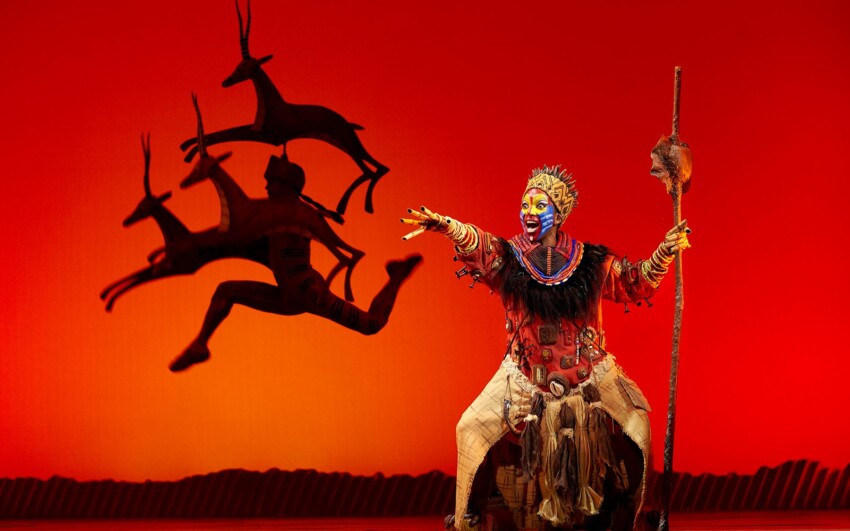
Playing at the Lyceum Theatre1 since 1999, The Lion King is one of the West End’s longest-running and most beloved musicals. The theatrical adaptation of the Disney classic uses elaborate masks and puppets to recreate the African savanna on stage, with a visual impact that leaves audiences breathless. The soundtrack by Elton John and Tim Rice, combined with innovative choreography inspired by African traditions, has captivated over 100 million viewers worldwide.
The animal masks, designed by Julie Taymor, are true masterpieces of theatrical craftsmanship: actors wear them over their heads, allowing the audience to see simultaneously both the human face and the represented animal, creating an effect of extraordinary emotional power. The opening Circle of Life scene, with animals processing through the audience rows to reach the stage, has become iconic.
At the Queen's Theatre2 since 1985, Les Misérables holds the record for the longest-running musical in West End history. Based on Victor Hugo’s novel, it tells an epic story of redemption, love and revolution in 19th-century France. The score by Claude-Michel Schönberg includes some of the most famous pieces in musical theatre such as “I Dreamed a Dream”, “On My Own” and “Do You Hear the People Sing?”
The distinctive revolving scenery of this production allows smooth transitions between the numerous scenes, from the streets of Paris to the barricades of the 1832 uprising, whilst dramatic lighting and period costumes transport audiences into the atmosphere of revolutionary France. Over 75 million people have attended this musical in 52 countries and 22 different languages.
Composed by Andrew Lloyd Webber, The Phantom of the Opera has been playing at His Majesty's Theatre3 since 1986 and is the longest-running musical in world theatre history. The Gothic story set at the Paris Opera combines romance, mystery and tragedy with a musical score of extraordinary beauty that includes immortal pieces such as “The Music of the Night” and “All I Ask of You”.
The opera chandelier that crashes onto the audience during the performance is one of musical theatre’s most celebrated special effects, whilst lavish costumes and elaborate scenery recreate the decadent atmosphere of the Parisian Belle Époque. The Phantom’s white mask has become one of the world’s most recognisable theatre symbols.
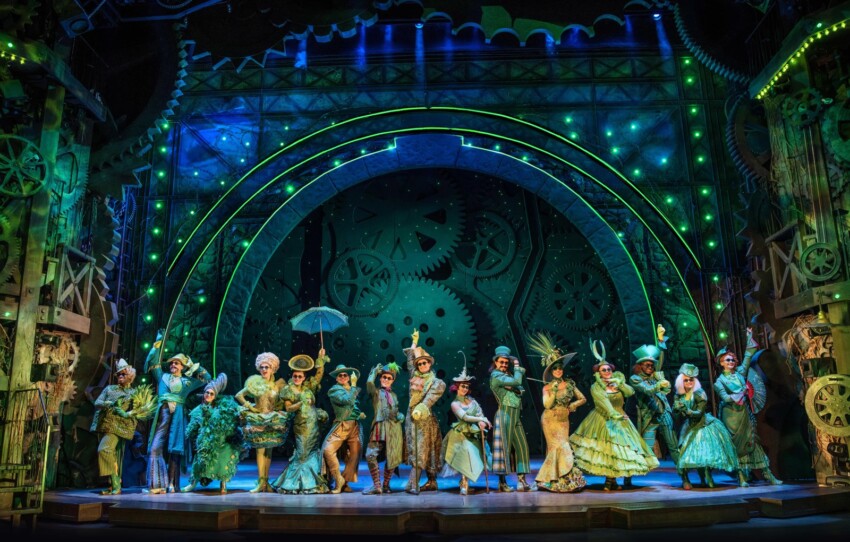
Playing at the Apollo Victoria Theatre4 since 2006, Wicked tells the untold story of the witches from Oz, exploring the friendship between Elphaba (the future Wicked Witch of the West) and Glinda before the events of The Wizard of Oz. With music by Stephen Schwartz, this musical has captured audiences worldwide through its story of friendship, ambition and difficult moral choices.
The song “Defying Gravity” has become a modern feminist anthem, whilst the spectacular scenery, which includes a 15-metre mechanical dragon and elaborate special effects, transports audiences into the magical world of Oz. The imaginative costumes, particularly Elphaba’s emerald green gowns and Glinda’s pink, glittering ones, have become iconic.
At the Novello Theatre5, Mamma Mia! celebrates ABBA’s music through a sun-soaked story set on a Greek island. This jukebox musical, which uses 22 songs from the Swedish group to tell a story of love, family and second chances, deserves credit for reviving the genre of musicals based on pre-existing pop songs.
Mamma Mia!’s strength lies in its ability to make the audience feel part of the celebration: it’s not uncommon for spectators to rise and dance during the finale, transforming the theatre into a genuine disco. With over 65 million viewers worldwide, this musical has proven that a simple story and an engaging soundtrack can create lasting success.
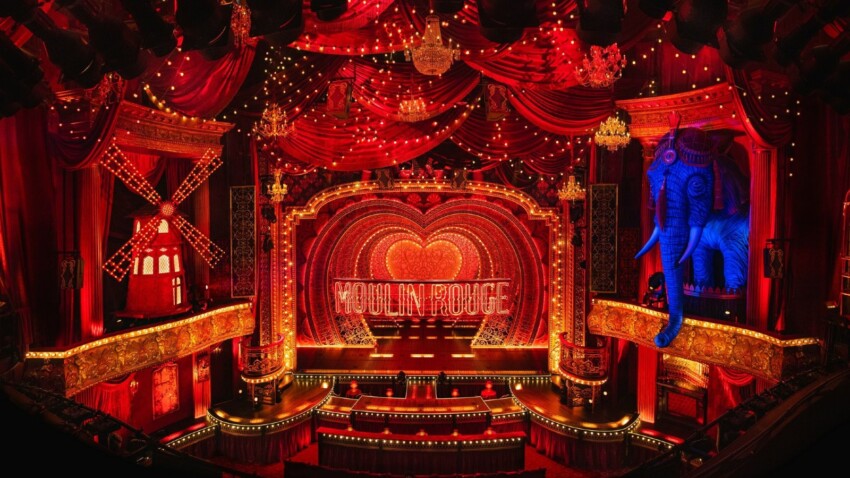
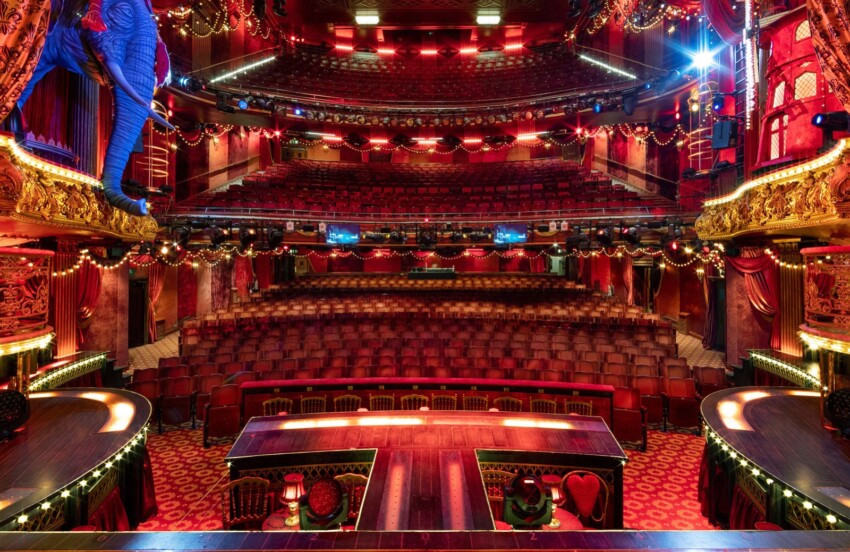
At the Piccadilly Theatre6 since 2021, Moulin Rouge! The Musical is the theatrical adaptation of Baz Luhrmann’s acclaimed 2001 film. Winner of 10 Tony Awards on Broadway, including Best Musical, this spectacular jukebox musical transports audiences to bohemian Paris in 1899, a world of unbridled excess, glittering glamour and overwhelming romance.
The story follows American poet Christian and cabaret star Satine, whose impossible love story intertwines with over 70 songs by legendary artists including Elton John, David Bowie, The Beatles, Madonna, Katy Perry, Rihanna and many others.
Derek McLane’s scenic design has literally transformed the Piccadilly Theatre: a giant elephant dominates one side of the theatre, whilst an iconic windmill occupies the other, surrounded by shimmering chandeliers and drapes of red velvet that create an atmosphere of decadent opulence.
At The Mousetrap at St. Martin's Theatre7 since 1952, Agatha Christie’s The Mousetrap holds the absolute record as the longest-running show in theatre history. This psychological thriller, set in an isolated guesthouse during a snowstorm, keeps audiences on the edge of their seats until the final scene. Tradition dictates that spectators do not reveal the murderer’s identity to those who haven’t yet seen the show, thus preserving the mystery for over 70 years.
The intimate atmosphere of St Martin’s Theatre, with its 550 seats, contributes to creating the perfect tension for this classic whodunit. The cast changes regularly, but the production maintains the original staging, faithful to Agatha Christie’s vision and the tradition of 1950s English theatre.
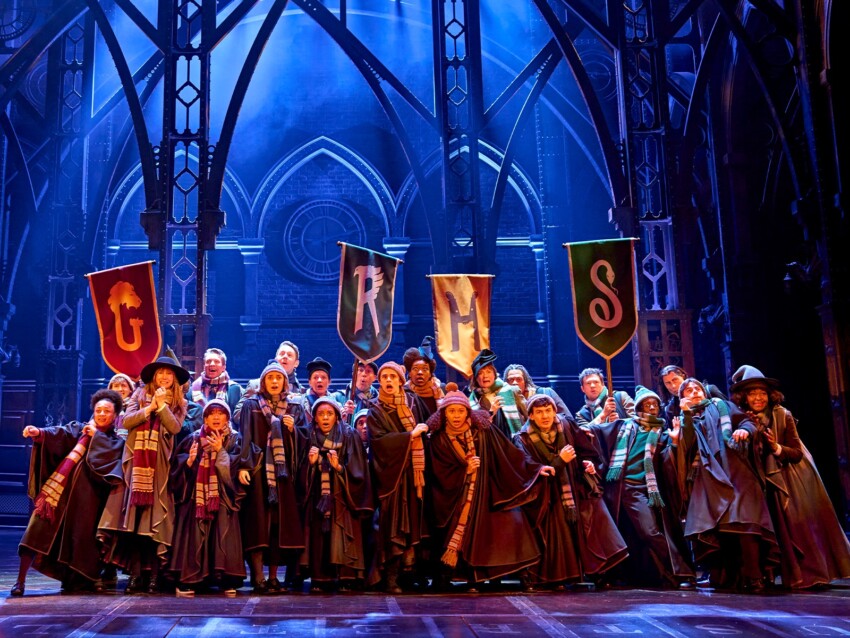
At the Palace Theatre8, this two-part show represents the official continuation of the Harry Potter saga, set 19 years after the Battle of Hogwarts. The special effects, which include magic, transformations and time travel, have been hailed as the most innovative ever seen in a West End theatre. The production has won 9 Laurence Olivier Awards, the most prestigious theatre prize in the United Kingdom.
The illusion effects created by Jamie Harrison are so sophisticated that audiences still wonder how they’re achieved: people vanishing and reappearing, objects flying, instant transformations. The production team maintains strict secrecy about the tricks used, adding a further element of magic to the theatrical experience.
At the Prince of Wales Theatre9, this satirical musical comedy created by the authors of South Park has won 9 Tony Awards and is considered one of the most irreverent and entertaining comedies in contemporary theatre. The story follows two young Mormon missionaries sent to Uganda and combines caustic humour with sharp social critique, tackling themes including organised religion, cultural colonialism and faith.
Despite its provocative content, the musical has been praised for its intelligence, brilliant score and elaborate choreography. The Church of Jesus Christ of Latter-day Saints responded to the show with advertising campaigns inviting audiences to learn about “the real Book of Mormon”, demonstrating a remarkable sense of humour.
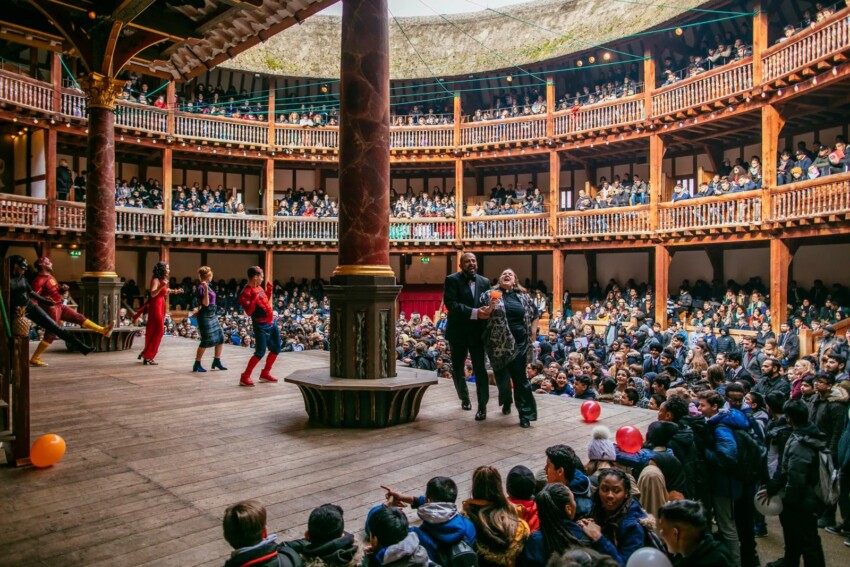
On the south bank of the Thames, Shakespeare's Globe10 offers a completely different theatrical experience from that of the West End. This faithful reconstruction of the original Elizabethan theatre from 1599 presents live performances from April to October, recreating the conditions in which Shakespeare’s works were originally performed.
The theatre is constructed entirely of English oak, with a thatched roof (the first permitted in London since the Great Fire of 1666) and an open stage that projects into the auditorium. The 700 “groundling” spectators stand in the courtyard in front of the stage for the entire duration of the performance, just as the common people did in Shakespeare’s day, paying just £5 for their ticket.
Performances take place in daylight, without sound amplification or electric lighting, with live music performed on period instruments. Actors interact directly with the audience, respecting the conventions of Elizabethan theatre.
The complex is also home to the Sam Wanamaker Playhouse, a 350-seat covered theatre lit by candlelight, which recreates the conditions of 17th-century indoor Jacobean theatres. During the winter months, when the main Globe is closed, this intimate space offers an even more immersive theatrical experience, with performances that exploit the flickering candlelight to create evocative atmospheres.
In the following map you can see the location of the main places of interest mentioned in this article.
West End shows run every day of the year except 25 December. The quietest periods are January and February, when it’s easier to find available tickets and discounted prices. Matinée performances, typically on weekdays, tend to be less crowded than evening or weekend shows and sometimes offer reduced prices.
During the Christmas holidays and school holidays, theatres are often fully booked, so it’s essential to book well in advance. London’s theatre schedule doesn’t follow rigid seasons: many successful shows run for years or even decades without interruption.
The West End is extremely well served by public transport. The most useful Underground stations are Leicester Square (Piccadilly Line), Covent Garden (Piccadilly Line), Tottenham Court Road (Northern and Central Lines) and Charing Cross (Northern and Bakerloo Lines). The latter is also a railway station connecting the city centre with suburban areas.
Numerous bus routes pass through the theatre district, with stops along Strand, Shaftesbury Avenue and Charing Cross Road. To reach Shakespeare’s Globe, the nearest stations are Southwark (Jubilee Line) and London Bridge (Northern and Jubilee Lines), both around a 10-minute walk away, or you can cross the picturesque Millennium Bridge from St Paul’s Cathedral.
Arrive at the theatre at least 30 minutes before the start of the show to collect your tickets, use the facilities and take your seat at leisure. West End theatres strictly observe start times and you may not be permitted to enter once the performance has begun, or only during intervals.
London theatres are generally smaller than modern venues and seating can be tight, especially in the upper circles. However, the acoustics are excellent and sightlines are designed to offer a good experience from almost every position. Cushions for wooden seats and binoculars for distant seats are available to rent.
Most shows have an interval of 15–20 minutes, during which you can buy drinks and snacks at the theatre bar. You’re not permitted to bring food or drinks into the auditorium. Dress code is informal: there’s no need to dress formally, although many Londoners consider a theatre evening a special occasion.
Mobile phones must be switched off during the performance and photography or video recording is not permitted. Respect for the performers and fellow audience members is fundamental to British theatre etiquette. At the end of the show, it’s tradition to applaud standing (standing ovation) for particularly well-received performances.
Buying West End tickets requires planning, especially for popular musicals such as The Lion King, which often sell out weeks in advance.
We recommend booking them online well in advance.
For those looking for last-minute tickets at discounted prices, the TKTS booth at Leicester Square is the ideal solution. Run by the Society of London Theatre, this official retailer offers discounted tickets up to 50% off for shows on the day or the following days. The booth, situated in the Clocktower building in the centre of Leicester Square, is open Monday to Saturday from 10:00 to 19:00 and Sunday from 11:00 to 16:30.
Expert staff can advise on available shows and check seat availability in real time. It’s important to arrive early, especially for Saturday evening performances, when demand is highest. Tickets can also be purchased online at tkts.co.uk, offering the same deals as the physical booth.
Many theatres also offer lottery tickets via apps such as TodayTix: these are daily draws that allow you to win tickets at heavily reduced prices, sometimes as little as £10–20. Entry periods vary from show to show, so it’s worth checking the app regularly. Some theatres also sell rush tickets or day seats directly at the box office an hour before the performance, at discounted prices and for a limited number of seats.
Another favourable period for finding deals is during Get Into London Theatre, an initiative running in January and February that offers tickets from £10 to £40 with no booking fees for many of the most popular shows. In August, Kids Week allows children to enter free with a paying adult, representing a great opportunity for families.
City Card allow you to save on public transport and / or on the entrances to the main tourist attractions.
 Hotel
Hotel 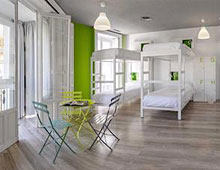 Budget accommodations
 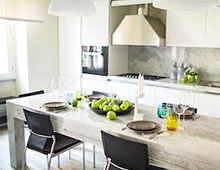 Apartments
 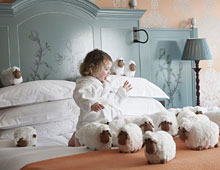 Family Hotel
 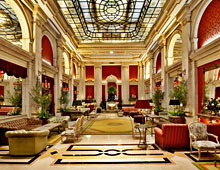 Luxury Hotel