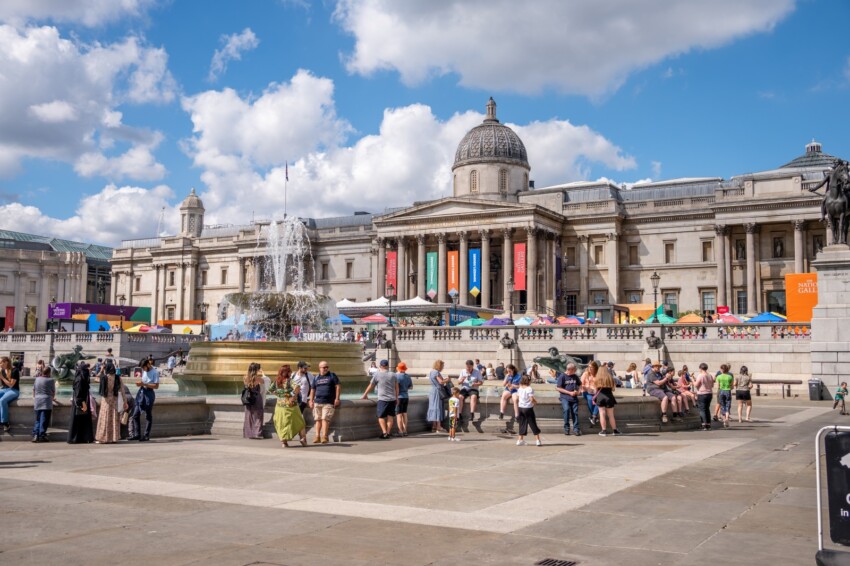
The National Gallery in London stands as one of the world’s greatest temples of art, an unmissable destination for anyone visiting the British capital. Housed in the iconic neoclassical building that dominates Trafalgar Square, this museum holds one of the world’s most significant painting collections, spanning from the thirteenth to the twentieth century.
Founded in 1824, the National Gallery today displays over 2,300 masterpieces by the greatest artists in art history, including Leonardo da Vinci, Van Gogh, Monet, Botticelli and Rembrandt. Unlike many London museums, admission to the permanent collection is completely free, making this extraordinary artistic heritage accessible to all.
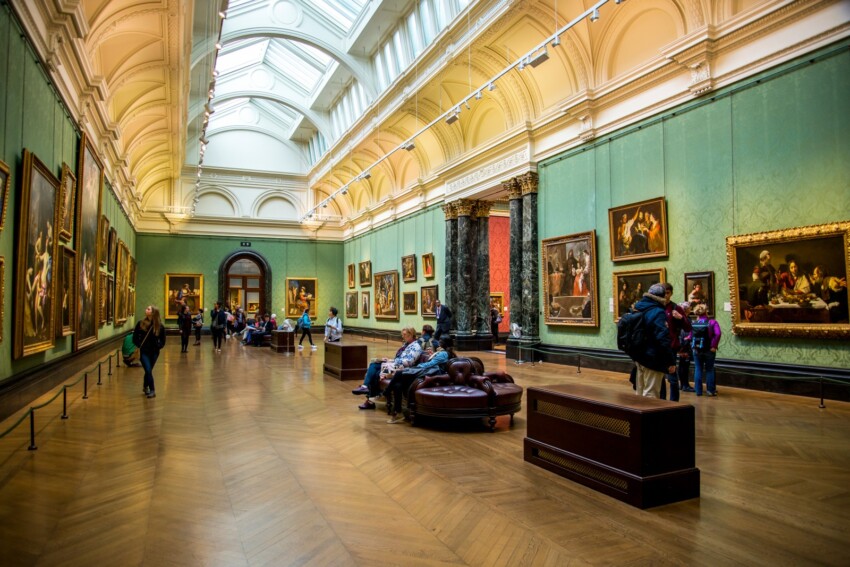
The vastness of the National Gallery’s collection can feel overwhelming to visitors. Here’s a selection of unmissable works – authentic masterpieces that mark significant milestones in the history of Western art.
One of the world’s most famous and recognisable paintings, Van Gogh’s “Sunflowers” (1888) epitomises post-impressionist art. Part of a series of still lifes, this version at the National Gallery shows a vase containing fifteen sunflowers against a yellow background. The almost blinding luminosity and bold use of colour create a work of extraordinary expressive power.
The painting is located in Room 43, dedicated to post-impressionist art. To appreciate the work to best effect, visit early in the morning or late in the evening, when the museum is less crowded. A fascinating detail: Van Gogh painted this work to decorate a bedroom for his friend Paul Gauguin in Arles, hoping to create an artistic community in southern France.
The “Virgin of the Rocks” (1491-1508) represents one of Leonardo da Vinci’s greatest masterpieces in the museum. This work depicts the Madonna with the Christ Child, St John the Baptist and an angel in a rocky landscape – a perfect example of Leonardo’s sfumato technique, by which the artist created imperceptible transitions between light and shadow.
The painting is located in Room 2, dedicated to Italian Renaissance art. It’s worth noting that two versions of this work exist: one at the Louvre in Paris and this one, considered the second version, at the National Gallery. The differences between the two versions offer a fascinating insight into the evolution of Leonardo’s artistic thinking.
The “Arnolfini Portrait” (1434) is one of the most enigmatic and studied paintings in art history. This work by the Flemish master Jan van Eyck depicts an Italian merchant and his wife in their home in Bruges. The wealth of symbolic detail, masterful use of light and the mysterious convex mirror in the background reflecting other figures have sparked centuries of interpretation.
Located in Room 15, the painting deserves careful study. Try to spot all the hidden symbols: the dog (fidelity), the fruit on the windowsill (prosperity), the candles (divine presence) and the Latin inscription above the mirror reading “Johannes de Eyck fuit hic” (Jan van Eyck was here).
Better known as “The Rokeby Venus”, this work by Velázquez from 1647-1651 is the only surviving female nude by the Spanish master. The painting shows the goddess Venus reclining, viewed from behind, as she gazes at herself in a mirror held by her son Cupid.
The ethereal beauty of the figure, subtle sensuality and masterful painterly technique make it one of the most beloved pieces in the collection. Located in Room 30, the work has a dramatic history: in 1914 it was severely damaged by a suffragette as a political protest, but was masterfully restored.
This pointillist masterpiece, completed in 1884, depicts a group of young people relaxing on the banks of the Seine at Asnières, near Paris. Seurat developed the pointillist technique, applying tiny dots of pure colour that, viewed from a distance, blend in the observer’s eye to create an extraordinary luminous effect.
Located in Room 43, this large painting (2×3 metres) took Seurat two years to complete and represents a manifesto of neo-impressionist art. View the painting from different distances to appreciate how your perception of the image changes.
Painted around 1505-1506, the “Madonna of the Meadow” (or “Madonna del Belvedere”) is a perfect example of the harmony and balance that characterise Raphael Sanzio’s work. The pyramidal composition featuring the Virgin, Christ Child and St John the Baptist shows the influence of Leonardo, but the sweet, luminous style is unmistakably Raphaelesque.
The work is located in Room 2 alongside other Italian Renaissance masterpieces. The golden light, serene landscape in the background and the Madonna’s expression – simultaneously human and divine – make this one of the most beloved paintings in the collection.
Completed in 1844, “Rain, Steam and Speed” depicts a train crossing Maidenhead Bridge during a thunderstorm. This revolutionary work anticipates Impressionism and showcases Turner’s visionary genius in using light and colour to capture atmospheric sensations.
The painting, displayed in Room 34, challenges the viewer to distinguish between rain, steam and smoke in a whirlwind of brushstrokes that seem almost abstract. Legend has it that Turner had himself tied to a ship’s mast during a storm to experience the force of the elements directly – a dedication reflected in the emotional power of this painting.
The National Gallery in London was established by an Act of Parliament in 1824, when the government purchased 38 paintings from the collection of banker and collector John Julius Angerstein for £57,000. The aim was to create an art museum accessible to all citizens, at a time when most art collections were privately owned by the aristocracy.
Initially, the collection was housed in Angerstein’s home on Pall Mall, but the rapid expansion of the collection necessitated a larger venue. In 1838, the current building at Trafalgar Square was inaugurated, designed by architect William Wilkins in the neoclassical style. The location was strategically chosen at the centre of London, halfway between the wealthy West End and the working-class East End, to be accessible to all social classes.
During World War Two, to protect the masterpieces from German bombing, the entire collection was transferred to a slate mine in North Wales. This extraordinary logistical effort saved the priceless artistic heritage from destruction.
Over the years, the National Gallery has expanded with new wings and galleries. The most significant addition was the Sainsbury Wing, opened in 1991, which houses the collection of Early Renaissance paintings. The building, designed by architects Robert Venturi and Denise Scott Brown, represents a successful example of postmodern architecture that dialogues with the historic building.
Today the National Gallery possesses one of the world’s most comprehensive collections of Western European painting, spanning nearly 700 years of art history, from the late medieval period to post-Impressionism. The museum’s original mission – to make art accessible to all – continues to be honoured through free admission to the permanent collection.
One of the National Gallery’s most appreciated features is that admission to the permanent collection is completely free. This policy, in line with the museum’s original mission, allows everyone to enjoy the masterpieces on display at no cost.
For temporary exhibitions, however, a ticket is usually required. Prices vary depending on the importance of the exhibition and generally range between £15 and £25 for a full ticket. Reduced rates are available for students, seniors, disabled visitors and their companions. Children under 12 usually enter free to temporary exhibitions as well.
We strongly recommend purchasing tickets online from the National Gallery’s official website, especially for popular exhibitions that tend to sell out quickly. Buying online allows you to skip the ticket queue and choose a specific time slot for your visit.
The National Gallery offers several guided tour options:
The National Gallery is open daily with the following hours:
The museum is closed on 25 December and opens later (11:00) on 1 January. During the Christmas period and other holidays, opening hours may vary, so we recommend checking the official website before your visit.
For a comprehensive visit to the National Gallery, we recommend allowing at least 3-4 hours. If time is limited, you can follow one of the suggested thematic routes that allow you to see the main masterpieces in 60-90 minutes.
It’s important to note that as a very large museum, you may experience “museum fatigue”. We therefore recommend taking regular breaks and making use of the rest areas and cafés within the building.
The best time to visit the National Gallery is on weekdays, especially early in the morning (10:00-11:30) or late in the afternoon (after 16:00), when the museum is generally less crowded.
Here are some practical tips to help you make the most of your National Gallery visit and avoid the crowds:
Every Friday, the National Gallery stays open until 21:00, offering a completely different atmosphere compared to daytime visits. During the “Friday Late Nights” you can admire the masterpieces with atmospheric lighting and in a more relaxed, less crowded environment. Special events are often organised such as live music concerts, talks with art experts or artistic performances.
The experience is particularly magical in the Central Hall, where live music creates a unique atmosphere as you admire works by Turner, Constable and Gainsborough. The bar also serves cocktails and wine, allowing you to sip a drink whilst contemplating art.
These specialised tours concentrate on a single masterpiece, analysed in depth over 30 minutes by a National Gallery expert. The “Painting in Focus” tours allow you to discover details, techniques and fascinating stories that might otherwise escape even the most careful eye. The experience is free and takes place several times a week, with a schedule available on the museum’s website.
For drawing enthusiasts and amateur artists, the National Gallery regularly organises life drawing sessions inspired by masterpieces in the collection. These sessions, led by professional artists, offer the unique opportunity to explore the techniques of the great masters and put them into practice immediately. Materials are provided by the museum and the experience is suitable for both beginners and more experienced artists.
Occasionally, the National Gallery offers exclusive tours of the conservation laboratories, where you can watch conservators working on masterpieces from the collection. These tours, available only on specific dates and with advance booking, offer a fascinating glimpse into the scientific and artistic techniques used to preserve century-old paintings. It’s a rare opportunity to understand the invisible side of the museum.
Depending on the time of year, the National Gallery proposes seasonal thematic routes. During the Christmas period, for example, a tour exploring representations of the Nativity in European art is organised, whilst in spring there might be a route dedicated to flowering landscapes and seasonal allegories. These tours offer a different perspective on the collection, linking works to specific cultural traditions.
The National Gallery enjoys a prime central location in London, overlooking Trafalgar Square, which makes it easily accessible by any form of transport.
The Underground is undoubtedly the most convenient way to reach the museum. The nearest stations are:
We recommend using an Oyster Card for your journeys, which will allow you to travel at reduced fares on all of London’s public transport.
Numerous bus routes also stop at Trafalgar Square or in the immediate vicinity; the main ones include: Routes 3, 6, 9, 11, 12, 13, 15, 23, 24, 87, 88, 91, 139, 159, 176.
Yes, admission to the National Gallery’s permanent collection is completely free. Only temporary exhibitions generally require ticket purchase. This policy aligns with the museum’s original mission of making art accessible to everyone.
For the permanent collection, no booking is necessary – you can simply turn up during opening hours. However, for temporary exhibitions, advance booking is strongly recommended, particularly for popular exhibitions that tend to sell out quickly.
Yes, you’re allowed to photograph most works in the permanent collection, provided you use no flash and for personal use only. Some temporary exhibitions may have specific photography restrictions – always check the signage. Tripods and selfie sticks are not permitted.
Yes, the National Gallery is fully accessible to visitors with disabilities. There are ramped entrances, lifts serving all floors, accessible toilets and wheelchairs available free of charge (advance booking is recommended). Audio guides with descriptions for visually impaired visitors and tours in British Sign Language (BSL) are also available.
The National Gallery has a free cloakroom where you can leave coats and small bags. However, for security reasons, they do not accept large bags or suitcases. If you have bulky luggage, we recommend depositing it elsewhere before your visit.
Yes, the National Gallery’s audio guides are available for a fee in several languages. The audio guides offer detailed commentary on over 200 major works in the collection and are an excellent way to enhance your visit.
The National Gallery offers various resources to make visits enjoyable for younger visitors. Magic Carpet Storytelling for children aged 2–5 (every Sunday morning) features readings and creative activities inspired by paintings. Family Trails are thematic routes for families with interactive activities. Free drawing kits are also available at the information desks, and practical workshops run during weekends and school holidays.
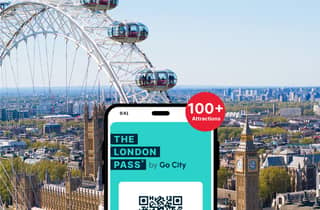
City Card allow you to save on public transport and / or on the entrances to the main tourist attractions.
 Hotel
Hotel 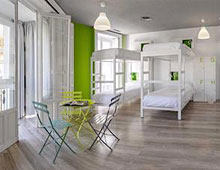 Budget accommodations
 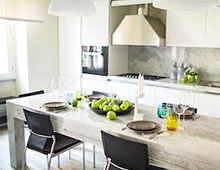 Apartments
  Family Hotel
 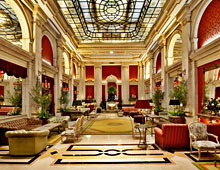 Luxury Hotel