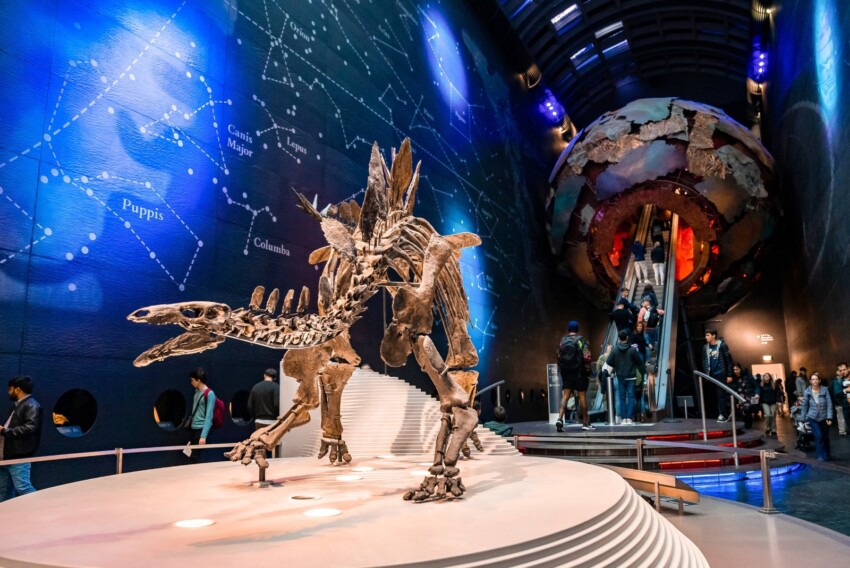
Imagine stepping into a magnificent Victorian building and coming face-to-face with the skeleton of a dinosaur as tall as a three-storey building. This is merely the beginning of the adventure awaiting you at the Natural History Museum in London, one of the world’s most important and captivating scientific institutions. With over 80 million specimens collected over more than 250 years of exploration, this museum is a genuine treasure trove of biodiversity and natural history.
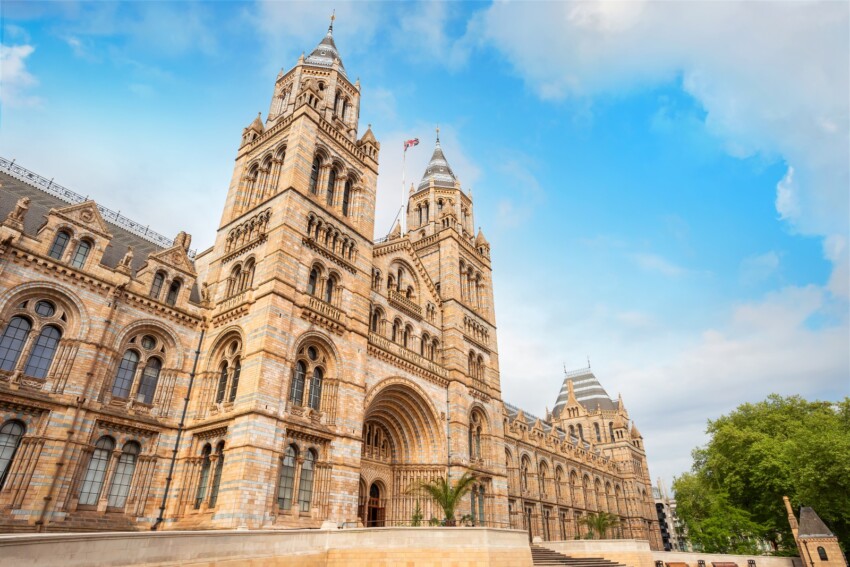
Located in the heart of South Kensington, the museum is not simply a repository of natural wonders, but also an architectural masterpiece in its own right, with its richly decorated terracotta façade and the spectacular Hintze Hall that greets visitors with its magnificence. Every year, over 5 million people pass through the doors of this institution to explore its vast collections, ranging from the rarest minerals to the most ancient fossils, from microscopic insects to the most impressive mammals.
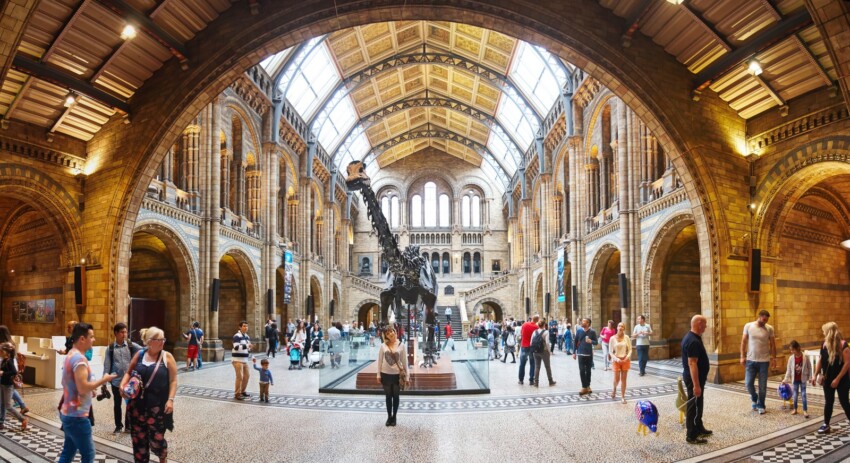
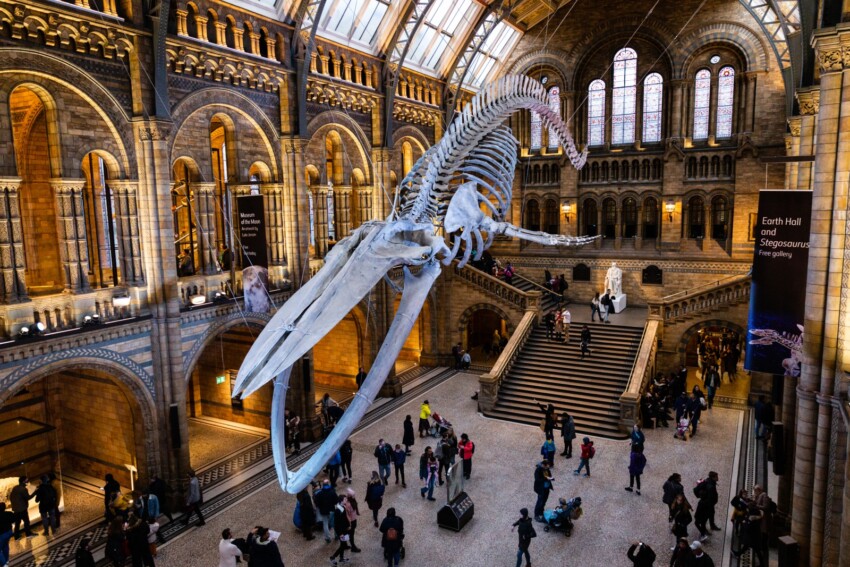
Your journey through the Natural History Museum begins in the spectacular Hintze Hall, the imposing central atrium that has housed the suspended skeleton of “Hope”, a female blue whale measuring 25 metres, since 2017. This magnificent specimen replaced the famous diplodocus skeleton “Dippy” (now touring the UK) and represents a symbol of hope for the future of ocean conservation.
The Romanesque-style hall is an architectural masterpiece in its own right, with elaborate decorations celebrating biodiversity: notice the terracotta panels adorning the walls, each depicting a different plant species. The impressive staircases branching out either side of the atrium will lead you towards the museum’s various galleries, whilst on the upper balcony you can admire a statue of Charles Darwin, a pivotal figure in the development of natural sciences.
The best vantage point to appreciate Hope in all her glory is from the first-floor balcony, where you can take in the majesty of this magnificent marine mammal and capture stunning photographs of the entire atrium.
The Dinosaur Gallery is undoubtedly one of the museum’s most popular attractions, particularly for younger visitors. This gallery houses some of the world’s most significant dinosaur fossils, including the first Tyrannosaurus rex specimen ever discovered in Britain.
The route guides you through 160 million years of dinosaur history, with authentic fossils and life-sized reconstructions that transport you back in time. Particularly impressive is the full-scale animatronic T-Rex model, which with its realistic movements and roars creates an immersive experience for visitors of all ages.
Don’t miss the section dedicated to dinosaur extinction, which engagingly explains theories about the asteroid impact that ended the Mesozoic era. An educational experience that blends science, adventure and a touch of thrills!
To avoid the crowds, visit this gallery in the early morning or late afternoon, and take time to observe the fossil details: every bone tells a story from millions of years ago.
The Mammals Hall brings you face to face with some of the planet’s most iconic creatures. At the centre of the hall stands an impressive life-sized model of a blue whale, the largest animal ever to exist on Earth. At 30 metres long, this faithful reproduction will give you a real sense of the extraordinary dimensions of these ocean giants.
The gallery houses hundreds of mammal specimens of every shape and size, from tiny shrews to mighty elephants and rhinoceroses. Particularly fascinating is the section dedicated to primates, where you can observe the evolutionary similarities between different species of apes and humans.
Be sure to admire the collection of extinct or endangered mammals, which notably includes the Tasmanian tiger (extinct in the 1930s) and the exceptionally rare snow leopard. These specimens are not only extraordinarily beautiful to behold but also serve as an important reminder of the importance of conservation.
The best spot to photograph the blue whale is from the upper balcony, where you can capture the entire specimen in a single shot.
A truly unique experience awaits you in the Earth Hall, where you can ride the celebrated orange escalator on a symbolic journey through the Earth’s core. This 22-metre-long moving staircase carries you through a model of the Earth’s centre to the upper floor, which houses galleries dedicated to geology, volcanoes and earthquakes.
At the centre of the atrium, you cannot fail to notice the enormous metallic globe called “Stegosaurus”, an art installation representing the Earth and its geological processes. This globe is composed of 3,300 metal sheets and is illuminated from within, creating a spectacular visual effect.
Once you reach the upper floor, explore the Volcanoes and Earthquakes Gallery, where you can experience an earthquake simulation in a replica of a Japanese supermarket – an experience that’s as educational as it is thrilling!
The Minerals Gallery is one of the museum’s hidden treasures, often less crowded than other sections but absolutely unmissable for Earth science enthusiasts. This gallery, with its original Victorian design, houses one of the world’s most important mineral collections, with over 12,000 specimens on display.
Admire the giant crystals, faceted gemstones and precious metals from every corner of the planet. Among the most extraordinary pieces is the Meteorite Collection, which includes fragments from the Moon and Mars, offering a unique opportunity to “touch” other worlds.
Don’t miss the Vault, a special room that safeguards some of the collection’s most precious and rare gemstones, including the captivating “Aurora Opal” and the world’s largest cut topaz.
For a relaxing break from exploring indoors, head to the Wildlife Garden, a small corner of nature in the heart of London. This 1-acre garden recreates various British habitats, from wetlands to oak woodlands, and is home to over 3,000 plant and animal species.
Open from April to October, the garden offers the opportunity to observe local wildlife in its natural setting: you may spot colourful butterflies, dragonflies, birds and even urban foxes if you’re lucky. Museum volunteers are often on hand to guide visitors and share information about local ecosystems.
It’s a perfect spot for a peaceful break during your museum visit, especially on sunny days, and offers excellent photography opportunities for nature lovers and macrophotography enthusiasts.
The Darwin Centre and its extraordinary cocoon-shaped structure called the Cocoon represent the museum’s most modern section. This imposing eight-storey white building houses millions of preserved specimens from the museum’s entomological and botanical collections.
Inside the Cocoon, a spiral walkway guides you through the vast scientific collections, showing you how scientists classify, preserve and study various specimens. You can observe researchers at work in their laboratories through large windows, offering a fascinating glimpse into the scientific work that happens behind the scenes.
Particularly interesting is the insect collection, which comprises over 28 million specimens, including butterflies collected by Alfred Russel Wallace, Darwin’s contemporary and co-discoverer of the theory of evolution by natural selection.
A visit to the Cocoon is a quieter, more contemplative experience than other parts of the museum, and offers an important perspective on current scientific work in taxonomy and conservation.
The Human Evolution Gallery is one of the museum’s newest galleries, opened in 2015, and offers a fascinating journey through seven million years of human evolution. Through lifelike reconstructions, authentic fossils and interactive technology, this gallery tells the story of how we became the species we are today.
Highlights include strikingly realistic reconstructions of our hominid ancestors, created by forensic artists using the latest available scientific data. You can see what a Neanderthal or Homo erectus would have looked like, with impressive detail that makes these ancient relatives surprisingly “human”.
Don’t miss the cast of the famous Lucy fossil (Australopithecus afarensis), discovered in Ethiopia in 1974 and considered one of the most important discoveries in the history of anthropology. Alongside the specimens are interactive displays that allow you to compare your DNA with that of other species or see how your face would transform into that of a prehistoric hominid.
The Treasures Gallery, located in the Cadogan Gallery on the second floor, houses some of the most precious and historically significant pieces from the entire museum collection. This relatively small but extraordinary gallery contains just 22 objects, yet each one represents an invaluable scientific treasure.
Among the most notable specimens is the first Archaeopteryx specimen ever discovered, a revolutionary fossil showing characteristics of both dinosaur and bird, providing crucial evidence for Darwin’s theory of evolution. You can also admire a rare Dodo specimen, one of only a handful of remaining specimens of this extinct species, and the original manuscript of “On the Origin of Species” by Charles Darwin, complete with his handwritten annotations.
The gallery is designed to provide a contemplative experience, with soft lighting that protects the delicate specimens and creates an almost sacred atmosphere. Each object is accompanied by a detailed explanatory panel that tells its scientific story and significance to our understanding of the natural world.
The Images of Nature Gallery offers a unique perspective on natural history through art and scientific illustration. This fascinating gallery displays hundreds of historical botanical and zoological drawings, watercolours, engravings and contemporary photographs from the museum’s extensive collection.
Particularly interesting are the scientific illustrations created during the great exploring expeditions of the 18th and 19th centuries, when artists accompanied naturalists around the world to document new species. You can admire the detailed watercolours of Maria Sibylla Merian, a pioneer of entomology in the 17th century, and the precise bird illustrations of John James Audubon.
The gallery also includes a section dedicated to modern scientific imaging techniques, showing how contemporary technologies such as electron microscopy and computerised tomography have revolutionised the way we visualise and understand nature.
Don’t miss the collection of glass models of marine organisms created by master glassmakers Leopold and Rudolf Blaschka in the 19th century, genuine masterpieces of scientific precision and craftsmanship.
The Birds Gallery is a paradise for ornithology enthusiasts, with an extraordinary collection that documents the incredible diversity of the avian world. The gallery houses hundreds of taxidermied bird specimens from every continent, from tiny hummingbirds to majestic Andean condors.
A must-see highlight is the section dedicated to birds of paradise from New Guinea, with their extraordinarily colourful plumage and bizarre shapes, the result of millions of years of sexual selection. Equally fascinating is the collection of extinct birds, which includes rare specimens of species such as the American passenger pigeon, once the most numerous bird species on the planet, but extinct in the early 20th century due to overhunting.
The gallery does more than simply showcase the beauty of birds; it also explores their evolution, behaviour and remarkable adaptations. Interactive displays allow you to listen to the calls of different species or compare the different flying strategies that evolved independently in various groups.
The Marine Invertebrates Gallery takes you into the depths of the oceans to discover the fascinating world of spineless animals that populate the seas. This less crowded gallery, but no less interesting than others, displays an incredible variety of marine creatures, from delicate starfish to mysterious giant squid.
The centrepiece of the collection is undoubtedly the model of a giant squid measuring 8.62 metres long, suspended from the ceiling, which gives you an idea of the impressive dimensions these elusive deep-sea inhabitants can reach. Alongside it, you’ll find preserved in a tank of liquid one of the rare actual giant squid specimens in the museum’s collection.
Particularly fascinating too is the section dedicated to corals, where you can admire both real specimens and glass models that illustrate the surprising diversity of shapes and colours of these colonial organisms that build coral reefs.
The gallery also includes an overview of the evolution of marine invertebrates, from primitive sponges to highly developed cephalopods, with examples of fossils that show how these groups evolved over hundreds of millions of years.
The Creepy Crawlies Gallery is dedicated to the world of arthropods – insects, arachnids, crustaceans and centipedes – the most numerous and diverse group of animals on the planet. This gallery, particularly popular with children (though it may give some adults the shivers!) offers a close-up look at these small but extraordinary animals.
You can admire magnificent collections of brightly coloured butterflies and beetles, observe microscopic details of insects enlarged into giant models, and discover the remarkable adaptations that have allowed these invertebrates to colonise almost every terrestrial habitat.
Don’t miss the section dedicated to social insects, with models of ant colonies and beehives that show the complex organisation of these animal societies. Particularly impressive is the termite mound model that illustrates the intricate internal architecture of these extraordinary structures.
The gallery combines real specimens, interactive models and fun educational games that allow visitors of all ages to understand the ecological importance of these often-undervalued small animals.
The Discovery Centre is an interactive space primarily aimed at children and families, where learning happens through hands-on exploration and play. This area offers the unique opportunity to handle genuine natural history objects under the guidance of experienced museum educators.
The centre has specimen handling tables where visitors can examine objects such as fossils, shells, minerals or animal skulls up close, using microscopes and other scientific equipment. Museum volunteers are on hand to answer questions and guide children in discovering the natural world through touch and direct observation.
The space also includes areas dedicated to natural drawing, interactive puzzles, and stations where younger visitors can dress up as scientists and simulate naturalistic expeditions. It’s a perfect place to take a break during your museum visit, allowing children to learn actively rather than simply observing.
The Lasting Impressions Gallery is dedicated to fossils and the fossilisation process, explaining how the remains of plants and animals can be preserved for millions of years to tell us the story of life on Earth. This lesser-known gallery offers an interesting exploration of palaeontological techniques and the information we can glean from fossils.
Particularly fascinating is the section that shows the different types of fossilisation, from the most common mineral replacement to rare preservation of soft tissues or amber containing trapped insects. You can see examples of transitional fossils that document the evolution of key features such as feathers in dinosaurs or limbs in early tetrapods.
The gallery also includes an interactive section where visitors can learn the techniques palaeontologists use to extract fossils from rock and prepare them for study, providing an interesting perspective on the scientific work that takes place behind the scenes at the museum.
The Fossil Marine Reptiles Gallery takes you back in time to the Mesozoic, when the oceans were dominated by extraordinary marine reptiles now extinct. This historic gallery retains some of the original Victorian display, creating a fascinating atmosphere that combines contemporary science with the charm of 19th-century natural history museums.
The collection includes some of the world’s most important fossils of ichthyosaurs and plesiosaurs, many of which were collected by pioneering palaeontologist Mary Anning in the early 19th century from the cliffs of Lyme Regis in Dorset. You can admire the complete skeleton of an ichthyosaur over 9 metres long and the exceptionally well-preserved remains of a plesiosaur with its last meal still visible in the stomach region.
Particularly impressive is the fossil of Temnodontosaurus, one of the largest ichthyosaurs ever discovered, with its giant eye perfectly preserved, providing clues to its exceptional visual ability in the deep marine depths.
The Natural History Museum in London has a fascinating history that begins in 1753, when Sir Hans Sloane, a physician and naturalist, bequeathed his vast collection of natural specimens to the British nation. Initially, this collection was part of the British Museum, but as the natural history collection grew, it became clear that a separate building was needed.
In 1864, Professor Richard Owen, an anatomist and palaeontologist (renowned for coining the term “dinosaur”), persuaded the government to construct a museum dedicated exclusively to natural sciences. The building’s design was entrusted to architect Alfred Waterhouse, who created a masterpiece in Romanesque-Byzantine style, using ornamental terracotta that could withstand Victorian London’s pollution.
The new museum officially opened to the public in 1881 under the name British Museum (Natural History), but it only became a formally independent institution in 1963, assuming its current name of Natural History Museum in 1992.
The building itself is a celebration of biodiversity: the terracotta decorations adorning the exterior and interior depict living and extinct creatures, from mammals to reptiles, birds to plants. This attention to naturalistic detail makes the building a work of art in itself, perfectly reflecting its purpose of celebrating and studying the natural world.
Over the years, the museum has evolved from a simple exhibition space into an important centre of scientific research. Today, more than 300 scientists work within the museum, conducting research in various fields of natural science, from taxonomy to palaeontology, entomology to molecular biology.
Among the most significant moments in the museum’s recent history was the replacement, in 2017, of the historic diplodocus skeleton “Dippy” (present in the entrance hall since 1979) with the skeleton of the sperm whale “Hope”. This symbolic change marked a new focus for the museum towards themes of conservation and environmental sustainability for the planet’s future.
One of the most appreciated features of the Natural History Museum is that entry is free for all visitors. However, it is advisable to still book your entry, specifying your preferred time on the museum’s official website to avoid long queues.
Some temporary and special exhibitions require the purchase of a separate ticket, and again it is highly recommended to book online in advance, as the most popular exhibitions often sell out, especially during peak seasons.
The museum also offers premium experiences such as the “Behind the Scenes Tour”, which allows you to explore areas normally closed to the public and see some of the over 80 million specimens not on display.
To enhance your experience, the museum offers complimentary daily guided tours lasting approximately 60 minutes and covering the main highlights. These tours depart from the Hintze Hall and are conducted by expert volunteers with in-depth knowledge of the collections.
The museum also provides audio guides available in several languages, including Italian, English, French, Spanish, German, Mandarin and Japanese. These audio guides provide detailed information on over 200 specimens and are an excellent way to explore the museum at your own pace.
The Natural History Museum is open every day from 10:00 to 17:50, with the last entry at 17:30. Hours may vary during public holidays, so it’s always advisable to check the official website before your visit.
During peak seasons, such as school holidays, the museum may extend its opening hours until 18:30 or occasionally organise special evening sessions with opening hours until 22:00.
For a comprehensive visit to the Natural History Museum, you should plan to spend at least 3–4 hours. This will allow you to explore the main galleries and enjoy the most popular exhibitions. If you’re particularly interested in specific collections or want to see everything the museum has to offer, you could easily spend an entire day inside.
For visitors with limited time, it’s possible to see the main highlights (Hintze Hall, Dinosaur Gallery and Mammals Hall) in around 90 minutes, though this would be quite a rushed visit.
The best time to visit the museum is on weekdays, especially early in the morning (just after opening at 10:00) or in the late afternoon (after 15:00). During these hours, you’ll find fewer crowds and be able to enjoy the exhibitions more peacefully.
The busiest periods are weekends, school holidays and bank holidays, particularly between 11:00 and 15:00. If you can only visit during these peak periods, we recommend arriving at opening time or opting for the last few hours of the day.
The Natural History Museum is not just a place of permanent exhibition, but a vibrant cultural centre hosting numerous special events throughout the year.
Science Uncovered is an annual event held in September as part of the European Researchers’ Night. During this special evening, the museum stays open late and offers visitors the unique opportunity to meet scientists working behind the scenes, participate in debates, workshops and scientific demonstrations. You’ll be able to handle specimens normally inaccessible to the public and discover the latest research being conducted at the museum. Entry is free, but some activities require advance booking.
Once a month, usually the last Friday, the museum hosts “Lates”, themed evening events for adults (18+) where you can explore the collections in a relaxed atmosphere, with bars open, live music and special activities. Each Lates event has a different theme, often linked to temporary exhibitions or current scientific topics. Entry is free, but it’s advisable to arrive early as these events are very popular.
During the festive season (generally from late October to mid-January), the museum’s front garden transforms into a magical outdoor ice skating rink, surrounded by thousands of lights. It’s one of London’s most beautiful skating rinks, set against the spectacular backdrop of the illuminated Victorian building. Tickets cost approximately £12–15 for adults and £8–10 for children, with skating sessions lasting 50 minutes. Advance booking is essential, especially on weekends and during the festive period.
For a truly unforgettable experience, the museum organises “Dino Snores” events, where children (in the Kids version) or adults (in the Grown-ups version) can spend an entire night inside the museum, sleeping in the Hintze Hall beneath the sperm whale skeleton or in other evocative galleries.
The children’s version (ages 7–11) includes activities such as torch-led treasure hunts, science workshops and bedtime stories. The adults’ version comprises a welcome drink, a three-course dinner, an open bar, comedy science shows, film screenings and exclusive access to the galleries at night. These events are in high demand, and tickets (approximately £60 for children and £180 for adults) sell out quickly.
One of the most prestigious temporary exhibitions hosted by the museum is “Wildlife Photographer of the Year”, the world’s most important nature photography competition. The exhibition showcases approximately 100 extraordinary images selected from tens of thousands of international entries, offering a breathtaking glimpse of the natural world. Open generally from October to June of the following year, this exhibition requires a separate ticket (approximately £15 for adults) and advance booking is highly recommended.
The Natural History Museum is located on Cromwell Road in South Kensington, one of London’s most accessible areas thanks to its excellent public transport network.
The most convenient way to reach the museum is certainly by underground train (London Underground). The nearest station is South Kensington (served by the Circle, District and Piccadilly lines), just a 5-minute walk from the museum. A particularly useful feature is the underground passage that directly connects the station to the museum, allowing you to avoid traffic and shelter from the rain.
Numerous London bus routes serve the area surrounding the museum:
For general admission, booking is not technically mandatory, but it is strongly recommended, especially during peak seasons. Free booking guarantees your entry and allows you to avoid the always lengthy queues. For temporary exhibitions and special events, advance booking is almost always necessary.
Yes, the museum has a cloakroom near the main entrance where you can deposit coats, umbrellas and small bags for a fee. Lockers are available using a £1 coin (refundable). Please note that for security reasons, large suitcases cannot be stored.
At the museum entrance, there is a security check with metal detectors and bag inspection. Additional checks may be present in certain areas. The museum has a closed-circuit television system and security personnel are present throughout all areas.
Personal photography (without flash) is generally permitted in all permanent galleries, but may be prohibited in some temporary exhibitions. Professional photography, use of tripods and extensive video recording require prior authorisation by contacting the museum’s public relations department.
Absolutely! The Natural History Museum is one of London’s most popular attractions for families. Many galleries are designed with children in mind, featuring interactive displays, hands-on activities and content suitable for different age groups. Particularly popular are the Dinosaur Gallery, the Mammals gallery and the Earth and its phenomena area.
The museum is fully accessible to visitors with reduced mobility, with ramps and lifts serving all levels. Free wheelchairs are available (advance booking is recommended), accessible toilets and dedicated parking (to be booked in advance) are provided. For visitors with visual impairments, Braille guides and tactile maps are available, whilst for visitors with hearing impairments, many videos include subtitles. It’s also possible to request guided tours in British Sign Language (BSL).
The museum has several dining options:
During the summer months, there’s often a refreshment point in the internal garden as well.
Since general admission to the museum is free, it’s not technically “included” in any city card. However, several tourist passes such as the London Pass offer benefits such as priority access or discounts on special exhibitions and paid events within the museum.
Outside special events such as “Lates” (the last Friday of the month) or extraordinary openings for particular exhibitions, the museum closes at 17:50, with the last entry at 17:30. For evening events, check the calendar on the official website and book tickets in advance, as they tend to sell out quickly.
City Card allow you to save on public transport and / or on the entrances to the main tourist attractions.

 Hotel
Hotel  Budget accommodations
  Apartments
  Family Hotel
  Luxury Hotel