Ruby Zoe Hotel London by IHG
London - 146-164 Notting Hill Gate
Book now
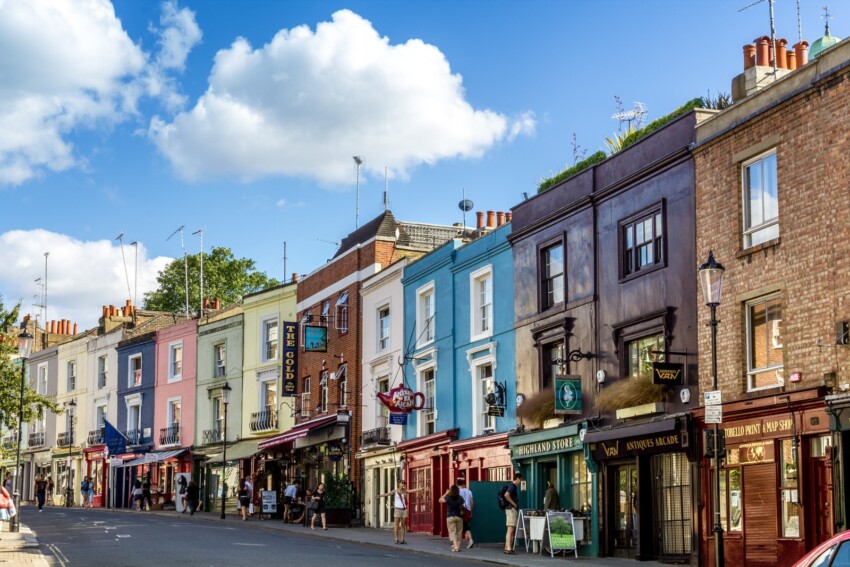
Notting Hill is one of London’s most iconic and captivating neighbourhoods, made famous worldwide by the film of the same name starring Hugh Grant and Julia Roberts. Located in the west of Britain’s capital, within the Royal Borough of Kensington and Chelsea, this district has undergone an extraordinary transformation over the years, evolving from a neglected area into one of the city’s most desirable and fashionable neighbourhoods.
With its elegant Victorian townhouses featuring pastel-coloured façades, vibrant markets, independent shops and a thriving cultural scene, Notting Hill is for many visitors a delightful surprise: stylish yet unpretentious, it’s one of those destinations that leaves you with genuinely pleasant memories of a London that feels less modern and more human in scale.
You can capture the essence of Notting Hill simply by wandering through the characteristic streets of this residential quarter: romance and refinement, cobbled pavements and colourful boutiques, houses with simple exteriors but meticulous attention to detail make this part of London something quite unique, which unsurprisingly serves as a perfect open-air film set.
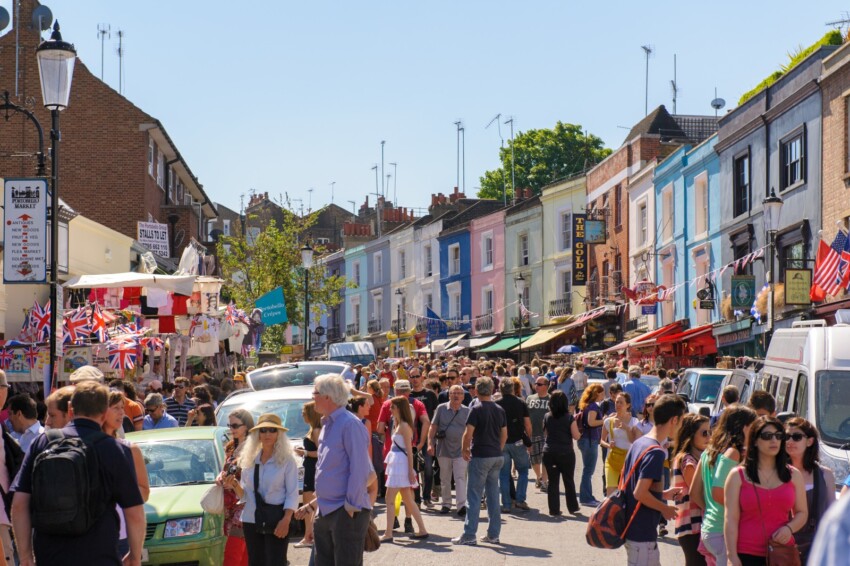
Portobello Road Market is undoubtedly Notting Hill’s most famous attraction and one of the world’s best-known open-air markets. It stretches for nearly two kilometres along Portobello Road and offers a unique experience that varies depending on the day of the week.
Saturday is the main day, when the market is at its finest with over 1,000 traders offering everything from antiques to vintage clothing, handcrafted goods, fresh produce and international street food. The early morning hours (from 8:00 to 11:00) are best for antique enthusiasts seeking one-off pieces, before the tourist crowds arrive.
During the week, the market is smaller but still active, with stalls selling fresh fruit and vegetables, flowers, bread and other foodstuffs, particularly concentrated in the northern section. Friday is a good alternative to Saturday, with many antique dealers already present but fewer crowds.
The market’s antiques section, concentrated around Westbourne Grove, is considered among London’s finest, with dozens of stalls and shops specialising in period items, from porcelain to furniture, vintage jewellery to collectibles. Even if you’re not interested in buying, browsing these stalls is like visiting an open-air museum of British culture.
Bring cash: many traders don’t accept cards. If you’re after serious antiques, focus on the permanent shops lining the street rather than the external stalls, where quality is more variable.
Finally, a tip for photographers: the most colourful and photogenic sections of the market are found between Westbourne Grove and Elgin Crescent, where stalls are interspersed with independent shops featuring vibrant façades and character.
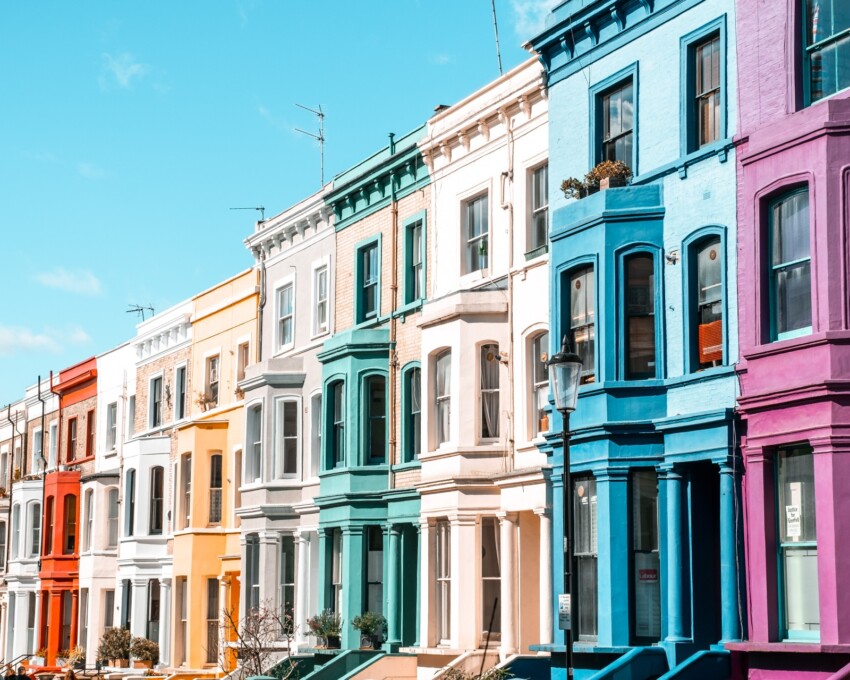
The pastel-coloured Victorian houses of Notting Hill have become the neighbourhood’s visual emblem and one of London’s most photographed settings. These elegant terraced residences, built mainly between 1850 and 1870, are concentrated on specific streets that form the area’s most architecturally valuable nucleus.
The tradition of painting houses in bright colours didn’t originate in the Victorian era. In fact, this practice became widespread in the 1960s and 1970s, when artists and members of the counterculture began settling in Notting Hill, then a neglected and affordable area. Vibrant colours became an expression of individuality and renewal, contrasting with the surrounding urban greyness.
Lansdowne Road2 is arguably the most emblematic street, with houses painted in shades of pink, pale blue, yellow and eau de nil creating an extraordinary chromatic effect. The distinctive characteristic of these properties is the combination of white neoclassical columns with coloured façades, original sash windows and small front gardens bounded by black wrought-iron railings.
Westbourne Park Road3 and adjoining streets such as Lancaster Road and St Luke’s Mews offer equally noteworthy concentrations of coloured Victorian architecture. Special mention goes to Saint Lukes Mews4, a picturesque lane where the famous love declaration scene with cue cards was filmed in “Love Actually”. This tranquil alley with brightly coloured houses is one of Notting Hill’s most photographed locations.
The blue house at number 280 Westbourne Park Road became particularly famous after appearing in the “Notting Hill” film as the travel bookshop run by Hugh Grant’s character. Although the interior was recreated in a studio, the external façade is authentic and now houses a different business. Film fans flock there daily to photograph this location, which has helped cement the neighbourhood’s romantic image.
To fully appreciate the quarter’s architecture, a stroll through secondary residential streets such as Colville Terrace5 and Powis Terrace6 is recommended, where you can admire similar architecture with fewer tourists, thus capturing the authentic residential atmosphere of the neighbourhood. Beyond the colours, notice the architectural details: plasterwork mouldings around windows, column capitals, slate roof tiles and the characteristic basement flats accessed via external stairs. Many of these houses retain original Victorian features inside, including marble fireplaces, high ceilings with plasterwork ceiling roses and wooden flooring.
It’s important to respect residents’ privacy: these are private homes, not public attractions. Photograph the façades from the public street but avoid entering private gardens or causing a disturbance. The most photogenic streets tend to be crowded at weekends, so a weekday morning visit offers a quieter, more authentic experience.
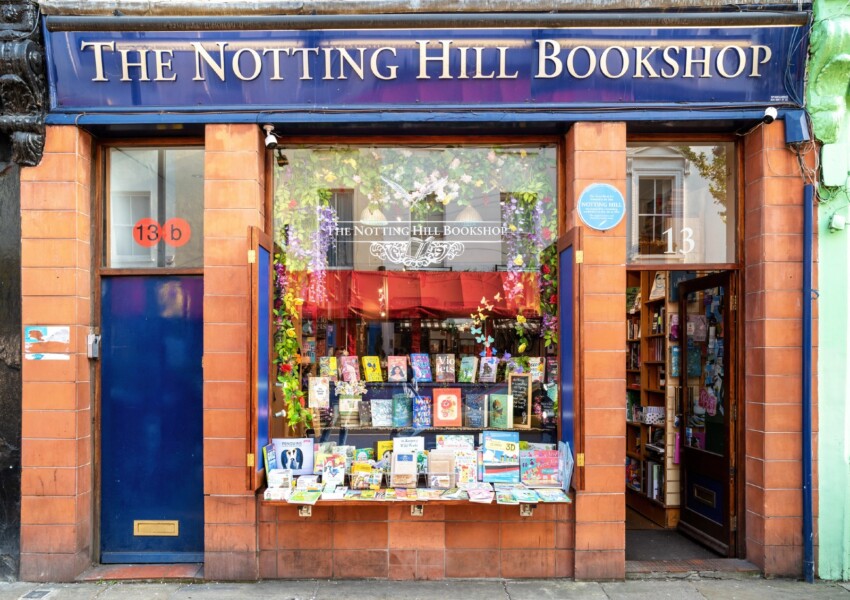
The Notting Hill Bookshop on Blenheim Crescent is a must for literature lovers and “Notting Hill” film fans. Although not quite the shop that inspired the film’s “Travel Book Shop” (that was based on a now-closed bookshop formerly on Portobello Road), this charming independent bookshop has become a landmark for visitors.
Founded in 1979, the bookshop offers an excellent selection of fiction and non-fiction titles in a welcoming, traditional atmosphere. The staff are known for their expertise and friendliness, always ready to offer personalised recommendations.
Inside you’ll also find a section dedicated to the “Notting Hill” film with memorabilia and postcards, perfect for a memento of your visit. If you’re a reading enthusiast, take time to explore the shelves properly, perhaps discovering a new British author or a book on London’s history.
Electric Cinema on Portobello Road is one of Great Britain’s oldest cinemas, in operation since 1910. The Edwardian-style building with its distinctive façade is a neighbourhood landmark and offers a unique and luxurious film experience.
Unlike modern multiplex cinemas, Electric Cinema retains old-world charm combined with modern comfort. The main screen is fitted with spacious leather armchairs, two-seater sofas and even beds in the front row, ideal for a truly special evening. The cinema screens both blockbusters and independent films, with programming that balances commercial and niche titles.
Adjacent to the cinema is the Electric Diner, an American-style restaurant serving breakfast, lunch and dinner, perfect for a meal before or after your film. The venue is particularly renowned for its burgers and American breakfast, served until late morning.
If you’re interested in seeing a film here, it’s advisable to book in advance on the official website, as seating is limited and often sold out, especially at weekends.
The Museum of Brands is a hidden gem of Notting Hill offering a fascinating journey through 150 years of consumer culture and design history. Located on Lancaster Road, this unique museum displays over 12,000 objects that chart the evolution of branding, advertising and packaging from the Victorian period to the present day.
The collection, begun by collector Robert Opie in the 1960s, includes cereal boxes, tins, advertising posters, toys, magazines and much more, arranged chronologically in a “tunnel of time” that allows you to observe how everyday products have transformed over decades, reflecting social, economic and technological changes.
Particularly interesting are the sections covering the wartime period, which show how resource scarcity influenced packaging, and the 1960s and 1970s, with the boom in pop culture and colourful advertising. The museum also hosts temporary exhibitions on themes specific to design and consumer culture.
It’s a place that evokes strong nostalgia in adults, who recognise products from their childhood, and is surprisingly engaging for younger visitors, who can compare vintage items with contemporary ones. The visit takes approximately 1-2 hours and the museum has a small but well-stocked café with a terrace.
Ladbroke Square Garden is one of London’s largest private gardens, part of the Ladbroke Estate, a planned residential complex from the 19th century that represents an excellent example of Victorian urban planning. Although the garden is accessible only to residents, you can admire it from the surrounding streets, particularly from Ladbroke Grove.
This three-acre green space (approximately 12,000 square metres) is surrounded by elegant terraced houses and characterised by mature trees, flower beds and well-maintained lawns. The design follows English landscape style, with winding paths and vegetation that appears natural but is actually carefully planned.
During the Open Garden Squares Weekend, an annual event typically held in June, Ladbroke Square Garden and other private London gardens exceptionally open to the public, offering a unique opportunity to explore these normally inaccessible spaces.
If you’re interested in architecture and urban planning, it’s worth walking around the surrounding area, known as the Ladbroke Estate, to admire the characteristic crescent-shaped street layout and houses, a significant example of 19th-century London urban development.
In recent years, Notting Hill has seen a flourishing street art scene, with murals and graffiti adding a contemporary touch to the neighbourhood’s historic architecture. Unlike the more famous street art area in Shoreditch, Notting Hill’s works are more scattered but perfectly integrated into the urban context.
Some of the best places to admire local street art include Portobello Road, where several shops have commissioned murals on their shutters, Acklam Road beneath the A40 motorway underpass, and Blenheim Crescent, where works by emerging and established artists occasionally appear.
Particularly noteworthy is the mural dedicated to Bob Marley on Blenheim Crescent, which honours the neighbourhood’s historic connection with the Caribbean community. Another point of interest is the nearby Trellick Tower, an iconic brutalist building that has become a landmark for local street art.
Notting Hill’s street art is constantly evolving, with new works appearing and disappearing regularly, so every visit may bring different surprises.
Also known as “Little Morocco“, it’s the ideal place to enjoy a bite of North African and Portuguese flavours.
It’s considerably less well-known than Portobello Road and, because of this, experiences less intensive tourist traffic, which, in many people’s view, translates into greater authenticity of the area and the market it hosts.
Notting Hill boasts a culinary scene that reflects both its multicultural heritage and recent gentrification. The neighbourhood combines independent cafés, authentic ethnic restaurants and fashionable venues frequented by affluent residents.
The Cow12 on Westbourne Park Road is an iconic gastropub run by Tom Conran. Specialising in oysters and seafood, this establishment maintains an authentic pub atmosphere with high-quality cooking. Rock oysters hail from the west coast of Ireland and are served with rye bread and Irish butter.
The independent café scene is particularly strong. Granger and Co.13 on Westbourne Grove is a breakfast institution, celebrated for its creamy scrambled eggs, avocado toast and ricotta hotcakes with caramelised banana. Expect queues at weekends, but the quality justifies the wait.
The Churchill Arms14 on Kensington Church Street, technically just outside Notting Hill but easily reached, is one of London’s most photographed pubs. The façade is completely covered in flowers during the summer months, creating a burst of colour. Inside, a Thai restaurant operates, serving authentic curries at reasonable prices in a traditional British pub setting—an unusual but highly effective combination.
Notting Hill’s nightlife is more low-key compared to other London areas such as Soho or Shoreditch. Portobello Rd Distillery @ The Star15 on Portobello Road is a traditional pub with a hidden cocktail bar upstairs called Lounge Bohemia, accessible only by reservation. The cocktails are creative and the eclectically decorated bohemian space creates an intimate atmosphere.
In the following map you can see the location of the main places of interest mentioned in this article.
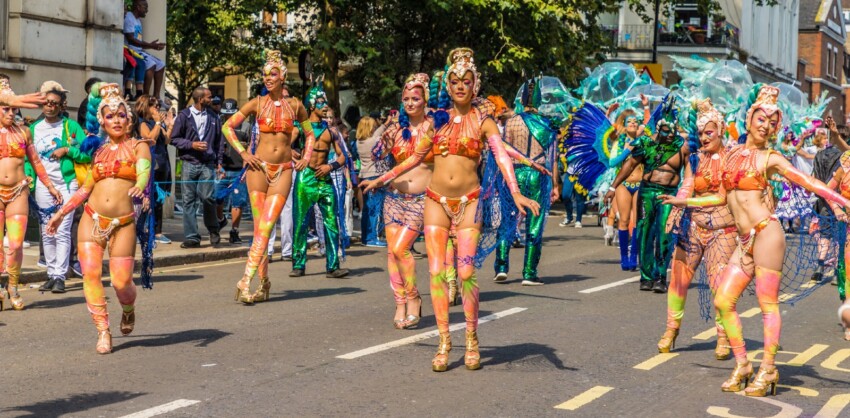
The Notting Hill Carnival is Europe’s largest street festival and the world’s second-largest Caribbean parade after Rio de Janeiro’s Carnival. This extraordinary event takes place every year during the final August bank holiday weekend (Sunday and Monday), completely transforming the neighbourhood’s streets for two days of intense cultural celebration.
The carnival’s origins date back to 1966, when it was first organised as a response to racial tensions and as a celebration of Caribbean culture by Notting Hill’s Afro-Caribbean community. Community leader Claudia Jones had previously organised indoor Caribbean events, but it was Rhaune Laslett who proposed a street festival that would involve the entire local community.
Today the carnival attracts over a million visitors annually and involves approximately 50,000 performers. Sunday is dedicated to children and families, with a more relaxed atmosphere and daytime hours (approximately 9:00 to 19:00). Monday is the main day, with large parades following a 5.5-kilometre route through the neighbourhood’s streets.
Distinctive carnival features include sound systems—stationary stages positioned along the route, playing soca, calypso, reggae, dancehall and other Caribbean genres at extremely high volume. There are typically over 40 sound systems distributed throughout the area, each with its own musical identity and following. The most famous include Rampage, Channel One and Gaz’s Rockin’ Blues.
The mas bands (masquerade groups) are the carnival’s central visual element. These bands, comprising dozens or hundreds of costumed participants, parade along the official route accompanied by enormous trucks equipped with sound systems. Costumes, crafted with feathers, sequins, crystals and colourful fabrics, require months of preparation and can cost hundreds of pounds.
Street food is integral to the experience. Hundreds of stalls line the route selling authentic Caribbean specialities: jerk chicken (Jamaican marinated and grilled chicken), curry goat, roti (curry-filled bread), ackee and saltfish (Jamaica’s national dish), rice and peas, fried plantain and Jamaican patties. Drinks include rum punch, sorrel (hibiscus infusion) and Red Stripe beer.
To participate in the carnival safely and enjoyably, consider these practical tips. Arrive early: streets begin filling from 10:00 and some areas become impassable by afternoon. Notting Hill Gate underground station often closes to manage crowds, so consider alternative stations such as Ladbroke Grove, Westbourne Park or Holland Park.
Travel light: large rucksacks are not permitted for security reasons. Public toilets are insufficient, so plan accordingly. Local residents rarely allow use of their facilities. The carnival is highly physical and crowded: it’s not ideal for very young children or people with reduced mobility, especially during Monday afternoon peak hours.
Despite occasional security incidents reported in the media, the carnival is generally a safe event with a substantial Metropolitan Police presence. However, remain aware of your surroundings and protect your belongings. For a less claustrophobic experience, explore the route’s peripheral areas rather than focusing on the crowded centre near Westbourne Grove.
Portobello Road represents the most central choice for those wishing to wake up in the neighbourhood’s heart. Hotels and B&Bs along this iconic street offer immediate access to the market and restaurants and cafés. Accommodation ranges from designer boutique hotels to family-run guesthouses, with very high prices but unbeatable location. Bear in mind potential noise during the Saturday market.
Westbourne Grove, Ladbroke Grove and Ledbury Road host some of the neighbourhood’s most elegant boutique hotels, housed in magnificent restored Victorian townhouses. This sophisticated area is perfect for those seeking luxury and design, with easy access to the finest restaurants and excellent connections from Notting Hill Gate station (Central, District, Circle lines).
Bayswater and Queensway, just to the east, offer the widest choice of budget and mid-range accommodation, with family hotels and hotel chains at more reasonable prices. Proximity to Hyde Park and excellent underground connections compensate for the less distinctive atmosphere compared to Notting Hill.
If you plan to attend the Notting Hill Carnival (final August bank holiday weekend), book 4–6 months in advance: prices increase significantly. For more London accommodation options, consult the guide on where to stay in London.
Notting Hill Gate underground station is the primary access point to the neighbourhood and serves three underground lines: Central (red), District (green) and Circle (yellow). This station is located at the intersection of Notting Hill Gate and Pembridge Road, in the heart of the shopping district. From here, Portobello Road is approximately a 5-minute walk north.
Useful alternative stations include Ladbroke Grove on the Hammersmith & City (pink) and Circle lines, situated at the northern end of Portobello Road, ideal if you wish to begin your visit from the Golborne Road market area. Westbourne Park station, also on the Hammersmith & City line, provides access to the neighbourhood’s north-western section.
For those arriving from central areas such as Westminster or Covent Garden, the Central line from Tottenham Court Road or Oxford Circus takes approximately 10–15 minutes to Notting Hill Gate. From the South Bank neighbourhood, the District line from Embankment requires approximately 20 minutes.
Several bus routes serve Notting Hill, offering a more scenic alternative to the underground. Route **23** connects Hammersmith to Liverpool Street via Notting Hill Gate, Marble Arch and Oxford Circus. Route 52 runs through the neighbourhood north to south, linking Ladbroke Grove with Victoria via Kensington.
To reach Portobello Road specifically, routes 7, 23, 28 and 31 have nearby stops. London buses accept contactless payment or Oyster Card, but not cash. A single journey costs £1.75 at a flat rate regardless of distance.
City Card allow you to save on public transport and / or on the entrances to the main tourist attractions.
 Hotel
Hotel  Budget accommodations
 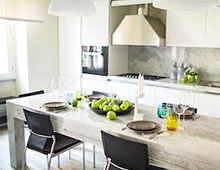 Apartments
 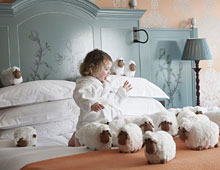 Family Hotel
 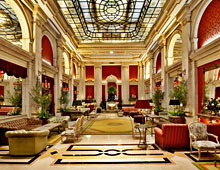 Luxury Hotel