A guide to one of London's most famous and beautiful parks, Regent's Park. Discover the main things to see and what to do throughout the year.
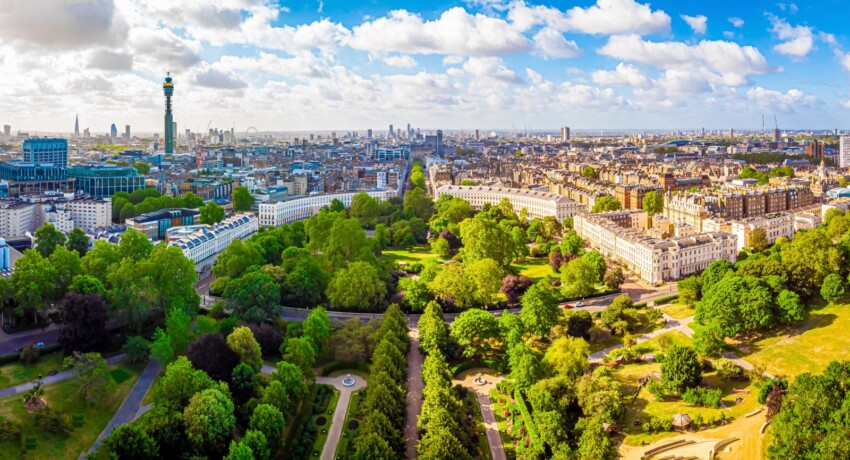
Regent’s Park stands as one of London’s most elegant green spaces, stretching across 166 hectares between the boroughs of Westminster and Camden. Designed by architect John Nash in 1811 for the Prince Regent (the future George IV), the park brings together magnificent Georgian architecture, formal Italian-style gardens and expansive lawns where Londoners and visitors alike relax throughout the year.
With its Queen Mary’s Gardens hosting over 12,000 roses, the largest open-air theatre in the United Kingdom and the ZSL London Zoo founded in 1828, Regent’s Park offers a complete experience that extends far beyond a simple stroll through the greenery. The park distinguishes itself from London’s other Royal Parks through its distinctive architecture: the elegant neoclassical terraces surrounding it create a unique urban backdrop, whilst tree-lined avenues lead to surprising spots such as the Japanese Garden Island and the boating lake.
The central location makes Regent’s Park easily accessible from most of London’s main tourist areas. From Piccadilly Circus, you can reach it in approximately 15 minutes by Underground (Northern Line towards Camden Town, change at Leicester Square for the Piccadilly Line), whilst from King’s Cross it’s just a 10-minute walk through the charming Primrose Hill neighbourhood.
For those staying in Marylebone, Camden or King’s Cross, Regent’s Park becomes a daily fixture for morning jogs, afternoon picnics or simply cutting through the city to avoid traffic. Discover with us all the secrets of this royal park which has been open to the public since 1835, establishing itself as the verdant heart of north London.
The Queen Mary’s Gardens occupy 12 hectares in the south-western section of Regent’s Park and represent the park’s true botanical gem. Opened in 1932 and dedicated to Queen Mary, consort of King George V, these gardens house the capital’s most important collection of roses: over 12,000 specimens of approximately 400 different varieties bloom from May to September, creating an irresistible spectacle of colours and fragrances.
The best time to visit the rose garden is June, when blooming reaches its peak. The roses are arranged in geometric beds around a central pond with fountain, following the classical style of Italian gardens. Among the most prized varieties are the heritage English David Austin roses, tea hybrids and modern floribunda roses. Gardeners from the Royal Parks Foundation maintain these gardens with meticulous care, pruning and nurturing each plant according to techniques passed down through generations.
Beyond the roses, the Queen Mary’s Gardens include a Begonia Garden with annual plants that change seasonally, an area dedicated to perennial plants, and the Japanese Garden Island. This latter section, accessible by crossing a small bridge, recreates the atmosphere of a Japanese zen garden with Japanese maples, azaleas, an artificial stream and a waterfall. During autumn, the maples turn deep crimson, offering an exceptional photographic scene that contrasts beautifully with the surrounding Georgian architecture.
The gardens also host special events such as summer concerts and floral exhibitions organised by the Royal Horticultural Society. Admission is free and the gardens follow the park’s general opening hours, but their sheltered position makes them particularly pleasant on the windy days typical of London’s spring.
The Regent’s Park Open Air Theatre has operated since 1932 and is the largest open-air theatre in the United Kingdom, with a capacity of 1,240 seats. Located within the Queen Mary’s Gardens, this unique theatrical space offers a summer season running from May to September, featuring primarily Shakespeare works, musicals and contemporary productions beneath the park’s century-old trees.
The theatre’s design is conceived to integrate with the natural environment: seating is arranged in semicircles on wooden steps, whilst the main stage remains open to the sky. The surrounding trees serve as a natural backdrop, and it is not uncommon for ring-necked parakeets, a parrot species now naturalised in London, to pass overhead during performances, or to hear the calls of owls inhabiting the park. This interaction with nature becomes an integral part of the theatrical experience.
Productions are of the highest professional standard, often featuring nationally renowned actors who choose to perform in this magical setting. Among the most frequently staged productions are “A Midsummer Night’s Dream”, particularly suited to the wooded setting, and “Romeo and Juliet”. Musicals such as “Jesus Christ Superstar” and “Grease” have enjoyed great success in recent seasons.
It is advisable to book tickets well in advance, especially for weekend performances and August shows. Prices range from £25 for seats further back to £75 for premium seating. The theatre provides free blankets as London evenings can be cool even in summer, and offers refreshment facilities with the option of dining before the show. In case of heavy rain, performances are rescheduled and tickets refunded, but cancellations are rare thanks to a sophisticated system of retractable covers installed in 2017.
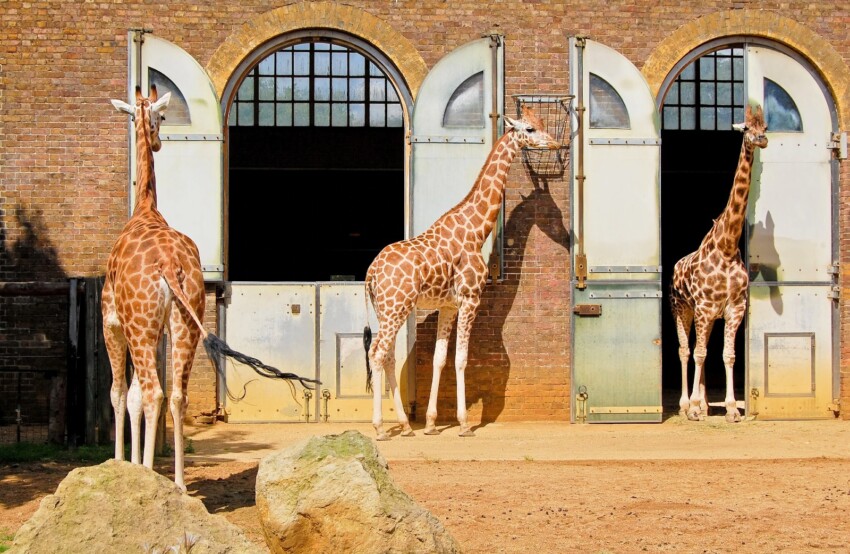
The ZSL London Zoo, founded in 1828 by the Zoological Society of London, occupies 15 hectares in the north-eastern corner of Regent’s Park and is the world’s oldest scientific zoological garden still in operation. Unlike many modern zoos built on the periphery, London Zoo maintains its original urban location, creating a remarkable experience where African lions and Antarctic penguins coexist just steps away from the elegant Victorian terraces of Camden.
The collection includes over 750 animal species with approximately 19,000 individuals, many of which participate in international conservation programmes for endangered species. Among the most impressive areas stands Land of the Lions, opened in 2016, which recreates a village from Gujarat, India complete with a derelict railway station where Asian lions (a critical subspecies with only 600 specimens in the wild) live in a 2,500 square metre habitat. The Tiger Territory, which opened in 2013, is home to Sumatran tigers in an environment simulating Indonesian forests with a diving pool and glass-level observation points.
Rainforest Life is a climate-controlled greenhouse maintaining constant tropical temperature and humidity, where sloths, armadillos and tamarind monkeys roam freely whilst visitors walk on elevated walkways through the vegetation. Lemurs from Madagascar inhabit the In with the Lemurs area, where you can enter their shared space accompanied by a keeper who explains the behaviour of these primate species endemic to Madagascar.
Opening hours vary seasonally: in summer (April-September) the zoo opens at 10:00 and closes at 18:00, whilst in winter (October-March) it closes earlier at 16:00. Online tickets cost £29.75 for adults and £21.50 for children aged 3-15, with family discounts available. The London Pass includes free admission, representing significant savings if visiting other attractions. Plan to spend at least 3-4 hours for a complete visit, though enthusiasts could easily spend an entire day exploring all sections and attending the daily keeper talks.
4The Regent's Park, Hanover Gate, London NW1 4NU, UK
Regent’s Park’s Boating Lake is an irregularly shaped artificial body of water extending approximately 9 hectares in the eastern section of the park, created during John Nash’s original design to offer aquatic attractions to visitors. During the summer months (typically April to October, weather permitting), you can hire rowing boats and pedal boats from a kiosk located on the lake’s south-eastern shore.
Hire costs £10 for half an hour on weekdays and £12 at weekends, with a deposit required. Boats can accommodate up to 6 people, making them ideal for families or groups of friends. Rowing on the lake offers unique perspectives on the neoclassical terraces surrounding the park, particularly the magnificent Sussex Place with its octagonal domes and the Cumberland Terrace, considered Nash’s architectural masterpiece. The experience is particularly romantic at sunset, when golden light illuminates the cream-coloured facades of the Georgian buildings.
The lake is surrounded by a pedestrian path of approximately 2 kilometres much frequented by joggers and cyclists. Along the shores nest mute swans, Canada geese, great crested grebes and various duck species. During winter, when the lake freezes partially, it becomes an important stopover area for migratory birds from northern Europe. Birdwatchers can spot over 30 different species of waterfowl throughout the year.
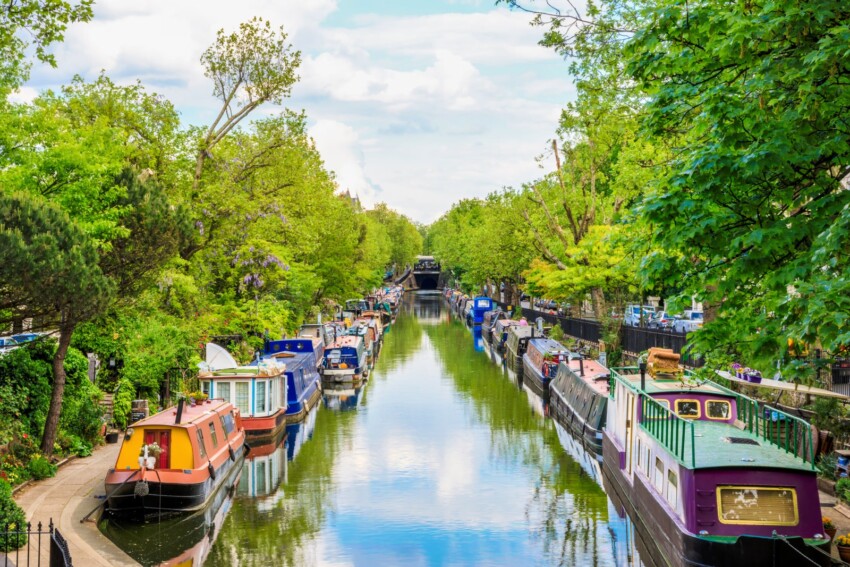
The Regent’s Canal borders the park’s northern edge, running for 13.8 kilometres from Little Venice (Paddington) to the Docklands. This navigable canal, completed in 1820, was built to connect the Grand Junction Canal with the Thames docks, facilitating cargo transport into London. Today it is used primarily by houseboats and leisure boats. The Regent’s Canal Towpath, the path alongside the water, represents one of London’s most picturesque walks, allowing you to stroll from Camden Lock Market to the park via the London Zoo (visible from outside) and beneath ornamental Victorian bridges. The complete walk from Camden Town to Regent’s Park takes approximately 15-20 minutes and is particularly evocative on misty autumn mornings when traditional narrowboats emerge from the haze.
Primrose Hill is technically a separate park adjacent to Regent’s Park, situated immediately north of the canal. This 63-metre-high hillock offers one of the most spectacular views of the capital, with a 360-degree panorama stretching from the City of London to the Surrey hills on clear days. The hill has been protected since 1842 by an Act of Parliament guaranteeing perpetual public access, preserving it from the development that has transformed surrounding areas.
The ascent to the summit takes only 5-10 minutes along well-maintained paths winding through open grassland. At the top, a Victorian milestone indicates distances to major British cities, whilst an information panel helps identify visible monuments: the Shard, the London Eye, the BT Tower, St Paul’s Cathedral and the Canary Wharf skyscrapers form an unmistakable skyline. Sunset is the most popular visiting time, when professional and amateur photographers gather to capture the golden light illuminating the city.
Primrose Hill has become a symbol of London culture cited in numerous songs, poems and novels. The eponymous neighbourhood surrounding the park is one of London’s most exclusive, with Victorian villas home to celebrities and wealthy professionals. Streets around the hill, such as Regent’s Park Road and Gloucester Avenue, are dotted with gastropubs, artisan cafés and independent boutiques that have maintained a village character despite their proximity to the city centre.
During festivities, Primrose Hill takes on special significance: at Christmas many Londoners climb the hill to admire the city’s lights, whilst on New Year’s Eve it becomes a privileged point for viewing fireworks lighting up simultaneously across different parts of the city. On 1st May, according to a neo-pagan tradition revived in the 1980s, modern druids and folklore enthusiasts gather at the summit to celebrate Beltane, the ancient Celtic spring festival, though the event has become more of a tourist curiosity than an authentic religious rite.
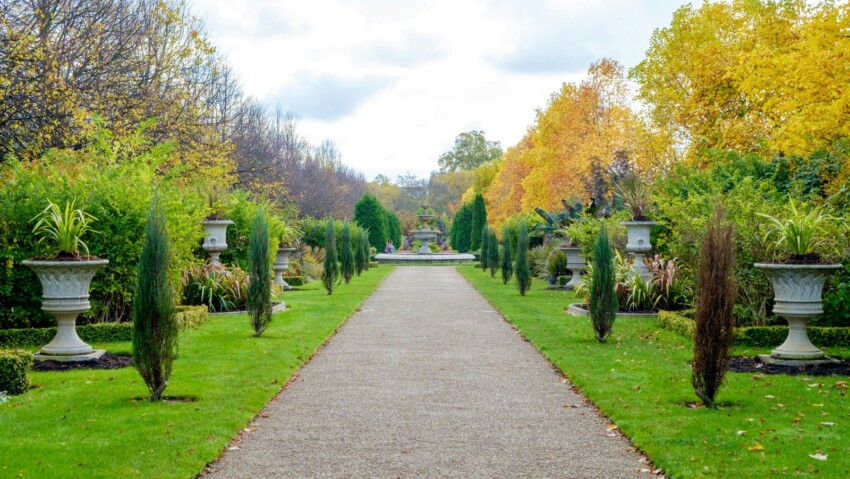
Beyond the celebrated Queen Mary’s Gardens, Regent’s Park conceals smaller gardens often overlooked by tourists but appreciated by local residents. The Avenue Gardens line the central avenue that runs through the park from south to north, connecting York Gate to Chester Road. These formal gardens feature geometric beds with seasonal plantings that change three times yearly: spring bulbs (daffodils, tulips, hyacinths), summer plants (geraniums, petunias, begonias) and autumn compositions with chrysanthemums and ornamental cabbages.
Gardeners from the Royal Parks Foundation follow a tradition of bedding schemes dating back to the Victorian era, when public parks became laboratories for ornamental horticulture. Each season approximately 75,000 specimens are planted throughout Regent’s Park, with the most elaborate projects concentrated in the Avenue Gardens. During May-June, spring blooms attract solitary bees and bumblebees nesting in “insect hotels” installed by the Royal Parks as part of their urban biodiversity project.
The Chester Road Gate, at the park’s northern tip, provides access to a quieter area dominated by large mature trees. Here stand some of the park’s most ancient oriental planes, planted during the initial construction phase in the 1820s. These monumental trees, recognisable by their flaking mottled bark that peels in patches, reach heights exceeding 30 metres and represent important ecological corridors for grey squirrels and numerous arboreal bird species such as greater spotted woodpeckers and great tits.
This area of the park is particularly valued by those practising outdoor yoga and meditation. During warmer months, qualified instructors offer free or donation-based sessions on the grass, taking advantage of the relative tranquillity compared to busier zones. Practitioners bring their own mats and typically gather in early morning (7:00-8:00) or at sunset for 60-90 minute Hatha yoga or Vinyasa flow sequences.
Map
In the following map you can see the location of the main places of interest mentioned in this article.
How to reach Regent’s Park
Regent’s Park is exceptionally well served by London’s public transport network, with several Underground stations positioned around the perimeter that provide easy access from anywhere in the city. Regent’s Park station (Bakerloo Line) is located on the south-western side and offers the most direct entrance for those arriving from Waterloo, Embankment or Paddington. From here, York Gate is just a 2-minute walk away.
To reach the London Zoo and Boating Lake areas, Camden Town station (Northern Line) is the most convenient, situated a 10-minute walk from the park’s northern entrance via the Regent’s Canal Towpath. This station provides direct connections to popular tourist areas such as Leicester Square, Tottenham Court Road and King’s Cross St Pancras. During weekends, the flow of visitors heading to Camden Market can make the station particularly crowded, so it’s advisable to avoid peak hours (11:00-14:00).
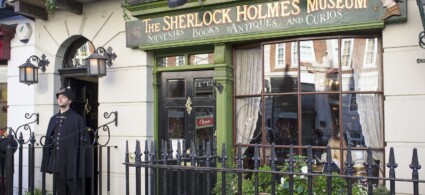
Great Portland Street (Metropolitan, Circle and Hammersmith & City Lines) serves the eastern side of the park and is particularly useful for those coming from Paddington, Notting Hill Gate or the City. Baker Street (Bakerloo, Metropolitan, Circle, Hammersmith & City and Jubilee Lines), one of London’s main Underground hubs, is about 5 minutes’ walk from the south-eastern corner of the park and offers connections from virtually every area of London. From here you can also visit the nearby Sherlock Holmes Museum located at 221B Baker Street.
Bus routes 274, 13, 82, 113 and C2 stop around the park’s perimeter on various sides. Route 274 in particular connects Regent’s Park with Angel and Highbury, passing through Camden, whilst route C2 is useful for reaching South Bank and Westminster.
For those staying in or departing from Camden Town, a walk along the Regent’s Canal is highly recommended: 15-20 minutes along the towpath offer unique glimpses of residential London and allow you to observe the houseboats moored along the waterway.
Practical information for your visit
Regent’s Park is open year-round with hours varying seasonally to maximise public safety during daylight hours. During winter (January-March and October-December) the gates open at 5:00 and close at dusk, typically between 16:00 and 17:30 depending on the month. In spring and summer (April-September), the park remains accessible until 21:00-22:00, allowing evening walks that many Londoners enjoy after work.
Entry to the park is free, following the British tradition of Royal Parks open to all. However, some attractions within it do charge admission, such as London Zoo. Queen Mary’s Gardens and all other ornamental gardens are completely free.
As for food and drink, the park has several refreshment facilities. Honest Burgers by the Boating Lake serves gourmet burgers with British ingredients, whilst the Garden Café in Queen Mary’s Gardens offers full English breakfasts, sandwiches and homemade cakes in a Victorian winter garden setting. During summer, temporary food trucks also appear selling ice cream, speciality coffee and international street food.
Park rules prohibit barbecues (except in designated areas during special events), alcohol consumption (although tolerated if discrete), and require dogs to be kept on a lead in formal garden areas whilst they may roam free in certain marked grassy areas. Cycling is permitted only on the Outer Circle, not on internal paths. During special events such as concerts or sporting fixtures, some sections may be temporarily closed to the public.
Safety is generally good thanks to the presence of the Royal Parks Police, a specialist force that patrols all of London’s Royal Parks. However, as in any large urban park, it’s advisable to keep an eye on your belongings, particularly in more secluded areas after dusk. Busy areas such as Queen Mary’s Gardens and the Boating Lake are considered safe even during evening hours in summer.
Useful information
Address
Regent's Park, London NW1, UK
Transports
Metro stops
Baker Street (329 mt)
Edgware Road (724 mt)
Regent's Park (988 mt)
Bus stops
Rossmore Road / London Business School (Stop LM) (133 mt)
 Hotel
Hotel  Budget accommodations
  Apartments
  Family Hotel
  Luxury Hotel