Montcalm Royal London House, London City
London - 22-25 Finsbury Square, City
Book now
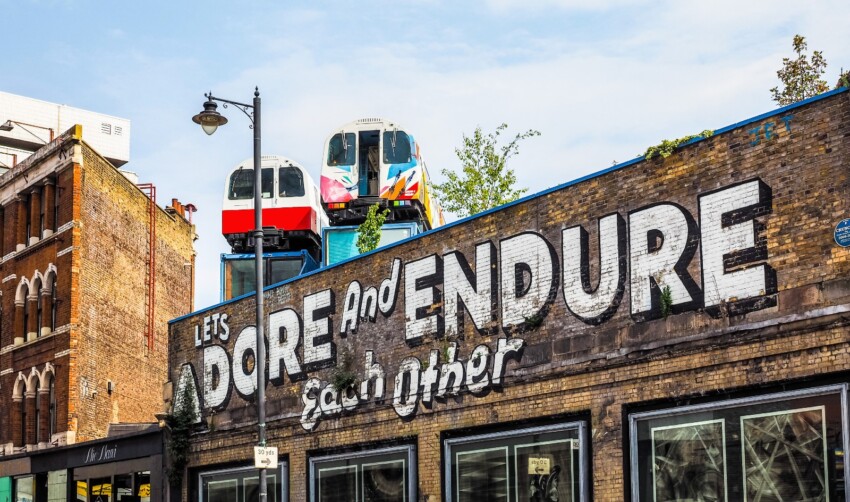
In the heart of East London, Shoreditch has become the symbol of the British capital’s urban transformation. This neighbourhood, which was considered a run-down industrial area in the 1990s, now represents the epicentre of contemporary creativity in London. With over 2,000 street art works decorating its walls and a concentration of art galleries higher than any other London neighbourhood, Shoreditch attracts millions of visitors every year seeking authenticity and innovation.
The history of Shoreditch mirrors that of many European industrial areas: from 19th-century textile manufacturing to early 20th-century furniture factories, through to the post-industrial abandonment of the 1980s. The turning point came at the end of the last century when artists and creatives began occupying old warehouses, attracted by low rents and spacious premises. This process of creative gentrification transformed the neighbourhood into one of London’s most dynamic and sought-after locations.
Today the neighbourhood extends between Old Street, Liverpool Street and Bethnal Green, characterised by a unique blend of Victorian architecture and contemporary interventions. Its streets form an urban laboratory where technology startups, design studios, innovative restaurants and historic markets coexist. In this article, we’ll explore what makes Shoreditch an unmissable destination, from its main attractions to lesser-known spots, from the best times to visit to practical advice for getting around the area.
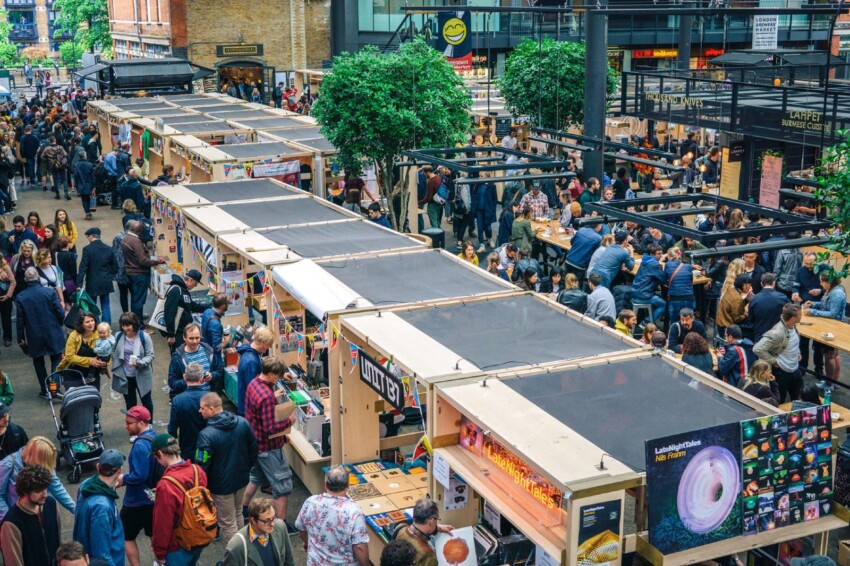
Spitalfields Market represents a perfect example of architectural regeneration that respects the location’s history. The original Victorian structure, built in 1887, was restored and extended in 2005, maintaining the spectacular barrel vault in iron and glass. Located between Commercial Street and Brushfield Street, just a short walk from Liverpool Street Station, the market covers an area of over 5,000 square metres.
The market operates according to a precise thematic calendar: Thursdays are dedicated to antiques and applied arts (9:00-17:00), Fridays to fashion and contemporary art (10:00-16:00), whilst weekends host the general market with over 100 stalls (11:00-17:00 Saturday, 10:00-17:00 Sunday). The market is closed on Mondays and Tuesdays, whilst Wednesdays host private events. On the second Sunday of each month, the Record Fair takes place, one of the UK’s largest vinyl markets, with over 50 dealers.
Within the permanent structure you’ll also find quality restaurants and bars: from the modern British cuisine of Michelin-starred Galvin La Chapelle to the more casual offerings of the food court kiosks. The market’s architecture, with its cast-iron columns and original skylights, creates particularly striking plays of light on sunny mornings, when rays filter through the glass structure casting geometric shadows on the cobbled floor.
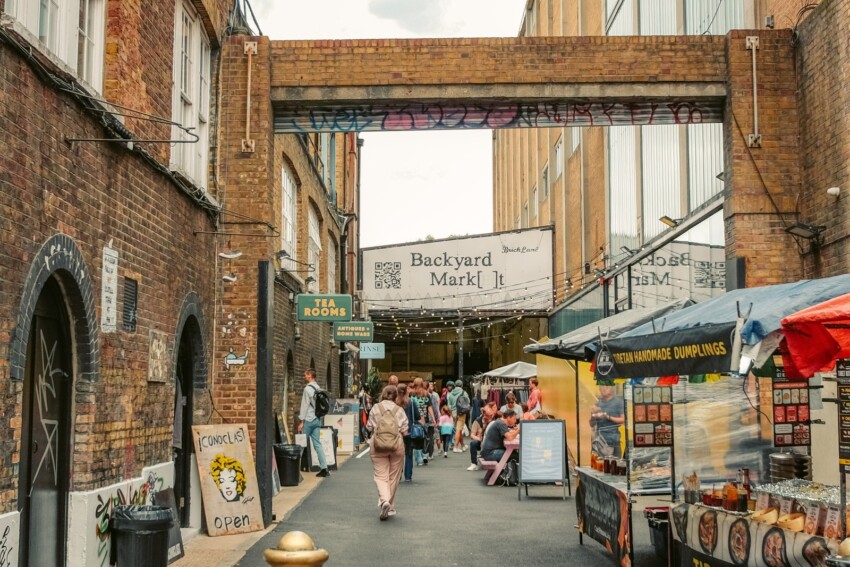
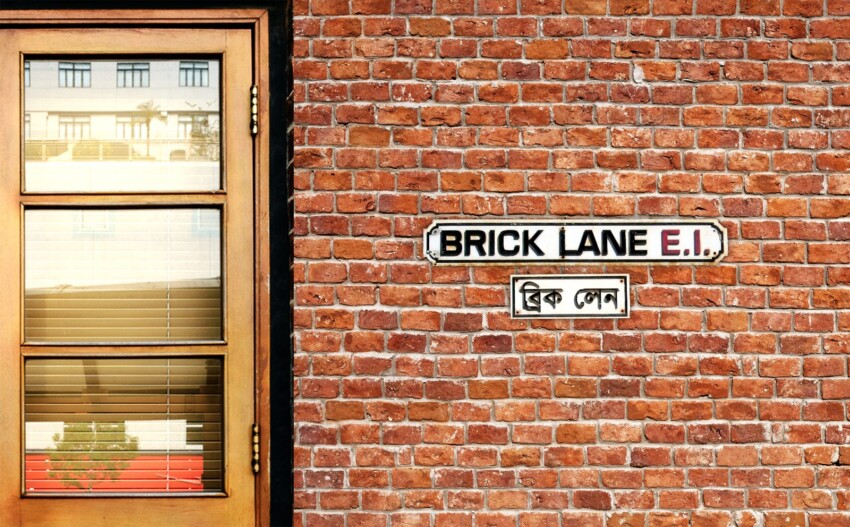
The beating heart of Shoreditch is undoubtedly Brick Lane, a street nearly a kilometre long that runs through the neighbourhood from north to south. This thoroughfare, whose name derives from the brick kilns that once lined it in the 15th century, has become a symbol of London’s cultural diversity. Every Sunday morning, Brick Lane transforms into a market that attracts over 30,000 visitors, with stalls selling everything from vintage clothing and vinyl records to second-hand books, antiques and contemporary craftsware.
The most fascinating section of the market is found within the Old Truman Brewery, a complex of Victorian buildings that once housed one of London’s largest breweries. Today these industrial spaces welcome around 250 traders every Sunday, spread across several floors. Here you’ll find the Vintage Market (open Thursday-Sunday), the Backyard Market and the Tea Rooms. The best times to visit the market are between 11:00 and 14:00 on Sunday, when footfall is heaviest but it’s still possible to move around comfortably.
The street is also famous for its Bengali culinary tradition. Since the 1970s, the Bangladeshi community has transformed this area, so much so that it’s often called “Banglatown”. The restaurants along Brick Lane serve curry and traditional dishes, many of which stay open late into the night. The perfect photo spot is at the intersection with Hanbury Street, where the contrast between the neon restaurant signs and colourful murals creates a unique atmosphere, particularly striking at sunset.
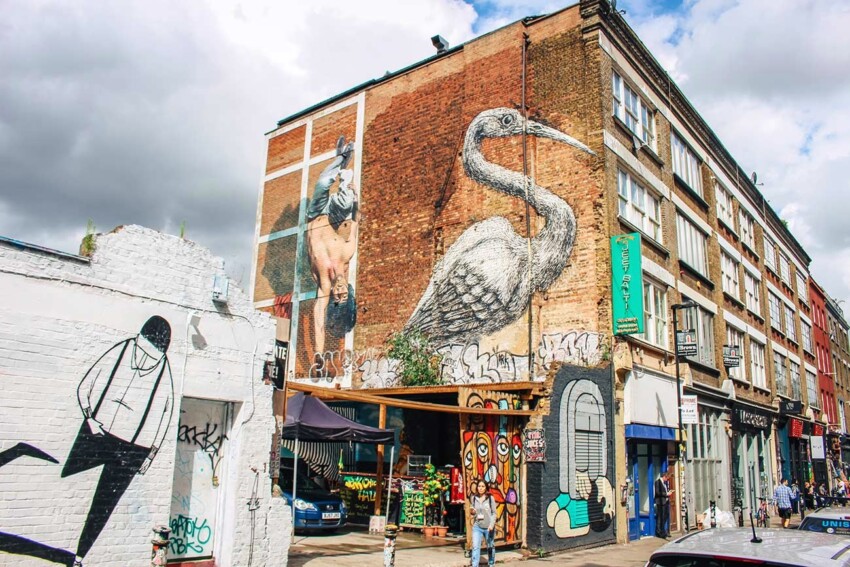
Shoreditch hosts Europe’s highest concentration of street art, with works ranging from spontaneous graffiti to commissions from international brands. The Great Eastern Street Art Wall3 is the focal point of this artistic scene: a 30-by-15-metre wall that changes appearance every few weeks, hosting works by emerging and established artists. Since its inauguration in 2008, it has featured work by over 200 artists from around the world.
The streets richest in murals are Grimsby Street4, where an entire block is decorated with geometric and abstract works, and Fashion Street5, which connects Commercial Street to Brick Lane. You’ll often find works here by artists such as Stik, famous for his stylised figures, and ROA, specialising in large-scale animal representations. The area around Rivington Street and Curtain Road is particularly rich in three-dimensional installations and urban sculptures.
To capture the best works, the early morning hours (7:00-9:00) offer perfect light and semi-deserted streets. It’s important to note that many works are ephemeral: what you see today might be covered or replaced the following week, making each visit unique.
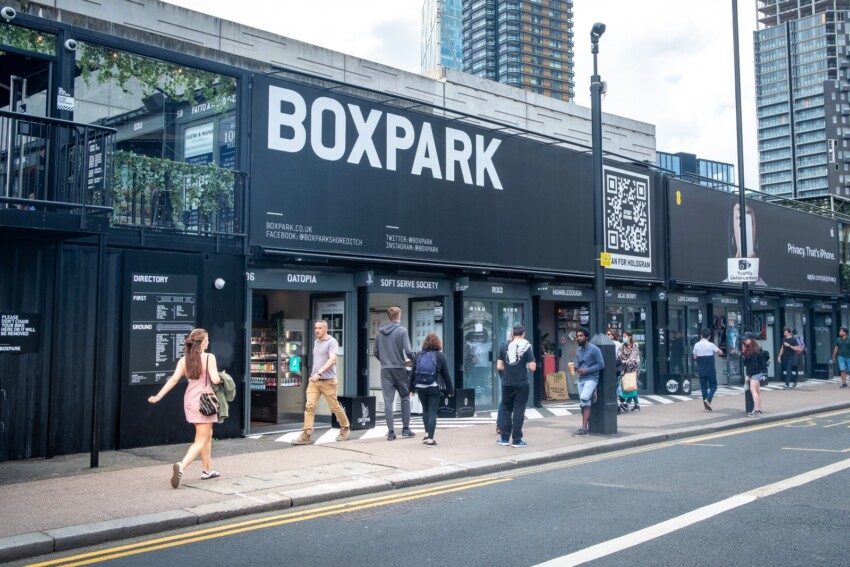
Opened in 2011, Boxpark represents a pioneering experiment in the concept of urban shopping centre. Built entirely with 61 recycled and stacked shipping containers across two levels, this 5,500-square-metre complex has redefined London retail. Located on Bethnal Green Road, near Shoreditch High Street underground station, Boxpark hosts emerging brands, restaurants, bars and spaces for temporary events.
The structure is open daily from 11:00 to 23:00 (until midnight on Fridays and Saturdays), with shops operating in 3-6 month cycles, guaranteeing constantly renewed offerings. On the ground floor you’ll mainly find food outlets with cuisines from around the world: from Hawaiian poke to Mexican tacos, Korean food to American barbecue. The first floor is dedicated to fashion concept stores and accessories, with particular focus on independent and sustainable designers.
Boxpark’s real strength is its panoramic rooftop terrace on the second floor, freely accessible, which offers a privileged view of Shoreditch’s skyline and surrounding historic buildings. During summer it hosts DJ sets and sports event screenings on large screens, transforming into one of the neighbourhood’s most popular hangouts. Sunday afternoon is an ideal time to visit, when the atmosphere is relaxed yet still lively.
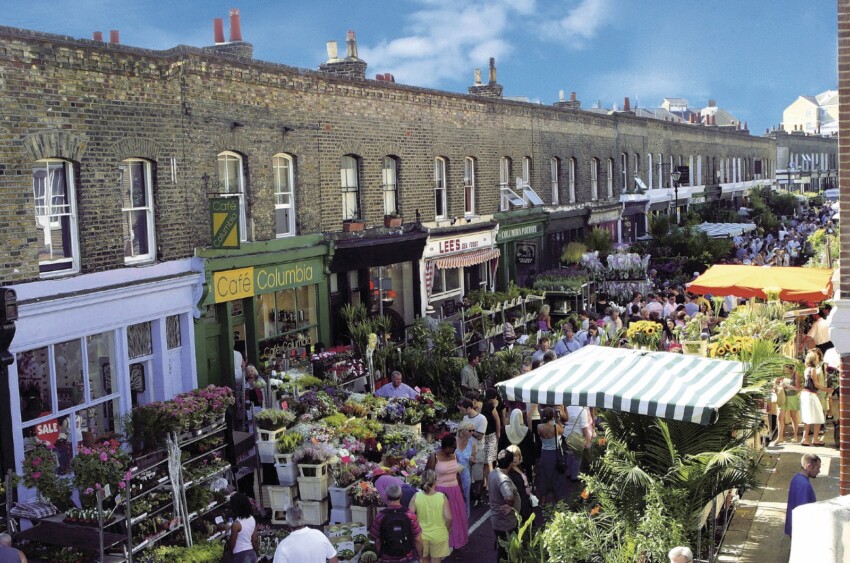
Every Sunday morning, from 8:00 to 15:00, Columbia Road transforms into one of Europe’s most characterful flower markets. This Victorian-era street, around 400 metres long, welcomes over 60 stalls from florists and plant nurseries offering plants, bulbs, cut flowers and gardening supplies. The market has a tradition dating back to 1869 and maintains a genuine, unpretentious atmosphere, far removed from tourist dynamics.
The best times to visit the market vary depending on your priorities: arriving at 8:00 means finding the widest selection and regular prices, but also maximum footfall. Those seeking bargains should arrive after 14:00, when traders begin clearing remaining stock at discounts that can reach 50%. Seasonality is key: in spring (March-May) you’ll find bulbs and flowering plants, while in autumn the offer focuses on houseplants and Christmas arrangements.
Beyond the stalls, Columbia Road hosts around forty independent shops that open only on Sundays, specialising in antiques, vintage objects, artisanal food products and homewares. Particularly interesting are the Nordic design shops and artisan ceramics boutiques. The street is completely pedestrian during market hours, creating a festive atmosphere amplified by traders’ calls offering their wares in the tradition of London’s historic “costermongers”.
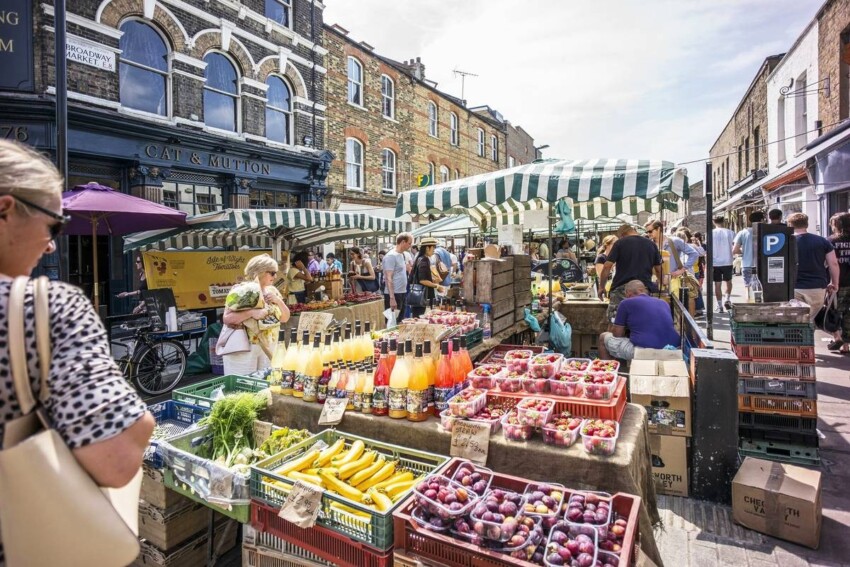
Although technically located in nearby Hackney rather than Shoreditch, Broadway Market is the natural terminus of an ideal itinerary starting (or ending) at Brick Lane, passing through Columbia Road Market and finishing here, perhaps in one of the many pubs or venues.
Broadway Market is indeed one of the capital’s most authentic and fashionable markets. Every Saturday, from 9:00 to 17:00, this Victorian street comes alive with over 130 stalls offering an explosion of colours, aromas and flavours from around the world.
Unlike the more touristy Borough Market or Camden, Broadway Market retains a genuine and relaxed atmosphere, frequented mainly by Hackney residents, East End creatives and street food enthusiasts. The stalls offer fresh and organic produce, international gastronomic specialities, vintage clothing, artisanal jewellery, second-hand books and flowers. Particularly popular are the culinary offerings ranging from Mexican tacos to Japanese onigiri, Argentinian empanadas to Spanish churros.
The market’s strategic location, nestled between London Fields park and the picturesque Regent’s Canal, makes it ideal for a day out in the open air. On weekdays, even without stalls, the street deserves a visit for its independent shops, specialist cafés, art galleries and trendy restaurants such as the renowned Café Cecilia.
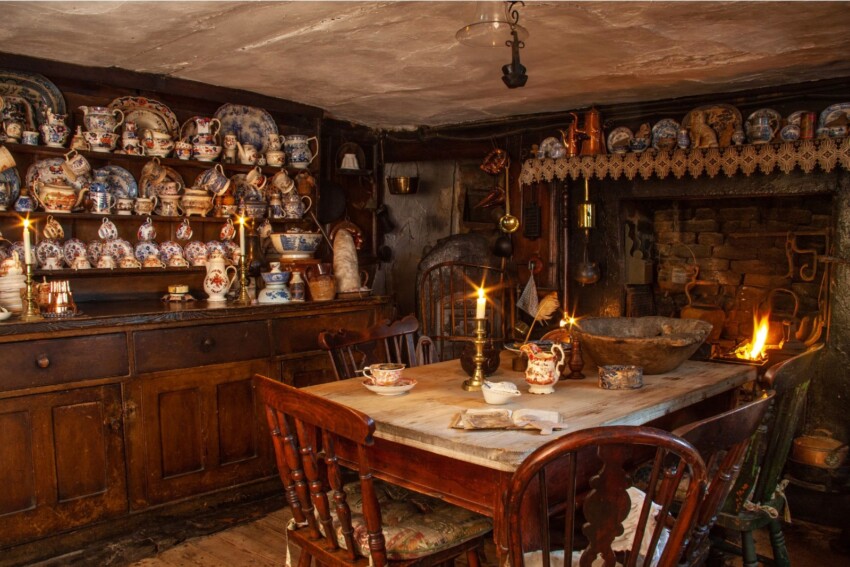
Dennis Severs’ House on Folgate Street offers a unique immersive experience. This Georgian house from 1724 has been transformed by American artist Dennis Severs (1948-1999) into a permanent art installation that recreates the life of a Huguenot weaver family through ten rooms across four floors. The peculiarity is that each room is arranged as if the inhabitants had just left: lit candles, food on plates, unmade beds.
Visits follow strict protocols: absolute silence, no photography, and slow movement from one room to another following a set route. Severs called his creation “still-life drama”, a complete sensory experience engaging sight, hearing and smell. In each room you hear footsteps, distant voices, cooking smells, creating the illusion of an invisible presence moving always one step ahead of the visitor.
The house is open with limited hours: “Silent Night” visits are held on Monday, Wednesday and Friday evenings (18:00-21:00, £20 per adult, booking required on the official website). The first Sunday of each month hosts daytime visits from 12:00 to 16:00 (£15). The visit lasts around 45 minutes and accommodates a maximum of 15 people at a time, guaranteeing an intimate and contemplative experience. It’s not suitable for children under 12 due to the sombre atmosphere and required silence.
Shoreditch is a paradise for vintage and second-hand enthusiasts. The Vintage Market10 inside the Old Truman Brewery (Thursday–Sunday) is the ideal starting point, with over 100 stalls selling clothing, accessories and collectibles from the 1920s to the 1990s. ATIKA London11 on Brick Lane is one of the most iconic vintage shops, spanning 3,000 square metres across three floors.
Rokit12 on Brick Lane features four floors of vintage organised by decade and style.
The best time to shop is Thursday or Friday afternoon, when shops are restocked for the weekend but not yet crowded.
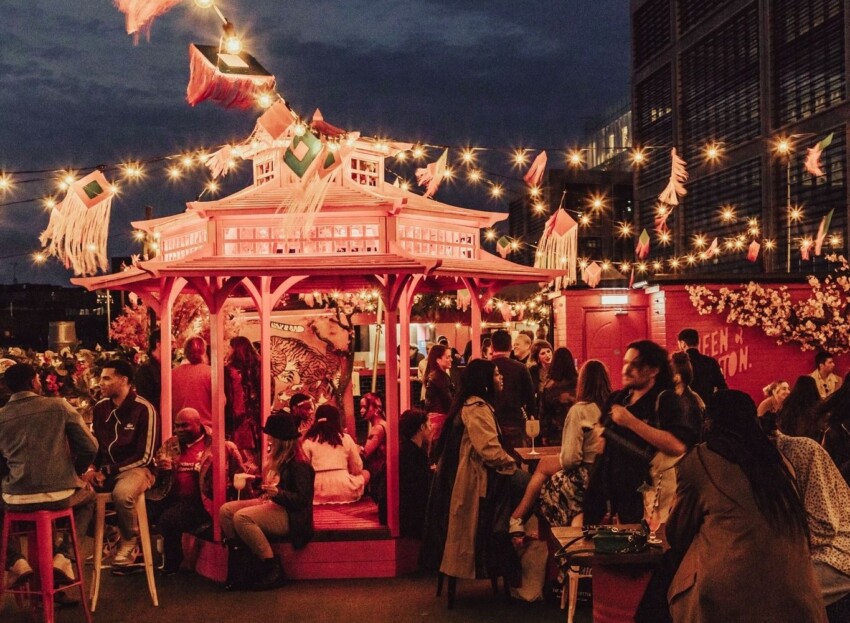
Shoreditch is the neighbourhood of choice for creatives, artists, students and young professionals seeking an authentic experience away from the tourist circuits of Soho and Leicester Square. With over 130 venues concentrated mainly along Shoreditch High Street, Curtain Road and Old Street, this area represents the beating heart of London’s underground scene.
You can start the evening at one of the many sophisticated cocktail bars such as Callooh Callay13, a speakeasy hidden behind a bookshop serving creative cocktails in a Prohibition-era atmosphere, or Nightjar14, renowned for its signature drinks accompanied by live jazz. For a more relaxed vibe, TBC15 on Leonard Street offers a laid-back environment where you can dine, drink and socialise.
The true symbol of Shoreditch’s nightlife, however, is undoubtedly the Queen of Hoxton16, a three-storey venue that perfectly embodies the spirit of the neighbourhood. The ground floor features a vibrant bar with luminous installations and experimental design, the basement transforms into a nightclub with Funktion One sound system where local and international DJs take turns until the early hours, whilst the real highlight is the rooftop bar on the top floor. This panoramic terrace completely changes theme twice yearly: in summer it becomes a Mediterranean oasis with barbecues and tacos, whilst in winter it transforms into an Alpine lodge with a heated yurt, fire pits and warm cocktails such as Hot Buttered Rum.
For electronic music lovers, Xoyo17 on Cowper Street is a must-visit. This two-storey club with an art space upstairs is considered one of London’s most cutting-edge venues and regularly hosts internationally renowned DJs in an intimate setting that accommodates up to 500 people.
For those seeking more unique experiences, Shoreditch does not disappoint. Village Underground18 combines a club with a cultural space, Ballie Ballerson19 offers pools filled with coloured balls to dive into between cocktails, whilst The Truman Brewery20 hosts temporary events, markets and themed parties in a converted industrial space.
In the following map you can see the location of the main places of interest mentioned in this article.
Shoreditch is served by several underground and Overground stations, making access easy from anywhere in London. The most central station is Shoreditch High Street (Overground line, zone 1), located on Bethnal Green Road and within a few minutes’ walk of the neighbourhood. From here, trains depart for Highbury & Islington, Dalston, Clapham Junction and Crystal Palace, with services every 5–10 minutes.
Other useful stations include Liverpool Street (Metropolitan, Circle, Hammersmith & City, Central line and Overground), situated at the neighbourhood’s southern boundary, and Old Street (Northern line), at the western edge. From Liverpool Street, Spitalfields Market is within a 2-minute walk, whilst from Old Street it’s about 10 minutes on foot to the heart of Shoreditch.
Several bus routes pass through Shoreditch: the 8, 26, 35, 47, 48, 55, 67, 78, 135, 149, 242 and 388. Bus 26 is particularly useful as it connects the neighbourhood directly to Waterloo, passing through Holborn and King’s Cross. Night buses N26, N55 and N253 operate after the underground closes (around 1:00 am).
To see all the facilities and book accommodation in Shoreditch use the form below, entering the dates of your stay.
City Card allow you to save on public transport and / or on the entrances to the main tourist attractions.

 Hotel
Hotel  Budget accommodations
  Apartments
  Family Hotel
  Luxury Hotel