The Z Hotel Tottenham Court Road
London - 52 Poland Street
Book now
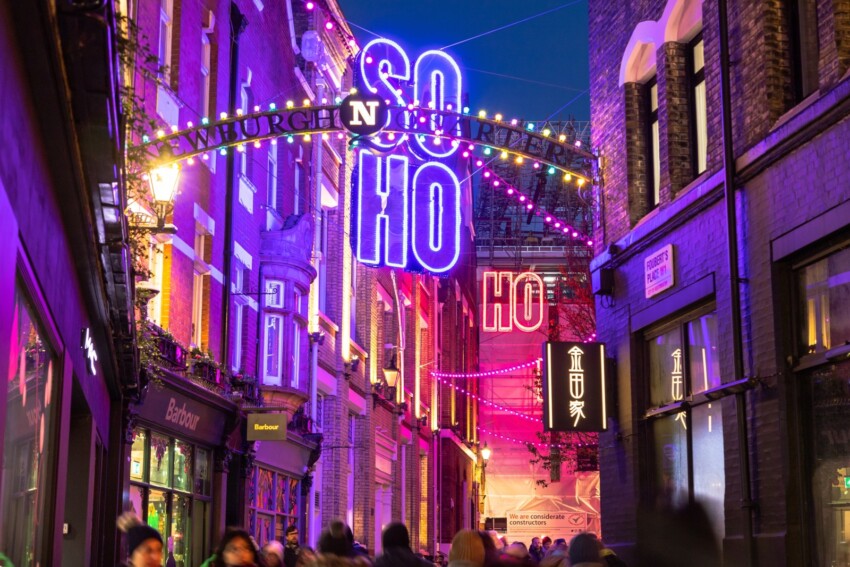
Soho represents the beating heart of London’s West End, a neighbourhood that embodies the rebellious and creative spirit of the British capital. Bordered by Oxford Street to the north, Regent Street to the west, Leicester Square to the south and Charing Cross Road to the east, this maze of narrow streets and cobbled alleyways encompasses approximately 2.6 square kilometres of pure urban energy.
The area stands out for an extraordinary concentration of theatres, historic cinemas, international restaurants, independent boutiques and nightlife venues that have shaped British pop culture. From the shop windows of historic bookshops on Cecil Court to the colourful neon lights of Old Compton Street, every corner tells a different story of immigration, bohemia and urban transformation.
Its streets are frequented daily by approximately 500,000 people—residents, workers and visitors—making it one of the city’s most vibrant and densely populated destinations.
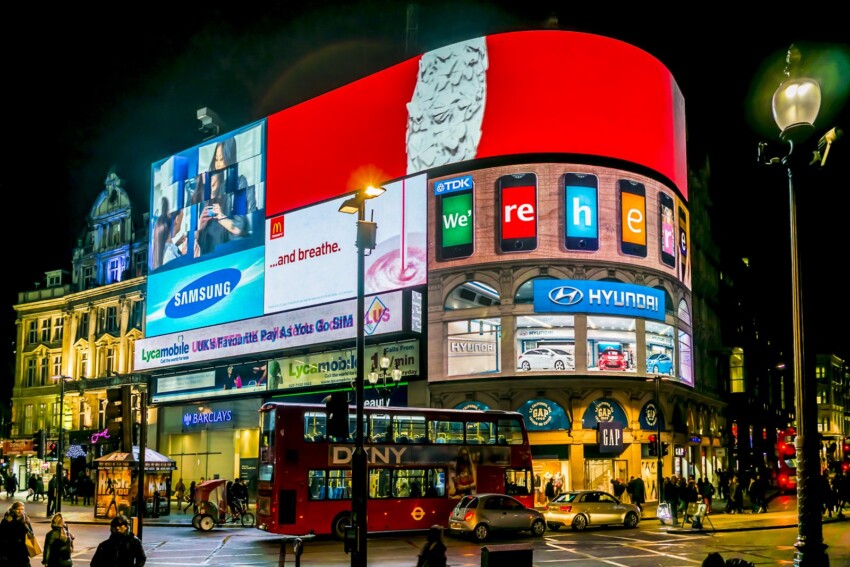
At Soho’s south-western border, Piccadilly Circus stands as one of London’s most iconic landmarks and a natural gateway to the neighbourhood: for some it’s part of Soho, for others it sits just outside, but the reality remains unchanged—Piccadilly Circus, in the collective imagination, is London with its mega-sized illuminated screens and giant shop signs.
In the centre of the square stands the Shaftesbury Memorial Fountain, unveiled in 1893 and topped by a statue commonly known as “Eros” but actually representing the Angel of Christian Charity. The fountain has become one of London’s most popular meeting spots, always surrounded by tourists and street performers.
The large illuminated advertising screens dominating the northern side of the square have been present since 1908 and have become synonymous with Piccadilly Circus in much the same way the Eiffel Tower is with Paris. The neon signs, lit 24 hours a day, create a London version of Times Square atmosphere and have been used as locations in countless films and music videos.
From Piccadilly Circus, you can easily reach Chinatown with a short walk along Shaftesbury Avenue (2 minutes), or dive into the heart of Soho via Glasshouse Street towards Brewer Street. The tube station provides access to the Piccadilly and Bakerloo lines, making it a crucial hub for exploring the entire area.
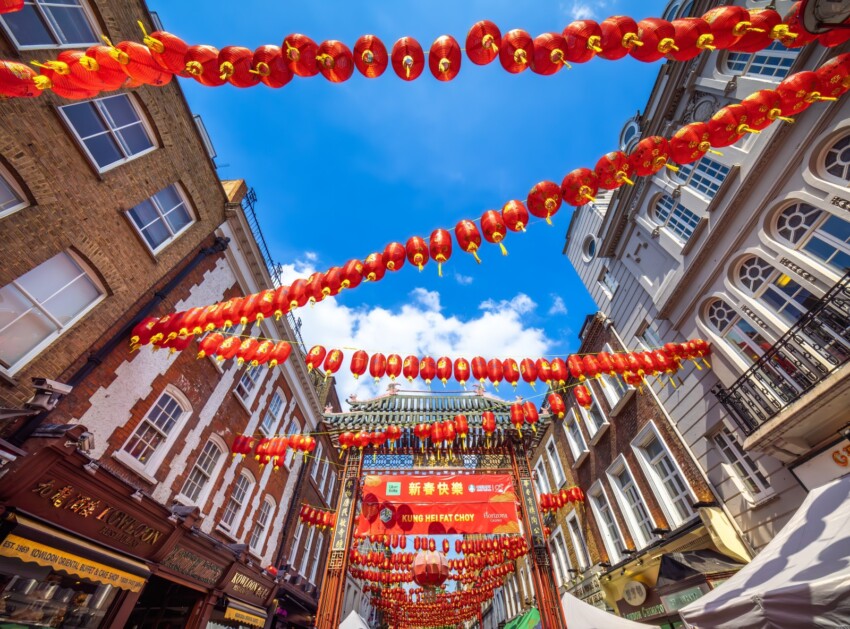
Though technically part of Soho, Chinatown has a distinctive identity that merits separate exploration. Centred around Gerrard Street, this enclave was officially established in the 1970s when the Chinese community relocated from the Limehouse area in the East End.
The main entrance from Shaftesbury Avenue is marked by imposing traditional Chinese gates (paifang) donated by the People’s Republic of China, complete with guardian lions and red and gold decorations. The pedestrian streets are illuminated by red lanterns year-round, creating a distinctive atmosphere that intensifies during Chinese New Year in January or February.
Chinatown is home to over 80 restaurants, bakeries and supermarkets offering cuisines from across East Asia: Cantonese, Sichuan, Malay, Vietnamese, Japanese and Korean. Asian supermarkets such as New Loon Moon and See Woo stock ingredients impossible to find elsewhere in London: from fresh Asian vegetables to rare teas, fermented sauces to traditional cooking utensils.
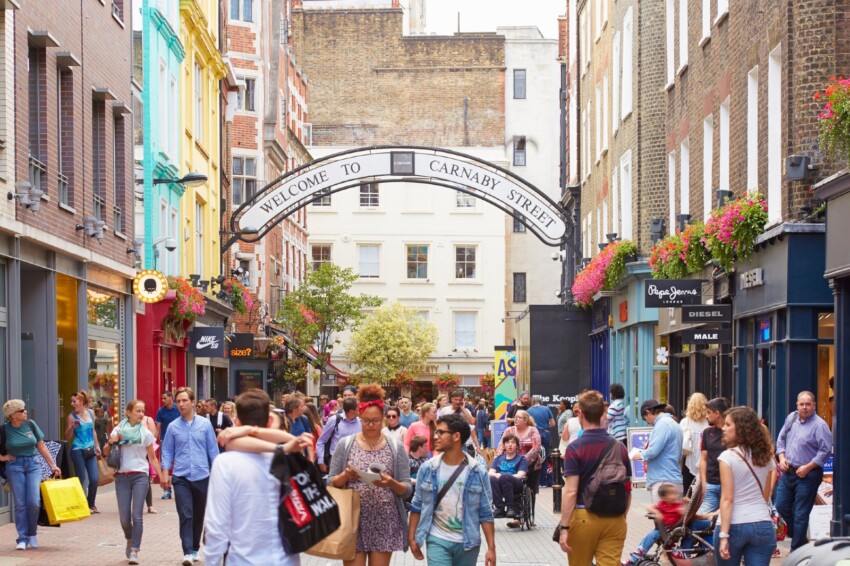
Carnaby Street became synonymous with Swinging London in the 1960s, when boutiques like Mary Quant and Lord John redefined British youth fashion. This mere 150-metre-long street attracted music icons such as the Beatles, the Rolling Stones and Jimi Hendrix, who came to shop at its revolutionary boutiques.
Today Carnaby Street and the surrounding streets form a pedestrian shopping district encompassing over 150 shops, bars and restaurants spread across 14 streets. Victorian architecture has been preserved, whilst colourful signage and temporary art installations keep the neighbourhood’s creative spirit alive.
The area is particularly spectacular during the festive season, with elaborate decorations refreshed annually. In December, contemporary-artist-designed Christmas lights transform the streets into an immersive experience that attracts thousands of visitors every evening.
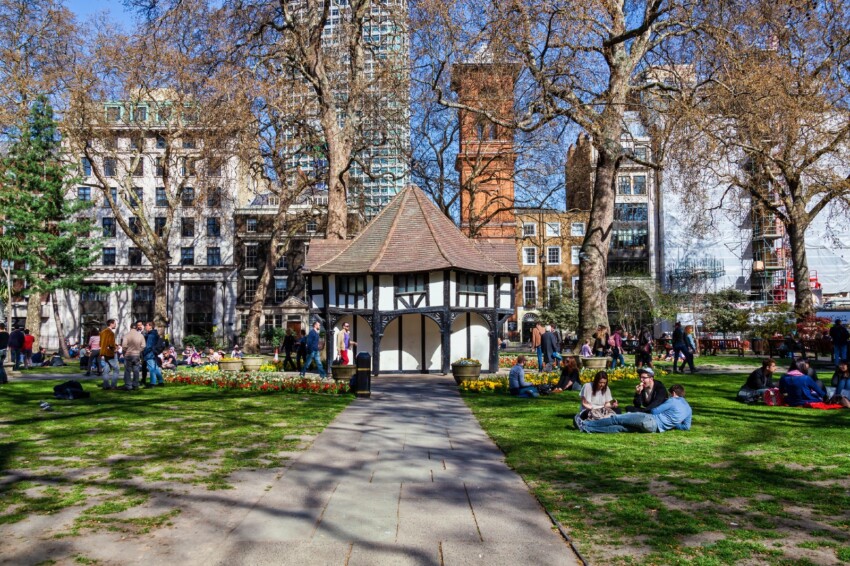
Soho Square represents the neighbourhood’s green oasis, a public garden of approximately 2.3 hectares open to the public Monday to Sunday from 8:00 am until sunset. At its centre stands a Tudor-style cottage built in 1925, which conceals an entrance to Second World War air-raid shelters that still exist underground.
The garden features statues of historical figures: a sculpture of Charles II (a replica; the 1681 original is now at the Museum of London) and commemorative monuments. The central lawns are opened to the public during summer, becoming a popular spot for picnics and lunch breaks for office workers from surrounding buildings.
The Georgian buildings surrounding the square house cultural organisations and film production companies. At number 20 stands St Patrick’s Church, the Irish national Catholic church built in 1893, featuring elaborate Neo-Gothic interiors.
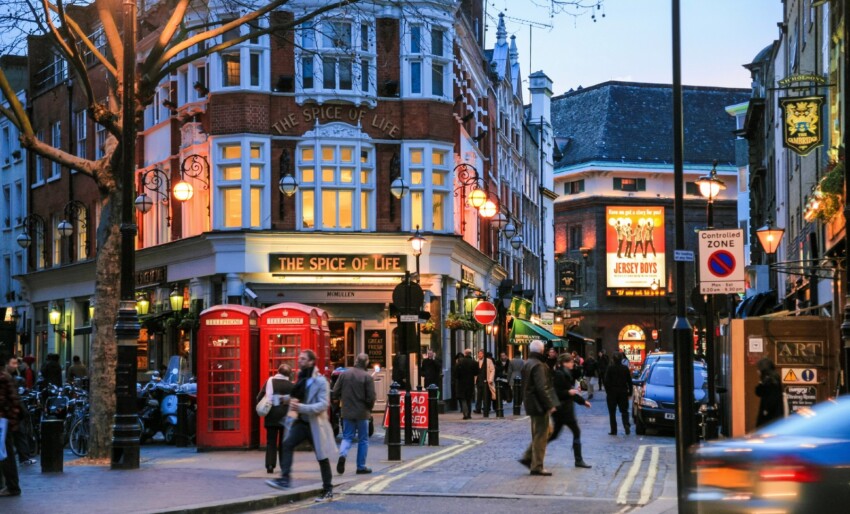
Charing Cross Road marks Soho’s eastern border and has represented the heart of London’s book trade for over a century. This approximately 800-metre-long street connects Trafalgar Square to the north with Tottenham Court Road, passing through the West End theatre district.
Charing Cross Road’s worldwide reputation as a book lover’s paradise dates back to the 19th century, when dozens of antiquarian and specialist bookshops opened along the street. Helene Hanff’s book “84, Charing Cross Road” (1970), which chronicles the correspondence between the American author and a London bookseller, immortalised this literary tradition. Though many historic shops have closed in recent decades, the street maintains its literary identity.
Foyles at number 107 is the largest and most celebrated bookshop, a true London institution founded in 1903 by the Foyle brothers. Following a major refurbishment completed in 2014, the shop spans five floors with over 200,000 titles, a literary café on the first floor with city views and a continuous programme of author presentations, signings and events. The gallery on the upper floor hosts free temporary exhibitions.
In the southern section, near Leicester Square, music shops and memorabilia stores concentrate. Quinto Bookshop at 48A specialises in rare art, photography and architecture volumes, serving an international clientele of collectors and creative professionals.
Cecil Court, the narrow pedestrian passage connecting Charing Cross Road to St Martin’s Lane (immediately behind the National Portrait Gallery), is nicknamed “Flitcroft Street” in honour of booksellers. This Victorian alleyway of just 100 metres houses around 20 antiquarian bookshops specialising in first editions, manuscripts, antique prints and rare books. The atmosphere feels suspended in the 19th century, with shop windows displaying volumes from the 18th and 19th centuries.
Old Compton Street has been the beating heart of London’s LGBTQ+ community since the post-war period. This approximately 400-metre street connects Charing Cross Road to Wardour Street and is lined with bars, cafés, restaurants and shops proudly displaying rainbow flags year-round.
Historic venues such as The Admiral Duncan (at number 54), open since 1832, and Compton’s of Soho (at numbers 51-53) were crucial gathering points during periods of discrimination. The street became a symbol of resilience following the far-right bomb attack on the Admiral Duncan in 1999, which killed three people and injured 70 others.
Today Old Compton Street is a vibrant celebration of diversity, particularly during London’s Pride in July, when the entire area becomes the stage for events, parties and celebrations. The outdoor café tables are occupied at all hours of the day and evening, creating an unusually Mediterranean atmosphere for London.
Operating since 1778, Berwick Street Market is one of London’s oldest street markets and represents Soho’s authentic soul. Open Monday to Saturday from 9:00 am to 6:00 pm, the market stretches along Berwick Street with around 50 stalls.
Vendors offer fresh fruit and vegetables at prices significantly lower than supermarkets, alongside flowers, artisan cheeses, freshly baked bread and international produce. The atmosphere is lively and genuine, with vendors calling out to customers in traditional London style.
Beyond food products, some stalls sell vintage fabrics, second-hand clothing and vinyl records, reflecting the neighbourhood’s past as a centre of the textile and music industries. The street was immortalised on the cover of the Oasis album (What’s the Story) Morning Glory? in 1995, photographed right in front of the record shops that still characterise the area today.
The Photographers’ Gallery at 16-18 Ramillies Street (opened at its current location in 2012) is the only public gallery in the UK dedicated exclusively to photography. Admission is free, with temporary exhibitions changing every 6-8 weeks showcasing emerging and contemporary master photographers.
Riflemaker at 79 Beak Street occupies three floors of a historic Georgian building, with exhibition spaces that preserve original architectural features such as fireplaces and decorative ceilings. The gallery specialises in conceptual art and installations that engage with the space’s history.
Lazinc at 29 Sackville Street presents established contemporary British and American artists, with a particular focus on figurative painting and sculpture. Exhibitions change every 6-8 weeks with public opening receptions.
The Church of St Anne on Wardour Street, constructed between 1677 and 1686, was severely damaged during bombing raids in 1940. The original tower survived and still dominates the local skyline at 60 metres high. The garden occupying the site of the destroyed nave is now a public memorial garden open Monday to Friday from 12:00 pm to 2:00 pm.
Meard Street, pronounced “Merd”, is one of Soho’s best-preserved Georgian streets, with 1720s terraced houses remaining virtually intact. This mere 5-metre-wide street offers a glimpse of how the neighbourhood appeared 300 years ago, before Victorian demolitions.
St Anne’s Court is a narrow pedestrian passage between Wardour Street and Dean Street, flanked by 18th-century buildings that retain original proportions and details. Ground floors house small restaurants and bars, whilst upper floors preserve historic apartments.
Soho is exceptionally well connected thanks to its central position in the West End, with six Underground stations within a 5–10 minute walk. This accessibility makes it one of the easiest areas to reach for visitors.
Oxford Circus (Central, Bakerloo and Victoria lines) is the most used station for reaching northern Soho, with exits leading directly onto Oxford Street. From exit 3, you can reach Carnaby Street in 3 minutes on foot. The station handles approximately 95 million passengers annually and is one of London’s busiest.
Piccadilly Circus (Piccadilly and Bakerloo lines) serves south-eastern Soho and is the most convenient access to Chinatown and Leicester Square. The numerous exits can be confusing: for Chinatown, use exit 3 towards Shaftesbury Avenue. For details on London transport, consult the guide to the London Underground.
Tottenham Court Road (Northern and Central lines) is ideal for reaching eastern Soho, near Soho Square and Greek Street. Leicester Square (Northern and Piccadilly lines) is perfect for theatres and cinemas, located right at Soho’s southern boundary. The exits lead directly towards Old Compton Street and the heart of the neighbourhood.
Dozens of bus routes cross or run alongside Soho, making this an particularly convenient option for those with an Oyster Card or using contactless payment. The main routes include:
Oxford Street is served by routes 3, 6, 7, 10, 12, 13, 23, 73, 94, 98, 137, 139, 159, and 390, connecting the area to London’s entire transport network. Night buses (N-prefixed) operate 24/7, particularly useful after the Underground closes at 1:00am.
Shaftesbury Avenue is served by routes 14, 19, 24, 29, 38, and 176, offering direct links to Camden Town to the north and Waterloo to the south. For complete information, visit the dedicated page on London buses.
Soho is easily accessible on foot from all the major attractions in central London: Buckingham Palace is about 20 minutes’ walk south through Green Park, Covent Garden is 10 minutes east, and Hyde Park is 15 minutes west.
The walk from Trafalgar Square (5 minutes) allows you to admire the Edwardian architecture of Lower Regent Street before immersing yourself in Soho’s narrower streets. The route is completely flat and suitable for everyone.
Staying in Soho or in its immediate vicinity means being at the heart of London, with immediate access to transport, restaurants and nightlife. However, prices reflect this prime location, with few budget options available.
For more economical options, consider neighbouring areas such as King’s Cross, Paddington or Bayswater, which are well connected by Underground and offer significantly lower prices. The comprehensive guide to where to stay in London analyses the best areas for every budget.
City Card allow you to save on public transport and / or on the entrances to the main tourist attractions.
 Hotel
Hotel 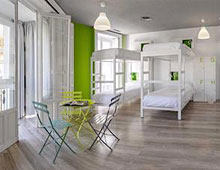 Budget accommodations
 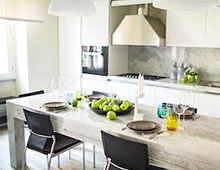 Apartments
 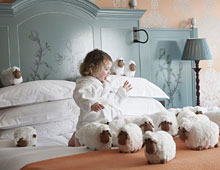 Family Hotel
 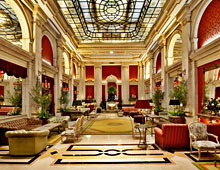 Luxury Hotel