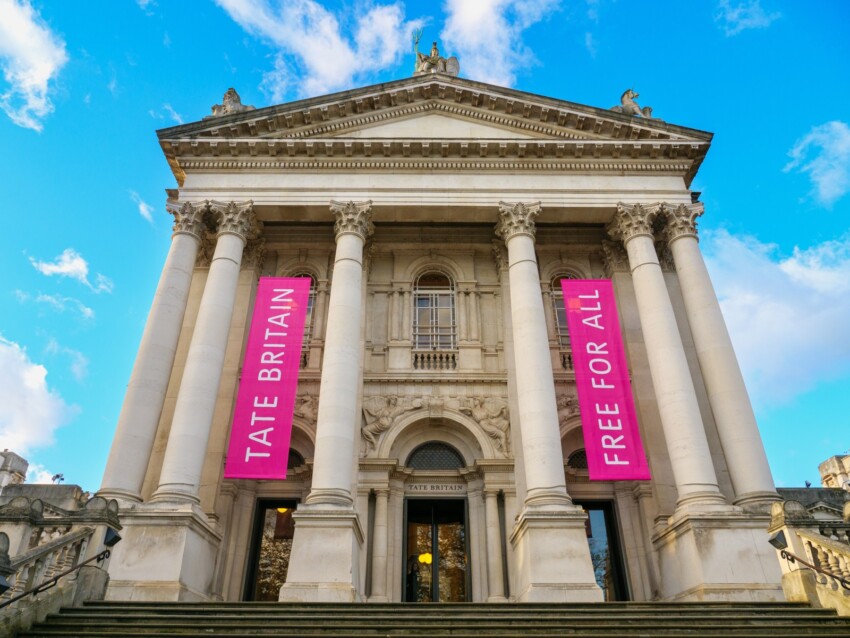
Overlooking the banks of the Thames stands Tate Britain, a magnificent neoclassical building housing the world’s most important collection of British art. Founded in 1897 thanks to the generous donation of philanthropist Henry Tate, this gallery represents a journey through over 500 years of British creativity, from Renaissance masterpieces to contemporary artistic expressions.
Tate Britain is far more than a museum – it is a true sanctuary of British cultural identity, where works by Turner, Constable, Blake, Bacon and many other masters chronicle the evolution of art and society across the United Kingdom. With its elegant, luminous spaces, recently renovated, the museum offers an immersive experience that combines the architectural magnificence of the building with the extraordinary richness of its collections.
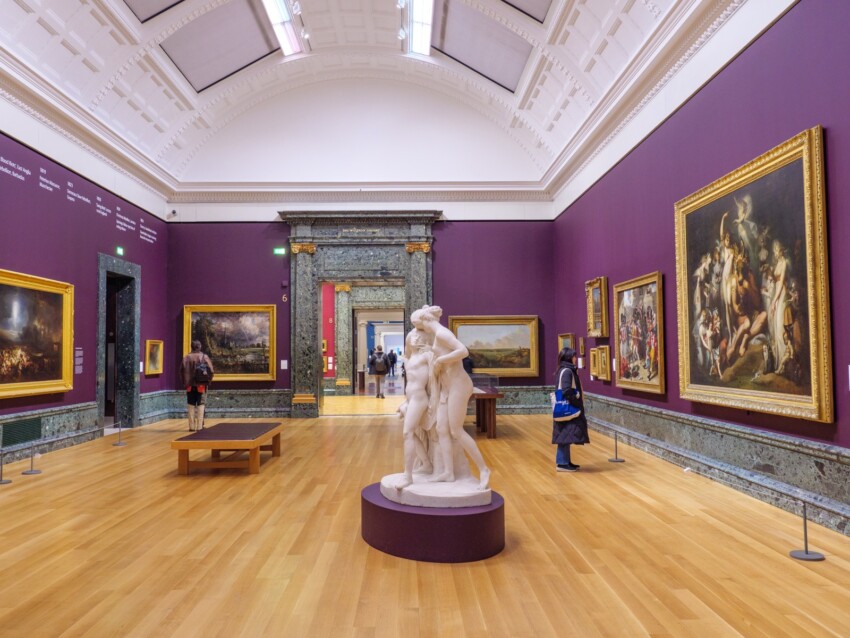
The Turner Collection represents the beating heart of Tate Britain and one of its greatest treasures. Joseph Mallord William Turner, regarded as Britain’s greatest landscape painter, bequeathed to the nation over 300 paintings and more than 30,000 sketches and watercolours. The gallery dedicated to Turner allows you to admire the evolution of his style, from his early topographical landscapes to his celebrated late works characterised by whirling light and colour.
Don’t miss masterpieces such as “Rain, Steam and Speed”, which masterfully captures the power of the industrial revolution, or “The Fighting Temeraire”, voted as Britain’s most beloved painting. The best viewing point to appreciate Turner’s chromatic subtleties is from the centre of the gallery, where you’ll notice how natural light filtering through the upper windows enhances his extraordinary atmospheric effects.
The Pre-Raphaelite collection at Tate Britain represents the world’s most important gathering of works from this revolutionary movement. Born in the mid-nineteenth century as a reaction against Victorian academic art, the Pre-Raphaelite movement is characterised by vivid colours, meticulous detail and subjects often drawn from literature, mythology and religion.
Among the most significant works you’ll find “Ophelia” by John Everett Millais, with its extraordinary naturalistic representation of nature, and “The Lady of Shalott” by John William Waterhouse, inspired by Tennyson’s poem. To fully appreciate the microscopic detail of these paintings, draw as close as safety guidelines permit and observe the precision with which every flower, leaf and water reflection has been rendered.
The room dedicated to Francis Bacon offers a completely different experience from other sections of Tate Britain. Bacon, one of the most influential artists of the twentieth century, is celebrated for his distorted and unsettling figures that explore the darkest aspects of human existence. The arrangement of works in this gallery, deliberately claustrophobic, perfectly reflects the emotional intensity of the paintings on display.
The masterpiece “Three Studies for Figures at the Base of a Crucifixion” (1944) represents a turning point in post-war British art. Observe how Bacon employs vivid colours – predominantly oranges and reds – to create a shocking contrast with the tormented subjects of his canvases. The best viewing point is from the centre of the room, where you can fully experience the immersive and disturbing effect of his art.
The Walk Through British Art is an innovative chronological pathway that allows you to literally traverse five centuries of British art. The galleries are organised by historical period, from 1500s artworks through to contemporary creations, offering an extraordinary overview of the country’s artistic evolution.
Particularly interesting is the section devoted to eighteenth-century British art, considered the golden age of portraiture, featuring works by Thomas Gainsborough and Sir Joshua Reynolds. Don’t miss the 1960s gallery, where you can admire significant examples of British Pop Art, including works by David Hockney and Richard Hamilton. The recommendation is to follow the pathway in chronological order to fully appreciate the stylistic and thematic changes across the centuries.
The Duveen Galleries constitute Tate Britain’s most imposing and theatrical space. This magnificent neoclassical corridor, stretching over 90 metres, was specifically designed to house large-scale sculptures and installations. The carefully planned natural lighting, filtered from above through cleverly positioned skylights, creates a solemn and contemplative atmosphere.
In this spectacular space, site-specific installations commissioned from contemporary artists regularly rotate as part of the Tate Britain Commission. These temporary works dialogue with the classical architecture of the space, creating intriguing contrasts between the ancient and modern. The best vantage point is from the main entrance to the galleries, where you can appreciate the perspective and elegance of the entire space.
The room dedicated to William Blake offers an immersion into the visionary universe of one of Britain’s most original artists and poets. Blake, regarded as a precursor of Romanticism, is celebrated for his mystical and symbolic illustrations, often accompanied by poetic texts written and illustrated personally by the artist.
The relatively small scale of many of Blake’s works demands close observation. Take time to admire the intricate detail in the illustrations for “Songs of Innocence and Experience” and the extraordinary plates of “The Ancient of Days”. The room is deliberately kept dimly lit to preserve these delicate watercolours and engravings, creating an intimate atmosphere perfectly suited to the contemplative and spiritual nature of Blake’s art.
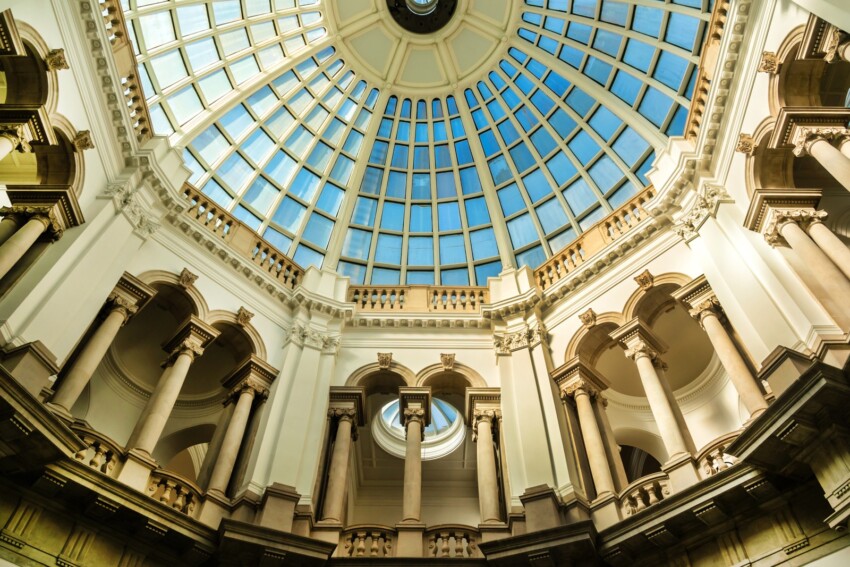
The history of Tate Britain officially began in 1897, when the museum opened as the National Gallery of British Art, thanks to the generous donation of Henry Tate, a sugar magnate who contributed both his personal collection of British art and funds to construct the building. The aim was to create a space devoted exclusively to British art, separate from the National Gallery, which at that time primarily housed European works.
The original building, designed by architect Sidney R.J. Smith in neoclassical style, is distinguished by its imposing façade with Ionic columns and a grand staircase leading to the main entrance. Throughout the twentieth century, the gallery underwent several expansions: the North and South Wings were added in 1926 and 1937 respectively, whilst the Duveen Galleries were created in 1937 thanks to a donation from art dealer Lord Duveen.
A crucial moment in the museum’s history occurred in 2000, when it was officially renamed Tate Britain following the establishment of Tate Modern in the former Bankside power station. This change marked a clear division of roles: whilst Tate Modern focuses on international modern and contemporary art, Tate Britain reaffirmed its mission as custodian of British art from the sixteenth century to the present day.
In 2013, Tate Britain completed a major £45 million refurbishment project that restored many of the building’s original architectural elements and significantly improved the exhibition spaces. The gallery has been designated as a Grade II* Listed building, an important protective status reserved for buildings of particular architectural or historical interest in the United Kingdom.
Entry to Tate Britain’s permanent collection is free. This free access policy reflects Tate’s mission to make art accessible to everyone.
For temporary exhibitions, a paid admission charge applies, with prices varying according to the importance of the display. Discounts are available for students, seniors (over 60) and family groups. Children and young people under 16 can access special exhibitions free of charge when accompanied by a paying adult.
It is highly advisable to purchase tickets online in advance through the official Tate Britain website, especially for the most popular exhibitions which tend to sell out quickly. Booking online will also allow you to avoid queues at the ticket desk and often includes the option of entering during specific time slots, further reducing waiting times.
Tate Britain offers several guided tour options that can significantly enrich your visit. Tours of the permanent collection are available daily and last approximately one hour, at a cost of £8 per person. These tours provide valuable insights into the principal works and the historical context in which they were created.
For a more exclusive experience, you can book a private tour with a dedicated guide at approximately £150 for groups of up to 10 people. This option is particularly recommended for those seeking a personalised route tailored to their specific interests.
For those preferring to visit independently, an audio guide is also available, offering detailed commentary on over 200 works from the collection. The audio guide is available in many languages.
Tate Britain is open every day from 10:00 to 18:00.
During certain periods of the year, such as Christmas (24–26 December) and New Year’s Day (1 January), opening hours may vary or the museum may be closed. It is always advisable to check the opening hours on the official website before your visit, particularly near public holidays.
For a comprehensive visit to Tate Britain, it is advisable to allow at least 2–3 hours. This time will enable you to explore the permanent collection at a leisurely pace and appreciate the principal works without hurrying.
If your interest is focused solely on the most celebrated works or if you have limited time, it is possible to complete an essential route in approximately 90 minutes, following the masterpieces itinerary suggested on maps available at the entrance.
For true art enthusiasts or those wishing to visit a temporary exhibition as well, it is advisable to plan for a half day (4–5 hours), allowing you to include a relaxing break at the museum’s café or restaurant.
The best time to visit Tate Britain is during weekdays, particularly on Tuesday and Wednesday mornings, when the museum is generally less crowded. Weekends, especially Saturday afternoons, tend to be the busiest times.
A particularly special time to visit the museum is during Late at Tate Britain, an event typically held on the first Friday of each month, when the museum remains open until 21:30 with special events, live music and interactive activities that offer a different perspective on the collections.
Late at Tate Britain is a monthly event that transforms the museum into a vibrant cultural space in the evening. Usually held on the first Friday of the month, from 6pm to 9:30pm, this unique event offers a completely different perspective on the museum and its collections.
During these special evenings, the museum hosts DJ sets, live performances, creative workshops and talks with contemporary artists. Each edition focuses on a specific theme, often connected to the ongoing temporary exhibitions. The informal and lively atmosphere attracts a young and diverse audience, creating an interesting contrast with the solemnity of the historic building.
A particularly fascinating aspect of Late at Tate is the opportunity to explore the galleries in an evening atmosphere, with lighting that completely transforms how you perceive the artworks. The museum’s bar and restaurant remain open during the event, offering special cocktails and dedicated menus.
For a truly exclusive experience, Tate Britain offers the possibility of booking private gallery tours outside regular opening hours. These tours, available early morning (8am to 10am) or in the evening after closing (6pm to 8pm), allow you to admire the collection in complete peace and quiet.
The service includes a dedicated expert guide who can personalise the route based on the specific interests of participants, focusing on particular artistic periods or preferred artists. These private tours must be booked well in advance.
Tate Britain houses one of the world’s most important art archives, containing documents, letters, photographs and materials relating to British artists from the sixteenth century to the present day. Occasionally, the museum organises special “Archive Course” sessions, during which curators present documents rarely displayed to the public.
These sessions offer a unique opportunity to see preparatory sketches, artists’ personal correspondence and research materials that are normally inaccessible. The dates of these special events are published on the Tate website and places are generally limited, so it’s advisable to book in advance.
Each year, usually from September to January, Tate Britain hosts the Turner Prize Exhibition, an exhibition presenting works by the four finalist artists of the prestigious Turner Prize, one of the UK’s most important awards for contemporary art.
Visiting this exhibition represents a unique opportunity to engage with the most innovative trends in British and international contemporary art. The exhibition is often accompanied by a rich programme of supporting events, including artist talks, workshops and critical debates that offer insights into contemporary artistic practices.
The prize is usually awarded in December during a formal ceremony that attracts international media attention and represents one of the most important events in the British cultural calendar.
Tate Britain is located in Millbank, in the Westminster area, in a central position that’s easily accessible by various forms of transport.
By Underground, the nearest station is Pimlico (Victoria Line), situated about 600 metres (8 minutes’ walk) from the museum. Alternatively, you can use Westminster (Jubilee, District and Circle Lines) or Vauxhall (Victoria Line) stations, both about 15 minutes’ walk from Tate Britain.
Numerous bus routes also stop near Tate Britain:
A picturesque way to reach Tate Britain is to use the Tate Boat, a riverboat service that connects Tate Modern (Bankside Pier) to Tate Britain (Millbank Pier) with an intermediate stop at the London Eye (London Eye Pier). Boats depart every 40 minutes and the journey offers splendid views of the Thames and London’s landmarks.
It’s not necessary to book in advance to visit Tate Britain’s permanent collection, which is free to enter. However, it’s highly recommended that you book tickets for temporary exhibitions, especially for the more popular displays which tend to sell out quickly at weekends and during peak season.
Yes, Tate Britain is fully accessible to people with disabilities. The building has access ramps, lifts to all floors, accessible toilets and free wheelchairs available. Staff are trained to assist visitors with specific needs and alternative format information materials are available, such as Braille guides and large print guides.
Photography for personal use is generally permitted inside Tate Britain, but with some restrictions: the use of flash, tripods or selfie sticks is not allowed. Some artworks or temporary exhibitions may have specific photography bans for conservation or copyright reasons, clearly signposted in the relevant rooms.
Tate Britain has both a café and a restaurant. The Café, situated on the ground floor, offers a selection of light dishes, pastries and beverages in an informal setting. The Rex Whistler Restaurant, famous for its historic mural, offers a more refined dining experience with a seasonal menu of contemporary British dishes and an excellent wine list. Booking is recommended for the restaurant, especially at weekends.
Tate Britain offers various resources to make your visit engaging for younger visitors:
The contemporary art area, with its interactive installations, is often particularly stimulating for younger visitors.
City Card allow you to save on public transport and / or on the entrances to the main tourist attractions.

 Hotel
Hotel  Budget accommodations
  Apartments
  Family Hotel
  Luxury Hotel