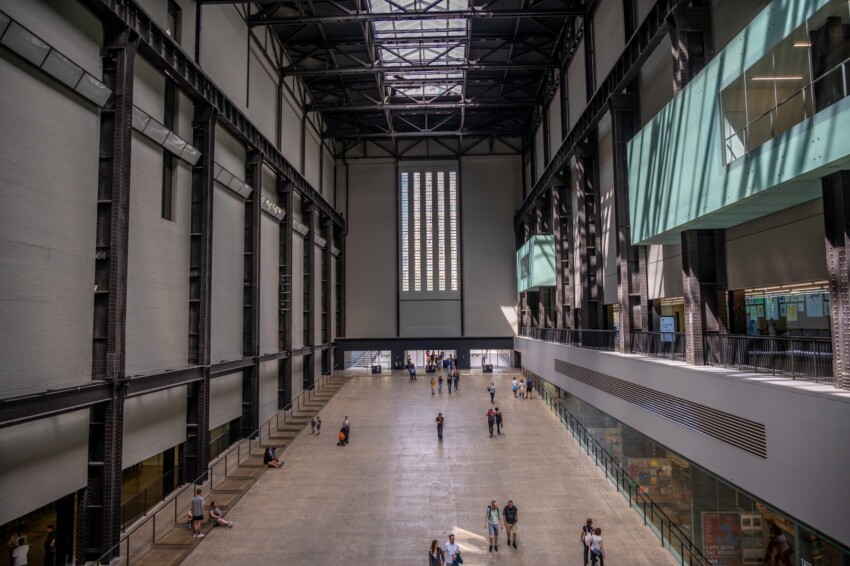
The Tate Modern in London, the world’s most visited contemporary art museum, stands on the south bank of the Thames, transforming what was once an industrial power station into one of the planet’s most significant and influential artistic spaces. With its distinctive 99-metre-high chimney and striking red-brick structure, this contemporary art colossus attracts over 5.7 million visitors each year.
Tate Modern is far more than a museum—it’s a cultural experience that challenges traditional perceptions of art. Its expansive galleries house an extraordinary permanent collection spanning works from 1900 to the present day, ranging from iconic masterpieces by Picasso, Dalí and Warhol to immersive installations by cutting-edge contemporary artists. Unlike many traditional museums, Tate Modern organises its exhibitions thematically rather than chronologically, creating unexpected dialogues between works from different periods and cultural backgrounds.
Opened in May 2000 and expanded in 2016 with the spectacular Blavatnik Building (Switch House), Tate Modern represents one of London’s most successful urban regeneration projects. The building itself is a masterpiece of reimagined industrial architecture, with its monumental Turbine Hall—35 metres high—that regularly hosts site-specific artistic installations of breathtaking proportions.
Tate Modern forms part of the Tate Gallery complex, along with Tate Britain, Tate Liverpool and Tate St. Ives, established at the bequest of Sir Henry Tate, who donated a substantial art collection to the state with the intention of creating an art museum.
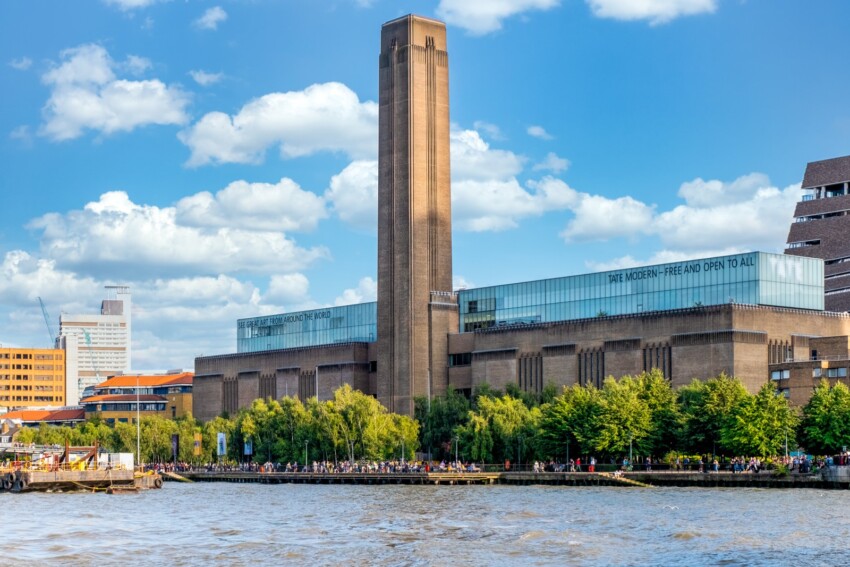
The undisputed centrepiece of Tate Modern is the majestic Turbine Hall, an imposing industrial space that once housed the generators of Bankside Power Station. At 35 metres high, 152 metres long and 27 metres wide, this cavernous space forms the beating heart of the museum, leaving visitors breathless the moment they step through the building’s entrance.
Since 2000, the Turbine Hall has hosted the celebrated Unilever Series (later the Hyundai Commission), a programme of monumental site-specific artistic installations commissioned annually from major international artists. Over the years, this space has witnessed some of the 21st century’s most ambitious and hotly debated public artworks, such as Olafur Eliasson’s famous “The Weather Project” (2003)—a colossal artificial sun that transformed the space into a hypnotic sensory experience—and Doris Salcedo’s “Shibboleth” (2007), a dramatic crack that ran the entire length of the hall’s floor.
The impact of these temporary installations is such that many visitors plan their London trips specifically to see the latest Turbine Hall commission. Each new installation, typically on display from October through to March or April of the following year, becomes an international cultural event that often redefines the boundaries of what public art can be.
Even without spectacular installations, the Turbine Hall remains a fascinating space where you can admire the architectural details of the industrial building, which have been carefully preserved by architects Herzog & de Meuron during the conversion. It’s also an ideal place to rest, reflect, or simply observe the constant flow of visitors from around the world.
Tate Modern’s permanent collection comprises over 78,000 artworks, though only a small percentage is on display at any given time. Distributed across multiple floors and organised thematically rather than chronologically, the collection offers an extraordinary immersion into 20th and 21st-century art. Here are some unmissable masterpieces:
In the “Materials and Objects” section, don’t miss Henri Matisse’s “The Snail”, one of his celebrated cut-outs created in his later years when, unable to paint due to health problems, he created compositions by cutting shapes from coloured paper. The result is a vibrant abstract work that maintains a profound sense of organic vitality.
In the abstract expressionism section, Claude Monet’s “Water Lilies” bridges impressionism and modern art, with its loose brushwork and focus on light and colour that anticipated many concerns of later abstract art.
Among the surrealist works, Salvador Dalí’s “Metamorphosis of Narcissus” is particularly mesmerising, with its reinterpretation of the Greek myth through a dreamlike landscape and psychoanalytic symbols. In the same section, Pablo Picasso’s “The Three Dancers” strikes with its brutal energy and expressive distortion of human figures.
In the Pop Art gallery, don’t miss Andy Warhol’s “Marilyn Diptych”, an iconic representation of Marilyn Monroe exploring celebrity culture and mechanical image reproduction in consumer society. Nearby, Roy Lichtenstein’s “Whaam!”, with its comic-book-derived style, perfectly exemplifies high art’s appropriation of popular culture.
For more contemporary art, Cildo Meireles’s monumental installation “Babel”—a tower of over 800 radios tuned to different stations—creates an auditory and visual experience exploring themes of global communication and informational chaos.
Remember that the arrangement of artworks changes periodically, so check the maps available at the entrance or on the Tate app to locate works of particular interest during your visit.
In 2016, Tate Modern opened a striking extension: the Switch House, later renamed the Blavatnik Building in honour of its principal funder. This ten-storey pyramidal building, also designed by the Herzog & de Meuron architecture studio, expanded the museum’s exhibition space by 60%, allowing a much broader range of the permanent collection and temporary exhibitions to be displayed.
The Blavatnik Building is distinguished by its perforated-brick façade, which creates a filtered-light effect during the day and transforms the building into a glowing lantern at night. The interior features more intimate exhibition spaces compared to the vast galleries of the main building, with particular emphasis on contemporary artistic practices, performance art and new technologies.
One element absolutely not to be missed is the panoramic terrace on the 10th floor, which is freely accessible and offers a spectacular 360-degree view across London. From here you can admire the Thames, St. Paul’s Cathedral, The Shard, the London Eye and much of London’s skyline. It’s one of the city’s lesser-known viewing points, yet certainly among the most spectacular, especially at sunset.
In the lower floors of the Blavatnik Building, the galleries are devoted to themes such as “Living Cities”, which explores the relationship between art and the urban environment, and “Media Networks”, which examines how artists have responded to the emergence of mass media and digital technologies. These exhibition spaces particularly highlight works by artists from regions traditionally underrepresented in the Western canon, such as Latin America, Africa, East Asia and the Middle East, reflecting Tate Modern’s commitment to a more global and inclusive vision of art history.
Temporary exhibitions at Tate Modern are international-scale events that attract visitors from around the world. Housed mainly in the spacious galleries on the third floor of the main building and the fourth floor of the Blavatnik Building, these exhibitions offer in-depth monographs on individual artists or explore artistic movements and themes through innovative perspectives.
Unlike the permanent collection, access to these exhibitions typically requires a separate ticket purchase.
The curatorial quality of Tate Modern’s temporary exhibitions is universally recognised for its intellectual depth and attention to detail. Whether retrospectives of established figures like the groundbreaking Yayoi Kusama exhibition or introductions to artistic practices less known in the West, these exhibitions often offer fresh and transformative perspectives.
The temporary exhibition calendar changes regularly, with 3–4 major exhibitions per year, so it’s advisable to check the museum’s website for up-to-date information on current and forthcoming shows. The most popular exhibitions can be very crowded, especially at weekends and in the final days of their run, so plan your visit accordingly.
The Tanks represent one of Tate Modern’s most unique features. These enormous circular spaces in raw concrete, once oil storage tanks for the power station, have been transformed into halls dedicated specifically to performance art, sound installations and video works.
Opened in 2012 and integrated into the Blavatnik Building expansion in 2016, the Tanks are the first spaces in a world-class art museum to be permanently devoted to live and time-based art forms. Their raw industrial architecture and absence of natural light create an immersive environment ideal for the most experimental artistic practices.
Throughout the year, the Tanks host varied programming including contemporary dance performances, sound installations, experimental film projections and performance works that often directly engage the audience. This focus on artistic practices that exist in time rather than as static objects reflects Tate Modern’s commitment to an expanded conception of art that goes beyond traditional paintings and sculptures.
Check the Tate’s website before your visit for Tank programming, as events can have specific times and sometimes require separate booking. Even when they’re not hosting performances, these unique spaces are worth visiting to appreciate their impressive industrial architecture.
Beyond the aforementioned panoramic terrace on the 10th floor of the Blavatnik Building, Tate Modern offers other notable viewing points that deserve a stop during your visit.
The restaurant on the 9th floor of the main building (Natalie Bell Building) offers spectacular views of St. Paul’s Cathedral and Millennium Bridge through its expansive windows. Even if you’re not dining at the restaurant, you can still access this floor to enjoy the panorama.
On the 1st floor of the Blavatnik Building, an outdoor terrace allows you to observe the distinctive perforated-brick façade up close and offers interesting views of the rapidly evolving surrounding neighbourhood.
As for shopping, Tate Modern offers several options for art and design enthusiasts. The main shop on the ground floor stocks a wide range of art books, postcards, posters, jewellery, design objects and merchandise related to current exhibitions. The section dedicated to children’s books on art and creative play is particularly interesting.
A smaller second shop on the 1st floor focuses on exclusive design items, limited-edition pieces created by contemporary artists and more specialist publications. These shops represent one of London’s best selections of art books and design objects, and even browsing them can be an enriching cultural experience.
The history of Tate Modern begins, quite remarkably, with a power station. The building that today houses one of the world’s most visited contemporary art museums was originally the Bankside Power Station, designed by renowned architect Sir Giles Gilbert Scott (also famous for designing the iconic British red telephone boxes) and built in two phases between 1947 and 1963.
The power station remained operational until 1981, when rising oil costs and growing concerns about pollution in central London led to its closure. The imposing brick structure then lay abandoned for nearly two decades, facing the threat of demolition, whilst its twin on the north bank of the Thames, Battersea Power Station (also designed by Scott), became a cultural icon thanks to Pink Floyd’s “Animals” album cover.
The turning point came in 1992, when the Tate Gallery (which already held a significant collection of modern art alongside British works displayed in its original Millbank building) announced its search for a new dedicated space for modern and contemporary art. The Bankside site was selected in 1994 for its central location, impressive dimensions and architectural potential.
In 1995, Swiss architecture firm Herzog & de Meuron won the international competition to convert the building with a design that respected its original industrial character whilst radically transforming it. Their vision preserved the brick exterior and distinctive central chimney, whilst reimagining the interior to create flexible exhibition spaces and the spectacular Turbine Hall.
Following a renovation process costing £134 million, partly funded by the National Lottery, Tate Modern finally opened its doors to the public on 11 May 2000. The success was immediate and exceeded all expectations: in the first three days, the museum welcomed 84,000 visitors, and in the first year the figure reached 5.25 million, more than double initial projections.
This extraordinary success soon made it clear that the space was insufficient to properly display the growing collection and accommodate visitor numbers. In 2009, work therefore began on an ambitious expansion, again designed by Herzog & de Meuron. The new wing, originally called Switch House and later renamed Blavatnik Building in honour of its principal donor, opened in 2016, increasing exhibition space by 60%.
Today, Tate Modern, together with Tate Britain (the original Millbank building), Tate Liverpool and Tate St Ives in Cornwall, forms the family of national galleries known as Tate. Under the leadership of influential figures such as Sir Nicholas Serota (1988–2017) and current director Frances Morris, Tate Modern has played a crucial role in democratising contemporary art and expanding the Western canon to include artists from traditionally under-represented regions.
Admission to the permanent collection is completely free for all visitors. This free-access policy, common to major British national museums, makes contemporary art accessible to a broad audience, enabling both brief and repeat visits.
While you can explore the main exhibition spaces freely, temporary exhibitions generally require purchasing a separate ticket. Prices for these exhibitions vary depending on their significance and scale. Discounts are available for students, seniors (65+) and groups, whilst children under 12 accompanied by an adult enter free to special exhibitions as well.
We strongly recommend booking online in advance on the official Tate website, especially for popular exhibitions that often sell out at weekends and during the final days of opening. Online booking also allows you to skip the ticket queue, saving valuable time during your visit.
To enrich your Tate Modern experience, several guided tour options are available:
Free guided tours of the permanent collection take place daily and last approximately 45 minutes. Led by expert guides, these thematic tours cover different areas of the collection and offer insights accessible even to those without formal art history training. Schedules are available at information points or on the museum website.
For a more personalised experience, you can book private tours. These tours can be tailored to specific interests and are available in various languages upon advance request.
For visitors who prefer exploring independently but still want deeper insights, digital audioguides are available in several languages including English, French, Spanish, German, Russian, Mandarin and Japanese.
A free alternative to the official audioguide is the Tate app, downloadable on your devices, which offers thematic trails, information about artworks and interactive museum maps. Free Wi-Fi available throughout the building facilitates app use during your visit.
Tate Modern is open to the public seven days a week, with the following hours:
The museum is closed only on 24, 25 and 26 December. During some holiday periods, hours may vary, so it’s always advisable to check the official website before your visit.
Late opening on Friday and Saturday until 22:00 offers an ideal opportunity to visit the museum with fewer crowds and a more relaxed atmosphere. Moreover, Tate Modern illuminated at night, reflected in the Thames waters, creates a particularly evocative visual spectacle.
The time needed to visit Tate Modern depends on your interests and approach to contemporary art. For a visit covering the main highlights of the permanent collection, you should allow at least 2–3 hours. If you wish to explore the collections more thoroughly and include a temporary exhibition, it’s advisable to set aside half a day (4–5 hours).
For art enthusiasts who want to immerse themselves fully in the experience, it’s not uncommon to spend an entire day at Tate Modern, perhaps with breaks in the museum’s cafés and restaurants to rest and reflect on what you’ve seen.
For an optimal experience with fewer crowds, the best times to visit Tate Modern are weekdays (Monday to Thursday), early morning hours (10:00–11:30) or Friday and Saturday evenings (after 18:00).
If you’re planning a visit during peak season or weekends, we recommend arriving at opening time (10:00) to enjoy at least an hour of relative quiet before larger groups arrive.
Tate Modern enriches its cultural offering with an extensive programme of events and special visits that go beyond simply displaying artworks, transforming the museum into a vibrant hub of cultural production and debate.
One of the most popular events is Tate Lates, a series of special evenings usually held on the last Friday of each month, when the museum stays open until 22:00 with a programme of free activities designed primarily for younger and dynamic audiences. These evenings combine art, music, workshops, talks and performances, transforming the museum into a social and creative space.
During Tate Lates, you can participate in practical workshops led by artists, watch live performances, engage in discussions about contemporary artistic themes or simply enjoy a drink at the bar accompanied by DJ sets or live music. The atmosphere is informal and lively, offering an alternative way to experience contemporary art.
In line with its mission to expand the concept of art beyond traditional boundaries, Tate Modern regularly hosts live performances and events in the Tanks spaces and occasionally in the Turbine Hall. These events range from contemporary dance to performance art, poetry readings to experimental sound installations.
The BMW Tate Live programme represents one of the main initiatives in this area, commissioning and presenting innovative performance artworks that challenge conventions and engage audiences in unexpected ways. These events often have limited capacity and require advance booking, so it’s advisable to check the calendar on the official website and secure tickets well in advance.
For those wishing to deepen their understanding of contemporary art, Tate Modern organises a rich programme of talks, lectures and symposia with artists, curators, academics and other cultural figures. These events offer valuable opportunities to explore the context and ideas behind displayed works or to discuss relevant themes in contemporary art.
Particularly interesting is the “Curator’s Talk” series, in which curators of temporary exhibitions share insights into the curatorial process and the decisions that guided exhibition organisation.
Tate Modern is surprisingly welcoming to younger visitors, with numerous dedicated family activities mainly held at weekends and during school holidays. These include creative workshops, discovery trails designed for different age groups and interactive materials that help children connect with contemporary art in playful and stimulating ways.
Dedicated “Tate Create” spaces regularly host free practical activities where children can experiment with artistic techniques inspired by works on display in the museum. These activities are usually available without booking, but it’s advisable to check the programme on the website before your visit.
Cinema and visual arts have a deep and ongoing relationship, explored at Tate Modern through a regular programme of film screenings spanning experimental cinema to art documentaries, auteur films to collaborations between filmmakers and visual artists.
The Starr Cinema, a state-of-the-art screening room located within the museum, hosts these events, which often include discussions with filmmakers, artists or film critics. The full programme is available on the Tate website, and advance booking is recommended here too for the most popular events.
Tate Modern enjoys a privileged central location on the south bank of the Thames, easily accessible by various means of transport.
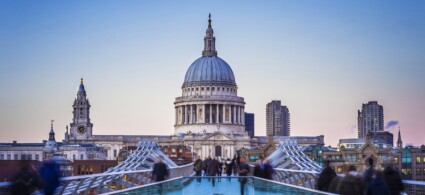
London Underground offers several options for reaching Tate Modern. Southwark (Jubilee Line) is the nearest station, approximately 600 metres (8 minutes’ walk) from the museum, whilst Blackfriars (Circle and District Lines) is situated on the north bank of the Thames but is directly connected to the south bank by a passage within the railway station. Once across the river, Tate Modern is just 5 minutes’ walk west. Another useful station is St Paul’s (Central Line), connected to Tate Modern by the Millennium Bridge, the famous pedestrian bridge offering spectacular views of St Paul’s Cathedral and the museum itself.
Several London bus lines also serve the area around Tate Modern:
An evocative way to reach Tate Modern is to use river transport services on the Thames. Thames Clippers stop at Bankside Pier, located right next to the museum. This service connects numerous points along the river, including Embankment, London Eye, Tower Bridge and Greenwich, whilst offering spectacular views of London from the river.
For the permanent collection, no booking is required and admission is free for everyone. During peak times, a queuing system may be implemented, but access is generally unrestricted and freely available.
For paid temporary exhibitions, it’s highly advisable to book tickets in advance, particularly for popular shows that can sell out on weekends and during the final weeks of display. Booking can be done online through the official Tate website.
Tate Modern has a cloakroom on level 0, where you can deposit coats, umbrellas and small to medium-sized bags. Bicycle locks are available for free loan upon presentation of a valid ID.
For larger luggage, Waterloo Station offers baggage storage facilities approximately 15 minutes’ walk from the museum.
Photography for personal use without flash is generally permitted in the permanent collection galleries. Some works may have specific restrictions indicated by signage.
Photography policies for temporary exhibitions may vary: some exhibitions allow photography, whilst others prohibit it entirely for copyright or conservation reasons. This information is always clearly displayed at the exhibition entrance.
Absolutely! Contrary to what one might assume, Tate Modern offers numerous engaging experiences for young visitors. Large-scale works, interactive installations and kinetic pieces tend to be particularly appreciated by children.
The museum regularly offers family activities, especially at weekends and during school holidays. Free family trails, available at information points, provide fun routes through the collections with activities and observation prompts tailored for children.
Tate Create hosts free practical workshops where children can experiment with artistic techniques inspired by the displayed works. For families with very young children, changing tables are available in all restrooms, and there is a dedicated nursing area.
Tate Modern is fully accessible to visitors with disabilities. The companion of a person with a disability is entitled to free admission to temporary exhibitions.
Tate Modern offers several dining options to suit all tastes and budgets:
You are welcome to consume your own food in designated areas outside the galleries, such as the Turbine Hall or outdoor spaces weather permitting.
“Tate” is pronounced simply “tate”. The name derives from Henry Tate, the sugar magnate and philanthropist who founded the original gallery by donating his art collection and providing funds for the first building.
City Card allow you to save on public transport and / or on the entrances to the main tourist attractions.

 Hotel
Hotel  Budget accommodations
  Apartments
  Family Hotel
  Luxury Hotel