Bestseller
London: Tower Bridge Entry Ticket
From 20,61 €
Buy the ticket
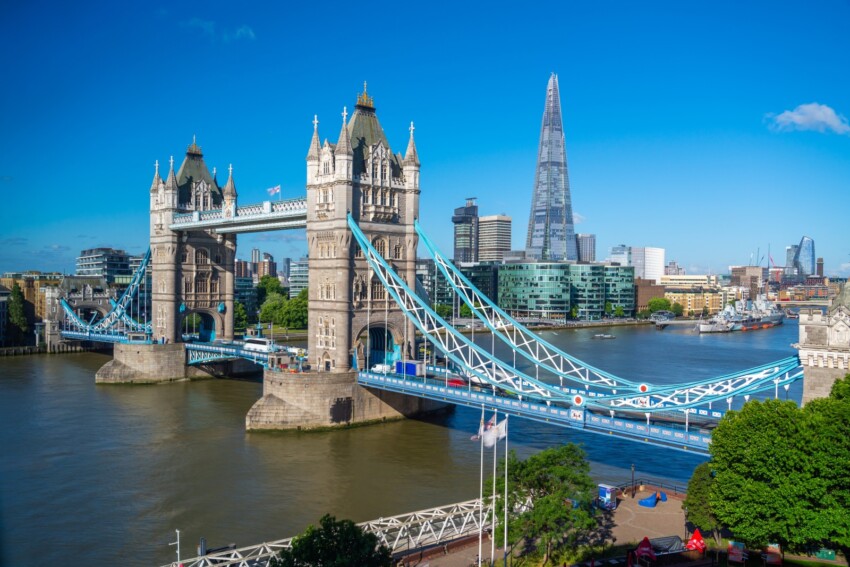
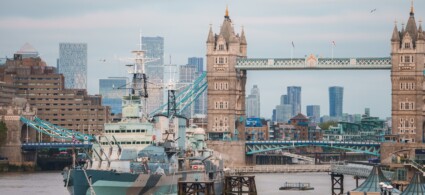
Tower Bridge is one of London’s most recognisable icons and a Victorian engineering masterpiece that since 1894 has witnessed over a century of British capital history. Located in the heart of London, just steps away from the historic Tower of London, this bascule bridge elegantly combines functionality with architectural beauty.
With its neo-Gothic towers and distinctive blue and white colour, Tower Bridge stands majestically over the Thames, offering visitors not just a passage across the river, but an immersive cultural experience through its exhibition and panoramic walkways.
In this comprehensive guide, we’ll take you through all the secrets of Tower Bridge: from its fascinating history to the spectacular views of the city enjoyed from its glass walkways, from practical visiting information to the best spots for photography.
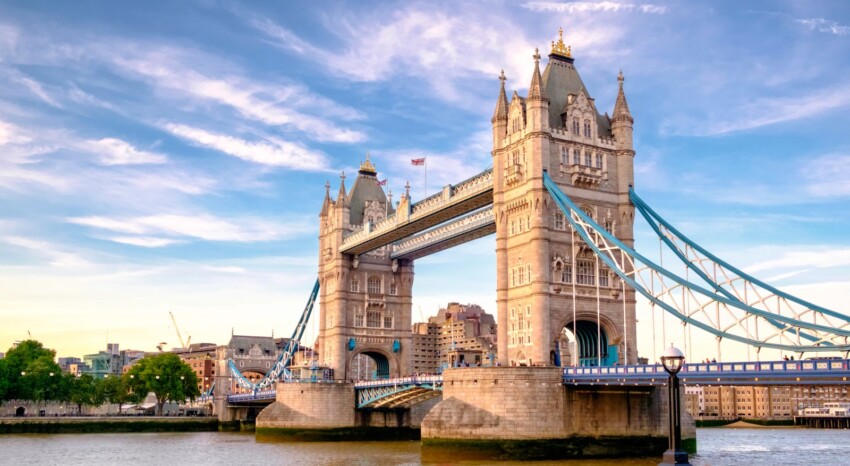
The imposing neo-Gothic towers represent one of Tower Bridge’s most distinctive features. Designed by architect Horace Jones in collaboration with engineer John Wolfe Barry, these structures are not only aesthetically impressive but also conceal ingenious functionality. Within the towers are housed the original mechanisms that allowed the bridge to rise and allow large vessels to pass.
During your visit, you’ll be able to admire Victorian architecture in all its splendour and discover how these towers symbolised the greatness of the British Empire at its peak. The Portland stone cladding and decorative elements were a conscious choice to harmonise the bridge with the nearby Tower of London, creating historical and architectural continuity.
The best vantage point to observe the towers in their entirety is from the South Bank, where you can capture the full impressiveness of the structure and its reflection on the Thames in a single frame.
One of Tower Bridge’s most thrilling experiences is walking across the glass walkways suspended 42 metres high. These transparent corridors, which connect the two towers, offer a unique perspective over London and the Thames.
Originally, these walkways were enclosed and served as a pedestrian route when the bridge was raised. However, they fell into disuse as pedestrians preferred to wait rather than climb the 300 steps required to cross them. Today, with the installation of glass floors in 2014, they’ve become one of the bridge’s main attractions.
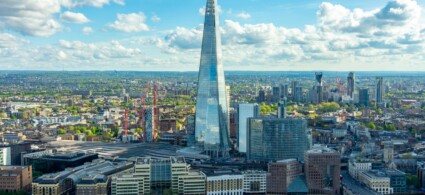
Walking across the glass, you’ll enjoy breathtaking views of The Shard, Western Europe’s tallest skyscraper, the London Eye and many other London attractions. With the Thames flowing 42 metres below, the walkways also host temporary exhibitions and art installations that further enrich the visiting experience.
The engine room is perhaps Tower Bridge’s most surprising feature. Here you can admire the original Victorian steam engines that for decades allowed the bridge to rise. These gigantic machines, perfectly preserved, represent an outstanding example of Victorian-era engineering.
The two enormous hydraulic engines, with their polished brass and steel components, were used from 1894 until 1976, when they were replaced by a more modern electro-hydraulic system. The remarkable thing is that these original engines are still in perfect working order, though today they’re only operated on special occasions.
During your visit, you’ll have the opportunity to observe these machines in action through interactive models and films that demonstrate how the original hydraulic system allowed the bridge to rise in just ninety seconds.
The engine room also provides detailed information about the workers who operated the bridge, telling their daily stories and the challenges they faced.
Witnessing the opening of Tower Bridge is an unmissable spectacle. When a large vessel needs to pass across the Thames at this point, the two central sections of the bridge rise to form an angle of 86 degrees.
This operation still happens regularly today, approximately 800-900 times per year. Although in the early years of operation the bridge opened almost 50 times a day, nowadays openings are less frequent but no less fascinating.
The opening schedule is published in advance on the Tower Bridge official website, allowing you to plan your visit to coincide with this spectacular event. Witnessing the bridge lift from the Thames embankment or, even better, from the panoramic walkways, is an experience that will leave you breathless.
Walking along the roadway of Tower Bridge allows you to appreciate the details of Victorian architecture up close. The original lamp posts, wrought-iron railings and finely decorated balustrades are testament to the aesthetic taste of the era.
The bridge is 15 metres wide and 244 metres long, with two carriageways and two pavements. The central section, 61 metres long, comprises the two moveable parts that rise when needed.
During your walk across the bridge, pause to observe decorative details, such as the Gothic-style elements adorning the metal structures, and enjoy the view over the Thames. From here you can see numerous historic buildings, including HMS Belfast, the warship permanently moored in the river.
Within the Tower Bridge complex is housed a permanent exhibition that tells the story of the bridge’s construction, the engineering challenges faced and the impact this structure has had on London life.
Through historical photographs, original documents, interactive models and historical objects, the exhibition offers an in-depth look at the historical context in which the bridge was conceived and built. Particularly interesting are the original drawings and documents showing the various alternative proposals considered before choosing the final design.
The exhibition also includes an exhibition on the workers who built the bridge, telling their stories and showing the tools they used. An entire section is dedicated to Sir John Wolfe Barry, the engineer who oversaw the project, and his innovative vision.
Tower Bridge’s history begins in the second half of the 19th century, when London’s expansion east of Tower Bridge necessitated the construction of a new crossing over the Thames. In 1876 a special committee was established to find a solution, but the requirements were many: the bridge needed to allow both road and river traffic, which at the time was very heavy.
After evaluating more than 50 different projects, in 1884 architect Horace Jones’s proposal was approved, in collaboration with engineer John Wolfe Barry. Their brilliant idea was to create a bascule bridge that could open to allow large ships to pass to the Pool of London, the city’s port.
Construction work began in 1886 and took eight years and employed 432 workers. One of the greatest challenges was the realisation of the foundations, which had to be built on the river bed using iron caissons into which compressed air was pumped to allow workers to labour underwater.
The bridge was officially opened on 30 June 1894 by the Prince of Wales (the future King Edward VII) and his wife, Princess Alexandra. At the time, Tower Bridge was the largest and most sophisticated bascule bridge ever built.
Originally painted chocolate brown, the bridge only assumed its characteristic blue and white colour in 1977, for the occasion of Queen Elizabeth II’s Silver Jubilee.
Over the years, Tower Bridge has undergone several refurbishments and upgrades. The most significant occurred in 1976, when the original hydraulic steam engines were replaced by an electro-hydraulic system. In 2010 the bridge underwent major restoration ahead of the 2012 London Olympics, while in 2014 the glass walkways were installed, which today attract thousands of visitors.
A curious anecdote concerns the 1952 incident, when a number 78 bus had to accelerate and “jump” from one section to another of the bridge that had begun to open while the vehicle was crossing it. Driver Albert Gunter became a local hero and received a £10 reward for his bravery.
Visiting Tower Bridge is an experience that requires a ticket to access the towers, walkways and engine room, whilst crossing the bridge on foot or in a vehicle is free.
To save money, it’s advisable to purchase tickets online in advance.
Tower Bridge is included in the London Pass, a city card that offers admission to numerous London attractions. If you’re planning to visit several attractions during your stay, this option could prove very worthwhile.
Tower Bridge is open to visitors every day, with hours varying slightly depending on the season:
During the Christmas holidays (24-26 December and 1 January) hours may vary, so it’s advisable to check the official website before your visit.
For a complete visit to Tower Bridge, including the towers, panoramic walkways and engine room, it’s advisable to set aside at least 1 to 1.5 hours. If you’d like to explore all the exhibitions at leisure and fully enjoy the views from the walkways, you might want to allow up to 2 hours.
To avoid queues and enjoy a more peaceful experience, weekdays are generally less crowded than weekends. The first hours of the morning (9:30-11:00) and late afternoon are the best times to visit the attraction with fewer crowds.
A particularly atmospheric experience is visiting Tower Bridge at sunset, when the city lights begin to come on and you can enjoy spectacular views of London in both natural light and night-time illumination.
Tower Bridge regularly hosts special events that offer visitors unique experiences and different perspectives on this iconic structure.
Evening tours of Tower Bridge offer a completely different atmosphere compared to daytime visits. During these special tours, you’ll be able to admire illuminated London from the privileged perspective of the panoramic walkways. The artistic lighting of the bridge itself, renewed in 2019 with an eco-friendly LED system, creates an evocative backdrop for unforgettable photographs.
These tours are only available during certain periods of the year and require advance booking on the official website.
For photography enthusiasts, Tower Bridge organises photography workshops led by professionals. These events offer the opportunity to access privileged viewpoints and learn specific techniques for capturing the bridge’s architecture and London’s panoramas at their best.
Workshops often include out-of-hours access, allowing you to photograph the bridge and city in ideal lighting conditions and without the presence of other visitors.
Tower Bridge’s walkways regularly host temporary exhibitions on themes related to London’s history, architecture or engineering. These exhibitions enrich the visiting experience with new perspectives and information.
Past exhibitions have included historical photography exhibitions, contemporary art installations and in-depth explorations of specific aspects of the bridge’s construction or operation.
During school holidays, Tower Bridge organises special activities and visit routes for younger visitors. These include treasure hunts, creative workshops and interactive demonstrations of how the bridge works.
These activities are designed to make the history and engineering of Tower Bridge accessible and fun for younger visitors, transforming the visit into an educational and engaging experience.
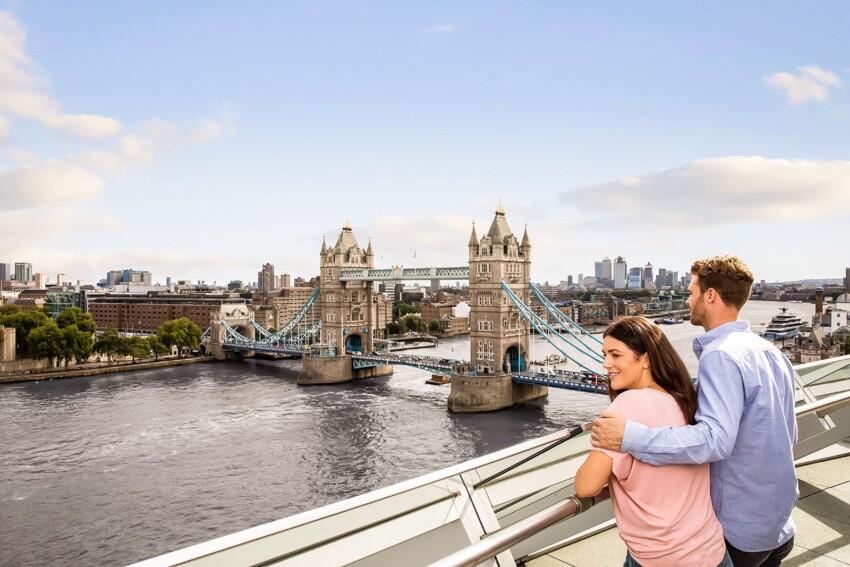
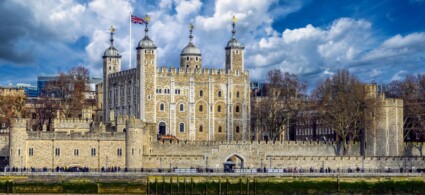
Tower Bridge is located in a central area of London, brimming with attractions. You can reach it easily on foot from the Tower of London in just 5 minutes, from HMS Belfast in 5 minutes, from The Shard in 15 minutes, from Borough Market in 15 minutes, or from St. Paul’s Cathedral in approximately 20 minutes’ walk.
By public transport, the Underground is probably the most convenient way to reach Tower Bridge. Tower Hill station (Circle and District Lines) is just 5–7 minutes’ walk from the northern end of the bridge. Other options include London Bridge (Northern and Jubilee Lines), located about 10 minutes’ walk from the southern end of the bridge, and Bermondsey (Jubilee Line), approximately 15 minutes’ walk from the southern side of the bridge. For detailed information about London’s Underground network, you can visit our page on London Underground.
Numerous bus routes stop near Tower Bridge. On the north side, you can use routes 15, 42, 78, 100 and RV1, whilst the south side is served by routes 47, 381, 42 and RV1. London buses offer an economical and scenic way to get around. For more information on London buses.
A particularly scenic way to reach Tower Bridge is by using the river transport services on the Thames, with stops at Tower Pier (north side) and London Bridge City Pier (south side).
Yes, it is highly recommended to book tickets online in advance, especially during peak season. This not only guarantees your entry on your chosen date and time, but often allows you to save money compared to purchasing on the day.
Yes, Tower Bridge is fully accessible. Lifts are available to reach the walkways and the engine room. Free wheelchair hire is also available, though advance booking is recommended. Guide dogs are permitted in all areas of the attraction.
Photography is permitted and encouraged in all areas of Tower Bridge, both for personal use and social media. The use of tripods and professional equipment may require special permission, which can be requested in advance.
Absolutely. Tower Bridge offers many attractions that appeal to children, including the glass walkways, interactive models of how the bridge operates, and demonstrations in the engine room. During school holidays, special activities for younger visitors are organised. For families with children, we also recommend visiting the nearby Tower of London.
City Card allow you to save on public transport and / or on the entrances to the main tourist attractions.

 Hotel
Hotel 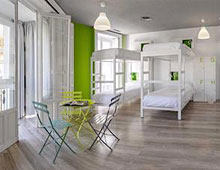 Budget accommodations
  Apartments
  Family Hotel
 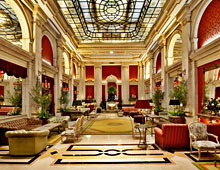 Luxury Hotel