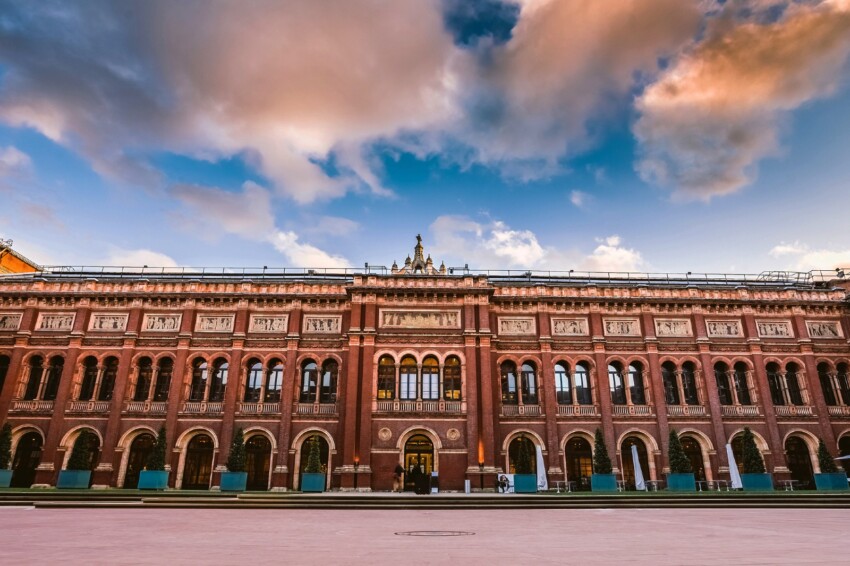
With over 2.3 million permanent objects spanning 5,000 years of human creativity, the Victoria and Albert Museum (often abbreviated to V&A) houses the world’s largest collection of decorative arts and design in a building that is itself a Victorian architectural masterpiece.
Founded in 1852 and named after Queen Victoria and Prince Albert, this extraordinary museum is situated in the prestigious South Kensington district. The V&A is far more than just a museum—it’s a journey through the history of human ingenuity: from Chinese ceramics dating back to 3000 BC to the most innovative contemporary designs, from Italian Renaissance sculptures to haute couture creations by the twentieth century’s most influential designers. The breadth and diversity of its collections make it a place where every visitor, regardless of their interests, can discover something extraordinary.
The Victoria and Albert Museum is so vast that it would be impossible to admire every single piece in a single visit. Here is a selection of the unmissable collections and objects that represent the essence of this remarkable museum.
The Raphael Court houses the famous Cartoons by Raphael, a series of seven full-scale drawings created by Raphael between 1515 and 1516 for the tapestries of the Sistine Chapel. These Renaissance masterpieces, considered among the greatest artistic treasures in the United Kingdom, have recently been restored and are now displayed in a redesigned gallery that showcases their magnificence.
To best appreciate these masterpieces, position yourself in the centre of the room where you can admire all the cartoons simultaneously and observe the extraordinary detail in Raphael’s technique. The natural light filtering through the upper windows varies throughout the day, creating different effects on the drawings.
The British Galleries offer a journey through 400 years of British design history, from 1500 to 1900. This section, one of the museum’s largest with over 3,000 objects displayed across 15 rooms, tells the story of the evolution of British style through furniture, textiles, fashion, ceramics and other artefacts.
Don’t miss the Great Bed of Ware, an enormous sixteenth-century four-poster bed so famous it is even mentioned by Shakespeare, and the Norfolk House Music Room, an elegant eighteenth-century music room completely reconstructed within the museum.
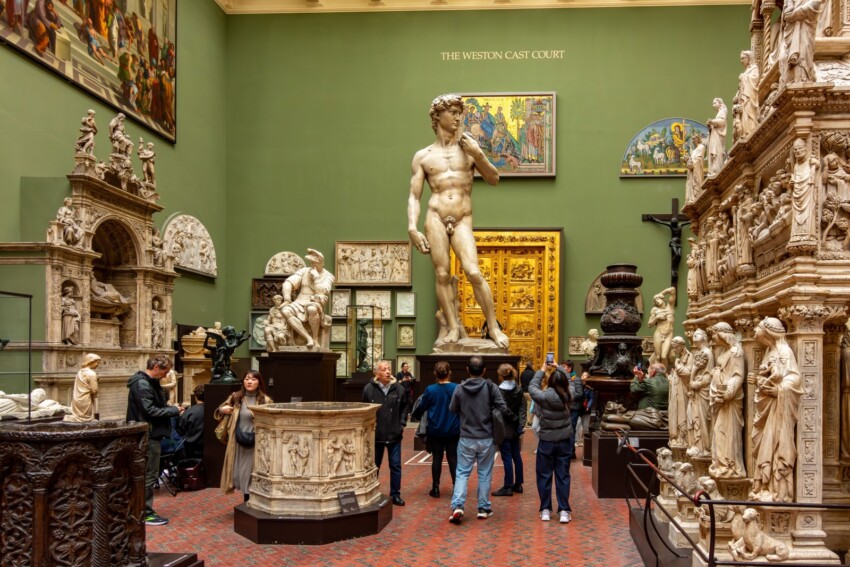
The Cast Courts, opened in 1873, contain an extraordinary collection of plaster casts of some of Europe’s most important monuments and sculptures. The undisputed star is the full-scale reproduction of Trajan’s Column from Rome, so tall that it had to be divided into two sections to fit the museum’s height.
These grand spaces offer a unique opportunity to admire perfect reproductions of masterpieces that would otherwise require trips across Europe. The best spot for photographs is from the upper balcony, from which you can capture the impressive vastness of the galleries.
The V&A’s Fashion Gallery boasts one of the world’s most comprehensive fashion collections, tracing the evolution of clothing from the seventeenth century to the present day. With over 14,000 garments, the collection includes creations by revolutionary designers such as Alexander McQueen, Coco Chanel, Christian Dior and Vivienne Westwood.
The exhibitions change regularly to preserve delicate fabrics, so each visit may hold different surprises. If you’re a fashion enthusiast, ask the staff which new pieces have been recently put on display.
This section celebrates all forms of performance art, from theatre and opera to dance, film and popular music. Among the most notable pieces are the original costumes from the musical “The Lion King”, manuscripts of theatrical works, historic musical instruments and an extensive collection of memorabilia related to iconic figures such as The Beatles and David Bowie.
The gallery also includes incredibly detailed miniature theatrical sets that offer a fascinating glimpse into the creative process behind some of the UK’s most celebrated productions.
The Jewellery Gallery houses one of the world’s most extraordinary jewellery collections, with over 3,000 pieces spanning 4,000 years. The objects range from ancient Egyptian jewellery to contemporary creations by the most innovative designers of the twenty-first century.
The gallery is designed like a glittering jewel box, with lighting carefully designed to make gemstones and precious metals shine brilliantly. Pay particular attention to the Renaissance jewellery, which displays extraordinary complexity and beauty.
This vast collection celebrates the rich artistic traditions of the Indian subcontinent and the Islamic Middle East. Among the most spectacular pieces is the Ardabil Carpet, considered one of the finest Persian carpets ever made, and the bed of Tipu Sultan, a rare ceremonial bed that belonged to the eighteenth-century ruler of Mysore.
To preserve the ancient Ardabil Carpet, the lighting in its room is kept very low and only increased for brief periods each hour. Plan your visit so that you are present during these moments to fully appreciate the details and colours.
The Medieval and Renaissance galleries house an extraordinary collection of European art from 300 to 1600. Spread across five floors, these rooms display masterpieces such as the Choir by Giambologna, a series of Renaissance bronzes of exceptional quality, and the Devonshire Hunting Tapestries, rare large-scale medieval tapestries.
A striking feature is the façade of an Italian Renaissance palace reconstructed within the museum, offering visitors the chance to admire architectural details up close that are normally visible only from a distance.
The history of the Victoria and Albert Museum begins in 1851, in the aftermath of the Great Exhibition held in Hyde Park in the iconic Crystal Palace. This event, strongly championed by Prince Albert, consort of Queen Victoria, had demonstrated to the world the progress of industry and culture from all nations, with particular emphasis on British innovations of the Victorian era.
The success of the Great Exhibition generated a significant financial surplus that was used to purchase land in South Kensington with the aim of creating a complex of educational and cultural institutions, what is known today as “Albertopolis”. The Museum of Manufactures, the first core of the current V&A, was founded in 1852 and was initially located at Marlborough House.
In 1857 the museum relocated to its current home and was renamed the South Kensington Museum. Under the direction of Henry Cole, the institution’s first director, the museum adopted an innovative policy: remaining open late into the evening and free on certain days, to allow working-class visitors to access cultural education—a revolutionary concept for the time.
The main building, designed by architect Francis Fowke and completed by his colleague Henry Scott, was opened in 1909 by Queen Victoria. On this occasion, the institution took on its present name of Victoria and Albert Museum, in honour of the sovereign and her late consort, a great patron of the arts.
During the Second World War, many of the collections were evacuated to protect them from London’s bombing. The building itself sustained damage during the Blitz, but most of the artworks survived intact.
The museum has continued to expand and reinvent itself in subsequent decades, with major refurbishment works completed in 2017 that created a new entrance on Exhibition Road and additional underground exhibition spaces. Today the V&A is recognised not only as the world’s largest museum of decorative arts and design, but also as a leading institution in the preservation, research and presentation of global artistic heritage.
Its designation as an independent charity in 1983 and subsequent inclusion in the National Museums group ensured continued government funding, enabling free access to the permanent collection, in keeping with Henry Cole’s original vision of a cultural institution accessible to all.
Admission to the Victoria and Albert Museum’s permanent collection is free, in line with British national museums’ policy. This accessibility reflects the museum’s original mission to make art and design available to all visitors, regardless of their financial circumstances.
For temporary exhibitions, however, a ticket is generally required. Prices vary depending on the importance and scale of the exhibition. Discounts are available for students, over-60s, people with disabilities and their companions, while under-18s often benefit from significantly reduced rates or free entry.
It is highly recommended to purchase tickets online in advance through the V&A’s official website, especially for the most popular exhibitions which may sell out at weekends and during peak seasons. Online tickets include the option to skip queues, a considerable advantage on busy days.
The museum offers several guided tour options:
Specific educational programmes are available for school and university groups, which should be booked well in advance through the museum’s education department.
The Victoria and Albert Museum is open every day of the week with the following hours:
The museum is closed on 24, 25 and 26 December each year, whilst on other public holidays it generally observes normal opening hours.
During special periods such as Christmas holidays or school breaks, opening hours may vary, so it’s always advisable to check the official website before your visit.
Given the museum’s enormous size and the richness of its collections, it is practically impossible to see everything in a single visit. For a satisfying experience:
For visitors with specific interests, the museum offers thematic maps that guide you through related collections, making the most of your time.
To avoid crowds, the best times to visit the V&A are weekdays: particularly Tuesday and Thursday mornings. The first hour after opening (10:00–11:00) is generally less busy, whilst Friday evenings
Weekends and school holidays are significantly more crowded, as are rainy days, as many tourists seek indoor attractions.
The most popular temporary exhibitions tend to be particularly busy in the final weeks before closing, so it’s advisable to visit them early in their exhibition run or book tickets with a specific entry time.
The Victoria and Albert Museum enriches visitor experience with a dynamic programme of events and special opportunities that extend far beyond viewing the galleries.
On the last Friday of every month (except December), the V&A hosts Friday Late, a free evening event that transforms the museum into a vibrant hub of contemporary cultural expression. Each edition focuses on a specific theme and explores the intersection between art, design and society through live performances, installations, talks, DJ sets and interactive workshops. The evenings attract a young and diverse audience, creating a unique atmosphere that pleasantly contrasts with the museum’s traditional daytime serenity.
During the summer months, the evocative central courtyard hosts spectacular light installations that transform this already enchanting space into an immersive experience. Artistic projections on the museum’s internal facades create a visual dialogue between Victorian architecture and contemporary artistic expression. These installations are generally free and particularly striking at dusk.
For the more inquisitive visitors, the V&A periodically offers exclusive tours of areas normally closed to the public, including conservation studios, storage facilities and archives. Conducted by curators and conservators, these tours provide a privileged insight into the scientific work that underpins the museum’s operations and the vast portion of the collection not on display (over 90% of objects). Places are extremely limited and tickets, available on the museum’s website, sell out quickly.
The V&A’s artist residency programme invites designers, makers and innovative thinkers to work within the museum, drawing inspiration from the collections and engaging with the public. The studios of resident artists are open to visitors at scheduled times, offering a unique opportunity to observe the creative process and speak directly with the creators. This programme bridges the museum’s historical heritage and contemporary artistic practice.
The V&A hosts several themed festivals throughout the year:
A visit to the Victoria and Albert Museum engages more than just sight. The museum offers multisensory experiences including:
To stay informed about special events and temporary exhibitions, it’s advisable to subscribe to the museum’s newsletter or follow its official social media channels, where new initiatives are regularly announced.
The Victoria and Albert Museum is located on Cromwell Road, in the heart of South Kensington’s cultural quarter, and benefits from excellent public transport connections.
The most convenient option is London’s underground, alighting at South Kensington station (served by the District, Circle and Piccadilly lines). From the station exit, an underground pedestrian tunnel leads directly to the museum, avoiding the need to cross busy roads. The route is well signposted and takes about 5 minutes’ walk.
Alternatively, you can use Gloucester Road station (also served by the District, Circle and Piccadilly lines), which is approximately 10–12 minutes’ walk from the museum.
Numerous bus routes serve South Kensington:
No, advance booking is not required to access the museum’s permanent collection, which is free. However, for paid temporary exhibitions, it is strongly recommended to purchase tickets online in advance, particularly during peak season or for particularly popular shows, to avoid the risk of finding no availability upon arrival.
Yes, non-commercial photography without flash is permitted in most permanent galleries. However, some temporary exhibitions or loaned objects may have specific restrictions, which will be clearly marked. Tripod use is permitted only with prior authorisation. Professional or commercial photography requires special permission, which should be requested in advance.
Yes, the museum is fully accessible to people with reduced mobility. Barrier-free entrances, lifts to access all levels, accessible facilities and free wheelchairs (bookable in advance) are available. For visitors with visual impairments, audio descriptions and some tactile elements are provided, whilst for visitors with hearing impairments, many exhibition videos are subtitled and British Sign Language (BSL) guides are available.
Yes, the V&A has a free cloakroom located near the main entrance, where you can deposit jackets, umbrellas and medium-sized bags. For security reasons, large luggage (such as suitcases) cannot be accepted. The service is available during all museum opening hours, but items must be collected before closing time.
The Victoria and Albert Museum offers several dining options:
You may consume your own food and drinks only in the John Madejski Garden area, but not within the galleries.
Absolutely! Despite its reputation as an “adult” museum, the V&A offers numerous activities designed specifically for younger visitors:
The costume, theatre and toys galleries are particularly popular with children. The museum is also fully accessible with pushchairs, and changing facilities and nursing areas are available.
City Card allow you to save on public transport and / or on the entrances to the main tourist attractions.
 Hotel
Hotel 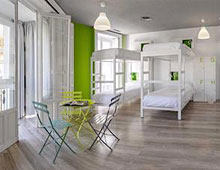 Budget accommodations
 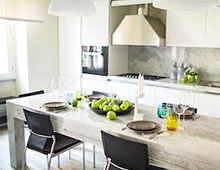 Apartments
 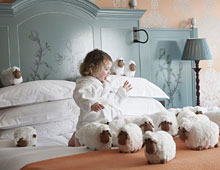 Family Hotel
 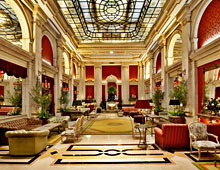 Luxury Hotel