Bestseller
London: Westminster Abbey Entrance Ticket
From 35,57 €
Buy the ticket
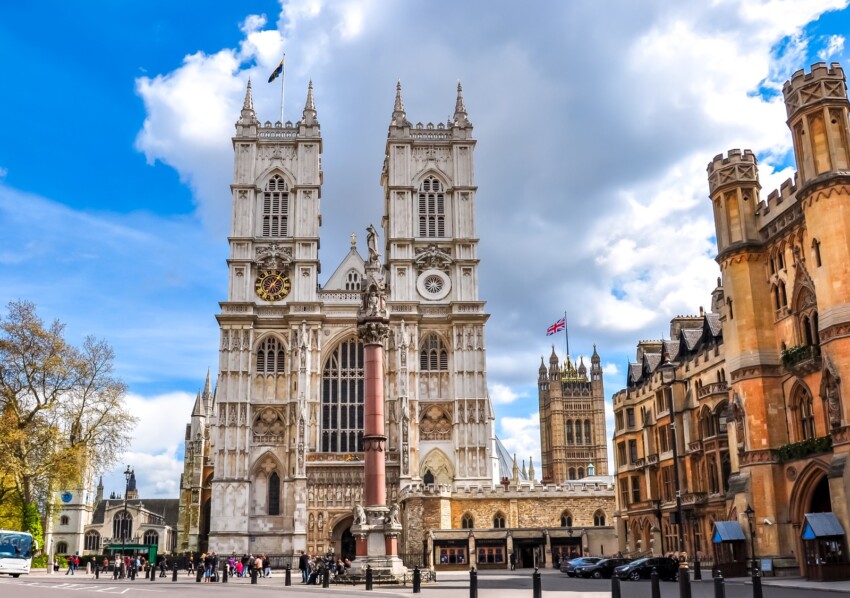
Royal and regal: there are few words more apt to describe Westminster Abbey, this church of solemn, imposing and majestic form, within whose walls the fundamental pages of English history have been written.
The magnificent Westminster Abbey represents one of the most emblematic and historically significant places not only in London, but throughout Great Britain. With over a thousand years of history, this extraordinary Gothic church has hosted coronations, royal weddings and state funerals, intertwining its destiny with that of the monarchy and the British nation.
The abbey, whose official name is the Collegiate Church of St. Peter at Westminster, is far more than a simple place of worship: it is an architectural treasure, a national pantheon that houses the tombs of monarchs, poets, scientists and other illustrious figures, and a living symbol of English history. Its unmistakable silhouette, with twin western towers, dominates the Westminster skyline, just a short walk from the Thames and the Palace of Westminster.
Every year, over a million visitors pass through the doors of this Gothic masterpiece to admire its breathtaking interiors, elaborate architectural details and to breathe in the solemn atmosphere of a place where history is quite literally carved in stone. Since 1987, Westminster Abbey has been designated a UNESCO World Heritage Site alongside the nearby Palace of Westminster and the church of St. Margaret.
The central nave of Westminster Abbey will welcome you with its imposing height of 31 metres, representing one of the most majestic examples of Gothic architecture in England. Built between 1245 and 1517, the nave features finely decorated fan vaults that seem to float above your head.
When you enter, look up to admire the spectacular ceiling with its elaborate details. Light filters through the stained-glass windows, creating an almost mystical atmosphere. Along the nave, you will notice commemorative monuments to illustrious figures and plaques dedicated to significant historical personalities.
The stone floor, worn by the footsteps of millions of visitors and pilgrims over the centuries, silently tells the story of this sacred place. During royal ceremonies, it is along this nave that solemn processions take place, transforming the space into a theatre of regal grandeur.
Poets’ Corner represents one of the abbey’s most celebrated and visited spaces. Located in the southern part of the transept, this area is dedicated to Britain’s greatest literary figures, many of whom are buried or commemorated here.
It all began with the burial of Geoffrey Chaucer in 1400, more for his role as an abbey official than for his literary fame. It was only in the 16th century that this area began to be associated with the commemoration of great writers, when in 1556 an elaborate monument to Chaucer was erected.
Today, you can admire memorials to literary giants such as William Shakespeare (though he is buried at Stratford-upon-Avon), Jane Austen, the Brontë sisters, Charles Dickens, T.S. Eliot, and many others. Some have only a commemorative monument here, whilst others actually rest beneath the stone slabs you walk on.
The best spot to photograph this area is from the entrance to the southern transept, where you can capture an overall view of this tribute to British literary culture. Take the time to read some of the inscriptions, often poignant or witty, that testify to the genius of the poets and writers honoured here.
Henry VII’s Chapel, also known as the Lady Chapel, represents the pinnacle of late Perpendicular Gothic architecture and one of the abbey’s most precious treasures. Built between 1503 and 1512 at the behest of King Henry VII, this chapel is considered a masterpiece of medieval engineering.
The ceiling, with its extraordinary fan vaults, is simply breathtaking. Constructed in stone, it creates the illusion of delicate lace hovering in the air, defying gravity with its apparent lightness. Each fan is composed of hundreds of small decorated panels, creating a three-dimensional effect that changes with the light of day.
The finely carved wooden choir stalls, adorned with figures of fantastical animals and plant motifs, date from the Tudor period and display an extraordinary level of detail. Notice the small carved animals on the armrests, each with a unique and often humorous personality.
At the centre of the chapel stands the tomb of Henry VII and his wife Elizabeth of York, a work by Renaissance Italian sculptor Pietro Torrigiano. The gilt bronze effigies of the sovereigns lie on a black marble base, representing a perfect example of Renaissance funerary art.
This chapel also houses the tombs of numerous other sovereigns, including Elizabeth I and Mary I Tudor, rivals in life but now buried close together in death, and Mary, Queen of Scots. The contrast between their turbulent lives and eternal rest in this place of peace is particularly moving.
The best time to visit the Lady Chapel is in the early morning hours, when sunlight filters through the eastern stained-glass windows, illuminating the vaults with golden hues and creating an almost celestial atmosphere.
In the floor of the central nave lies one of the abbey’s most moving monuments: the Tomb of the Unknown Warrior. This memorial, unveiled on 11 November 1920, contains the remains of an unidentified British soldier who died during the First World War and represents all those who lost their lives in conflict without receiving an identifiable burial.
The Belgian marble slab is surrounded by soil brought from the principal battlefields and bears a touching inscription that reads: “Buried here is a British soldier known only to God“. At the foot of the tomb, wreaths of red poppies are often laid, symbolising the remembrance of those who died in war.
Unlike many other areas of the abbey, photography is permitted here, but we recommend doing so discreetly, in respect of the profound significance of this place. The most atmospheric time to visit the tomb is during Remembrance Day commemorations (11 November) or in the quiet of the early morning hours.
Westminster Abbey houses the tombs of 30 monarchs, from Edward the Confessor to George II, representing a living museum of British royal history. Each tomb tells chapters of English history and reveals the evolution of artistic styles through the centuries.
The most ancient and revered tomb is that of Saint Edward the Confessor, located behind the high altar in a place of great honour. Built in the 13th century, this elaborate structure in stone and marble has been an important pilgrimage site for centuries. The original shrine was enriched with gems and precious metals, most of which were removed during the Reformation.
Particularly striking is the tomb of Elizabeth I in Henry VII’s Chapel, where the effigy of the sovereign in royal dress rests on an elaborate sarcophagus. Interestingly, in the same chapel stands the tomb of her half-sister and rival Mary I Tudor.
Medieval sovereigns such as Edward I, Edward III and Henry V have monumental tombs that reflect the Gothic taste of the time, with stone effigies representing them in all their regal majesty, often with hands clasped in prayer.
A curious detail: some royal tombs, such as that of Henry V, contain only partial remains of the sovereign. His head, in fact, was preserved in a separate silver reliquary, which was lost during the Reformation.
The best way to appreciate the royal tombs is to take a guided tour that can highlight the historical and artistic details of these monuments, shedding light on the complex family relationships and often dramatic stories of the sovereigns buried here.
The choir of Westminster Abbey is not only an architectural element of great beauty, but also the beating heart of the abbey’s liturgical life. The finely carved wooden stalls date from the mid-19th century and are the work of architect Edward Blore, though they incorporate older elements.
The monumental organ, which visually and acoustically dominates the space, has a history dating back to 1694, when it was built by Bernard Smith. Over the centuries, the instrument has been repeatedly enlarged and restored, and today it boasts over 5,000 pipes, producing a rich and powerful sound that fills the Gothic vaults with unparalleled majesty.
If possible, plan your visit to attend an evensong service, when the renowned abbey choir performs accompanied by the organ. This experience will allow you to appreciate the building’s perfect acoustics and experience the abbey not only as a historical monument, but as a living place of worship.
An interesting detail: in the choir are the seats used during coronation ceremonies, including the famous Coronation Chair, designed in 1300 for King Edward I to hold the Stone of Scone, the ancient Scottish coronation stone.
The cloister of Westminster Abbey offers a pleasant contrast to the solemn and crowded interiors. This quadrangular space, with its elegant arcades and verdant central garden, was originally the heart of daily monastic life before the abbey was secularised in the 16th century.
Built between the 13th and 14th centuries, the cloister features one of the finest collections of medieval tile floors in all of England. Pay attention to the coloured patterns that depict animals, mythological figures and heraldic symbols.
The College Garden, located to the west of the cloister, is considered England’s oldest continuously cultivated garden, with a horticultural history spanning over a thousand years. Originally the medicinal herb garden of the Benedictine monks, where they grew herbs to treat the sick.
This is the ideal place for a quiet break during your visit. In the summer months, the garden offers a spectacular view of the abbey’s Gothic structure against London’s skyline, creating an unmissable photographic opportunity. The contrast between the ancient stone building and lush greenery is particularly striking.
A curious detail: in the cloister you can find the door that led to the ancient Pyx Chamber, one of the abbey’s oldest structures, which served as a strongbox for royal treasures in the Middle Ages, including the kingdom’s standards for weights and measures.
The Abbey Museum, located in the rooms of the ancient monastic dormitory, houses a fascinating collection of artefacts that tell the thousand-year history of Westminster. Although less well-known than other areas, this space offers a deeper immersion into the abbey’s life through the centuries.
Among the most interesting objects are the wax funeral effigies of various sovereigns and nobles, created to be carried during funeral processions. The oldest dates to the 14th century and depicts Philippa of Hainault, wife of Edward III. These figures, with their realistic details and original clothing, offer a unique glimpse into the customs and faces of the past.
The museum also displays the original 13th-century Cosmatesque pavement, a masterpiece of medieval decorative art with intricate geometric mosaics in coloured marble, porphyry and precious stones.
Do not miss the collection of architectural models showing the abbey’s evolution over the centuries, providing a three-dimensional perspective on the structural changes the building has undergone.
A tip: ask for the museum’s dedicated audio guide, which provides interesting details not always evident from the captions. The museum is generally less crowded than other areas of the abbey, allowing you to explore these historical treasures at leisure.
Among the various monuments and collective memorials, a volume collects the names of all civilians killed by the enemy during the Second World War, one plaque commemorates the names of the “innocent victims” of wars and oppression throughout history, and another honours the poets of the First World War.
Among the countless other plaques and commemorative statues are those for poets and writers William Shakespeare, John Keats, Lewis Carroll, the Brontë sisters, Sir Walter Scott, Lord Byron, T.S. Eliot, Percy Shelley, Henry James and Dylan Thomas; among statesmen, Franklin Delano Roosevelt and Sir Winston Churchill; among scientists, Ernest Rutherford and Paul Dirac. Among philanthropists, Robert Baden-Powell, the founder of the Scout movement.
In total, between tombs and plaques, 3,300 people are commemorated at Westminster Abbey.
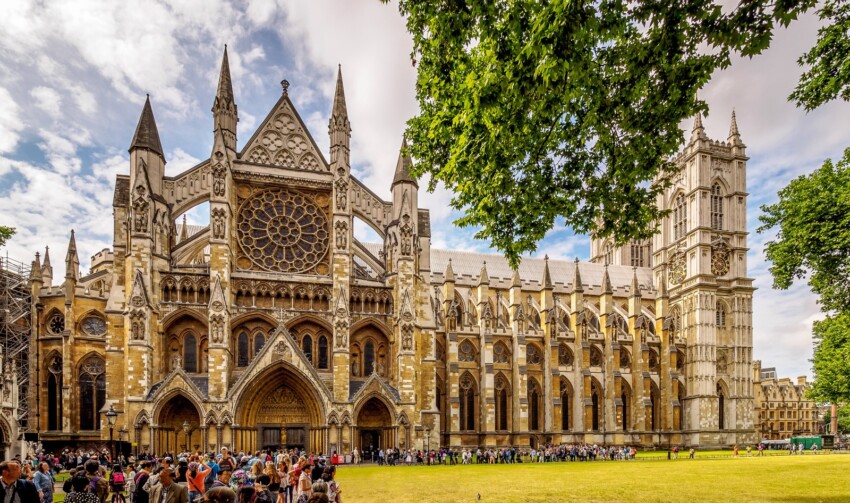
The history of Westminster Abbey has been intertwined with that of the monarchy and the British nation since its origins. According to tradition, the first religious building on this site was founded around 960 AD by St Dunstan and King Edgar. However, it was Edward the Confessor (1042-1066) who drove forward the construction of a great Romanesque church, consecrated on 28 December 1065, just a week before his death.
The abbey we see today is largely the work of Henry III, who in 1245 began to rebuild Edward’s church in magnificent Gothic style, inspired by great French cathedrals such as Reims and Amiens. Work continued for several centuries: the naves were completed by Richard II in the 14th century, whilst the distinctive western façade with its twin towers was added only in the 18th century by Nicholas Hawksmoor.
A crucial moment in the abbey’s history was the Dissolution of the Monasteries under Henry VIII in 1540, when the Benedictine community that had run it for centuries was dissolved. The abbey avoided destruction thanks to its status as a “Royal Peculiar” (personal property of the sovereign), and was transformed into a cathedral for a brief period before receiving from Elizabeth I in 1560 the status of The Collegiate Church of St Peter at Westminster.
Since 1066, the year of the coronation of William the Conqueror, Westminster Abbey has hosted virtually all coronations of English and British monarchs, creating a ceremonial continuity that is unique in Europe. The last coronation, that of King Charles III, took place on 6 May 2023, following a ritual that, whilst modernised, retains elements dating back almost a thousand years.
The abbey has also been the setting for numerous royal weddings, including that of Prince William and Catherine Middleton in 2011, and solemn state funerals, such as that of Queen Elizabeth II in 2022.
During the Second World War, the abbey suffered damage from German bombing, particularly in 1940 and 1941. The stained glass windows were removed beforehand and many treasures placed in safety. Post-war restoration work has preserved the historical integrity of the building, keeping alive this extraordinary architectural document.
In 1987, Westminster Abbey was designated a UNESCO World Heritage Site together with the Palace of Westminster and the nearby church of St Margaret, recognising its exceptional universal value as a testimony to human civilisation.
Entry to Westminster Abbey requires the purchase of a ticket, unless you are attending a religious service. We strongly recommend purchasing tickets online: not only will you save money compared to the box office price, but you’ll also avoid the long queues that often form at the entrance, especially during the busy tourist season.
The ticket includes access to all public areas of the abbey and an audioguide available in 14 different languages that will guide you through the main points of interest with detailed commentary and historical information.
Westminster Abbey is included in several London tourist passes, such as the London Pass, which can be worthwhile if you plan to visit numerous attractions during your stay.
Guided tours led by specialist abbey guides are available for an additional cost and offer a more in-depth experience thanks to the guides’ expert knowledge. These tours last approximately 90 minutes and should be booked in advance, especially during peak times.
Westminster Abbey follows variable opening hours depending on the day of the week and religious services. It is important to always check updated opening hours on the official website before your visit, as there may be changes for special events or religious ceremonies.
Standard hours are:
The abbey is generally closed during major religious holidays such as Christmas and Easter, and may have reduced hours or partial closures for national commemorations, state funerals or royal events. During summer, especially in July and August, opening hours are often extended until 18:00 to accommodate more visitors.
Regarding visiting times, you should allow at least 1.5 to 2 hours for a complete visit that allows you to appreciate the abbey’s main attractions. If you’re particularly interested in history or architecture and want to examine the monuments and tombs carefully, you may want to allow up to 3 hours.
The best time to visit Westminster Abbey is on weekdays, preferably early morning (just after opening) or late afternoon. These times tend to be less crowded than midday. In particular, Tuesday and Thursday mornings are generally quieter.
A practical tip: on sunny days, the light filtering through the coloured stained glass creates spectacular effects inside the abbey, making the experience even more memorable and offering unique photographic opportunities, especially in Henry VII’s Chapel in the morning.
Westminster Abbey is not just a historical monument but a living place that hosts numerous special events and offers unique experiences throughout the year. Attending one of these events can greatly enrich your visit, allowing you to experience the abbey in a different light.
Evensong (sung evening prayer) represents an unmissable opportunity to experience the abbey in its primary function as a place of worship. This daily liturgical service, held generally at 17:00 on weekdays and at 15:00 on Sunday, features the abbey’s renowned choir, whose tradition dates back over 500 years.
Admission to Evensong is free and does not require reservation, but it is advisable to arrive at least 30 minutes before the start to secure a seat. During the service, you can admire the interior of the abbey surrounded by an atmosphere of contemplation, accompanied by the celestial voices of the choir resonating under the Gothic vaults – a complete sensory experience that combines architecture, music and spirituality.
Periodically, Westminster Abbey hosts sacred and classical music concerts that showcase the building’s exceptional acoustics. These events, ranging from Renaissance repertoire to contemporary music, offer the opportunity to visit the abbey in the evening, when artificial lighting creates a particularly evocative atmosphere.
Concert tickets are usually available on the abbey’s official website and tend to sell out quickly, so it is advisable to book well in advance.
At certain times of the year, especially during summer, the abbey organises extraordinary evening openings until 20:00. These events allow you to visit the monument when the sunset light filters through the stained glass, creating a magical atmosphere. Evening openings often also include short musical performances or thematic talks in different areas of the abbey.
Westminster Abbey takes on particular charm during the Christmas celebrations, when the building is elegantly decorated and hosts carol concerts and special services, such as the famous “Festival of Nine Lessons and Carols”. Holy Week and Easter also see particularly solemn celebrations, with rituals dating back centuries.
The Advent period (the four weeks before Christmas) is ideal for a special visit, with the abbey lit by candlelight and a musical programme that includes some of the finest sacred compositions in the Western repertoire.
Periodically, the abbey organises themed guided tours focusing on specific aspects of its history and artistic heritage. These include tours dedicated to royal tombs, Gothic architecture, stained glass, or the abbey’s influence on English literature.
Particularly interesting is the “Hidden Abbey Tour“, which allows access to areas normally closed to the public, such as the upper galleries and some spaces of the ancient monastic area. These tours, available only on selected dates and for small groups, offer unique perspectives and details that escape a standard visit.
For families with children, interactive tours and creative workshops are organised during school holidays that introduce younger visitors to the abbey’s history through engaging activities and storytelling.
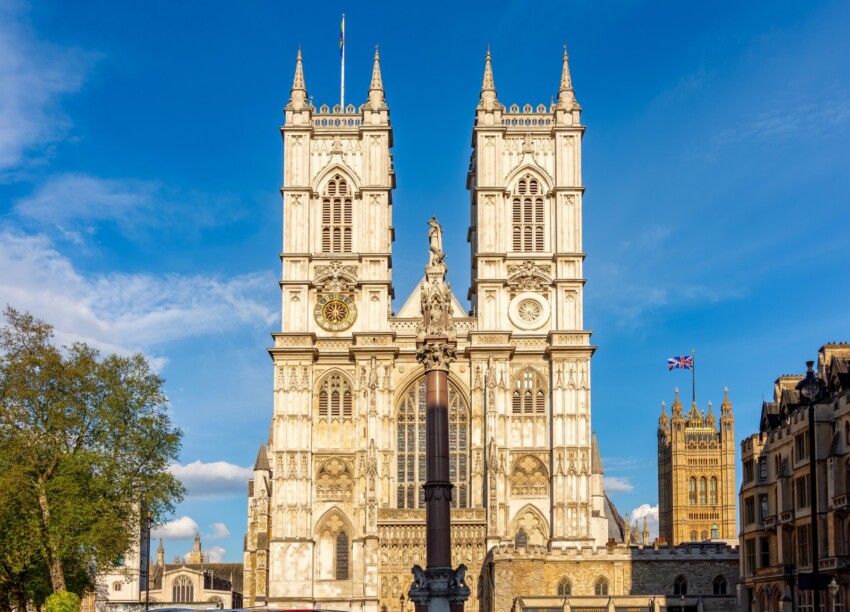
Reaching Westminster Abbey is extremely straightforward thanks to its central location and proximity to numerous public transport links.
The London Underground is the most efficient way to reach the abbey. The nearest stations are Westminster just 5 minutes’ walk away and St James’s Park which is about 7 minutes’ walk from the abbey, offering a pleasant walk through the adjacent park.
Numerous London bus routes stop near Westminster Abbey:
Yes, it is highly recommended to book tickets in advance. This not only guarantees you a discount on the ticket price compared to buying on the spot, but also allows you to avoid the long queues that often form at the entrance, especially in summer months and during holiday periods. In peak season, tickets for certain times can sell out several days in advance.
Photography is not permitted inside the abbey to preserve the atmosphere of contemplation and to protect ancient artefacts from camera flash damage. There are some exceptions, such as the cloisters and the College Garden, where photography is allowed. This rule is sometimes suspended during special events or at certain times of the year, but it’s always best to ask staff for confirmation.
Yes, the abbey is accessible to visitors with reduced mobility, although there are some limitations due to the historic nature of the building. Wheelchair access is from the north side (North Door). Approximately 90% of the abbey is accessible by wheelchair thanks to mobile ramps and lifts. Special audioguides are available for blind and partially sighted visitors and induction loops for people with hearing aids. Staff are trained to assist visitors with particular needs.
Yes, you can attend religious services without paying an entry fee. During these times, however, you are not permitted to visit the abbey as a tourist. If you wish to attend a religious service, such as the daily Evensong, you can do so free of charge by entering from the West Door approximately 30 minutes before the start. It’s a wonderful way to experience the abbey in its primary function as a place of worship and to enjoy the choir’s singing.
Yes, Westminster Abbey is included in the London Pass, which can represent good value if you intend to visit numerous attractions during your stay in London. However, even with the London Pass, it is advisable to book a specific time slot for your visit, especially during peak times. Always check the updated conditions on the London Pass website, as there may be temporary limitations or restrictions.
Children under 6 enter free, whilst those aged 6-17 pay a reduced rate. A discounted family ticket is also available that covers 2 adults and up to 3 children.
Yes, “Westminster Abbey” is simply the English name for the Abbey of Westminster. The full official name is “The Collegiate Church of St Peter at Westminster”, but it is universally known as Westminster Abbey.
It should not be confused with the nearby Westminster Cathedral, which is London’s principal Roman Catholic church with neo-Byzantine architectural style, nor with the Palace of Westminster, which is the seat of parliament.
City Card allow you to save on public transport and / or on the entrances to the main tourist attractions.



 Hotel
Hotel  Budget accommodations
  Apartments
  Family Hotel
  Luxury Hotel