

Why book with us?
- Best price guaranteed
- Free cancellation
- No commissions
- 24h Service - 7/7d

Hiring a car in London to explore the city itself rarely makes sense, but it becomes decidedly useful when you want to discover the magnificent surrounding areas of southern England, such as the Cotswolds and nearby Stonehenge, the white cliffs of Dover or the historic universities of Oxford and Cambridge.
The English capital and its airports represent strategic points for car hire collection, with over 25 locations spread across air terminals, railway stations and central districts.
The British road network is excellent, with well-signposted motorways and efficient services, making journeys between destinations straightforward and enjoyable. Just remember to watch out for left-hand driving, which requires a bit of extra concentration.
Below are the cheapest prices for car hire at in London, to book click here.










The prices of car rental at the in London varies depending on the time of year. This graph shows the average prices in the various months to help you find out which is the best period to rent a low cost car.
According to reviews by other travellers, the following are the best car rental companies in London. To compare rates click here.









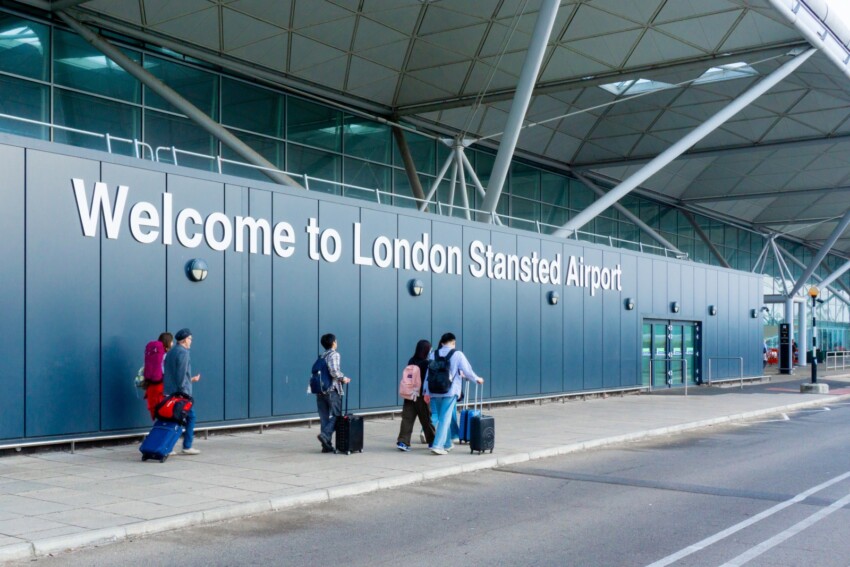
London’s airports are undoubtedly the most convenient and strategic locations for collecting a hire car, allowing you to bypass city traffic and head straight to your chosen destinations. Which airport suits you best depends on your final destination and the type of itinerary you have in mind, as each terminal offers optimal connections to different parts of England.
Heathrow Airport, Britain’s largest aviation hub with over 80 million passengers annually, houses all major international car hire companies across its five terminals. Located just 35 minutes from central London and 23 kilometres west of the capital, Heathrow is the ideal choice if you’re heading west and south-west.
Heathrow’s main advantage is direct access to the M4, the motorway linking London with Bath and Wales, and the M25, the orbital motorway connecting to other major UK roads. Car collection areas are short distances from the terminals, reachable by free shuttles every 10-15 minutes. During peak hours, leaving the airport can take an extra 30-40 minutes due to heavy traffic, so it’s advisable to arrange collection outside 7:00-9:30 and 16:30-19:00.
Hire a car at HeathrowGatwick Airport, London’s second-busiest terminal and located 45 kilometres south of the capital, is the perfect base for exploring the English south coast. The airport has two terminals, North and South, both with extensive car hire facilities.
Gatwick is excellent if you want to visit Brighton (30 minutes), the Seven Sisters (50 minutes), or head towards Kent and Canterbury. The M23 and A23, directly accessible from the airport, lead quickly to the coast, whilst the M25 allows travel east or west. Car hire parking areas are well-signed and located just minutes’ walk from the terminals, with no need for shuttles.
Hire a car at GatwickStansted Airport, located 62 kilometres north-east of London in Essex, is the main base for budget airlines like Ryanair and often the most economical choice. The airport has a single modern, functional terminal where car hire companies are concentrated in the international arrivals area, opposite the duty-free zone, making collection extremely quick and convenient.
Parked cars are in a dedicated area easily reached on foot in 5-10 minutes from the terminal, avoiding shuttle waits. Stansted’s main advantage is its strategic location for exploring eastern England—Cambridge, for instance, is just 45 minutes away.
Another benefit of Stansted is less congestion than Heathrow, making airport exit generally smoother. Hire prices at Stansted are often slightly lower than at Heathrow, with weekly rates starting from £20-25 per day for economy cars during low season.
Hire a car at StanstedLuton Airport, around 55 kilometres north of London, is another major budget airline hub offering good connections to the northern Cotswolds and the Midlands. Hire companies are in the terminal arrivals area, though some firms have nearby offices reachable by short shuttles. Luton is particularly useful if you want to avoid London traffic and head straight north or north-west, with direct access to the M1 motorway connecting London with the Midlands and northern England.
Hire a car at LutonThe first hurdle for most drivers is left-hand driving, which needs an adjustment period. The driver sits on the right side of the car, and the gear stick (if manual) is operated with the left hand. In roundabouts, traffic flows clockwise and you always give way to traffic from the right.
The Congestion Charge is one of the biggest costs for driving in central London. This charge, currently £15 per day, applies Monday to Friday from 7:00 to 18:00 and weekends from 12:00 to 18:00. The zone roughly covers the area from King’s Cross to Vauxhall and Paddington to Whitechapel. Payment can be made online or via app by midnight on the third day after your trip, though paying in advance is advised to avoid hefty £180 fines.
Overlapping the Congestion Charge Zone is the ULEZ (Ultra Low Emission Zone), expanded from 2023 to all 33 London boroughs. This environmental zone operates 24/7, except Christmas Day. Vehicles not meeting Euro 4 standards for petrol cars and Euro 6 for diesels must pay a daily charge of £12.50. Combined, the Congestion Charge and ULEZ can cost up to £27.50 daily just to drive around. The good news is most modern hire cars meet ULEZ standards.
Speed limits vary significantly: 30 mph (48 km/h) in built-up areas, 60 mph (96 km/h) on single carriageways and 70 mph (112 km/h) on motorways. Speed cameras are everywhere and fines are sent to the rental company, which will charge them to you plus administrative fees. Parking is another challenge: paid public car parks are marked with a white P on blue background and cost £4-6 per hour in the centre. Double yellow lines mean no parking, whilst single yellow lines allow parking at specified times.
During peak hours, from 7:00 to 9:30 and 16:30 to 19:00, traffic can be extremely congested. The M25, the orbital motorway surrounding London, often becomes a car park during critical times. Navigation apps like Waze and Google Maps are essential for monitoring traffic in real time and finding alternative routes.
One important tip: outside London, in the English countryside, country roads are often narrow, with stone walls and high hedges limiting visibility. Proceed cautiously and familiarise yourself with the concept of “passing place”.
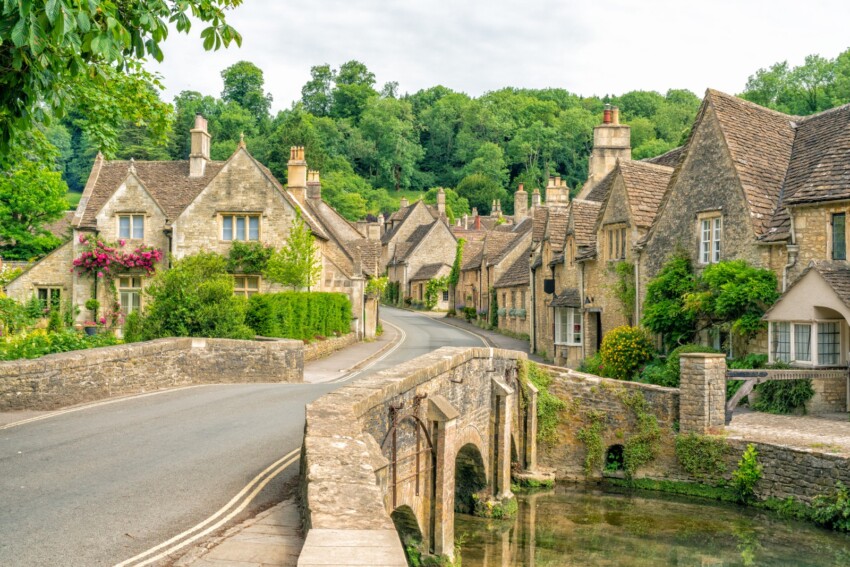
A drive through the Cotswolds represents one of England’s most enchanting rural routes, perfect for those seeking to immerse themselves in the quintessential British countryside. Starting from London, the M40 heads north-west for approximately two hours until reaching the first stop: Oxford, the city of “dreaming spires” with its magnificent university colleges dating back to the 11th century. After visiting the Bodleian Library and Christ Church, head west towards Woodstock and the magnificent Blenheim Palace, the birthplace of Winston Churchill.
The heart of the Cotswolds reveals itself through a succession of postcard-perfect villages built from characteristic honey-coloured stone. Bibury, described by William Morris as “the most beautiful village in England”, captivates with Arlington Row, a perfectly preserved row of 14th-century weavers’ cottages. Just a few kilometres away, Bourton-on-the-Water deserves a stop for its stone bridges crossing the River Windrush, whilst Stow-on-the-Wold hosts the region’s oldest medieval marketplace. The quiet country roads connecting these villages offer breathtaking views across rolling hills dotted with sheep and ancient country estates.
The southern section of the route includes Castle Combe, often used as a film location for its perfectly preserved medieval appearance, and concludes with Bath, designated a UNESCO World Heritage site. Here, beyond the celebrated Roman Baths dating from 44 AD, the Royal Crescent and the Circus are well worth a visit, both outstanding examples of Georgian architecture. The entire route covers approximately 220 kilometres and can be completed in two to three days, staying at characteristic bed and breakfasts or historic country inns. A rental car is essential as public transport between villages is sparse and infrequent.
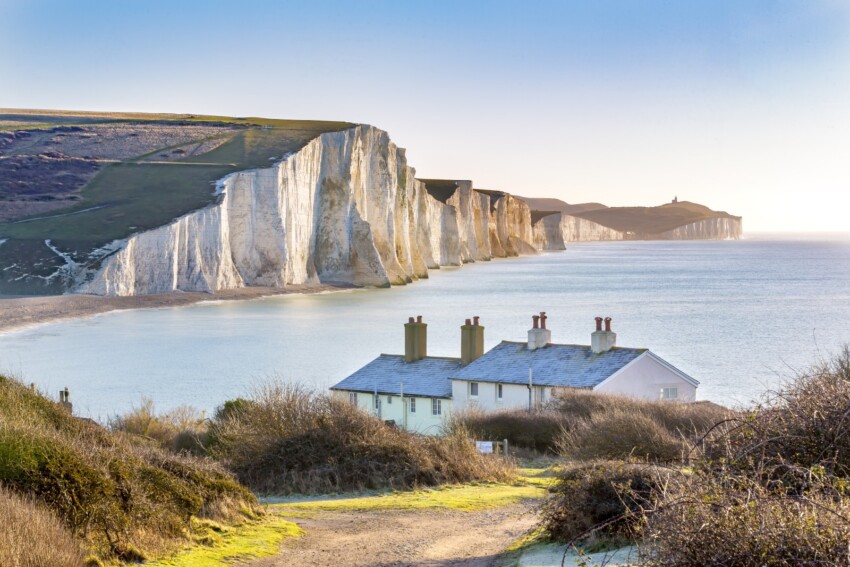
A trip to England’s south coast offers the perfect mix of Victorian seaside culture and spectacular natural landscapes. From London, take the A23/M23 heading south for approximately 90 minutes to reach Brighton, the vibrant seaside resort that has been Londoners’ favourite beach destination since the 19th century. Brighton Pier, built in 1899, with its vintage fairground rides and fish and chips stands, epitomises the essence of British seaside culture. The Royal Pavilion, an extraordinary Indo-Saracenic palace commissioned by Prince Regent George IV, is not to be missed.
The North Laine district deserves a few hours to explore its vintage shops, independent art galleries and alternative cafés. The Brighton Museum & Art Gallery, located within the Royal Pavilion gardens, houses an eclectic collection of art and design. For those seeking nightlife, the seafront offers a wealth of bars, restaurants and clubs that come alive after sunset.
Continuing east along the A259, after approximately 30 kilometres you reach one of England’s most iconic natural spectacles: the Seven Sisters, imposing white chalk cliffs rising 162 metres above sea level. Seven Sisters Country Park offers several walking trails to admire the cliffs, with the most popular route starting from Seaford and reaching Eastbourne via Beachy Head, the highest cliff. The contrast between the dazzling white of the chalk faces and the deep blue of the Channel creates extraordinary photographic opportunities, particularly striking at sunset.
The route can be completed with a visit to Canterbury, approximately an hour’s drive east, where the magnificent Gothic cathedral represents one of Europe’s oldest pilgrimage sites. Dover’s cliffs, with their iconic medieval castle, are just 30 minutes from Canterbury and provide a spectacular conclusion to the coastal route. The entire journey covers approximately 250 kilometres and can be completed in a long day or, better yet, as a weekend break with an overnight stay in Brighton.
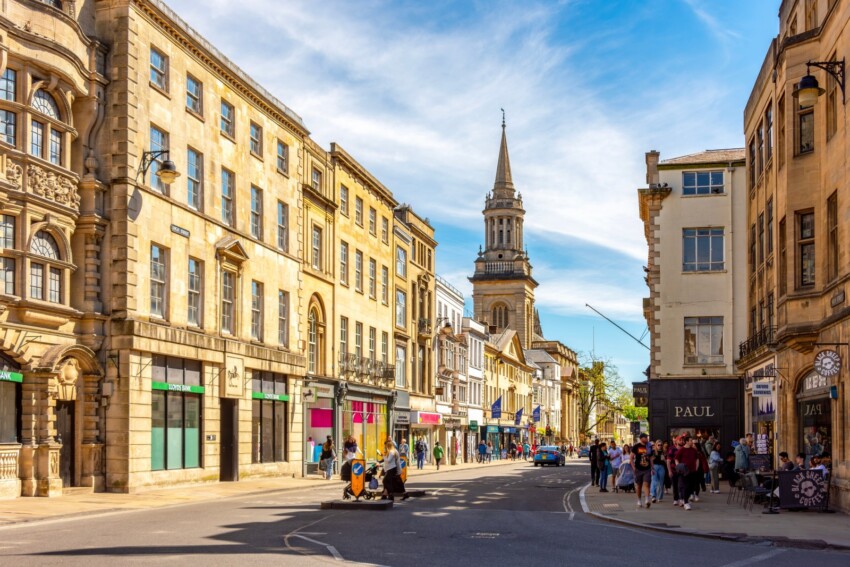
This cultural route takes in some of central England’s most prestigious locations, combining academic excellence and literary heritage. Cambridge, reachable from London in approximately 90 minutes along the M11, welcomes visitors with its 31 university colleges spread along the River Cam. King’s College, with its Gothic chapel and 15th-century stained glass, epitomises the city. The experience of “punting”, navigating the river in a flat-bottomed boat propelled by a pole, allows you to admire the “Backs”, the gardens overlooking the waterway.
Trinity College, where Isaac Newton and Lord Byron studied, and St John’s College with its Bridge of Sighs are essential stops. The city centre, closed to traffic, lends itself to leisurely strolls past historic bookshops, student-frequented pubs and characterful shops. The Fitzwilliam Museum houses one of the UK’s most important art collections, with works spanning Egyptian antiquity to French Impressionism.
From Cambridge, head west for approximately two hours along the A428 and A421 to Oxford, passing through the quiet countryside of Bedfordshire and Oxfordshire. Oxford, with colleges even older than those in Cambridge, has educated countless British prime ministers and Nobel laureates. Christ Church, used as a filming location for the Harry Potter series, with its refectory transformed into Hogwarts’ Great Hall, is the most visited. The Radcliffe Camera, the round Baroque building of the Bodleian Library, dominates the city centre and stands as one of England’s most photographed buildings.
The route concludes to the north at Stratford-upon-Avon, the birthplace of William Shakespeare. Just one hour from Oxford along the A34 and A3400, this Warwickshire market town preserves five houses connected to the Bard, including the birthplace on Henley Street and Holy Trinity Church where he is buried. The Royal Shakespeare Theatre offers evening performances of Shakespeare’s works, whilst a walk along the River Avon, surrounded by timber-framed and brick Tudor buildings, completes the historic atmosphere. The entire cultural triangle covers approximately 300 kilometres and requires at least three days to appreciate properly, with accommodation in historic university inns or characterful bed and breakfasts.

Visitors from outside the EU will need one, whilst EU citizens do not require an International Driving Permit. A driving licence in card format issued by the European Union is perfectly valid for renting and driving in the UK. The licence must have been held for at least one year and must be valid. A valid form of identity is also required.
Yes, it is possible to rent a car in London for drivers aged 21-24, but most companies charge a “young driver” supplement that can range from £15 to £30 per day. Drivers under 21 are rarely able to rent vehicles. Additionally, young drivers have access to a limited range of vehicles, typically only economy and compact cars, excluding SUVs, luxury vehicles and vans. It is essential to check the specific terms of the rental company at the time of booking.
Pay the Congestion Charge online via the Transport for London website, using the TfL app, by phone or at authorised retailers. Payment can be made in advance, on the day itself or by midnight of the third working day following. If you pay in advance or on the day, the charge is £15; late payment increases it to £17.50.
Many rental companies also offer an Auto Pay service that automatically charges the fee, with a small administrative commission. Failure to pay results in a £180 fine, reduced to £90 if paid within 14 days.
Three essential documents are required: a valid driving licence, a form of identity (passport or identity card) and a credit card in the primary driver’s name. The credit card is used for the security deposit, which is “frozen” and released upon vehicle return. Debit cards are not accepted for the deposit. If you’ve booked online, bring your booking confirmation as this will speed up the collection process. Some companies also require proof of residence.
Yes, most companies offer one-way rental service, allowing you to return the car at a different location from the pickup point. This service typically incurs a supplement that varies depending on the distance between the two locations and can range from £30 to £150.
Some popular routes, such as London to Edinburgh, may have lower one-way charges due to high demand.
The basic insurance included in the rental price typically covers third-party liability and theft or fire damage, but with high excess amounts that can reach £1,000-£1,500. Many drivers choose to reduce or eliminate the excess by purchasing CDW (Collision Damage Waiver) or Super CDW.
In the UK, the use of approved child car seats is mandatory for all children up to 12 years of age or 135 cm in height. Infants up to 15 months must travel in rear-facing car seats (Group 0+), whilst for older children, appropriate group car seats are used.
Rental companies provide car seats for a fee (£5-£8 per day), but it’s important to book them in advance to ensure availability. Many families prefer to bring their own car seats from home to save costs, ensuring they comply with British standards. Children over 135 cm can use standard seatbelts, whilst those between 135 and 150 cm should ideally continue using a booster seat.
In case of an accident, safety is the priority. If possible, move the vehicle off the road, turn on hazard lights and place a warning triangle. Call the police immediately on 999 if anyone is injured or if the accident is blocking traffic, otherwise call 101 for non-urgent reports. Take photos of the damage and collect details from any other vehicles involved. Then contact the rental company using the emergency number provided in your contract. In case of mechanical breakdown, major rental companies offer 24/7 roadside assistance. Never attempt to repair the vehicle yourself and do not authorise any repairs without the rental company’s consent, as you may lose insurance cover.
Here are some quick answers to the most common doubts about car rental in London.
To reserve a car in London a credit card or debit card is sufficient. However, when you go to collect the car, you will need:
The car rental companies in London allow to rent a car to all those who are between 21 and 70 years old. However, there is an additional cost for under 25 and for those over 70.
A car rental in London always includes:
Any extras or additional insurance coverage are separate.
Find the best rates by comparing all car rental companies in one search.






 Hotel
Hotel  Budget accommodations
  Apartments
  Family Hotel
  Luxury Hotel