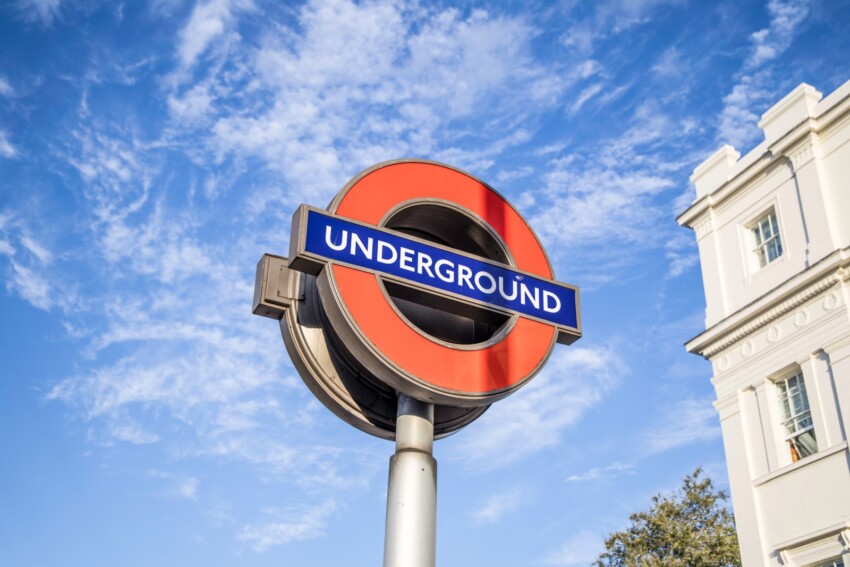
The London Underground (London Underground, commonly known as the Tube), opened in 1863, is the world’s oldest metro system and one of the busiest. Its distinctive logo has become an icon of the city itself and of British culture more broadly. With over 400 km of track, it connects approximately 270 stations across 9 fare zones along 11 different lines.
The Underground is fully integrated with London’s other rail services:
London Overground: a network of frequent urban trains that connect the city quickly with the sprawling suburbs of Greater London;
Bear in mind that the Underground map’s schematic does not represent actual distances between stations, so walking can sometimes be quicker. If you’d like to know journey times, you can download this helpful map, which shows the distances between stations.
When using the Underground, it’s important to understand which direction you need to travel in. However, heading the wrong way isn’t a major inconvenience, as trains run very frequently (every 2 to 7 minutes during the day) so you can easily go back.
Below you’ll find the London Underground map in PDF format.
The Tube’s ticketing system may seem complex at first, but understanding it will help you optimise your travel costs.
Daily spending caps
The most important thing to know is that whether you pay with an Oyster Card or a contactless card, a daily spending cap applies, which varies depending on the zones you travel through. Once you reach this limit, all subsequent journeys on the same day are free.
For zones 1-2, the most commonly used by visitors, the daily cap at the time of writing is £8.90. This means that regardless of how many journeys you make, you’ll never pay more than this amount in a single day. The system automatically calculates the best fare for you, with no need to buy specific tickets.
Peak hours
Fares vary depending on whether you travel during peak hours or off-peak. Peak hours are those most commonly used by commuters: 6:30 to 9:30 and 4:00 to 7:00 pm, Monday to Friday. All weekends and other times on weekdays are considered off-peak.
During peak hours, tourist fares are higher to discourage their use and leave space on trains for those who genuinely need it for work.
If your plans allow, travelling outside peak hours not only saves you money but also makes your experience far more pleasant, avoiding the crowds and overcrowded trains.
Children’s fares
Children under 11 travel free on the London Underground, provided they’re accompanied by an adult with a valid ticket or Oyster Card.
Young people aged 11 to 15 can benefit from 50% discounted fares using a Zip Oyster Card, a special card that must be applied for in advance through Transport for London’s website. You’ll need to provide a photo and some documents, so plan ahead if travelling with teenagers in this age group.
How to Pay for Underground Tickets
There are four main ways to pay for your Tube journeys, each with specific advantages depending on how long you’re staying and your needs.
Contactless Cards
If you have a contactless credit or debit card, you can use it directly at the Underground barriers without needing to buy an Oyster Card. The system will automatically charge the correct fare based on the zones you travel through and will apply the same daily spending caps as the Oyster Card.
This solution is particularly convenient for short stays (up to 4-5 days), saving you the need to buy and top up a separate card. You can also link the same contactless card to devices such as smartphones or smartwatches via Apple Pay or Google Pay, allowing multiple people to travel using different payment methods from the same physical card.
Important: each adult must have their own Oyster Card or contactless card. You cannot use the same payment method to pass multiple people through the barriers.
Oyster Card
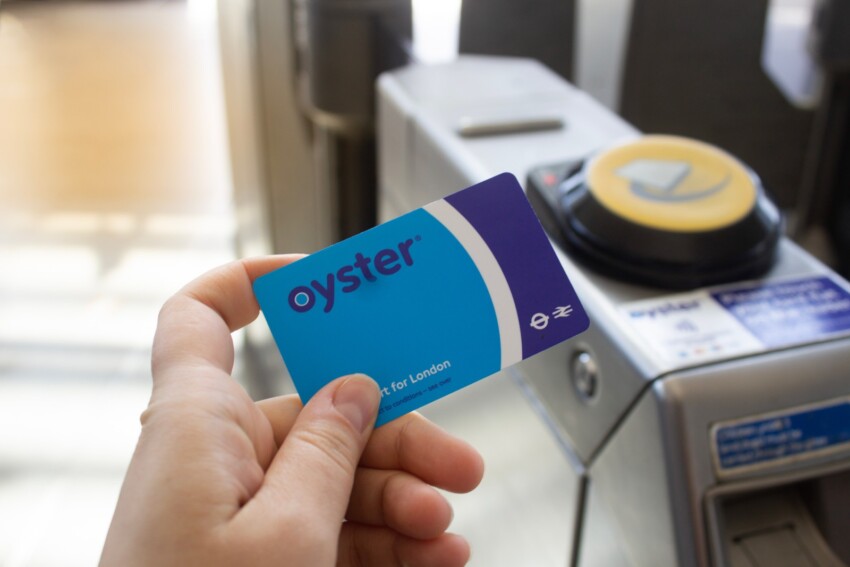
The Oyster Card is a rechargeable electronic card that’s the preferred choice for both residents and visitors. It can be used not only on the Underground, but also on buses, trams, DLR, London Overground and some National Rail services within London.
You can buy an Oyster Card at Underground stations, online on Transport for London’s official website, or at some affiliated shops. The card requires an initial deposit, which is fully refundable when you return it. Once you have the card, you can top it up with any amount you choose using the automatic machines found in all stations.
Travelcard
A Travelcard is a pass that allows unlimited travel on all London public transport for a set period. You can choose travelcards valid for 1 day, 7 days, 1 month or even 1 year.
The cost of a travelcard depends on which zones you intend to travel through, the duration of validity and the time you travel (peak or off-peak). The most cost-effective travelcard for visitors is generally the weekly pass for zones 1-2, which has no price difference between peak and off-peak times.
The travelcard can be loaded directly onto your Oyster Card. If you’re planning to stay in London for several days and use public transport frequently, a travelcard is the most economical solution.
Single Ticket
A single ticket is purchased from automatic machines in every station and costs significantly more than other payment methods. This option is only recommended if you genuinely need to make just one journey during your stay, a scenario that’s fairly rare for tourists visiting London.
London Underground Zones
London is divided into 9 concentric fare zones, with zone 1 representing the city centre and subsequent zones extending towards the suburbs. Fares increase based on how many zones you travel through on your journey.
The vast majority of major tourist attractions are located in zones 1 and 2: Big Ben, Buckingham Palace, Tower Bridge, the main museums, the Soho and Covent Garden areas, and many other must-see destinations are all concentrated in this central area.
When planning your journeys, always check which zone your destination is in so you can calculate the correct travel cost.
Tube Lines and Colours
Each London Underground line has a distinctive name and colour that makes it easily identifiable on the map and in stations. Memorising the colours is often simpler than remembering the line names.
The main lines are: Bakerloo (brown), Central (red), Circle (yellow), District (green), Hammersmith & City (pink), Jubilee (grey), Metropolitan (purple), Northern (black), Piccadilly (dark blue), Victoria (light blue) and Waterloo & City (turquoise). Added to these are the DLR (Docklands Light Railway), London Overground and the Elizabeth Line.
Some lines have branches with different final destinations. For example, the Northern Line divides into two branches in north London. It’s important to always check the illuminated signs on the platforms to see the final destination of the arriving train, so you can make sure you board the right one.
Underground Operating Hours
The London Underground generally opens at 5:00 am and closes around 1:00 am, Monday to Friday. Weekend hours may vary slightly and train frequency is generally reduced.
Each line and station has specific opening and closing times, which you can easily check by downloading the official Transport for London app or visiting the website. Train frequency varies considerably: at central stations during the day, trains pass every 2-3 minutes, whilst during quieter hours or at suburban stations you may have to wait 10-15 minutes.
Night Tube
Some Underground lines offer the Night Tube service, remaining open all night during the weekend (Friday and Saturday nights). The lines currently operating 24 hours are the Central, Jubilee, Northern, Piccadilly and Victoria, although not at all their stations.
Night trains run at reduced frequency, generally every 10-15 minutes, but represent a safe and convenient option for those wanting to enjoy London’s nightlife without worrying about how to get back to their hotel. Fares are identical to daytime rates and you can use your Oyster Card or contactless card normally.
Getting Around Stations
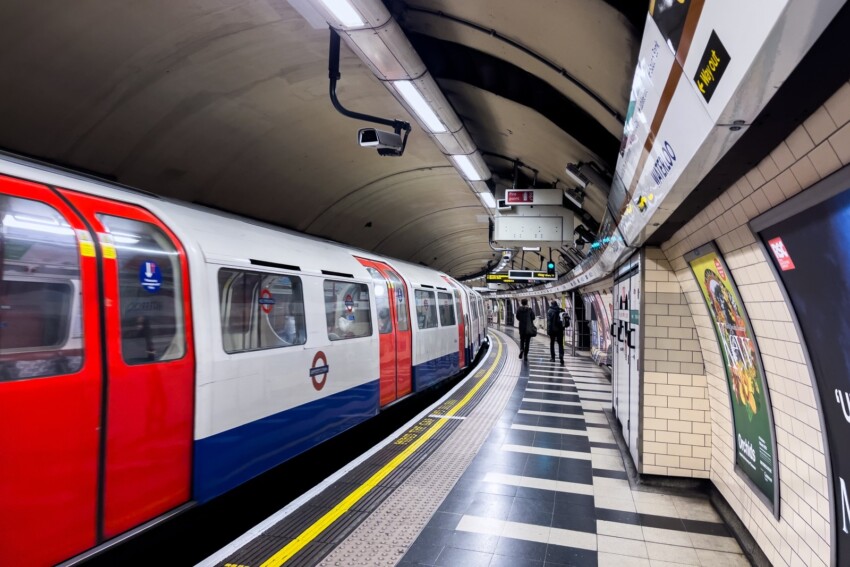
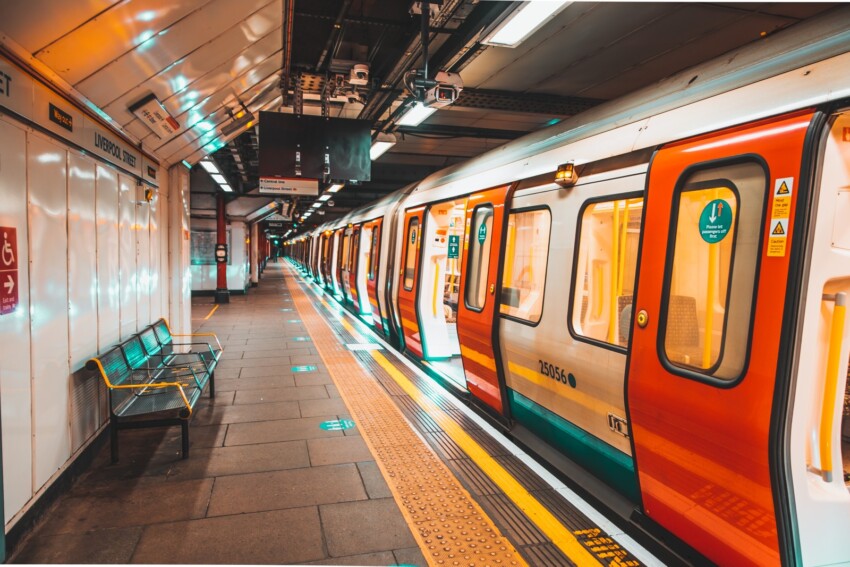
In each Underground station there are two platforms for each line, one in each direction. Depending on the orientation of the line on the map, platforms are marked as northbound (towards the north), southbound (towards the south), eastbound (towards the east) or westbound (towards the west).
In the stations you’ll find clear signs indicating, for each line, all the stations you can reach in each direction. For example, if you’re at Waterloo and need to reach Leicester Square, you’ll notice on the map that the Northern Line connects the two stations directly. Waterloo is south of Leicester Square, so you’ll need to follow the signs for the northbound platform.
Above each platform there are illuminated signs showing in real time which line is arriving, how many minutes until arrival and what the train’s final destination is. Always check these displays before boarding to make sure you’re on the right train.
Barriers and Station Access
Each station has entry and exit barriers where you need to validate your ticket or card. They all look similar, but some are designed for specific uses: there are standard barriers for individual passengers, wider barriers for pushchairs and luggage (generally located to the side), and staff-assisted positions.
To pass through, hold your Oyster Card or contactless card against the yellow circular reader on the barrier. If you’re using a paper ticket or travelcard, insert it into the designated slot: the ticket will be “swallowed” by the barrier and come out the other side. Always take it, as you’ll need it to exit the station too.
You can only enter through barriers marked with a green arrow. If you see a red “X”, that barrier is for exit only. The same validation procedure must be repeated on exit: this double reading allows the system to calculate the correct fare based on the zones you’ve travelled through.
Useful Apps
Using certain applications can radically transform your London Underground experience, making it simpler and less stressful.
Citymapper
Citymapper is considered one of the most useful apps for urban transport in London. It provides detailed, real-time updated directions, suggests alternative routes in case of delays or closures, and calculates the exact cost of your journey based on your chosen payment method.
A particularly appreciated feature is the ability to set notifications that alert you when it’s time to get off the train or bus, perfect for those unfamiliar with the city. The app also works offline, allowing you to consult downloaded maps without a data connection.
Google Maps
Google Maps is not only an excellent app for driving directions, but is also very effective for planning Underground routes. Enter your destination and the app will automatically show you which lines to take, where to change and estimated journey times.
It also includes options to compare routes with other transport methods such as buses, bikes or taxis, allowing you to choose the best solution. Integration with real-time schedules makes Google Maps particularly reliable for avoiding delays and service interruptions.
Both apps are free and available on iOS and Android devices. Downloading them before you travel will help you enormously in getting around safely and independently.
Rules to Follow on the London Underground
The London Underground carries millions of people every day, and its smooth operation depends on all passengers respecting a set of rules—both written and unwritten.
Always Stand on the Right
This is probably the most important and most visible rule. On escalators, you must always stand on the right side, leaving the left side clear for those in a hurry who wish to walk or run up.
You’ll see “Stand on the Right” written everywhere, and Londoners take this rule very seriously indeed. If you position yourself on the left, you’ll be politely but firmly asked to move. During rush hours, you’ll see a continuous stream of people rushing up or down the left side of the escalators.
Have Your Ticket Ready
Never approach the ticket barriers without having your ticket or card already in hand, ready to be scanned. Stopping in front of the gates to rummage through your rucksack or bag for your Oyster Card creates congestion and delays, frustrating everyone behind you.
Get into the habit of preparing your card or ticket whilst walking towards the barriers, so you can pass through smoothly without creating queues.
Let People Off Before Getting On
When the train arrives at the platform, don’t board immediately. Always wait for all passengers who need to exit at that stop to leave the train first, then board in an orderly manner.
This simple common-sense rule ensures an efficient flow of people and significantly reduces the time trains spend stopped at stations. You’ll often notice arrows marked on the platform floor indicating where to stand to facilitate this process.
Mind the Gap
You’ll constantly hear the phrase “Mind the gap between the train and the platform” repeated by both automated announcements and staff members.
At some stations, especially where trains stop on a curve, the gap between the train’s edge and the platform can be substantial—sometimes exceeding 20 centimetres. Take care when boarding and alighting, particularly if you’re carrying luggage or travelling with small children.
Frequently Asked Questions
What happens if I lose my Oyster Card?
If you’ve registered your Oyster Card online (highly recommended), you can block it and transfer any remaining credit to a new card. If you haven’t registered, any remaining credit on your lost card cannot be recovered.
Can I use the same contactless card for multiple people?
No, each person must have their own payment method. However, you can use the physical card for one person and the same card linked to a mobile device (smartphone or smartwatch) for another person.
Is the Underground safe at night?
Yes, the London Underground is generally very safe even during late hours and on the Night Tube service. There are always staff members present and CCTV cameras throughout. As with any major city, exercise sensible precautions and keep an eye on your belongings.
Can I bring large luggage on the Underground?
Yes, you can bring luggage on the Underground at no extra cost. However, during peak hours it can be extremely uncomfortable. If possible, avoid travelling with large luggage during the busiest times and use the less crowded carriages, typically those in the middle of the train.
How does Wi-Fi work on the Underground?
Many Underground stations offer free Wi-Fi, though the connection is not available inside the tunnels. You can connect for free by registering with the service the first time; after that, access will be automatic at all stations covered by the service.
Iconic Stations Not to Miss
Some London Underground stations are genuine tourist attractions in their own right, thanks to their architecture, history or unique characteristics.
King’s Cross St Pancras is London’s largest station and deserves a visit not only for the architectural beauty of the two railway stations that sit above it, but also to hunt for the famous “Platform 9¾” from Harry Potter, recreated for fans of the series at King’s Cross station. St. Pancras International is also the arrival station for the Eurostar service from Paris.
Baker Street is one of the oldest stations and still retains its original Victorian tilework. With 10 platforms and the highest number of platform edges on the network, it’s also the station dedicated to the famous detective Sherlock Holmes, with silhouettes of the character scattered throughout the corridors.
Westminster is a spectacular modern station, with long escalators descending 32 metres below ground. Exiting the station, you’ll find yourself directly facing Big Ben and the Houses of Parliament—one of London’s most iconic vistas.
How to save on transport and entrance fees
City Card allow you to save on public transport and / or on the entrances to the main tourist attractions.

 Hotel
Hotel  Budget accommodations
  Apartments
  Family Hotel
  Luxury Hotel