London: The London Eye Entry Ticket
36.568 reviews
Buy now
From 33,21€ per person
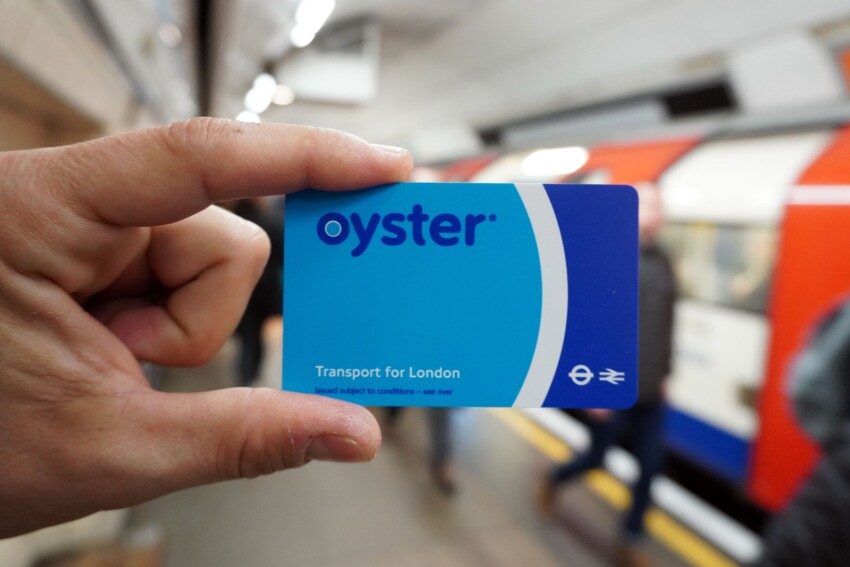
The Oyster Card is a rechargeable smartcard that allows you to travel on London’s entire public transport network. You can use it on city buses, the Underground, DLR, London Overground, TfL rail services, the Emirates Air Line, river buses and most rail services within the city. You can also load various travelcards onto your Oyster Card.
Getting a new Oyster Card is straightforward—you can order it online (it’s also included in the London Pass) and collect it from one of the visitor centres at Gatwick or Heathrow. The card activation fee is £5.
The Oyster Card is a rechargeable electronic smartcard used to pay for journeys on all of London’s public transport. It uses contactless technology: simply tap it against the yellow readers on the Underground barriers or on buses to validate your journey, with no need to insert it into any device.
The system was introduced in 2003 and has since become the standard payment method for millions of commuters and visitors. The card is purchased with a pre-loaded credit of your chosen amount, ranging from a minimum of £10 up to £50 or more. With each journey, the cost is automatically deducted from your available credit, calculated based on the zones you travel through and the time of day.
One of the most advantageous features of the Oyster Card is the Daily Price Cap: no matter how many journeys you make in a day, you’ll never pay more than a set amount. Once you reach this cap, all subsequent journeys that day are free.
There’s a special version of the Oyster Card designed specifically for visitors: the Visitor Oyster Card. It works exactly like the standard Oyster Card in terms of use and fares, but comes with exclusive benefits that make it particularly attractive for those visiting London.
The main differences between the two versions relate to how you purchase them and the additional benefits. The standard Oyster Card is available at all London Underground ticket offices, at Heathrow, Gatwick and London City airport stations, and in many shops displaying the Oyster logo. It has an initial cost of £7 as a deposit, which is fully refundable when you return the card.
The Visitor Oyster Card, on the other hand, can only be purchased online through authorised websites and is sent directly to your home within 15-20 working days. This means you’ll have it with you when you leave, avoiding the need to hunt for a ticket office as soon as you land in London.
The most significant advantage of the Visitor Oyster Card is the exclusive discounts it offers at numerous London attractions and restaurants, including Planet Hollywood, M&M’s World, London Transport Museum, Kidzania, Thames Rockets and many others. These discounts can reach up to 25% and more than make up for any difference in initial cost.
Beyond the exclusive discounts, the Visitor Oyster Card offers several practical advantages for visitors. It’s ready to use as soon as you receive it: it activates automatically when you first use it, when the first amount is deducted from your credit. You can therefore order it weeks in advance without worrying that your credit will expire.
The card has no expiry date: if you have unused credit when your trip ends, you can keep it and use it on a future visit to London, or give it to friends or family planning a trip to the capital. It also makes a nice souvenir of your trip, thanks to its unique tourist-focused design.
The flexibility of available top-ups, from £10 to £50, lets you cover anything from a short weekend to a full week in London, giving you peace of mind that you’ll always have enough credit for your journeys.
If you opt for the standard Oyster Card, you can easily buy one once you arrive in London. All Underground stations have automated ticket machines with multilingual interfaces that accept both cash and credit or debit cards.
The process is very straightforward: select “Oyster Card” on the touchscreen, choose how much credit you’d like to load initially (usually £10 or more), add the £7 deposit, and proceed with payment. The machine will immediately issue your Oyster Card, ready to use.
You can also buy an Oyster Card at staffed ticket windows, where staff can help you and answer any questions. These are found in major stations such as King’s Cross, Victoria, Paddington and all London airport terminals served by the Underground.
Many shops in the city display the Oyster logo and are authorised to sell the card, offering another purchasing option if you prefer to avoid the Underground stations.
To buy a Visitor Oyster Card, you must order it online from the official Transport for London website and authorised partner sites. The process is simple: select your desired credit amount, provide your delivery address and proceed with payment.
Your card will be delivered by standard post within 15-20 working days, so it’s important to plan your purchase well in advance of your departure date. Don’t leave it to the last minute: it’s better to have it one or two weeks early to be sure you’ll receive it in time.
The main advantage of buying online is the convenience of having the card ready when you land in London, letting you use public transport immediately without having to find a ticket office at the airport or station.
One of the great advantages of the Oyster Card is its versatility: it can be used on virtually all of London’s public transport, making it the only card you’ll need during your stay.
The London Underground is of course the main transport covered by the Oyster Card. You can use it on all 11 lines, plus the DLR (Docklands Light Railway) and London Overground, with no zone restrictions.
All of London’s iconic red double-decker buses accept the Oyster Card and are one of the most economical ways to get around the city. London buses no longer accept cash as of 2014, so an Oyster Card or contactless card is essential.
The trams in South London are also fully integrated into the Oyster system, with the same fares as buses.
The Oyster Card can be used on surface trains operating within Greater London, including many National Rail services in London’s fare zones. This is particularly useful for reaching destinations slightly outside the centre that aren’t served by the Underground.
One of the most appreciated advantages for visitors is the ability to use your Oyster Card to reach the airports.
Heathrow Airport is connected to central London via the Underground (Piccadilly Line), while from Gatwick Airport you can use your Oyster Card on the Gatwick Express or National Rail trains.
Finally, London City Airport is accessible via the DLR.
The Oyster Card can also be used on more specialised services such as the Emirates Air Line cable car crossing the Thames, and offers a 10% discount on Thames Clipper river boats and the circular sightseeing cruise operating from London’s main piers.
The Heathrow Express, the fast train to the airport, and TfL Rail also accept the Oyster Card.
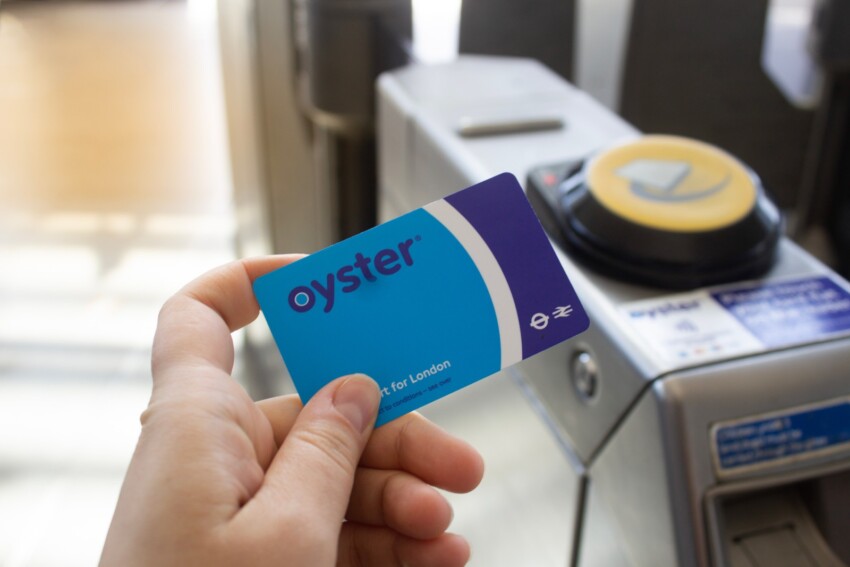
Using the Oyster Card is extremely straightforward, though there are some important differences depending on which transport you’re using.
When using the Underground or other rail services, you must always validate your Oyster Card twice: once on entry (touch in) and once on exit (touch out) at the station.
On entry, tap your card against the yellow circular reader on the barriers. You’ll hear a beep and see a green light with a confirmation message. The barriers will open automatically, letting you through to the platforms. If the light is orange or red and you hear a double beep, something’s wrong: you may have insufficient credit or the reader couldn’t read your card.
On exit, repeat the same action on the exit barriers. This second tap is crucial: the system only calculates the correct fare based on the zones you’ve travelled through if you touch out. If you forget to validate on exit, you’ll be charged the maximum fare and may receive a penalty.
The reader display will show your remaining credit after each validation, letting you keep track of your balance.
On buses, the process is simpler: you only need to validate your Oyster Card when you board, tapping it against the yellow reader near the entrance door. There’s no need to validate when you get off.
London buses charge a flat fare per journey, regardless of journey length. You also benefit from the “Hopper fare”: if you take another bus within 60 minutes of your first tap, you won’t be charged again. You can therefore change buses freely within an hour of your first journey, paying only for one fare.
On trams, you also only validate on boarding, following the same rules as buses.
You can use your Oyster Card immediately upon arrival if you land at Heathrow, Gatwick or London City airports. Simply follow the signs for trains or the Underground and use your card normally at the barriers.
For Heathrow Airport, the most economical option is to take the Piccadilly Line Underground, which takes around 45-60 minutes to reach the city centre.
Understanding the Oyster Card fare system will help you plan your budget more effectively and choose the most cost-effective option for your needs.
Underground fares vary based on two main factors: the zones you travel through and the time of day you travel. Central London (zones 1-2) is where most tourist attractions are concentrated and is likely where you’ll spend the majority of your time.
For a single journey in zones 1-2, you’ll pay £2.80 during peak hours and £2.70 off-peak. Peak hours are Monday to Friday from 6:30am to 9:30am and 4:00pm to 7:00pm. All other times, including weekends and bank holidays, are considered off-peak.
If your journey crosses multiple zones, fares increase progressively: zones 1-3 cost £3.70 in peak and £3.00 off-peak, whilst reaching Heathrow Airport (zone 6) costs £5.60 regardless of time of day.
The most advantageous feature of the Oyster Card is the Daily Price Cap: a maximum daily spending limit beyond which you won’t be charged for any further journeys, no matter how many more you make.
For zones 1-2, the daily limit is £8.50. This means that once you’ve spent this amount in a day, all subsequent journeys are free. The system automatically calculates when you’ve reached the cap and stops deducting from your credit.
For other zones, the daily limits are: £10.00 for zones 1-3, £12.30 for zones 1-4, £14.60 for zones 1-5, and £15.60 for zones 1-6 (including Heathrow Airport).
Buses are the most economical way to get around London. A single journey costs just £1.75, regardless of distance or time of day. The daily limit for buses is £5.25, allowing you unlimited bus travel for less than the cost of three underground journeys.
Remember the Hopper fare: if you change buses within 60 minutes of your first tap, your second journey is free. You can plan your journeys to take advantage of this and save even more.
Airport connections have specific fares. Heathrow Airport costs £5.60 on the underground (Piccadilly Line), whilst the faster Heathrow Express costs £25 but still accepts the Oyster Card.
For Gatwick Airport, you can use your Oyster Card on the Gatwick Express at £22.90 or on National Rail trains at £20.30 during peak hours and £12.20 off-peak, representing significant savings compared to paper tickets.
London is very generous with families travelling with children, offering reduced fares or even free travel for the youngest passengers.
Children under 11 travel completely free on all London buses and trams. On the Underground, DLR and London Overground, they travel free when accompanied by an adult with a valid Oyster Card or Travelcard.
One adult can travel with a maximum of four children under 11. To get through the Underground barriers, the adult should tap their Oyster Card and then ask a member of staff to let the children through the wider side gate.
Children aged 11 to 15 qualify for reduced fares on all transport. To benefit from these discounted fares (Young Visitor discount), speak to the staff at an Underground ticket office and ask them to apply the discount to an Oyster or Visitor Oyster Card.
Once activated for a maximum of 14 days, children will always pay half the adult fare, with the daily limit (price cap) halved on all services. This is particularly advantageous for stays of one or two weeks.
For longer stays or residents, there’s the 11-15 Oyster photocard, which allows young people in this age group to travel free on buses and trams, and at reduced fares on the Underground and trains. This card requires online registration and has a minimum validity of 4 weeks.
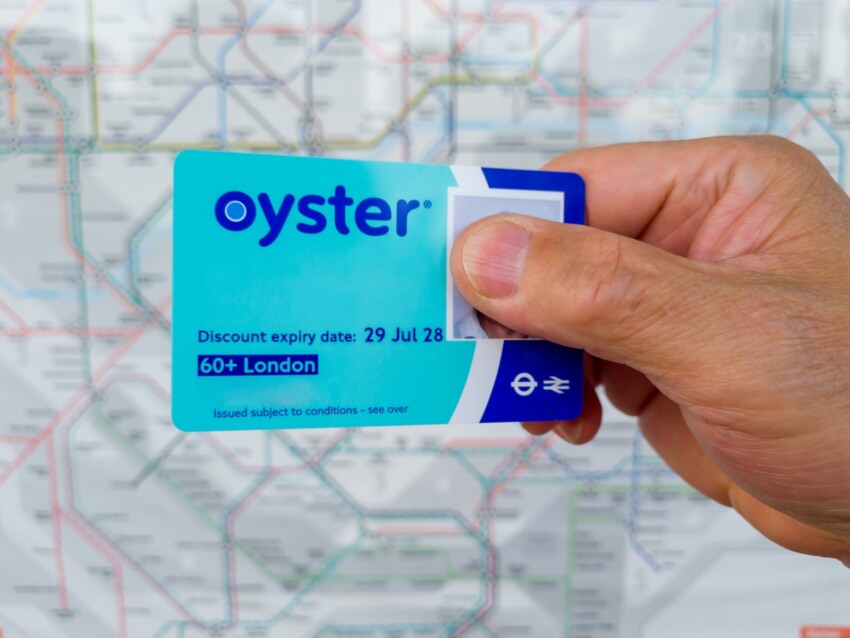
When the credit on your Oyster Card is running low, you can easily top it up in several ways. The top-up process is called a “top up” in English.
The most common and quickest method is to use the automatic ticket machines found in all Underground, DLR, London Overground, TfL Rail and some National Rail stations.
The machines have a multilingual touch-screen interface, making the process very straightforward. Insert your Oyster Card into the designated slot, select the amount you wish to add (usually you can choose from £10, £20, £30, £40 or £50, or enter a custom amount), and proceed with payment in cash or by credit/debit card.
The top-up is immediate and you can use the card straight after retrieving it from the machine. Your new balance will be displayed on the screen and will also show on the reader’s display next time you use it.
If you prefer personal assistance or have questions, you can speak to the ticket office staff at major stations. Simply tell them the amount you’d like to add and proceed with payment.
The staff can also help you check your current balance, review your recent journey history, or resolve any card issues.
If you have a standard Oyster Card (not a Visitor Oyster Card), you can register it online on the Transport for London official website and top it up via the internet. This option is particularly convenient for those who visit London frequently or for extended stays.
Once you’ve registered your card on the oyster.tfl.gov.uk website, you can add credit online with a credit card. The credit will be available within 24 hours and will activate automatically the first time you use the card after topping up online.
You can also set up auto top-up, a feature that automatically tops up your card when your credit falls below a certain threshold, ensuring you never run out of funds.
A common question among visitors is whether it’s better to use the Oyster Card in “pay as you go” mode or purchase a Travelcard, a daily or weekly pass for unlimited travel.
The Oyster Card in pay-as-you-go mode is generally better value if you’re staying in London for less than a full week, if your journeys aren’t daily, or if you alternate between very active days with many journeys and quieter days when you move around less.
The main advantage of the Oyster Card is flexibility: you only pay for the journeys you actually make, with the daily cap protecting you from spending more than £8.50 per day in the central zones, no matter how many journeys you take.
If you want to explore outlying areas or make day trips outside the centre, the Oyster Card is better value than a Travelcard because you can travel freely across all zones, always paying the lowest available fare.
The 7 Day Travelcard can be better value if you meet all these criteria: you’re staying in London for at least 6-7 days, you travel every single day, and you make numerous daily journeys concentrated in the central zones.
A 7 Day Travelcard for zones 1-2 costs around £42.70 (prices may vary), which works out to around £6 per day. If you consistently reach the Oyster Card’s daily limit of £8.50 every day, the Travelcard would save you approximately £2.50 per day.
However, in practice, most visitors don’t travel intensively every day: some days involve more walking, others staying in one area, some days you have a late breakfast and go out less. For this reason, the Oyster Card is better value in the majority of cases.
It’s worth knowing that you can also load a Travelcard onto your Oyster Card. If after a few days of pay-as-you-go use you realise a Travelcard would be better value, you can purchase one at a ticket office and have it loaded onto your existing Oyster Card, keeping your pay-as-you-go credit separate for any journeys outside the zones covered by the Travelcard.
Even with an efficient system like the Oyster Card, problems can occasionally occur. Here are the most common situations and how to resolve them.
If you try to enter the Underground and the barrier won’t open, showing a red or orange light, you probably don’t have enough credit to complete your journey. The system requires a minimum credit before allowing entry to ensure you can pay the maximum possible fare.
The solution is straightforward: head to one of the automatic machines in the station and top up your card before trying to enter again.
If you forget to tap out when leaving the Underground, the system can’t calculate the correct fare and will automatically charge you the maximum fare, which can be as much as £9 or more.
If you notice the error immediately, you can contact station staff within 48 hours with your Oyster Card and request a refund of the difference. Always keep your card with you until the end of your journey so you can resolve any such issues.
In rare cases, the Oyster Card may stop working due to physical damage or technical problems. If your card is no longer being read by the readers, contact the staff at a main ticket office immediately.
If you’ve registered your standard Oyster Card online, any remaining credit can be transferred to a new card. For the Visitor Oyster Card, which can’t be registered online, recovering credit may be more complicated, so handle it with care.
If you notice a charge that seems wrong, you can check your journey history at the automatic machines or by asking for assistance from staff. If the charge is genuinely incorrect, you can file a complaint within 8 weeks of the incident through the Transport for London website.
The most common errors include being charged the maximum fare for forgetting to tap out, or incorrect fares due to system technical issues. In most cases, if the problem is documented, you’ll receive a refund of the difference.
When your stay in London comes to an end, you have several options for dealing with your Oyster Card and any remaining credit.
The simplest solution is to keep your Oyster Card for a future visit to London. The card has no expiry date and the credit remains valid indefinitely. You can reuse it even after years, simply by tapping it on your first journey of your next visit.
This option is particularly convenient for the Visitor Oyster Card, which also makes a nice souvenir of your trip thanks to its tourist-focused design.
If you purchased a standard Oyster Card in London, you can return it at any Underground ticket office and get a full refund of the £7 deposit plus any remaining credit, provided it’s less than £10.
Approach a staffed ticket office, hand over your card and request a refund. You’ll receive the money in cash immediately or can ask for it to be credited back to your credit card if you prefer.
A practical alternative is to pass your Oyster Card with any remaining credit to friends or relatives who are about to visit London, or even to other travellers you meet at the airport or hotel. Many visitors appreciate this opportunity to save time by not having to buy a new card.
Although the Oyster Card is the most popular solution, there are alternatives that may suit certain situations better.
As already mentioned in the Underground guide, if you have a contactless credit or debit card, you can use it directly at the barriers without buying an Oyster Card.
The fares and daily limits are identical to the Oyster Card, and the system is extremely convenient for short stays (generally up to 5 days). However, you’ll miss out on exclusive Visitor Oyster Card discounts at attractions and restaurants, which can be worth more than the card itself.
The London Pass is a tourist card that includes entry to over 80 London attractions. Some versions of the London Pass also include a Travelcard for public transport, combining travel and entry into a single purchase.
This solution can be good value if you plan to visit many paid attractions during your stay, but should be carefully evaluated based on your specific itinerary.
No, each person must have their own Oyster Card or contactless card. You cannot use the same card to allow multiple people through the barriers. The system records each journey individually and calculates personalised fares based on usage.
The Oyster Card works on some National Rail trains operating in the London metropolitan area, but cannot be used for journeys to other cities across the UK. To visit Oxford, Cambridge or other destinations outside London, you will need to purchase separate rail tickets.
If you have registered a standard Oyster Card on the Transport for London website, you can block it online and transfer any remaining credit to a new card. For the Visitor Oyster Card, which cannot be registered, lost credit cannot be recovered, so treat it as carefully as you would cash.
Yes, you can top up your Oyster Card at the automated ticket machines at Heathrow, Gatwick and London City airports. This is particularly convenient if you arrive with a Visitor Oyster Card that needs topping up before use.
Yes, the Oyster Card works normally on the Night Tube, the overnight underground service operating on Friday and Saturday nights on selected lines. Fares are the same as the daytime service and count towards your daily cap.
Credit on the Oyster Card remains valid indefinitely, even for years. There is no expiry date, so you can safely keep your card with remaining credit for a future trip to London.
 Hotel
Hotel  Budget accommodations
  Apartments
  Family Hotel
  Luxury Hotel