Leonardo Hotel Aberdeen
Aberdeen - Union Square, Guild Street
Book now
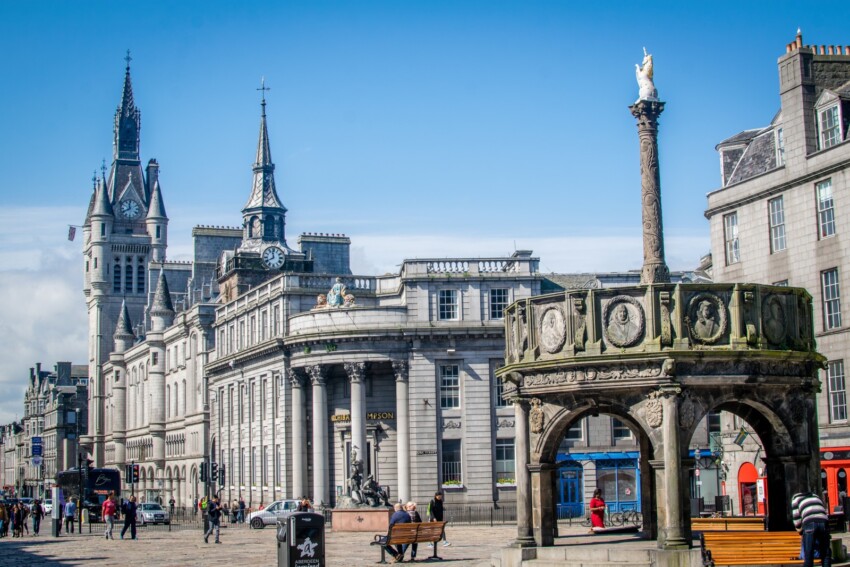
Aberdeen, known as the “Granite City” due to the distinctive colour of its buildings, sits on Scotland’s east coast.
The city is world-renowned as one of the principal centres of North Sea oil and gas operations. Beyond its economic significance, Aberdeen offers visitors an abundance of cultural attractions that make it a compelling destination for all types of traveller.
Aberdeen is home to two historic universities and consequently boasts a vibrant student atmosphere that brings energy to its numerous pubs, restaurants and nightlife venues.
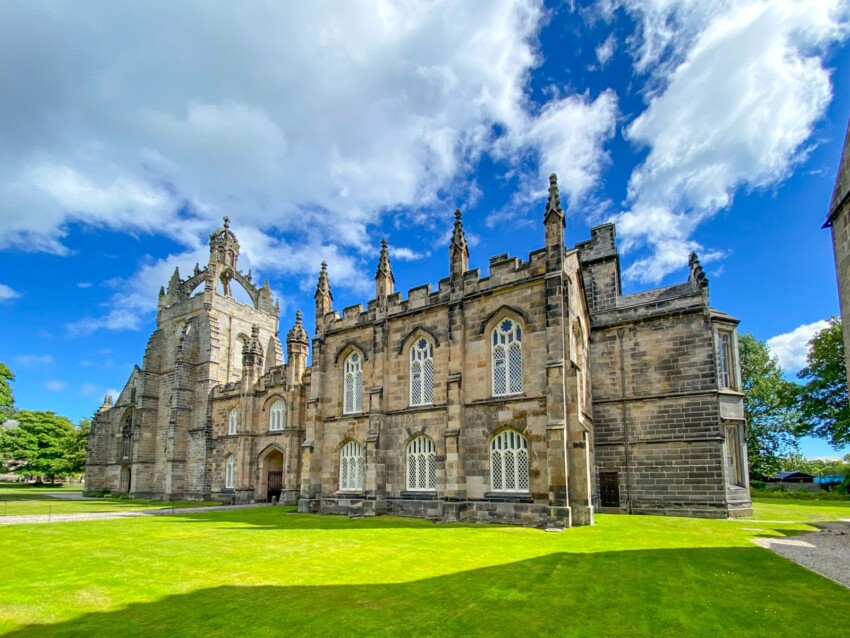
With its distinctive granite buildings that gleam in the sunlight, this port city will delight you with its elegance and the variety of attractions waiting to be discovered.
Old Aberdeen represents the historic and academic heart of the city, where time seems to have stood still amidst cobbled streets and medieval buildings. This charming area is home to the University of Aberdeen, founded in 1495, which boasts some of Scotland’s oldest and most evocative university buildings. The magnificent King’s College, with its iconic stone crown, is an architectural masterpiece you simply cannot miss.
Strolling along High Street, the main thoroughfare of Old Aberdeen, you’ll be enchanted by picturesque granite townhouses and independent boutiques interspersed with welcoming cafés. St. Machar’s Cathedral is another gem of the area: this 15th-century pre-Reformation cathedral features an imposing façade with twin towers and an ornate oak-panelled ceiling depicting the heraldry of European nobility.
Don’t miss the Cruickshank Botanic Garden, a peaceful botanical garden home to over 2,500 plant species. This corner of paradise offers a pleasant escape from urban hustle and proves particularly beautiful in spring and summer, when flowering plants create a natural tapestry of extraordinary beauty.
The Maritime Museum tells the story of Aberdeen’s profound connection with the sea. Located at the heart of the harbour, this award-winning museum offers a comprehensive overview of Aberdeen’s maritime heritage, from the historic fishing industry to modern North Sea oil and gas operations.
The building itself is architecturally interesting, combining a 16th-century structure with contemporary design. Inside, you’ll admire detailed ship models, period navigational instruments and an extraordinary collection of historic photographs documenting the evolution of Aberdeen’s harbour over the centuries.
The museum’s most striking feature is undoubtedly the full-scale model of an offshore oil platform, which extends across several floors of the building. This unique installation offers a fascinating insight into the complex engineering and daily life aboard these offshore structures. Interactive exhibitions also allow you to experience firsthand some of the challenges faced by maritime workers.
The Maritime Museum is both educational and engaging for visitors of all ages, with hands-on activities and simulations that make your visit an immersive experience. From the fourth floor, you’ll enjoy spectacular panoramic views across Aberdeen harbour, watching vessels coming and going and taking in the North Sea horizon.
The Aberdeen Art Gallery is one of the city’s most precious cultural treasures: housed in a magnificent Victorian-style building with a granite façade, it holds one of Scotland’s most important art collections.
The gallery boasts an extraordinary collection of British and international art, with works spanning from the 15th century to the present day. You’ll admire masterpieces by renowned artists such as Francis Bacon, Joan Eardley, Claude Monet and Tracey Emin. The Scottish art collection is particularly noteworthy.
A recent refurbishment created 21 gallery spaces and added a striking glass dome that floods the central atrium with natural light. Don’t miss the Cowdray Hall, a concert hall with excellent acoustics that regularly hosts musical events, and the Remembrance Hall, a contemplative space dedicated to those who fell in war. The gallery also includes a welcoming café where you can relax and reflect on the artworks you’ve just admired.
Duthie Park is a 44-acre green space in the heart of Aberdeen, gifted to the city by Miss Elizabeth Crombie Duthie in 1880. This impeccably maintained Victorian park is one of the most beloved leisure spots for locals and offers visitors an oasis of tranquillity away from urban bustle.
The park features enchanting landscaped gardens, picturesque ponds and spacious lawns perfect for picnics and outdoor activities. Children will love the adventure playground, whilst sports enthusiasts can enjoy tennis courts and areas dedicated to other recreational pursuits.
The true jewel of Duthie Park, however, is the David Welch Winter Gardens, one of Europe’s largest covered greenhouses and certainly one of Scotland’s most visited. This extraordinary glass structure houses a world-renowned botanical collection, with plants from every corner of the globe. You can explore different environments, from tropical rainforest to arid desert, admiring rare and exotic species.
The Temperate House will astound you with its camellia collection, whilst the Fern House shelters some of the world’s oldest ferns. Particularly fascinating is the Cactus House, with its impressive collection of succulents and cacti from the globe’s arid regions. Don’t miss the Corridor of Perfumes, where you can indulge in the fragrances of aromatic plants carefully selected for their scents.
Footdee, pronounced locally as “Fittie”, is an ancient fishing village that represents one of Aberdeen’s most characteristic and photogenic quarters. Located at the eastern end of the harbour, this picturesque corner of the city preserves its original charm with cobbled streets and neat rows of traditional cottages.
Designed by architect John Smith in 1809 as a planned settlement for the fishing community, Footdee is organised into four squares of inward-facing cottages, an arrangement designed to protect residents from the fierce North Sea winds. What makes this place truly unique are the tiny gardens and sheds fronting the cottages, decorated in wonderfully eccentric and colourful ways by locals over the years.
Walking through these narrow lanes, you’ll observe the extraordinary variety of personal ornaments, maritime decorations and curious objects adorning every shed, reflecting the personality and creativity of their owners. This eclectic open-air display offers a fascinating glimpse into local culture and the community’s deep connection with the sea.
Footdee also offers splendid views across the sea and the harbour entrance of Aberdeen, where you can watch ships coming and going from the commercial port. Proximity to Aberdeen Beach makes this area perfect for a revitalising seaside walk after exploring the village.
Aberdeen Beach is an extensive stretch of golden sand extending nearly two miles along the North Sea coast. This splendid urban beach offers the perfect retreat from city bustle and treats you to breathtaking seascapes.
The well-maintained seafront promenade is ideal for leisurely walks, jogging or cycling. Despite the water temperature not being tropical, many locals and brave visitors take a swim, especially between June and September.
Along the Esplanade you’ll find numerous attractions that keep this area lively year-round. The Codona’s Amusement Park is a fun fair with rides, arcade games and an exciting roller coaster, perfect for family entertainment. Nearby is the Beach Leisure Centre, a complex featuring a swimming pool with water slides and a wellness area.
The University of Aberdeen, founded in 1495, is the fifth oldest university in the English-speaking world and represents one of the city’s most important architectural and cultural treasures. With over five centuries of academic history, this prestigious institution has made significant contributions to scientific, literary and philosophical advancement not only in Scotland but worldwide.
The main campus of King’s College in Old Aberdeen is a masterpiece of Gothic and Renaissance architecture that absolutely merits a visit. The King’s College Chapel, with its iconic stone crown atop the tower, is one of Scotland’s best-preserved medieval buildings. Inside you’ll admire the splendid oak-vaulted ceiling and refined western stained glass, whilst ancient carved wooden stalls testify to centuries of academic tradition.
The Quadrangle is the university’s historic heart, an elegant courtyard surrounded by granite buildings where generations of students have walked and debated. Nearby stands the modern Sir Duncan Rice Library, a bold example of contemporary architecture with its fluted glass façade creating a fascinating contrast with the surrounding historic buildings. From the eighth floor you’ll enjoy spectacular panoramic views across the city and the North Sea.
The university also houses interesting museums such as the King’s Museum and the Zoology Museum, which hold scientific and historical collections of considerable value. The campus gardens offer pleasant green spaces where you can relax and admire further examples of academic architecture spanning different styles and periods.
The SPECTRA Light Festival is one of Aberdeen’s most captivating and innovative cultural events, transforming the city into an open-air art gallery. This annual festival, typically held in early February, illuminates Scotland’s long winter nights with spectacular light installations that breathe new life into Aberdeen’s historic buildings and public spaces.
International artists create site-specific works that use the city’s unique granite architecture as canvas for projections, light sculptures and interactive installations. Aberdeen’s iconic buildings such as Marischal College, the Art Gallery and Union Terrace Gardens transform into fantastic scenes through cutting-edge technology combining light, digital projections and sound design.
The festival is completely free and accessible to all, attracting thousands of visitors who follow an illuminated route through the city centre discovering the various installations. The festive atmosphere is further enriched by live performances, creative workshops and family activities that encourage active audience participation.
During the festival, the city literally becomes brighter, creating an immersive experience that challenges your perception of familiar urban spaces and offers fresh perspectives on the city.
If you have the chance to visit Aberdeen during this period, SPECTRA will gift you a unique and unforgettable cultural experience, ideal too for capturing extraordinary photographs of the city in a completely different light.
Aberdeen is well connected thanks to an efficient transport system that includes air, rail and road links. Located approximately 200 km north-east of Edinburgh and 240 km north-east of Glasgow, Aberdeen also makes an excellent base for exploring the Scottish Highlands and the north-east coast. The city itself is relatively compact and easy to navigate, with a good public transport system that will allow you to move around easily once you arrive.
Aberdeen International Airport (ABZ) is located at Dyce, about 11 km from the city centre. The fastest way to reach the city centre from the airport is by train from Dyce Station, located approximately 3 km from the airport and accessible by a short taxi journey. Trains take just 10 minutes to reach Aberdeen’s central station.
Alternatively, you can use the dedicated JET 727 bus service operated by Stagecoach, which connects the airport directly to the city centre in approximately 30 minutes. Buses depart every 10-15 minutes during the day and offer a convenient and economical connection.
If you prefer a taxi, you’ll find them at the terminal exit. The journey to the city centre takes about 20 minutes, depending on traffic.
Aberdeen has a railway station (Aberdeen Railway Station) centrally located on Guild Street, near the harbour and Union Square shopping centre. The station is well connected to the rest of Scotland and the UK through services operated by ScotRail, LNER and CrossCountry.
From Edinburgh, trains to Aberdeen depart regularly from Waverley Station and take approximately 2 hours and 30 minutes, travelling through the stunning scenery of the Scottish east coast. Services from Glasgow take approximately 3 hours and depart from Queen Street Station.
For those arriving from further afield, there are direct connections with London operated by LNER, with a journey of approximately 7 hours that passes through some of Britain’s most beautiful countryside.
The railway line also connects Aberdeen to other major Scottish cities such as Inverness (2 hours and 15 minutes), Dundee (1 hour and 15 minutes) and Perth (1 hour and 30 minutes), making it easy to combine a visit to Aberdeen with other Scottish destinations.
Reaching Aberdeen by car is relatively straightforward thanks to good road connections linking it to the rest of Scotland. The main road artery is the A90, which connects the city with Dundee and Edinburgh to the south. From Glasgow and the west of Scotland, you can follow the M80, then the M9 to Perth and finally the A90 heading north. The drive from Edinburgh takes approximately 2 hours and 30 minutes, while from Glasgow the journey takes about 3 hours.
Once in the city, be aware that Aberdeen can experience heavy traffic during rush hours, particularly around Union Street and Market Street. The city has numerous public car parks.
If you prefer not to drive into the city centre, you might consider using the Park & Ride services located on the city outskirts. These allow you to park free or at reduced rates and continue to the city centre on frequent buses.
Old Aberdeen is the best area for tourists: museums, restaurants, shops and pubs are all within a short walk. Old Aberdeen is home to the ancient University of Aberdeen and is characterised by cobbled streets and magnificent granite buildings that create an evocative atmosphere. Staying here will allow you to immerse yourself in the history and medieval architecture of the city, away from the bustle of the modern centre.
The area is well served by public transport to the rest of the city, but also offers a good selection of cafés, traditional pubs and small restaurants within walking distance. Accommodation tends to be welcoming bed & breakfasts and guest houses with character, often located in converted historic buildings that add a touch of authenticity to your experience.
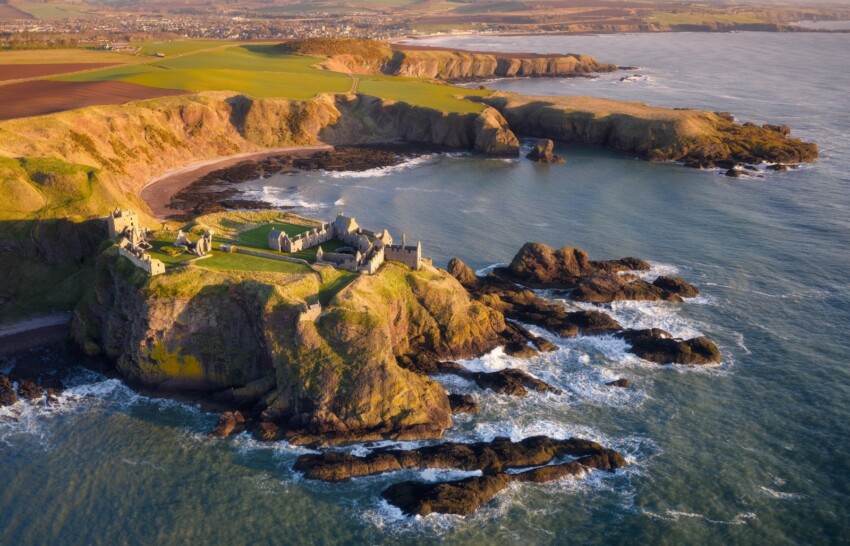
Aberdeen is in a privileged location, surrounded by some of Scotland’s most spectacular natural and historical beauty. Hiring a car is certainly the best choice for exploring the surrounding area, as it will give you the flexibility needed to visit castles, distilleries, villages and natural landscapes that are difficult to reach by public transport. The region’s road network is well maintained and distances are relatively short, allowing you to organise comfortable day trips from the city.
The area surrounding Aberdeen, known as Aberdeenshire, is famous for its Castle Trail, which includes over 300 castles, ruins and fortified houses – the highest concentration of fortresses in Europe.
Dunnottar Castle is one of Scotland’s most spectacular and photographed medieval fortresses, located near the town of Stonehaven. This ruined castle stands on a rocky promontory overlooking the North Sea, connected to the mainland only by a narrow pathway, a strategic position that made it virtually impregnable throughout the centuries.
The castle’s dramatic location, surrounded on three sides by vertiginous cliffs that plunge into the ocean, creates an almost surreal atmosphere and offers breathtaking panoramas that more than reward the walk needed to reach the entrance. The path itself is part of the experience, with a steep descent followed by a staircase that leads up to the entrance of the fortress, a journey that will immediately make you understand the defensive value of this position.
Within the walls, you can explore the remains of numerous buildings that tell the long and troubled history of the castle, which dates back to the 14th century.
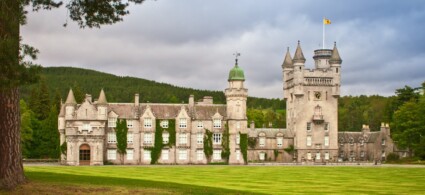
Balmoral Castle is undoubtedly one of the most prestigious attractions in the vicinity of Aberdeen and represents a symbol of the British Royal Family’s connection to Scotland. Located about 50 miles west of Aberdeen, in the beautiful valley of the River Dee, this magnificent castle has been the Royal Family’s summer residence since 1852, when it was purchased by Prince Albert for Queen Victoria.
The current castle is an impressive example of Scottish baronial architecture, built in local granite with towers and turrets that give it a fairytale appearance. During the summer months, when the Royal Family is not in residence, visitors can access the Ballroom, the only room in the castle open to the public, where paintings, porcelain and other objects from the royal collection are displayed.
But the true treasure of Balmoral is its extensive gardens and estates. You can explore over 20,000 acres of stunning Scottish landscape, with well-marked trails that wind through forests, moors and hills. The formal gardens near the castle are particularly enchanting, with manicured lawns, colourful flower beds and sculptures.
During your visit, don’t miss the exhibitions in the stable block, which offer an insight into the castle’s history and the Royal Family’s lifestyle when in residence. The Balmoral Cairns, a series of stone monuments erected by Queen Victoria in memory of her family members, represent another interesting attraction for those who enjoy walking.
The picturesque coastal town of Stonehaven, located just 25 km south of Aberdeen, offers an ideal excursion combining history, natural beauty and authentic Scottish traditions. This charming seaside resort, with its characteristic harbour and crescent-shaped bay, provides a welcome contrast to Aberdeen’s more urban atmosphere.
Stonehaven’s picturesque harbour is perfect for a leisurely stroll, where you can observe local fishing boats and enjoy the maritime atmosphere. Don’t miss the chance to try the famous fish and chips from Carron Fish Bar, which claims to have invented the deep-fried Mars bar, a curious Scottish delicacy.
During the summer months, Stonehaven beach offers a pleasant place to relax, while the heated seawater outdoor pool is a unique attraction. If you visit the town on New Year’s Eve, you might witness the spectacular Fireball Festival ceremony, when brave locals swing balls of fire over their heads in a procession down High Street to drive away evil spirits at the start of the new year.
Aberdeenshire is a key region for whisky enthusiasts, located at the eastern end of the famous Speyside Whisky Trail. This area boasts some of Scotland’s most renowned distilleries, easily accessible on a day trip from Aberdeen. A journey along this route will allow you to discover the secrets of producing Scotland’s “water of life” and taste various varieties of this iconic spirit.
About an hour’s drive from Aberdeen is the Glen Garioch Distillery in Oldmeldrum, one of Scotland’s oldest operating distilleries, founded in 1797. This small but fascinating distillery offers guided tours that illustrate traditional production methods. Its location in one of Scotland’s most fertile areas contributes to the distinctive character of its whisky, known for its malted notes and subtle hints of heather.
Continuing west for about 30 minutes, you can visit the Glendronach Distillery, renowned for its exceptional single malts matured in sherry casks. Founded in 1826, this distillery is set in a picturesque location and offers tastings of rich, fruity whiskies that have won enthusiasts around the world.
For a more immersive experience, you can venture into the Speyside region, about 90 minutes’ drive from Aberdeen. Here you’ll find the world’s highest concentration of whisky distilleries, including legendary names such as Glenfiddich, The Macallan and Glenlivet. Many of these offer complete tours of their facilities, from fermentation halls to distilleries and maturation warehouses, followed by guided tastings.
If you prefer not to drive, there are several organised tours departing from Aberdeen that allow you to visit multiple distilleries in a day, with the convenience of dedicated transport and expert guides who will enrich your experience with anecdotes and information about the history of Scottish whisky.
The spectacular Moray Firth Coast extends north of Aberdeen and offers some of Scotland’s most beautiful beaches and coastal villages. This excursion will take you through stunning marine landscapes, historic settlements and give you the opportunity to observe a rich marine fauna, all within a short distance from the city. The coastal route is particularly scenic and can be explored by following the A90/A952 coastal road heading north.
The first gem you’ll encounter along this route is Newburgh Beach, just 20 minutes’ drive from Aberdeen. This vast expanse of sand is known for hosting a colony of over 400 grey seals that can easily be observed from the shore. The contrast between the golden dunes and the blue waters of the North Sea creates a particularly photogenic scene.
Continuing north, it’s worth stopping at the Forvie National Nature Reserve, one of Britain’s most extensive sand dune systems. This protected area hosts an extraordinary variety of seabirds, including terns and plovers, and offers several hiking trails that wind through the dunes and coastal heathland.
The picturesque village of Cruden Bay, about 40 minutes from Aberdeen, is well worth a visit. In addition to its splendid beach, the village is known for being near the evocative ruins of Slains Castle, which is said to have inspired Bram Stoker for his “Dracula”. The sight of the fortress perched on the cliff edge, with waves crashing against the rocks below, is truly eerie and fascinating.
Continuing your coastal journey, you’ll reach Peterhead, Scotland’s largest fishing port, where you can visit the Peterhead Prison Museum or simply stroll along the lively waterfront. Just further north is Fraserburgh, where you can explore the Lighthouse Museum in Scotland’s oldest mainland lighthouse, built in 1787.
For nature lovers, one of the main reasons to explore this coast is the opportunity to spot the bottlenose dolphins that inhabit the Moray Firth. The best viewing points are Torry Battery in Aberdeen itself, or venturing a little further north towards Banff and Macduff, where there is also an interesting marine aquarium.
What's the weather at Aberdeen? Below are the temperatures and the weather forecast at Aberdeen for the next few days.
Aberdeen is situated on the north-east coast of Scotland, overlooking the North Sea. This important urban centre lies approximately 200 km north-east of Edinburgh and 240 km north-east of Glasgow.
The city sits at the mouth of two rivers, the Dee and the Don, which have contributed to the development of its natural harbour and economic prosperity. North of Aberdeen, around 70 km away, lies the city of Inverness, a gateway to the northern Highlands, whilst to the south, approximately 110 km away, you'll find Dundee.
 Hotel
Hotel  Budget accommodations
  Apartments
  Family Hotel
  Luxury Hotel