Flights to Edinburgh
Three hours and you're already in Scotland thanks to budget flights departing from Italy's major cities. Book now to find the best deals.
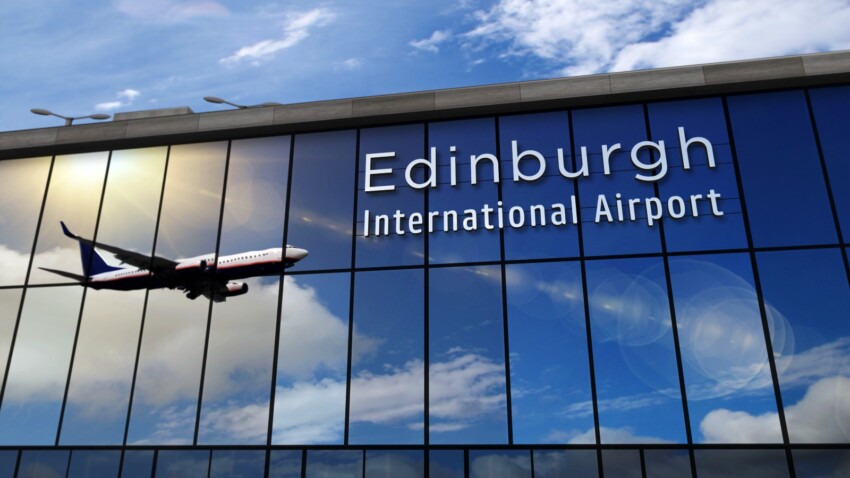
Scotland is served by four international airports, two of which — Edinburgh and Glasgow — handle the vast majority of international flights, including those from mainland Europe. Which airport to land at depends on your planned itinerary: if you want to start in the Scottish capital, Edinburgh is your destination; if you’re heading straight for the Highlands or the Isle of Skye, Glasgow might be more convenient. It’s worth checking both options before booking, and also considering the two secondary airports — Aberdeen and Inverness — which can work out well for itineraries in the northern Highlands.
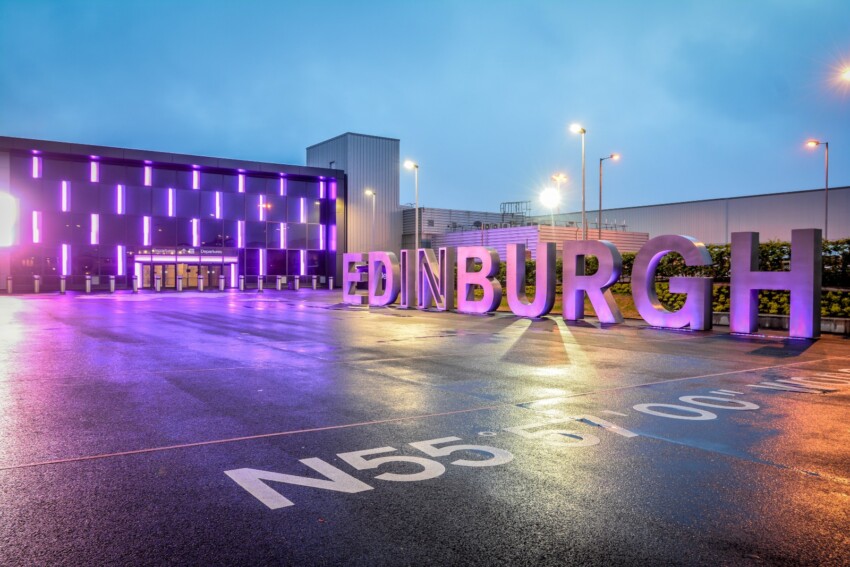
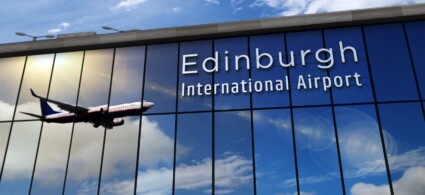
Edinburgh Airport (IATA code: EDI) is Scotland’s busiest airport and the fifth largest in the UK, handling nearly 10 million passengers annually with connections to over 100 international destinations. Located approximately 13 km west of the city centre, it’s reachable in 20–30 minutes under normal traffic conditions. It’s the main hub for Ryanair and easyJet in Scotland and offers the widest selection of flights from across Europe.
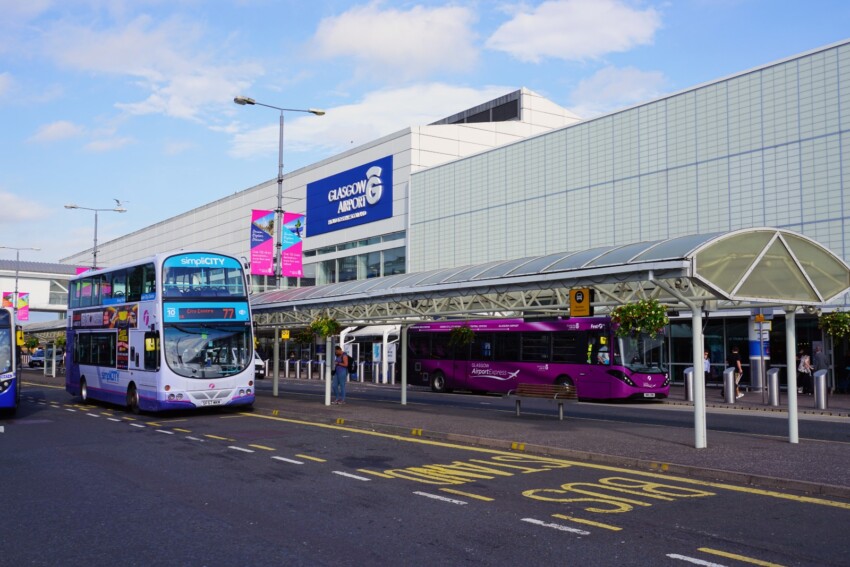
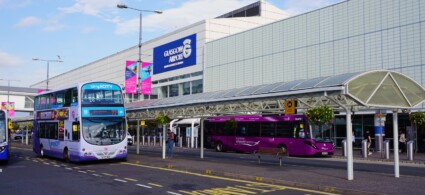
Glasgow International Airport (IATA code: GLA) is Scotland’s second-largest airport and lies around 13 km west of Glasgow city centre, near Paisley. It’s particularly useful if you want to explore the western Highlands, Loch Lomond and the Isle of Skye — you can reach these destinations in under an hour from Glasgow. It also works as an alternative for reaching Edinburgh, which is approximately an hour away by train or bus.
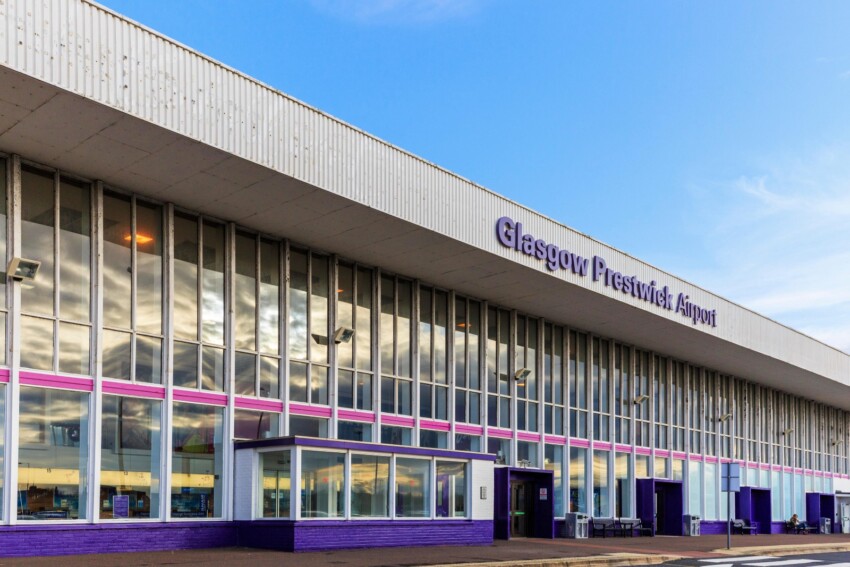
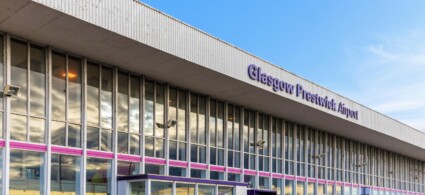
Glasgow Prestwick Airport (IATA code: PIK) is a second airport serving the Glasgow region, though it’s located about 50 km south-west of the city centre, near Prestwick and Ayr. It’s used almost exclusively by Ryanair, which has made it a base for its budget flights to European destinations. Ryanair operates flights to Prestwick from various European cities with often very competitive fares, but you’ll want to factor in the distance from Glasgow carefully.
Inverness Airport (IATA code: INV) is mainland Scotland’s northernmost airport, located around 15 km east of Inverness town centre. It’s particularly useful if you want to head straight into the northern Highlands, Loch Ness and the north coast without going through the major cities. There are no direct flights from mainland Europe — you’ll need to connect via London (Heathrow, Gatwick or London City) or Amsterdam. The regional carrier Loganair operates from most UK airports.
Aberdeen Airport (IATA code: ABZ) serves Scotland’s third-largest city and is the hub of North Sea oil and gas industry activity. Situated around 11 km north-west of Aberdeen city centre, it’s accessible by bus and taxi. Like Inverness, it doesn’t have direct flights from mainland Europe but is well-connected via London and Amsterdam. It’s a sensible choice if you want to start an itinerary along Scotland’s north-east coast or head into the eastern Highlands.
Scotland has a network of small regional airports, mainly operated by the regional carrier Loganair, which connects the islands and remote communities with the main centres. While they’re not directly accessible from mainland Europe without at least two connections, they’re essential if you want to explore the islands without relying on ferries or coastal roads.
Dundee Airport (DND)6 is the smallest of Scotland’s urban airports, just a few kilometres from the centre of the country’s third-largest city. It mainly serves domestic connections to London City operated by Loganair.
Stornoway Airport (SYY)7, on the Isle of Lewis in the Outer Hebrides, is the main gateway by air to the western islands. Loganair connects it with Glasgow, Edinburgh and Inverness several times daily — a convenient alternative to the ferry from Ullapool, especially in winter when the sea can be rough.
Kirkwall Airport (KOI)8, in the Orkney Islands, and Sumburgh Airport (LSI)9, in the Shetland Islands, are the two main airports serving the northern islands. Both have daily connections with Aberdeen, Edinburgh and Glasgow, allowing you to reach these archipelagos in less than an hour of flight time rather than 12–14 hours on an overnight ferry from Aberdeen. For those with limited time who still want to visit Shetland or Orkney, flying is the most practical option.
Among Europe’s most picturesque airports is Barra Airport (BRR)10, in the Hebrides, whose runway is a sandy beach: planes land at low tide and the runway disappears underwater at high tide. It’s considered one of the world’s most spectacular airports and is worth a detour in itself. Loganair operates flights there from Glasgow. Islay Airport (ILR)11, on the island famous for its peaty whiskies, is also connected to Glasgow with daily flights.
In the following map you can see the location of the main places of interest mentioned in this article.
To find the best fares to Edinburgh and Glasgow, always compare prices on flight comparison websites with both airports included in your search: sometimes the price difference between landing in Edinburgh or Glasgow Prestwick is easily offset by the cost of a train transfer between the two cities. July and August are the most expensive months and seats fill up quickly; if you have flexibility with dates, you’ll find significantly lower fares in May, June and September. Booking 30–50 days in advance is generally the sweet spot between availability and price.
Alternatively, if you’re willing to take a connecting flight, London is the city through which most direct flights to Scotland pass. From London’s airports — Heathrow, Stansted, Luton and Gatwick — you can reach Glasgow, Edinburgh, Aberdeen and Inverness airports daily at various times.


 Hotel
Hotel  Budget accommodations
  Apartments
  Family Hotel
  Luxury Hotel