The Trossachs National Park is a natural gem nestled in the heart of Scotland, a paradise of crystal-clear lochs, majestic mountains and lush forests that we’ve had the privilege of exploring. Established in 2002 as Scotland’s first national park, it spans an area of over 1,865 km² across four distinct regions: Loch Lomond, The Trossachs, Breadalbane and Cowal.
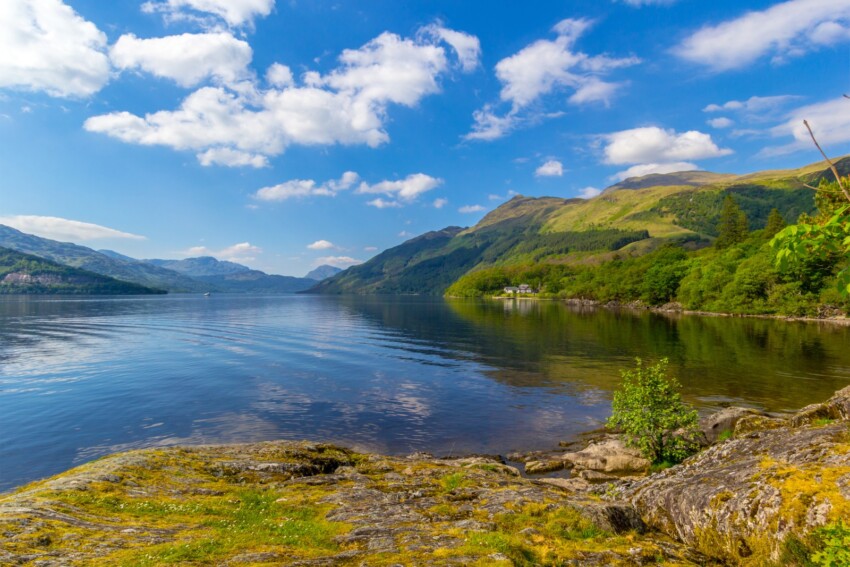
The sparkling waters of Loch Lomond, Britain’s largest freshwater lake, mirror the surrounding peaks to create vistas that seem to have stepped straight out of a painting. The Trossachs, often described as “the Highlands in miniature”, offer a perfect taste of Scotland’s most iconic landscape in a relatively compact area.
The range of activities available is extensive: hiking along well-marked trails, challenging climbs, water sports, cycling on scenic routes, wildlife watching or simply relaxing whilst taking in scenery that has inspired poets and artists for centuries.
When to visit Loch Lomond & The Trossachs National Park
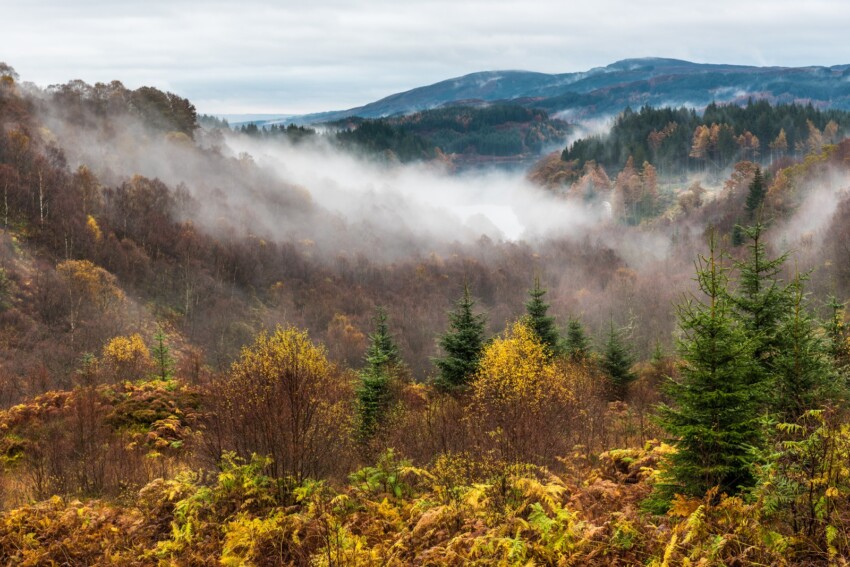
From a natural perspective, autumn is the best time to visit this area: the valleys burst with colour and glow with the beautiful warm tones of autumn set against the hues of the sky and lochs – a true paradise for photography enthusiasts.
However, thanks to its lush landscape, summer sees the area extremely busy (not only with tourists but also with Scottish and English visitors) who arrive in droves for hiking, cycling, water activities and holidays. We’d therefore recommend booking well in advance.
Things to do and do
A tour of the Trossachs takes you through truly scenic lochs and mountain passes.
At 38 kilometres long and 8 kilometres wide, Loch Lomond is the largest lake in Great Britain and the heart of the Trossachs region. The distinctive profile of Ben Lomond towers over the wooded shoreline, making it a paradise for hillwalkers.
For photography enthusiasts, we recommend taking the scenic road that circles the loch: at various points you’ll find lay-bys and car parks (usually at boat launching sites) where you can stop and enjoy spectacular views across the water.
To see the loch in all its glory and its 37 islands, you can take a boat trip on short cruises departing from Balloch. Luss is a charming and picturesque village with traditional sandstone cottages framed by climbing roses and sheltered beaches on the loch, perfect for spending a leisurely afternoon.
Trekking enthusiasts will find the West Highland Way particularly rewarding – Scotland’s longest long-distance walking route, which passes through here en route to Fort William. It’s straightforward, well-maintained and follows ancient cattle droving trails through increasingly spectacular scenery. In this section, it runs right along the wooded shores of Loch Lomond.
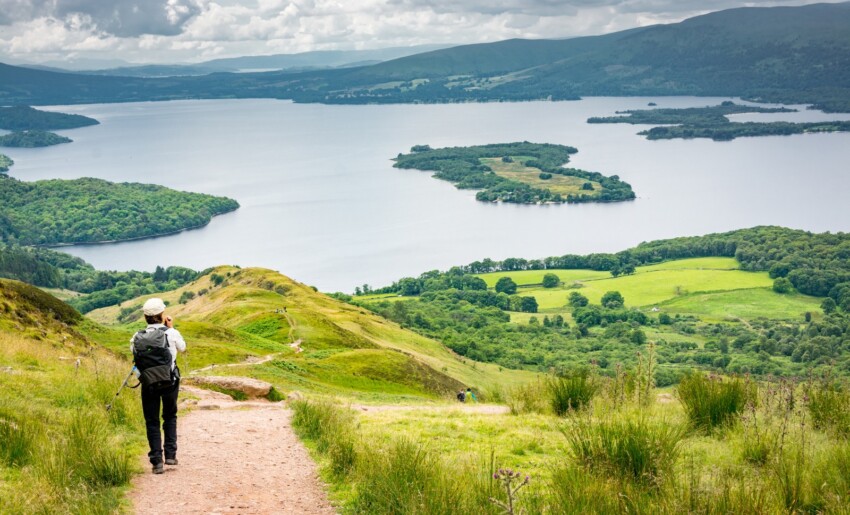
There are two excellent hill walks offering magnificent views across the loch: one climbs to the summit of Ben Lomond, a 5-6 hour round trip starting from Rowardennan, while the other is gentler, ascending Conic Hill in 2-3 hours from Balmaha. For a shorter stroll, Duncryne is a small panoramic hill near Gartocharn that takes just an hour to climb.
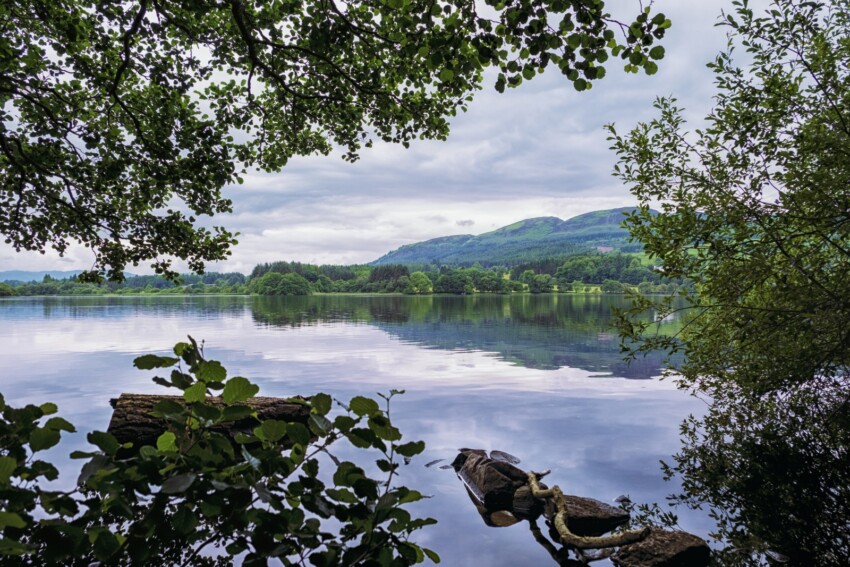
This charming body of water is Scotland’s only lake to be called a “lake” rather than a “loch”, a term referring to the geological depression rather than just the water itself. The loch is absolutely delightful and particularly suits those who enjoy outdoor activities such as fishing or boating.
From the northern shore, you can catch a ferry to the island of Inchmahome, where you can explore the ruins of Inchmahome Priory, where Mary, Queen of Scots was hidden when she was just five years old.
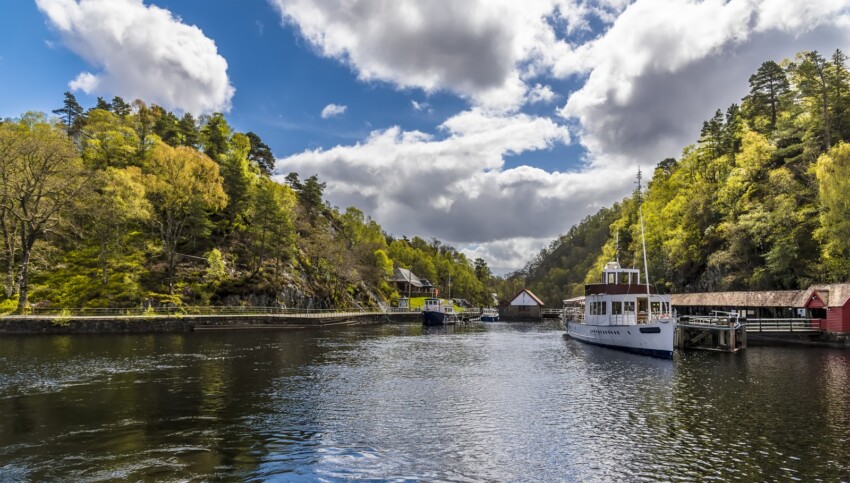
This atmospheric loch set among mountain peaks deserves a visit: from the pier, you can set off on a beautiful walk around the loch with stunning views of Ben Venue.
From April to October, an elegant Victorian steamship sails the loch daily – a delightful excursion, especially if travelling with children. www.lochkatrine.com
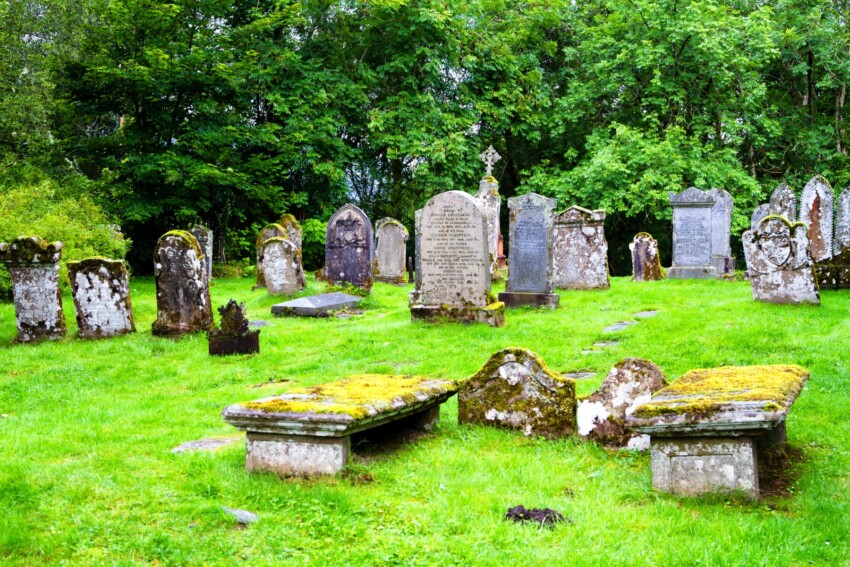
The quiet village of Balquhidder has become famous for its tiny churchyard, which holds the grave of the legendary outlaw Rob Roy. Originally a modest cattle dealer and merchant, he became an outlaw following a failed business transaction and rose to notoriety as a sort of Scottish Robin Hood, his adventures and exploits generating countless legends.
Despite his enduring fame boosted not only by Walter Scott’s novel but also by the film starring Liam Neeson, his grave has remained refreshingly free of kitsch memorials and fan tributes – simply marked by a cross and a sword.
For truly spectacular scenery, head along the Achray Forest Drive: this scenic route winds through Achray Forest to Duke’s Pass, a mountain pass where you’ll enjoy beautiful views framed by woodland and small glens. In autumn, this area explodes with vivid colour and is a paradise for photographers.
At David Marshall Lodge Visitor Centre, you can pick up information about the numerous trails that criss-cross the forest park.
Ben Lomond rises majestically on the eastern shore of Loch Lomond, reaching an altitude of 974 metres, making it Scotland’s most southerly Munro. Its iconic silhouette dominates the landscape and is visible from considerable distances, serving as a natural landmark for the entire region.
Climbing Ben Lomond is one of the most rewarding experiences in the park. The classic route starts from the small settlement of Rowardennan, accessed by driving along the road that hugs the loch’s eastern shore. The well-maintained and clearly marked path initially passes through oak and coniferous woodland before emerging above the tree line, where views progressively open out over the loch below and the surrounding mountains.
The ascent takes approximately 4-5 hours (round trip) and, whilst it’s a physical challenge, it presents no technical difficulties in favourable weather conditions. The reward is a spectacular 360° panorama that on clear days extends from the islands of Arran and Jura to the west as far as Edinburgh to the east, and from the Pentland Hills to the south to the peaks of the far northern Highlands.
Luss village is a picture-postcard settlement on the western shores of Loch Lomond, with characteristic stone cottages sporting slate roofs, neatly arranged along cobbled lanes and decorated with colourful flower gardens.
From the picturesque pier, you can enjoy a spectacular view across the loch and its islands, with Ben Lomond rising on the horizon. Boat hire is available, and short cruises depart from the pier, offering a different perspective on the surrounding landscape.
The Falls of Falloch represent one of the park’s hidden gems – a spectacular waterfall situated north of Loch Lomond, near the village of Crianlarich. The Falloch river, which originates on the slopes of Ben Lui, plunges here into a deep natural pool, creating a scene of great natural beauty, particularly dramatic after heavy rainfall.
A short path to the waterfall winds through lush woodland along the river course. Along the way you’ll notice a viewing platform called “Woven Sound”, an elegant architectural structure installed as part of the national park’s “Scenic Routes” project, offering a safe vantage point from which to admire and photograph the powerful cascading water.
In summer, the Falls of Falloch are a popular wild swimming spot, where the brave take dips in the cool natural pool beneath the waterfall.
Balmaha is a charming village on the eastern shore of Loch Lomond that serves as an ideal gateway to the national park. With its picturesque small harbour, welcoming cafés and well-equipped visitor centre, it makes an excellent starting point for exploring this section of the park.
The area’s main attraction is Conic Hill (361 metres), a modest height that offers views quite disproportionate to the effort required to reach the summit. The path from Balmaha visitor centre climbs steadily through oak woodland before emerging onto grassy upper slopes. From the top, you’re rewarded with breathtaking panoramas of Loch Lomond and its islands, and you can clearly observe the Highland Boundary Fault, the geological fault line that separates the Highlands from the Scottish Lowlands. The loch’s islands align perfectly along this fault line, offering a rare opportunity to visualise an important geological phenomenon in the landscape.
Before leaving the area, pop into the Oak Tree Inn, a traditional pub that’s a real fixture in the village, where you can sample Scottish traditional fare and local beers.
Inversnaid sits on the eastern shore of Loch Lomond, in a remote and particularly wild location accessible either by a narrow scenic road or by boat from other loch-side settlements.
The main attraction is the spectacular Inversnaid Waterfall, where the Arklet river plunges dramatically into Loch Lomond, creating a scene that has inspired poets including William Wordsworth and Gerard Manley Hopkins. A footbridge and viewing platform allow you to appreciate the power of the water in complete safety.
The Inversnaid Hotel, a historic building right on the loch with a panoramic terrace, is the ideal spot for a contemplative pause, enjoying the views and perhaps savouring a local whisky or a warm Scottish soup after a walk.
The Three Lochs Forest Drive is an 11-kilometre scenic route through Queen Elizabeth Forest Park that offers an accessible way to experience the natural beauty of the Trossachs, even for those with mobility restrictions or limited time. This one-way drive, typically open from March to October, allows you to explore landscapes by car that would otherwise require lengthy walks.
As the name suggests, the route winds around three enchanting lochs: Lochan Reòidhte, Loch Drunkie and Loch Achray. Each has its own character – from the small, intimate Lochan Reòidhte surrounded by conifers, to the broader Loch Drunkie with its romantic inlets, to the picturesque Loch Achray dominated by the silhouette of Ben Venue.
Particularly appealing is the variety of short circular walks accessible directly from the road, allowing for pleasant 15-30 minute rambles to reach the loch shores or explore the surrounding forests.
The Three Lochs Forest Drive is accessed from the A821 near Aberfoyle and requires payment of a small toll that supports maintenance of the facilities. It’s an excellent option for families with young children or travellers wanting to maximise their time while exploring some of the Trossachs’ most evocative scenery.
Breadalbane
Breadalbane comprises the northern section of the park, an area of imposing mountains, deep lochs and remote glens.
The Loch Tay12, stretching 23 kilometres, is the heart of this region. Its deep waters are popular for salmon and trout fishing, as well as water sports such as kayaking and canoeing. Along its shores, you can visit the Scottish Crannog Centre, which houses a faithful reconstruction of an ancient Iron Age loch dwelling, offering a fascinating glimpse into the region’s prehistoric life.
The picturesque village of Killin13, at the western end of Loch Tay, is dominated by the spectacular Falls of Dochart, where the Dochart river tumbles through granite boulders creating an impressive series of rapids right in the heart of the village. Nearby, Glen Lyon14 is considered one of Scotland’s most beautiful glens – a peaceful, relatively unvisited place where nature holds sway and red deer, golden eagles and ptarmigan can be spotted with relative ease.
The region is also rich in ancient history, as evidenced by numerous stone circles and other megalithic monuments scattered throughout. The Fortingall Yew15, an ancient yew tree in the churchyard of the village of the same name, is considered Europe’s oldest tree, estimated to be between 2,000 and 5,000 years old – a living monument to the history of these lands.
Cowal
Cowal comprises the south-western section of the park, a wild peninsula jutting into the Firth of Clyde, characterised by rugged coastlines, lush forests and breathtaking views towards the western isles.
The charming Loch Eck16 is a narrow, long loch surrounded by dense coniferous and beech forests. Its tranquil waters are popular for boating and fishing, whilst the paths circling it offer pleasant walks with spectacular views. The Argyll Forest Park17, the first forest park to be designated in Great Britain (1935), occupies much of the Cowal peninsula and is home to some of Scotland’s oldest and most precious forest ecosystems.
A visit to the Benmore Botanic Garden18 is not to be missed – an outstation of Edinburgh’s Royal Botanic Gardens. These magnificent gardens, spread over 49 hectares, are renowned for their avenue of giant sequoias, planted in 1863, which create a truly spectacular entrance. The rich collection includes plants from around the world, with sections dedicated to Bhutan, Chile, Tasmania and Japan, all beautifully set within the Scottish landscape.
Cowal’s coastal side offers spectacular seascapes and opportunities to spot seals, otters and occasionally dolphins and porpoises in the Firth of Clyde waters. The small but enchanting village of Tighnabruaich19, with its colourful houses overlooking the Kyles of Bute narrows, is perfect for a contemplative stop, taking in views of the islands on the horizon.
Map
In the following map you can see the location of the main places of interest mentioned in this article.
Getting to Loch Lomond & The Trossachs National Park
To explore the park effectively, we recommend hiring a car to give yourself maximum freedom and easy access to all the main attractions.
To rent a car in Argyll we always recommend comparing the rates of all companies with DiscoverCars because in our opinion it offers the best prices, allows cancellation up to 48 hours before rental and offers a very cheap comprehensive insurance policy.
By car, the park’s southern boundary is just 30 minutes’ drive from central Glasgow, whilst from Edinburgh it takes around 90 minutes.
For those preferring public transport:
Train: The West Highland Line, one of the world’s most scenic railway routes, runs through the park with stations at Balloch (the park’s southern gateway), Arrochar & Tarbet, Ardlui and Crianlarich. Trains depart regularly from Glasgow Queen Street, taking approximately 50 minutes to Balloch and around 2 hours to Crianlarich.
Bus: Regular services connect Glasgow with various locations within the park, including Balloch, Luss, Tarbet, Inveruglas, Arrochar and Crianlarich along the A82, and Aberfoyle, Callander and Strathyre via the Trossachs Road. Citylink is the main operator, with frequent daytime services.
Organised tours
Numerous tour operators offer day trips from Glasgow and Edinburgh that include other attractions in the region. This is a convenient option for a first-time visit or if you’d prefer not to worry about driving on the left or navigating public transport schedules.
A car is the ideal way to explore this area, as the road network is well maintained, though it includes many narrow, winding minor roads that require care, especially in poor weather conditions. More remote areas, such as the Cowal Peninsula, are accessible by ferries that connect different points within the park.
Distances between attractions within the park can be considerable: for example, it takes around 45 minutes to drive from Balloch in the south to Inverarnan at the northern tip of Loch Lomond. From Balloch to Aberfoyle, the gateway to the Trossachs, takes approximately 30 minutes.
For exploring the park without a car, the Waterbus connects various points on Loch Lomond including Balloch, Luss, Balmaha, Rowardennan and Tarbet, operating mainly during the summer season.
The local bus service Loch Lomond Rambler (route 309) runs between Tarbet, Inveruglas, Arrochar and Succoth, and is useful for walkers wanting to complete a section without having to return to their starting point.
 Hotel
Hotel  Budget accommodations
  Apartments
  Family Hotel
 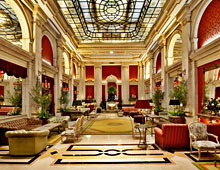 Luxury Hotel