Edinburgh: Loch Ness, Glencoe & the Scottish Highlands Tour
18.051 reviews
Buy now
From 76,03€ per person
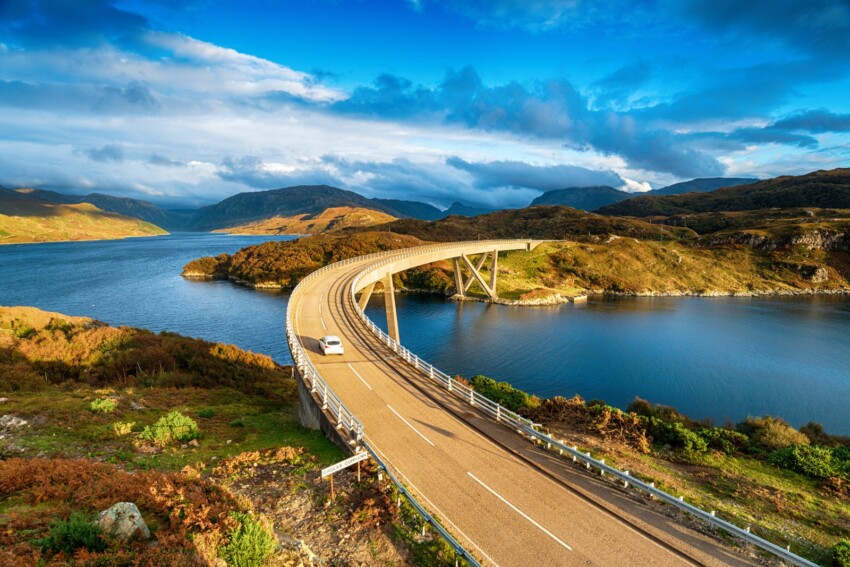
Driving in Scotland is a wonderful experience: you’ll have the opportunity to undertake a road trip through breathtaking landscapes, spectacular views, mountain passes and panoramic coastal roads that sweep above shimmering bays and lochs.
Exploring Scotland by car offers priceless freedom: complete autonomy to stop wherever you wish, not being tied to train or bus schedules and connections, and the ability to visit the most remote locations and drive scenic routes that public transport simply doesn’t reach.
Don’t be put off by driving on the left, typical of Anglophone countries: once you’ve got over the initial shock and had a bit of practice, you’ll find driving on Scottish roads enjoyable and far from difficult.
Regulations for driving in Great Britain are published in The Highway Code, available online and in bookshops. Below are the essential points to keep in mind before you set off on Scottish roads.
Great Britain is very strict about enforcing speed limits, particularly on fast roads and motorways: many roads have fixed speed cameras and average speed detection cameras, and unmarked police cars patrol regularly.
We recommend respecting speed limits on rural roads too, where you may encounter obstacles, road narrowings, wildlife crossing, cyclists and, near villages, schoolchildren walking home.
Remember that speed on road signs is displayed in miles per hour (mph), not kilometres per hour:
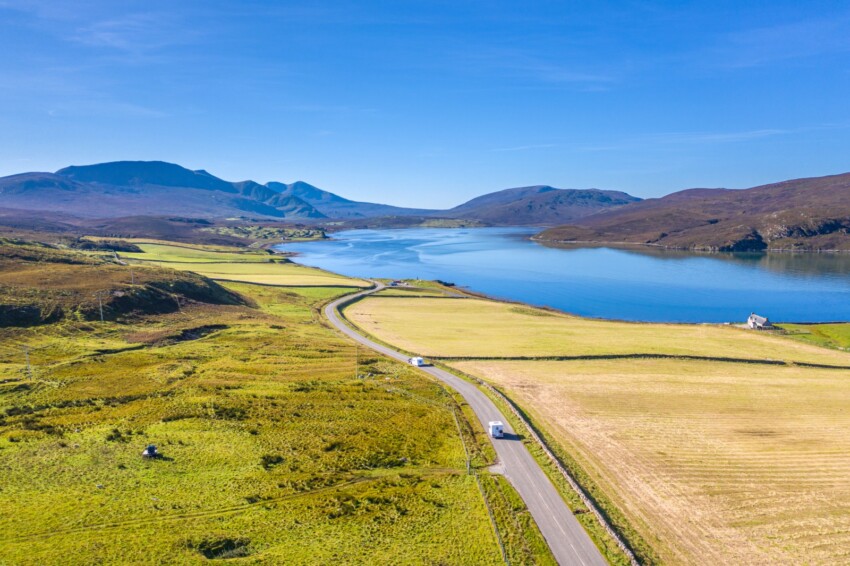
Scotland has an excellent road network, with motorways and dual carriageways connecting many of the largest towns and cities.
The main road network extends across most of the country, with the exception of some remote areas of the Highlands where you’ll find narrow single-track roads that allow only one vehicle at a time: these roads have passing places where you can pull in to allow oncoming traffic through.
Motoring organisations (Automobile Association, Royal Automobile Club, Green Flag) provide a 24-hour breakdown service in the event of a breakdown or accident, but in remote areas or on the islands you may have to wait considerable time for assistance.
In some parts of Scotland Gaelic is still used not only in everyday speech but also on road signs and public notices. On the Outer Hebrides place names are predominantly in Gaelic. In the Highlands signage is bilingual: the Scottish Gaelic name appears first, followed by English, in the same font and size. Don’t be surprised, therefore, if you encounter signs with seemingly incomprehensible place names: almost always you’ll find the English version alongside.
In towns many petrol stations remain open 24 hours a day, but in rural areas the distances between stations are greater and opening hours may be limited. If you’re planning to drive in remote areas of the Highlands or on the islands, fill up before you go: you may not find another station for several hours.
Most petrol stations sell unleaded petrol and diesel. Fuel is sold by the litre and prices tend to be higher in rural and remote areas than in large towns.
In town centres parking is usually only permitted in paid car parks, charged on a time basis. In high-traffic areas some parking metres have a maximum stay limit.
For visitors from abroad, the most common way to explore Scotland is to hire a car directly at the airport on arrival. Major international car-hire companies are represented at Edinburgh, Glasgow, Aberdeen and Inverness airports. Remember to specify when booking if you prefer an automatic transmission, as most rental cars in Scotland have manual gearboxes — a detail that’s hardly insignificant when you also need to adjust to driving on the left. For a comprehensive guide to costs, insurance and practical tips, see our article on car hire in Scotland.
 Hotel
Hotel  Budget accommodations
  Apartments
  Family Hotel
  Luxury Hotel