From picturesque vistas to Harry Potter's pages, enchanting Edinburgh is brimming with magic. Essential information for making the most of Scotland's captivating capital.
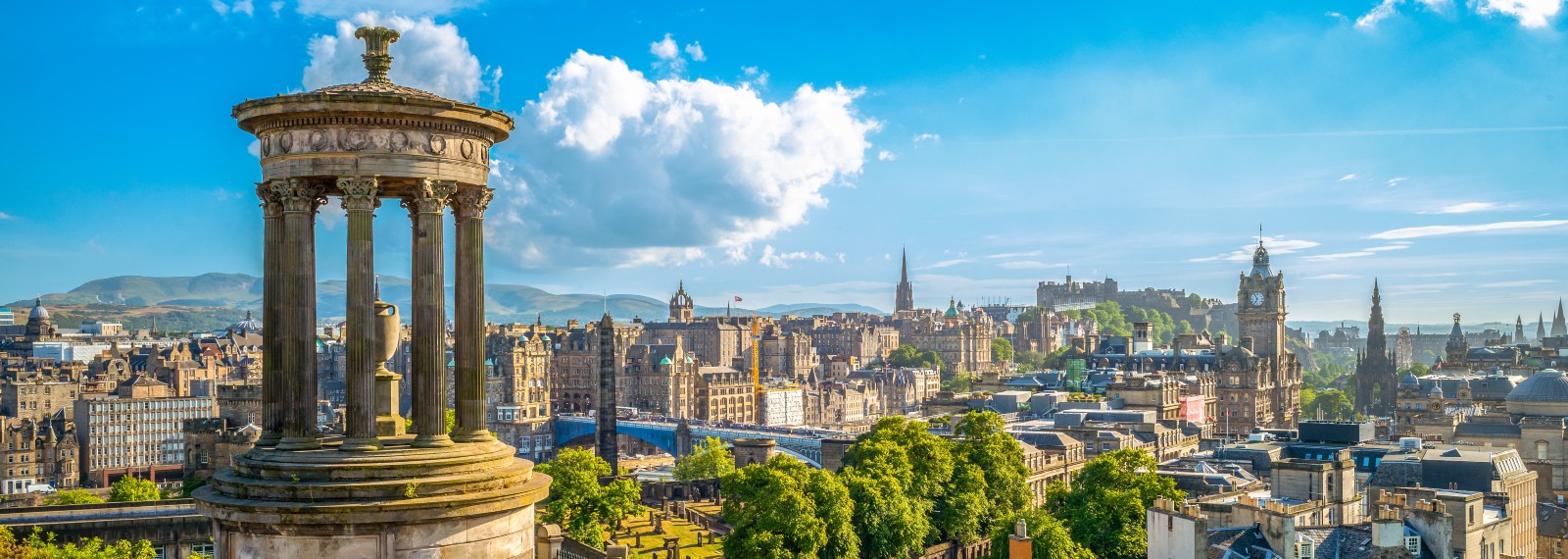
Romantic and dark, cultured and witty, Edinburgh is a small jewel, justly considered one of Europe’s most beautiful capitals. Its alleyways and historic monuments have cleverly nestled into narrow spaces along the slopes of a series of hills, creating a distinctive city where landscape and architecture seem to form a single entity.
Edinburgh is a city of culture and ideals, perfect for lovers of history, art and literature, but it’s also steeped in the distinctive sense of humour that Scots are known and loved for around the world, making it an ideal destination for those who enjoy a good laugh. And when things do get too serious, a fine whisky is all you need to ease the tension.
Don’t be fooled by its medieval appearance: Scotland’s capital is a forward-thinking city that has long embraced artistic innovation, particularly in theatre and street performance. It also has a darker side, with gothic atmospheres that you can discover by visiting underground Edinburgh’s seventeenth-century vaults or other locations linked to ghost stories, mysteries and legends.
All the ingredients for a memorable weekend are here, with plenty left over for those wanting a longer break. No matter how long you stay: picturesque views, the peaty notes of whisky, dark alleyways with gothic atmospheres, charming cafés that inspire you to start writing a novel, and views of the city and sea from the castle will remain in your heart for ever.
Edinburgh’s climate is temperate oceanic. Winters are long and cold, but less harsh than those in other cities at the same latitudes.
To give you an idea, winter temperatures in Edinburgh rarely drop below freezing, whereas in Moscow, a city at the same latitude, it’s normal to see temperatures of -5°C or lower. Summer is also mild and more like a cool spring, with average temperatures around 22°C.
Rain is frequent throughout the year, whilst between October and May you may experience occasional storms with strong winds and heavy downpours.
The best time to visit Edinburgh is summer: you can take advantage of very long days and higher but never stifling temperatures. If you’re travelling in August, book well in advance as this is when the Fringe Festival takes place, the city’s most important cultural event, and hotels are always fully booked.
Things to do in Edinburgh
Although tourists tend to love Edinburgh more for its distinctive atmosphere than for any particular monument, the list of things to visit in the city is so varied that it’s bound to make you want to book a flight and plan a trip straight away.
Here are the 5 must-see attractions in Edinburgh that you absolutely must include in your travel plans.
Edinburgh Castle
The top attraction in Edinburgh is undoubtedly the enchanting castle perched on top of an extinct volcano that has shaped the city’s image.
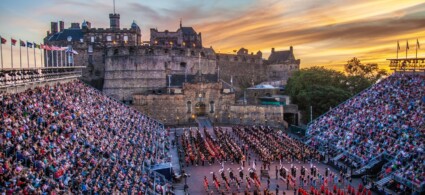
Built in the eleventh century and used as both a military fortress and royal residence, Edinburgh Castle is the true symbol of Scotland’s capital, deeply connected to the city’s history, culture and legends.
Magnificent to photograph from below, it’s also an exceptional vantage point from which to admire Edinburgh. Within its walls are museums, prisons, royal apartments, courtyards, cannons, gates and other historical curiosities: allow at least 2-3 hours for a castle visit.
Royal Mile
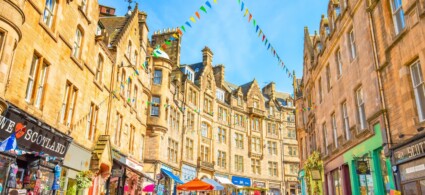
The Royal Mile is Edinburgh’s most famous street: it runs through the entire historic centre linking the castle to Holyroodhouse. A mile long, as the name suggests, it’s divided into four sections (Castlehill, Lawnmarket, High Street and Canongate), each with its own distinct character and peculiar atmosphere.
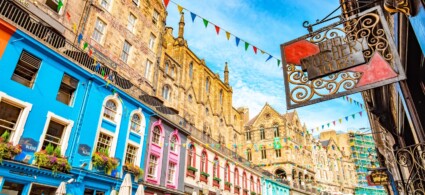
As you stroll along the Royal Mile, you can browse charming shops selling local products, have a beer or whisky in a traditional pub with a warm and welcoming atmosphere, photograph splendid historic buildings, and visit St Giles’ Church (Edinburgh’s cathedral) and other magnificent churches.
You can also visit two interesting themed museums: the Writers’ Museum dedicated to three greats of Scottish literature (Robert Burns, Walter Scott and Robert Louis Stevenson) and the Scotch Whisky Heritage Centre devoted to Scotland’s national drink.
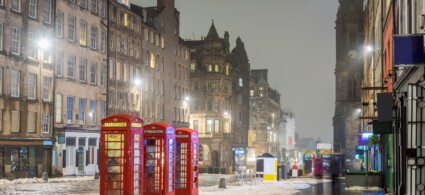
Don’t overlook the alleyways and covered passages that open off the sides of the Royal Mile: they hide unexpected treasures and will immerse you in the gothic and mysterious atmosphere of medieval Edinburgh.
Holyroodhouse
It’s worth walking the entire length of the Royal Mile because at the end awaits one of the city’s finest historic buildings: the elegant Holyroodhouse. It still officially serves as a royal residence, though the monarch of Scotland spends only a few months here each year.
A guided tour of Holyroodhouse allows you to enter the State apartments, the historic chambers of Mary Queen of Scots, the Throne Room and other lavishly decorated rooms; in summer it’s also possible to visit the gardens.
For a small additional fee you can visit the Queen’s Gallery, which displays on rotation works from the royal collection held for the British nation.
Real Mary King’s Close
One of Edinburgh’s most popular tours is a visit to the city’s ancient underground vaults: a labyrinth of passages descending into the depths of the city up to 25 metres below the level of the Royal Mile. You’ll be accompanied by costumed guides who will explain what life was like in seventeenth-century Edinburgh and tell you fascinating stories and anecdotes.
By turns entertaining and eerie, a visit to the underground tourist route of Real Mary King’s Close is a must for anyone who doesn’t suffer from claustrophobia.
Harry Potter Locations
Edinburgh is a literary city, full of independent bookshops and cultural initiatives to promote reading. Some of the most important English-language writers have lived and worked here, including J.K. Rowling, author of Harry Potter.
It was in a café in Scotland’s capital that the first pages of the magical story that captured millions of fans around the world were written, and the final chapter was also written here in Edinburgh.
Harry Potter location tours in Edinburgh have become one of the city’s main attractions, outranking museums and monuments of greater prestige in tourist popularity rankings. After all, who doesn’t love magic and spells?
Guided and free tours of Edimburgo
Discover Edimburgo through the eyes of expert guides who will take you on a tour of the city's hidden treasures. Participating in a guided visit or a free tour will allow you to capture the true essence of Edimburgo.
The free tours are a viable alternative to traditional guided tours. They work like this: participation is free and at the end of the visit you can leave a tip at your discretion. Below you will find our favourite free tour, otherwise you can see the full list by visiting this page.
Edinburgh has an international airport connected to major European cities with direct flights. If you’re already in Scotland, you can easily reach Edinburgh by bus, train or car from all major towns.
Many English cities are also connected to Edinburgh by bus and train. London is quite far, over 700 km away, but can be reached in just four and a half hours by direct train departing roughly every half hour.
Where to stay
For those looking for a hotel in Edinburgh, the dilemma is: is it better to stay in the Old Town or the New Town? The answer depends on the type of holiday you’re after and your budget.
Staying in central Edinburgh is the choice preferred by most tourists for three reasons: it’s a fascinating area, the main tourist attractions are within reach, and there’s a good choice of venues for spending the evening. On the other hand, city centre accommodation ranges from budget hostels for independent travellers to luxury hotels housed in historic buildings.
The New Town is recommended if you’re looking for a mid-range hotel: this area has a greater selection of three-star hotels and quality bed and breakfasts.
We offer best rates If you find it cheaper we refund the price difference.
Free cancellation Most properties allow cancellation without penalty.
We're available 24 hours a day For any problem call Booking.com.
Edinburgh’s city centre is small and compact and very easy to explore on foot, despite the Royal Mile, the road leading to the castle, being uphill.
If you need to move from one part of the city to another, perhaps because you’ve booked a hotel outside the centre or want to visit more distant attractions such as Portobello Beach or the zoo, you can rely on an efficient bus network operating 24 hours a day and a tram line.
Edinburgh doesn’t have the underground, but you won’t miss it. However, there are hop-on hop-off tourist buses: run by private companies, they’re very convenient as they have stops at all the main tourist attractions.
Edinburgh airport is 12 km from the city centre and can be reached by direct bus operating 24 hours a day with departures every 10 minutes during peak hours. From the New Town you can also reach the airport by tram.
Finally, if you intend to explore Scotland, we strongly recommend you hire a car at the airport so you can get around independently and reach all places of interest easily and quickly.
Where is located Edinburgh
Edinburgh sits on the south-eastern coast of Scotland along the Firth of Forth, a deep inlet created by a river estuary. The port area is washed by the North Sea, whilst the city's historic core lies further inland.
It forms part of what's known as the Central Belt, Scotland's central region encompassing the country's most densely populated areas.
If you glance at a map of Scotland, Edinburgh and Glasgow may appear remarkably close—and they are, with just 60 km separating the two cities.















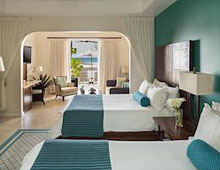 Hotel
Hotel  Budget accommodations
  Apartments
  Family Hotel
 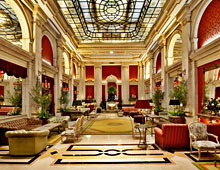 Luxury Hotel