Hogmanay, New Year’s Eve in Edinburgh
Hogmanay is the name of Edinburgh's New Year celebration. Unfamiliar with it? Discover this: it's the largest in Europe, a festival featuring events and music that lasts a full three days.
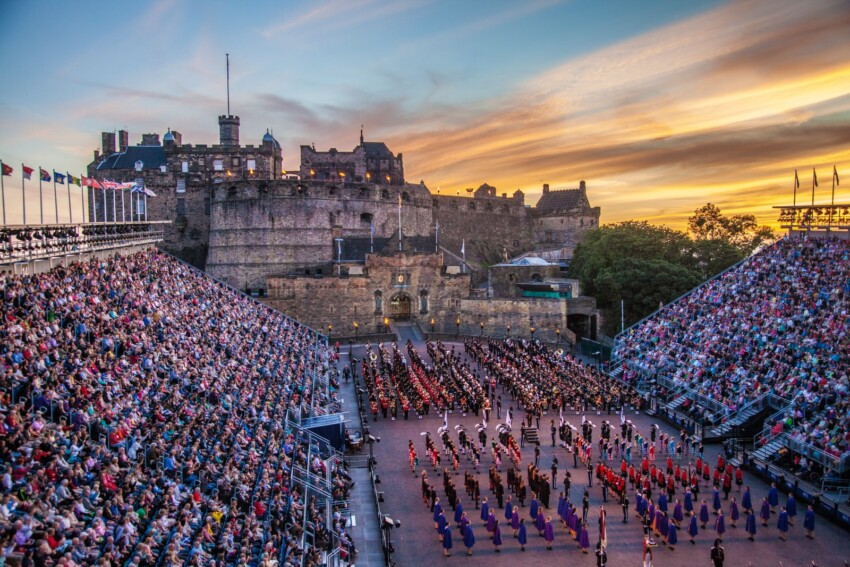
Edinburgh offers a rich calendar of musical and cultural events and festivals, particularly during the summer months and especially in August, which is undoubtedly the city’s liveliest month, with numerous festivals running simultaneously. The atmosphere is electrifying, though accommodation prices reach their peak and the city becomes extremely crowded.
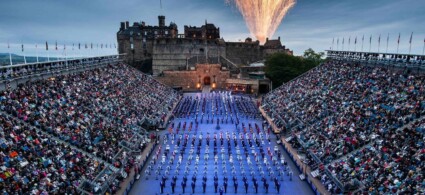
The collection of summer events is known as the Edinburgh Festival, whose programme encompasses multiple events taking place in Edinburgh during the same period. Among these is arguably Edinburgh’s most celebrated summer event: the Royal Edinburgh Military Tattoo, a spectacular show performed in front of the castle, where music, dance and military pageantry will leave you utterly spellbound.
Beyond the many summer events, it’s impossible not to mention Edinburgh’s celebrated New Year’s Eve, which despite often challenging weather conditions attracts over 100,000 visitors annually, making it Europe’s largest year-end festival.
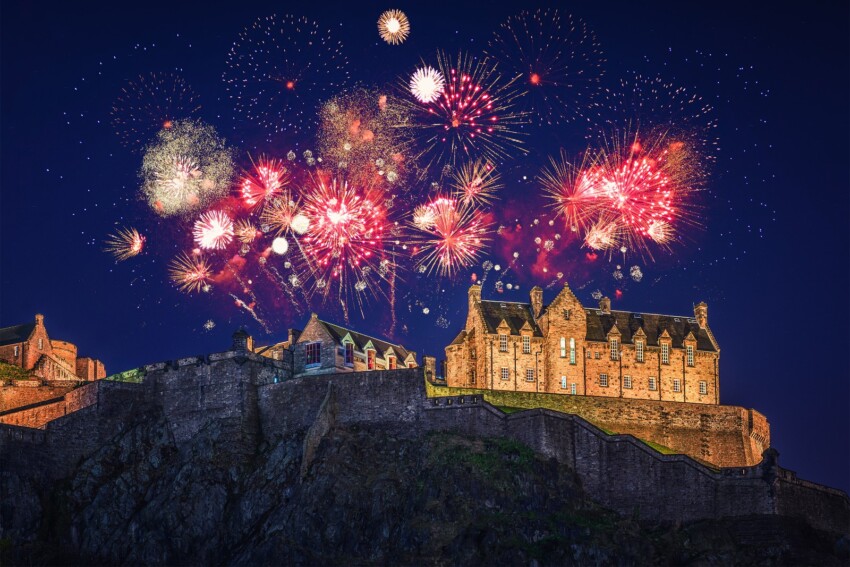
Dates: 30 December – 1 January
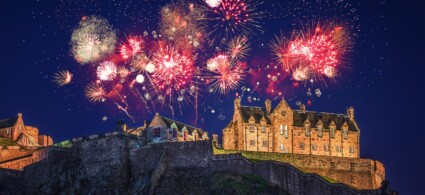
New Year in Edinburgh, known locally as Hogmanay, is one of the world’s largest and most spectacular year-end celebrations. The city marks this occasion with a three-day programme of events, running from 30 December to 1 January. The highlight is undoubtedly the New Year’s party on Princes Street, where tens of thousands of people gather for live concerts, traditional dancing and a spectacular fireworks display with Edinburgh Castle as the backdrop.
On 30 December, proceedings begin with the Torch Procession. The heart of Edinburgh is set ablaze by a parade of lit torches creating a river of fire along the historic Royal Mile down to Holyrood Park.
31 December is the festival’s main day. With spectacular Edinburgh Castle as the backdrop, the Gardens host the main stage featuring live performances by internationally renowned singers and DJs, giant screens and outdoor bars. Beyond the main stage, numerous squares host concerts of different genres and performance spectacles.
At midnight, the grand fireworks display welcomes in the new year. Don’t miss Auld Lang Syne, a traditional song during which you can join hands with friends from around the world as you sing together this anthem to the year ahead.
On 1 January, if you still have the energy and manage to wake up in time, don’t miss the Loony Dook, the now-famous annual plunge into the freezing waters of the River Forth at South Queensferry, just outside Edinburgh. First though, head to the Dookers Parade on the High Street, the parade that brings the New Year festivities to a close.
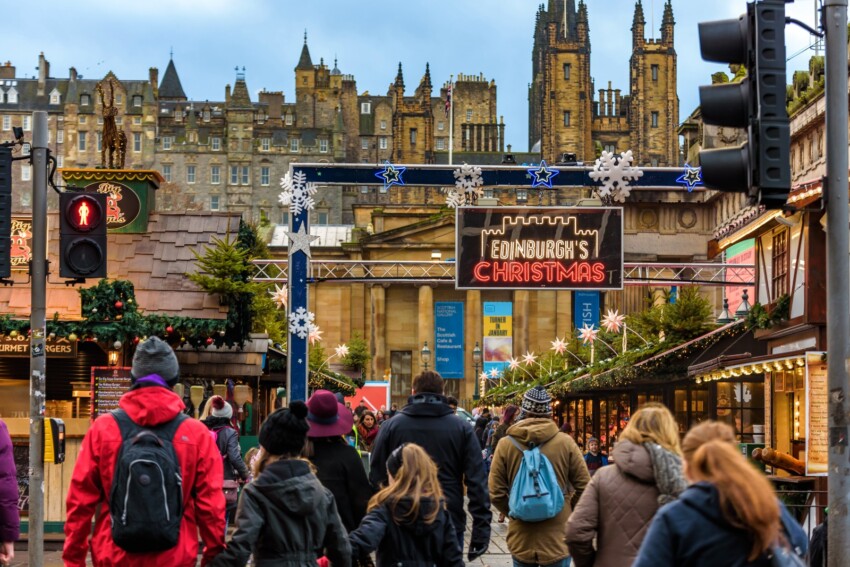
When: Mid-November – early January
Edinburgh’s Christmas transforms the city centre into a winter wonderland from mid-November through early January. East Princes Street Gardens hosts Christmas markets inspired by German traditions, fairground rides, a Ferris wheel and an ice skating rink.
Worth noting are the Street of Light on George Street, a tunnel of lights synchronised to music, and the Christmas Tree Maze. Luminous projections on historic buildings create a magical atmosphere, whilst market stalls offer handmade products and gastronomic specialities from across Europe.
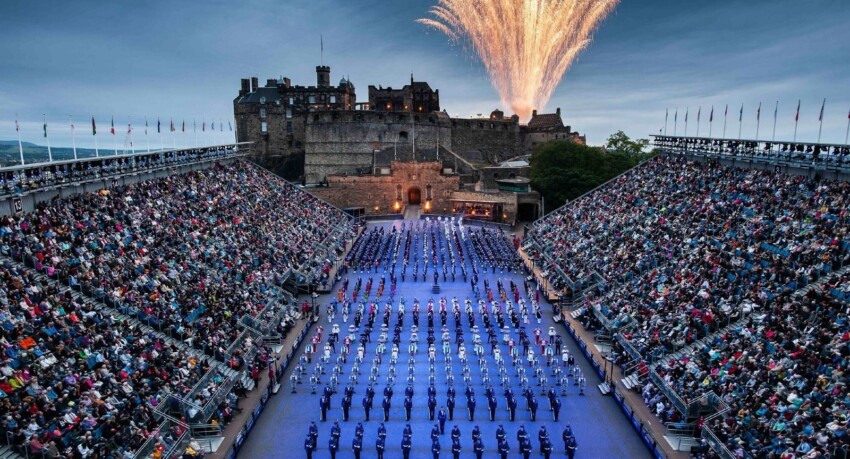
When: August (performed every evening for three weeks)
If there’s one event that captures the essence of Scotland and its traditions, it’s undoubtedly the Royal Edinburgh Military Tattoo. On our first visit to Edinburgh, we didn’t know what to expect, and we were absolutely speechless.
The show takes place in the atmospheric setting of Edinburgh Castle‘s Esplanade and features military bands and performers from around the world. The heart of the event, however, remains Scottish tradition, with bagpipe and drum bands performing military marches dressed in traditional kilts.
The experience is made even more magical by the extraordinary choreography, the light shows projected onto the castle walls and the moving finale with a performance of “Auld Lang Syne” as the audience joins hands.
Practical tips:
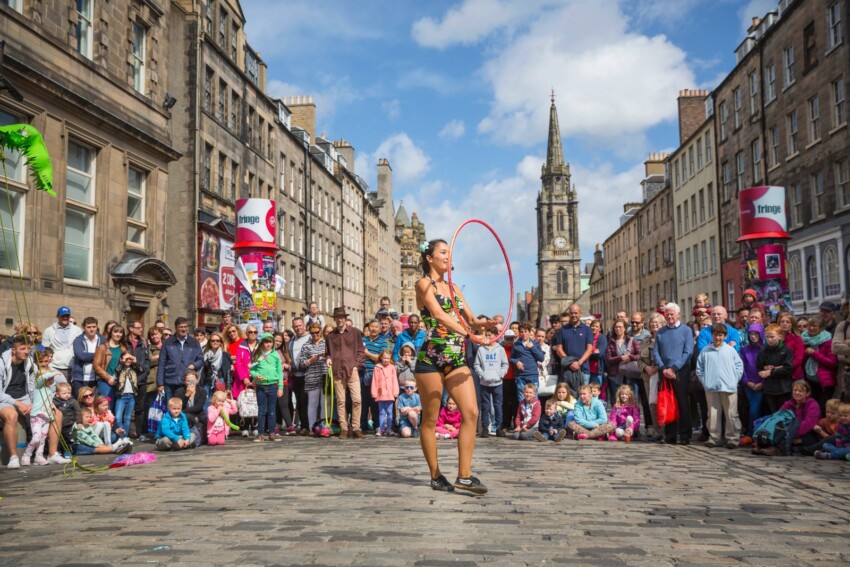
When: August (usually the three weeks starting from the first Friday of the month)
The Edinburgh Fringe Festival is the world’s largest gathering of artists: each year features 15,000 performances with 700 companies and 12,000 participants, 1,500 shows daily, 24 hours a day, across 200 different venues throughout the city.
It’s a genuine visual, artistic and sensory experience in every dimension, enriched by the city’s unique atmosphere: whilst traditional performances take place in reserved spaces like theatres and purpose-built stages, the vast majority of shows happen on the streets, with continuous interaction between art, city and spectators.
Another fundamental feature of the festival is the absence of artistic direction: this means anyone can propose their work, making the festival a launching pad and opportunity for visibility for hundreds of young artists from around the world. From satire and comedy to dramatic texts and Shakespearean classics, from musicals and ballet to children’s shows, from readings and concerts to street performers: here you’ll find art in its purest form, constantly blending tradition and innovation, classicism and experimentation.
Practical tips:
When: August (same dates as the Fringe)
Founded in 1947, the Edinburgh International Festival takes place simultaneously with the Fringe and is considered the city’s “official” cultural event. Unlike the Fringe, where anyone can perform, here artists are selected and invited by the organisers.
The festival presents dance, opera, classical music and theatre performances of the highest quality in the city’s most prestigious venues. What makes this festival special is the exceptional calibre of productions and their ability to blend tradition and innovation. Many performances are original productions specifically commissioned for the festival.
During the festival period, every branch of art and performance is represented and choosing what to see and which tickets to buy can be difficult: we recommend studying each programme carefully before you travel.
When: June
The Edinburgh International Film Festival, founded in 1947, is the world’s longest-running film festival still in operation and the one that has shown films continuously without interruption.
When it was sponsored by the Edinburgh Film Guild (the world’s oldest film society), it exclusively screened documentaries and only two other film festivals existed in Europe, at Cannes and Venice.
The festival screens a diverse range of films from around the world, and the screens show not only feature films and documentaries but also short films, animations and music videos.
The Grand Jury awards “The Michael Powell Award for Best New British Feature Film” whilst the audience votes for the “Standard Life Audience Award”; a panel of emerging producers also awards the “Skillset New Directors Award”. There are also a number of Oscar awards for short films.
When: August (usually the central two weeks of the month)
The Edinburgh International Book Festival is the world’s largest literary festival and takes place each August in Charlotte Square Gardens, a beautiful park in the heart of the New Town. For two weeks, the park transforms into a village of white marquees hosting author meetings, debates, writing workshops and children’s activities.
You can attend meetings with internationally renowned authors and emerging writers, discovering new literary voices and witnessing stimulating debates on contemporary issues. The festival’s relaxed atmosphere, with its well-stocked bookshop and outdoor cafés, offers a pleasant contrast to the frenetic energy of the Fringe.
When: July (usually the central two weeks of the month)
The International Jazz and Blues Festival is an event that attracts music enthusiasts from around the world. It takes place in July, before the major tourist influx of August, and features a rich programme of concerts with international artists and local talent.
Beginning as an outdoor music event to enliven the not-so-warm Scottish evenings, it has evolved into a much-loved international event with a substantial following, having featured important names such as B.B. King and Van Morrison over the years.
Scottish jazz performances in atmospheric venues alternate with major concerts by traditional musicians. From original New Orleans and 1920s Chicago jazz to contemporary New York jazz, right through to covering jazz classics worldwide, this festival will delight music lovers. There are over 100 events across 10 days with an estimated 50,000 visitors.
When: August (coinciding with the other summer festivals)
The Edinburgh Art Festival brings together the work of artists, galleries, museums and visual arts spaces throughout the city to present the public with the most exciting and interesting contemporary and modern visual arts landscape.
It acts as a platform for leading international artists, new trends and emerging talent, giving rise to a large number of temporary exhibitions across the city.
Throughout the festival, over 130 exhibitions are staged in 50 spaces across the city. An interesting festival feature is Art Late, a series of evening events combining guided exhibition tours with musical and artistic performances.
When: 30 April (evening)
The Beltane Fire Festival is a modern celebration inspired by the ancient Celtic Beltane festival, which marks the beginning of summer. It takes place on the evening of 30 April on Calton Hill and involves hundreds of artists, dancers and musicians.
You’ll be captivated by the fire ritual unfolding around a large bonfire, with performers embodying mythological figures representing the passage from winter to summer through dance and symbolic acts. The combination of percussion music, dancing, acrobatics and fire installations creates a magical and primal atmosphere.
It’s a ticketed event with limited tickets available to purchase in advance.
When: 31 October (evening)
The Samhuinn Fire Festival is the autumn equivalent of Beltane, celebrating the passage from summer to winter according to ancient Celtic tradition. It takes place on the evening of 31 October (Halloween) and traditionally was held on the Royal Mile, though in recent years it has been relocated to Calton Hill.
The spectacle narrates the symbolic battle between the King of Summer and the King of Winter, with mythological figures such as the Cailleach (the winter goddess) intervening in the narrative. Like Beltane, the event combines live music, dance, physical theatre and spectacular fire effects.
When: 25 January
Burns Night is a celebration honouring Scotland’s national poet, Robert Burns, held on 25 January (his birth date). It’s not a festival in the traditional sense, but an important cultural event celebrated across the city with traditional suppers, poetry readings and ceremonies.
During the event, you can attend a traditional Burns Supper at a city-centre restaurant, witnessing the full ceremony: the ceremonial entrance of haggis (Scotland’s national dish) accompanied by bagpipes, the recitation of Burns’s Address to a Haggis (a poem dedicated to this dish), and the numerous toasts and poetry readings that punctuate the evening.
Many restaurants, pubs and hotels organise Burns Suppers, though you’ll need to book well in advance. The evening often features Scottish dancing and traditional music performances.
When: March–April (during the Easter school holidays)
The Edinburgh International Science Festival is one of the most engaging events for families and science enthusiasts. Held in spring, primarily during the Easter school holidays, it offers an extensive programme of interactive exhibitions, workshops, talks and activities for all ages.
You’ll be impressed by the festival’s ability to make complex scientific concepts accessible and entertaining for younger visitors. The hands-on and interactive activities at the City Art Centre, transformed for the occasion into a vast multi-level science laboratory, will captivate your children—and adults will find plenty to discover too.
 Hotel
Hotel 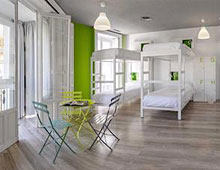 Budget accommodations
  Apartments
 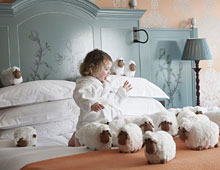 Family Hotel
 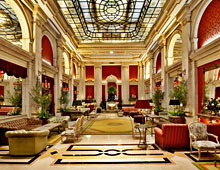 Luxury Hotel