Edinburgh is a city of many facets, and each one will enchant you.
From the medieval charm of the Old Town with its ancient castle and the Royal Mile leading to the fairytale Holyroodhouse Palace, to the vibrant nightlife, ethnic restaurants and seafood venues, and the eighteenth-century flavour of the New Town—from the panoramic views of Calton Hill to the pristine natural landscape of Arthur’s Seat, Scotland’s most impressive and spectacular volcano.
All of this complemented by art galleries, museums, traditional pubs aplenty and shops where you can savour Scottish traditions.
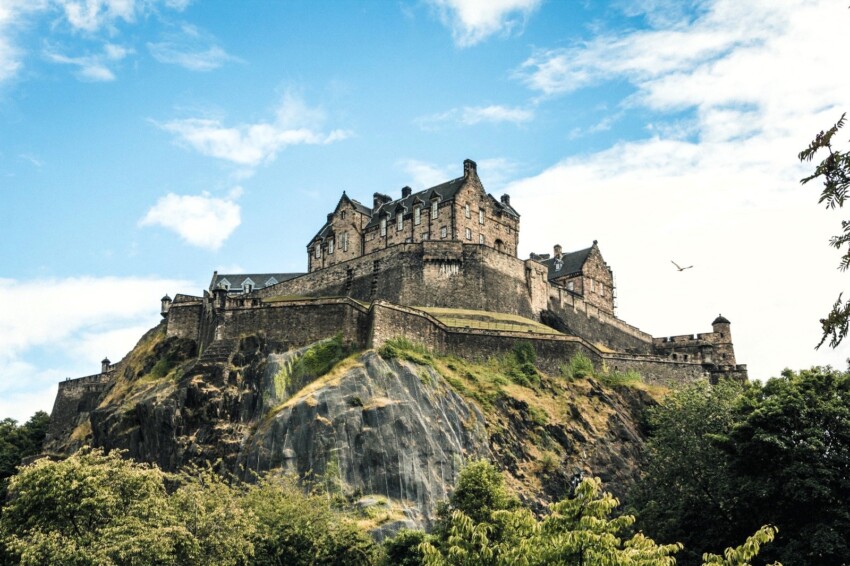
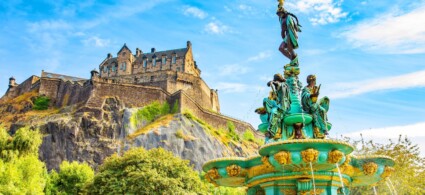
The city’s premier attraction, Edinburgh Castle dominates the urban skyline from atop Castle Rock, drawing over 2 million visitors annually. This medieval fortress is not only Scotland’s most visited monument but represents the beating heart of national identity.
Inside, visitors are captivated by the Scottish Crown Jewels (Honours of Scotland), Europe’s oldest, and the Stone of Destiny, a crucial element in coronation ceremonies. The castle also houses the National War Memorial and the Royal Palace, where Mary, Queen of Scots gave birth to James VI.
During the Military Tattoo in August, the castle provides the backdrop for spectacular military band performances.
We recommend purchasing tickets online in advance and arriving before 10:00 am. The full route takes approximately 2–3 hours.
The Royal Mile, the main thoroughfare of Edinburgh’s Old Town, connects Edinburgh Castle to Holyroodhouse Palace along a Scottish mile of history and culture. This long cobbled street, formed by the High Street, Canongate and Lawnmarket, represents the medieval heart of the capital.
Along the way, narrow alleyways known as “closes” and “wynds” branch off like ribs, concealing secret courtyards and historic buildings. Characteristic multi-storey buildings, some dating back to the sixteenth century, house souvenir shops, traditional pubs, whisky shops and tartan boutiques.
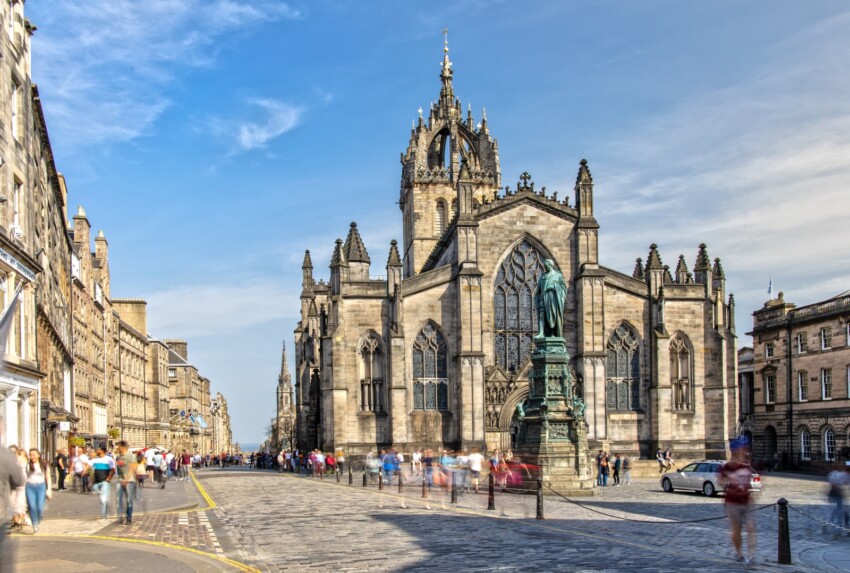
Among the main attractions along the street are the striking St Giles’ Cathedral with its iconic stone crown and the Camera Obscura. Street performers and musicians frequently animate the boulevard, particularly during the Edinburgh Festival in August.
Ghost stories and dark legends are an integral part of the Royal Mile’s allure, recounted during popular evening ghost tours. Despite heavy tourism, the street manages to maintain an authentic atmosphere that transports visitors back in time.
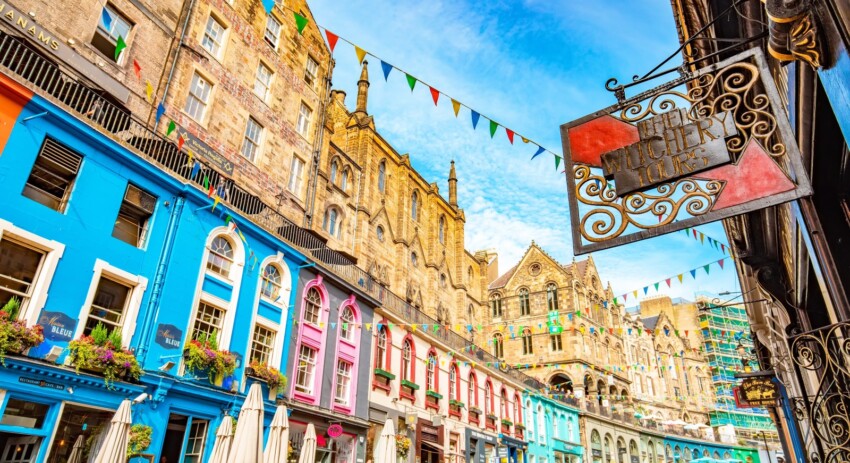
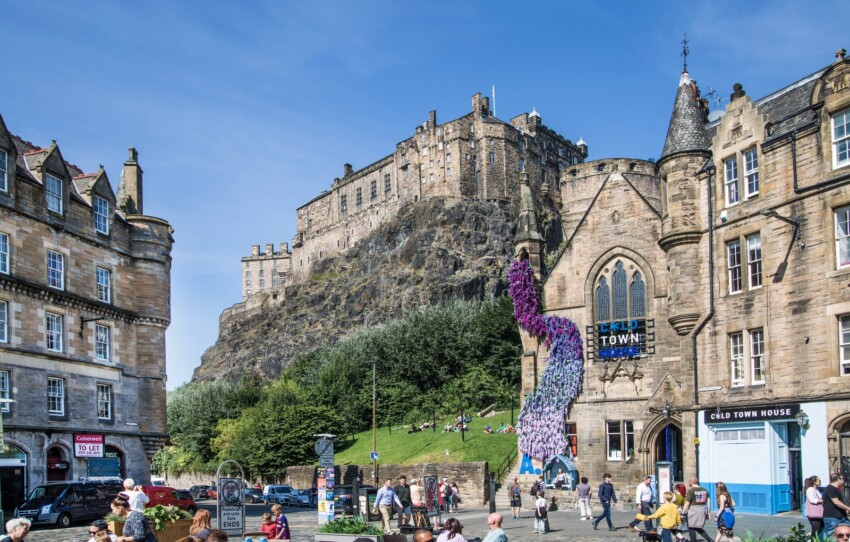
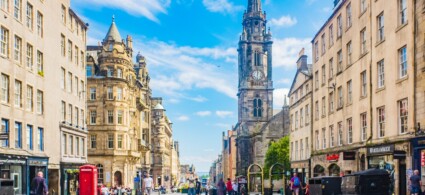
Victoria Street is one of the city’s most distinctive thoroughfares. This historic street, named after Queen Victoria, stands out for its distinctive architecture developed across two levels, creating a unique theatrical effect.
The street winds uphill through the historic Old Town, a quarter that retains its intact medieval charm. What immediately captures visitors’ attention is the succession of buildings with brightly coloured facades, creating a vibrant mosaic against the grey of Scottish stone.
The street has gained particular fame among Harry Potter enthusiasts, as it is believed to have inspired J.K. Rowling in the creation of Diagon Alley, the famous wizards’ street described in her novels. It comes as no surprise that today Victoria Street has become a pilgrimage destination for saga fans, who can immerse themselves in the magical atmosphere by visiting themed shops such as The Great Wizard and Museum Context UK, where you can find memorabilia and objects evoking the world of magic.
The particular atmosphere of Victoria Street is further emphasised by its architectural features: stone arches, staircases connecting the two levels of the street and lateral alleyways all contribute to creating that aura of mystery and charm that makes it one of Edinburgh’s most photographed streets and an unmissable stop for anyone visiting the city.
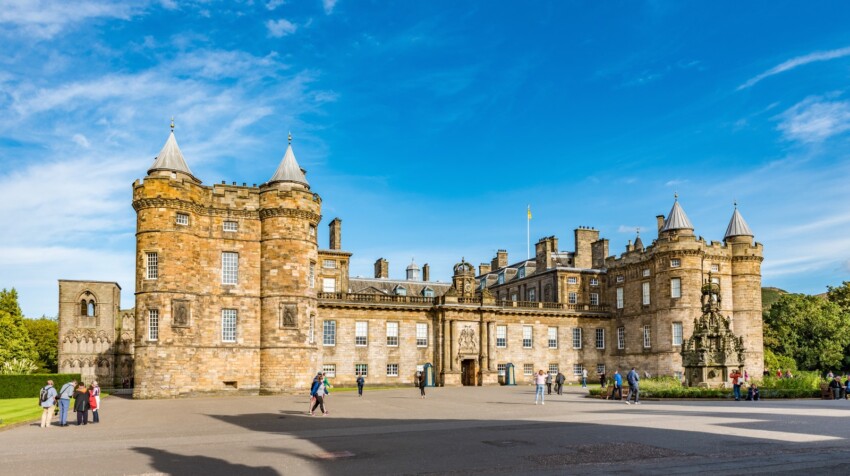
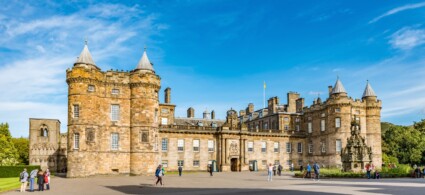
Holyroodhouse Palace, the official residence of the British Royal Family in Scotland, stands majestically at the foot of the Royal Mile. Founded as a monastery in 1128, it has evolved over the centuries into an elegant royal palace combining Baroque and Renaissance architectural elements.
Mary, Queen of Scots’ apartments are among the palace’s most fascinating spaces, including the private bedroom where the murder of her secretary David Rizzio took place. The State Apartments, still used by the Royal Family today, gleam with precious tapestries, period furnishings and historical portraits.
The palace gardens, with the striking ruins of the abbey, offer a picturesque setting with views of Arthur’s Seat.
During the Royal Week in June the palace becomes the centre of Scottish royal life and is closed to visitors. For the rest of the year it is open to visitors, who can explore the historic rooms through guided tours.
In the heart of Edinburgh’s Old Town, Mary King’s Close is one of the Scottish capital’s most mysterious and fascinating locations. This remarkably preserved network of seventeenth-century underground alleyways offers a unique glimpse into medieval city life.
The close is named after Mary King, a wealthy merchant who lived in the alley in 1630. When the Royal Exchange was built in the eighteenth century, these alleyways were sealed off and preserved beneath the new building, creating a true time capsule.
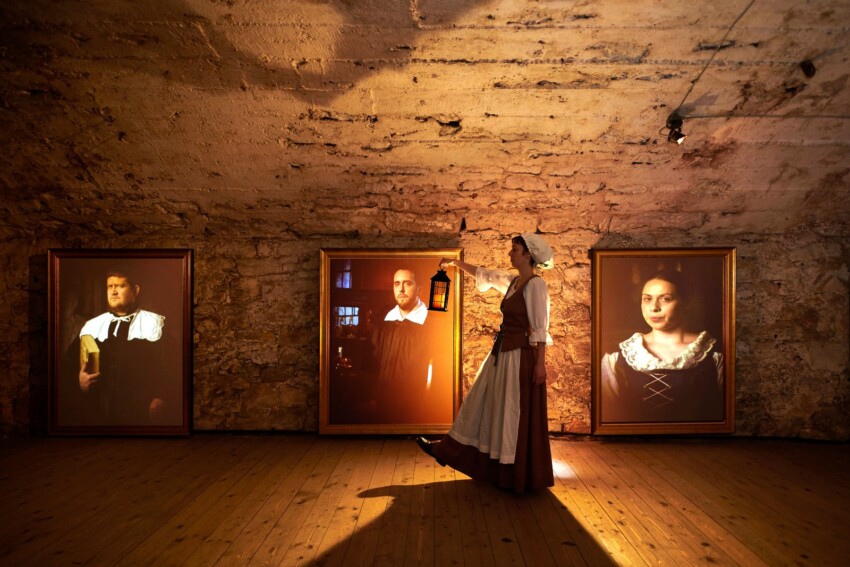
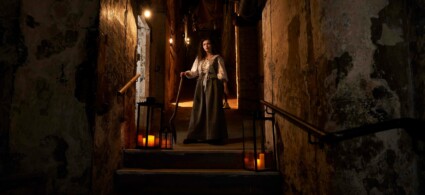
Visitors can explore the authentic spaces where families lived and worked, accompanied by costumed guides who recount tales of epidemics, poverty and alleged paranormal phenomena. Particularly moving is the room with toys left in memory of Annie, a young girl who, according to legend, still haunts these places.
Guided tours, available by reservation only, reveal the harsh living conditions of the era: cramped rooms, poor lighting and rudimentary sewage systems. An immersive experience that allows you to understand the true essence of life in medieval Edinburgh.
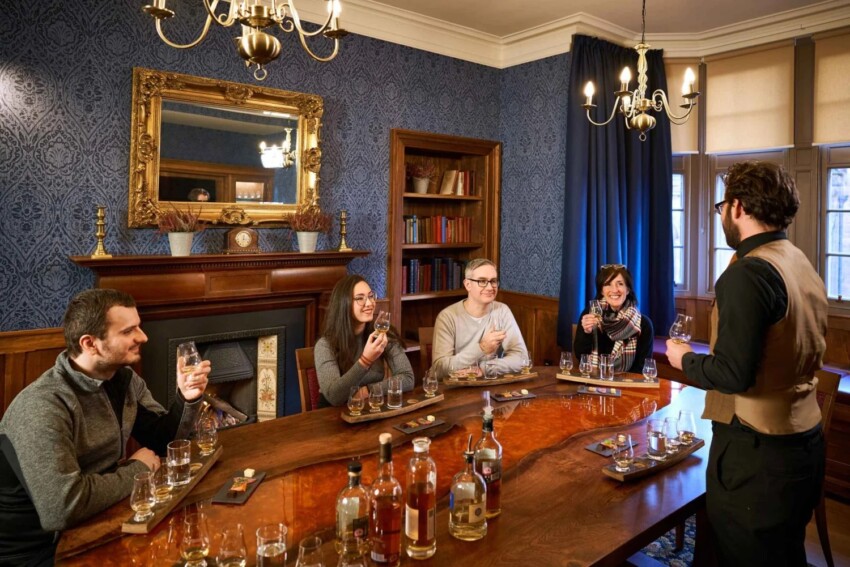
Located next to Edinburgh Castle, the Scotch Whisky Experience offers visitors the opportunity to immerse themselves in the world of Scotch Whisky: whisky tours, shops, a bar, coffee shop and restaurant.
Visitors will learn the differences between single malt, blended and grain whisky, meet the master blender and journey through whisky history. The tour includes a whisky tasting and a complimentary glass to take home as a souvenir.
This venue is a simulation of a distillery visit: we recommend it only for those passionate about whisky who lack the opportunity to visit one of Scotland’s many distilleries.
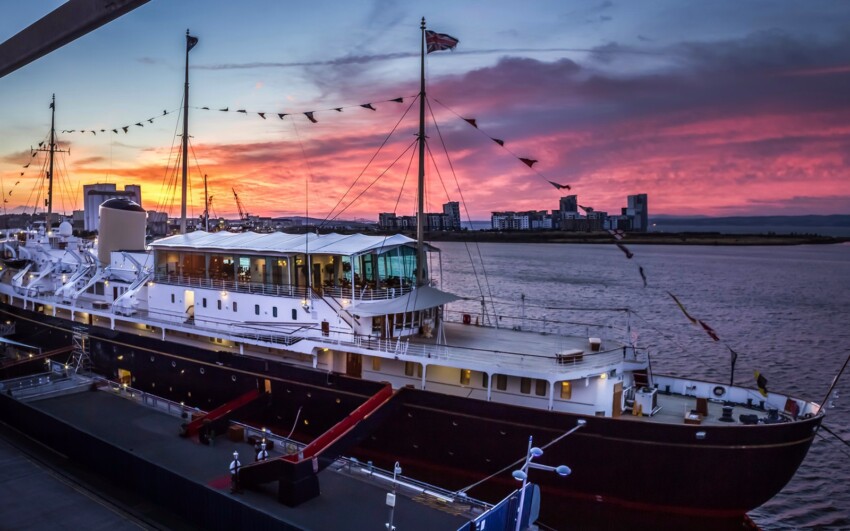
The Royal Yacht Britannia was the British Royal Family’s royal yacht for over 40 years and remains one of the world’s most important vessels.
Britannia was built in Scotland in 1953 at John Brown & Co. Ltd shipyard on the Clyde, and since then has been used by the Royal Family on 968 official voyages, sailing over one million nautical miles and calling at 600 ports in more than 135 countries.
Launched by Her Majesty Queen Elizabeth II on 16 April 1953, during her career as Royal Yacht (during wartime there was consideration to convert her into a hospital ship, though the plan never came to fruition), she carried the Queen, other family members and various dignitaries on 696 official visits abroad and 272 visits to British waters.
In 1981, Prince Charles and Princess Diana spent their honeymoon aboard Britannia.
The ship also evacuated more than 1,000 refugees from the civil war in Aden in 1986. Furthermore, the yacht served as a mobile refuge for the British Royal Family during the period of nuclear tension with the Soviet Union.
In 1997, after decommissioning, the vessel was acquired by Leith Council and converted into a museum against the Royal Family’s wishes, who wanted to have her scuttled for a dignified end.
The visit allows you to explore the bridge, the admiral’s quarters and the Royal Family’s accommodation, with free access to roam the yacht. You can reach here by buses departing from Prince Street or Waverley Bridge, though on a fine day a long walk can be pleasant.
This beautiful Old Town square at the foot of the castle was one of the city’s most macabre locations: public executions on the gallows took place here.
Grassmarket is linked to episodes of mob violence, riots and insurrections. Not only that: in a close facing this square, two notorious body snatchers and murderers had their lair, luring victims to obtain cadavers to sell to the esteemed doctor Robert Knox. Captured and condemned, they were hanged right here.
Despite this macabre history, today the square is a riot of restaurants, pubs and venues and constitutes one of the fun spots in the Old Town. But on grey, rainy days, when the facades become dark and shadowy, you can still glimpse its more sinister side with its gloomy and mysterious atmosphere.
In the north-eastern corner you can admire the 5 surviving old buildings of the ancient West Bow that led towards the Royal Mile.
Ascend the charming Victoria Street, a distinctive two-level street dotted with very picturesque shops (including a little witchcraft shop), characterful eateries and pubs, among them the Bow Bar, which won the award for best bar in Britain: wooden panels, an almost exclusively local clientele and an excellent selection of Scottish beers and whiskies—nearly 150!
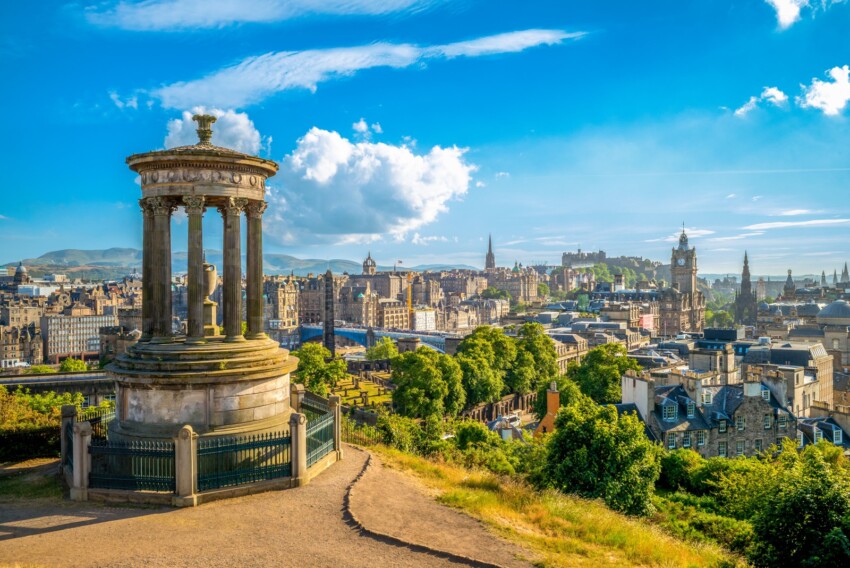
A wonderful walk to take, especially on clear days, is the climb up Calton Hill, the volcanic crag that rises directly opposite the Old Town.
The paths leading to the summit will give you the opportunity to admire Edinburgh from above, with a 360° view of the city: you’ll not only get the most photographed view of Edinburgh with the famous Greek temple, but also enjoy the splendid panorama of Arthur’s Seat on one side and the sea and Fife on the other.
Over the centuries, numerous architects have used this hill as a laboratory for their ambitious project to turn Edinburgh into a kind of Athens of the North: indeed, the many monuments that populate Calton Hill have Greek themes, intended to recreate a sort of timeless space that emphasised a sense of distance from the city.
Starting from the bottom, you’ll find the Old Royal High School, which was intended to represent the culmination of the city’s Athenian aspirations: an imposing building in Doric style.
The Burns Monument is a Corinthian temple erected in honour of national poet Robert Burns.
The best views can be enjoyed from the top of the Nelson Monument: the city’s most famous photographs are taken from here.
The National Monument, meanwhile, is considered Edinburgh’s true “eyesore”: an awkward attempt to imitate and reproduce the Parthenon, left unfinished due to lack of funds.
The adjacent City Observatory was also abandoned almost immediately in the mid-1800s due to rapidly increasing pollution from the introduction of street lighting.
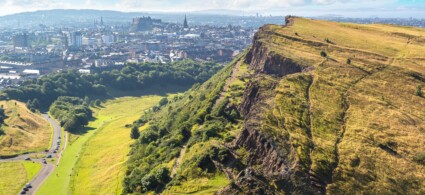
At the foot of the Royal Mile stretches a wooded area of marvellous beauty: once you’ve left the busy, noisy centre, within a few steps you’ll find yourself immersed in nature and it will feel as though you’re worlds away from the city.
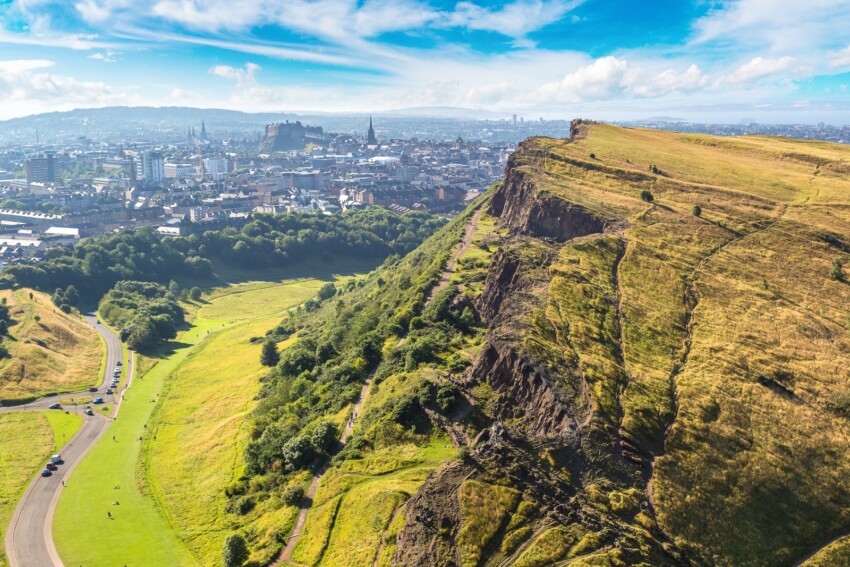
This area is called Holyrood Park and condenses all the charm and variety of Scottish landscapes within 8 kilometres in diameter: mountains, moorland, cliffs, marshes, lochs (lakes), glens (narrow valleys) and lush green fields.
On sunny days, the climb up Arthur’s Seat is a real feast for the eyes and an excellent opportunity for a walk completely immersed in nature just a short distance from the historic centre of the Old Town.
Wear comfortable shoes and bring a windproof jacket: the frequent rains that batter the city make the paths muddy and slippery, whilst a gusty wind sweeps across the ridges and moorland. In summer, don’t forget sunscreen: the ever-present breeze masks the sensation of the sun’s rays on your skin.
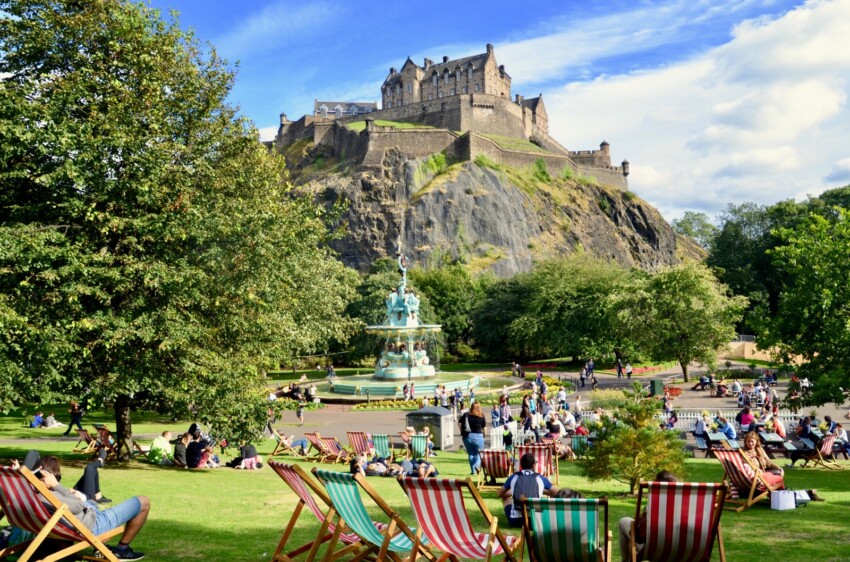
A true green lung of the city in the heart of the historic centre, Princes Street Gardens are an idyllic spot, filled with large trees, green lawns and paths that cross the two sections of the park, East and West.
This is the ideal place to relax, read a book on a bench or watch city residents who come here for a rejuvenating break, but most importantly, from here you enjoy a spectacular view of Edinburgh Castle perched on the hill.
Also from here, during Hogmanay and the major festivals, you can watch the fireworks that always draw large crowds: it’s one of the best vantage points to admire them in all their splendour.
Finally, be aware that there is a children’s play park on the western side and that during the warmer months beautiful floral displays are set up (especially at the entrance to West Princes Street Gardens, at the base of the hill).
The Water of Leith is a long pedestrian path along the waterway stretching almost 20 kilometres through the city.
Beneath street level, away from the noise of traffic and the city, lies this idyllic corner that seems to have stepped straight out of a 19th-century romantic novel.
A long pedestrian and cycling path runs from Balerno to the sea, passing through ancient rural villages, now absorbed into the city’s outskirts, vibrant suburbs, locks, small waterfalls and hidden and evocative corners of the city: few tourists visit this charming place, whilst it’s very popular with Edinburgh residents as a Sunday walk.
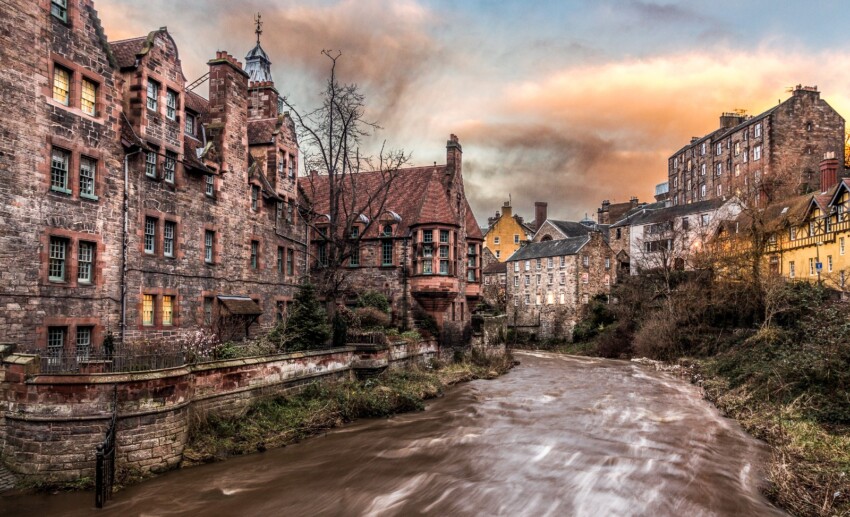
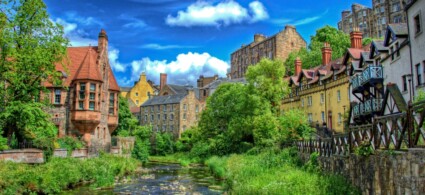
The most enchanting and captivating stretch is surely the one starting from Dean Village, one of the most picturesque places in the city, and reaching Canonmills: you’ll feel as though you’ve stepped back in time as you walk along the waterway, passing under bridges, footbridges, waterfalls, ancient wrought-iron gates, moss-covered walls. The city centre will feel far away and you’ll be immersed in an atmosphere of slow, bygone times.
Dean Village is a real gem that Edinburgh hides from the eyes of hurried tourists: it’s an ancient mining village that has perfectly preserved period buildings and houses. Today integrated into the city’s urban fabric, it has managed to maintain its identity intact thanks to the village’s residents and its proud character.
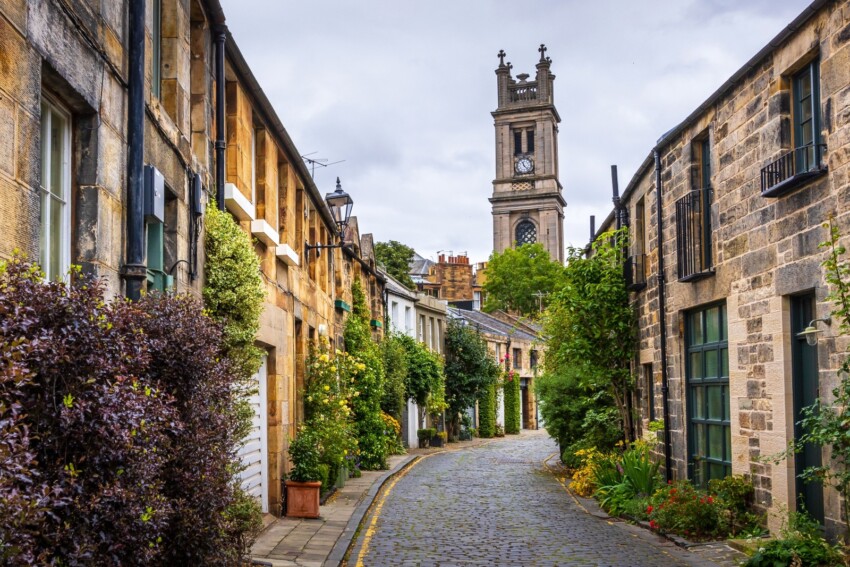
Stockbridge represents the alternative and artistic face of Edinburgh, far from the classic tourist trails of the historic centre and the sound of bagpipes. This charming residential neighbourhood attracts visitors with its cobbled streets, characteristic sandstone buildings in pastel tones and lush gardens that create a romantic and peaceful atmosphere.
Unlike the city centre, you won’t find traditional tourist attractions here, but you can immerse yourself in an authentic bohemian atmosphere, frequented mainly by local residents. The neighbourhood has become a reference point for art and vintage lovers, thanks to its numerous antique shops, art galleries, independent bookshops and literary cafés that attract culture enthusiasts from across the city.
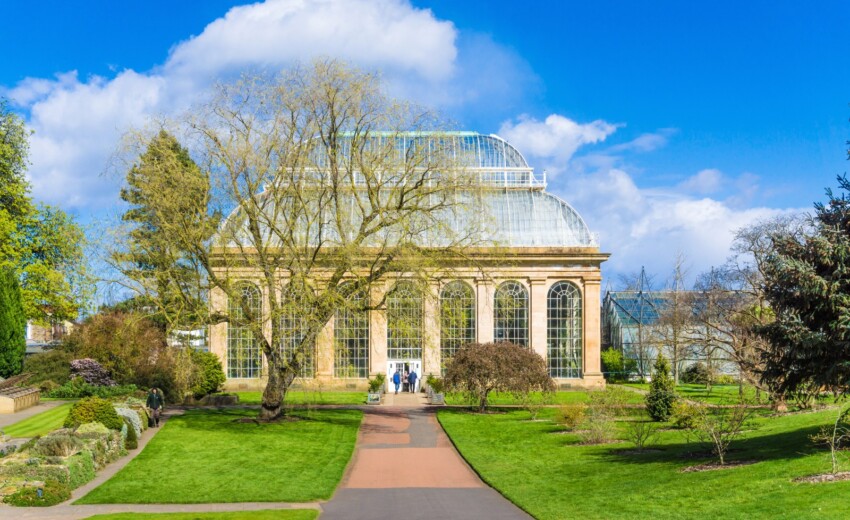
Among the unmissable spots is the Royal Botanic Garden, a green oasis that hosts a rich collection of exotic plants and fragrant flowers.
On Sundays, the Stockbridge Market offers the opportunity to discover and purchase high-quality local products, completing the authentic experience of this characteristic Edinburgh neighbourhood.
A true slice of paradise in Edinburgh can be found at the Royal Botanic Garden, a lush oasis located on the northern fringes of the New Town: not only is it the ideal place to learn about exotic flora but its verdant surroundings make it the perfect spot to spend a sunny afternoon.
In addition to greenhouses with palms, ferns, orchids and aquatic plants, you’ll find themed sections such as the Chinese garden and Scottish woodland, as well as paths immersed in the gentlest nature where you might encounter inquisitive squirrels and catch glimpses of foxes amongst the trees.
If you visit after a thunderstorm, the flora will be particularly delightful and there will be few people around. From the Terrace Café you’ll have a spectacular view of the castle and the Old Town.
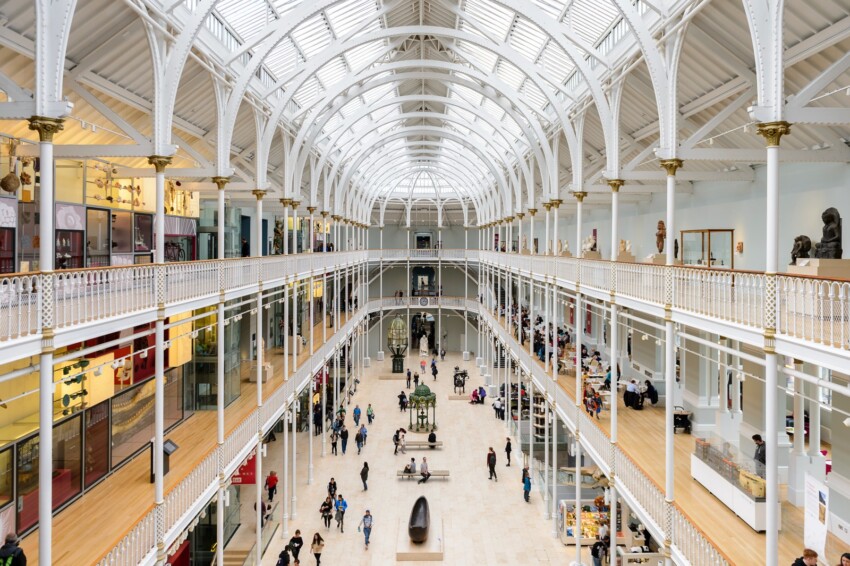
On the south side of Chambers Street, just steps from the Greyfriars Bobby statue, stands the extraordinary building that houses the National Museum of Scotland: this beautiful museum is definitely interesting both for those wanting to delve deeper into Scottish history and for those travelling with children, thanks to sections dedicated to nature, world cultures and science.
One section of the museum tells the story of Scotland from the first human settlements to the present day through a chronological division across seven levels: here you can explore the various historical periods of Scotland through invaluable archaeological artefacts such as the Traprain treasure or the Lewis Viking chess pieces, with illustrious figures such as Stevenson and the evolution of industry and transport.
Within the museum there are also several galleries dedicated to the natural world, the evolution of science and technology, different cultures around the world, art and design throughout history, innovations and ideas that have shaped the world and led to discoveries.
The National Museum of Scotland boasts 8,000 artefacts not only from Scotland, but also from exploration voyages by scientists of the era, such as Charles Darwin: the ideal place to shelter on a rainy day.
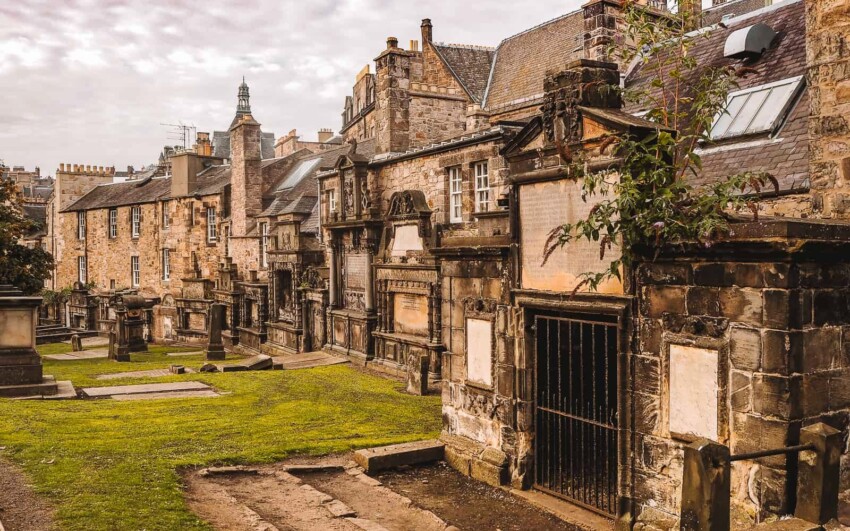
Greyfriars Kirkyard is one of Edinburgh’s most fascinating and visited cemeteries.
The most touching story associated with this place is that of Greyfriars Bobby, the loyal Scottish terrier who, after the death of his owner John Gray in 1858, kept vigil over his grave for 14 years until his own death. This moving demonstration of loyalty is commemorated with a statue outside the cemetery and has inspired books and films.
More recently, the Kirkyard has gained immense popularity amongst Harry Potter fans, as J.K. Rowling drew inspiration from the gravestones in this cemetery to create the names of some characters, most notably the tomb of Tom Riddle. But you’ll also find graves with other surnames familiar to readers of the saga, such as McGonagall or Moodie.
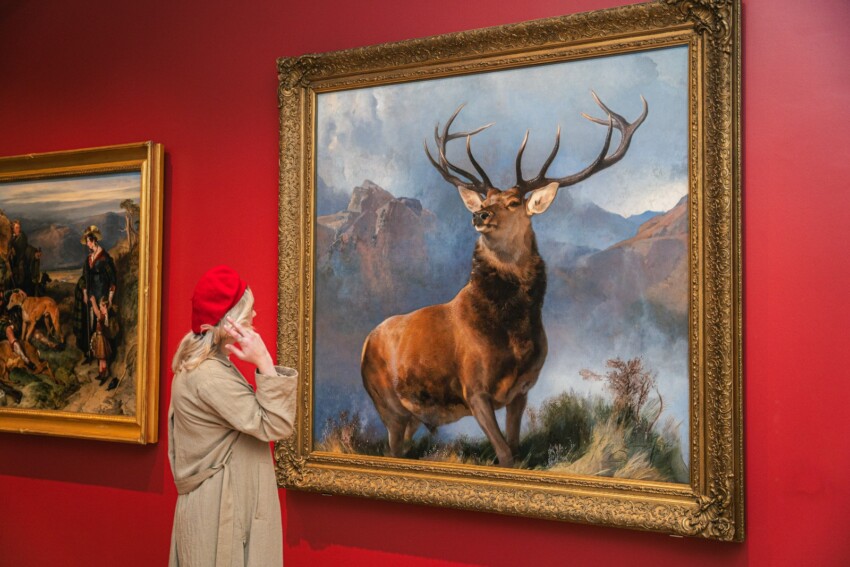
Built as a “temple of fine arts”, this imposing museum is positioned in front of the beautiful gardens of West Prince Street Garden and at the foot of the Mound, the hill created with earth spoil from the construction works of the New Town.
The museum has now been integrated into the museum complex of the National Galleries, alongside the Scottish National Gallery of Modern Art and the Scottish National Portrait Gallery and also includes The Royal Scottish Academy, a gallery dedicated to art and cultural events.
Inside you can admire works by Botticelli, Raphael, Titian, Jacopo Bassano, Tintoretto and Veronese. In addition to Poussin’s series of the Seven Sacraments, works by Rubens, Rembrandt, Vermeer, Pissarro, Degas, Monet, Renoir, Gauguin, Van Gogh and Cézanne are also on display. Among Scottish and English painters, we also note a splendid collection of watercolours by Turner.
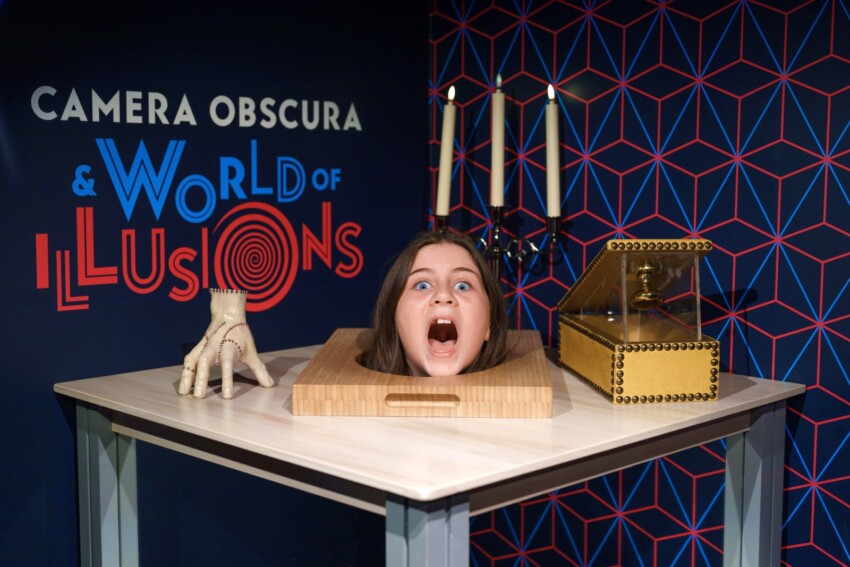
Edinburgh’s Camera Obscura represents one of the city’s oldest attractions, operating since 1835 at the top of the Royal Mile. The original optical device, installed in the Outlook tower building, projects a panoramic real-time image of the city onto a concave surface through a system of mirrors and lenses. During the demonstration, which takes place in a darkened room, you can observe the traffic on Princes Street, tourists at Edinburgh Castle and even follow details of passers-by, all thanks to Victorian optical precision.
The building has expanded across five storeys with over 100 interactive experiences dedicated to optical illusions, holograms and contemporary installations. The Mirror Maze on the third floor disorients with its endless corridors, while the Vortex Tunnel creates the sensation of walking on an unstable surface whilst remaining perfectly flat. The panoramic terrace offers 360-degree views of Edinburgh, particularly striking at sunset when the city lights begin to twinkle.
The attraction is just a stone’s throw from the Castle, making it easily accessible during your visit to the Old Town.
19134 Corstorphine Rd, Corstorphine, Edinburgh EH12 6TS, UK
Edinburgh Zoo, managed by the Royal Zoological Society of Scotland since 1913, sprawls across 33 hectares on the southern slopes of Corstorphine Hill, about 4 km from the city centre. The zoo houses over 1,000 animals representing approximately 200 species, with a strong emphasis on international conservation programmes. The main attraction remains the colony of king penguins, the largest outside Antarctica, which has performed its famous “penguin parade” daily since 1951 at 14:15 (March to October), when the animals walk freely along the zoo’s pathways accompanied by keepers.
The recently opened Highland Tiger Territory recreates the Scottish Highlands habitat to house Amur tigers in a 2-hectare environment complete with forests, pools and rocky outcrops. The Budongo Trail offers an immersive experience of watching chimpanzees through full-height glass panels that allow you to study the group’s complex social dynamics. To reach the zoo, take Lothian buses 12, 26 or 31 from Princes Street (approximately 25 minutes).
The route has several significant elevation changes, so allow at least 3-4 hours for a complete visit.
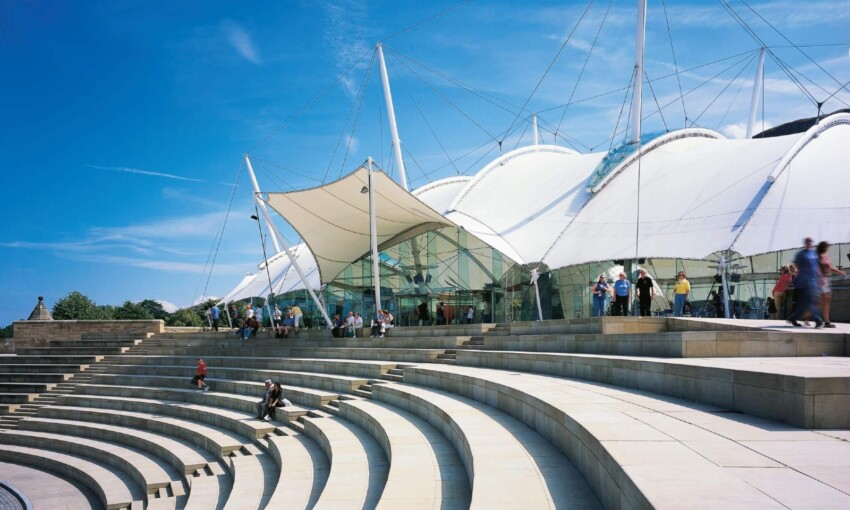
Our Dynamic Earth is a striking white structure with a vaguely armadillo-like shape, studded with spikes. Inside, it houses a cutting-edge technological attraction that takes visitors on a journey through time to discover the evolution of planet Earth.
Particularly ideal for those travelling with children, at Our Dynamic Earth you can witness the Big Bang, come face-to-face with a dinosaur, experience volcanic eruptions, fly over glaciers, dive into oceans and find yourself in the middle of a tropical storm.
This charming museum at the foot of Canongate houses the city’s most comprehensive collection of local history. You’ll find countless artefacts and authentic objects from Edinburgh residents’ daily lives, beautifully preserved and organised by neighbourhood.
If you’re familiar with the story of Greyfriars Bobby, you’ll be delighted to see his collar, his bowl and the original plaster cast used for the bronze statue that stands at Candlemaker Row.
Among the museum’s greatest treasures is the National Covenant signed by the Presbyterian Church of Scotland in 1638. The collections of Scottish pottery and artefacts belonging to Field Marshal Earl Haig are of national significance.
Beyond the objects themselves, take time to admire the building’s structure and interiors: you’ll easily be able to imagine life in that era.
Guided and free tours of Edimburgo
Discover Edimburgo through the eyes of expert guides who will take you on a tour of the city's hidden treasures. Participating in a guided visit or a free tour will allow you to capture the true essence of Edimburgo.
The free tours are a viable alternative to traditional guided tours. They work like this: participation is free and at the end of the visit you can leave a tip at your discretion. Below you will find our favourite free tour, otherwise you can see the full list by visiting this page.
In the following map you can see the location of the main places of interest mentioned in this article.
Free things to see in Edinburgh
Scotland isn’t known for being budget-friendly, but Edinburgh has plenty of free attractions to make your stay enjoyable without breaking the bank. Here are a few examples:
Most of the city’s museums are completely free: City Art Centre, Museum of Edinburgh, National Gallery of Scotland, Scottish National Portrait Gallery, Dean Gallery, Scottish National Gallery of Modern Art, The People’s Story Museum, The Writers’ Museum & Makars’ Court.
A stroll through the Royal Botanic Garden.
The breathtaking views from the esplanade of Edinburgh Castle (castle admission is charged).
The panorama over the city from Calton Hill.
A visit to St. Giles’ Cathedral.
A lovely walk surrounded by greenery at Holyrood Park, or in the Princes Street Gardens, or along the Water of Leith, a scenic waterway with pastoral vistas that will show you hidden corners of the city and lead you down to the sea to admire the harbour!

 Hotel
Hotel  Budget accommodations
  Apartments
  Family Hotel
  Luxury Hotel