Royal Edinburgh Ticket
Book this Royal Edinburgh Ticket and enjoy the best of the Scottish capital city for 48 hours. Visit the Castle, the Royal Yacht and the Palace.
From 92,80 €
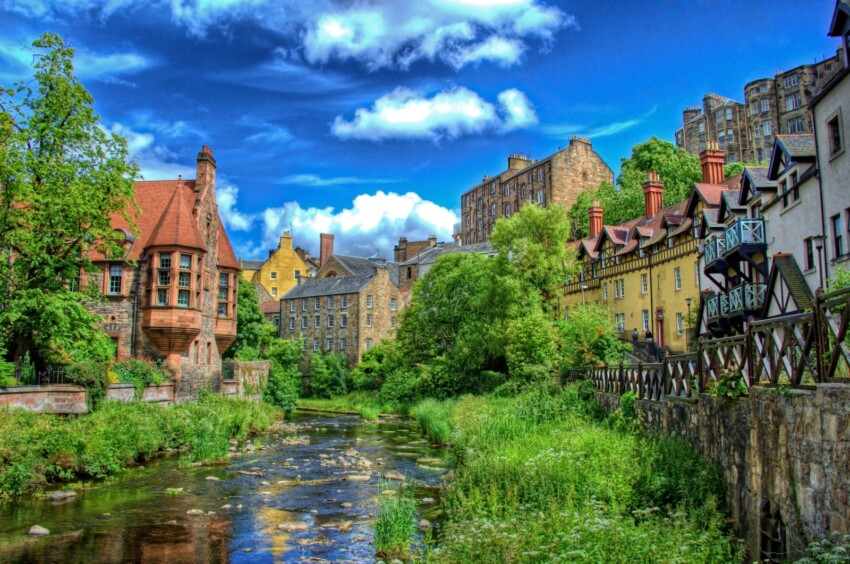
Just a stone’s throw from Edinburgh’s bustling city centre, Dean Village is a corner of paradise that seems suspended in time. This historic village, once a flourishing flour-milling hub powered by the Water of Leith, today stands as one of the most picturesque and photographed locations in Scotland’s capital. With its grey stone buildings, beautifully preserved architectural details and peaceful atmosphere, Dean Village offers a completely different experience from the hustle and bustle of Edinburgh’s Old Town streets.
Despite being just a 15-minute walk from Princes Street, many visitors overlook this hidden gem—a mistake we’d urge you not to make. Dean Village perfectly embodies Edinburgh’s remarkable ability to preserve its history and character whilst evolving as a modern city. The soft-hued houses overlooking the river, restored old mills and stone bridges create an urban landscape of extraordinary beauty that thoroughly deserves a visit.
The name “Dean Village” derives from the word dene, an ancient term meaning a “deep valley”. This enchanting settlement, nestled with its characteristic dwellings along the banks of the Leith, is believed to have been founded in 1128, when monks from Holyrood Abbey established a community here.
For more than eight centuries, this area enjoyed considerable economic prosperity. The village was an important industrial centre that harnessed the river’s power—which flowed with particular vigour in this section—to drive its mills. Eleven water-powered milling operations were positioned strategically along the Water of Leith, grinding flour destined for Edinburgh’s entire supply and bakeries.
Walking through the area, you can still spot traces of that industrial era: the watercourse features artificial weirs constructed to accelerate the current and boost the efficiency of the water wheels. During recent restoration work, an old millstone was recovered, testament to the area’s historic milling heritage.
Back then, Dean Village was also a crucial waypoint for travellers heading to Edinburgh. The village developed around a narrow stone passage—one of the few practicable crossings through this otherwise difficult ravine. Travellers from distant regions, such as Fife, had to pass through Dean Village to reach Scotland’s capital.
Everything changed radically after 1827, when entrepreneur John Learmonth acquired land north of Edinburgh to develop as part of the New Town expansion. However, situated on the far side of the gorge, these properties held little commercial value without easy access to the city. Learmonth therefore commissioned an impressive viaduct to cross the valley and make his investments more attractive.
Engineer Thomas Telford designed and oversaw construction of what would become the Dean Bridge—his final major work before his death—completed within two years. With this innovation, the city became accessible without descending into the valley where Dean Village stood. Essentially, the bridge’s impact was to isolate the village, which lost its strategic importance and entered rapid decline.
Over time, the mills themselves ceased operations, replaced by more modern facilities near Leith harbour, where larger structures enabled greater production and more efficient sea-based export.
By the late 19th century, Dean Village risked becoming a ghost town, but the construction of the Well Court residential complex represented an attempt to repopulate this former industrial area. The building was commissioned in 1880 by Sir John Findlay, then proprietor of The Scotsman newspaper. Well Court, complete with its distinctive clock tower, was completed in 1884, serving as a focal point for the community.
Despite this initiative, Dean Village’s economic activity continued to decline over time, reducing it by around 1960 to a deprived and impoverished area. Fortunately, people recognised the potential of this pleasant location, strategically close to the city centre. With municipal support, a regeneration programme began several decades ago. The entire area was revitalised and transformed into a highly sought-after residential neighbourhood.
Today Dean Village retains its late-Victorian charm intact, with the river creating an atmosphere of tranquillity mere steps from the urban bustle. It seems almost unbelievable that this picturesque corner lies just a short walk from a European capital’s heart.
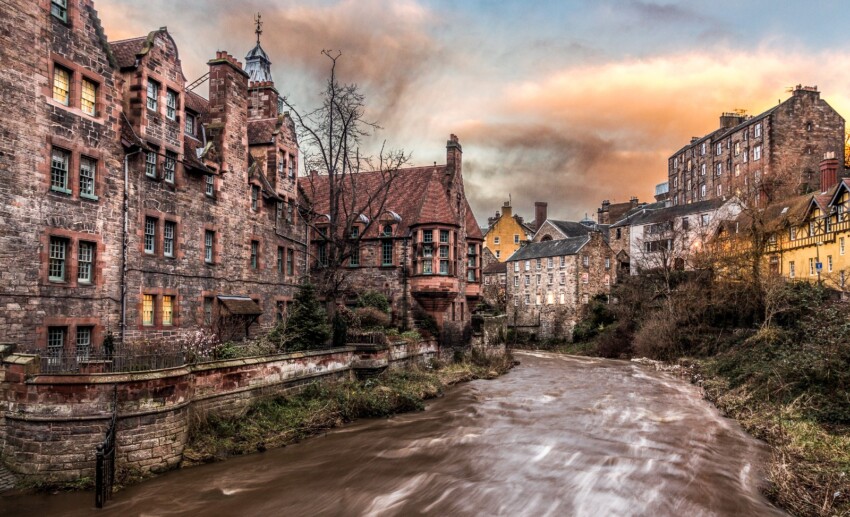
Dean Village is a place where the main attraction is simply to wander and soak up the atmosphere.
The Water of Leith Walkway is the river that winds through Dean Village, and for centuries it powered the area’s economy. Today, the walking path alongside the river offers a relaxing and scenic stroll. You can explore the village itself in around 20 minutes, but we’d recommend a more rewarding itinerary starting from Belford Road, passing through Dean Village, continuing to Stockbridge and then returning to the centre via the New Town.
The full walk, which can equally be done in reverse if you’re staying in the New Town, takes around an hour—unless you pause to photograph every corner (almost inevitable given that this area offers some of Edinburgh’s most picturesque views), though every minute is worthwhile for the scenic vistas you’ll encounter along the way.
Starting hypothetically from Belford Road, even before technically entering Dean Village, you’ll first encounter the Dean Gallery and Scottish National Gallery of Modern Art1, offering an extraordinary collection of modern and contemporary art. These museums are housed in elegant neoclassical buildings surrounded by sculpture gardens. The permanent collections include works by internationally renowned artists such as Picasso and Matisse, alongside prominent Scottish artists.
Continuing on, the Dean Cemetery2 absolutely warrants a stop. Opened in 1846, this Victorian burial ground stands where the Dean Mansion House once stood, with some surrounding walls forming part of the original estate.
It was among Edinburgh’s first cemeteries organised according to a formal, geometric layout. Numerous eminent figures in Scottish culture rest here: medical pioneers, scientific luminaries, masters of art and literature, alongside many war memorials. Most burials belong to the privileged social classes of the era.
The overall impression is one of being in an ornamental garden that, ignoring the gravestones, you might forget the site’s true nature. Though privately owned, Dean Cemetery maintains regular public opening hours and definitely merits a walk along its well-maintained paths, which offer different scenes depending on the season.
Further along stands Well Court3, arguably the most iconic and photographed building in Dean Village. This imposing red sandstone complex was built in 1880 as housing for local mill workers. With its distinctive clock tower and arched windows, it represents a beautiful example of 19th-century Scottish architecture.
Immediately after comes Miller Row4, one of Dean Village’s most charming streets, lined with ancient stone houses that once accommodated millers and their families. Walking along this narrow cobbled passage, we noticed various emblems carved into the buildings evoking the milling trade—mill wheels and depictions of grain sacks. These decorative details tell the story of the village’s industrial heritage and add further appeal to an already inherently picturesque area.
From Miller Row you’ll notice the Dean Bridge5, an impressive structure designed by Thomas Telford in 1832 that towers over the Dean valley at over 30 metres high. The bridge offers spectacular views across the valley and the Water of Leith. During our visit, we took some of our best photographs from this panoramic vantage point.
Before leaving Dean Village you’ll encounter St. Bernard's Well6, an elegant neoclassical structure situated along the Water of Leith. Built in 1789, this graceful circular pavilion with Doric columns shelters a mineral spring believed to have healing properties. The statue of the Greek goddess Hygieia crowning the structure adds a classical touch to the landscape. It’s open to the public only on special occasions, but it’s still worth admiring from the outside.
Continuing along the tree-lined path immersed in lush vegetation, you’ll eventually reach Stockbridge.
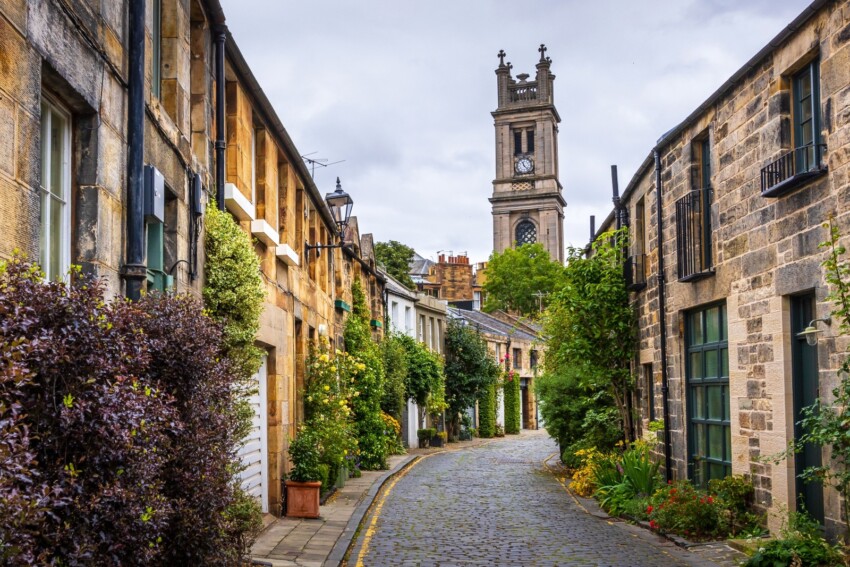
Extending our walk along the Leith’s banks, we reached the vibrant neighbourhood of Stockbridge. Like Dean Village, this was once an independent community later absorbed into 19th-century urban expansion. Nevertheless, it still retains today the intimate atmosphere of smaller towns, perceptible in its stone-paved lanes, especially on market days when the area bustles with stalls.
The name Stockbridge literally means “wooden bridge”, although the main crossing has been reconstructed in stone since 1786. During the 1970s, affordable rents attracted numerous artists and students who imparted the neighbourhood with a bohemian air still tangible today. Currently Stockbridge is one of Edinburgh’s most coveted and sought-after areas, and it’s easy to see why: the peaceful setting, independent boutiques, art galleries and proximity to both the city centre and green spaces make it an ideal residential location.
A must-see attraction is Circus Lane7, a delightful residential passage that will steal your heart. Despite its proximity to a major thoroughfare, this corner is shrouded in a quiet that makes you forget how close you are to the city centre. This charming lane belongs to the Stockbridge mews complex, passages created in the 17th and 18th centuries behind the grand tenement houses. Whilst the ground floors housed stables and hay lofts, the upper levels served as quarters for servants and domestic workers.
If it’s Sunday, don’t miss the characterful Stockbridge Market8. This weekly farmers’ and artisans’ market runs from 10am to 5pm at Jubilee Gardens, in the neighbourhood’s heart. You’ll find numerous stalls offering a selection of local and artisanal products. You can sample quality meats, fresh fish, seasonal fruit and vegetables, local artisan cheese, egg preparations such as traditional Scotch eggs, and an array of vividly coloured jams and preserves.
Various city shops, including renowned chocolatiers and bakeries, set up temporary stalls here to sell their creations. Unlike other Edinburgh gastronomic events, this market isn’t limited to local specialities but offers a cosmopolitan range: authentic Italian products, Spanish cheeses, French pastries and much more. Completing the offering is a selection of handmade crafts including jewellery, clothing and personal care products.
In the following map you can see the location of the main places of interest mentioned in this article.
Dean Village is just 10 minutes’ walk from Edinburgh’s city centre. From the New Town neighbourhood, you can reach it by heading along Queensferry Street and then descending Bell’s Brae.
If you prefer public transport, several Lothian bus lines (routes 13, 19, 36, 37, 41, 47 and 47B) stop on Queensferry Road, a short walk from Dean Village. Taxis are readily available throughout central Edinburgh and can drop you directly at the village entrance on Belford Road.
During our stay, we found it particularly pleasant to reach the area on foot by following the Water of Leith pathway, either from Stockbridge or the city centre, thus enjoying the riverside environment before arriving at the village.
A practical tip when planning this excursion: remember that Dean Village is exclusively residential, so it’s important to respect residents’ peace and privacy. There are no restaurants or public facilities. If you’d like a food break, we’d suggest heading to Stockbridge.
City Card allow you to save on public transport and / or on the entrances to the main tourist attractions.
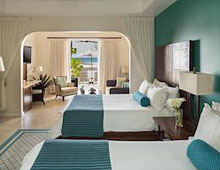 Hotel
Hotel  Budget accommodations
 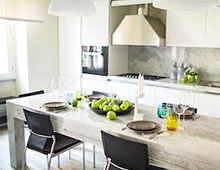 Apartments
  Family Hotel
 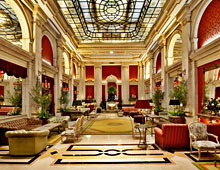 Luxury Hotel