Bestseller
Edinburgh: Palace of Holyroodhouse Entry Ticket
From 25,25 €
Buy the ticket
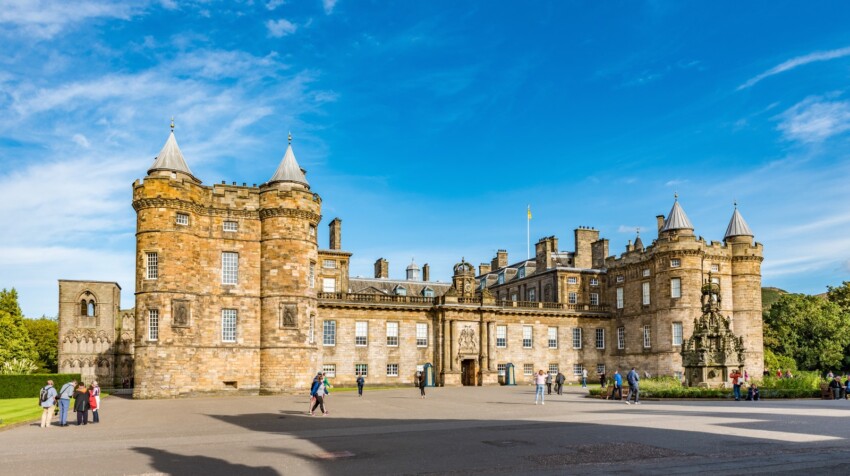
Palace of Holyroodhouse is the official residence of the British Royal Family in Scotland but, unlike most royal residences, it is open to visitors in almost all of its rooms and for much of the year.
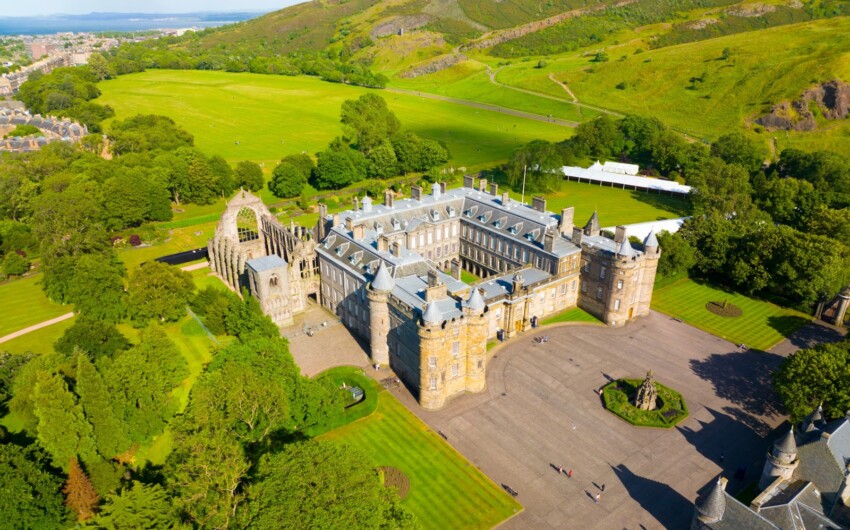
Located at the foot of the Royal Mile, which connects the palace to the castle through the historic city centre, Holyroodhouse stands majestically at the base of the impressive Arthur’s Seat, creating a spectacular contrast between architecture and wild nature. With over 500 years of history, Holyroodhouse has witnessed some of the most significant events in Scottish history: from the intrigue of Mary, Queen of Scots’ court to the union of the kingdoms of Scotland and England.
During your visit, you can admire the royal apartments lavishly decorated, the splendid gardens and the ruins of Holyrood Abbey.
The history of Holyroodhouse begins long before the construction of the current palace. It all started in 1128, when King David I of Scotland founded an Augustinian abbey on the site. According to legend, whilst hunting in the woods of Edinburgh, the king was attacked by a furious stag. At the moment of danger, a miraculous cross appeared between the animal’s horns, which immediately calmed. In gratitude for being saved, the king founded the abbey, naming it “Holy Rood” (Holy Cross).
Over the centuries, the abbey became an important religious centre and Scottish monarchs began building residences nearby. However, it was James IV who, at the beginning of the 16th century, decided to transform the complex into a true royal palace, beginning the construction of the structure we see today.
The most dramatic period in the palace’s history is undoubtedly linked to Mary, Queen of Scots, who lived here from 1561 to 1567. Her private chambers, still perfectly preserved, were the scene of tragic events, including the assassination of her Italian secretary David Rizzio, stabbed to death in 1566 on the orders of Mary’s husband, Lord Darnley, in a court conspiracy.
After the union of the crowns of Scotland and England in 1603, the palace temporarily lost importance, until Charles II ordered a complete reconstruction in the 1670s, entrusting the project to architect Sir William Bruce. Since then, Holyroodhouse has remained the official residence of British sovereigns in Scotland, where today the King spends a week at the beginning of summer, during which official receptions and ceremonies are held.
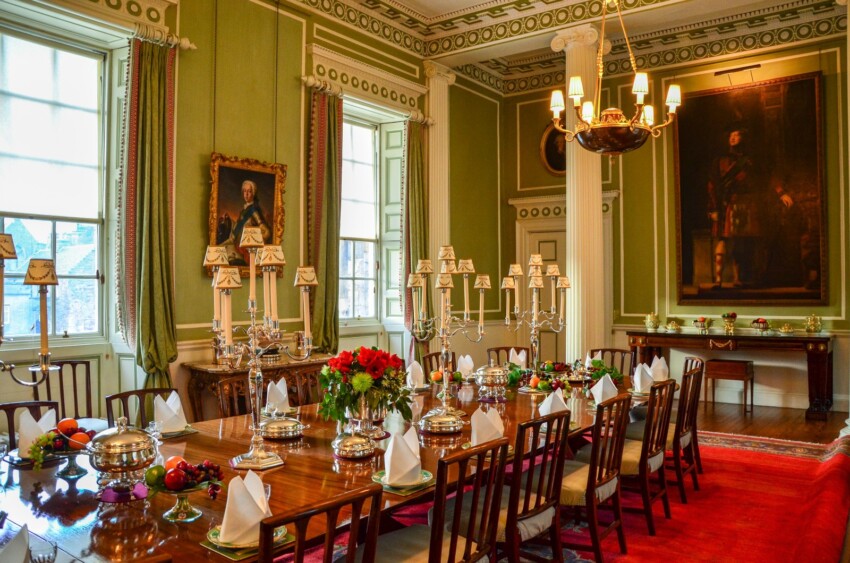
At the heart of the Palace of Holyroodhouse experience are the State Apartments, splendidly furnished and rich in works of art from the Royal Collection. These magnificent spaces are still used today by the Royal Family for official ceremonies and receptions.
The Great Gallery is the most imposing room in the palace, a full 44 metres long and decorated with 110 portraits of Scottish monarchs (both real and legendary), commissioned by Charles II. Unfortunately, many of the original paintings were damaged in 1745 by Jacobite troops, but were subsequently restored.
The Throne Room is used for official receptions and investiture ceremonies. During your visit you can admire the throne used by the King during official visits to Scotland.
Don’t miss the Morning Drawing Room and Evening Drawing Room, where you can admire splendid tapestries and period furniture that testify to the refined taste of the British monarchy.
Without doubt, one of the most fascinating elements of Holyroodhouse are Mary, Queen of Scots’ Apartments, located on the second floor of the palace. These rooms have retained much of the 16th-century atmosphere and tell the dramatic story of the ill-fated queen.
Mary’s Bedroom is one of the most evocative rooms, with its four-poster bed and original furnishings. It was here that the queen retired after witnessing the murder of her secretary.
The Dining Room is sadly famous for being the place of the assassination of David Rizzio, the queen’s secretary and confidant. A plaque on the floor marks the exact spot where the young Italian was stabbed to death in 1566, in the presence of the pregnant queen. According to legend, the bloodstains are still visible on the floor.
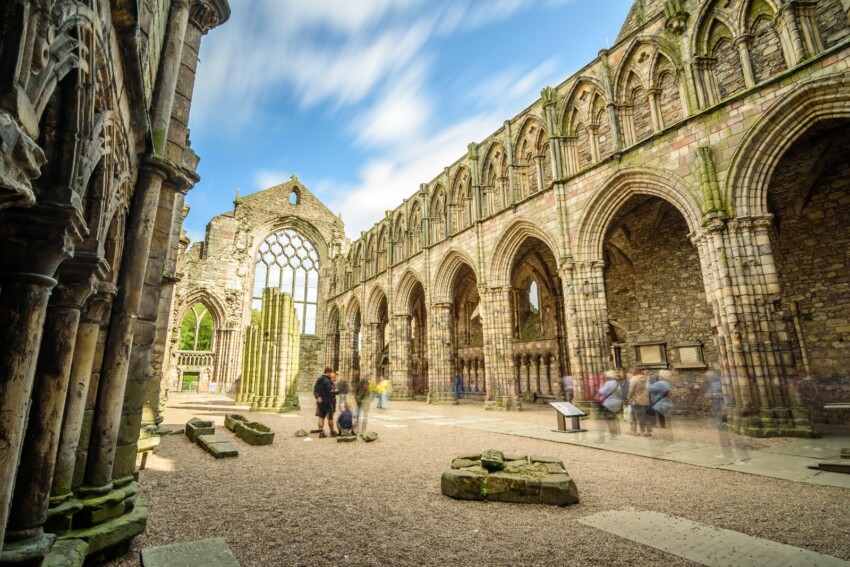
Adjacent to the palace are the evocative ruins of Holyrood Abbey, founded in the 12th century. Despite the centuries and historical events that have compromised its structural integrity (it was severely damaged during the Scottish Reformation in 1559), the ruins still retain extraordinary charm.
You can admire the Gothic nave, with its tall Gothic windows now devoid of glass, and imagine the original splendour of this sacred place. The abbey was also the site of coronation and burial of many Scottish monarchs, including David II and James II.
The Gardens of Holyroodhouse offer an oasis of peace in the heart of the city. Spanning over 4 hectares, they represent the only major garden in the city still officially managed and maintained.
During your visit you can stroll along the orderly paths and admire the geometric flower beds designed in the classic formal style. From the gardens you also enjoy a spectacular view of Arthur’s Seat, the ancient extinct volcano that dominates Edinburgh’s skyline, and the abbey ruins.
A curiosity: every year in July, the gardens host the royal Garden Party, during which approximately 8,000 guests are invited to meet the King and other members of the Royal Family.
Adjacent to the palace is the Queen’s Gallery, an exhibition space that hosts temporary exhibitions of artworks from the Royal Collection. Inaugurated in 2002 on the occasion of Queen Elizabeth II’s Golden Jubilee, the gallery regularly presents thematic exhibitions that change approximately every six months.
The exhibitions range from masterpieces of Renaissance painting to historical photographs, from royal jewels to period furnishings. If you are passionate about art, it’s absolutely worth checking which exhibition is scheduled during your visit.
Palace of Holyroodhouse is generally open to the public all year round, but opening times vary depending on the season:
It is important to note that the palace occasionally closes for official visits or royal events, particularly during Holyrood Week (or “Royal Week”) at the beginning of summer, when the King or other members of the Royal Family are in residence. We recommend you always check opening times on the official website before your visit.
Holyrood Abbey and the gardens follow the same opening hours as the palace.
There are several ticket options to visit Palace of Holyroodhouse:
Prices vary depending on the season and any special offers. Children under 5 enter free, whilst discounts are available for students, over 60s and families. Tickets can be purchased online in advance (recommended option, especially in high season) or directly at the palace ticket office.
An excellent option to save money is the Royal Edinburgh Ticket, which includes entry to Palace of Holyroodhouse, Edinburgh Castle and the Royal Yacht Britannia, as well as 48 hours of unlimited transport on the city’s tourist buses.
In addition to the standard self-guided tour with audioguide, Palace of Holyroodhouse periodically offers special guided tours that explore specific aspects of the palace’s history and art:
Advance booking is generally required for these special tours, given the limited number of places available.
To make the most of your visit to Palace of Holyroodhouse, here are some helpful tips:
Every year, traditionally at the beginning of summer (usually the first week of July), Holyrood Week or Royal Week is held, during which the British Monarchy celebrates Scottish heritage, culture and community achievements.
During this week, the palace hosts numerous official events, including:
During Royal Week, the palace is closed to visitors, so check the dates if you are planning a trip to Edinburgh during that period.
The Queen’s Gallery regularly hosts temporary exhibitions of works from the Royal Collection, one of the world’s most important art collections. Exhibitions change approximately every six months and span various themes and historical periods.
The exhibitions are curated with great attention and often feature works never previously shown to the public or thematic collections of great artistic and historical value. On the official website of the Royal Collection Trust you can find information about current and upcoming exhibitions.
Throughout the year, Palace of Holyroodhouse organises various special and seasonal events, particularly during the Christmas and Easter periods. These may include:
If you are interested in these special events, check the official website to see what is scheduled during your stay in Edinburgh.
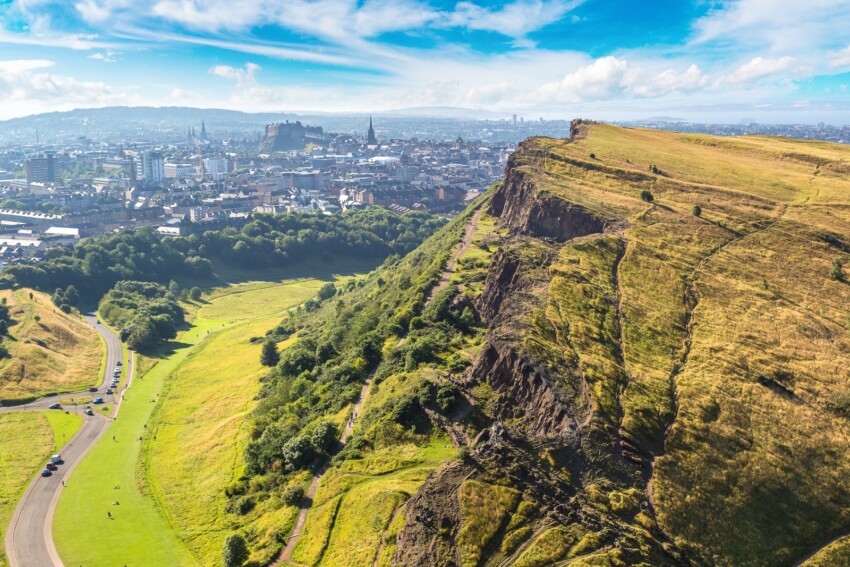
Adjacent to the palace lies Holyrood Park, a remarkable natural area spanning over 260 hectares in the heart of the city. The park is dominated by Arthur’s Seat, an extinct volcano rising 251 metres that offers one of Edinburgh’s most spectacular panoramic views.
Climbing to the summit of Arthur’s Seat takes approximately an hour and is of moderate difficulty. The most accessible path starts directly behind the palace, though various routes of differing difficulty are available. Once at the top, you’ll be rewarded with a 360-degree view of the city, the Firth of Forth and, on the clearest days, right across to the Highlands.
The park also features the Salisbury Crags, impressive volcanic cliffs, and St. Margaret’s Loch, a picturesque pond frequented by swans and ducks.
Facing the Palace of Holyroodhouse stands the Scottish Parliament building, a masterpiece of contemporary architecture designed by Catalan architect Enric Miralles and opened in 2004. The contrast between the ancient royal palace and the modern parliamentary home creates one of the most fascinating aspects of this area of the city.
The Parliament building is open to visitors (free admission) and offers guided tours that showcase not only the innovative architecture, but also explain how Scotland’s parliamentary institution works.
Just a short walk from the palace is Dynamic Earth, an interactive science attraction that tells the story of Earth and the evolution of our planet. Featuring simulations, interactive displays and a planetarium, it’s an excellent destination for families with children and anyone with an interest in natural sciences.
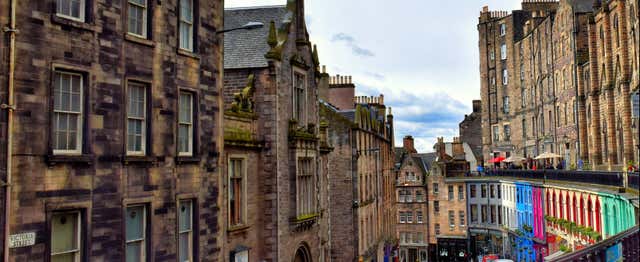
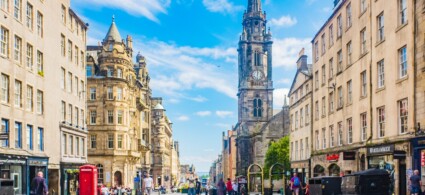
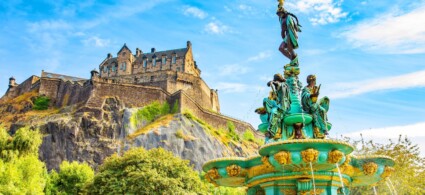
From the Palace of Holyroodhouse’s doorstep begins the celebrated Royal Mile, Edinburgh’s most famous street, which connects the palace to the castle whilst cutting through the entire historic centre. Stretching precisely one Scottish mile (approximately 1.8 km), this thoroughfare is lined with historic buildings, churches, traditional pubs and souvenir shops.
As you walk up the Royal Mile from the palace towards the castle, you’ll encounter numerous attractions, including Canongate Kirk (the church where Zara Phillips and Mike Tindall were married), the Museum of Edinburgh, St Giles’ Cathedral and numerous closes (the characteristic narrow alleyways that branch off from the main street).
City Card allow you to save on public transport and / or on the entrances to the main tourist attractions.
 Hotel
Hotel  Budget accommodations
  Apartments
  Family Hotel
  Luxury Hotel