Edinburgh: Loch Ness, Glencoe & the Scottish Highlands Tour
18.051 reviews
Buy now
From 76,03€ per person
Galloway, located in south-west Scotland, represents one of the most authentic and least explored regions of the entire United Kingdom.
This region, characterised by breathtaking coastal landscapes, rolling hills and ancient forests, offers visitors a unique experience away from the most well-trodden tourist routes. With its picturesque fishing villages, medieval castles and Europe’s first Dark Sky Park, Galloway is a destination that captivates those seeking the purest essence of Scotland.
The best way to explore the region – perhaps the only practical way, given its rural nature and the distances between attractions – is by hiring a car. The best time to visit is from May to September, when days are longer and the weather milder. However, each season offers unique perspectives for discovering this extraordinary region.
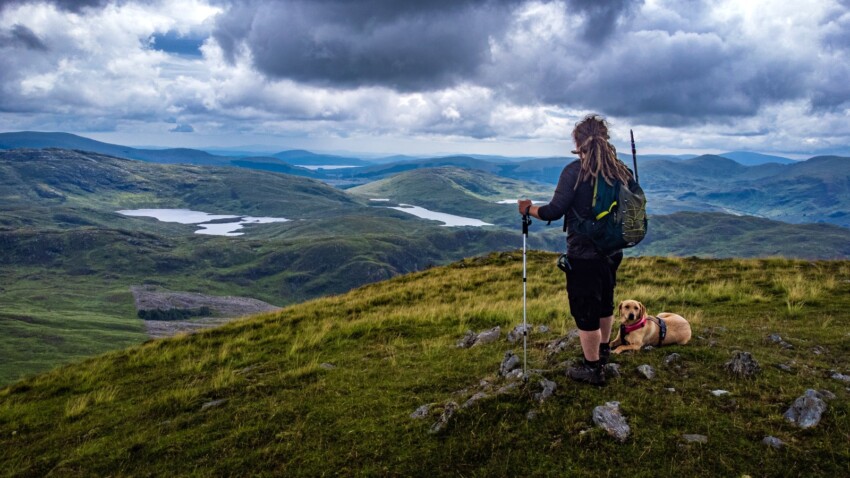
An enchanting landscape of crystal-clear lochs, forests hiding small waterfalls and bare rounded peaks make up the Galloway Forest Park, Britain’s largest forest park.
This is a true paradise for hiking enthusiasts – both on foot and mountain biking – with an abundance of well-maintained and clearly signposted trails.
Within the park there are 3 visitor centres, equipped with tea rooms, information about activities and walking routes.
Most hikers follow Glentrool, an 8 km long narrow valley that leads first to Buchan Waterfall and then to Bruce Stone, the spot where Robert Bruce ambushed the English. From Loch Troll, beautiful trails depart, recommended for more experienced hikers, such as the one climbing to the summit of Merrick.
There is one road crossing the park, a stretch of the A712 known as the Queen’s Way, from which undemanding walks depart from the Grey Mare’s Tail Bridge into the conifer woods, discovering small gorges, burns and waterfalls.
One of Galloway’s most extraordinary features is its Dark Sky Park, Europe’s first and one of the world’s finest for stargazing. The almost complete absence of light pollution allows you to witness a rare celestial spectacle. The Clatteringshaws Visitor Centre regularly organises evening stargazing sessions, particularly popular in winter when nights are longer and skies clearer.
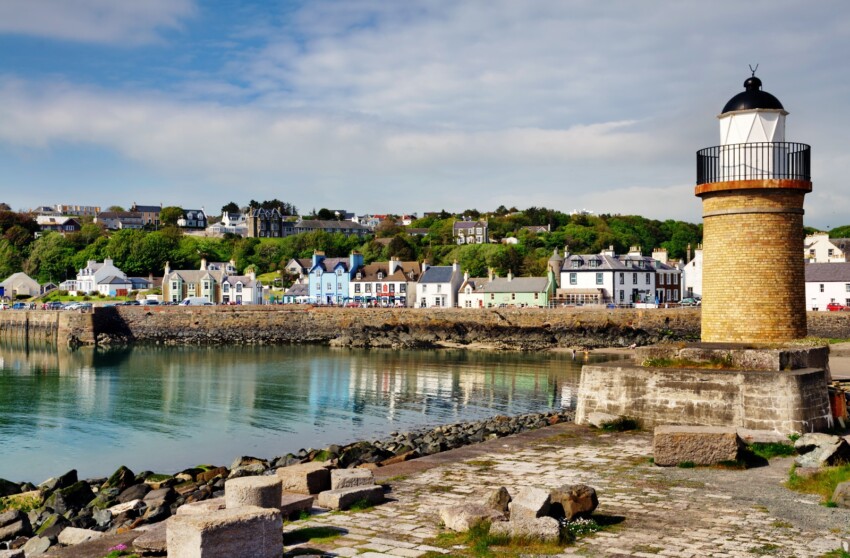
The village of Portpatrick is a true gem of the Galloway coast. This former fishing port, with its colourful houses arranged in a semicircle around the natural harbour, looks like it has stepped out of a postcard.
Its cobbled streets host delightful seafood restaurants, traditional pubs and artisan boutiques. The village is also the starting point of the Southern Upland Way, one of Scotland’s longest hiking routes.
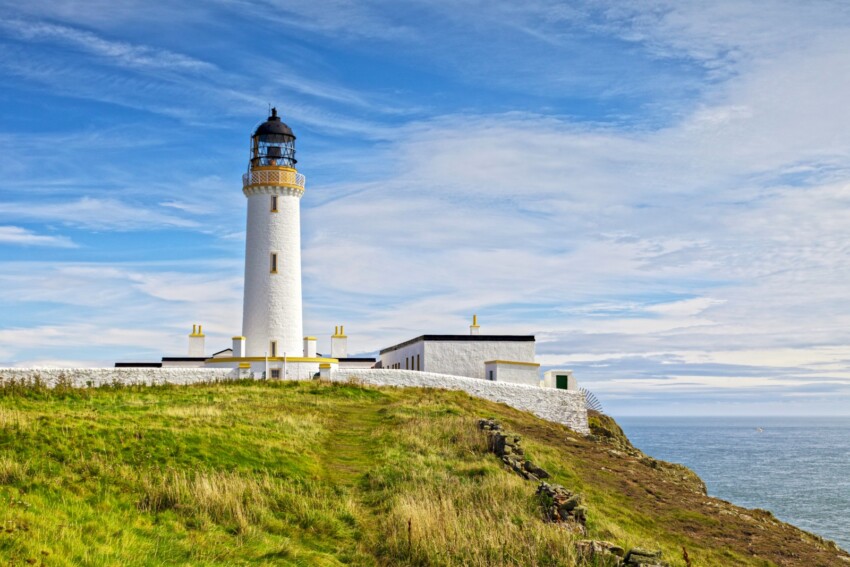
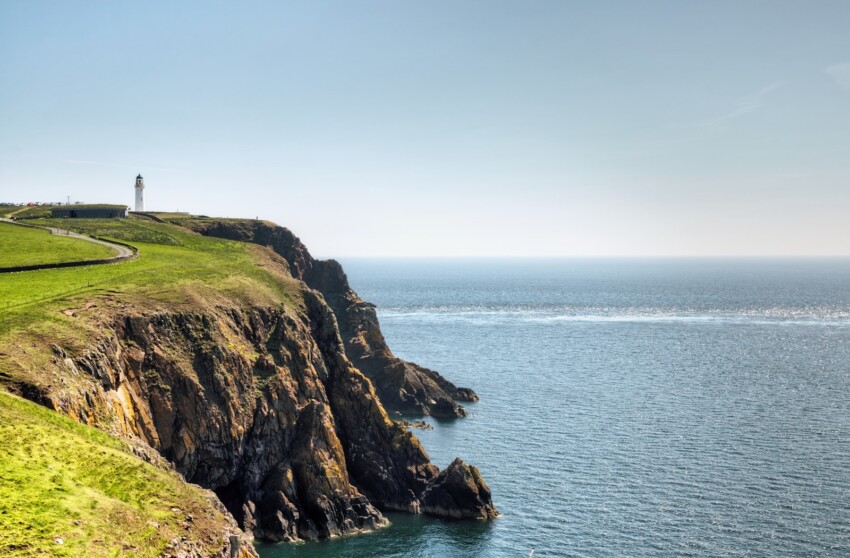
The journey to reach the Mull of Galloway is truly worthwhile: upon arrival, you’ll find a wonderful windswept headland with a classic whitewashed lighthouse. You’re at Scotland’s most southerly point and the views are spectacular: on clear days you can see not only the Isle of Man but also the coasts of Ireland, and the heather-covered moorland is populated by hundreds of seabirds that come here to nest.
The Mull of Galloway Lighthouse stands majestically. Built in 1830, it remains operational and houses an interesting museum on maritime history. The 115-step staircase leads to the top, offering breathtaking views over the Irish Sea. The adjacent visitor centre houses the RSPB Nature Reserve, where you can observe numerous seabird species.
Follow some trails to fully enjoy this quiet and solitary landscape. For a clifftop snack, don’t miss the Gallie Craig café, which serves hot refreshments.
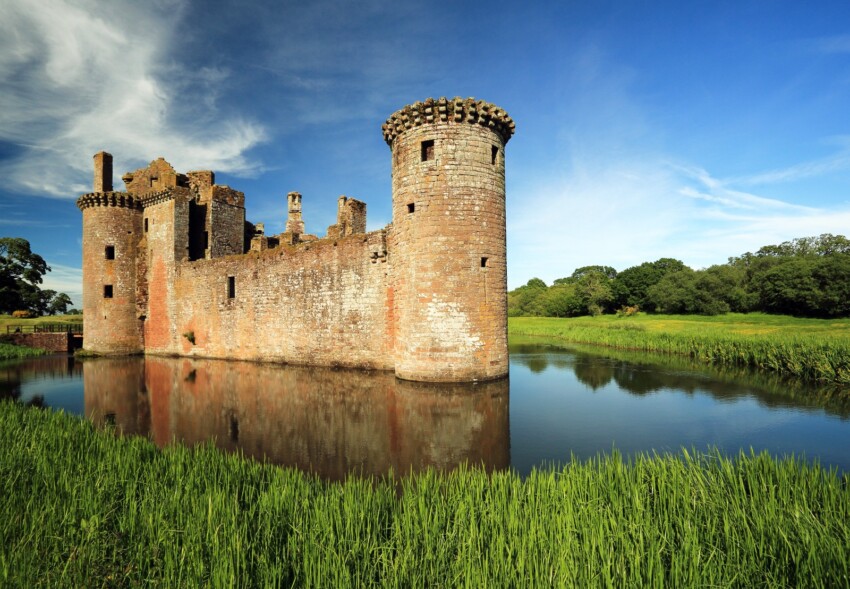
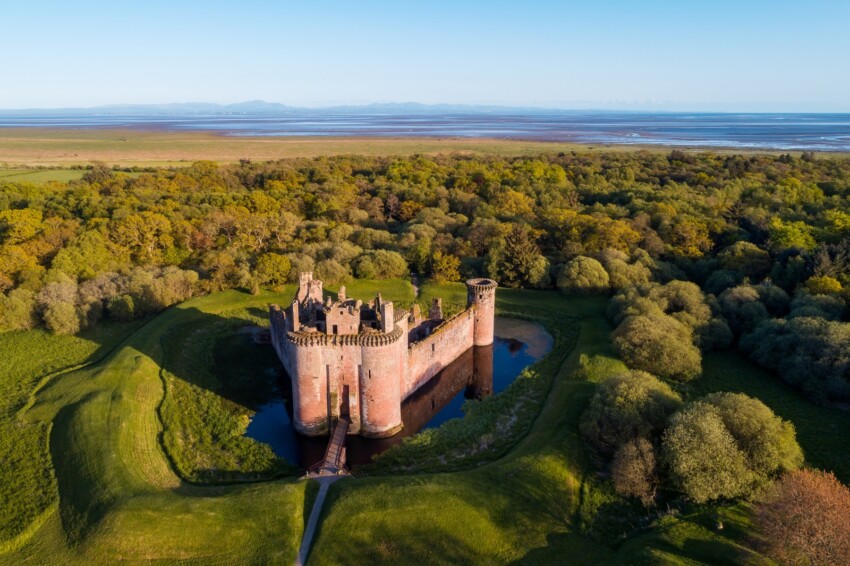
13 km from Dumfries stands Caerlaverock Castle, a magnificent postcard-perfect ruin: surrounded by a wide moat, built in red sandstone that gleams in the warm sunset light, it has a peculiar triangular shape and despite its decay has preserved its entrance gate and two mighty towers intact.
After suffering attacks and warfare, the castle still retains the Renaissance façade of the Nithsdale Lodging, with decorated pediments illustrating vivid mythological and heraldic scenes.
Moreover, the castle is set within a magnificent natural setting, a nature reserve inhabited by wading birds and waterfowl with numerous trails through nature, ideal for family outings.
To stay on theme with nature, just 5 km from the castle you’ll find the Caerlaverock Wetland Centre, 546 hectares of protected wetland with saltmarsh and mudflats: 12,000 barnacle geese nest here and the centre has camouflaged hides for birdwatching and wildlife spotting, with rangers organising free nature safaris in summer. It’s also possible to camp or stay in farm rooms at the centre.
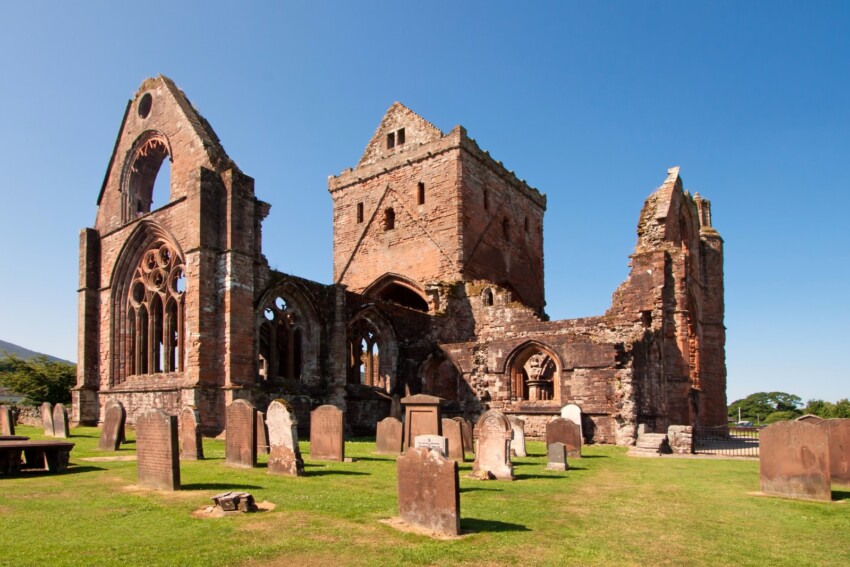
The colossal Sweetheart Abbey lies in a romantic setting near the village of New Abbey and owes its curious name to its founder, Dervogilla de Balliol, Lady of Galloway, who in her later years always carried with her the embalmed heart of her husband: even upon her death, she wished to be buried in this very monastery alongside the casket containing the heart.
The majestic red sandstone abbey is now overgrown with grass but retains all of its grandeur thanks to its immense naves, the Gothic arches soaring upwards and the elaborate carved and fretted window work, details that highlight the progressive departure from the austere simplicity of earlier Cistercian abbeys.
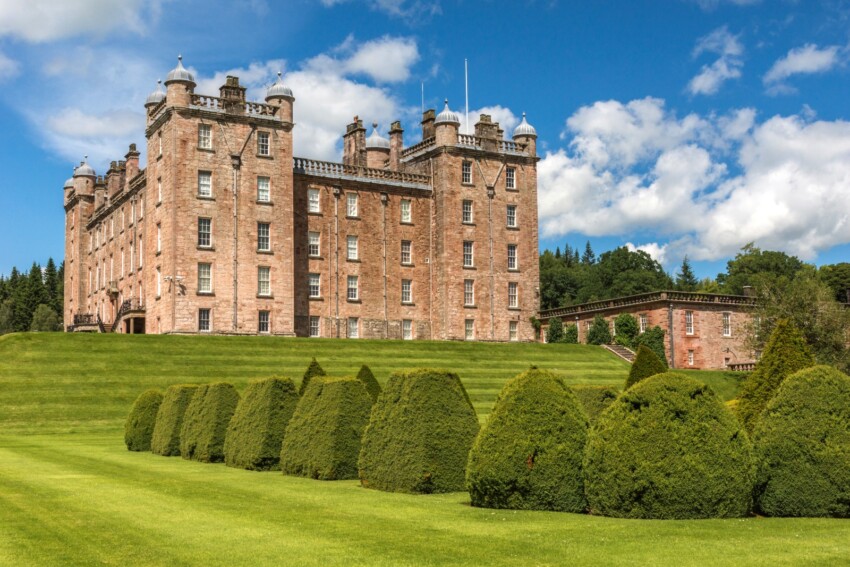
Drumlanrig Castle is one of the most impressive examples of Scottish Renaissance architecture. Nicknamed the “Pink Palace” for its sandstone colour, this 17th-century castle is the historic seat of the Dukes of Buccleuch. The sumptuous interiors house one of Scotland’s most important private art collections, including works by Rembrandt and Leonardo da Vinci. The formal gardens and 40-hectare park offer splendid walks, mountain bike trails and a children’s play area. The castle regularly organises special events and guided tours of the historic rooms.
Annandale Distillery represents an important piece of Scottish distilling history. Founded in 1836 and reopened in 2014 after nearly 100 years of closure, this distillery has returned to producing high-quality single malt whisky. Visitors can participate in guided tours illustrating the entire production process, from malting to distillation.
Dundrennan Abbey is one of Scotland’s finest examples of Cistercian architecture. Founded in 1142, this ruined abbey is famous for being the last place Mary, Queen of Scots stayed on Scottish soil before her exile to England. The beautifully preserved ruins allow visitors to admire architectural details of great merit, such as carved capitals and Gothic arches. The site includes a small museum displaying artefacts uncovered during archaeological excavations.
Dumfries, known as the “Queen of the South”, is the region’s main town. This lively urban centre is rich in history and culture, particularly linked to the poet Robert Burns, who spent his final years here. Burns House, now a museum, and the Robert Burns Centre offer an immersion into the life and work of Scotland’s national bard.
The Theatre Royal, Scotland’s oldest working theatre, continues to host quality performances. Dumfries Museum tells the town and region’s history through engaging exhibitions. The town is also an excellent base for exploring Galloway, with numerous restaurants, historic pubs and shops.
Drummore is Scotland’s most southerly village, a picturesque coastal settlement offering an authentic glimpse into Scottish maritime life. Its fishing harbour remains active and supplies fresh fish to local restaurants.
The village is surrounded by pristine beaches and dramatic cliffs, ideal for scenic walks. Don’t miss Luce Bay, one of the region’s finest, where you can enjoy water sports or simply take in the views. The village is also an ideal starting point for boat trips and marine wildlife spotting.
Threave Castle is one of Scotland’s most evocative examples of medieval military architecture. Situated on an island in the River Dee, it’s accessible only by small ferry, adding an element of adventure to your visit. The main tower, standing 30 metres high, offers panoramic views over the surrounding countryside. Threave Gardens, managed by the National Trust for Scotland, are an extraordinary example of Scottish horticulture.
Cardoness Castle is a 15th-century tower house overlooking the Fleet estuary. Although ruined, the structure is remarkably well preserved and offers visitors an authentic immersion in medieval Scottish life. Its six floors are explorable via an original spiral staircase, culminating in a viewing platform with spectacular vistas.
Kirkcudbright, known as the “Artists’ Town”, is a vibrant cultural centre. Its Georgian streets host numerous art galleries and artist studios. The Tolbooth Art Gallery, housed in a historic 17th-century building, features temporary exhibitions of great interest. MacLellan’s Castle in the town centre offers insight into 17th-century aristocratic life.
Wigtown has earned the title of Scotland’s National Book Town thanks to its numerous independent bookshops. Its annual literary festival, held in September, attracts writers and readers from around the world. The town square, surrounded by well-preserved historic buildings, hosts the weekly market and numerous cultural events throughout the year.
Logan Botanic Garden is a true botanical paradise. Thanks to the influence of the Gulf Stream, these gardens host an extraordinary collection of exotic plants that wouldn’t normally grow at these latitudes. The Victorian Walled Garden is particularly impressive, with its rare tropical and subtropical species.
In the following map you can see the location of the main places of interest mentioned in this article.
Route: 145 km
This itinerary takes you through beautiful landscapes that are surprisingly wild in places, with charming picturesque towns (this area was discovered by artists long ago) as well as gardens, castles, forest trails and industrial heritage sites.
The region holds plenty of surprises, including the story of Robert Burns, Scotland’s national poet, with his Dumfries house where he spent his final years, and Ayr, his birthplace.
The itinerary begins at Gretna, once a destination for runaway couples – their romantic tales are brought to life at popular attractions such as the Old Blacksmith’s Shop visitor centre.
Beyond the town of Annan, in Ruthwell Church just south of the main road, you’ll find an impressive 8th-century Anglo-Saxon carved cross – one of the finest in Britain.
Further west, also south of the main road, stands a medieval fortress, Caerlaverock Castle, surrounded by a moat and unusually triangular in shape. Nearby is the Caerlaverock Nature Reserve, where the fields and marshes are home to an astonishing variety of wild ducks and geese.
The main road leads to Dumfries, a town with strong connections to the poet Robert Burns. Burns House (on Burns Street) preserves the poet’s memorabilia, and his wife Jean Armour lived here until her death in 1834. Burns’s mausoleum is located nearby. Burns’s favourite pub, the Globe Inn, is still open and you can still see the poet’s chair, a window pane with an inscription and other memorabilia. The Robert Burns Centre is housed in a former mill building and features a cinema for audiovisual presentations, along with an exhibition illustrating the poet’s life and works.
The route now winds westward through pleasant countryside.
- A short detour to New Abbey brings you to a cluster of interesting attractions: the costume museum in Shambellie House, a historic grain mill (New Abbey Corn Mill) and Sweetheart Abbey.
- Continuing a little further south, you’ll find the Arbigland estate, with magnificent gardens. This was also the birthplace of John Paul Jones, founder of the United States Navy (and there’s a museum dedicated to him here).
- Continuing on, you’ll pass through Dalbeattie with its fine granite buildings and arrive at Castle Douglas. This is a typical Galloway town, with a lively high street well worth stopping to explore – full of independent shops and local businesses.
- Nearby are the Threave Gardens, managed by the National Trust for Scotland, featuring an impressive collection of plants of great interest throughout the year. Don’t confuse them with Threave Castle, which sits on an island nearby in the River Dee.
- If you wish to visit it, stop on the main street and ring the bell to summon the ferryman! Threave Castle was built in the 14th century by Archibald Douglas, the Galloway lord of the time, known as “The Grim”.
The itinerary continues north-west, heading into Ayrshire through the towns of New Galloway and St John’s Town of Dalry before continuing to Ayr.
- Follow the signs to Loch Doon, situated in a scenic setting surrounded by remote hills.
- Discover the story of historical weavers at the Cathcartson visitor centre and learn about local ironworks at the Dunaskin Open Air Museum, an industrial heritage site that also features steam locomotives.
- In Ayr, you can visit several sites connected to the poet Robert Burns. The Burns National Heritage Park at Alloway contains the cottage where the poet was born in 1759 and the adjacent museum.
- Nearby are also the ruins of Alloway Church and the old churchyard, along with the bridge over the River Doon celebrated in the poet’s work.
- Between them stands the Burns Monument, erected in 1823 and surrounded by attractive gardens overlooking the River Doon.
- Near the old church is the Tam o’ Shanter Experience, featuring exhibitions and an audiovisual programme that illustrates Burns’s life.
 Hotel
Hotel  Budget accommodations
  Apartments
  Family Hotel
  Luxury Hotel