Glasgow: Celtic Park Stadium Tour
3.466 reviews
Soak up the history and feel the passion at Celtic Park Stadium on a guided tour. Visit the dressing room, the tunnel, the dugout, and more.
Buy now
From 22,83€ per person
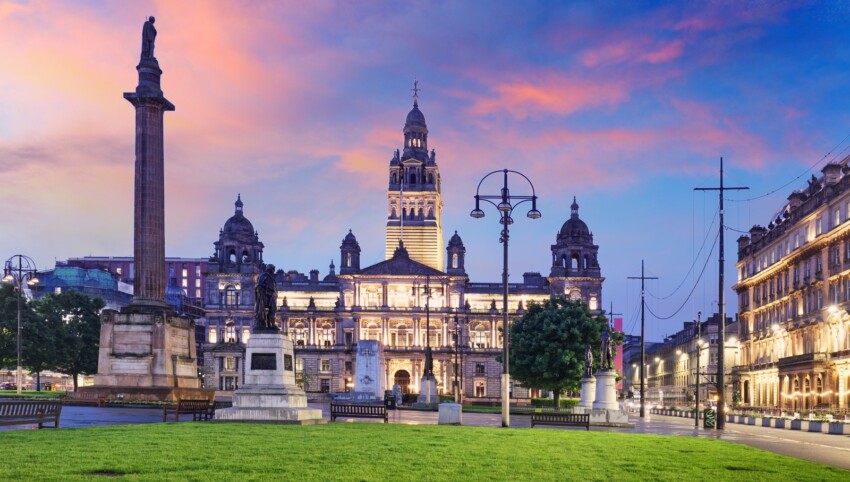
Glasgow is Scotland’s “other” capital, and whilst some regard it as Edinburgh’s unfortunate sister, nothing could be further from the truth. Give it a chance—a couple of days before heading off on a road trip—and you’ll discover a vibrant and lively city rooted in tradition yet firmly focused on the twenty-first century, with surprising food and drink, and plenty to see. True, Edinburgh boasts greater inherent beauty, but Glasgow isn’t interested in competing on those grounds; instead, it stakes its claim through events, festivals (including sporting ones) and economic prowess. The city is Scotland’s leading economic hub and the third largest in the UK by per-capita GDP.
Throughout its history, Glasgow was central to Scotland’s post-industrial revolution development, but as the country’s economy shifted towards services, the city’s prosperity took a sharp downturn. The 1980s and early twenty-first century saw Glasgow undergo radical transformation, with cutting-edge constructions rising along the River Clyde, new buildings and infrastructure, alongside an impressive programme of cultural events throughout the year. Today, visiting Glasgow makes real sense—both to understand how life unfolds for residents of Scotland’s largest city and to connect with its industrial and Victorian heritage whilst keeping an eye on the nation’s future.
What is known as Glasgow city centre is an area bounded by Saltmarket Street, High Street and Castle Street to the east, the River Clyde to the south and the M8 motorway to the east and north. It’s a fairly expansive zone, and within it you’ll find numerous things to see. Visit the highlights, then explore the surrounding areas and other neighbourhoods: they won’t disappoint you either.
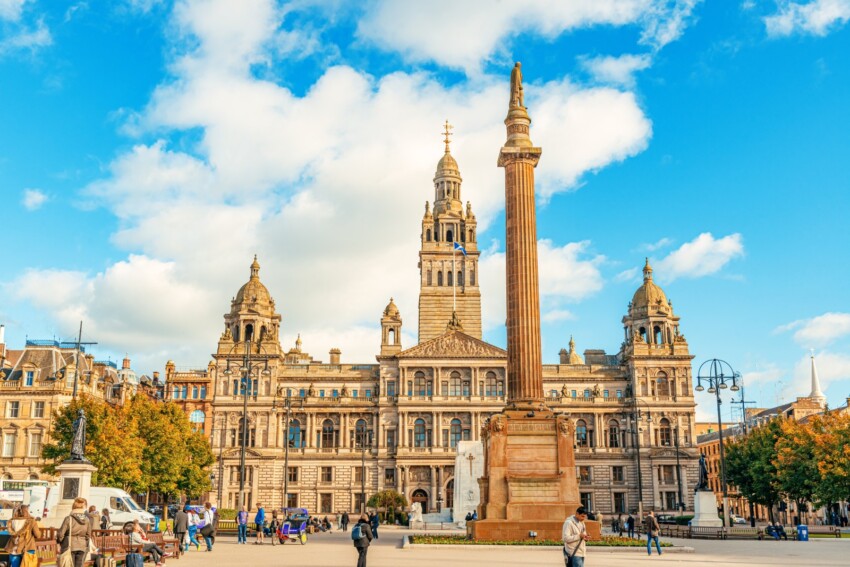
In George Square, right in front of Queen Street railway station, you’ll find Glasgow’s town hall, officially known as Glasgow City Chambers. It’s a stunning Victorian building constructed in the late 19th century, designed by architect William Young and incorporating some classical Italian-style elements. Outside stands a sculpture depicting Queen Victoria seated on her throne, surrounded by emblematic figures from Scottish, English, Irish and Welsh history, created by James Alexander Ewing.
Inside, Glasgow City Chambers showcases beautiful rooms, such as the Council Chamber, with its elegant coffered ceilings and expansive windows, and the Banqueting Hall, featuring an enormous vaulted ceiling. The marble staircase leading to the upper floors is equally impressive.
Tours of Glasgow City Chambers are available through guided group tours lasting approximately 45 minutes, held twice daily at 10:30 am and 2:30 pm, Monday to Friday. You can purchase tour tickets at the information desk inside the building from 30 minutes before the tour begins; advance bookings are not available.
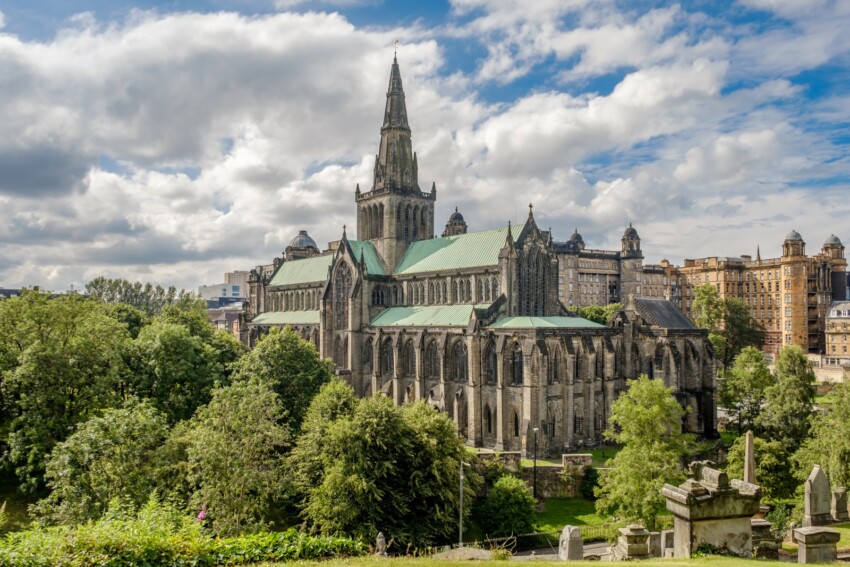
Glasgow Cathedral is Scotland’s oldest cathedral and one of the city’s most ancient buildings. It was consecrated in 1197, though what we see today is the result of numerous renovations and reconstructions carried out over the centuries.
The church, in Gothic style, is impressively large and genuinely beautiful both inside and out. First appreciate the exterior by strolling around Cathedral Square, the plaza on which it stands, then visit the interior, where you can admire its stunning stained-glass windows.
Glasgow Cathedral operates on somewhat unusual opening hours, quite different from what you might be accustomed to. During winter (1 October to 31 March) it’s open Monday to Saturday from 10:00 to 16:00, and on Sunday from 13:00 to 16:00, with last admission at 15:00. During summer (1 April to 30 September) it opens Monday to Saturday from 9:30 to 17:30, and on Sunday from 13:00 to 17:30, with last admission at 16:30. The cathedral also closes for lunch from noon to 1:00 pm.
You can also join free guided tours conducted by volunteer guides, available year-round Monday to Saturday. Tours last approximately 30 minutes.
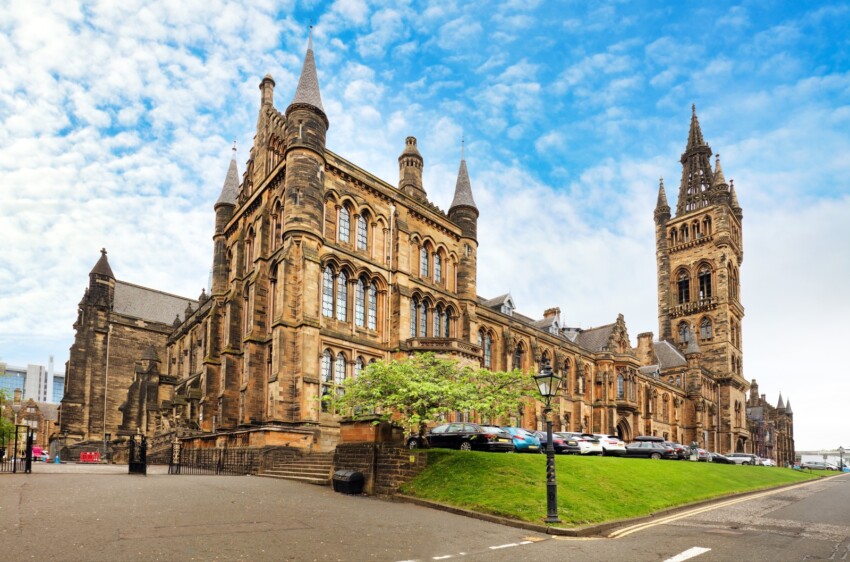
The University of Glasgow, founded in 1451, is one of the city’s most majestic buildings and attracts visitors from around the world thanks to its extraordinary Neo-Gothic architecture. Its main building, located on Gilmorehill, is distinguished by a characteristic tower standing 85 metres tall and its spires that dominate the city’s skyline.
The university complex evokes Hogwarts with its magical atmosphere, featuring cloisters, courtyards and Gothic arches. Among the most picturesque spots is the Cloisters (or Undercroft), an arched corridor connecting the main courtyards, which has become an iconic photography location.
The campus also houses several museums open to the public, including the Hunterian Museum, Scotland’s oldest public museum. Here you can admire collections of art, archaeological and scientific artefacts, including a section dedicated to Lord Kelvin.
Visitors can freely explore the external courtyards and some interior spaces of the university during opening hours. Particularly striking are Bute Hall, with its stained-glass windows, and the Memorial Chapel, a perfect example of Victorian Gothic architecture.
The university’s gardens also offer a pleasant green space with panoramic views over western Glasgow.
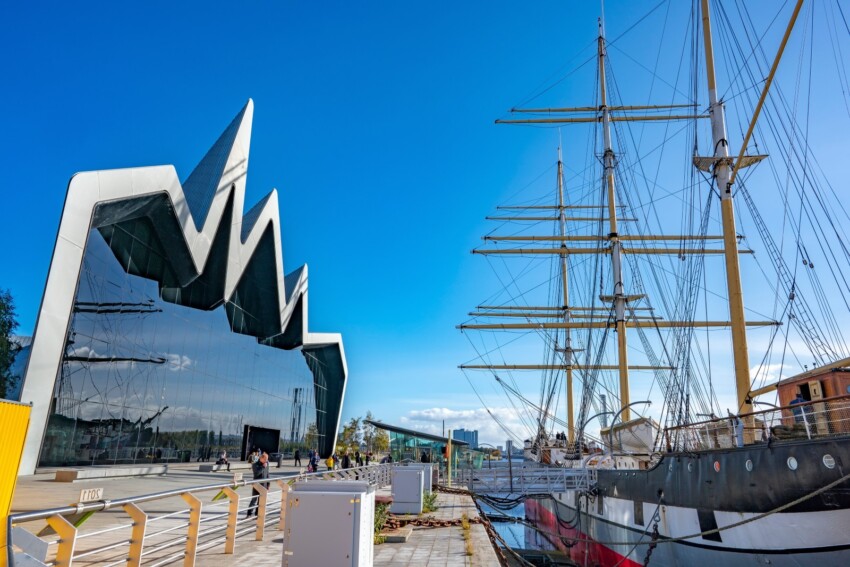
The Riverside Museum replaced Glasgow’s former Transport Museum in 2011, taking on its functions and many of its exhibits. It sits on the water at the confluence of the Kelvin and Clyde rivers in the Yorkhill area, accessible via Partick station approximately one kilometre away, in a futuristic building designed by internationally renowned architect Zaha Hadid.
The museum, which won the prestigious European Museum of the Year Award (EMYA) in 2013, displays steam engines, locomotives, buses and even a ship, the Glenlee, moored along the River Clyde. Inside the Riverside Museum halls, you’ll also find scale models of some of the most famous vessels from the British naval fleet, such as the Queen Mary, Queen Elizabeth and the Comet of 1812.
Riverside Museum is open daily from 10:00 to 17:00, though on Fridays and Sundays it opens at 11:00. Admission is free and no booking is required.
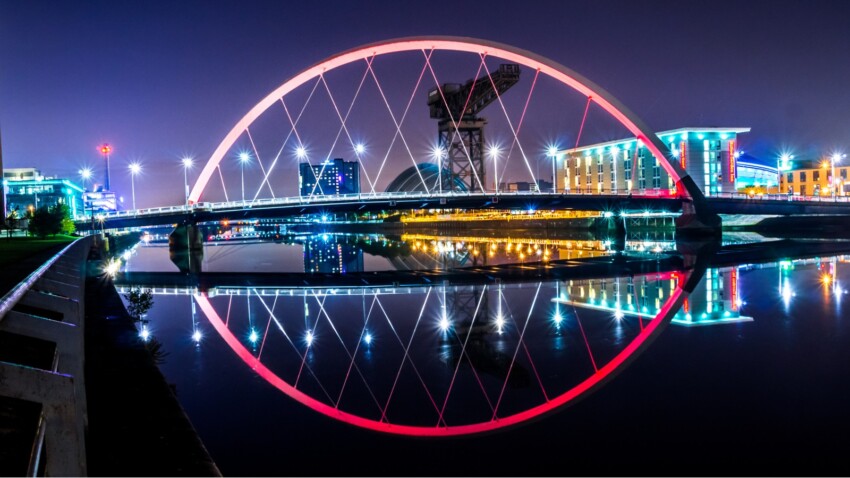
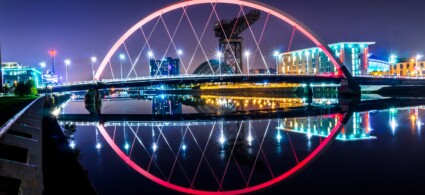
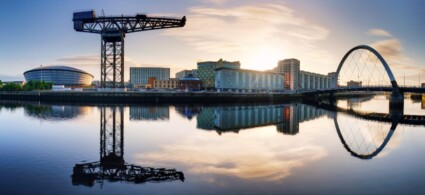
The Clyde Arc is a bridge built in 2006 that has quickly become one of Glasgow’s symbols and undoubtedly a defining feature of its skyline. It spans the River Clyde in the western part of the city, connecting Finnieston to the north and Pacific Quay to the south, two of the city’s fastest-developing neighbourhoods in recent years. Its enormous arch, the structure’s defining characteristic, is visible from hundreds of metres away, and an interesting feature of the bridge is that it crosses the river at an angle rather than perpendicularly.
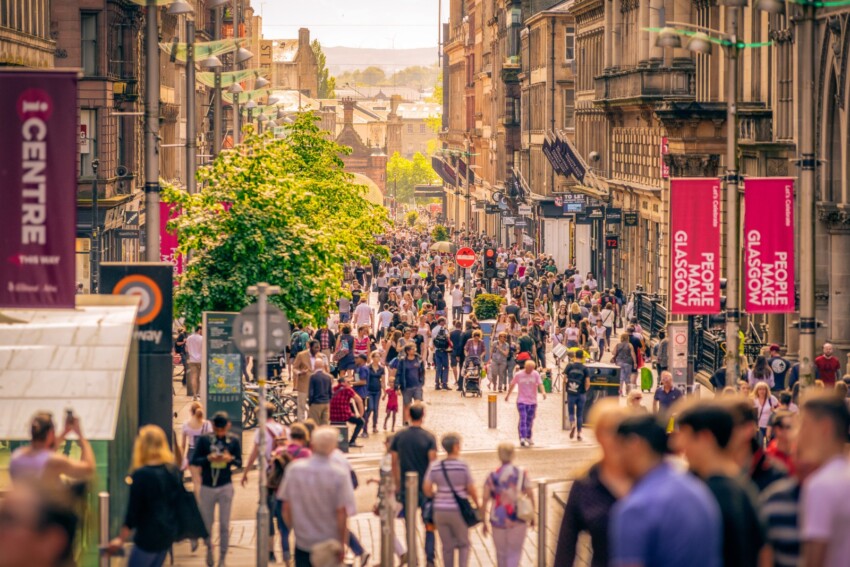
Glasgow’s main shopping streets are Sauchiehall Street6, Buchanan Street7 and Argyle Street8. They’re located close to one another, all on the north side of the river in the city centre, just a short distance from Central and Queen Street stations.
Along these streets, largely pedestrianised, you’ll find shopping centres, international brand shops and souvenir retailers, as well as bars, pubs and restaurants. It’s a lively area during the day and pleasant to explore on foot. It won’t have the charm of historic city centres (or Edinburgh’s, for that matter), but it’s nonetheless one of Glasgow’s must-see areas.
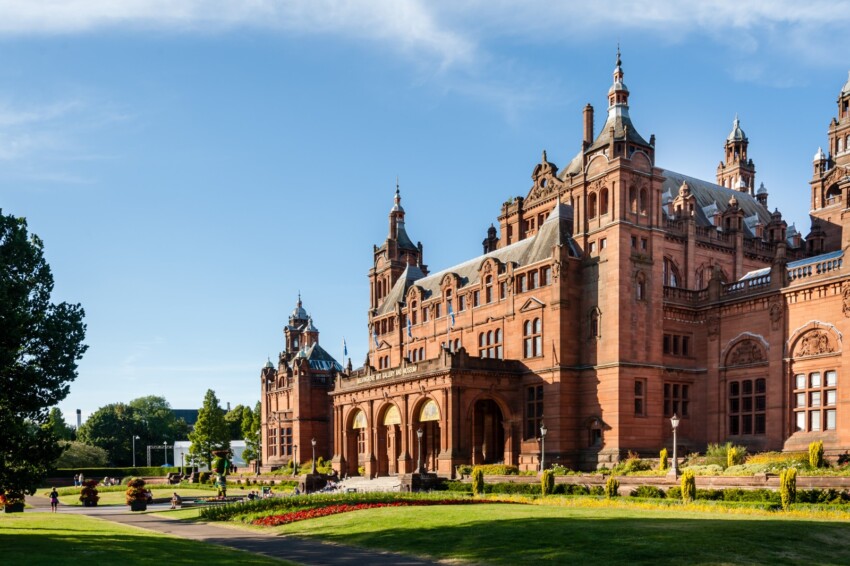
One of Glasgow’s most celebrated museums is undoubtedly the Kelvingrove Art Gallery and Museum, located within the public Kelvingrove Park. Originally dating to 1901 but reopened in 2006 after a three-year restoration costing over €30 million, its exhibition is divided into two sections, called Life and Expression. The Life gallery showcases natural history, human history and prehistory, while the Expression gallery is dedicated to fine art. In total, there are 22 rooms containing over 8,000 objects and works of art.
The Kelvingrove Museum is open 7 days a week from 10:00 to 17:00, except Fridays and Sundays when it opens at 11:00. There’s also an organ concert daily from 13:00 to 13:30 Monday to Saturday, and from 15:00 to 15:45 on Sunday. Admission to the museum is free, and no booking is required.
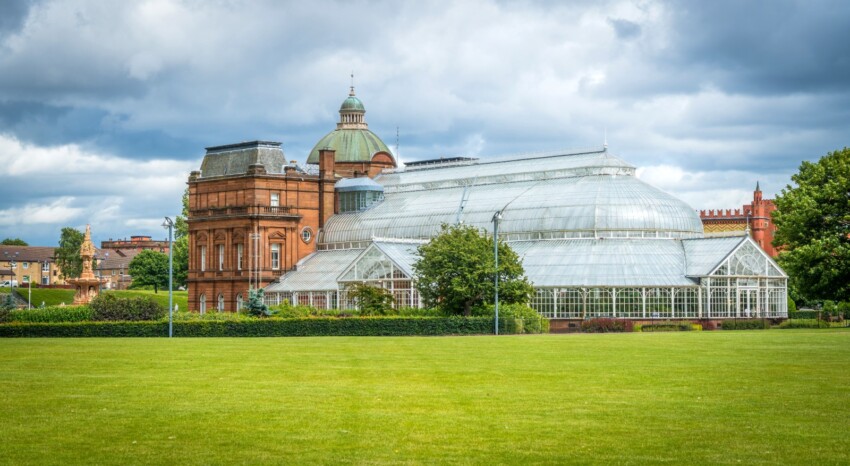
For an escape from the city while remaining in it, there’s nothing better than a visit to Glasgow’s Botanic Gardens, a beautiful park where you can admire numerous plant and flower species. There’s no shortage of activities within the park: among the most interesting is the Tree Trail, a walking route that allows you to appreciate 20 species of trees from diverse ecosystems, from the Corsican pine to the Ginkgo biloba.
Glasgow’s Botanic Gardens are open daily year-round from 7:00 am to sunset. There are also glasshouses open from 10:00 to 18:00, with earlier closing at 16:15 in winter.
During your visit to the Botanic Gardens, you can also join a group tour led by volunteers who maintain the park, departing daily at 2:00 pm from the Kibble Palace. It lasts around an hour and consists essentially of a leisurely walk through the gardens, stopping to admire the finest areas. The tour is free and requires no booking, though a maximum of 15 participants is allowed.
The Botanic Gardens are located north of the city, in the Hillhead area, at 730 Great Western Road, just south of the River Kelvin. They’re easily reached by underground, getting off at Hillhead station and walking for 7 minutes.
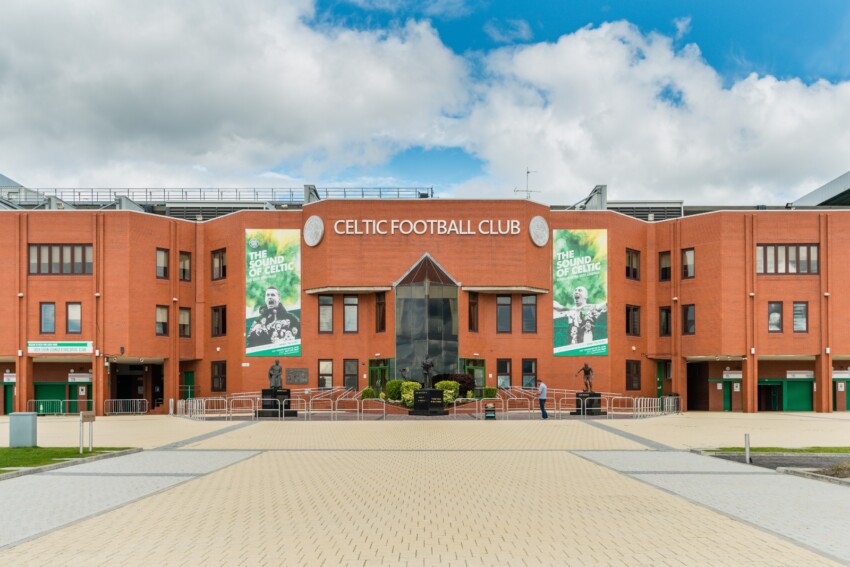
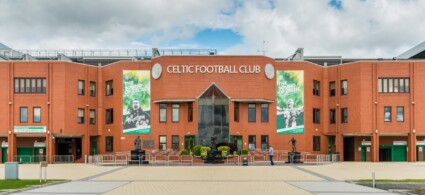
The Celtic Park Stadium is the home ground of Celtic Football Club and is located in Parkhead, east Glasgow, Scotland. It’s one of Glasgow’s most visited attractions and a significant venue for football enthusiasts, offering various opportunities for visitors. If your visit coincides with a Celtic Glasgow match, you’ll experience something truly unique.
For example, you can take part in a guided tour that allows visitors to explore various aspects of the stadium, including the dressing rooms, trophy halls, media areas and much more. During the tour, you have the opportunity to immerse yourself in the club’s history and appreciate the stadium’s unique atmosphere.
At the Celtic Superstore, fans and visitors can purchase a variety of official Celtic Glasgow products, including shirts, hats, scarves and other collectibles.
If you want to breathe some fresh air and walk surrounded by nature, head without hesitation to Queen’s Park, Glasgow’s green lung. Located on the south side of the River Clyde, approximately 4 kilometres south of the city centre, it stretches across 60 hectares. Walking through the park, developed from the 19th century onwards, you’ll pass through manicured lawns, centuries-old trees, flower beds and various areas dedicated to outdoor activities, such as bowls lawns, a tennis club, football pitches and a mini-golf course. Although Queen’s Park is at its best in summer, it’s also heavily frequented in winter, when after snowfall its slopes are used as sledging runs.
Reaching Queen’s Park by public transport is straightforward, as Queen’s Park railway station is located on the north side, while Mount Florida station is on the south-east side. On the north-west corner stands the famous Camphill Queen’s Park Baptist Church, a 19th-century church built in French Gothic style, whose pointed steeple is visible from numerous vantage points while walking through the park.
In the following map you can see the location of the main places of interest mentioned in this article.
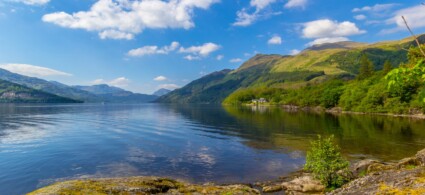
To the north of the city, you’ll find yourself just moments from Loch Lomond and the Trossachs area, whilst to the south, some 45 minutes away, lies Lanarkshire, a stunningly verdant region that follows the leisurely flow of the River Clyde, interspersed with lush orchards and blooming gardens.
This is the Clyde Valley, and it makes for an ideal day trip on fine summer days.
Designated a UNESCO World Heritage Site, New Lanark was a centre of social and industrial reform. The vista of this industrial village nestled in the Clyde gorge is quite unparalleled: honey-coloured dwellings and warehouses line the tumbling river, part of a community founded in 1785 through the visionary work of celebrated social reformer Robert Owen. Here he established an education system for workers, the world’s first infant school, and pioneered schools where physical punishment and rewards were forbidden, with music and dance as compulsory subjects.
Do not miss the waterfalls at the foot of the village, which were indeed the original reason for establishing the settlement in this location.
On your return journey, stop at Bothwell Castle, an imposing and formidable fortress and one of Scotland’s most spectacular and well-preserved strongholds: its red sandstone bulk dominates the river and is surrounded by magnificent gardens.
Glasgow is a sprawling city, and choosing which area to stay in can be tricky. We’d recommend the city centre, near Queen Street and Central stations, as this gives you convenient access to both trains and the subway via Buchanan Street station. You’ll find plenty of shops, bars and restaurants in this area, along with several attractions and city landmarks, including the City Chambers.
The newer area along the River Clyde is also worth considering, between the Clyde Arc and Millennium Bridge, where you’ll discover futuristic buildings and numerous hotels from major international chains, including Hilton, Premier Inn, Moxy, Crowne Plaza and Radisson. This modern quarter offers pleasant riverside strolls and good public transport connections to the centre.
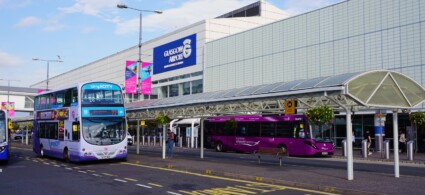
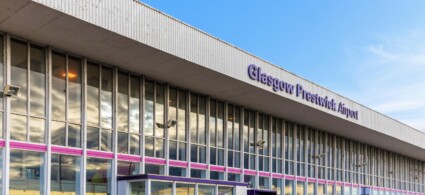
Glasgow is served by two airports: Prestwick, located around 50 kilometres south-east, and the main airport, simply known as Glasgow Airport, situated approximately 15 kilometres east of the centre. Prestwick experienced substantial growth around 2010 thanks to heavy use by budget airlines, but its traffic has since dwindled significantly: it’s now served solely by Ryanair, with a limited route network.
Glasgow’s main airport, by contrast, is far more developed and busy. Handling around 6 million passengers annually, it connects with numerous European and intercontinental destinations.
For many visitors, the most convenient option is to fly into Edinburgh and continue by train: the two cities are very close, services run frequently, and the journey takes less than an hour. You can also travel by coach, though journey times extend to around an hour and a half.
What's the weather at Glasgow? Below are the temperatures and the weather forecast at Glasgow for the next few days.
Glasgow is located in Scotland's most densely populated region, the Lowlands, within an area that also encompasses Edinburgh, lying less than 100 kilometres to the west.


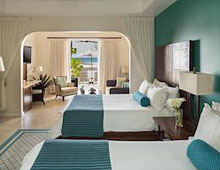 Hotel
Hotel 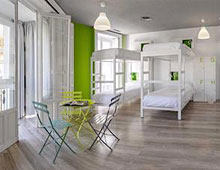 Budget accommodations
 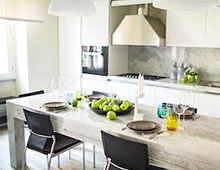 Apartments
  Family Hotel
 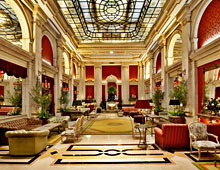 Luxury Hotel