Bestseller
Glasgow: Celtic Park Stadium Tour
From 21,21 €
Buy the ticket
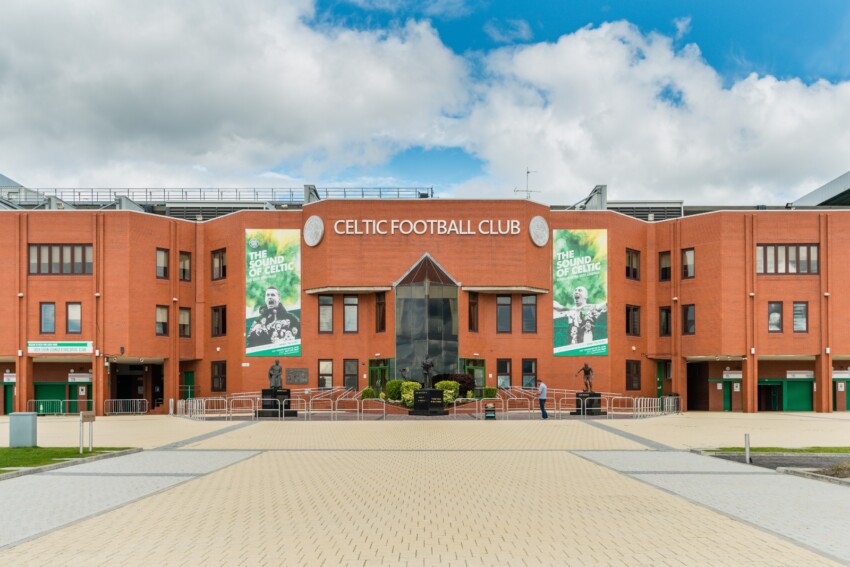
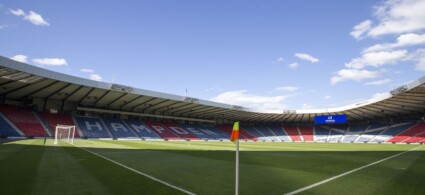
The Celtic Park Stadium, Glasgow’s glorious ground, is located in the Parkhead area and is home to Celtic, one of the city’s two major football clubs alongside Rangers. With a capacity of 61,000 spectators, it ranks as the third largest stadium in the United Kingdom after Wembley in London and Old Trafford in Manchester.
Also known as Parkhead — named after the district where it stands — or as “Paradise”, it dates back to 1892 and was comprehensively redeveloped in 1995, when the entire stadium was modernised to contemporary standards. According to legend, the Paradise nickname stems from the fact that the stadium sits adjacent to a cemetery: for the green-and-white faithful, playing here is like being in paradise.
Famous for its iconic continuous double-tiered stand covering three-quarters of the pitch, the stadium sees Celtic’s most passionate supporters seated in the corner at the Jock Stein Stand, also known as the “Celtic End”. Away supporters are accommodated at the opposite corner, the Lisbon Lions Stand. The two side stands are called the South Stand and North Stand; it’s worth noting that the latter alone has a capacity greater than 10 stadiums in the Scottish Premier League.
At the stadium entrance stand 4 statues, commemorating four hugely important figures in Celtic’s history: Andrew Kerins, known as Brother Walfrid, the club’s founder, alongside Jimmy Johnstone, voted the greatest player in the club’s history, Jock Stein, voted the greatest manager, and Billy McNeill, the greatest captain.
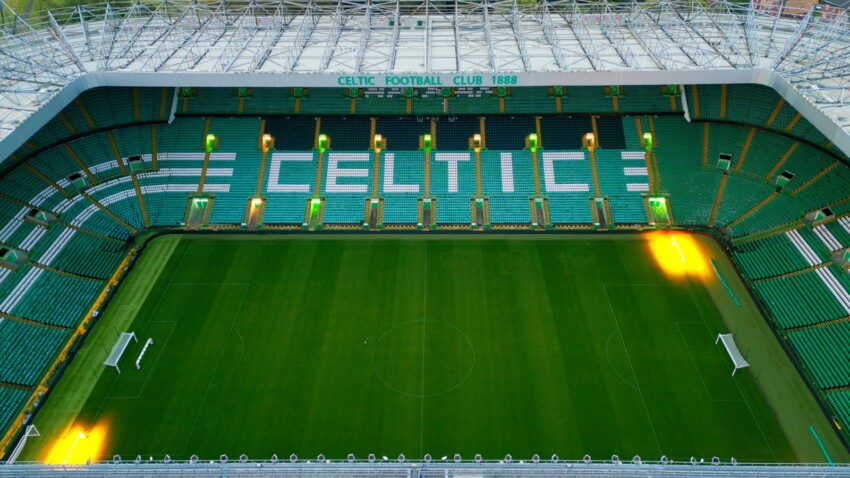
Football enthusiasts can take guided tours of Celtic Park lasting approximately one hour, during which you’ll have the opportunity to discover all the stadium’s secrets and access areas normally off-limits to the public: the Celtic FC boardroom, the changing rooms, the tunnel leading to the pitch, the dugout and the touchline, where you can imagine playing in front of thousands of roaring supporters.
The meeting point varies depending on the day: on Mondays and Thursdays, you should present yourself at the main reception, whilst on Fridays and Sundays the tour departs from the Sports Bar accessible via the Kerrydale Street entrance (entrance number 7, west side). It’s always advisable to arrive at least 10 minutes before your booked time. Note that the stadium is cashless: only card payments are accepted. For up-to-date opening times and bookings, it’s essential to check availability online, as times vary and tours may be suspended on match days.
Tour tickets can be purchased either on-site or online; discounts are available for children under 12, over-65s and students; there is a family package for 2 adults and 2 children, whilst children under 5 enter free.
There’s also the opportunity to enhance your stadium visit with a Tour & Dine package that, in addition to a one-hour guided tour, includes a three-course meal at the stadium’s Number 7 Restaurant, with panoramic views of the pitch. The meal begins approximately 90 minutes after the tour. Drinks are not included. You can also add prosecco or a cake to celebrate a birthday or special occasion.
Celtic Park is located on Janefield Street, east of the city centre, in the Parkhead area. It’s easily reached by public transport departing from the central station. Specifically, you can take buses on routes 2, 61, 240 and 255 departing from Drury Street and arriving at St. Michael’s Lane, from where it’s just a few minutes’ walk to the stadium. The entire journey, including the walk, takes just under half an hour.
Alternatively, if you’re in the Glasgow Green area, you can take the ScotRail train to Bridgeton or Dalmarnock, both about 10 minutes’ walk from the stadium. Those wishing to drive to Celtic Park should head from the city centre by crossing the River Clyde on the Glasgow Bridge and continue eastwards along Norfolk Street, which then feeds onto the A74. The journey takes less than 20 minutes, though times can obviously increase on match days or during events. There are several car parks on-site, but on big days it may be difficult to find a space.
Celtic Park Stadium is located in the Parkhead area, east of Glasgow city centre, in an area bounded by London Road to the south, Clyde Gateway to the west and Janefield Street to the north.
 Hotel
Hotel  Budget accommodations
  Apartments
  Family Hotel
  Luxury Hotel