Bestseller
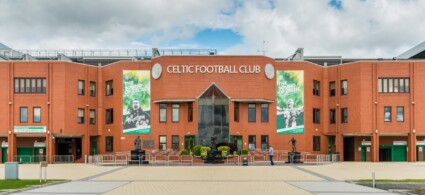
Glasgow: Celtic Park Stadium Tour
From 21,21 €
Buy the ticket
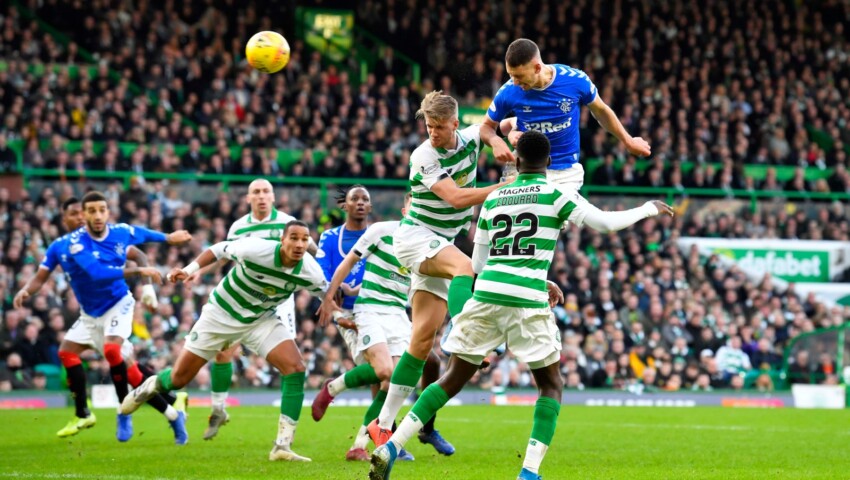
Glasgow is Scotland’s football capital. This city is home to two legendary football clubs of the nation: the Celtic Football Club and the Rangers Football Club.
The two teams have been protagonists of epic clashes. The long-standing rivalry between the two sides dates back to their very first match, described by the press as “a friendly encounter” and ending in an unexpected 5-2 victory. Old Firm is the name Scots give to this legendary rivalry, which over more than a century has shaped Scottish society, politics and religion. It’s a complex subject because the rivalry extends far beyond football, touching on profound aspects of Scottish identity. To put it simply, Celtic is supported by Irish immigrants or those of Irish descent living in Scotland, predominantly of the Catholic faith, whilst Rangers are backed by native Scots, predominantly Protestant.
Together, the two teams have won 110 Scottish league titles out of 128 seasons contested, and since 1985-86 the championship has been won uninterrupted by one of the Old Firm sides. Their fan base extends well beyond Scotland and Northern Ireland: the two clubs boast millions of supporters worldwide.
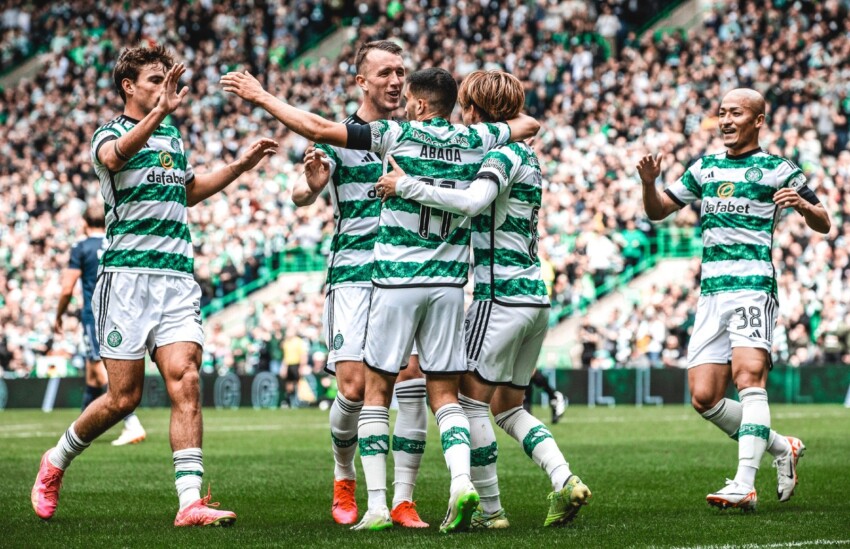
The name Celtic evokes Ireland, and with good reason: the club was founded in the late 19th century with the explicit purpose of alleviating the poverty and marginalisation of Irish immigrants living in Glasgow’s East End.
Whilst not all the club’s earnings reached those in need, Celtic became a symbol of redemption for the community—a source of pride they could identify with. This perhaps explains the devoted fan base the team acquired in a short space of time and has maintained to this day.
Throughout its history, the club’s kit and badge have always drawn explicitly on Irish symbolism: white and green stripes, Celtic crosses, and shamrocks.
Celtic is Scotland’s most decorated club, with a trophy cabinet containing 55 Scottish league titles (a record shared with Rangers), 42 Scottish Cups and 22 League Cups. On the European stage, they boast a European Cup, won in 1967 against Inter Milan in Lisbon: those players became known as the Lisbon Lions and remain the only British side to win the competition with a squad composed entirely of players born within 30 miles of their home ground. These achievements are complemented by the highest average attendance for domestic matches and numerous attempts at emulation, the most famous being Belfast Celtic.
Another point of pride for Celtic is their stadium, which with a capacity of 61,000 spectators is Scotland’s largest football stadium and the third largest football ground in the United Kingdom by capacity, after Wembley and Old Trafford.
Celtic Park in Glasgow is located in an area of the city known as Parkhead, a name sometimes used for the stadium itself. The most devoted fans, however, call it Paradise.
Countless myths and legends surround this iconic stadium’s long history, which has hosted legendary clashes of British and international football. The best way to discover them is to take a guided tour of Celtic Park. The tour gives you the chance to experience the emotions of the players by entering the Celtic changing rooms, the club’s executive lounge, the tunnel through which players emerge, and the pitch itself.
In the Jock Stein Lounge, the waiting area before the tour begins, you can admire a collection of historical documents, personal items and other memorabilia from figures who made club history.
Tours run twice daily Monday to Thursday and hourly from 12.30 to 17.30 on Saturday and Sunday. Times are indicative and may change depending on the home team’s requirements and match schedules.
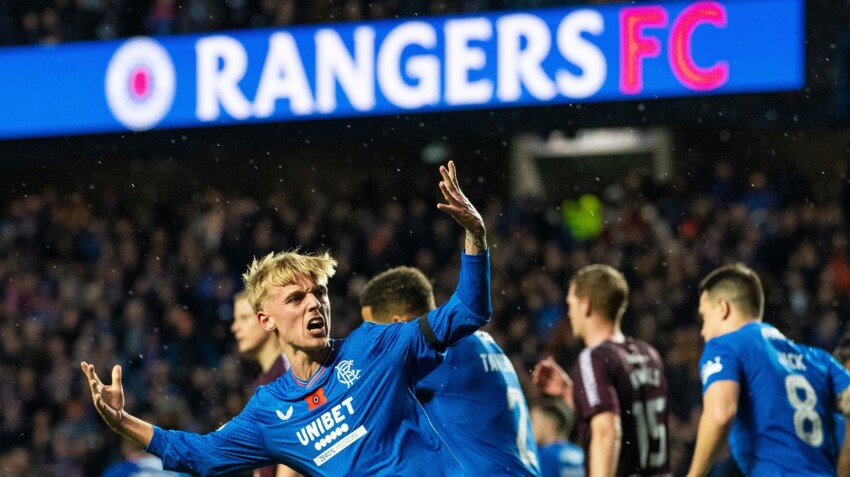
Of Glasgow’s two historic teams, the Rangers Football Club (also called Glasgow Rangers) is the older, founded in 1872. Rangers’ trophy cabinet is among the richest in the world: 55 Scottish league titles (a record shared with Celtic), 34 Scottish Cups and 28 League Cups. On the European stage, they boast a Cup Winners’ Cup won in 1972 in Barcelona against Dynamo Moscow, and were the first British team to reach the final of a UEFA competition.
The club’s colours are blue, white and red. There are two official badges:
The fan base is exceptional: there are 150 official supporters’ clubs in Great Britain and Ireland and over 90 spread across twenty countries around the world.
It’s worth mentioning an episode that illustrates the depth of the religious rivalry between the two sets of supporters: for over fifty years, from the early 1930s until 1989, Rangers followed an unwritten rule of not signing Catholic players. The tradition was broken by the signing of Mo Johnston, a openly Catholic player whom the club signed from Celtic, sparking furious reactions from both sets of supporters.
With a capacity of over 50,000 spectators (50,987 seats), Rangers’ stadium ranks among Scotland’s largest. The current Ibrox Stadium is located in the eponymous Glasgow neighbourhood, south of the River Clyde, and is considered one of Europe’s safest stadiums, awarded 4-star UEFA status.
Opened in 1899 as Ibrox Park, it is sadly remembered for two incidents that caused a tremendous loss of life. The first occurred in 1902, when the collapse of a wooden stand during a match against England killed 25 people. The second, known as the Ibrox Disaster, happened in 1971: 66 people died crushed by the crowd on the exit stairs at the end of the derby against Celtic. Following this tragedy, the stadium was almost completely rebuilt. Renovation works continued until the mid-1980s and concluded with further reconstruction in 1997, when the ground was officially renamed Ibrox Stadium. A memorial on the stadium’s perimeter honours the 66 victims of 1971.
The Rangers stadium in Glasgow can also be visited via a guided tour that provides access to both teams’ changing rooms, the manager’s office, the tunnel and the pitch. You can also visit the Trophy Room where cups, medals and other club honours are displayed.
The Ibrox Stadium tour runs Monday to Saturday three times daily, from morning through early afternoon. Timings may also vary on match days or for special events.
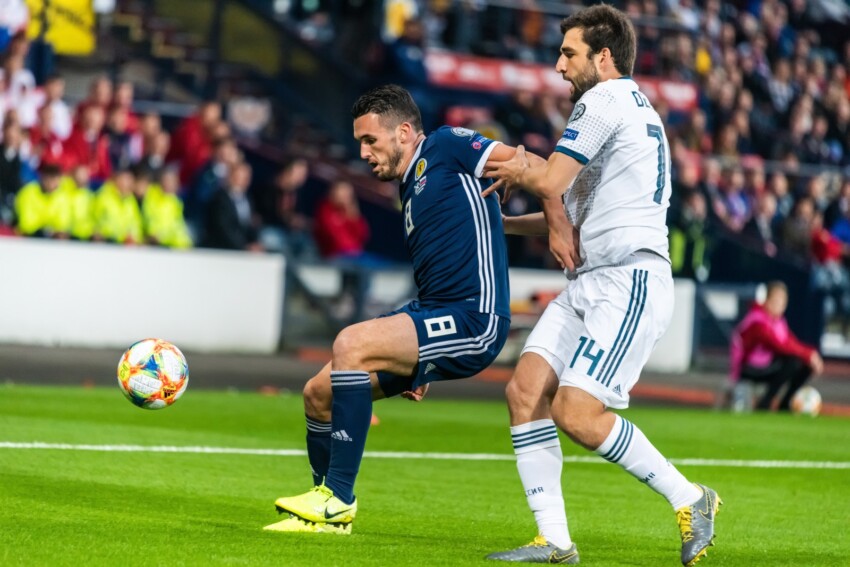
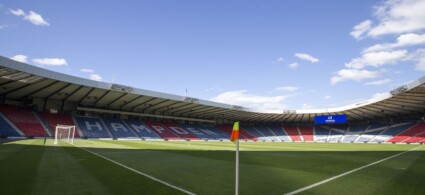
A few kilometres from Celtic Park and Ibrox stands Glasgow’s third great football temple: Hampden Park, Scotland’s national stadium. With a capacity of 51,866 seats, it is Scotland’s second-largest stadium after Celtic Park and hosts matches for the Scottish national team, the finals of domestic cup competitions, and from 2026 will be one of the venues for Euro 2028, the tournament co-hosted by the United Kingdom and Ireland.
Hampden Park’s history is remarkable: between the 1920s and 1930s it was the world’s largest stadium, with a capacity approaching 150,000. The record for the largest attendance at a club match in Europe still belongs to this stadium: in 1937 the Scottish Cup final between Celtic and Aberdeen was watched by over 146,000 spectators. These extraordinary numbers reflect the importance of football in Scottish culture.
The stadium is home to the Scottish Football Museum, the official museum of Scottish football, which displays trophies, historic kits, archive footage and memorabilia spanning over 150 years of the game in Scotland, including artefacts from the first international football match ever played—Scotland versus England in 1872. The museum can be visited independently of the stadium tour. The guided tour, lasting approximately two hours, provides access to the players’ changing rooms, the tunnel, the trophy presentation area and the interactive Hampden Hotshots gallery, where you can try your hand at some shots on goal. Groups are limited to a maximum of 15 participants, ensuring an intimate and personalised experience.
 Hotel
Hotel  Budget accommodations
  Apartments
  Family Hotel
  Luxury Hotel