Edinburgh: Loch Ness, Glencoe, Coos & the Highlands Day Tour
2.667 reviews
Buy now
From 64,38€ per person
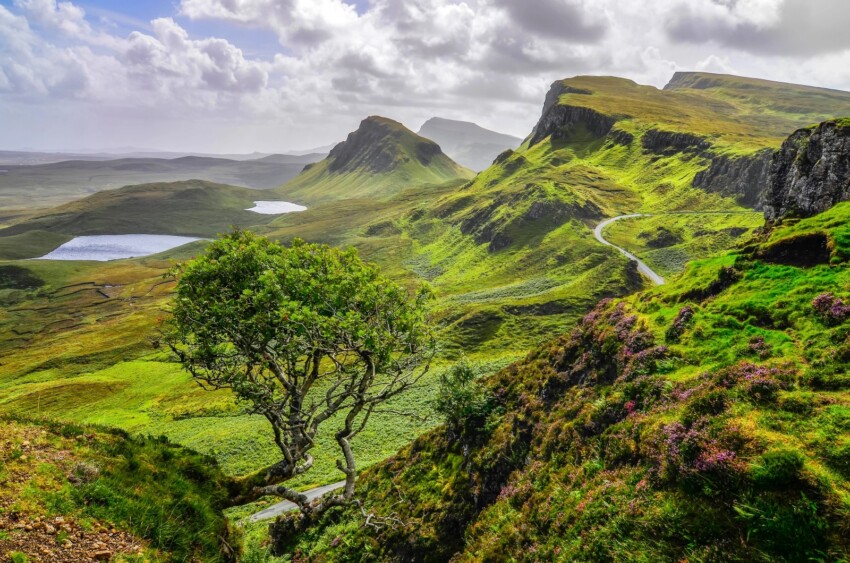
The Highlands are the heart and true symbol of Scotland, its wildest, most untamed and picturesque region that will captivate you with its infinite beauty.
Postcard-perfect locations, lands of legendary heroes, grandiose landscapes, imposing mountains, ancient forests that tumble into the sea, freshwater lochs that blend into the ocean’s deepest fjords, wildlife roaming free, solitary valleys and untamed territories that will leave you breathless.
Here, inhabited villages are few and far between, and you may find yourself driving for hours through pure nature, surrounded only by moorland, lochs and pine forests: an unforgettable landscape that has fuelled legends and ballads for centuries, a fairy-tale setting that will enchant particularly photography enthusiasts.
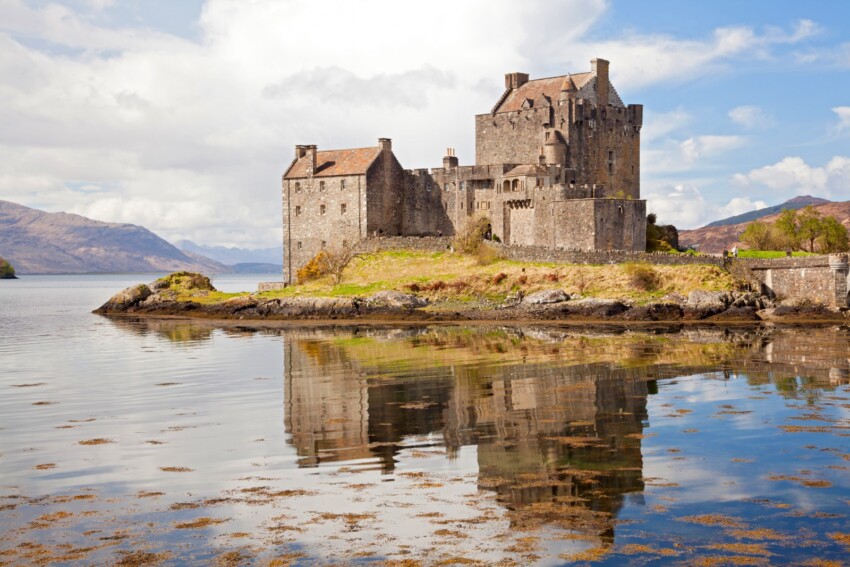
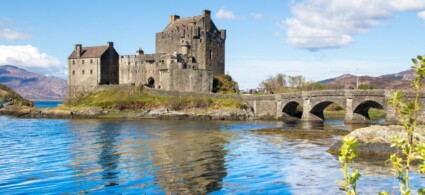
The majestic Eilean Donan Castle, an undisputed icon of the Scottish Highlands, stands on a small island connected to the mainland by a distinctive stone bridge. Its imposing walls, reconstructed in the early 1900s on the ruins of the original 13th-century fortress, are reflected in the crystal-clear waters where three lochs meet: Duich, Long and Alsh.
Inside, the richly furnished rooms tell the story of Clan Mackenzie and their Macrae allies, who served as the castle’s guardians for generations. The meticulously restored interiors offer a fascinating glimpse into Scottish castle life: from the Great Hall, where feasts were held, to the armoury with its impressive collection of swords and shields.
At sunset, when the sun’s rays turn the ancient stones golden, the castle offers one of Scotland’s most photographed views, so much so that it was chosen as a filming location for numerous productions, including Highlander and The World Is Not Enough.
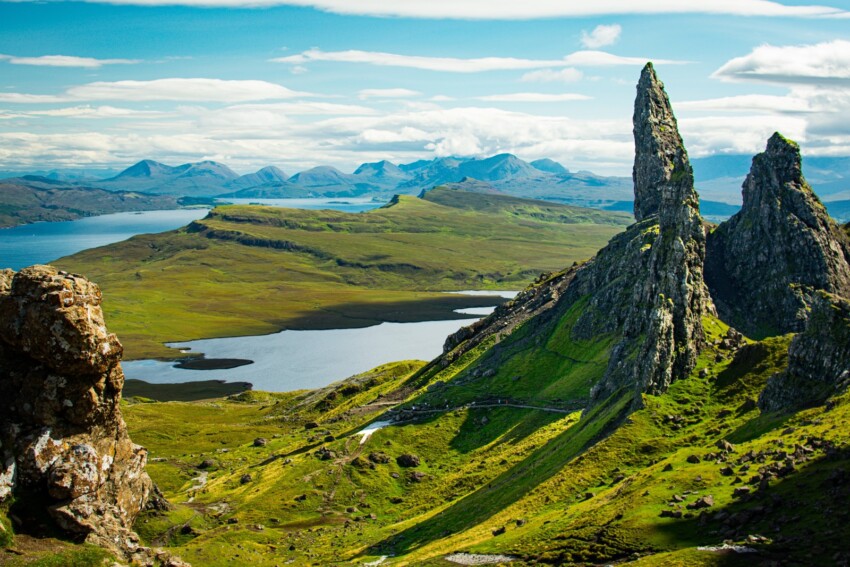
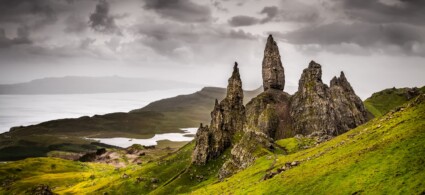
The Isle of Skye, the largest of the Inner Hebrides, is a wild paradise where nature reigns supreme. Its jagged coastline is dominated by the rocky pinnacles of the Old Man of Storr and the cliffs of Neist Point, where solitary lighthouses brave the Atlantic storms.
The Cuillin mountain range, with its sharp ridges that resemble daggers thrust into the sky, challenges even the most experienced hillwalkers, whilst the Fairy Pools, with their crystal-clear waters, attract visitors from around the world.
In picturesque villages like Portree, with its colourful houses overlooking the harbour, time seems to have stood still. Ancient Gaelic traditions survive in local pubs, where traditional music echoes every evening. The moorland, dotted with ancient castles and mysterious rock formations, turns violet in summer when heather blooms.
The island’s historic distilleries, such as Talisker, produce some of the world’s most acclaimed whiskies, infusing their spirits with the very essence of this wind-swept land.
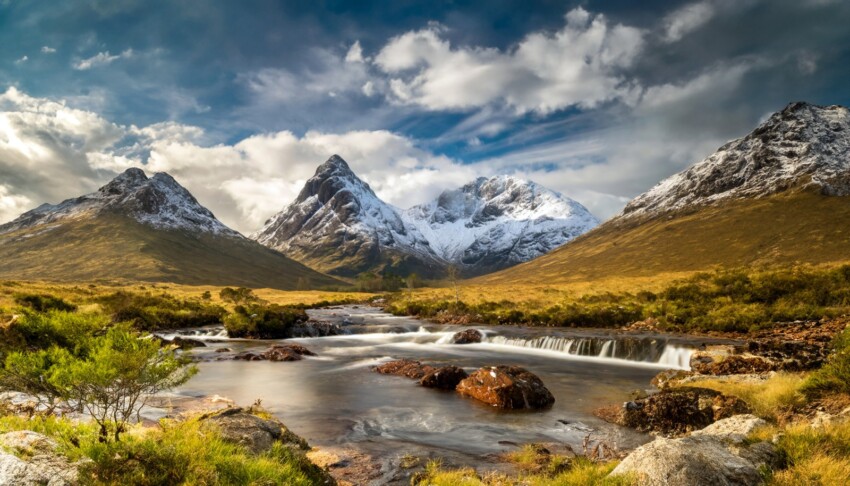
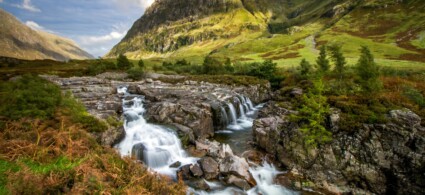
The Glencoe valley embodies the deepest and most dramatic essence of the Highlands. Shaped by ancient glaciers, this valley is surrounded by imposing mountains and roaring waterfalls that plunge from vertiginous rocky cliffs.
Its dark past, marked by the tragic massacre of Clan MacDonald in 1692, when 38 clan members were brutally killed by their guests from Clan Campbell, still lingers in the air like a warning from history.
Today, it is a paradise for outdoor enthusiasts: hillwalkers, climbers and skiers find their ideal terrain here. The Three Sisters, three majestic mountains that dominate the valley, offer some of Scotland’s most spectacular climbing routes. The valley is home to abundant wildlife, from red deer to golden eagles, whilst hidden mountain lochs hold legends as old as the Highlands themselves.
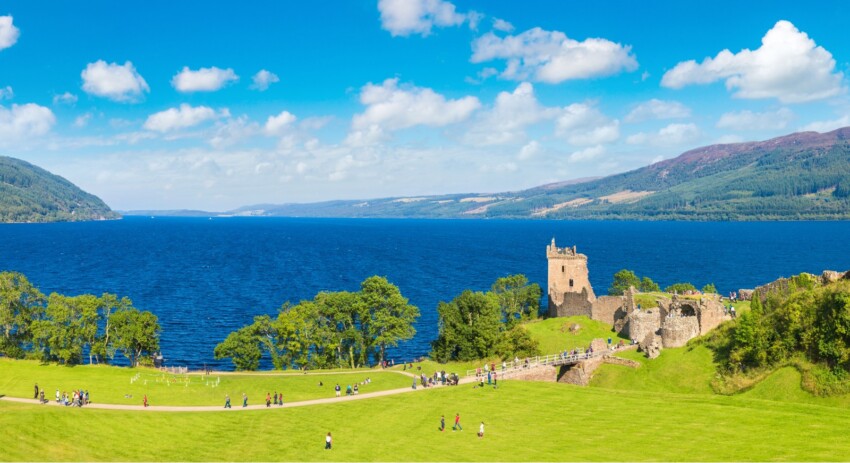
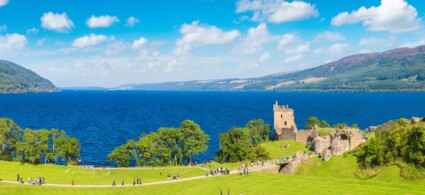
The legendary Loch Ness, with its deep and mysterious waters, continues to fascinate visitors from around the world. Stretching 37 kilometres and plunging to depths of over 230 metres, this loch is famous not only for its alleged resident, Nessie, but also for the extraordinary beauty of its surrounding landscape. Its dark waters contain more freshwater than all the lakes of England and Wales combined, and their depth has fuelled centuries of legends and mysterious sightings.
On its shores, the ruins of Urquhart Castle offer a breathtaking view over the loch and bear witness to centuries of turbulent history. The castle, one of Scotland’s largest, has survived numerous sieges and battles during the Scottish Wars of Independence.
Small villages like Drumnadrochit have become the starting point for loch cruises, whilst the visitor centre tells the story and mysteries of these legendary waters. Modern technologies, from sonar to underwater cameras, continue to explore the loch’s depths, fuelling the eternal fascination of this unique place in the world.
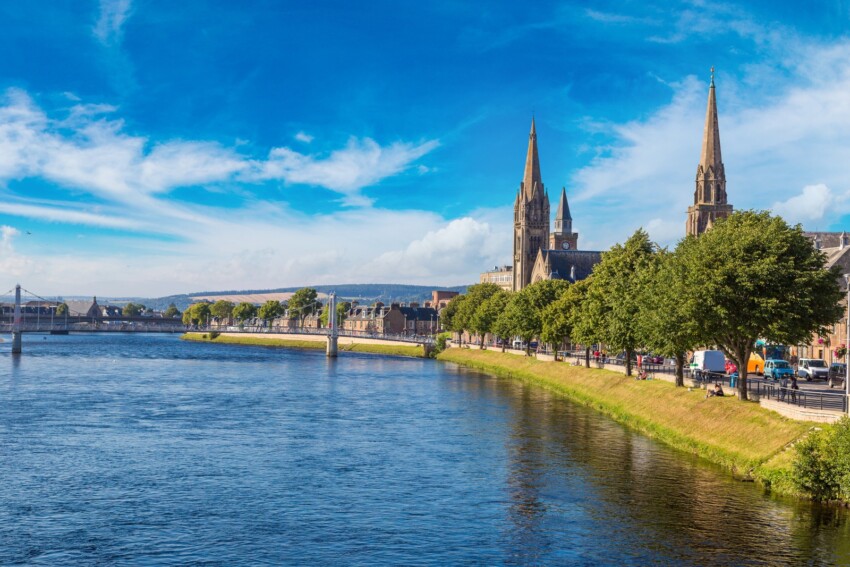
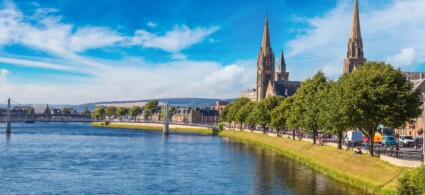
Inverness, the capital of the Highlands, stands majestically at the mouth of the River Ness, serving as the gateway to Scotland’s far north. The city, crowned by its striking red sandstone Victorian castle that dominates the skyline, boasts a history spanning millennia that intertwines with the Highlands’ deepest legends. In the heart of the historic centre, the Old High Church has stood on the riverbanks since the 12th century, whilst the Victorian Market preserves the charm of historic shopping arcades.
The modern city pulses with cultural energy, with the Eden Court theatre hosting internationally significant performances and art galleries celebrating both local and international artists. The Culloden Battlefield, just a few kilometres from the centre, tells the story of the bloody 1746 battle that marked the end of the Jacobite dream. The surrounding area offers unique experiences: from wildlife watching in the Moray Firth, where you can spot dolphins and seals, to whisky tastings at the region’s historic distilleries.
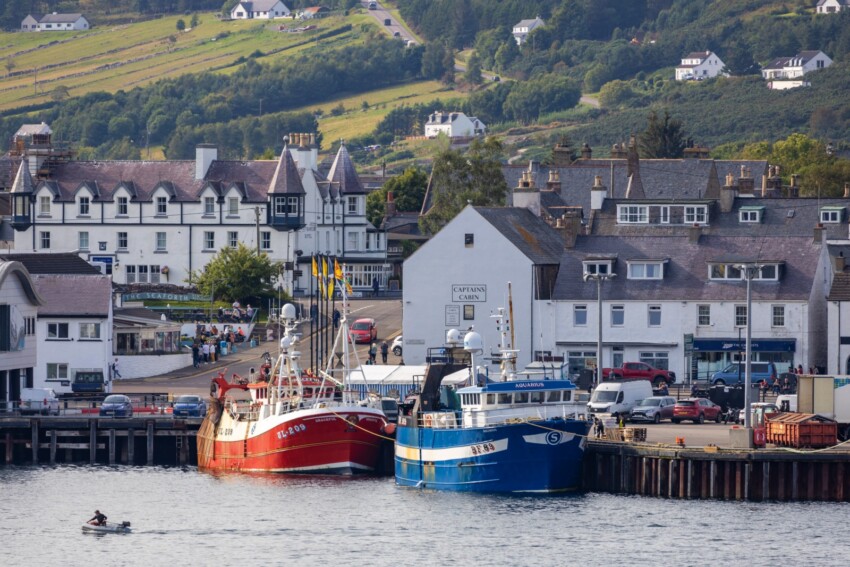
Ullapool, a picturesque fishing village nestled on the shores of Loch Broom, represents one of the hidden gems of the Highlands’ west coast. Founded in 1788 by the British Fisheries Society as a herring fishing port, today it is a vibrant cultural hub and the ideal starting point for exploring the northern Highlands.
Its whitewashed houses line the harbour in neat rows, where fishing boats continue to unload their daily catch alongside ferries heading to the Outer Hebrides.
The village is surrounded by some of Scotland’s most spectacular landscapes: the mountains of Beinn Ghobhlach and An Teallach create a dramatic backdrop, whilst the Museum of the Northern Highlands tells the region’s story, from the forced migration of the Highland Clearances to the everyday life of fishermen.
In the evening, local pubs such as the Ceilidh Place become the beating heart of the community, where traditional music blends with the maritime atmosphere in an authentic Highlands experience.
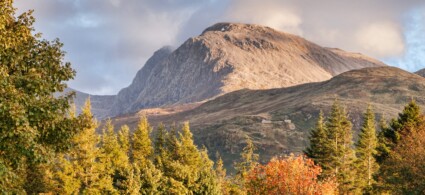
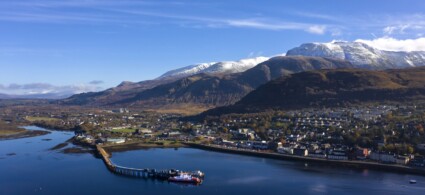
Fort William, known as Britain’s outdoor capital, nestles at the foot of Ben Nevis, the UK’s highest mountain. The town takes its name from a fortress built in the 17th century to control the turbulent Highland clans, and today it is a mecca for outdoor enthusiasts.
The town centre, with its pedestrianised High Street, offers an array of specialist outdoor shops, cosy cafés and traditional pubs.
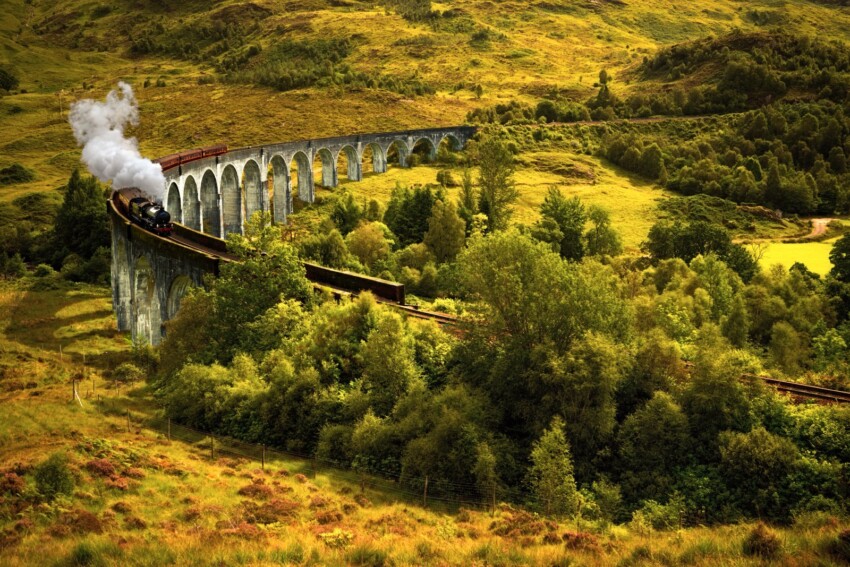
Yet the true magic of Fort William lies in its surroundings. The Jacobite Steam Train, made famous by the Harry Potter film series, departs from the town station for a spectacular journey through the Highlands, including the famous Glenfinnan viaduct.
The Nevis Range, with its ski slopes in winter and mountain-bike trails in summer, attracts sports enthusiasts from around the world, whilst nearby Glen Nevis boasts some of Scotland’s most spectacular waterfalls.
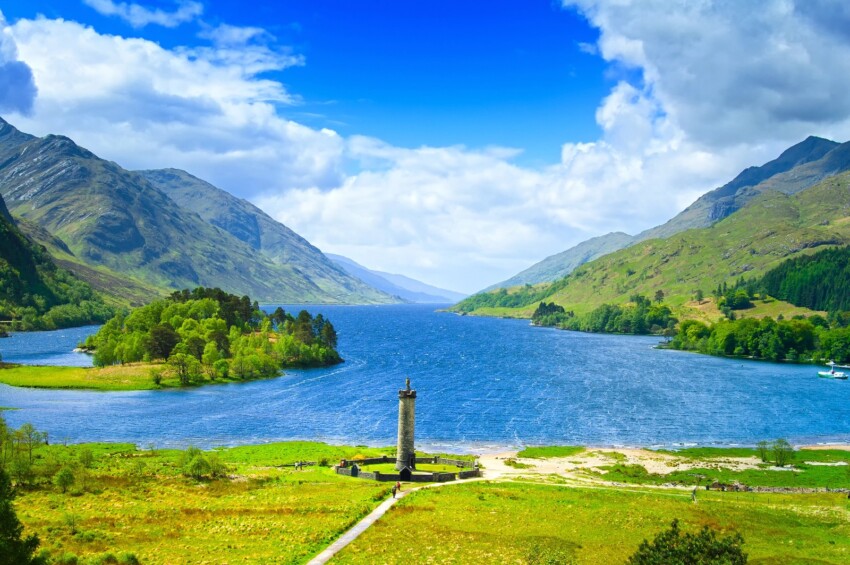
Overlooking the wonderful Loch Shiel, the Glenfinnan Monument was built on the spot where, in 1745, Bonnie Prince Charlie raised his standard to launch the Jacobite uprising.
Beyond its historical significance, this remains a truly evocative location, nestled amongst mountains with views over a fjord stretching to the horizon. At sunset, when colours brighten and the sun reflects off the water, you can admire an exceptional panorama.
Behind you stands the imposing 21-arched viaduct carrying the West Highland Railway, which became famous for its many appearances in the Harry Potter film saga.
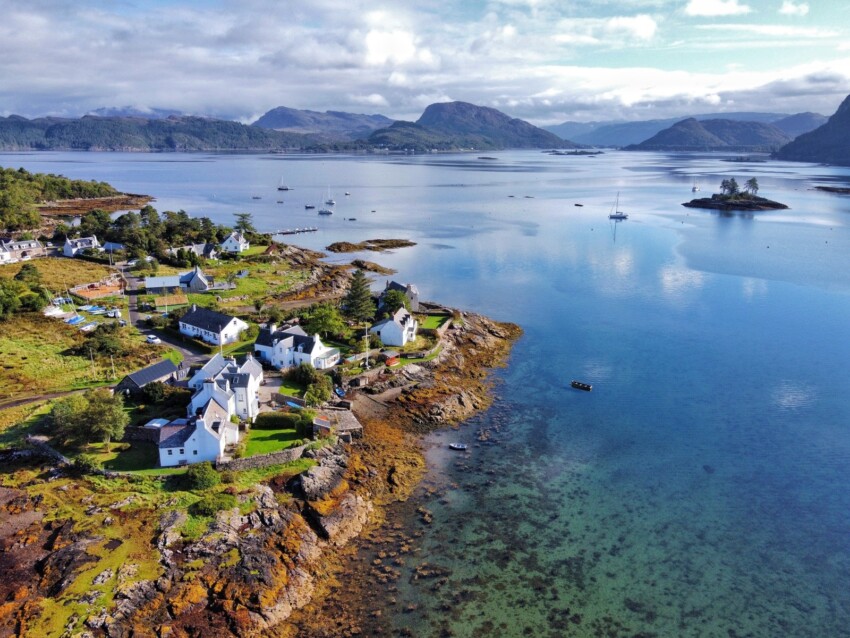
Plockton is one of the most picturesque villages in the Highlands, overlooking a tranquil bay inhabited by seals.
At the head of Loch Carron nestles the charming village of Plockton, one of the most evocative settlements in the Highlands: it comprises a handful of whitewashed and brightly coloured houses overlooking a sheltered small bay, with sailing boats bobbing at their moorings close to the shore. All around is splendid scenery: rocky mountains reflected in the sea and lush pine forests stretching down to the water’s edge.
In summer, the small waterfront comes alive with visitors and artists who come here to capture and recreate the unique light of this village, brilliant and intense, which is one of its defining characteristics.
Plockton makes an excellent base for exploring Wester Ross, one of Scotland’s wildest regions. Nature lovers can set out from here along the many trails that wind through the area’s beautiful forests or go on a cycling tour.
Don’t miss a short trip to see the seals that inhabit the bay and sunbathe on the many rocks that jut from the sea, and enjoy a delicious meal of fresh fish and seafood.
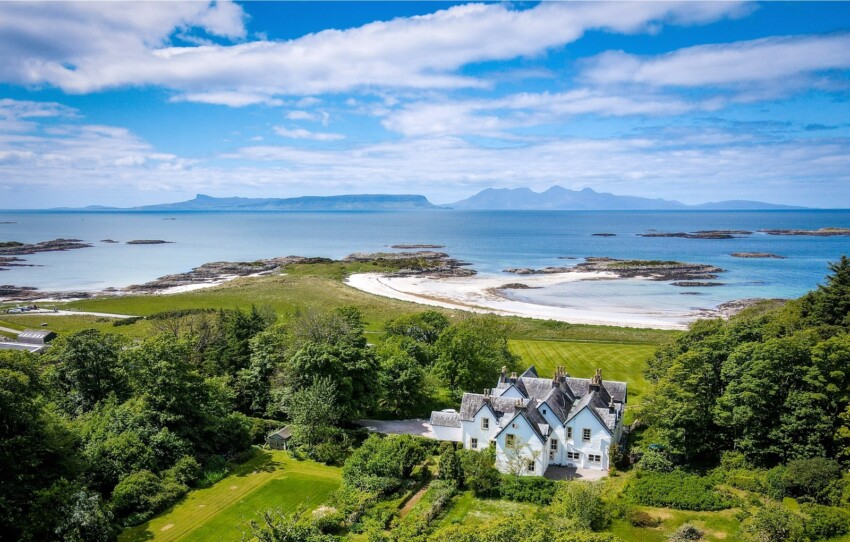
A few kilometres from Mallaig you will find yourself facing a surreal spectacle: Morar, a stretch of Caribbean-style white sand beaches that unfolds for 12 kilometres surrounded by moorland, granite hills and valleys covered with heather.
A mountainous landscape that opens onto a crystalline sea worthy of the Caribbean and on the horizon the silhouettes of Eigg and Rùm, two small islands.
Morar’s beaches are a natural wonder, especially on sunny days, when colours come alive and they are an excellent alternative for those unable to visit the twin beaches found in the Hebrides.
And if you love mysteries, you can search the nearby Loch Morar, home to another legendary lake monster, Morag.
The western and northern parts of the Highlands are absolutely remote: the only way to explore them is by driving, as bus services are extremely limited, unless you’re willing to use the postbus network. We recommend refuelling whenever you get the chance: petrol stations are few and far between, and almost never offer 24-hour self-service facilities.
The roads, meanwhile, are in good condition despite being very narrow—a drawback more than compensated for by the almost complete absence of traffic, save the occasional flock of sheep crossing the road.
Some areas, such as Torridon and Assynt, remain virtually untouched by tourism and preserve their authenticity and beauty in all their splendour. The region known as Wester Ross—the western coastline stretching from Mallaig to Cape Wrath—is without doubt the most spectacular: a jagged coastline interspersed with marvellous and enchanting peninsulas, a succession of sea lochs with turquoise waters sparkling in the sunlight, rocky headlands and sandy inlets dominated by wild, wind-swept mountains.
On Sundays, this part of Scotland comes to a standstill: shops, restaurants and buses all close.
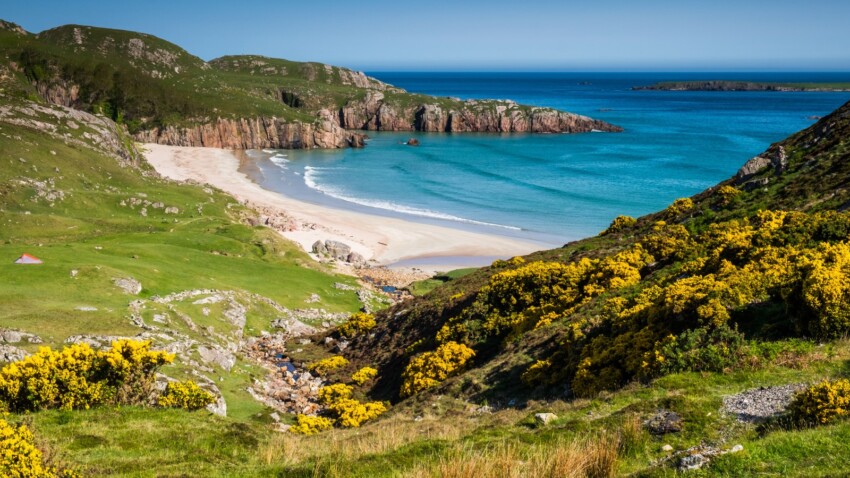
Sandy coves, dramatic cliffs, caves and waterfalls make the Durness coastline one of the finest areas in the Highlands.
The stretch of coast surrounding Durness doesn’t receive the heaviest tourist traffic, yet it’s a truly picture-postcard corner: a shoreline battered by fierce northerly winds, heather moorland behind it, rolling pastures, miles of cliffs stretching far into the distance enclosing and protecting small bays of white sand lapped by crystal-clear waters—often deserted even during summer months.
Photography enthusiasts will find plenty to get excited about.
Not far from the sandy expanse of Sango Sands, you’ll find signs for Smoo Cave, a 60-metre-long cave that penetrates deep into a steep cliff face: a true natural marvel with a beautiful waterfall concealed within. Access involves descending a slippery staircase—certainly an entertaining experience for families and children.
When you arrive at Balnakiel Bay, you might think you’re dreaming: on sunny days the water gleams with a glorious turquoise hue that adorns the white sand bay. If time permits, you can follow a path from here leading to Faraid Head, a headland hosting a puffin colony.
Keen walkers can venture onwards to Cape Wrath via a circular trail lasting approximately 4 hours.
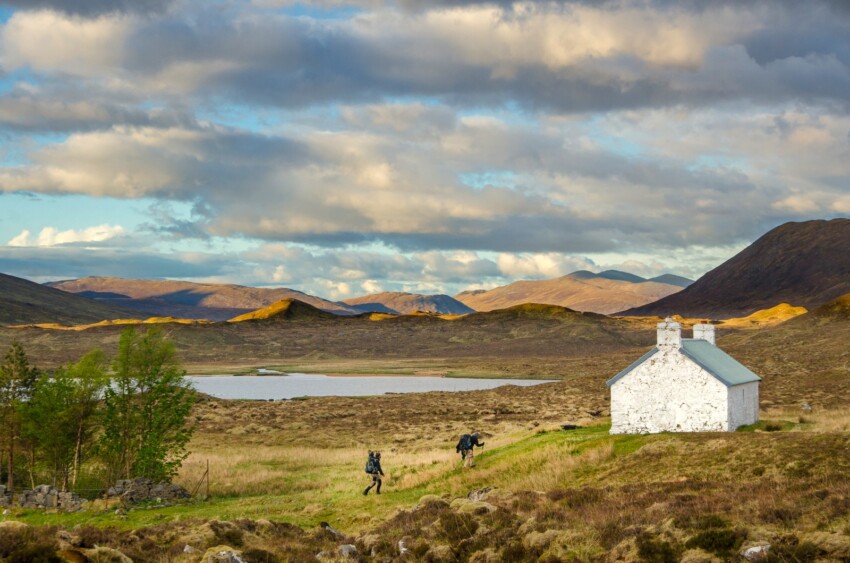
Cape Wrath is the most north-westerly point of Britain and an absolutely wild and remote place.
To reach Cape Wrath, you must board a ferry at Keoldale that crosses the Kyle of Durness. Once you’ve landed, a minibus will transport you to this remote corner of Scotland, where you can enjoy absolutely breathtaking views.
From the magnificent white lighthouse, on clear days you can spot the Outer Hebrides in the distance, while below you stretch the imposing Cliff Mor, Britain’s highest sea cliffs, whose steep, sheer faces provide nesting sites for various species of seabirds.
Walking enthusiasts will find this place absolutely delightful: many trails depart from here and wind along the clifftops.
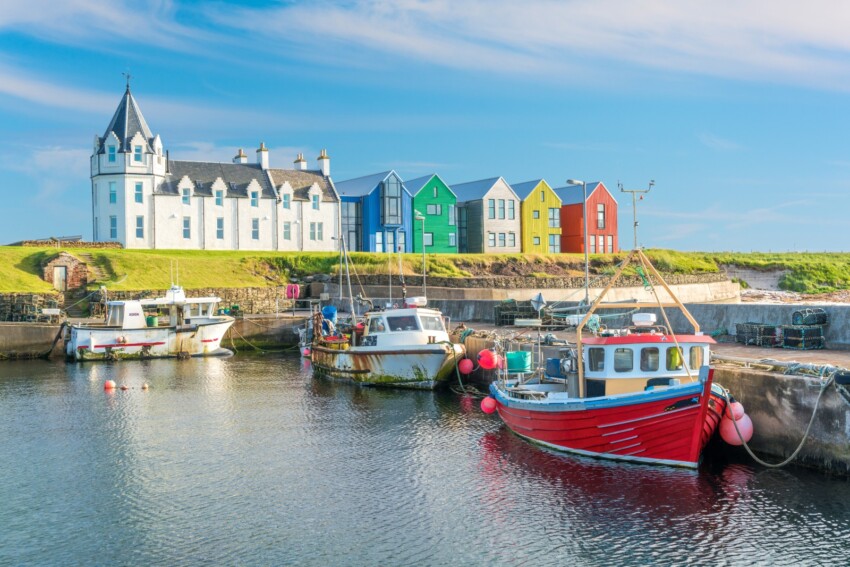
Everyone wishing to sail to the Orkney Islands passes through this outpost; indeed, alongside Scrabster, John O’Groats is the only port from which ferries depart for Orkney.
The atmosphere here is typical of frontier settlements—remote, isolated, lacking obvious attractions or former glories—but if you’re passing through to catch a ferry, know that the coastline around this village is truly spectacular.
Just 3 kilometres away stretches a long shoreline where you can admire imposing cliffs plunging sheer into turbulent seas, covered with lush green vegetation and teeming with countless seabirds.
If you have time for an excursion, you can follow the path leading to Duncansby Head, a headland offering spectacular views of 60-metre-high cliffs carved by deep, sheer-sided inlets known as geos, with dramatic sea stacks battered by waves scattered across the water.
Another truly spectacular location just a few kilometres away is Dunnet Head, a wild heather moorland headland covered with heather and swept by powerful winds: on clear days, you can even see the Orkney Islands from here.
Just outside Thurso, you can visit Castle of Mey, one of several royal residences scattered across Scotland.
In the following map you can see the location of the main places of interest mentioned in this article.
If you don’t intend to or can’t hire a car, don’t worry—you can still explore the Highlands by joining an organised tour, departing from Edinburgh or Glasgow.
Organised tours, always aboard shared coaches, are ideal if you have limited time or don’t have your own transport.
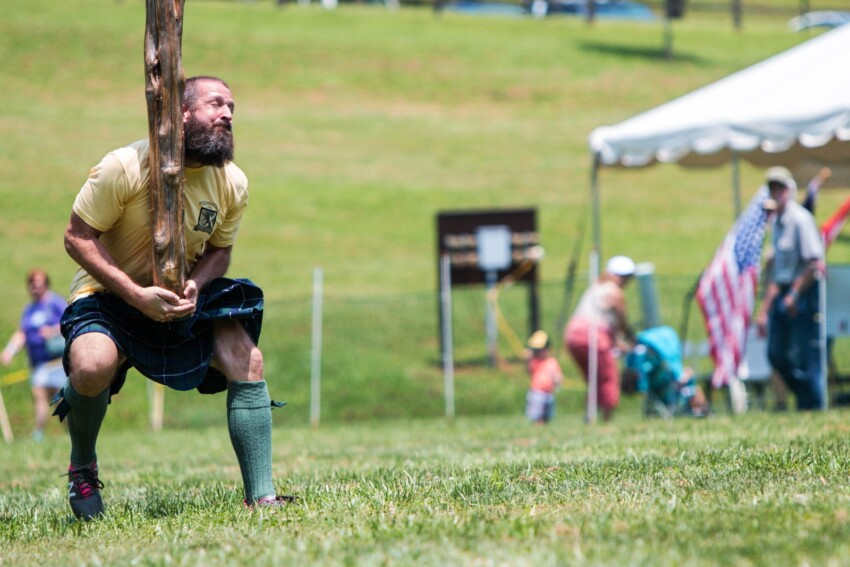
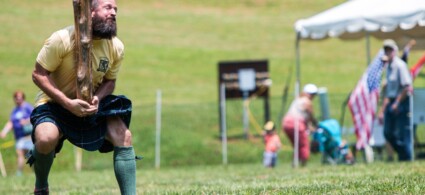
If you’re planning a summer visit to Scotland, don’t forget to include a location where you can watch the Highland Games! The Highland Games take place throughout Scotland between May and September, so it shouldn’t be difficult to fit them into your Scottish itinerary.
Originally born as tests of strength, skill and endurance among clan men to prove their worth in battle and be chosen by their chiefs, they still retain their authentic character today, featuring hammer throws, caber tosses, weight throws and tug-of-war, as well as light athletics competitions and dancing and bagpipe competitions.
This blend of athletic vigour, music and traditional dance makes the Highland Games a truly unique and unmissable spectacle!
The western coastline is battered by storms and the already changeable weather in these lands becomes downright harsh and unpredictable, yet rewards you with extraordinary light displays, atmospheres and unforgettable landscapes. Be prepared for heavy showers even in the height of summer.
The weather is therefore extremely fickle—don’t be misled by morning sunshine, as conditions can change dramatically within hours. On the rare windless days, you might encounter midges, annoying and particularly irritating biting insects.
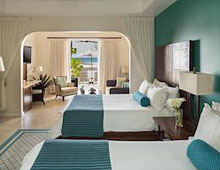 Hotel
Hotel  Budget accommodations
  Apartments
  Family Hotel
 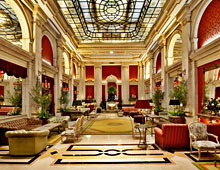 Luxury Hotel