Cruachan Hotel
Fort William - Achintore Road
Book now
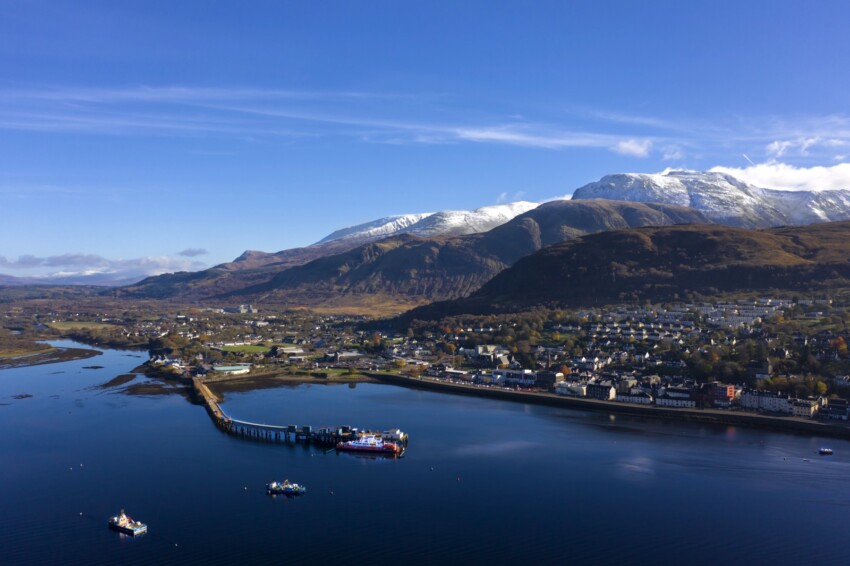
Nestled at the foot of Ben Nevis, Britain’s highest mountain, Fort William stands as Scotland’s unofficial capital for outdoor sports. This captivating Highland town, situated on the shores of Loch Linnhe, serves as a gateway to some of Scotland’s most spectacular landscapes. With a rich history dating back to the early 17th century, Fort William has transformed from a military outpost into a thriving adventure tourism hub.
The town’s strategic position at the southern end of the Great Glen makes it a crucial base for exploring the western Highlands. Throughout the year, visitors flock to this Highland gem for world-class hiking, mountain biking and winter sports. The surrounding area boasts some of Scotland’s most iconic landscapes, from mist-shrouded mountains to serene lochs that mirror the ever-changing Highland skies.
Beyond its outdoor appeal, Fort William offers a blend of Scottish heritage and modern Highland culture, with traditional pubs, historic sites and the famous Jacobite Steam Train that has captured imaginations worldwide.
Fort William’s attractions range from natural wonders to historic sites, offering visitors a perfect blend of outdoor adventure and cultural experiences. The town serves as an ideal base for exploring some of Scotland’s most breathtaking landscapes and immersing yourself in the rich heritage of the Highlands.
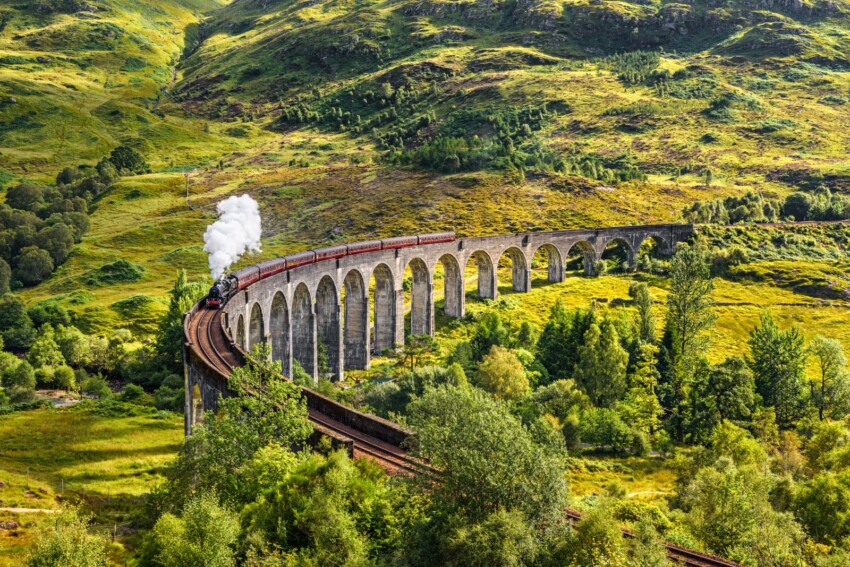
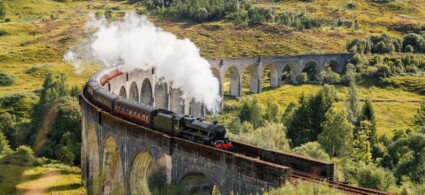
Often called the “Hogwarts Express” for its starring role in the Harry Potter films, the Jacobite Steam Train offers one of the world’s most scenic railway journeys. The 84-mile round-trip route from Fort William to Mallaig traverses the iconic Glenfinnan Viaduct, a spectacular 21-arch structure overlooking Loch Shiel.
The journey carries passengers through some of Scotland’s most dramatic landscapes, past deep lochs, towering mountains and remote coastal villages. The train operates from April to October, with two daily services during peak season. The morning service allows time to explore the fishing port of Mallaig before returning.
Journey highlights include views of the Small Isles, the “Road to the Isles” and the silvery sands of Morar. The experience combines the romance of steam travel with the incomparable Highland scenery, making it one of Fort William’s most popular attractions.
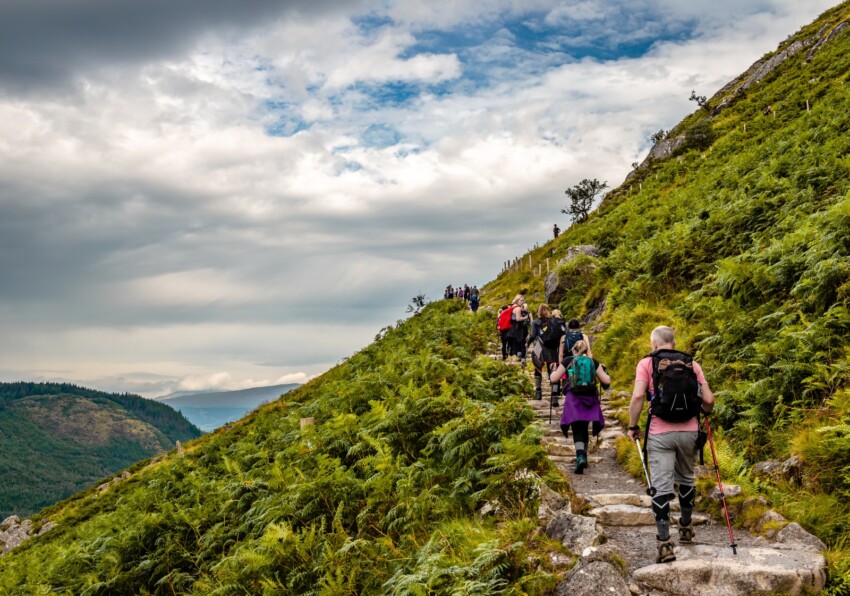
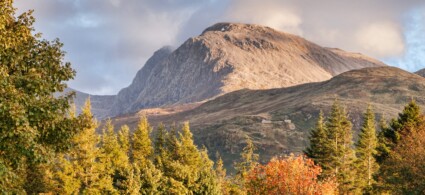
At 1,345 metres above sea level, Ben Nevis is not only Britain’s highest peak but a symbol of Scotland’s wild beauty. The mountain offers varied experiences for different ability levels, from the challenging classic “Tourist Path” ascent to more technical climbs on the north face. The Ben Nevis Visitor Centre provides essential information on the mountain’s geology, wildlife and safety considerations.
The main path, known as the Mountain Track, takes approximately 7–8 hours for a round trip. Whilst accessible to most reasonably fit hikers, the climb should not be underestimated. The summit frequently experiences extreme weather conditions, with snow possible year-round. On clear days, views from the top stretch across the Highlands to the Inner Hebrides, offering some of Scotland’s most spectacular panoramas.
The mountain’s north face presents an entirely different character, with its imposing cliffs and gullies making it a mecca for winter climbing. The CIC Hut, Britain’s highest shelter, serves as a base for climbers tackling these more challenging routes.
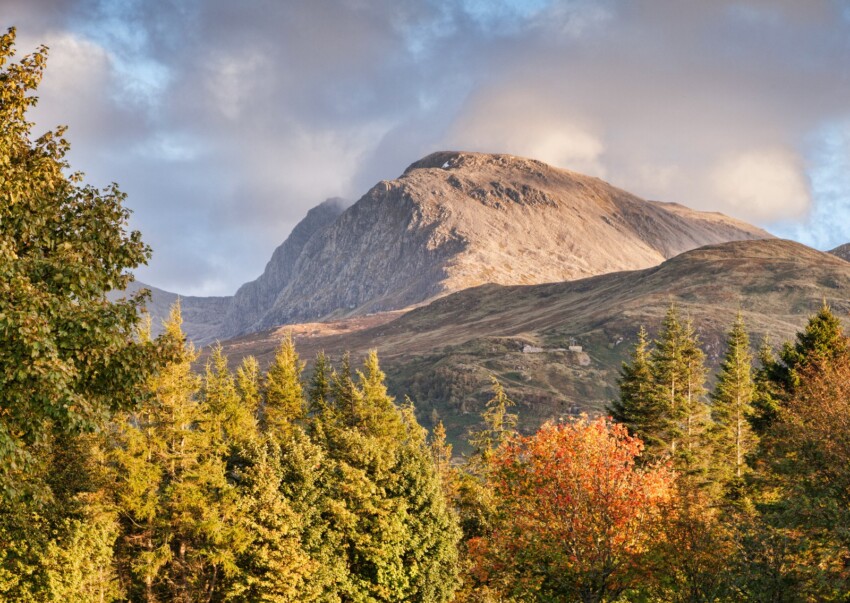
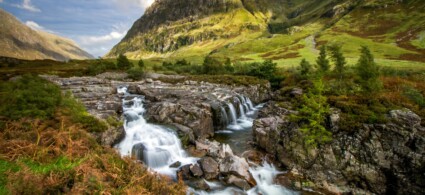
Glen Nevis, the valley at the foot of Ben Nevis, offers some of Scotland’s most accessible and beautiful hiking trails. The glen presents dramatically varied landscapes, from peaceful woodland walks to tumbling waterfalls and rugged mountain terrain.
The Lower Falls walk is a gentle trail suitable for all abilities, leading to a series of beautiful cascades. Higher up the glen, more challenging paths lead to the spectacular Steall Falls, Scotland’s second highest waterfall, accessible via a dramatic gorge walk.
Film enthusiasts may recognise parts of the glen from films such as “Braveheart” and “Harry Potter”. The natural amphitheatre of mountains and tumbling waters of the Water of Nevis create a landscape that captures the very essence of the Scottish Highlands.
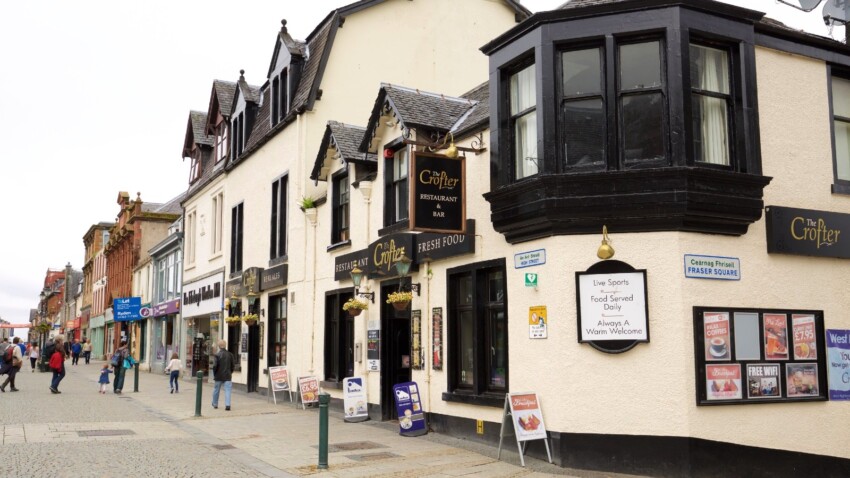
Fort William’s historic centre is centred along High Street, the pulsing heart of the town. This lively pedestrian thoroughfare is lined with beautifully preserved Victorian buildings that now house a variety of shops, cafés and traditional pubs. The atmosphere is quintessentially Highland Scottish, with a charming blend of history and modern life.
The waterfront area has been recently renovated and offers a pleasant scenic promenade. Cameron Square serves as the focal point of the town centre, where local events and outdoor markets are regularly held. Here you can admire the statue of the Great Frog, a tribute to the town’s history and its connections with Highland exploration.
For shopping enthusiasts, the West Highland Centre houses several outdoor clothing and sports equipment shops, as well as boutiques selling traditional Scottish products such as whisky, tartan and handcrafted souvenirs. Traditional Highland pubs abound, where you can enjoy local cuisine and listen to Scottish traditional music, particularly on weekend evenings.
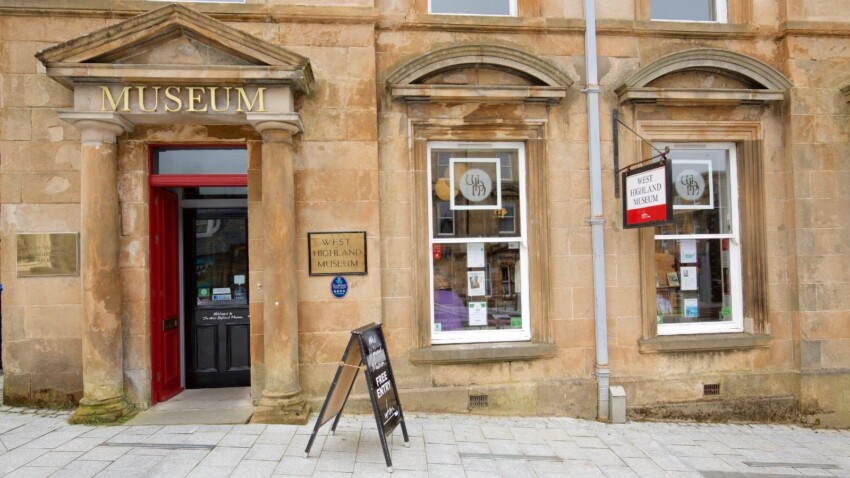
Located in the heart of Fort William, the West Highland Museum houses an impressive collection telling the story of the western Highlands and its people. The museum’s exhibitions cover various aspects of Highland life, from the Jacobite Uprisings to local geology and wildlife.
Of particular interest is the museum’s Jacobite collection, one of the finest in Scotland, featuring artefacts from the 1745 rising and objects associated with Bonnie Prince Charlie. The museum also displays traditional Highland dress, weapons and domestic objects that provide a snapshot of daily Highland life throughout history.
Interactive displays and regular special exhibitions make this visit engaging for all ages, providing context to the area’s rich cultural heritage.
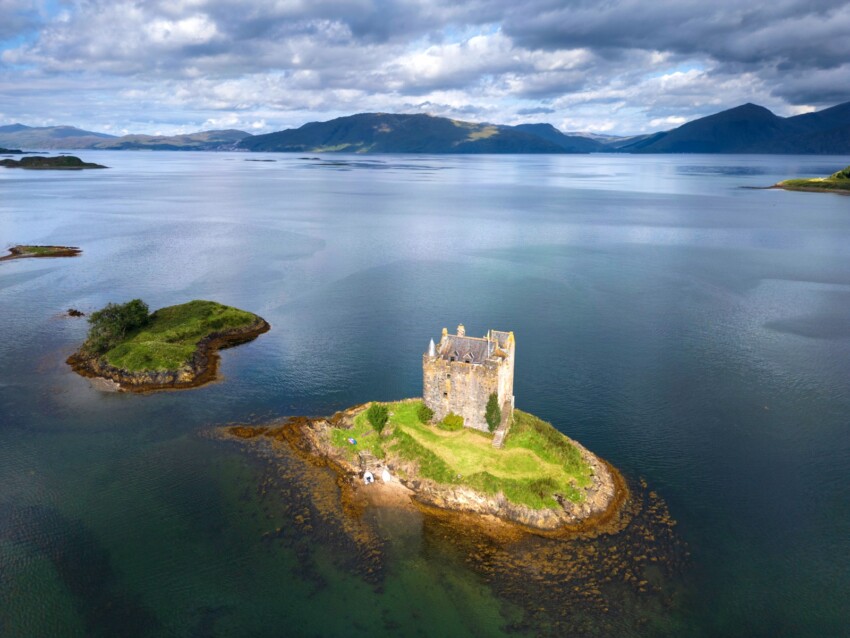
Loch Linnhe, a sea loch stretching from the town, offers numerous recreational opportunities and stunning views. The loch’s waters provide excellent opportunities for wildlife watching, with seals, porpoises and various seabirds regularly spotted.
Several operators offer boat trips on the loch, ranging from wildlife-watching cruises to fishing expeditions. The waterfront path provides a pleasant walking route with views across to the Ardgour peninsula, particularly beautiful at sunset when mountains are silhouetted against the western sky.
In recent years, the loch has become popular for water sports, with kayaking and stand-up paddleboarding available during the warmer months. The mix of fresh and salt water creates unique conditions for marine life, making it an interesting spot for nature enthusiasts.
The ruins of Old Inverlochy Castle testify to the area’s strategic importance in Scottish history. Built in the 13th century, this medieval castle played a crucial role in controlling the Great Glen, a natural passage through the Highlands.
Despite its ruined state, the castle’s structure remains remarkably intact, with its four round towers still standing. The site offers excellent views of Ben Nevis and provides interpretive panels explaining its fascinating history, including two major battles fought nearby.
The peaceful riverside location makes the castle perfect for a historic excursion combined with a pleasant walk along the River Lochy. The site is particularly evocative at sunset, when ancient stones glow in the evening light.
In the following map you can see the location of the main places of interest mentioned in this article.
High Street forms the heart of Fort William’s accommodation district, offering easy access to restaurants, shops and transport links. This central area is ideal for those wanting to experience the town’s atmosphere and enjoy evening strolls along the loch. Its proximity to the railway station makes it perfect for those arriving by train or planning to catch the Jacobite Steam Train.
The Glen Nevis area offers a quieter setting with splendid mountain views. Located about a mile from the town centre, this area is perfect for outdoor enthusiasts planning to climb Ben Nevis or explore the valley’s hiking trails. The mix of campsites, hostels and hotels caters to all budgets.
Along Achintore Road, which follows the shores of Loch Linnhe south of the town, you’ll find some of Fort William’s most upmarket hotels and guest houses. This area offers spectacular loch views and a peaceful setting whilst remaining only a short walk from the town centre.
Fort William is located in the western Highlands of Scotland, approximately 160 kilometres north of Glasgow. The town’s position makes it an important transport hub for the Highlands, with good road and rail connections.
Glasgow Airport is the main international gateway for reaching Fort William. From the airport, you can take a direct bus service operated by Citylink, which takes approximately 4 hours.
Alternatively, you can take a taxi or bus to Glasgow Queen Street station and catch a train to Fort William. The train journey, considered one of Britain’s most scenic, takes approximately 3 hours and 45 minutes.
However, we strongly recommend hiring a car to explore Fort William and the Highlands comfortably and with complete freedom.
What's the weather at Fort William? Below are the temperatures and the weather forecast at Fort William for the next few days.
 Hotel
Hotel  Budget accommodations
  Apartments
  Family Hotel
  Luxury Hotel